New Semester
Started
Get
50% OFF
Study Help!
--h --m --s
Claim Now
Question Answers
Textbooks
Find textbooks, questions and answers
Oops, something went wrong!
Change your search query and then try again
S
Books
FREE
Study Help
Expert Questions
Accounting
General Management
Mathematics
Finance
Organizational Behaviour
Law
Physics
Operating System
Management Leadership
Sociology
Programming
Marketing
Database
Computer Network
Economics
Textbooks Solutions
Accounting
Managerial Accounting
Management Leadership
Cost Accounting
Statistics
Business Law
Corporate Finance
Finance
Economics
Auditing
Tutors
Online Tutors
Find a Tutor
Hire a Tutor
Become a Tutor
AI Tutor
AI Study Planner
NEW
Sell Books
Search
Search
Sign In
Register
study help
mathematics
precalculus
Thomas Calculus Early Transcendentals 13th Edition Joel R Hass, Christopher E Heil, Maurice D Weir - Solutions
Find T, N, and κ for the space curves.r(t) = (3 sin t)i + (3 cos t)j + 4tκ
In r(t) is the position of a particle in space at time t. Find the particle’s velocity and acceleration vectors. Then find the particle’s speed and direction of motion at the given value of t. Write the particle’s velocity at that time as the product of its speed and direction. r(t) = (2 ln
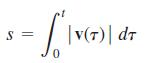
Find the arc length parameter along the curve from the point where t = 0 by evaluating the integralfrom Equation (3). Then find the length of the indicated portion of the curve. = f'live 0 S |V(T) dr
Solve the initial value problems for r as a vector function of t. Differential equation: Initial condition: dr dt r(0) = (180t)i + (180t - 16t²)j 100j =
Find T, N, and κ for the space curves.r(t) = (cos t + t sin t)i + (sin t - t cos t)j + 3κ
Find the point on the curve r(t) = (12 sin t)i - (12 cos t)j + 5tk at a distance 13p units along the curve from the point (0, -12, 0) in the direction opposite to the direction of increasing arc length.
Find T, N, and κ for the space curves.r(t) = (et cos t)i + (et sin t)j + 2κ
Solve the initial value problems for r as a vector function of t. Differential equation: Initial condition: dr 3 = (t + 1)¹/²i + e¯¹j + dt 2 r(0) = k 1 t + 1 -k
In r(t) is the position of a particle in space at time t. Find the particle’s velocity and acceleration vectors. Then find the particle’s speed and direction of motion at the given value of t. Write the particle’s velocity at that time as the product of its speed and direction. r(t) = (e)i +
In r(t) is the position of a particle in space at time t. Find the angle between the velocity and acceleration vectors at time t = 0. r(t) = (3t + 1)i + √3tj + f²k
Find T, N, and κ for the space curves.r(t) = (6 sin 2t)i + (6 cos 2t)j + 5tκ
Solve the initial value problems for r as a vector function of t. Differential equation: Initial condition: dr dt r(0) = i + j = (t³ + 4t)i + tj + 2t²k
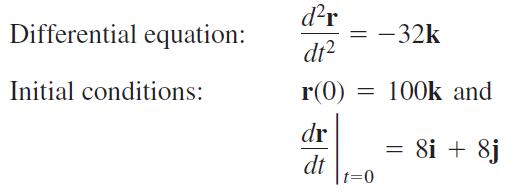
Solve the initial value problems for r as a vector function of t. Differential equation: Initial conditions: d²r dt² r(0) dr dt = = t=0 -32k 100k and = 8i + 8j
Find T, N, and κ for the space curves.r(t) = (t3/3)i + (t2/2)j, t > 0
In r(t) is the position of a particle in space at time t. Find the angle between the velocity and acceleration vectors at time t = 0. - (Y2²1)i + (Y²1 – 1612²) j t 2 r(t) =
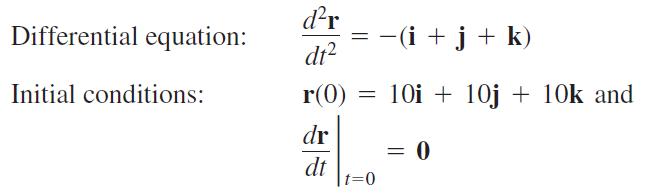
Solve the initial value problems for r as a vector function of t. Differential equation: Initial conditions: d²r dt² r(0) = 10i + 10j + 10k and dr dt = t=0 -(i + j + k) = 0
Find T, N, and κ for the space curves.r(t) = (cos3 t)i + (sin3 t)j, 0 < t < π/2
In r(t) is the position of a particle in space at time t. Find the angle between the velocity and acceleration vectors at time t = 0. r(t) = (In (t² + 1))i + (tan¯¹t)j + V₁² + 1 k
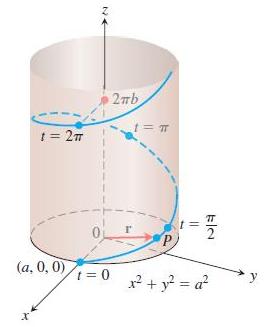
In Example 5, we found the curvature of the helix r(t) = (a cos t)i + (a sin t)j + btk (a, b ≥ 0) to be k = a/(a2 + b2). What is the largest value k can have for a given value of b? Give reasons for your answer.In Figure 13.22 EXAMPLE 5 Find the curvature for the helix (Figure 13.22) a, b =
Find T, N, and κ for the space curves.r(t) = ti + (a cosh (t/a))j, a > 0
In r(t) is the position of a particle in space at time t. Find the angle between the velocity and acceleration vectors at time t = 0. r(t) = =a (1 + 1)³/²i + (1 - 1)³/2j + 9 tk
Find T, N, and κ for the space curves.r(t) = (cosh t)i - (sinh t)j + tκ
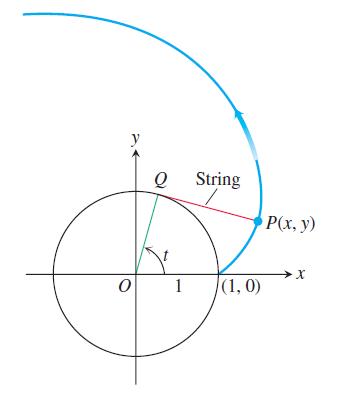
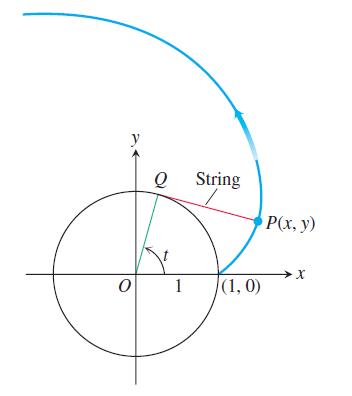
If a string wound around a fixed circle is unwound while held taut in the plane of the circle, its end P traces an involute of the circle. In the accompanying figure, the circle in question is the circle x2 + y2 = 1 and the tracing point starts at (1, 0). The unwound portion of the string is
Show that the parabola y = ax2, a ≠ 0, has its largest curvature at its vertex and has no minimum curvature.
We find the total curvature of the portion of a smooth curve that runs from s = s0 to s = s1 > s0 by integrating κ from s0 to s1. If the curve has some other parameter, say t, then the total curvature iswhere t0 and t1 correspond to s0 and s1. Find the total curvatures ofa. The portion of the
a. Show that the curve r(t) = (cos t)i + (sin t)j + (1 - cos t)k, 0 ≤ t ≤ 2π, is an ellipse by showing that it is the intersection of a right circular cylinder and a plane. Find equations for the cylinder and plane.b. Sketch the ellipse on the cylinder. Add to your sketch the unit tangent
Find the unit tangent vector to the involute of the circle at the point P(x, y). (See Exercise 19)Data from in Exercise 19If a string wound around a fixed circle is unwound while held taut in the plane of the circle, its end P traces an involute of the circle. In the accompanying figure, the circle
At time t = 0, a particle is located at the point (1, 2, 3). It travels in a straight line to the point (4, 1, 4), has speed 2 at (1, 2, 3) and constant acceleration 3i - j + k. Find an equation for the position vector r(t) of the particle at time t.
Show that the ellipse x = a cos t, y = b sin t, a > b > 0, has its largest curvature on its major axis and its smallest curvature on its minor axis. (As in Exercise 17, the same is true for any ellipse.)Exercise 17Show that the parabola y = ax2, a ≠ 0, has its largest curvature at its
A particle traveling in a straight line is located at the point (1, -1, 2) and has speed 2 at time t = 0. The particle moves toward the point (3, 0, 3) with constant acceleration 2i + j + k. Find its position vector r(t) at time t.
As mentioned in the text, the tangent line to a smooth curve r(t) = ƒ(t)i + g(t)j + h(t)k at t = t0 is the line that passes through the point (ƒ(t0), g(t0), h(t0)) parallel to v(t0), the curve’s velocity vector at t0. Find parametric equations for the line that is tangent to the given curve at
As mentioned in the text, the tangent line to a smooth curve r(t) = ƒ(t)i + g(t)j + h(t)k at t = t0 is the line that passes through the point (ƒ(t0), g(t0), h(t0)) parallel to v(t0), the curve’s velocity vector at t0. Find parametric equations for the line that is tangent to the given curve at
A projectile is fired at a speed of 840 m / sec at an angle of 60°. How long will it take to get 21 km downrange?
As mentioned in the text, the tangent line to a smooth curve r(t) = ƒ(t)i + g(t)j + h(t)k at t = t0 is the line that passes through the point (ƒ(t0), g(t0), h(t0)) parallel to v(t0), the curve’s velocity vector at t0. Find parametric equations for the line that is tangent to the given curve at
As mentioned in the text, the tangent line to a smooth curve r(t) = ƒ(t)i + g(t)j + h(t)k at t = t0 is the line that passes through the point (ƒ(t0), g(t0), h(t0)) parallel to v(t0), the curve’s velocity vector at t0. Find parametric equations for the line that is tangent to the given curve at
a. Show that doubling a projectile’s initial speed at a given launch angle multiplies its range by 4.b. By about what percentage should you increase the initial speed to double the height and range?
Find an equation for the circle of curvature of the curve r(t) = ti + (sin t)j at the point (π/2, 1). (The curve parametrizes the graph of y = sin x in the xy-plane.)
Show that if u is a unit vector, then the arc length parameter along the line r(t) = P0 + tu from the point P0(x0, y0, z0) where t = 0, is t itself.
Show that the vector-valued functiondescribes the motion of a particle moving in the circle of radius 1 centered at the point (2, 2, 1) and lying in the plane x + y - 2z = 2. r(t) = (2i + 2j + k) + cost (학) () i + sin t -
A projectile is fired with an initial speed of 500 m / sec at an angle of elevation of 45°.a. When and how far away will the projectile strike?b. How high overhead will the projectile be when it is 5 km downrange?c. What is the greatest height reached by the projectile?
Find an equation for the circle of curvature of the curve r(t) = (2 ln t)i - [t + (1/t)]j, e-2 ≤ t ≤ e2, at the point (0, -2), where t = 1.
Use Simpson’s Rule with n = 10 to approximate the length of arc of r(t) = ti + t2j + t3k from the origin to the point (2, 4, 8).
A baseball is thrown from the stands 32 ft above the field at an angle of 30° up from the horizontal. When and how far away will the ball strike the ground if its initial speed is 32 ft / sec?
Each of the following equations in parts (a)–(e) describes the motion of a particle having the same path, namely the unit circle x2 + y2 = 1. Although the path of each particle in parts (a)–(e) is the same, the behavior, or “dynamics,” of each particle is different. For each particle,
A spring gun at ground level fires a golf ball at an angle of 45°. The ball lands 10 m away.a. What was the ball’s initial speed?b. For the same initial speed, find the two firing angles that make the range 6 m.
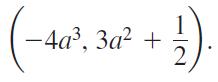
Show that the center of the osculating circle for the parabola y = x2 at the point (a, a2) is located at -4a3, 3a2 + 2
a. Show that if u, v, and w are differentiable vector functions of t, thenb. Show thatDifferentiate on the left and look for vectors whose products are zero. dt (u. V x W) = du dt v Xw + u dv dt Xwu.v X dw dt
An electron in a TV tube is beamed horizontally at a speed of 5 * 106 m/sec toward the face of the tube 40 cm away. About how far will the electron drop before it hits?
A particle moves along the top of the parabola y2 = 2x from left to right at a constant speed of 5 units per second. Find the velocity of the particle as it moves through the point (2, 2).
What two angles of elevation will enable a projectile to reach a target 16 km downrange on the same level as the gun if the projectile’s initial speed is 400 m / sec?
A particle moves in the xy-plane in such a way that its position at time t is r(t) = (t - sin t)i + (1 - cos t)j.a. Graph r(t). The resulting curve is a cycloid.b. Find the maximum and minimum values of |v| and |a|.(Find the extreme values of |v|2 and |a|2 first and take square roots later.)
Find the muzzle speed of a gun whose maximum range is 24.5 km.
Let r be a differentiable vector function of t. Show that if r · (dr/dt) = 0 for all t, then |r| is constant.
Find a parametrization of the osculating circle for the parabola y = x2 when x = 1.
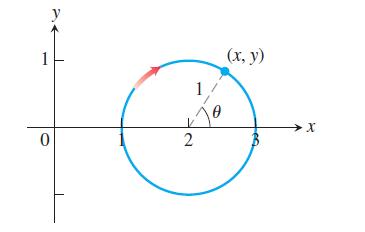
Find a parametrization for the circle (x - 2)2 + y2 = 1 starting at (1, 0) and moving clockwise once around the circle, using the central angle θ in the accompanying figure as the parameter. 1 0 1. по 2 (x, y) X
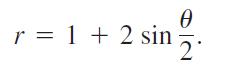
Graph the nephroid of Freeth: 0 r = 1 + 2 sinž.
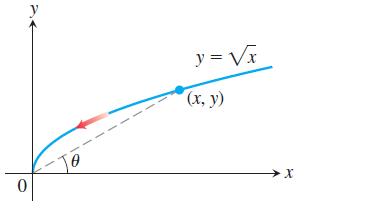
Find a parametrization for the curve y = √x with terminal point (0, 0) using the angle θ in the accompanying figure as the parameter. 0 Jo y = √x (x, y) X
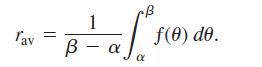
If ƒ is continuous, the average value of the polar coordinate r over the curve r = ƒ(θ), α ≤ θ ≤ β, with respect to θ is given by the formulaUse this formula to find the average value of r with respect to θ over the following curves (a > 0).a. The cardioid r = a(1 - cos θ)b. The
Give equations for hyperbolas. Put each equation in standard form and find the hyperbola’s asymptotes. Then sketch the hyperbola. Include the asymptotes and foci in your sketch.y2 - 3x2 = 3
Give the eccentricities of conic sections with one focus at the origin along with the directrix corresponding to that focus. Find a polar equation for each conic section.e = 2, x = 4
Can anything be said about the relative lengths of the curves r = ƒ(θ), α ≤ u ≤ β, and r = 2ƒ(θ), α ≤ u ≤ β? Give reasons for your answer.
Find Cartesian equations for the circles. Sketch each circle in the coordinate plane and label it with both its Cartesian and polar equations.r = -6 cos θ
Find the areas of the surfaces generated by revolving the curves bout the indicated axes.x = (2/3)t3/2, y = 2√t, 0 ≤ t ≤ √3; y-axis
Give the eccentricities of conic sections with one focus at the origin along with the directrix corresponding to that focus. Find a polar equation for each conic section.e = 5, y = -6
Replace the polar equations with equivalent Cartesian equations. Then describe or identify the graph.r = -3 sec θ
Graph the equation r = 1 - 2 sin 3θ.
Give equations for hyperbolas. Put each equation in standard form and find the hyperbola’s asymptotes. Then sketch the hyperbola. Include the asymptotes and foci in your sketch.8x2 - 2y2 = 16
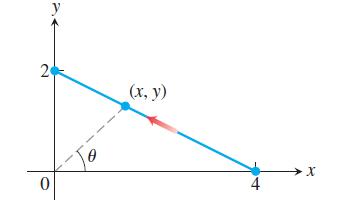
Find a parametrization for the line segment joining points (0, 2) and (4, 0) using the angle θ in the accompanying figure as the parameter. y 24 0 (x, y) 4 X
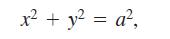
Find parametric equations for the circleusing as parameter the arc length s measured counterclockwise from the point (a, 0) to the point (x, y). x² + y² = a²,
Find the areas of the surfaces generated by revolving the curves bout the indicated axes.x = cos t, y = 2 + sin t, 0 ≤ t ≤ 2π; x-axis
As usual, when faced with a new formula, it is a good idea to try it on familiar objects to be sure it gives results consistent with past experience. Use the length formula in Equation (3) to calculate the circumferences of the following circles (a > 0).a. r = a b. r = a cos θ c. r = a sin θ
Replace the polar equations with equivalent Cartesian equations. Then describe or identify the graph.r = 4 csc θ
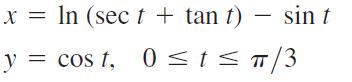
Find the lengths of the curve. x = In (sec t + tant) - sin t 0≤ t ≤ π/3 y = cost, cost,
Give equations for hyperbolas. Put each equation in standard form and find the hyperbola’s asymptotes. Then sketch the hyperbola. Include the asymptotes and foci in your sketch.y2 - x2 = 4
Which of the following has the same graph as r = cos 2θ?a. r = -sin (2θ + π/2) b. r = -cos (θ/2)Confirm your answer with algebra.
Give the eccentricities of conic sections with one focus at the origin along with the directrix corresponding to that focus. Find a polar equation for each conic section.e = 1, y = 2
Find Cartesian equations for the circles. Sketch each circle in the coordinate plane and label it with both its Cartesian and polar equations.r = 3√3 sin θ
Find the angle at which the cardioid r = a(1 - cos θ) crosses the ray θ = π/2.
Use a CAS to perform the following steps.a. Plot the space curve traced out by the position vector r.b. Find the components of the velocity vector dr / dt.c. Evaluate dr / dt at the given point t0 and determine the equation of the tangent line to the curve at r(t0).d. Plot the tangent line together
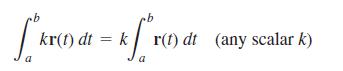
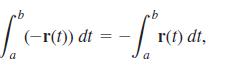
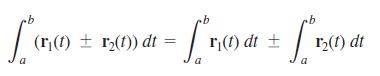
Establish the following properties of integrable vector functions.a. The Constant Scalar Multiple Rule:The Rule for Negatives,is obtained by taking k = -1.b. The Sum and Difference Rules:c. The Constant Vector Multiple Rules: b a kr(1) dt = - kfren. a k r(t) dt (any scalar k)
Give information about the foci and vertices of ellipses centered at the origin of the xy-plane. In each case, find the ellipse’s standard-form equation from the given information. Foci: (± √2, 0) Vertices: (±2,0)
Sketch the region defined by the inequalities -1 ≤ r ≤ 2 and -π/2 ≤ θ ≤ π/2.
Find a parametrization for the curve.The ray (half line) with initial point (2, 3) that passes through the point (-1, -1)
Graph the sets of points whose polar coordinates satisfy the equations and inequalitie.-π/2 ≤ θ ≤ π/2, 1 ≤ r ≤ 2
Find the lengths of the curve.x = t3, y = 3t2/2, 0 ≤ t ≤ √3
Find the value of tan ψ for the curve r = sin4 (θ/4).
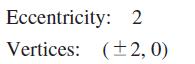
Give the eccentricities and the vertices or foci of hyperbolas centered at the origin of the xy-plane. In each case, find the hyperbola’s standard-form equation in Cartesian coordinates. Eccentricity: 2 Vertices: (2, 0)
Find the lengths of the curves.The parabolic segment r = 2/(1 - cos θ), π/2 ≤ θ ≤ π
Sketch the lines. Also, find a Cartesian equation for each line.r = -√2 sec θ
Give information about the foci and vertices of ellipses centered at the origin of the xy-plane. In each case, find the ellipse’s standard-form equation from the given information. Foci: (0, ±4) Vertices: (0, ±5)
Sketch the region defined by the inequalities 0 ≤ r ≤ 2 sec θ and -π/4 ≤ θ ≤ π/4.
Find a parametrization for the curve.The ray (half line) with initial point (-1, 2) that passes through the point (0, 0)
Graph the sets of points whose polar coordinates satisfy the equations and inequalitie.0 ≤ θ ≤ π/2, 1 ≤ |r| ≤ 2
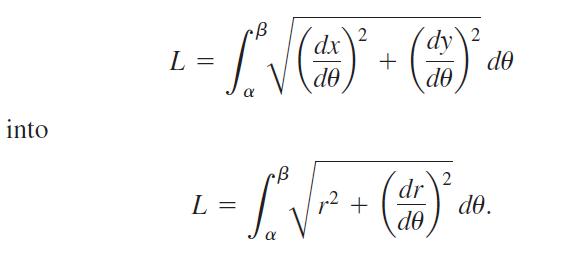
Assuming that the necessary derivatives are continuous, show how the substitutions(Equations 2 in the text) transform x = f(0) cos 0, y = f(0) sin 0
Find parametric equations for the semicircleusing as parameter the slope t = dy/dx of the tangent to the curve at (x, y). x² + y² = a², y > 0,
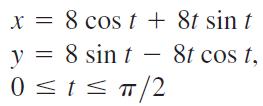
Find the lengths of the curve. x = 8 cost y = 8 sin t 0 ≤t≤ π/2 + 8t sin t 8t cos t,
Replace the polar equations with equivalent Cartesian equations. Then describe or identify the graph.r cos θ = 0
Give equations for hyperbolas. Put each equation in standard form and find the hyperbola’s asymptotes. Then sketch the hyperbola. Include the asymptotes and foci in your sketch.y2 - x2 = 8
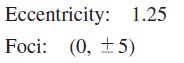
Give the eccentricities and the vertices or foci of hyperbolas centered at the origin of the xy-plane. In each case, find the hyperbola’s standard-form equation in Cartesian coordinates. Eccentricity: 1.25 Foci: (0,5)
Which of the following has the same graph as r = 1 - cos θ?a. r = -1 - cos θb. r = 1 + cos θConfirm your answer with algebra.
Showing 8400 - 8500
of 29454
First
78
79
80
81
82
83
84
85
86
87
88
89
90
91
92
Last
Step by Step Answers

 Get 50% OFF
Claim Now
Get 50% OFF
Claim Now