New Semester
Started
Get
50% OFF
Study Help!
--h --m --s
Claim Now
Question Answers
Textbooks
Find textbooks, questions and answers
Oops, something went wrong!
Change your search query and then try again
S
Books
FREE
Study Help
Expert Questions
Accounting
General Management
Mathematics
Finance
Organizational Behaviour
Law
Physics
Operating System
Management Leadership
Sociology
Programming
Marketing
Database
Computer Network
Economics
Textbooks Solutions
Accounting
Managerial Accounting
Management Leadership
Cost Accounting
Statistics
Business Law
Corporate Finance
Finance
Economics
Auditing
Tutors
Online Tutors
Find a Tutor
Hire a Tutor
Become a Tutor
AI Tutor
AI Study Planner
NEW
Sell Books
Search
Search
Sign In
Register
study help
mathematics
advanced engineering mathematics
Advanced Engineering Mathematics 10th edition Erwin Kreyszig - Solutions
Find the type, transform to normal form, and solve. Show your work in detail.uxx - 16uyy = 0
Show that the only solution of Laplace’s equation depending only on r = √x2 + y2 is u = c ln r + k.
Find the temperature w(x, t) in a semi-infinite laterally insulated bar extending from x = 0 along the x-axis to infinity, assuming that the initial temperature is 0, w(x, t) †’ 0 as x †’ ˆž for every fixed t ‰¥ 0, and w(0, t) = f(t). Proceed as
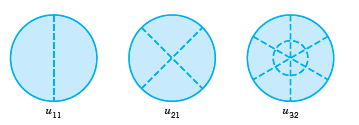
Write a program that gives you four numerically equal λmn in Example 1, so that four different Fmn correspond to it. Sketch the nodal lines of F18, F81, F47, F74 in Example 1 and similarly for further Fmn that you will find.
The electrostatic potential satisfies Laplace’s equation ∇2u = 0 in any region free of charges. Also the heat equation ut = c2 ∇2u (Sec. 12.5) reduces to Laplace’s equation if the temperature u is time-independent (“steady-state case”). Using (20), find the potential (equivalently:
Verify (by substitution) that the given function is a solution of the PDE. Sketch or graph the solution as a surface in space.Heat Equation (2) with suitable cu = e-9t sin ωx
If the ends x = 0 and x = L of the bar in the text are kept at constant temperatures U1 and U2 respectively, what is the temperature u1(x) in the bar after a long time (theoretically, as t → ∞)? First guess, then calculate.
Using (6), obtain the solution of (1) in integral form satisfying the initial condition u (x, 0) = f(x), whereVerify that u in the solution of Prob. 7 satisfies the initial condition.Data from Prob. 7Using (6), obtain the solution of (1) in integral form satisfying the initial condition u (x, 0) =
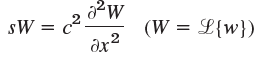
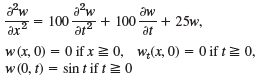
Solve by Laplace Transforms + 25w, + 100 w (x, 0) = 0 if x 0, w;(x, 0) = 0if t2 0, w (0, t) = sin t ift20 100 at хр
Represent f (x, y) by a series (15), wheref (x, y) = xy (α - x) (b - y), α and b arbitrary
The electrostatic potential satisfies Laplace’s equation ∇2u = 0 in any region free of charges. Also the heat equation ut = c2 ∇2u reduces to Laplace’s equation if the temperature u is time-independent (“steady-state case”). Using (20), find the potential (equivalently: the
Verify (by substitution) that the given function is a solution of the PDE. Sketch or graph the solution as a surface in space.Heat Equation (2) with suitable cu = e-t sin x
Solve by Laplace Transforms w(x, 0) = 1, w(0, t) = 1 + 2x- дw aw at = 2x, ах
Represent f (x, y) by a series (15), wheref (x, y) = x, α = b = 1
Verify (by substitution) that the given function is a solution of the PDE. Sketch or graph the solution as a surface in space.Wave Equation (1) with suitable cu = sin kct cos kx
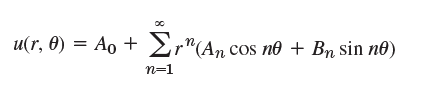
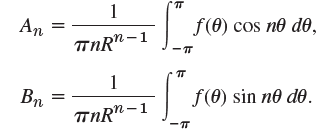
(a) Show that un= rncos nθ, un= rnsin nθ, n = 0, 1,· · ·, are solutions of Laplace€™s equation ˆ‡2u = 0 with ˆ‡2u given by (5). (What would unbe in Cartesian coordinates? Experiment with small n.)(b) Solve the Dirichlet
Find the surfaces on which u1, u2, u3 in (16) are zero.
Solve by Laplace Transforms дw дw 3D 1, w(0, t) %3D 1 х, w(x, 0) at дх
Represent f (x, y) by a series (15), wheref (x, y) = 1, α = b = 1
Verify (by substitution) that the given function is a solution of the PDE. Sketch or graph the solution as a surface in space.Wave Equation (1) with suitable cu = x2 + t2
Using (6), obtain the solution of (1) in integral form satisfying the initial condition u (x, 0) = f(x), wheref(x) = 1 if |x| < α and 0 otherwise
How would the motion of the string change if Assumption 3 were violated? Assumption 2? The second part of Assumption 1? The first part? Do we really need all these assumptions?
Which part of Assumption 2 cannot be satisfied exactly? Why did we also assume that the angles of inclination are small?
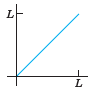
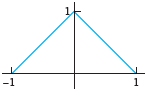
Find (a) The Fourier cosine series(b) The Fourier sine series. Sketch f(x) and its two periodic extensions. Show the details. L L
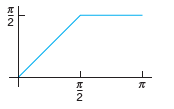
Find (a) The Fourier cosine series(b) The Fourier sine series. Sketch f(x) and its two periodic extensions. Show the details. kIN
Write the Fourier matrix F for a sample of eight values explicitly.
How does the minimum square error change if you multiply f(x) by a constant k?
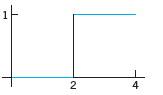
Find(a) The Fourier cosine series(b) The Fourier sine series. Sketch f(x) and its two periodic extensions. Show the details. 4 2.
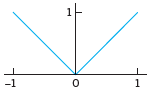
Obtain the Fourier series in Prob. 8 from that in Prob. 17.Data from Prob. 8Is the given function even or odd or neither even nor odd? Find its Fourier series. Show details of your work.Data from Prob. 17Is the given function even or odd or neither even nor odd? Find its Fourier series. Show
Using Prob. 11, show that 1 + 1/4 + 1/9 + 1/16 + · · · = 1/6 π2.Data from Prob. 11Is the given function even or odd or neither even nor odd? Find its Fourier series. Show details of your work.f (x) = x2 (-1 < x < 1), p = 2
Graph and discuss outputs of y" + cy' + ky = r(t) with r(t) as in Example 1 for various c and k with emphasis on the maximum Cn and its ratio to the second largest |Cn|.
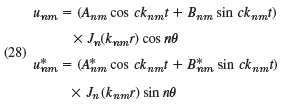
Show that solutions of (22) satisfying (27) are (see Fig. 310)
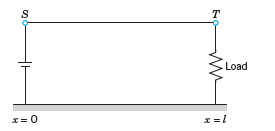
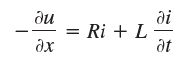
Consider a long cable or telephone wire (Fig. 315) that is imperfectly insulated, so that leaks occur along the entire length of the cable. The source S of the current i(x, t) in the cable is at x = 0, the receiving end T at x = l. The current flows from S to T and through the load, and returns to
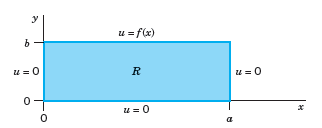
Find steady-state temperatures in the rectangle in Fig. 296 with the upper and left sides perfectly insulated and the right side radiating into a medium at 0°C according to ux(α, y) + hu(α, y) = 0, h > 0 constant. (You will get many solutions since no condition on
Show that the solutions z = z(x, y) of yzx = xzy represent surfaces of revolution. Give examples. Use polar coordinates r, θ and show that the equation becomes zθ = 0.
Show that the following membranes of area 1 with c2 = 1 have the frequencies of the fundamental mode as given (4-decimal values). Compare.Semicircle: 3.832/√8π = 0.7643
Show that i2 = -1, i3 = -i, i4 = 1, i5 = i, · · · and 1/i = -i, 1/i2 = -1, 1/i3 = i, · · · .
Find the potential in the following charge-free regions.In the interior of a sphere of radius 1 kept at the potential f(Φ) = cos 3Φ + 3 cos Φ (referred to our usual spherical coordinates).
Determine and sketch or graph the sets in the complex plane given by0 < |z| < 1
Find ez in the form u + iv and |ez| if z equals3 + 4i
Are the following functions analytic? Use (1) or (7).f(z) = izz̅
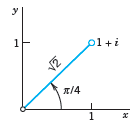
Represent in polar form and graph in the complex plane as in Fig. 325. Do these problems very carefully because polar forms will be needed frequently. Show the details.-4 + 4i У pl+i л/4
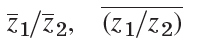
What happens to a quotient if you take the complex conjugates of the two numbers? If you take the absolute values of the numbers?
Formulas for hyperbolic functionsShow thatcosh (z1 + z2) = cosh z1 cosh z2 + sinh z1 sinh z2sinh (z1 + z2) = sinh z1 cosh z2 + cosh z1 sinh z2
Multiplication by i is geometrically a counterclockwise rotation through π/2 (90°). Verify this by graphing z and iz and the angle of rotation for z = 1 + i, z = -1 + 2i, z = 4 - 3i.
Are the following functions analytic? Use (1) or (7).f(z) = ex (cos y - i sin y)
Find ez in the form u + iv and |ez| if z equals0.6 - 1.8i
Determine and sketch or graph the sets in the complex plane given by-π < Im z < π
Represent in polar form and graph in the complex plane as in Fig. 325. Do these problems very carefully because polar forms will be needed frequently. Show the details.-5 У pl+i л/4
Verify (9) for z1 = -11 + 10i, z2 = -1 + 4i.
Represent in polar form and graph in the complex plane as in Fig. 325. Do these problems very carefully because polar forms will be needed frequently. Show the details. V3 - 10i -V3 + 5i У pl+i л/4
Determine and sketch or graph the sets in the complex plane given byRe (1/z) < 1
Find Ln z when z equals4 + 4i
Find ez in the form u + iv and |ez| if z equals11πi/2
Are the following functions analytic? Use (1) or (7).f(z) = 1/(z - z5)
Find, in the form u + iv,sin 2πi
Are the following functions analytic? Use (1) or (7).f(z) = Arg 2πz
Find Ln z when z equals1 ± i
Determine and sketch or graph the sets in the complex plane given by|z + i| ≥ |z - i|
Represent in polar form and graph in the complex plane as in Fig. 325. Do these problems very carefully because polar forms will be needed frequently. Show the details. -4 + 19i 2 + 5i У pl+i л/4
Find, in the form u + iv,cos πi, cosh πi
Let z1= -2 + 11i, z2= 2 - i. Showing the details of your work, find, in the form x + iy: Z122, (z1z2) Z1z2.
Are the following functions analytic? Use (1) or (7).f(z) = ln |z| + i Arg z
Write in exponential form (6):√i, √-i
Find Ln z when z equals-15 ± 0.1i
Find Re f, and Im f and their values at the given point z.f (z) = 5z2 - 12z + 3 + 2i at 4 - 3i
Determine the principal value of the argument and graph it as in Fig. 325.-5, -5 - i, -5 + i У pl+i л/4
Find, in the form u + iv,sinh (3 + 4i), cosh (3 + 4i)
Let z1 = -2 + 11i, z2 = 2 - i. Showing the details of your work, find, in the form x + iy:Re (1/z22 ), 1/Re (z22)
Are the following functions harmonic? If our answer is yes, find a corresponding analytic function f(z) = u(x, y) + iv(x, y).u = x2 + y2
Find all values and graph some of them in the complex plane.ln e
Find Re f, and Im f and their values at the given point z.f (z) = (z - 2)/(z + 2) at 8i
Find, in the form x + iy, showing details,(1 - i)10
Find, in the form u + iv,cos 1/2πi, cos [1/2π(1 + i)]
Let z1 = -2 + 11i, z2 = 2 - i. Showing the details of your work, find, in the form x + iy:z1/z2, z2/z1
Are the following functions harmonic? If our answer is yes, find a corresponding analytic function f(z) = u(x, y) + iv(x, y).v = xy
Find all values and graph some of them in the complex plane.ln (-7)
Find Re and Im ofe-πz
Find out, and give reason, whether f (z) is continuous at z = 0 if f(0) = 0 and for z ≠ 0 the function f is equal to:(Re z2)/|z|
Determine the principal value of the argument and graph it as in Fig. 325.-1 + 0.1i, -1 - 0.1i У pl+i л/4
Find, in the form x + iy, showing details,√i
Using the definitions, prove:|sinh y| ≤ |cos z| ≤ cosh y, |sinh y| ≤ |sin z| ≤ cosh y.Conclude that the complex cosine and sine are not bounded in the whole complex plane.
Let z1= -2 + 11i, z2= 2 - i. Showing the details of your work, find, in the form x + iy: Z1/22, (Z1/22)
Are the following functions harmonic? If our answer is yes, find a corresponding analytic function f(z) = u(x, y) + iv(x, y).u = sin x cosh y
Find all values and graph some of them in the complex plane.ln (4 + 3i)
Find out, and give reason, whether f (z) is continuous at z = 0 if f(0) = 0 and for z ≠ 0 the function f is equal to:(Im z2)/|z|2
Graph in the complex plane and represent in the form x + iy:6 (cos 1/3π + i sin 1/3π)
Find, in the form x + iy, showing details,eπi/2, e-πi/2
Find all solutions.sin z = 100
Are the following functions harmonic? If our answer is yes, find a corresponding analytic function f(z) = u(x, y) + iv(x, y).u = x3 - 3xy2
Solve for z.ln z = -πi/2
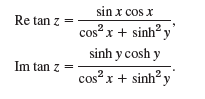
Re tan z and Im tan z. Show that
Find the value of the derivative of(iz3 + 3z2)3 at 2i
Determine α and b so that the given function is harmonic and find a harmonic conjugate.u = cos αx cosh 2y
Find the principal value. Show details.(2i)2i
Find all solutions and graph some of them in the complex plane. ez = -2
Find and graph all roots in the complex plane.3√3 + 4i
Find and graph all values of:√-32i
Determine α and b so that the given function is harmonic and find a harmonic conjugate.u = cosh αx cos y
Find the principal value. Show details.(1 - i)1+i
Showing 3100 - 3200
of 3937
First
25
26
27
28
29
30
31
32
33
34
35
36
37
38
39
Last
Step by Step Answers

 Get 50% OFF
Claim Now
Get 50% OFF
Claim Now