New Semester
Started
Get
50% OFF
Study Help!
--h --m --s
Claim Now
Question Answers
Textbooks
Find textbooks, questions and answers
Oops, something went wrong!
Change your search query and then try again
S
Books
FREE
Study Help
Expert Questions
Accounting
General Management
Mathematics
Finance
Organizational Behaviour
Law
Physics
Operating System
Management Leadership
Sociology
Programming
Marketing
Database
Computer Network
Economics
Textbooks Solutions
Accounting
Managerial Accounting
Management Leadership
Cost Accounting
Statistics
Business Law
Corporate Finance
Finance
Economics
Auditing
Tutors
Online Tutors
Find a Tutor
Hire a Tutor
Become a Tutor
AI Tutor
AI Study Planner
NEW
Sell Books
Search
Search
Sign In
Register
study help
sciences
college physics reasoning
College Physics Reasoning and Relationships 2nd edition Nicholas Giordano - Solutions
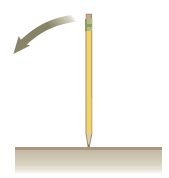
A pencil (mass 10 g and length 15 cm) is initially balanced so that it is sitting vertically on a flat table as shown in Figure P9.26. If the pencil then falls, what is its angular velocity just before it strikes the tabletop? Assume the mass of the pencil is distributed uniformly and the end of
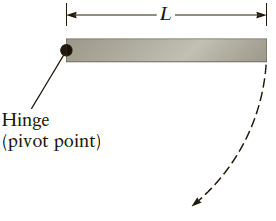
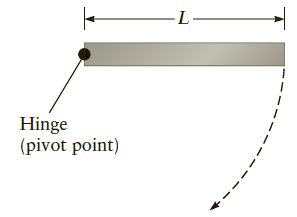
Repeat Problem 9.22(f) (i.e., find vf), but now assume the rod is initially oriented an angle of 30? above the horizontal. Data From Problem 9.22(f) ? -L- Hinge (pivot point)
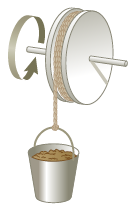
A bucket filled with dirt of mass 20 kg is suspended by a rope that hangs over a pulley of mass 30 kg and radius 0.25 m (Fig. P9.31). Everything is initially at rest, but someone is careless and lets go of the pulley and the bucket then begins to move downward. What is the speed of the bucket when
A bicycle is moving at a speed of 15 m/s when the rider applies her brakes. The bicycle comes to a stop after moving forward another 20 m. Estimate the force of one of the bicycle brake pads on the rim of a wheel. Be sure to include that there are four brake pads (two for each wheel).
A bicycle is moving at a speed of 15 m/s when the rider applies her brakes. The bicycle comes to a stop after moving forward another 20 m. Estimate the force of one of the bicycle brake pads on the rim of a wheel. Be sure to include that there are four brake pads (two for each wheel).
Estimate the angular momentum of a DVD that is playing your favorite video. Assume an angular speed of 1000 rpm. The mass of a DVD is about 15 g.Concerned with the magnitude of the angular momentum, not its sign.
A bowling ball has a mass of 6.0 kg and a radius of 22 cm. If it is rolling down a lane with a speed of 9.0 m/s, what is the angular momentum of the ball?Concerned with the magnitude of the angular momentum, not its sign.
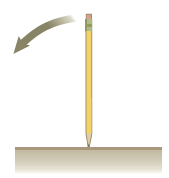
Consider the pencil in Problem 26. What is the angular momentum of the pencil just before it strikes the table? Concerned with the magnitude of the angular momentum, not its sign. Data from problem 26 A pencil (mass 10 g and length 15 cm) is initially balanced so that it is sitting vertically on
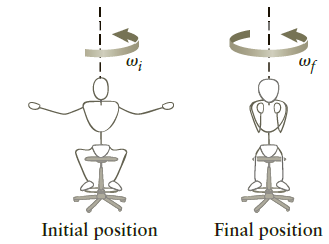
Consider a person who is sitting on a friction less rotating stool as in Figure P9.43. The person initially has his arms outstretched and is rotating with an angular speed of 5.0 rad/s. He then pulls his arms close to his body.? (a) Estimate his final angular speed.? (b) Estimate the kinetic energy
Estimate the angular momentum of an airplane propeller that is spinning at 2000 rpm.Concerned with the magnitude of the angular momentum, not its sign.
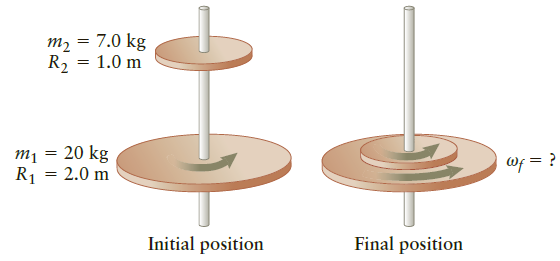
Two disks are located on an axle as shown in Figure P9.46. The lower disk is initially spinning at 50 rad/s, and the upper one is not spinning. The upper disk then falls onto the lower disk, and they stick together.? (a) Is there a torque on the lower disk? On the upper disk?? (b) Identify a system
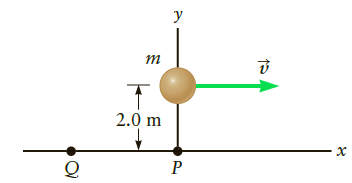
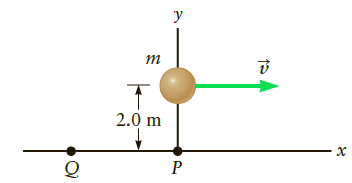
A particle of mass 3.0 kg moves with a horizontal velocity of 20 m/s as shown in Figure P9.47.? (a) What is the angular momentum of the particle about an axis that runs through point P and is directed out of the page?? (b) What is L about an axis that runs through Q?? (c) Explain why the answers to
A DVD (radius 6.0 cm) is spinning freely with an angular velocity of 1200 rpm when a bug drops onto and sticks to the DVD a distance 4.5 cm from the center. If the DVD slows to 800 rpm, what is the ratio of the bug’s mass to the DVD’s mass? (Ignore the effect of the hole in the center of the
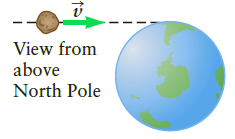
Estimate the angular momentum associated with the Moon’s orbital motion around the Earth.
What is the ratio of the angular momentum of the Moon due to its orbital motion around the Earth to the Earth’s orbital angular momentum around the Sun?
For the particle in Problem 47, what is the direction of the angular velocity of the particle? Data from problem 47 A particle of mass 3.0 kg moves with a horizontal velocity of 20 m/s as shown in Figure P9.47.? ? y m 2.0 m P
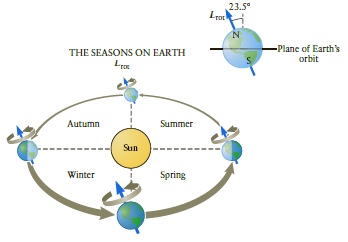
Use the right-hand rule to find the direction of the orbital angular momentum of the Earth as it orbits the Sun as sketched in Figure 9.19.? Figure 9.19 ? 23.5 THE SEASONS ON EARTH -Plane of Earth's orbit Autumn Summer Sun Winter Spring
Consider the rotational motion of the Earth as it spins about the axis that runs from the North Pole to the South Pole. Find the magnitude and direction of the angular momentum L(vector) associated with the spinning Earth. Assume the Earth is a sphere of uniform density.
Consider the rotational motion of the wheels of a car when the car is in motion. Use a drawing to show the direction of the angular momentum of each wheel.
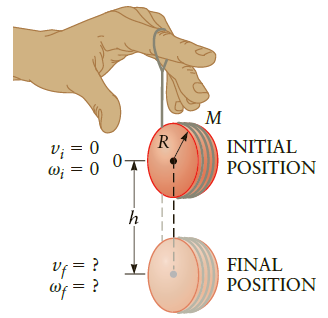
Consider the yo-yo in Figure 9.8. What is the direction of the angular momentum vector of the yo-yo? Figure 9.8 ? M R V; = 0 W; = 0 INITIAL POSITION Uf = ? Wf = ? FINAL POSITION
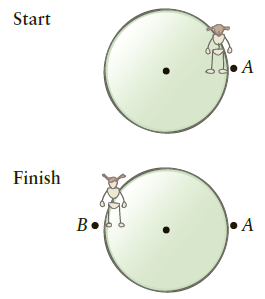
A child of mass 35 kg stands at the edge of a merry-go-round of mass 140 kg and radius 2.5 m, and both are initially at rest. The child then walks along the edge of the merry-goround until she reaches a point opposite her starting point as measured on the ground (point B in Fig. P9.59). How far
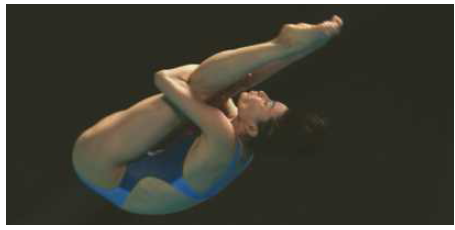
Consider the rotating diver shown in Figure P9.61. Suppose she has an angular speed of 60 rpm = 6.3 rad/s when she has her arms and legs pulled close to her body as shown (called the tuck position). Estimate her angular speed just before she enters the water, when her arms and legs are fully
A boy of mass mboy stands at the edge of a merry-go-round of radius R = 3.5 m and mass mmgr, and both are initially at rest. The boy then walks along the edge of the merry-go-round. After walking a distance of 21 m relative to the merry-go-round, the boy finds that the merry-go-round has rotated
The flywheel of an automobile engine is a solid disk with a mass of 8.7 kg and a radius of 22 cm and is rotating at 4000 rpm. If the entire rotational kinetic energy of the flywheel were converted to gravitational potential energy, to what height would the flywheel be lifted? Assume the flywheel is
Good approximation! Often when we apply equations to calculate moment of inertia, we are making a useful approximation, such as when we approximate a wagon wheel as a disk without a hole in the center. A manufactured item exists that is extraordinarily spherical, where the approximation of a
Better approximation! There exists an item in nature that is extraordinarily spherical, where the approximation of a uniform sphere is astonishingly close. A pulsar is a rotating neutron star, the remnant of a supernova of a star between six and eight solar masses. A typical pulsar rotates at a
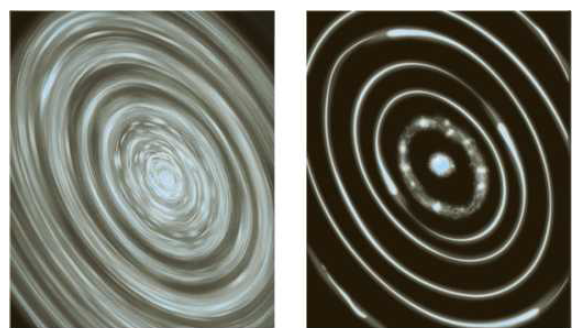
A model of solar system formation is that the Sun condensed from a disk of gas and dust through mutual gravitational attraction (Fig. P9.65). Consider a uniform disk of gas and dust that starts with the mass of the Sun and has a radius equal to that of Pluto?s mean orbital radius. The theory is
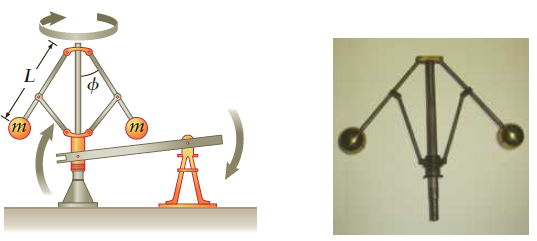
The mechanical governor shown in Figure P9.66 was invented by James Watt (Chapter 6) to regulate and limit, through feedback, a steam engine?s maximum speed. The device consists of two spherical masses connected via lightweight metal arms that can simultaneously rotate about a shaft and pivot
A large iron cylinder of mass 270 kg rests so that its circular face rolls along the edge of a table as shown in Figure P9.67. A smaller disk (radius 11 cm) is fastened to the circular face with its center axis aligned with the large cylinder such that the small disk extends beyond the edge of the
Extinction. Sixty-seven million years ago, a large asteroid impacted the Earth. It is widely accepted in the field of paleontology that this impact played a large role in a mass extinction that included all dinosaurs and 60% of the species living at the time. Such collisions could also alter
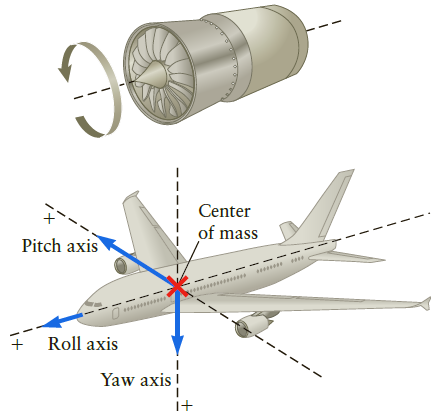
Some passenger jets have one engine attached to each wing. The core of a jet engine is a rotating turbine that spins at a rate of 9,000 rpm.? (a) Estimate the angular momentum of the airplane due to the rotation of the turbines in both engines. These turbines are cylindrical, are usually made of
The hard drive in a laptop computer or some MP3 players contains one or more platters (spinning disks), each having an angular speed of typically 10,000 rpm, a radius of 4.0 cm, and a mass of about 50 g. (a) What is the kinetic energy of one platter? (b) What is the angular momentum of
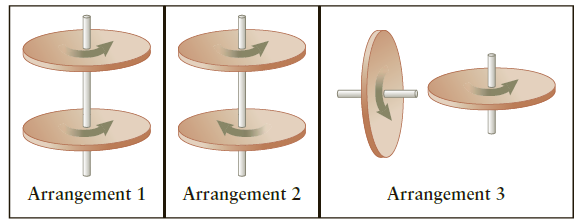
The spinning platter of a computer hard disk can act as a sort of gyroscope. Some early portable MP3 players contained a single hard disk, and the angular momentum of the disk could be ?felt? when the MP3 player was turned or rotated. It is theoretically possible to make an MP3 player using two
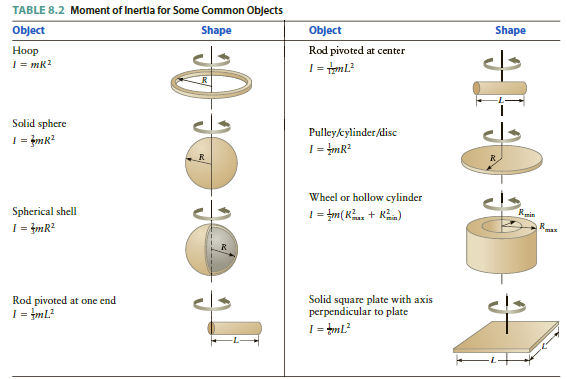
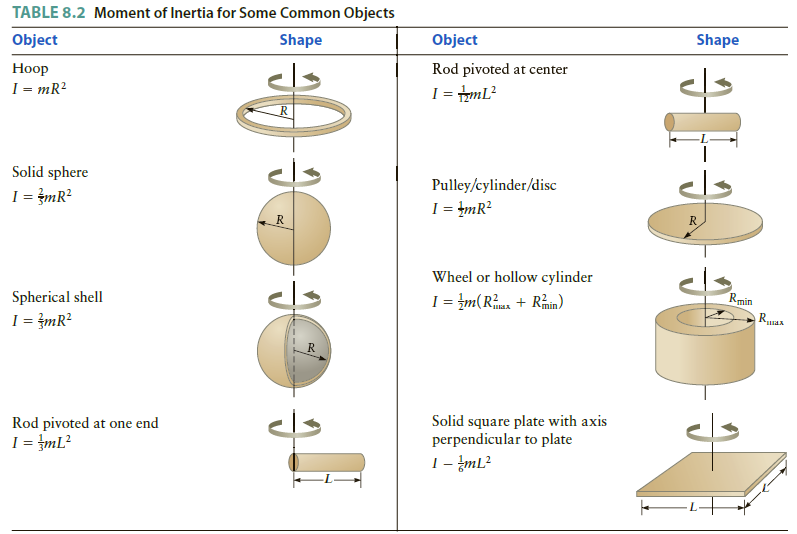
Estimate the moment of inertia of a basketball? Table 8.2 (page 264) may be helpful. ? TABLE 8.2 Moment of Inertla for Some Common Objects Object Shape Object Shape Rod pivoted at center Hoop T = mR? I = teml? Solid sphere Pulley/kylinder/disc 1= }mk? I = mR? Wheel or hollow cylinder Spherical
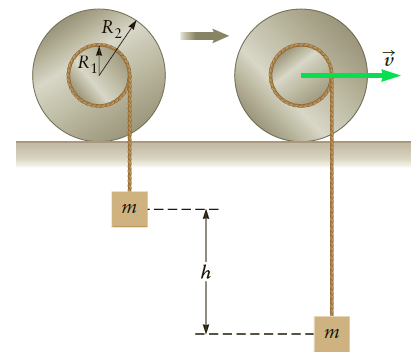
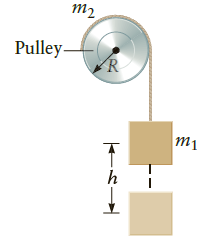
A mass m1 is connected to a pulley of radius R and mass m2 as shown in Figure P9.74. The mass m1 starts from rest and then falls through a distance h.? (a) Use conservation of energy to calculate the linear speed of m1.? (b) What is the final angular velocity of the pulley?? (c) What is the final
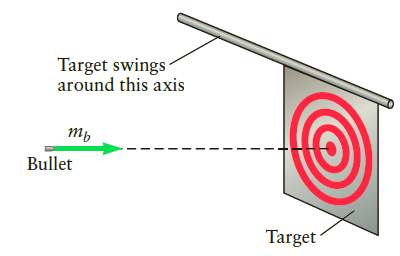
A bullet of mass mb = 25 g is fired with a speed of 250 m/s at a target that is a sheet of metal (mass mt = 500 g). The target is square with sides of length L = 20 cm. The target is hinged along its top edge so that it can swing freely (Fig. P9.75). If the bullet hits in the center of the target
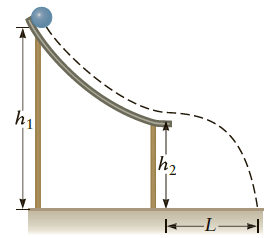
A ball rolls without slipping down the track shown in Figure P9.24, starting from rest at a height h1= 20 m as shown. The ball is traveling horizontally when it leaves the bottom of the track, which has a height h2= 9.0 m. Find where the ball hits the ground; that is, find L.? Figure P9.24 hi h2
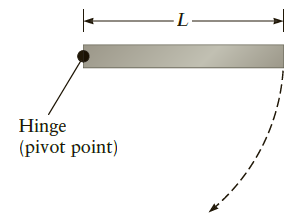
Consider the rod in Figure P9.22, but now assume it starts from rest in the ???up??? position (i.e., pointing vertically upward from the hinge). If the rod is then given a very small push, what is the linear speed of the end of the rod when it reaches the bottom of its circular path? Figure
A metal rod of length L = 3.0 m is free to rotate about a friction less hinge at one end (Fig. P9.22). The rod is initially at rest and oriented horizontally and then released so that it swings to the bottom.? (a) What are all the forces acting on the rod? Which force or forces do work on the rod
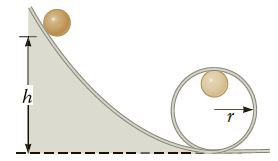
A sphere rolls down the loop-the-loop track shown in Figure P9.21, starting from rest at a height h above the bottom. The ball travels around the inside of the circular portion of the track (radius r = 5.0 m). It is found that the ball is just barely able to travel around the inside of the track
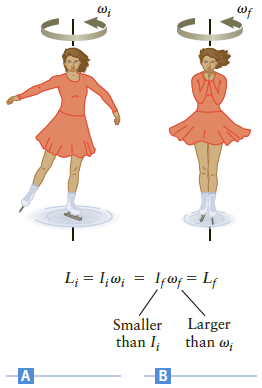
When a spinning figure skater pulls her arms close to her body (Fig. 9.11), she spins faster. If she then pushes her arms away from her body, her angular velocity decreases. Her rotational kinetic energy also decreases. Explain why her kinetic energy decreases. What force or torque does the
A yo-yo falls through a distance of 0.50 m as its string unwinds. If it starts from rest, what is its speed?
Some early spacecrafts used tape recorders to store data. These recorders have spools of magnetic tape that are rotated in spindles to move the tape past “heads” that record or read data. Explain why a tape recorder can affect a spacecraft’s motion.
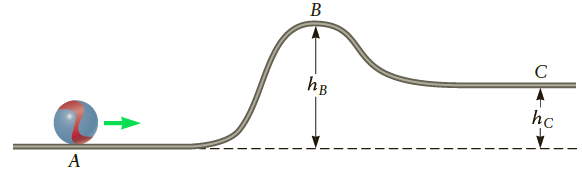
A marble rolls on the track shown in Figure P9.19, with hB= 25 cm and hC= 15 cm. If the marble has a speed of 2.0 m/s at point A, what is its speed at points B and C? Figure P9.19 ? C hB hc A
Consider a hoop of mass 3.0 kg and radius 0.50 m that rolls without slipping down an incline. The hoop starts at rest from a height h = 2.5 m above the bottom of the incline and then rolls to the bottom. (a) What forces act on the hoop? Which of these forces do work on the hoop? (b) Is
Why is it possible for a gymnast to perform more rotations during an airborne somersault when she is in a tuck position than when her body is straight (called the layout position)?
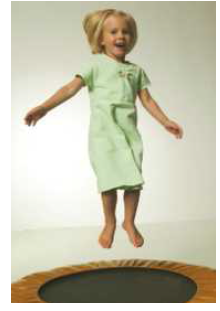
Consider a child who is jumping on a trampoline as shown in Figure Q9.14. Explain how the child can have zero angular momentum, but still rotate to either the right or the left while she is in the air. Figure Q9.14 ?
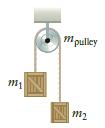
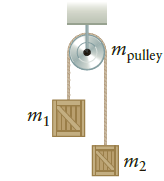
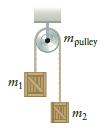
Consider again the system in Figure P9.14. Use the result from Problem 9.14 to find the acceleration of one of the crates. Is the acceleration constant?Figure P9.14 moulley m1 m2
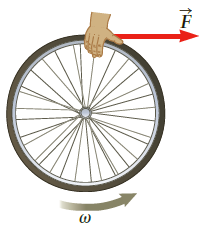
A wheel of mass 0.50 kg and radius 45 cm is spinning with an angular velocity of 20 rad/s. You then push your hand against the edge of the wheel, exerting a force F on the wheel as shown in Figure P9.5. If the wheel comes to a stop after traveling 1/4 of a turn, what is F? Figure P9.5 ? ω
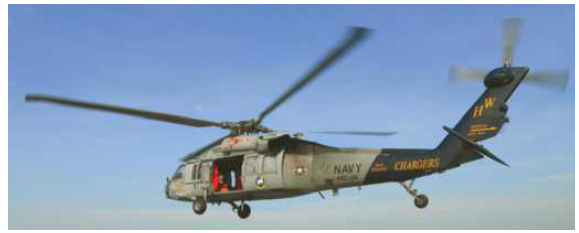
(a) Why do most small helicopters have a rotor on their tail (Fig. Q9.17)? (b) Many large helicopters have two large rotors. Why do these helicopters not need a tail rotor? Do you think the two large propellers rotate in the same direction? Explain.Figure Q9.17 CHARGERS NAVY
The barrel of a rifle contains spiral grooves that impart some spin to a bullet as it leaves the barrel. Explain why this spin improves the rifle’s accuracy.
For the system of two crates and a pulley in Figure P9.14, what fraction of the total kinetic energy resides in the pulley? Figure P9.14 mpulley N m2
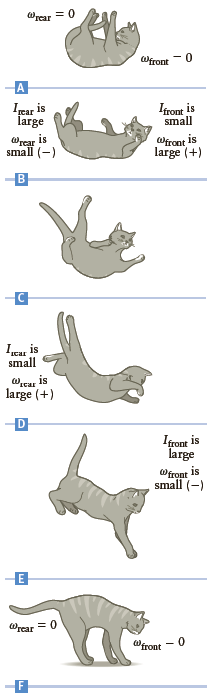
The cat in Figure 9.21 undergoes free fall due to the force of gravity. Explain why we did not consider gravity when we discussed how the cat in Figure 9.21 managed to land on its feet.Figure 9.21 Wrear = 0 Wfront Itront is small Irear large is @rear is small (-) is Wfront large (+) Icar small is
A marble (radius 1.0 cm and mass 8.0 g) rolls without slipping down a ramp of vertical height 20 cm. What is the speed of the marble when it reaches the bottom of the ramp?
Two crates of mass m1= 15 kg and m2= 9.0 kg are connected by a rope that passes over a frictionless pulley of mass mp= 8.0 kg and radius 0.20 m as shown inFigure P9.14. (a) What force(s) can do work on the masses and the pulley? (b) Identify a system whose mechanical energy will be
Many kilograms of asteroids land on the Earth each year. Discuss how they affect the length of a day.
What is the ratio of the rotational kinetic energy of the Earth to the rotational kinetic energy of the Moon as they spin about their axes?
Discuss how and if the moment of inertia of the Earth associated with its orbital motion around the Sun changes as the Earth moves through its orbit. How are these changes connected to changes in the Earth’s speed?
What is the rotational kinetic energy of the Earth as it spins about its axis?
The fly wheel within a car engine is a form of gyroscope, and when rotating at high rpm, it carries significant angular momentum.(A car fly wheel is just a disk attached to the engine’s main rotating shaft.) In most cases, the engine of a race car is mounted such that the axis of rotation
Estimate the fraction of a bicycle’s total kinetic energy associated with the rotational motion of the wheels. Consider the kinetic energy of the bicycle and not that of the rider.
Explain why the rim brakes on a bicycle wheel are located at the outer edge of the wheel instead of near the hub. Consider the work–energy theorem (Eq. 9.9) and how the magnitude of the torque produced by a given force varies when the force is applied at different distances from the axis of
Two balls (solid spheres) have the same radius and the same rotational kinetic energy. If the ratio of their masses is 3:1, what is the ratio of their angular velocities?
You are given the job of designing a new high-tech skateboard. For it to travel as fast as possible, you want to minimize the kinetic energy in its wheels. All else being equal (i.e., the mass and radius of the wheels), is it better to make the wheels in the shape of a disk, a sphere, or a
Estimate the rotational kinetic energy of an airplane propeller.
Is it possible for the total force on a system to be nonzero but the torque to be zero? Give an example.
An automobile wheel has a mass of 18 kg and a diameter of 0.40 m. What is the total kinetic energy of one wheel when the car is traveling at 20 m/s?
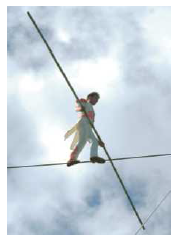
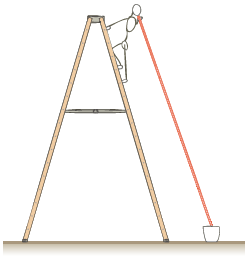
Tightrope walkers often carry a long pole (Fig. Q9.7). Explain why. Figure Q9.7
Consider a wheel on a racing bicycle for an adult. If the wheel has a mass of 0.40 kg and an angular speed of 15 rad/s, what is the rotational kinetic energy of the wheel?
You are given two objects and a ramp. Explain how you could measure the ratio of the moments of inertia of the two objects. Assume the two objects are both round (so that both roll), have the same mass and radius, and are solid (no holes in the center, etc.). Consider only objects that meet these
It has been proposed that large flywheels could be used to store energy. Consider a flywheel made of concrete (density 2300 kg/m3) in the shape of a solid disk, with a radius of 10 m and a thickness of 2.0 m. If its rotational kinetic energy is 100 MJ (1.0 × 10⁸ J), what is the angular velocity of
Consider the transnational and rotational kinetic energies of a disc that rolls without slipping. Show that the ratio of these energies is independent of the size (the radius) of the wheel.
Estimate the maximum rotational kinetic energy of a yo-yo. Use a rotation axis that passes through the yo-yo’s center.
Two objects having different shapes start from rest from the top of a long ramp. Both then roll without slipping down the ramp, and one reaches the bottom before the other. Which object has the smaller moment of inertia? Explain your answer.
Two identical spheres start from rest at the top of a long ramp. One ball rolls down the ramp without slipping, while the other slides down without rolling. Which one reaches the bottom first? Explain your answer.
Consider a quarter rolling down an incline. What fraction of its kinetic energy is associated with its rotational motion? Assume it rolls without slipping.
A pitcher throws a baseball (mass m = 0.14 kg, r = 7.4 cm) with linear speed v and angular velocity v. Which of the following statements is correct? Explain your answer. (a) The total kinetic energy of the baseball can be calculated knowing only m and v. (b) The total kinetic energy of
If the baseball in Problem 1 has a linear speed of 45 m/s, what is the ratio of its rotational and transnational kinetic energies?Data From Problem 1A baseball (mass 0.14 kg, radius 3.7 cm) is spinning with an angular velocity of 60 rad/s. What is its rotational kinetic energy?
A baseball (mass 0.14 kg, radius 3.7 cm) is spinning with an angular velocity of 60 rad/s. What is its rotational kinetic energy?
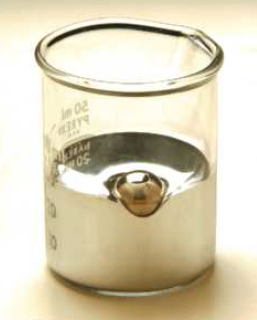
A steel ball bearing will float in mercury as shown in Figure P10.78. What fraction of the ball bearing’s volume is above the surface of the mercury?Figure P10.78
When an airplane is flying at a typical cruising altitude of 30,000 ft, the cabin pressure is typically about 75% of atmospheric pressure at ground level. What is the approximate force on one of the cabin windows of the airplane?
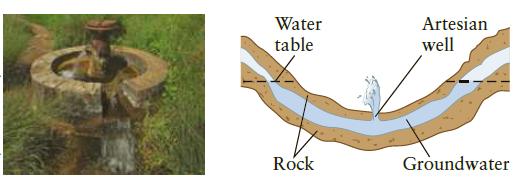
Artesian well. In some places, the water underground is at a pressure high enough that it will flow up and out of the ground without the need of a pump. Figure P10.99A shows an example, which is called an artesian well. Part B of the figure shows how this flow can happen. Loosely speaking, the
The water in the author’s house is provided by a well. Water is pumped from the well to a holding tank in the basement that is pressurized so that water can flow from the tank to the upper floors of the house. The pressure in the tank is approximately 3.0 × 10⁵ Pa. At approximately what speed
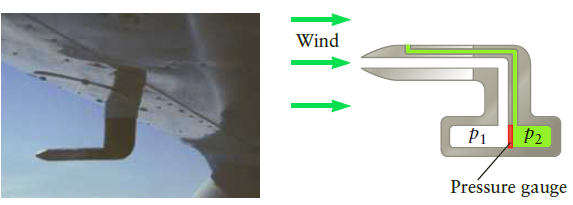
Measuring air speed. An airplane pilot must always know her speed relative to the surrounding air. Air speed that is too low can cause the plane to stall, whereas air speed that is too high can cause so much stress on the wings or rudder that they fail. GPS systems cannot be used to measure air
Collapsing submarines. The collapse depth of a typical military submarine—that is, the depth at which the submarine would be crushed by the force due to water pressure—is 700 m. If the pressure on the inside of the wall of such a submarine is Patm, what is the force on a 1-m2 area of the wall
(a) Water flows out of a shower in a typical house at a rate of 20 liters/min. If this shower is fed through a pipe that is 2.0 cm in diameter and 15 m from the high-pressure water tank, what is the difference between the pressure in the tank and atmospheric pressure? Assume the tank is at the same
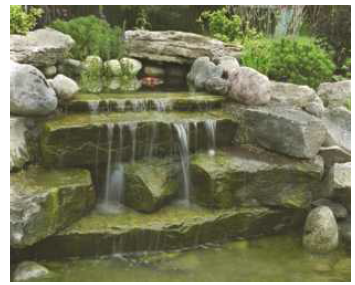
A backyard waterfall used in landscaping (Fig. P10.94) has water cascading down at a rate of 18 liters/min. (a) If the waterfall is fed using a hose of diameter 2.5 cm, what is the speed of water in the hose? (b) If the hose is 15 m long, what is the pressure difference between the two
A window in a house is rectangular, with height 40 cm and width 30 cm. The pressure inside the house is normal atmospheric pressure when a hurricane arrives and the wind speed outside is 75 m/s (about 165 mi/h). (a) Does the pressure difference between the inside and outside of the window tend
You can make a rough estimate of the thickness of the Earth’s atmosphere by assuming its density is constant with the value 1.3 kg/m3. How tall must the atmosphere be to give the observed pressure at the Earth’s surface?
In Example 10.11, we considered how the pressure ΔP across the ends of a narrowed blood vessel must increase to keep the average flow speed constant. If we instead want the smaller blood vessel to have the same flow rate as the larger blood vessel, what value must ΔP have?
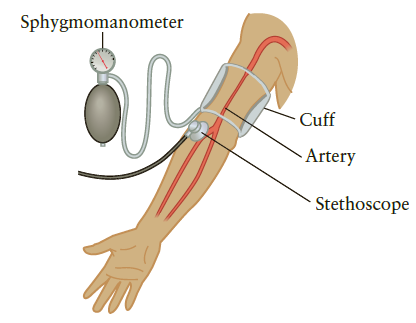
Blood pressure is measured at the brachial artery in the upper arm (Fig. P10.89). An inflatable strap is pumped with air until the artery is collapsed, stopping all flow. The pressure in the cuff is then slowly reduced while the operator listens with a stethoscope for a pulse downstream of the
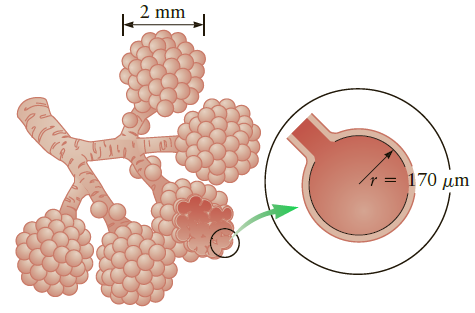
Pulmonary surfactant. Oxygen enters the blood in the hollow and roughly spherical alveoli of the lungs. The alveoli are small, approximately 170 mm in radius (Fig. P10.88), yet some 300 million of them make up 86% of the volume of each lung. The inner lining of the alveoli is, of course, wet as all
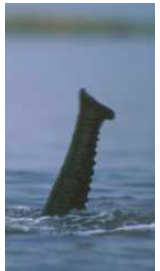
Snorkeling elephants. An elephant can use its long trunk as a snorkel while swimming or walking across the bottom of rivers (Fig. P10.86). The lining of an elephant???s lung is reinforced with connective tissue not present in other mammals, allowing elephants to generate larger pressure differences
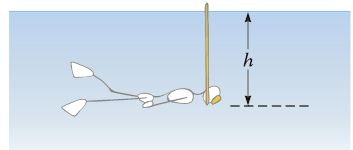
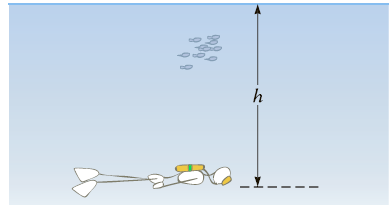
A scuba diver swims in a freshwater lake (Fig. P10.85).? (a) If the maximum pressure in her tanks is 10 atm, to what depth h could she swim and still breathe?? (b) Could she go deeper in the ocean? Calculate your answers to three significant figures. Figure P10.85 ? h
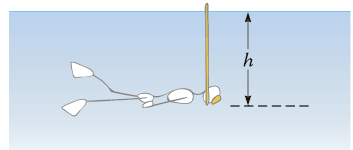
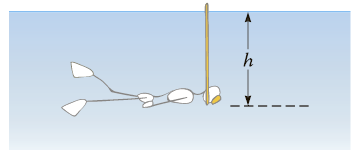
Long snorkel. Inhalation of a breath occurs when the muscles surrounding the human lungs move to increase the volume of the lungs, thereby reducing the air pressure there. The difference between the reduced pressure and outside atmospheric pressure causes a flow of air into the lungs. The maximum
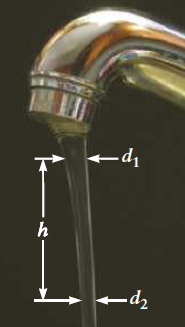
Consider a faucet with water running out in a smooth stream. How could one find the flow rate in cubic centimeters per second by simply taking measurements with a ruler? Following the diagram in Figure P10.83, find the rate of flow if d1= 1.2 cm, d2= 0.70 cm, and h = 7.0 cm. Figure P10.83 ? ーム
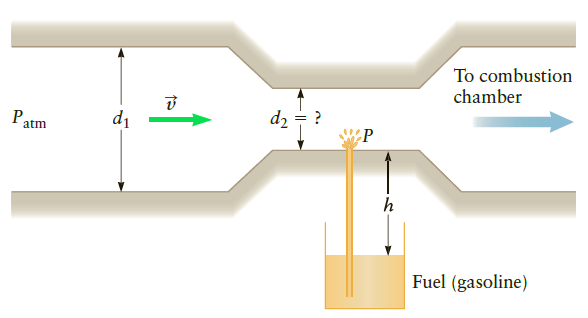
Before fuel injection. Some automobile engines (mainly older ones) use a carburetor to make the liquid fuel into vapor and mix it with air for combustion. The basic principle of carburetion is shown in Figure P10.82. A piston moves down in the cylinder, thereby drawing air from the outside through
Drawing (up) the longest straw. Consider a contest where the challenge is to find the greatest height from which the contestant in Figure P10.81 is able to drink water through a straw. Find the theoretical limit on the vertical distance h between the open top surface of the liquid and the top of
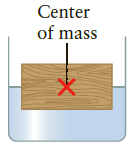
A small, square plank of oak floats in a beaker half full of water. The piece of oak is 6.0 cm on a side and 3.0 cm thick and floats on its side as shown in Figure P10.80. (a) Find the location of the plank’s center of mass with respect to the water’s surface. (b) A very
What will happen if water is poured on top of the mercury and ball bearing of Problem 78 such that the ball bearing is completely submerged in the water? Will the ball bearing (a) sink farther into the mercury, (b) rise up from its former position, or (c) stay at the same position? Why? Calculate
Showing 3900 - 4000
of 4913
First
33
34
35
36
37
38
39
40
41
42
43
44
45
46
47
Last
Step by Step Answers

 Get 50% OFF
Claim Now
Get 50% OFF
Claim Now