New Semester
Started
Get
50% OFF
Study Help!
--h --m --s
Claim Now
Question Answers
Textbooks
Find textbooks, questions and answers
Oops, something went wrong!
Change your search query and then try again
S
Books
FREE
Study Help
Expert Questions
Accounting
General Management
Mathematics
Finance
Organizational Behaviour
Law
Physics
Operating System
Management Leadership
Sociology
Programming
Marketing
Database
Computer Network
Economics
Textbooks Solutions
Accounting
Managerial Accounting
Management Leadership
Cost Accounting
Statistics
Business Law
Corporate Finance
Finance
Economics
Auditing
Tutors
Online Tutors
Find a Tutor
Hire a Tutor
Become a Tutor
AI Tutor
AI Study Planner
NEW
Sell Books
Search
Search
Sign In
Register
study help
social science
introduction to logic
A Concise Introduction to Logic 13th edition Patrick J. Hurley, Lori Watson - Solutions
Rachel is either a journalist or a newscaster. ( J, N )Translate the following statements into symbolic form. Avoid negation signs preceding quantifiers. The predicate letters are given in parentheses.
Neither Wordsworth nor Shelley was Irish. (I )Translate the following statements into symbolic form. Avoid negation signs preceding quantifiers. The predicate letters are given in parentheses.
Nancy is not a sales clerk. (S)Translate the following statements into symbolic form. Avoid negation signs preceding quantifiers. The predicate letters are given in parentheses.
Elaine is a chemist. (C)Translate the following statements into symbolic form. Avoid negation signs preceding quantifiers. The predicate letters are given in parentheses.
Create a symbolized tautology (logical truth). Then use conditional proof or indirect proof to prove it.
Use conditional proof or indirect proof and the eighteen rules of inference to establish the truth of the following tautologies.
Use conditional proof or indirect proof and the eighteen rules of inference to establish the truth of the following tautologies.
Use conditional proof or indirect proof and the eighteen rules of inference to establish the truth of the following tautologies.
Use conditional proof or indirect proof and the eighteen rules of inference to establish the truth of the following tautologies.
Use conditional proof or indirect proof and the eighteen rules of inference to establish the truth of the following tautologies.
Use conditional proof or indirect proof and the eighteen rules of inference to establish the truth of the following tautologies.
Use conditional proof or indirect proof and the eighteen rules of inference to establish the truth of the following tautologies.
Use conditional proof or indirect proof and the eighteen rules of inference to establish the truth of the following tautologies.
Use conditional proof or indirect proof and the eighteen rules of inference to establish the truth of the following tautologies.
Use conditional proof or indirect proof and the eighteen rules of inference to establish the truth of the following tautologies.
Use conditional proof or indirect proof and the eighteen rules of inference to establish the truth of the following tautologies.
Use conditional proof or indirect proof and the eighteen rules of inference to establish the truth of the following tautologies.
Use conditional proof or indirect proof and the eighteen rules of inference to establish the truth of the following tautologies.
Use conditional proof or indirect proof and the eighteen rules of inference to establish the truth of the following tautologies.
Use conditional proof or indirect proof and the eighteen rules of inference to establish the truth of the following tautologies.
Use conditional proof or indirect proof and the eighteen rules of inference to establish the truth of the following tautologies.
Use conditional proof or indirect proof and the eighteen rules of inference to establish the truth of the following tautologies.
Use conditional proof or indirect proof and the eighteen rules of inference to establish the truth of the following tautologies.
Use conditional proof or indirect proof and the eighteen rules of inference to establish the truth of the following tautologies.
Use conditional proof or indirect proof and the eighteen rules of inference to establish the truth of the following tautologies.
Use conditional proof or indirect proof and the eighteen rules of inference to establish the truth of the following tautologies.
Use conditional proof or indirect proof and the eighteen rules of inference to establish the truth of the following tautologies.
Use conditional proof or indirect proof and the eighteen rules of inference to establish the truth of the following tautologies.
Create two symbolized arguments consisting of at least two premises each, and which invite indirect proof to derive the conclusion. The arguments should look like those in Part I of this section. Then derive the conclusion of each.Part I From This Section:Use either indirect proof or conditional
Either deposits should be required on beer and soft-drink containers, or these containers will be discarded along highways and the countryside will look like a dump. If these containers will be discarded either in parks or along highways, then deposits should be required on soft-drink containers.
If astronauts spend long periods in zero gravity only if calcium is resorbed in their bodies, then astronauts on a Mars voyage will arrive with brittle bones. If astronauts attempt a voyage to Mars only if they spend long periods in zero gravity, then astronauts on a Mars voyage will arrive with
If asbestos workers sue their employers, then if punitive damages are awarded, then their employers will declare bankruptcy. If asbestos workers sue their employers, then punitive damages will be awarded. If asbestos workers contract asbestosis, then either they will sue their employers or their
If either the sea turtle population continues to decrease or rescue efforts are commenced to save the sea turtle from extinction, then nesting sanctuaries will be created and the indiscriminate slaughter of these animals will be halted. If either nesting sanctuaries are created or poachers are
If government deficits continue at their present rate and a recession sets in, then interest on the national debt will become unbearable and the government will default on its loans. If a recession sets in, then the government will not default on its loans. Therefore, either government deficits
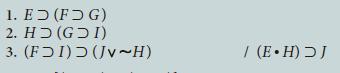
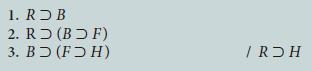
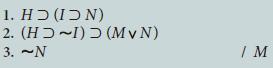
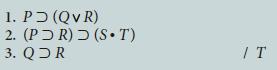
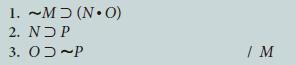
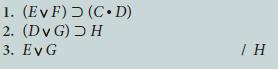
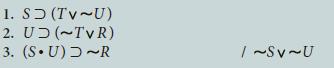
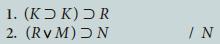
Use either indirect proof or conditional proof (or both) and the eighteen rules of inference to derive the conclusions of the following symbolized arguments. Having done so, attempt to derive the conclusions without using indirect proof or conditional proof.
Use either indirect proof or conditional proof (or both) and the eighteen rules of inference to derive the conclusions of the following symbolized arguments. Having done so, attempt to derive the conclusions without using indirect proof or conditional proof.
Use either indirect proof or conditional proof (or both) and the eighteen rules of inference to derive the conclusions of the following symbolized arguments. Having done so, attempt to derive the conclusions without using indirect proof or conditional proof.
Use either indirect proof or conditional proof (or both) and the eighteen rules of inference to derive the conclusions of the following symbolized arguments. Having done so, attempt to derive the conclusions without using indirect proof or conditional proof.
Use either indirect proof or conditional proof (or both) and the eighteen rules of inference to derive the conclusions of the following symbolized arguments. Having done so, attempt to derive the conclusions without using indirect proof or conditional proof.
Use either indirect proof or conditional proof (or both) and the eighteen rules of inference to derive the conclusions of the following symbolized arguments. Having done so, attempt to derive the conclusions without using indirect proof or conditional proof.
Use either indirect proof or conditional proof (or both) and the eighteen rules of inference to derive the conclusions of the following symbolized arguments. Having done so, attempt to derive the conclusions without using indirect proof or conditional proof.
Use either indirect proof or conditional proof (or both) and the eighteen rules of inference to derive the conclusions of the following symbolized arguments. Having done so, attempt to derive the conclusions without using indirect proof or conditional proof.
Use either indirect proof or conditional proof (or both) and the eighteen rules of inference to derive the conclusions of the following symbolized arguments. Having done so, attempt to derive the conclusions without using indirect proof or conditional proof.
Use either indirect proof or conditional proof (or both) and the eighteen rules of inference to derive the conclusions of the following symbolized arguments. Having done so, attempt to derive the conclusions without using indirect proof or conditional proof.
Use either indirect proof or conditional proof (or both) and the eighteen rules of inference to derive the conclusions of the following symbolized arguments. Having done so, attempt to derive the conclusions without using indirect proof or conditional proof.
Use either indirect proof or conditional proof (or both) and the eighteen rules of inference to derive the conclusions of the following symbolized arguments. Having done so, attempt to derive the conclusions without using indirect proof or conditional proof.
Use either indirect proof or conditional proof (or both) and the eighteen rules of inference to derive the conclusions of the following symbolized arguments. Having done so, attempt to derive the conclusions without using indirect proof or conditional proof.
Use either indirect proof or conditional proof (or both) and the eighteen rules of inference to derive the conclusions of the following symbolized arguments. Having done so, attempt to derive the conclusions without using indirect proof or conditional proof.
Use either indirect proof or conditional proof (or both) and the eighteen rules of inference to derive the conclusions of the following symbolized arguments. Having done so, attempt to derive the conclusions without using indirect proof or conditional proof.
Use either indirect proof or conditional proof (or both) and the eighteen rules of inference to derive the conclusions of the following symbolized arguments. Having done so, attempt to derive the conclusions without using indirect proof or conditional proof.
Use either indirect proof or conditional proof (or both) and the eighteen rules of inference to derive the conclusions of the following symbolized arguments. Having done so, attempt to derive the conclusions without using indirect proof or conditional proof.
Use either indirect proof or conditional proof (or both) and the eighteen rules of inference to derive the conclusions of the following symbolized arguments. Having done so, attempt to derive the conclusions without using indirect proof or conditional proof.
Use either indirect proof or conditional proof (or both) and the eighteen rules of inference to derive the conclusions of the following symbolized arguments. Having done so, attempt to derive the conclusions without using indirect proof or conditional proof.
Use either indirect proof or conditional proof (or both) and the eighteen rules of inference to derive the conclusions of the following symbolized arguments. Having done so, attempt to derive the conclusions without using indirect proof or conditional proof.
Use either indirect proof or conditional proof (or both) and the eighteen rules of inference to derive the conclusions of the following symbolized arguments. Having done so, attempt to derive the conclusions without using indirect proof or conditional proof.
Use either indirect proof or conditional proof (or both) and the eighteen rules of inference to derive the conclusions of the following symbolized arguments. Having done so, attempt to derive the conclusions without using indirect proof or conditional proof.
Create two symbolized arguments consisting of at least two premises each, and which invite conditional proof to derive the conclusion. The arguments should look like those in Part I of this section. Then derive the conclusion of each.Part I From This Section:Use conditional proof and the eighteen
If astronauts attempt interplanetary space travel, then heavy shielding will be required to protect them from solar radiation. If massive amounts of either fuel or water are carried, then the spacecraft must be very large. Therefore, if heavy shielding is required to protect the astronauts from
If jails are overcrowded, then dangerous suspects will be released on their own recognizance. If jails are overcrowded and dangerous suspects are released on their own recognizance, then crime will increase. If no new jails are built and crime increases, then innocent victims will pay the price of
A doctor must disconnect a dying patient from a respirator if and only if the fact that patients are self-determining implies that the doctor must follow the patient’s orders. If a dying patient refuses treatment, then the doctor must disconnect the patient from a respirator and the patient will
If the police take you into custody, then if they inform you that you have the right to remain silent, then whatever you say will be used against you. If the police inform you that you have the right to remain silent, then if whatever you say will be used against you, then you should not say
If high-tech products are exported to Russia, then domestic industries will benefit. If the Russians can effectively utilize high-tech products, then their standard of living will improve. Therefore, if high-tech products are exported to Russia and the Russians can effectively utilize them, then
Use conditional proof and the eighteen rules of inference to derive the conclusions of the following symbolized arguments. Having done so, attempt to derive the conclusions without using conditional proof.
Use conditional proof and the eighteen rules of inference to derive the conclusions of the following symbolized arguments. Having done so, attempt to derive the conclusions without using conditional proof.
Use conditional proof and the eighteen rules of inference to derive the conclusions of the following symbolized arguments. Having done so, attempt to derive the conclusions without using conditional proof.
Use conditional proof and the eighteen rules of inference to derive the conclusions of the following symbolized arguments. Having done so, attempt to derive the conclusions without using conditional proof.
Use conditional proof and the eighteen rules of inference to derive the conclusions of the following symbolized arguments. Having done so, attempt to derive the conclusions without using conditional proof.
Use conditional proof and the eighteen rules of inference to derive the conclusions of the following symbolized arguments. Having done so, attempt to derive the conclusions without using conditional proof.
Use conditional proof and the eighteen rules of inference to derive the conclusions of the following symbolized arguments. Having done so, attempt to derive the conclusions without using conditional proof.
Use conditional proof and the eighteen rules of inference to derive the conclusions of the following symbolized arguments. Having done so, attempt to derive the conclusions without using conditional proof.
Use conditional proof and the eighteen rules of inference to derive the conclusions of the following symbolized arguments. Having done so, attempt to derive the conclusions without using conditional proof.
Use conditional proof and the eighteen rules of inference to derive the conclusions of the following symbolized arguments. Having done so, attempt to derive the conclusions without using conditional proof.
Use conditional proof and the eighteen rules of inference to derive the conclusions of the following symbolized arguments. Having done so, attempt to derive the conclusions without using conditional proof.
Use conditional proof and the eighteen rules of inference to derive the conclusions of the following symbolized arguments. Having done so, attempt to derive the conclusions without using conditional proof.
Use conditional proof and the eighteen rules of inference to derive the conclusions of the following symbolized arguments. Having done so, attempt to derive the conclusions without using conditional proof.
Use conditional proof and the eighteen rules of inference to derive the conclusions of the following symbolized arguments. Having done so, attempt to derive the conclusions without using conditional proof.
Use conditional proof and the eighteen rules of inference to derive the conclusions of the following symbolized arguments. Having done so, attempt to derive the conclusions without using conditional proof.
Use conditional proof and the eighteen rules of inference to derive the conclusions of the following symbolized arguments. Having done so, attempt to derive the conclusions without using conditional proof.
Use conditional proof and the eighteen rules of inference to derive the conclusions of the following symbolized arguments. Having done so, attempt to derive the conclusions without using conditional proof.
Use conditional proof and the eighteen rules of inference to derive the conclusions of the following symbolized arguments. Having done so, attempt to derive the conclusions without using conditional proof.
Use conditional proof and the eighteen rules of inference to derive the conclusions of the following symbolized arguments. Having done so, attempt to derive the conclusions without using conditional proof.
Use conditional proof and the eighteen rules of inference to derive the conclusions of the following symbolized arguments. Having done so, attempt to derive the conclusions without using conditional proof.
Use conditional proof and the eighteen rules of inference to derive the conclusions of the following symbolized arguments. Having done so, attempt to derive the conclusions without using conditional proof.
Use conditional proof and the eighteen rules of inference to derive the conclusions of the following symbolized arguments. Having done so, attempt to derive the conclusions without using conditional proof.
Use conditional proof and the eighteen rules of inference to derive the conclusions of the following symbolized arguments. Having done so, attempt to derive the conclusions without using conditional proof.
Use conditional proof and the eighteen rules of inference to derive the conclusions of the following symbolized arguments. Having done so, attempt to derive the conclusions without using conditional proof.
Create four symbolized arguments consisting of at least three premises each, and whose proof requires at least two of the rules introduced in this section. The arguments should look like those in Part III of this section. Then derive the conclusion of each.
Create four symbolized arguments consisting of at least three premises each, and whose proof requires at least two of the rules introduced in this section. The arguments should look like those in Part III of this section. Then derive the conclusion of each.
The following dialogue contains ten arguments. Translate each into symbolic form and then use the eighteen rules of inference to derive the conclusion of each.Is This the End?Brian and Molly are at the memorial service of a mutual friend who had died suddenly the week before. “I’m still shocked
Vitamin E is an antioxidant and a useless food supplement if and only if it does not reduce heart disease. It is not the case either that vitamin E does not reduce heart disease or is not an antioxidant. Therefore, vitamin E is not a useless food supplement. (A, U, R)Translate the following
If parents are told that their unborn child has Tay–Sachs disease, then if they go ahead with the birth, then they are responsible for their child’s pain and suffering. Therefore, if parents are not responsible for their child’s pain and suffering, then if they go ahead with the birth, then
If two black holes collide, then Einstein’s general theory is proven true and gravitational waves are propagated throughout the universe. Either two black holes collide, or space-time is distorted and Einstein’s general theory is proven true. Therefore, Einstein’s general theory is proven
If grade-school children are assigned daily homework, then their achievement level will increase dramatically. But if grade-school children are assigned daily homework, then their love for learning may be dampened. Therefore, if grade-school children are assigned daily homework, then their
If selecting a Supreme Court justice creates intense political upheaval and extreme efforts are expended to block judicial candidates, then Supreme Court rulings are contaminated with political bias. Selecting a Supreme Court justice creates intense political upheaval. Therefore, if extreme efforts
If Congress enacts a law that either establishes a religion or prohibits the free exercise of religion, then that law is unconstitutional. Therefore, if Congress enacts a law that establishes a religion, then that law is unconstitutional. (E, P, U )Translate the following arguments into symbolic
If birth-control devices are made available in high school clinics, then the incidence of teenage pregnancy will decrease. Therefore, if both birth-control information and birth-control devices are made available in high school clinics, then the incidence of teenage pregnancy will decrease. (D, P,
It is not the case that strict controls exist on either the manufacture or the sale of handguns. Therefore, if strict controls exist on the sale of handguns, then the use of handguns in the commission of crimes has decreased. (M, S, U )Translate the following arguments into symbolic form and then
If there is a direct correlation between what a nation spends for health care and the health of its citizens, then America has the lowest incidence of disease and the lowest mortality rates of any nation on Earth. But America does not have the lowest mortality rates of any nation on Earth.
If sports-shoe manufacturers decline to use kangaroo hides in their products, then Australian hunters will cease killing millions of kangaroos yearly. It is not the case that both Australian hunters will cease killing millions of kangaroos yearly and the kangaroo will not be saved from extinction.
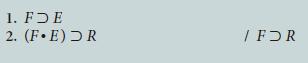
Use the eighteen rules of inference to derive the conclusions of the following symbolized arguments. 1. PDA 2. QOB / (PvQ) (Av B)
Showing 700 - 800
of 3685
1
2
3
4
5
6
7
8
9
10
11
12
13
14
15
Last
Step by Step Answers

 Get 50% OFF
Claim Now
Get 50% OFF
Claim Now


![PD [Q=(PQ)]](https://dsd5zvtm8ll6.cloudfront.net/si.question.images/images/question_images/1696/2/4/9/662651ab73ef01fc1696249662726.jpg)
![P=[Pv (Q~Q)]](https://dsd5zvtm8ll6.cloudfront.net/si.question.images/images/question_images/1696/2/4/9/643651ab72b8d55c1696249643337.jpg)
![[(P.Q) v R] [(~RvQ) (PQ)]](https://dsd5zvtm8ll6.cloudfront.net/si.question.images/images/question_images/1696/2/4/9/604651ab704ac61e1696249604463.jpg)
![P] [(Q~Q) R]](https://dsd5zvtm8ll6.cloudfront.net/si.question.images/images/question_images/1696/2/4/9/587651ab6f336b971696249586974.jpg)
![~[(P~P) (~PP)]](https://dsd5zvtm8ll6.cloudfront.net/si.question.images/images/question_images/1696/2/4/9/565651ab6dd8d7681696249565236.jpg)
![(~PvQ) [(Pv~Q) (P=Q)]](https://dsd5zvtm8ll6.cloudfront.net/si.question.images/images/question_images/1696/2/4/9/548651ab6cc0f3811696249547702.jpg)
![(PQ) [(P~Q)~P]](https://dsd5zvtm8ll6.cloudfront.net/si.question.images/images/question_images/1696/2/4/9/531651ab6bb792b31696249531200.jpg)
![[(PQ) R] > [(R~R) P]](https://dsd5zvtm8ll6.cloudfront.net/si.question.images/images/question_images/1696/2/4/9/497651ab699779e01696249497236.jpg)
![[P] (QR)] = [Q (PR)]](https://dsd5zvtm8ll6.cloudfront.net/si.question.images/images/question_images/1696/2/4/9/476651ab6845d2121696249475291.jpg)

![[~(P~Q)~Q]~P](https://dsd5zvtm8ll6.cloudfront.net/si.question.images/images/question_images/1696/2/4/9/332651ab5f49198d1696249332247.jpg)
![[(PQ) (PDR)] [P] (Q.R)]](https://dsd5zvtm8ll6.cloudfront.net/si.question.images/images/question_images/1696/2/4/9/308651ab5dc14acb1696249307739.jpg)
![. (PQ)=[P] (PQ)]](https://dsd5zvtm8ll6.cloudfront.net/si.question.images/images/question_images/1696/2/4/9/231651ab58fa3bc11696249231277.jpg)

![P=[P.(Qv~Q)]](https://dsd5zvtm8ll6.cloudfront.net/si.question.images/images/question_images/1696/2/4/9/112651ab518bc4bf1696249112489.jpg)
![. (Pv~Q) [(~PVR) J (QR)]](https://dsd5zvtm8ll6.cloudfront.net/si.question.images/images/question_images/1696/2/4/9/081651ab4f9db4421696249081646.jpg)
![(PQ) [(PR) (Q.R)]](https://dsd5zvtm8ll6.cloudfront.net/si.question.images/images/question_images/1696/2/4/9/053651ab4dd20c041696249052904.jpg)
![P=[Pv (Q P)]](https://dsd5zvtm8ll6.cloudfront.net/si.question.images/images/question_images/1696/2/4/9/035651ab4cb70be51696249035135.jpg)

![PD[(PQ) Q]](https://dsd5zvtm8ll6.cloudfront.net/si.question.images/images/question_images/1696/2/4/8/998651ab4a6d0c481696248998576.jpg)
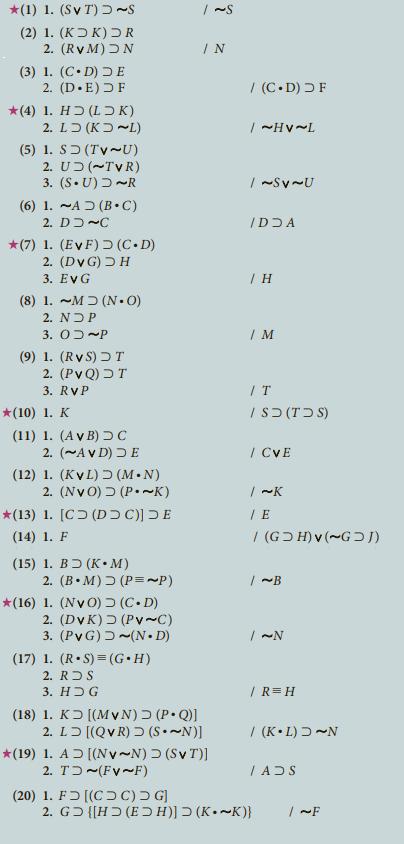
![1. F3 [(CDC) 3G] 2. G {[HD (EH)]](K~K)} /~F](https://dsd5zvtm8ll6.cloudfront.net/si.question.images/images/question_images/1696/2/4/8/428651ab26c591751696248428010.jpg)
![1. AD [(Nv~N) (SVT)] 2. TD (FV~F) /ADS](https://dsd5zvtm8ll6.cloudfront.net/si.question.images/images/question_images/1696/2/4/8/403651ab25309b201696248402681.jpg)
![[(MvN) 1. K 2. L [(QvR) (PQ)] (S.~N)] / (K.L) D~N](https://dsd5zvtm8ll6.cloudfront.net/si.question.images/images/question_images/1696/2/4/8/339651ab213d750e1696248339656.jpg)

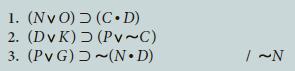


![1. [CD (DC)] DE IE](https://dsd5zvtm8ll6.cloudfront.net/si.question.images/images/question_images/1696/2/4/8/232651ab1a876c2b1696248232138.jpg)



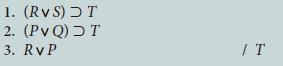




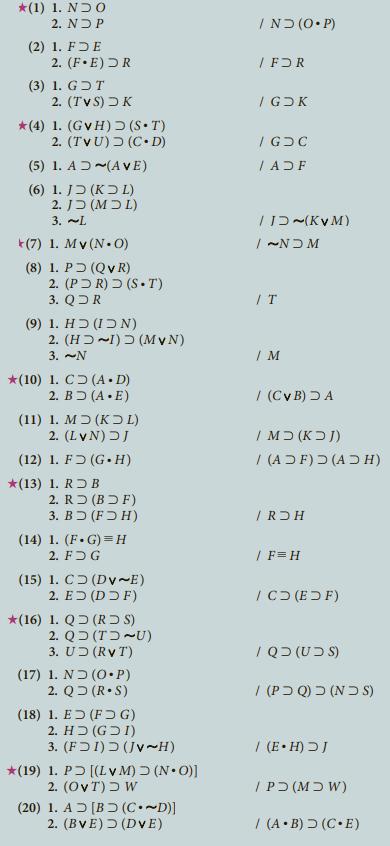
![1. AD [BD (C~D)] 2. (BvE) (DVE) /(A B) (CE)](https://dsd5zvtm8ll6.cloudfront.net/si.question.images/images/question_images/1696/2/4/6/649651aab79819731696246649167.jpg)
![1. P [(LvM) (NO)] 2. (OVT) W IPD (MOW)](https://dsd5zvtm8ll6.cloudfront.net/si.question.images/images/question_images/1696/2/4/6/621651aab5d74eb01696246621224.jpg)