New Semester
Started
Get
50% OFF
Study Help!
--h --m --s
Claim Now
Question Answers
Textbooks
Find textbooks, questions and answers
Oops, something went wrong!
Change your search query and then try again
S
Books
FREE
Study Help
Expert Questions
Accounting
General Management
Mathematics
Finance
Organizational Behaviour
Law
Physics
Operating System
Management Leadership
Sociology
Programming
Marketing
Database
Computer Network
Economics
Textbooks Solutions
Accounting
Managerial Accounting
Management Leadership
Cost Accounting
Statistics
Business Law
Corporate Finance
Finance
Economics
Auditing
Tutors
Online Tutors
Find a Tutor
Hire a Tutor
Become a Tutor
AI Tutor
AI Study Planner
NEW
Sell Books
Search
Search
Sign In
Register
study help
social science
introduction to logic
A Concise Introduction to Logic 13th edition Patrick J. Hurley, Lori Watson - Solutions
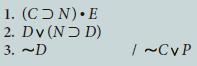
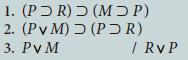
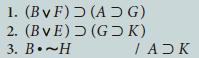
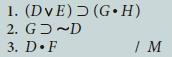
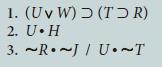
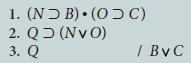
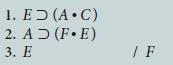
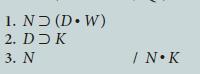
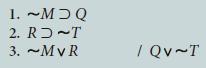
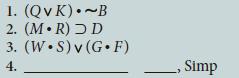
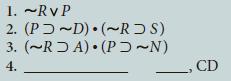
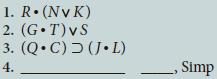
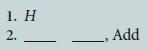
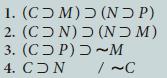
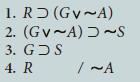
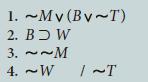
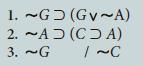
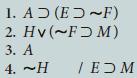
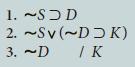
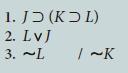
Use the first eight rules of inference to derive the conclusions of the following symbolized arguments:
Use the first eight rules of inference to derive the conclusions of the following symbolized arguments:
Use the first eight rules of inference to derive the conclusions of the following symbolized arguments:
Use the first eight rules of inference to derive the conclusions of the following symbolized arguments:
Use the first eight rules of inference to derive the conclusions of the following symbolized arguments:
Use the first eight rules of inference to derive the conclusions of the following symbolized arguments:
Use the first eight rules of inference to derive the conclusions of the following symbolized arguments:
Use the first eight rules of inference to derive the conclusions of the following symbolized arguments:
Use the first eight rules of inference to derive the conclusions of the following symbolized arguments:
Use the first eight rules of inference to derive the conclusions of the following symbolized arguments:
Use the first eight rules of inference to derive the conclusions of the following symbolized arguments:
Use the first eight rules of inference to derive the conclusions of the following symbolized arguments:
Use the first eight rules of inference to derive the conclusions of the following symbolized arguments:
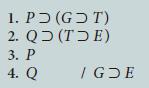
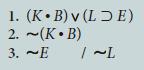
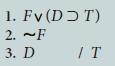
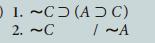
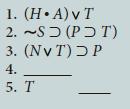
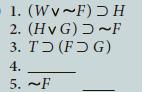
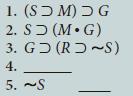
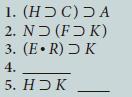
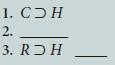
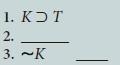
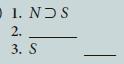
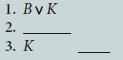
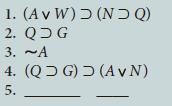
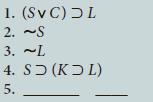
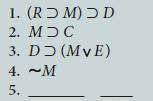
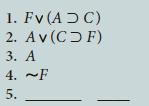
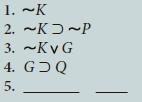
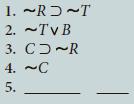
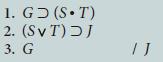
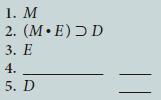
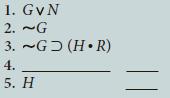
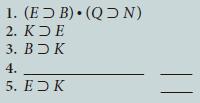
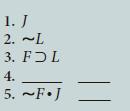
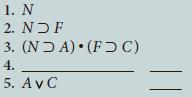
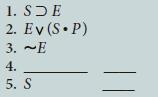
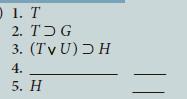
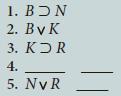
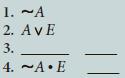
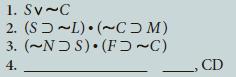
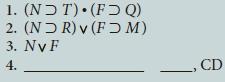
In the following symbolized arguments, derive the line needed to obtain the conclusion (last line), and supply the justification for both lines.
In the following symbolized arguments, derive the line needed to obtain the conclusion (last line), and supply the justification for both lines.
In the following symbolized arguments, derive the line needed to obtain the conclusion (last line), and supply the justification for both lines.
In the following symbolized arguments, derive the line needed to obtain the conclusion (last line), and supply the justification for both lines.
In the following symbolized arguments, derive the line needed to obtain the conclusion (last line), and supply the justification for both lines.
In the following symbolized arguments, derive the line needed to obtain the conclusion (last line), and supply the justification for both lines.
In the following symbolized arguments, derive the line needed to obtain the conclusion (last line), and supply the justification for both lines.
In the following symbolized arguments, derive the line needed to obtain the conclusion (last line), and supply the justification for both lines.
In the following symbolized arguments, derive the line needed to obtain the conclusion (last line), and supply the justification for both lines.
In the following symbolized arguments, derive the line needed to obtain the conclusion (last line), and supply the justification for both lines.
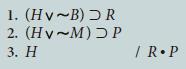
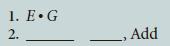
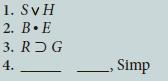
For each of the following lists of premises, derive the indicated conclusion and complete the justification. In problems 4 and 8 you can add any statement you choose.
For each of the following lists of premises, derive the indicated conclusion and complete the justification. In problems 4 and 8 you can add any statement you choose.
For each of the following lists of premises, derive the indicated conclusion and complete the justification. In problems 4 and 8 you can add any statement you choose.
For each of the following lists of premises, derive the indicated conclusion and complete the justification. In problems 4 and 8 you can add any statement you choose.
For each of the following lists of premises, derive the indicated conclusion and complete the justification. In problems 4 and 8 you can add any statement you choose.
For each of the following lists of premises, derive the indicated conclusion and complete the justification. In problems 4 and 8 you can add any statement you choose.
For each of the following lists of premises, derive the indicated conclusion and complete the justification. In problems 4 and 8 you can add any statement you choose.
For each of the following lists of premises, derive the indicated conclusion and complete the justification. In problems 4 and 8 you can add any statement you choose.
For each of the following lists of premises, derive the indicated conclusion and complete the justification. In problems 4 and 8 you can add any statement you choose.
For each of the following lists of premises, derive the indicated conclusion and complete the justification. In problems 4 and 8 you can add any statement you choose.
Create four symbolized arguments consisting of at least three premises each, and whose proof requires at least two of the rules introduced in this section. The arguments should look like those in Part III of this section. Then derive the conclusion of each.
If the death penalty is not cruel and unusual punishment, then either it is cruel and unusual punishment or if society is justified in using it, then it will deter other criminals. If the death penalty is cruel and unusual punishment, then it is both cruel and unusual and its use degrades society
If the drug interdiction program is strengthened only if heroin becomes more readily available, then either the number of addicts is decreasing or the war on drugs is failing. If the drug interdiction program is strengthened, then smugglers will shift to more-easily concealable drugs. If smugglers
If the drug interdiction program is strengthened only if heroin becomes more readily available, then either the number of addicts is decreasing or the war on drugs is failing. If the drug interdiction program is strengthened, then smugglers will shift to more-easily concealable drugs. If smugglers
Either we take recycling seriously or we will be buried in garbage. If we incinerate our garbage only if our health is jeopardized, then we do not take recycling seriously. If our landfills are becoming exhausted, then if we incinerate our garbage, then toxic ash will be produced. If toxic ash is
If terrorists take more hostages, then terrorist demands will be met if and only if the media give full coverage to terrorist acts. Either the media will voluntarily limit the flow of information or if the media will recognize they are being exploited by terrorists, they will voluntarily limit the
Either the continents are not subject to drift or if Antarctica was always located in the polar region, then it contains no fossils of plants from a temperate climate. If the continents are not subject to drift, then Antarctica contains no fossils of plants from a temperate climate. But it is not
Either the continents are not subject to drift or if Antarctica was always located in the polar region, then it contains no fossils of plants from a temperate climate. If the continents are not subject to drift, then Antarctica contains no fossils of plants from a temperate climate. But it is not
Either funding for nuclear fusion will be cut or if sufficiently high temperatures are achieved in the laboratory, nuclear fusion will become a reality. Either the supply of hydrogen fuel is limited, or if nuclear fusion becomes a reality, the world’s energy problems will be solved. Funding for
Either funding for nuclear fusion will be cut or if sufficiently high temperatures are achieved in the laboratory, nuclear fusion will become a reality. Either the supply of hydrogen fuel is limited, or if nuclear fusion becomes a reality, the world’s energy problems will be solved. Funding for
Either funding for nuclear fusion will be cut or if sufficiently high temperatures are achieved in the laboratory, nuclear fusion will become a reality. Either the supply of hydrogen fuel is limited, or if nuclear fusion becomes a reality, the world’s energy problems will be solved. Funding for
If teachers are allowed to conduct random drug searches on students only if teachers are acting in loco parentis, then if teachers are acting in loco parentis, then students have no Fourth Amendment protections. Either students have no Fourth Amendment protections or if teachers are allowed to
If quotas are imposed on textile imports only if jobs are not lost, then the domestic textile industry will modernize only if the domestic textile industry is not destroyed. If quotas are imposed on textile imports, the domestic textile industry will modernize. The domestic textile industry will
If poor people live as long as rich people, then longevity is unaffected by wealth. Either the less affluent have stopped smoking or it is not the case that longevity is unaffected by wealth. It is not the case that the less affluent have stopped smoking. Therefore, poor people do not live as long
If OxyContin is addictive, then either the pharmaceutical industry has stopped making it or thousands of patients are becoming addicted to it. The pharmaceutical industry has not stopped making OxyContin. Also, OxyContin is addictive. Therefore, thousands of patients are becoming addicted to it.
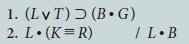
Use the first four rules of inference to derive the conclusions of the following symbolized arguments.
Use the first four rules of inference to derive the conclusions of the following symbolized arguments.
Use the first four rules of inference to derive the conclusions of the following symbolized arguments.
Use the first four rules of inference to derive the conclusions of the following symbolized arguments.
Use the first four rules of inference to derive the conclusions of the following symbolized arguments.
Use the first four rules of inference to derive the conclusions of the following symbolized arguments.
Use the first four rules of inference to derive the conclusions of the following symbolized arguments.
Use the first four rules of inference to derive the conclusions of the following symbolized arguments.
Use the first four rules of inference to derive the conclusions of the following symbolized arguments.
Use the first four rules of inference to derive the conclusions of the following symbolized arguments.
Use the first four rules of inference to derive the conclusions of the following symbolized arguments.
Use the first four rules of inference to derive the conclusions of the following symbolized arguments.
Use the first four rules of inference to derive the conclusions of the following symbolized arguments.
Use the first four rules of inference to derive the conclusions of the following symbolized arguments.
Use the first four rules of inference to derive the conclusions of the following symbolized arguments.
Use the first four rules of inference to derive the conclusions of the following symbolized arguments.
Use the first four rules of inference to derive the conclusions of the following symbolized arguments.
Use the first four rules of inference to derive the conclusions of the following symbolized arguments.
Use the first four rules of inference to derive the conclusions of the following symbolized arguments.
Use the first four rules of inference to derive the conclusions of the following symbolized arguments.
Use the first four rules of inference to derive the conclusions of the following symbolized arguments.
Use the first four rules of inference to derive the conclusions of the following symbolized arguments.
Use the first four rules of inference to derive the conclusions of the following symbolized arguments.
Use the first four rules of inference to derive the conclusions of the following symbolized arguments.
Use the first four rules of inference to derive the conclusions of the following symbolized arguments.
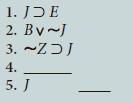
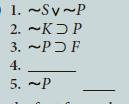
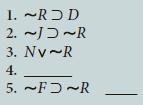
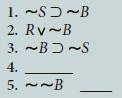
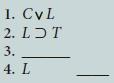
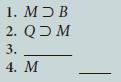
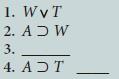
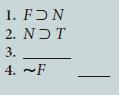
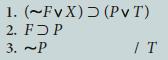
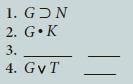
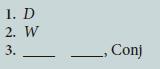
The following symbolized arguments are missing a premise. Write the premise needed to derive the conclusion (last line ), and supply the justification for the conclusion. Try to construct the simplest premise needed to derive the conclusion.
The following symbolized arguments are missing a premise. Write the premise needed to derive the conclusion (last line ), and supply the justification for the conclusion. Try to construct the simplest premise needed to derive the conclusion.
The following symbolized arguments are missing a premise. Write the premise needed to derive the conclusion (last line ), and supply the justification for the conclusion. Try to construct the simplest premise needed to derive the conclusion.
The following symbolized arguments are missing a premise. Write the premise needed to derive the conclusion (last line ), and supply the justification for the conclusion. Try to construct the simplest premise needed to derive the conclusion.
The following symbolized arguments are missing a premise. Write the premise needed to derive the conclusion (last line ), and supply the justification for the conclusion. Try to construct the simplest premise needed to derive the conclusion.
The following symbolized arguments are missing a premise. Write the premise needed to derive the conclusion (last line ), and supply the justification for the conclusion. Try to construct the simplest premise needed to derive the conclusion.
The following symbolized arguments are missing a premise. Write the premise needed to derive the conclusion (last line ), and supply the justification for the conclusion. Try to construct the simplest premise needed to derive the conclusion.
The following symbolized arguments are missing a premise. Write the premise needed to derive the conclusion (last line ), and supply the justification for the conclusion. Try to construct the simplest premise needed to derive the conclusion.
The following symbolized arguments are missing a premise. Write the premise needed to derive the conclusion (last line ), and supply the justification for the conclusion. Try to construct the simplest premise needed to derive the conclusion.
The following symbolized arguments are missing a premise. Write the premise needed to derive the conclusion (last line ), and supply the justification for the conclusion. Try to construct the simplest premise needed to derive the conclusion.
The following symbolized arguments are missing a premise. Write the premise needed to derive the conclusion (last line ), and supply the justification for the conclusion. Try to construct the simplest premise needed to derive the conclusion.
The following symbolized arguments are missing a premise. Write the premise needed to derive the conclusion (last line ), and supply the justification for the conclusion. Try to construct the simplest premise needed to derive the conclusion.
The following symbolized arguments are missing a premise. Write the premise needed to derive the conclusion (last line ), and supply the justification for the conclusion. Try to construct the simplest premise needed to derive the conclusion.
The following symbolized arguments are missing a premise. Write the premise needed to derive the conclusion (last line ), and supply the justification for the conclusion. Try to construct the simplest premise needed to derive the conclusion.
The following symbolized arguments are missing a premise. Write the premise needed to derive the conclusion (last line ), and supply the justification for the conclusion. Try to construct the simplest premise needed to derive the conclusion.
The following symbolized arguments are missing a premise. Write the premise needed to derive the conclusion (last line ), and supply the justification for the conclusion. Try to construct the simplest premise needed to derive the conclusion.
The following symbolized arguments are missing a premise. Write the premise needed to derive the conclusion (last line ), and supply the justification for the conclusion. Try to construct the simplest premise needed to derive the conclusion.
The following symbolized arguments are missing a premise. Write the premise needed to derive the conclusion (last line ), and supply the justification for the conclusion. Try to construct the simplest premise needed to derive the conclusion.
The following symbolized arguments are missing a premise. Write the premise needed to derive the conclusion (last line ), and supply the justification for the conclusion. Try to construct the simplest premise needed to derive the conclusion.
The following symbolized arguments are missing a premise. Write the premise needed to derive the conclusion (last line ), and supply the justification for the conclusion. Try to construct the simplest premise needed to derive the conclusion.
The following symbolized arguments are missing a premise. Write the premise needed to derive the conclusion (last line ), and supply the justification for the conclusion. Try to construct the simplest premise needed to derive the conclusion.
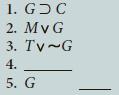
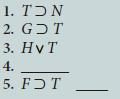
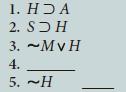
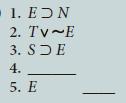
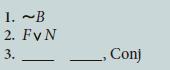
For each of the following lists of premises, derive the conclusion and supply the justification for it. There is only one possible answer for each problem.
For each of the following lists of premises, derive the conclusion and supply the justification for it. There is only one possible answer for each problem.
For each of the following lists of premises, derive the conclusion and supply the justification for it. There is only one possible answer for each problem.
For each of the following lists of premises, derive the conclusion and supply the justification for it. There is only one possible answer for each problem.
For each of the following lists of premises, derive the conclusion and supply the justification for it. There is only one possible answer for each problem.
For each of the following lists of premises, derive the conclusion and supply the justification for it. There is only one possible answer for each problem.
Showing 1000 - 1100
of 3685
First
4
5
6
7
8
9
10
11
12
13
14
15
16
17
18
Last
Step by Step Answers

 Get 50% OFF
Claim Now
Get 50% OFF
Claim Now


![1. ~N [(BD) (Nv~E)] 2. (BOE) ~N 3. BDD 4. DOE I~D](https://dsd5zvtm8ll6.cloudfront.net/si.question.images/images/question_images/1695/8/0/3/1316513e6fb8f2821695803131229.jpg)
![1. ~AD [Av (TR)] 2. RD [Rv (ADR)] 3. (TvD) 4. TvD ~R ID](https://dsd5zvtm8ll6.cloudfront.net/si.question.images/images/question_images/1695/8/0/3/1046513e6e0d33751695803104491.jpg)
![1. (RF) 2. (QF) 3. ~GOF 4. Q~G [(R~G) (SDQ)] (RDQ) ISOF](https://dsd5zvtm8ll6.cloudfront.net/si.question.images/images/question_images/1695/8/0/3/0846513e6ccbc7cf1695803084413.jpg)
![1. ~B] [(AK) (Bv~K)] 2. ~JOK 3. AD~J 4. ~B /~A](https://dsd5zvtm8ll6.cloudfront.net/si.question.images/images/question_images/1695/8/0/3/0196513e68b8c1081695803019165.jpg)
![1. H[~E (C) ~D)] 2. ~DDE 3. Ev H 4. ~E /~C](https://dsd5zvtm8ll6.cloudfront.net/si.question.images/images/question_images/1695/8/0/2/9966513e6746a3a11695802996082.jpg)
![1. ~G [Gv (SG)] 2. (SVL) 3. SvL ~G IL](https://dsd5zvtm8ll6.cloudfront.net/si.question.images/images/question_images/1695/8/0/2/9746513e65e20cb71695802973867.jpg)
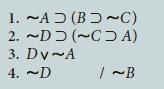
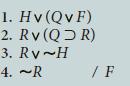
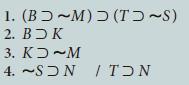
![1. ~J 2. JV 3. ~J [~A (D A)] A 1~D](https://dsd5zvtm8ll6.cloudfront.net/si.question.images/images/question_images/1695/8/0/2/8906513e60aceeac1695802890470.jpg)
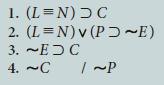
![1. G [~0 (G D)] 2. OVG 3. ~0 ID](https://dsd5zvtm8ll6.cloudfront.net/si.question.images/images/question_images/1695/8/0/2/7916513e5a739ce31695802790888.jpg)
![1. ND (JP) 2.(J>P)>(N2]) IP 3. N](https://dsd5zvtm8ll6.cloudfront.net/si.question.images/images/question_images/1695/8/0/2/7636513e58be02691695802763563.jpg)
![1. ~WD [~WD (XW)] 2. ~W](https://dsd5zvtm8ll6.cloudfront.net/si.question.images/images/question_images/1695/8/0/2/5486513e4b4dbdd41695802548532.jpg)