New Semester
Started
Get
50% OFF
Study Help!
--h --m --s
Claim Now
Question Answers
Textbooks
Find textbooks, questions and answers
Oops, something went wrong!
Change your search query and then try again
S
Books
FREE
Study Help
Expert Questions
Accounting
General Management
Mathematics
Finance
Organizational Behaviour
Law
Physics
Operating System
Management Leadership
Sociology
Programming
Marketing
Database
Computer Network
Economics
Textbooks Solutions
Accounting
Managerial Accounting
Management Leadership
Cost Accounting
Statistics
Business Law
Corporate Finance
Finance
Economics
Auditing
Tutors
Online Tutors
Find a Tutor
Hire a Tutor
Become a Tutor
AI Tutor
AI Study Planner
NEW
Sell Books
Search
Search
Sign In
Register
study help
social science
introduction to logic
A Concise Introduction to Logic 13th edition Patrick J. Hurley, Lori Watson - Solutions
Use the eighteen rules of inference to derive the conclusions of the following symbolized arguments. 1. PDA 2. QOB / (PvQ) (Av B)
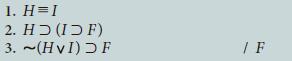
Use the eighteen rules of inference to derive the conclusions of the following symbolized arguments. 1. H=I 2. HD (IDF) 3. ~(HVI) OF IF
Use the eighteen rules of inference to derive the conclusions of the following symbolized arguments. 1. OD (Q.N) 2. (NVE) DS /ODS
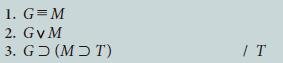
Use the eighteen rules of inference to derive the conclusions of the following symbolized arguments. 1. G=M 2. GVM 3. GD (MDT) m IT
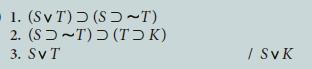
Use the eighteen rules of inference to derive the conclusions of the following symbolized arguments. 1. (SVT) (S~T) 2. (SDT) (TJK) 3. SVT / SvK
Use the eighteen rules of inference to derive the conclusions of the following symbolized arguments. 1. (SVT) (S~T) 2. (SDT) (TJK) 3. SVT / SvK
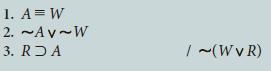
Use the eighteen rules of inference to derive the conclusions of the following symbolized arguments. 1. A = W 2. ~Av~W 3. RDA /~(WVR)
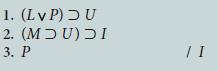
Use the eighteen rules of inference to derive the conclusions of the following symbolized arguments. 1. (LvP) DU 2. (MJU) DI 3. P II
Use the eighteen rules of inference to derive the conclusions of the following symbolized arguments. 1. (OR) 2. (POR) S S I~R
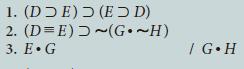
Use the eighteen rules of inference to derive the conclusions of the following symbolized arguments. 1. (DE) (ED) 2. (DE) D~(G.~H) 3. E.G / G. H
Use the eighteen rules of inference to derive the conclusions of the following symbolized arguments. 1. TD (ADN) 2. TV N /T=~N
Use the eighteen rules of inference to derive the conclusions of the following symbolized arguments. 1. T (HJ) 2. (HVN) DT | T=H
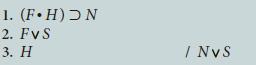
Use the eighteen rules of inference to derive the conclusions of the following symbolized arguments. 1. (F.H) ON 2. FVS 3. H / NvS
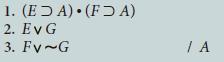
Use the eighteen rules of inference to derive the conclusions of the following symbolized arguments. 1. (EA) (FDA) 2. Ev G 3. Fv G I A
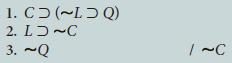
Use the eighteen rules of inference to derive the conclusions of the following symbolized arguments. 1. CD (~LDQ) 2. LO~C 3. ~Q I~C
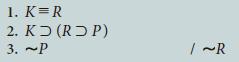
Use the eighteen rules of inference to derive the conclusions of the following symbolized arguments. 1. K=R 2. KO (RDP) 3. P I~R
Use the eighteen rules of inference to derive the conclusions of the following symbolized arguments. 1. Iv (N.F) 2. IDF IF
Use the eighteen rules of inference to derive the conclusions of the following symbolized arguments. 1. (GJ) (HQ) 2. J~Q 1~H
Use the eighteen rules of inference to derive the conclusions of the following symbolized arguments. 1. PD (~ED B) 2. ~(BVE) /~P
Use the eighteen rules of inference to derive the conclusions of the following symbolized arguments. 1. Q (W.D) /QOW
Use the eighteen rules of inference to derive the conclusions of the following symbolized arguments. 1. HOU /HD (UvT)
Use the eighteen rules of inference to derive the conclusions of the following symbolized arguments. 1. TOG 2. SOG / (TVS) G
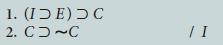
Use the eighteen rules of inference to derive the conclusions of the following symbolized arguments. 1. (IDE) C 2.C3-C / I
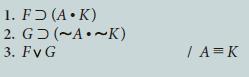
Use the eighteen rules of inference to derive the conclusions of the following symbolized arguments. 1. F (A.K) 2. G (~A~K) 3. FVG / A=K
Use the eighteen rules of inference to derive the conclusions of the following symbolized arguments. 1. S (L.M) 2. MD (LOR) ISOR
Use the eighteen rules of inference to derive the conclusions of the following symbolized arguments. 1. JD (GOL) /GD (JL)
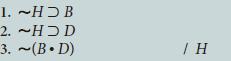
Use the eighteen rules of inference to derive the conclusions of the following symbolized arguments. 1. H > B 2. ~H 3D 3. (BD)
Use the eighteen rules of inference to derive the conclusions of the following symbolized arguments. 1. ~RvP 2. Rv P / R=P
Use the eighteen rules of inference to derive the conclusions of the following symbolized arguments. 1. M (UDH) 2. (Hv~U) OF IMDF
Use the eighteen rules of inference to derive the conclusions of the following symbolized arguments. 1. SV N 2. ~SVQ INDQ
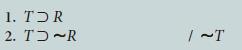
Use the eighteen rules of inference to derive the conclusions of the following symbolized arguments. 1. TOR 2. TO R /~T
Use the eighteen rules of inference to derive the conclusions of the following symbolized arguments. 1. ~(U. W) X 2. UD U /~(UV~X)
Use the eighteen rules of inference to derive the conclusions of the following symbolized arguments. 1. (0 C).(~S~D) 2. (ED) (~E~C) /ODS
Use the eighteen rules of inference to derive the conclusions of the following symbolized arguments. 1. K (BM) 2. D (KM) IDD B
Use the eighteen rules of inference to derive the conclusions of the following symbolized arguments. 1. T ISOT
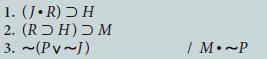
Use the eighteen rules of inference to derive the conclusions of the following symbolized arguments. 1. (J.R) H 2. (RH) M 3. ~(Pv~J) / M.~P
Use the eighteen rules of inference to derive the conclusions of the following symbolized arguments. 1. (BG) (FIN) 2. ~(G.N) /~(B.F)
Use the eighteen rules of inference to derive the conclusions of the following symbolized arguments. 1. TD (~TVG) 2. ~G /~T
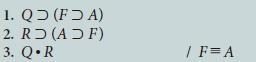
Use the eighteen rules of inference to derive the conclusions of the following symbolized arguments. 1. QD (FDA) 2. RD (ADF) 3. Q.R | F=A
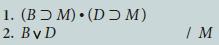
Use the eighteen rules of inference to derive the conclusions of the following symbolized arguments. 1. (BM). (DM) 2. BvD I M
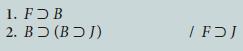
Use the eighteen rules of inference to derive the conclusions of the following symbolized arguments. 1. FOB 2. B (BOJ) IFDJ
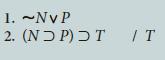
Use the eighteen rules of inference to derive the conclusions of the following symbolized arguments. 1. ~NV P 2. (NDP) OT IT
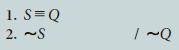
Use the eighteen rules of inference to derive the conclusions of the following symbolized arguments. 1. S=Q 2. ~S 1~Q
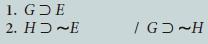
Use the eighteen rules of inference to derive the conclusions of the following symbolized arguments. 1. GOE 2. HD E IGO H
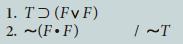
Use the eighteen rules of inference to derive the conclusions of the following symbolized arguments. 1. T (Fv F) 2. ~(F.F) /~T
Use the eighteen rules of inference to derive the conclusions of the following symbolized arguments. 1. T (Fv F) 2. ~(F.F) /~T
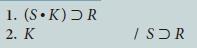
Use the eighteen rules of inference to derive the conclusions of the following symbolized arguments. 1. (S.K) DR 2. K ISOR
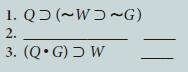
In the following symbolized arguments, derive the line needed to obtain the conclusion (last line), and supply the justification for both lines. 1. QD (~W~G) 2. 3. (Q.G) W
In the following symbolized arguments, derive the line needed to obtain the conclusion (last line), and supply the justification for both lines. 1. QD (~W~G) 2. 3. (Q.G) W
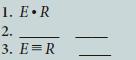
In the following symbolized arguments, derive the line needed to obtain the conclusion (last line), and supply the justification for both lines. 1. E.R 2. 3. E R
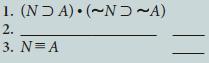
In the following symbolized arguments, derive the line needed to obtain the conclusion (last line), and supply the justification for both lines. 1. (NDA).(~N~A) 2. 3. N=A
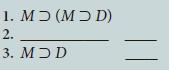
In the following symbolized arguments, derive the line needed to obtain the conclusion (last line), and supply the justification for both lines. 1. MD (MDD) 2. 3. MOD
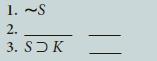
In the following symbolized arguments, derive the line needed to obtain the conclusion (last line), and supply the justification for both lines. 1. ~S 2. 3. SOK
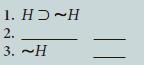
In the following symbolized arguments, derive the line needed to obtain the conclusion (last line), and supply the justification for both lines. H~CHI 2. 3. ~H
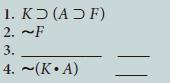
In the following symbolized arguments, derive the line needed to obtain the conclusion (last line), and supply the justification for both lines. 1. K (ADF) 2. ~F 3. 4. ~(K.A)
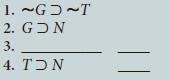
In the following symbolized arguments, derive the line needed to obtain the conclusion (last line), and supply the justification for both lines. 1. ~G~T 2. GON 3. 4. TON ||
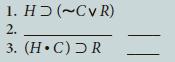
In the following symbolized arguments, derive the line needed to obtain the conclusion (last line), and supply the justification for both lines. 1. HD (~CVR) 2. 3. (H.C) DR ||
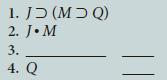
In the following symbolized arguments, derive the line needed to obtain the conclusion (last line), and supply the justification for both lines. 1. JD (MDQ) 2. J. M 3. 4. Q
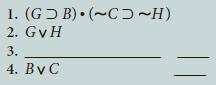
In the following symbolized arguments, derive the line needed to obtain the conclusion (last line), and supply the justification for both lines. 1. (GB) (~CD~H) 2. GvH 3. 4. Bv C
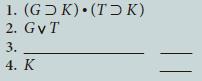
In the following symbolized arguments, derive the line needed to obtain the conclusion (last line), and supply the justification for both lines. 1. (GK) (TK) 2. GVT 3. 4. K
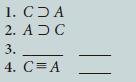
In the following symbolized arguments, derive the line needed to obtain the conclusion (last line), and supply the justification for both lines. 1. CDA 2. ADC 3. 4. C = A ||
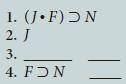
In the following symbolized arguments, derive the line needed to obtain the conclusion (last line), and supply the justification for both lines. 1. (J.F) ON 2. J 3. 4. FON ||
In the following symbolized arguments, derive the line needed to obtain the conclusion (last line), and supply the justification for both lines. 1. (J.F) ON 2. J 3. 4. FON ||
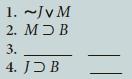
In the following symbolized arguments, derive the line needed to obtain the conclusion (last line), and supply the justification for both lines. 1. ~JvM B M .2 3. B4 ||
In the following symbolized arguments, derive the line needed to obtain the conclusion (last line), and supply the justification for both lines. 1. ~JvM B M .2 3. B4 ||
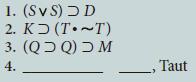
For each of the following lists of premises, derive the indicated conclusion and complete the justification. For tautology, derive a conclusion that is simpler than the premise. 1. (SVS) D 2. K (T~T) 3. (QQ) M 4. Taut
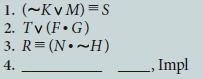
For each of the following lists of premises, derive the indicated conclusion and complete the justification. For tautology, derive a conclusion that is simpler than the premise. 1. (~KvM)=S 2. Tv (F.G) 3. R=(N~H) 4. Impl
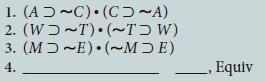
For each of the following lists of premises, derive the indicated conclusion and complete the justification. For tautology, derive a conclusion that is simpler than the premise. 1. (A~C) 2. (W~T) 3. (MD~E) 4. (C~A) (~TW) (~MDE) , Equiv
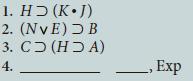
For each of the following lists of premises, derive the indicated conclusion and complete the justification. For tautology, derive a conclusion that is simpler than the premise. 1. H (KJ) 2. (NVE) B 3. C (HA) 4. Exp
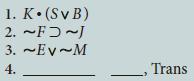
For each of the following lists of premises, derive the indicated conclusion and complete the justification. For tautology, derive a conclusion that is simpler than the premise. 1. K. (SVB) 2. ~F~J 3. ~Ev~M 4. Trans
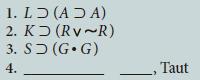
For each of the following lists of premises, derive the indicated conclusion and complete the justification. For tautology, derive a conclusion that is simpler than the premise. 1. L (ADA) 2. KO (Rv R) 3. S (G.G) 4. Taut
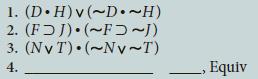
For each of the following lists of premises, derive the indicated conclusion and complete the justification. For tautology, derive a conclusion that is simpler than the premise. 1. (D.H) v (~D.~H) 2. (FJ) (~F~J) 3. (NvT)(~Nv~T) 4. , Equiv
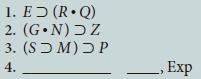
For each of the following lists of premises, derive the indicated conclusion and complete the justification. For tautology, derive a conclusion that is simpler than the premise. 1. ED (RQ) 2. (G.N) DZ 3. (SDM) P 4. , Exp
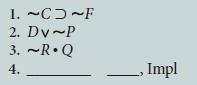
For each of the following lists of premises, derive the indicated conclusion and complete the justification. For tautology, derive a conclusion that is simpler than the premise. 1. ~CD~F 2. Dv~P 3. ~R.Q 4. , Impl
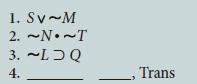
For each of the following lists of premises, derive the indicated conclusion and complete the justification. For tautology, derive a conclusion that is simpler than the premise. 1. SV M 2. ~N~T 3. ~LDQ 4. Trans
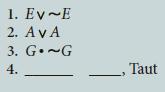
For each of the following lists of premises, derive the indicated conclusion and complete the justification. For tautology, derive a conclusion that is simpler than the premise. 1. Ev E 2. AVA 3. G. G 4. Taut
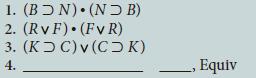
For each of the following lists of premises, derive the indicated conclusion and complete the justification. For tautology, derive a conclusion that is simpler than the premise. 1. (BN) (NB) 2. (RvF) (FvR) 3. (KC) v (CK) 4. , Equiv
For each of the following lists of premises, derive the indicated conclusion and complete the justification. For tautology, derive a conclusion that is simpler than the premise. 1. (BN) (NB) 2. (RvF) (FvR) 3. (KC) v (CK) 4. , Equiv
For each of the following lists of premises, derive the indicated conclusion and complete the justification. For tautology, derive a conclusion that is simpler than the premise. 1. (BN) (NB) 2. (RvF) (FvR) 3. (KC) v (CK) 4. , Equiv
Create four symbolized arguments consisting of at least three premises each, and whose proof requires at least two of the rules introduced in this section. The arguments should look like those in Part III of this section. Then derive the conclusion of each.
The following dialogue contains eight arguments. Translate each into symbolic form and then use the first thirteen rules of inference to derive the conclusion of each.New CradleChloe, with youngster in tow, is strolling across campus when she bumps into her friend Dylan. “Hi,” she says. “You
The following dialogue contains eight arguments. Translate each into symbolic form and then use the first thirteen rules of inference to derive the conclusion of each.New CradleChloe, with youngster in tow, is strolling across campus when she bumps into her friend Dylan. “Hi,” she says. “You
Either school dropout programs are not as effective as they could be, or they provide basic thinking skills and psychological counseling to their students. Either school dropout programs are not as effective as they could be, or they adequately prepare their students for getting a job and working
is not the case that either the sun’s interior rotates faster than its surface or Einstein’s general theory of relativity is wrong. If the sun’s interior does not rotate faster than its surface and eccentricities in the orbit of Mercury can be explained by solar gravitation, then Einstein’s
If women are by nature either passive or uncompetitive, then it is not the case that there are lawyers who are women. If men are by nature either insensitive or without the ability to nurture, then it is not the case that there are kindergarten teachers who are men. There are lawyers who are women
If China is to reduce its huge trade surplus, then it must either convince its citizens to spend more or it must move its manufacturing facilities to other countries. It is not the case that China will either increase its imports or convince its citizens to spend more. Furthermore, it is not the
If workers have a fundamental right to a job, then unemployment will be virtually nonexistent but job redundancy will become a problem. If workers have no fundamental right to a job, then production efficiency will be maximized but job security will be jeopardized. Workers either have or do not
Protein engineering will prove to be as successful as genetic engineering, and new enzymes will be developed for producing food and breaking down industrial wastes. If protein engineering proves to be as successful as genetic engineering and new enzymes are developed for breaking down industrial
Either mosquito genes can be cloned or mosquitoes will become resistant to all insecticides and the incidence of encephalitis will increase. If either mosquito genes can be cloned or the incidence of encephalitis increases, then mosquitoes will not become resistant to all insecticides. Therefore,
Either mosquito genes can be cloned or mosquitoes will become resistant to all insecticides and the incidence of encephalitis will increase. If either mosquito genes can be cloned or the incidence of encephalitis increases, then mosquitoes will not become resistant to all insecticides. Therefore,
It is not the case that either the earth’s molten core is stationary or that it contains no iron. If it is not the case that both the earth’s molten core is stationary and has a regular topography, then either the earth’s core contains no iron or the direction of the earth’s magnetic field
Either the ancient Etruscans were experienced city planners and they invented the art of writing or they were highly skilled engineers and they invented the art of writing. If the ancient Etruscans were bloodthirsty numskulls (as scholars once thought), they did not invent the art of writing.
Either health-care costs are skyrocketing and they are attributable to greedy doctors, or health-care costs are skyrocketing and they are attributable to greedy hospitals. If health-care costs are skyrocketing, then both the government should intercede and health care may have to be rationed.
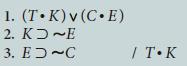
Use the first thirteen rules of inference to derive the conclusions of the following symbolized arguments: 1. (TK) v (C.E) 2. KD~E 3. ED C IT K
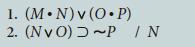
Use the first thirteen rules of inference to derive the conclusions of the following symbolized arguments: 1. (M.N) v (O.P) 2. (NVO) ~P IN
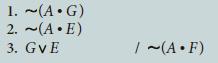
Use the first thirteen rules of inference to derive the conclusions of the following symbolized arguments: 1. ~(A.G) 2. ~(A.E) 3. GVE /~(A.F)
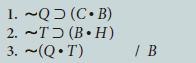
Use the first thirteen rules of inference to derive the conclusions of the following symbolized arguments: 1. ~Q (C.B) 2. ~TD (BH) 3. ~(Q.T) / B B
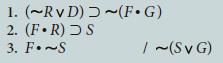
Use the first thirteen rules of inference to derive the conclusions of the following symbolized arguments: 1. (~RvD) 2. (FR) 3. F. S S ~(F.G) / ~ (SVG)
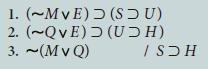
Use the first thirteen rules of inference to derive the conclusions of the following symbolized arguments: 1. (~MvE) (SDU) 2. (~QvE) (UDH) 3. ~ (Mv Q) ISCH
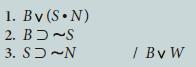
Use the first thirteen rules of inference to derive the conclusions of the following symbolized arguments: 1. Bv (S.N) 2. B~S 3. SO N / Bv W
Showing 800 - 900
of 3685
First
2
3
4
5
6
7
8
9
10
11
12
13
14
15
16
Last
Step by Step Answers

 Get 50% OFF
Claim Now
Get 50% OFF
Claim Now