New Semester
Started
Get
50% OFF
Study Help!
--h --m --s
Claim Now
Question Answers
Textbooks
Find textbooks, questions and answers
Oops, something went wrong!
Change your search query and then try again
S
Books
FREE
Study Help
Expert Questions
Accounting
General Management
Mathematics
Finance
Organizational Behaviour
Law
Physics
Operating System
Management Leadership
Sociology
Programming
Marketing
Database
Computer Network
Economics
Textbooks Solutions
Accounting
Managerial Accounting
Management Leadership
Cost Accounting
Statistics
Business Law
Corporate Finance
Finance
Economics
Auditing
Tutors
Online Tutors
Find a Tutor
Hire a Tutor
Become a Tutor
AI Tutor
AI Study Planner
NEW
Sell Books
Search
Search
Sign In
Register
study help
business
human resources management
Managing Employee Performance And Reward Systems, Practices And Prospects 3rd Edition John Shields, Jim Rooney - Solutions
6 How will today’s mega-trends, particularly demographic and technological transformation, reshape the future design and importance of employee benefits plans?
5 What are main differences in employee benefits between Australia, Canada, the United Kingdom and the United States?
4 What are the advantages of non-financial benefits?
3 What sort of organisation is likely to gain most from offering employees flexible or ‘cafeteria’ benefits schemes?
2 What is needed for an organisation to have effective flexible work and wellness programs?
1 Why are employee benefits becoming an increasingly important component of employee reward practice?
2 How would you go about determining whether a flexible benefits plan along these lines was working effectively? Compared to traditional ‘one-size-fits-all’ benefits plans, well-designed flexible benefits plans offering a mix of traditional and non-traditional benefits are commonly assumed to
1 Can you see any practical challenges in seeking to use flexible benefits plans to support workforce diversity and diversification? Compared to traditional ‘one-size-fits-all’ benefits plans, well-designed flexible benefits plans offering a mix of traditional and non-traditional benefits are
3 Keeping in mind the precepts of procedural and distributive justice, what changes would you recommend to organisational reward practices to help address the gender super gap? A pressing social issue in Australia’s superannuation system is the enormous gap in retirement savings between male and
2 Separate these factors into two categories: first, those that are within the control of working women themselves; second, those that are in the control of the employing organisation. A pressing social issue in Australia’s superannuation system is the enormous gap in retirement savings between
1 Draw up a list of the factors that you see as contributing to the relatively low super balances of women retirees. A pressing social issue in Australia’s superannuation system is the enormous gap in retirement savings between male and female workers. Whereas Australian men who retired in 2016
4 What are the implications for the approach that organisations should take to benefits strategy and practice in developing countries? Review the information provided in the following global report on employee attitudes towards benefits provision:Willis Towers Watson (2017), 2017 Global Benefits
3 In view of the evidence presented in the report, what changes should organisations consider making to how they manage employee benefits? Review the information provided in the following global report on employee attitudes towards benefits provision:Willis Towers Watson (2017), 2017 Global
2 What are the implications for the role that benefits should have in the employee value proposition? Review the information provided in the following global report on employee attitudes towards benefits provision:Willis Towers Watson (2017), 2017 Global Benefits Attitudes Survey. The employee
1 Why might ‘benefits matter more than ever’ to employees? Review the information provided in the following global report on employee attitudes towards benefits provision:Willis Towers Watson (2017), 2017 Global Benefits Attitudes Survey. The employee voice: more security, more flexibility,
2 How do you think your benefits preferences differ from those of your parents’ generation? According to a 2014 United States study by Neil Howe: ‘the millennial generation, today’s incoming young-adult employees, shows far more interest than older generations in a broad spectrum of employee
1 What types of employee benefits would you most prefer to receive? According to a 2014 United States study by Neil Howe: ‘the millennial generation, today’s incoming young-adult employees, shows far more interest than older generations in a broad spectrum of employee benefits to protect them
• appreciate the importance of employee benefits to the focal themes of employee engagement, strategic alignment, organisational justice, and workforce diversity.
• compare and contrast fixed and flexible benefits plans, explain the advantages and disadvantages of each and determine the appropriateness of each for particular organisational contexts.
• explain the difference between defined-benefit and defined-contribution superannuation schemes and the pros and cons of each
• understand the difference between benefits of a mandatory nature and those that are voluntary
• describe the distinction between employee benefits of a financial nature (e.g.superannuation) and those of a nonfinancial nature (e.g. employee wellness programs)
• appreciate the challenges associated with benefits plan choice and configuration
• understand the rationale for employee benefits plans and their growing importance in total reward practice
5 What factors should an organisation consider in choosing between the position-based and person-based approaches to base pay configuration?
4 From an employee perspective, what are the attractions and drawbacks of pay bands?
3 What is more important in determining position-based pay levels: internal equity or external competitiveness? Why?
2 Is the notion of the ‘rate for the job’ outdated? Why or why not?
1 Why should employees receive any base pay at all?
3 What might be the potential shortcomings of skill-based pay here? Many organisations still prefer the administrative convenience of paying employees according to the job to which they are assigned rather than according to the skills and competencies of individual job-holders. Configuring pay
2 Why might a skill-based pay be preferable to job-based pay in this regard? Many organisations still prefer the administrative convenience of paying employees according to the job to which they are assigned rather than according to the skills and competencies of individual job-holders. Configuring
1 How might skill-based pay allow an organisation to manage workforce diversity more effectively? Many organisations still prefer the administrative convenience of paying employees according to the job to which they are assigned rather than according to the skills and competencies of individual
3 To what extent is job evaluation capable of promoting procedural and distributive justice in the workplace? Or addressing the pay gap between male and female employees. Review the following report and reflect on the questions below.Workplace Gender Equality Agency (2018), Guide to gender pay
2 Why is job evaluation a double-edged sword when it comes to gender pay equity? Review the following report and reflect on the questions below.Workplace Gender Equality Agency (2018), Guide to gender pay equity: Practical steps to improve pay equity between women and men in your organisation,
1 Is it acceptable to use market rates to establish fair pay levels for female employees? Review the following report and reflect on the questions below.Workplace Gender Equality Agency (2018), Guide to gender pay equity: Practical steps to improve pay equity between women and men in your
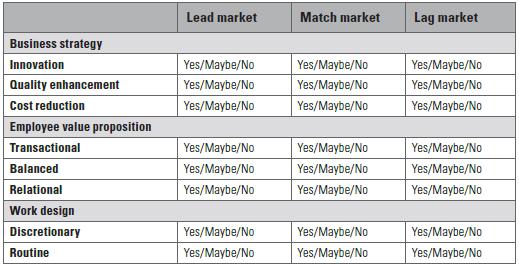
Survey-generated pay data provides a benchmark for establishing base pay levels for specific positions relative to market rates for comparable jobs. The organisation must then choose whether, for each position category, it wishes to ‘lead’, ‘match’ or ‘lag’ the market. This is referred
3 Which (if any) of the theories of motivation discussed in chapter 2 are supported by the points made in this article? Read the following article and answers the questions below.Wolfers, J. & Zilinsky, J. (2015), ‘Ten reasons workers should be paid more’, Newsweek, January 18,
2 Why might organisations that pay well need to devote fewer resources to monitoring their workers? Read the following article and answers the questions below.Wolfers, J. & Zilinsky, J. (2015), ‘Ten reasons workers should be paid more’, Newsweek, January 18,
1 Why might employees concerned about income security perform less well at work? Read the following article and answers the questions below.Wolfers, J. & Zilinsky, J. (2015), ‘Ten reasons workers should be paid more’, Newsweek, January 18,
• consider base pay options and issues through the lens of employee engagement, organisational justice, workforce diversity and organisational strategy.
• compare the strengths and weaknesses of each approach
• explain the pay structures, evaluation (pricing) methods and pay progression practices associated with each of these approaches
• discuss the difference between the two main approaches to configuring base pay:position-based base pay and person-based base pay
• understand the nature and purpose of base pay as the foundational component of employee pay
3 What do you say to Andrea? Why do you choose this approach? Andrea works in the training section of a large private sector IT company. She is in charge of delivering interpersonal skills training, including communication skills, networking and new manager training classes. At the end of each
2 What should you do now?You decide to meet with Andrea to talk about her rating scores. Andrea works in the training section of a large private sector IT company. She is in charge of delivering interpersonal skills training, including communication skills, networking and new manager training
1 What is your initial reaction to Andrea’s underperformance?You decide to collect a bit more information about Andrea. You find out that she has been with the organisation for two years. She has qualifications in the design of a training session and has five years’ experience doing similar
5 How would you deal with an underperforming subordinate?
4 Why should employees actively seek feedback (positive or negative) from their supervisor?
3 What are the differences between coaching and mentoring?
2 Why do employees dislike receiving negative performance feedback? In what circumstances might the ‘feedforward’ approach be a preferable alternative?
1 Is low motivation the most important cause of underperformance? Why or why not?
3 Is it unfair that some employees get higher ratings due to their ability to flatter their boss? Performance appraisal systems seek to identify and reward the best performers. The author in the following article suggests that some employees get higher performance ratings because they are good at
2 Under what conditions is flattery most likely to be effective? Performance appraisal systems seek to identify and reward the best performers. The author in the following article suggests that some employees get higher performance ratings because they are good at flattering their boss.Read the
1 Why does flattering the boss work? Performance appraisal systems seek to identify and reward the best performers. The author in the following article suggests that some employees get higher performance ratings because they are good at flattering their boss.Read the following short article and
2 Are there any problems with using performance management to promote employee engagement? Abigail White argues that performance management enhances employee engagement: ‘performance management ensures that all employees are dedicated to organizational operations, and employee engagement creates
1 How can performance management promote employee engagement? Abigail White argues that performance management enhances employee engagement: ‘performance management ensures that all employees are dedicated to organizational operations, and employee engagement creates a culture in which employees
3 What can be done to limit the influence of supervisory bias in performance ratings? Performance reviews are often subjective, which opens the door to gender bias. In the following article, the author argues that subjectivity can lead to the application of biases in ratings: ‘I found that these
2 Why do men tend to get higher performance ratings than women? Performance reviews are often subjective, which opens the door to gender bias. In the following article, the author argues that subjectivity can lead to the application of biases in ratings: ‘I found that these biases can lead to
1 How does the subjectivity of performance reviews allow biases to enter into the rating process? Performance reviews are often subjective, which opens the door to gender bias. In the following article, the author argues that subjectivity can lead to the application of biases in ratings: ‘I found
2 What are the likely consequences for supervisors of a move to using adjectives rather than numbers to describe an employee’s performance? Some organisations are dropping numeric performance rankings in favour of descriptive words. These companies argue that numbers cannot fully capture an
1 What are the limitations in using numbers to rate an employee’s performance? Some organisations are dropping numeric performance rankings in favour of descriptive words. These companies argue that numbers cannot fully capture an employee’s contribution to an organisation.Read the following
• appreciate the importance of reviewing, discussing and developing employee performance to the focal themes of employee engagement, strategic alignment, organisational justice, and workforce diversity.
• compare and contrast employee mentoring and coaching as tools of performance management
• understand one framework for managing employee underperformance
• describe the challenges in delivering and receiving negative performance feedback
• appreciate the perspectives of assessors and assessees on negative feedback
• describe the performance review meeting, including its content and timing
• explain the potential causes of underperformance
2 What, if any, performance management factors are more likely to benefit from such technology, in terms of individual performance achievement and improvement? As discussed in the case study on goal-setting in chapter 2, organisational theory emphasises the importance of individual employee
1 Is the information described in the Bloomberg item likely to be helpful for improving employee performance or is it simply an online form of management surveillance and instrumental behaviour control? Explain your answer in terms of the performance appraisal and management concepts covered in
5 ‘The pursuit of ever-more reliable performance assessment techniques is a self-defeating exercise.’ Critically analyse this assertion in the context of performance improvement.
4 ‘Competencies do not equal performance.’ Explain your response to this assertion.
3 What are the challenges involved in assessing individual competency levels?
2 What are the challenges in achieving ‘validity’ in performance assessment?
1 Why is performance appraisal such a perennially troubled aspect of human resource management?
3 What role, if any, does performance appraisal play in achieving this trade-off? Cancialosi, C. (2017), ‘The future of performance is not one-size-fits-all’, Forbes, February 22,
2 How would you take into account any trade-off between different stakeholder needs categories in evaluating individual employee performance? Cancialosi, C. (2017), ‘The future of performance is not one-size-fits-all’, Forbes, February 22,
1 Given the competitive pressures experienced by even the most admired institutions, how can organisational culture help achieve outcomes for all organisational stakeholders at the same time as addressing these market pressures? Cancialosi, C. (2017), ‘The future of performance is not
3 What characteristics would you expect to see in any measurement processes and results measures in a high performing team that you wouldn’t see in a ‘average’ performing individual or team? Forbes Coaches Council (2016), ‘13 characteristics of a high-performing team (and how leaders can
2 Of these characteristics aimed at organisational justice, how would you rank them against the others? Why? Forbes Coaches Council (2016), ‘13 characteristics of a high-performing team (and how leaders can foster them)’, Forbes, October 14,
1 Of the 13 characteristics mentioned in the Forbes article, which are aimed at addressing potential organisational justice problems in the creation of behavioural and competency measures? Why are these important? Forbes Coaches Council (2016), ‘13 characteristics of a high-performing team (and
3 From the article, what can you tell about the impact of remote/offsite management on employees at McMurdo Station? Pepper, F. (2018), ‘How Big Dead Place, the “WikiLeaks of Antarctica”, shed light on life at McMurdo Station’, ABC News, April 30,
2 What, if anything, does this story tell you about the organisational diversity at McMurdo Station and in the NSF? What clues can you find in the news article? What clues are missing? Pepper, F. (2018), ‘How Big Dead Place, the “WikiLeaks of Antarctica”, shed light on life at McMurdo
1 How do you believe the NSF and its operations support contractor have been taking organisational justice into account at the McMurdo Station? Pepper, F. (2018), ‘How Big Dead Place, the “WikiLeaks of Antarctica”, shed light on life at McMurdo Station’, ABC News, April 30,
3 What, if anything, does this decision on performance appraisal method tell you about the organisational culture at Accenture? What clues can you find in the news article from The Independent? Cunningham, L. (2015), ‘Accenture: One of the world’s biggest companies to scrap annual performance
2 What role does employee engagement play in determining the effectiveness of an organisation’s approach to the appraisal of individual employee performance? Cunningham, L. (2015), ‘Accenture: One of the world’s biggest companies to scrap annual performance reviews’, The Independent (UK),
1 How would you consider employee engagement in evaluating individual employee performance? Cunningham, L. (2015), ‘Accenture: One of the world’s biggest companies to scrap annual performance reviews’, The Independent (UK), July 28,
• understand the strategic considerations involved in deciding whether or not to use performance appraisal and in choosing between different behavioural assessment practices.
• explain the areas of interest and concern associated with evaluating and managing performance within organisations
• discuss issues associated with the presentation and use of performance appraisal information
• identify and assess the sources of data and methods used in performance appraisal
• understand common approaches to performance appraisal in a business context namely, behavioural and competency-based assessment
2 What, if any, KRAs may be more likely to benefit from such technology, in terms of individual performance achievement and improvement? As discussed in the section on goal-setting, organisational theory emphasises the importance of individual employee ‘self-regulation’ in effective motivation
1 Is the information described in the article likely to be helpful for improving employee performance or is it simply an online form of management surveillance? Explain your answer in terms of the performance measurement concepts and characteristics covered in this chapter. As discussed in the
5 What are the strengths and limitations of the balanced scorecard model?
4 ‘Organisational justice is less important than clear performance goals.’ Discuss.
3 What KPIs would you use for measuring team performance?
2 ‘You can’t manage what you can’t measure.’ Right or wrong? Why?
1 ‘A focus on results encourages unethical behaviour.’ Discuss.
Showing 400 - 500
of 3450
1
2
3
4
5
6
7
8
9
10
11
12
13
14
15
Last
Step by Step Answers

 Get 50% OFF
Claim Now
Get 50% OFF
Claim Now