New Semester
Started
Get
50% OFF
Study Help!
--h --m --s
Claim Now
Question Answers
Textbooks
Find textbooks, questions and answers
Oops, something went wrong!
Change your search query and then try again
S
Books
FREE
Study Help
Expert Questions
Accounting
General Management
Mathematics
Finance
Organizational Behaviour
Law
Physics
Operating System
Management Leadership
Sociology
Programming
Marketing
Database
Computer Network
Economics
Textbooks Solutions
Accounting
Managerial Accounting
Management Leadership
Cost Accounting
Statistics
Business Law
Corporate Finance
Finance
Economics
Auditing
Tutors
Online Tutors
Find a Tutor
Hire a Tutor
Become a Tutor
AI Tutor
AI Study Planner
NEW
Sell Books
Search
Search
Sign In
Register
study help
sciences
inorganic chemistry
Inorganic Chemistry 5th Edition Catherine Housecroft - Solutions
(a) Is CO2 linear or bent? (b) What hybridization is appropriate for the C atom? (c) Outline a bonding scheme for CO2 using the hybridization scheme you have suggested. (d) What C—O bond order does your scheme imply? (e) Draw a Lewis structure for CO2. Is this structure
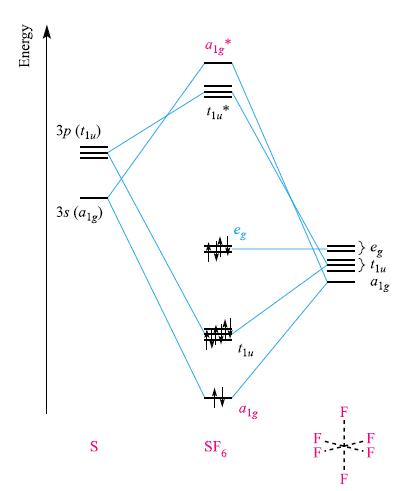
The hydrido complex [FeH6]4‾ has Oh symmetry. The bonding in [FeH6]4– can be described in terms of the interactions between the atomic orbitals of Fe and the LGOs of the H6-fragment.(a) Derive the six LGOs of the H6 fragment, showing clearly how you determine their symmetries.(b) The basis set
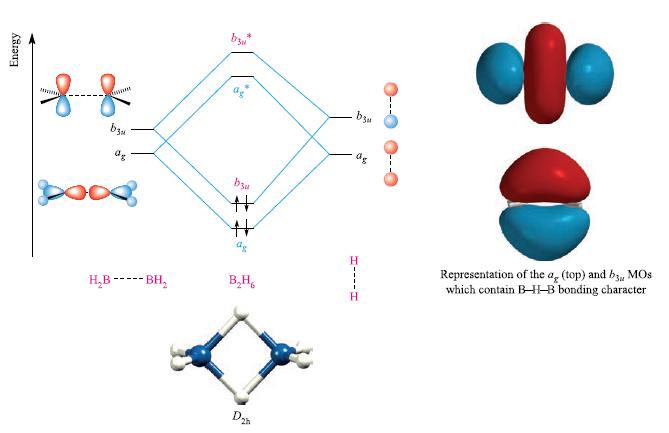
In the description of the bonding of B2H6, we draw the conclusion that the two bonding MOs in Fig. 5.33 have B—H bonding character delocalized over the four bridge atoms. (a) What other character do these MOs possess? (b) Does your answer to (a) alter the conclusion that this approximate MO
What is meant by a ligand group orbital?
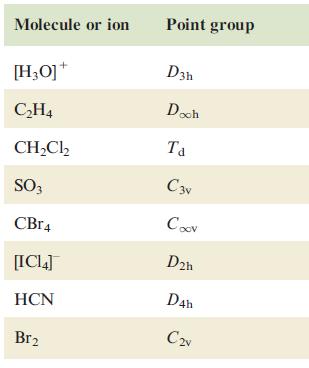
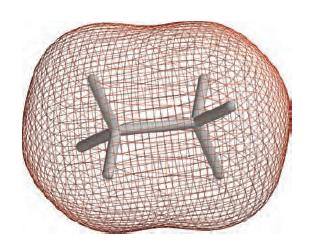
(a) The lists below show wrongly paired molecules or ions and point groups. Assign the correct point group to each species.(b) A molecule X2H6 belongs to the D3d point group. Does the molecule have an eclipsed or a staggered conformation?(c) Figure 5.35 shows the lowest energy a1g MO in ethane. If
VB and MO approaches to the bonding in linear XH2 (X has 2s and 2p valence atomic orbitals) give pictures in which the X—H bonding is localized and delocalized respectively. Explain how this difference arises.
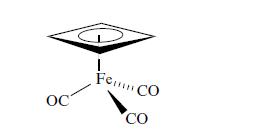
Cyclobutadiene, C4H4, is unstable but can be stabilized in complexes such as (C4H4)Fe(CO)3. In such complexes, C4H4 is planar and has equal C—C bond lengths:(a) After the formation of C—H and C—C σ-bonds in C4H4, what orbitals are available for π-bonding?(b) Assuming D4h symmetry for C4H4,
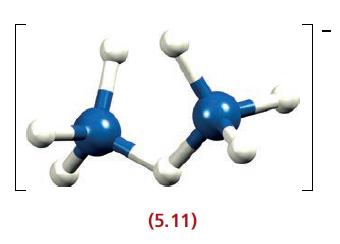
In [B2H7]‾ (5.11), each B atom is approximately tetrahedral. (a) How many valence electrons are present in the anion? (b) Assume that each B atom is sp3 hybridized. After localization of the three terminal B—H bonds per B, what B-centred orbital remains for use in the bridging
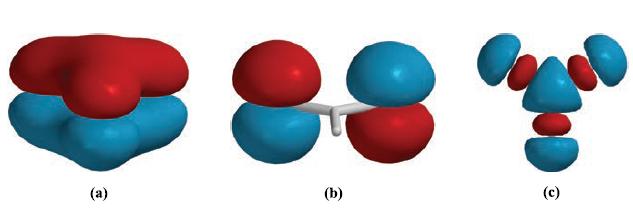
What hybridization scheme would be appropriate for the C atom in [CO3]2‾? Draw resonance structures to describe the bonding in [CO3]2‾. Figure 5.34 shows representations of three MOs of [CO3]2‾. The MOs in diagrams (a) and (b) in Fig. 5.34 are occupied; the MO in diagram (c) is unoccupied.
Use a ligand group orbital approach to describe the bonding in [NH4]+. Draw schematic representations of each of the bonding MOs.
The I—I bond distance in I2 (gas phase) is 267 pm, in the [I3]+ ion is 268 pm, and in [I3]‾ is 290 pm (for the [AsPh4]+ salt). (a) Draw Lewis structures for these species. Do these representations account for the variation in bond distance? (b) Use MO theory to describe the bonding
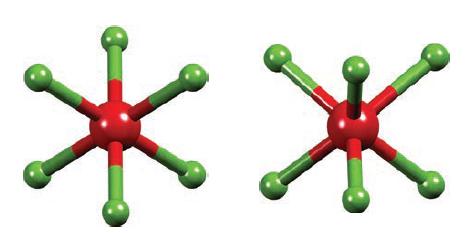
The structures below show (on the left) an octahedral and (on the right) a trigonal prismatic XY6 molecule.(a) To what point groups do these molecules belong?(b) The bonding MOs in octahedral XY6 have a1g, eg and t1u symmetries. Confirm that these symmetries are consistent with the point group that
(a) BCl3 has D3h symmetry. Draw the structure of BCl3 and give values for the bond angles. NCl3 has C3v symmetry. Is it possible to state the bond angles from this information? (b) Derive the symmetry labels for the atomic orbitals on B in BCl3 and on N in NCl3.
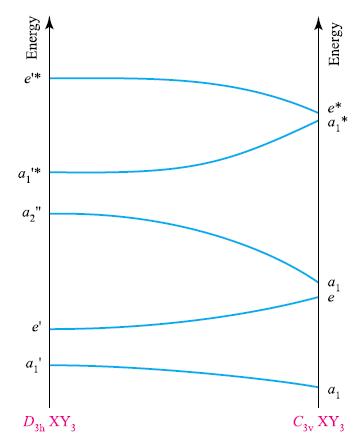
The compound H3N · BH3 is an adduct of NH3 and BH3. It is currently being investigated as a possible hydrogen storage material. (a) What is the hydrogen storage capacity (percentage by weight) of H3N · BH3?(b) Using the VSEPR model, draw structures for BH3, NH3 and H3N · BH3. (c) Figure 5.36
By considering the structures of the following molecules, confirm that the point group assignments are correct: (a) BH3, D3h; (b) NH3, C3v; (c) B2H6, D2h.
(a) What hybridization scheme would be appropriate for the Si atom in SiH4?(b) To which point group does SiH4 belong?(c) Sketch a qualitative MO diagram for the formation of SiH4 from Si and an H4-fragment. Label all orbitals with appropriate symmetry labels.
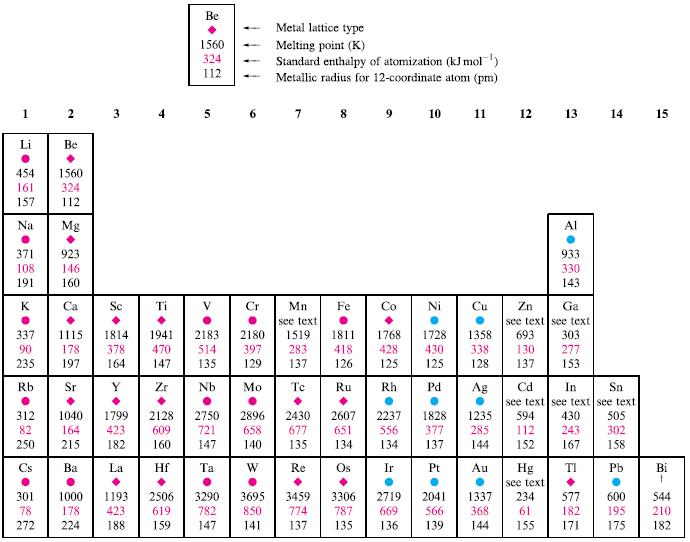
Refer to Table 6.2. (a) Write an equation for the process for which the standard enthalpy of atomization of cobalt is defined. (b) Suggest reasons for the trend in standard enthalpies of atomization on descending group 1. (c) Outline possible reasons for the trend in values of ∆aH° on going
(a) Draw a set of resonance structures for the hypothetical molecule PH5, ensuring that P obeys the octet rule in each structure. Assume a structure analogous to that of PF5.(b) To what point group does PH5 belong?(c) Using PH5 as a model compound, use a ligand group orbital approach to describe
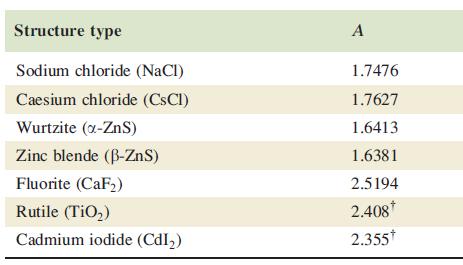
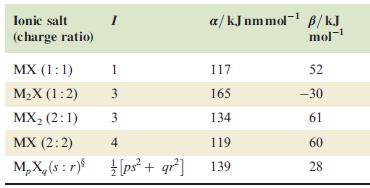
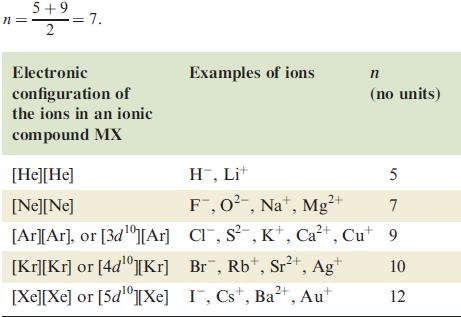
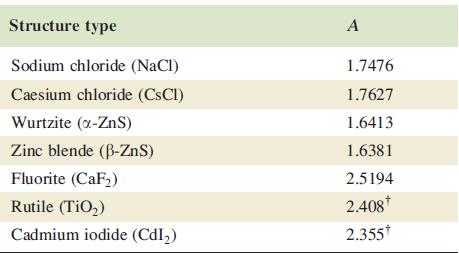
(a) Give a definition of lattice energy. Does your definition mean that the associated enthalpy of reaction will be positive or negative? (b) Use the Born–Lande´ equation to calculate a value for the lattice energy of KBr, for which r0 = 328 pm. KBr adopts an NaCl structure; other data may be
Outline the similarities and differences between cubic and hexagonal close-packed arrangements of spheres, paying particular attention to (a) Coordination numbers, (b) Interstitial holes (c) Unit cells.
State the coordination number of a sphere in each of the following arrangements: (a) ccp; (b) hcp; (c) bcc; (d) fcc; (e) Simple cubic.
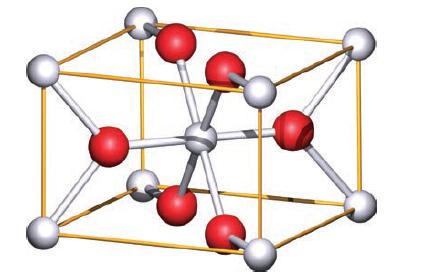
(a) Confirm that the unit cell for perovskite shown in Fig. 6.26a is consistent with the stoichiometry CaTiO3.(b) A second unit cell can be drawn for perovskite. This has Ti(IV) at the centre of a cubic cell; Ti(IV) is in an octahedral environment with respect to the O2− ions. In what sites must
(a) Lithium metal undergoes a phase change at 80K (1 bar pressure) from the α- to β-form; one form is bcc and the other is a close-packed lattice. Suggest, with reasons, which form is which. What name is given to this type of structural change? (b) Suggest why tin buttons on
(a) Use band theory to explain the difference between an insulator, conductor and semiconductor. (b) With reference to beryllium, explain how a small s–p separation of atomic ns and np levels affects the properties of the bulk metal.
(a) Draw a representation of the structure of diamond and give a description of the bonding. (b) Is the same picture of the bonding appropriate for silicon, which is isostructural with diamond? If not, suggest an alternative picture of the bonding.
(a) Give a definition of electrical resistivity and state how it is related to electrical conductivity. (b) At 273–290 K, the electrical resistivities of diamond, Si, Ge and a-Sn are approximately 1 × 10¹¹, 1 × 10⁻³, 0.46 and 11 × 10−8 Ωm. Rationalize this trend in values. (c)
Distinguish between an intrinsic and extrinsic semiconductor, giving examples of materials that fall into these classes, and further classify the types of extrinsic semiconductors. What structural features do many semiconductors have in common?
The metallic, covalent and ionic radii of Al are 143, 130 and 54 pm respectively; the value of rion is for a 6-coordinate ion. (a) How is each of these quantities defined? (b) Suggest reasons for the trend in values.
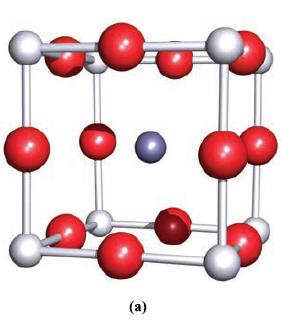
With reference to the NaCl, CsCl and TiO2 structure types, explain what is meant by (a) Coordination number, (b) Unit cell, (c) Ion sharing between unit cells, (d) Determination of the formula of an ionic salt from the unit cell.
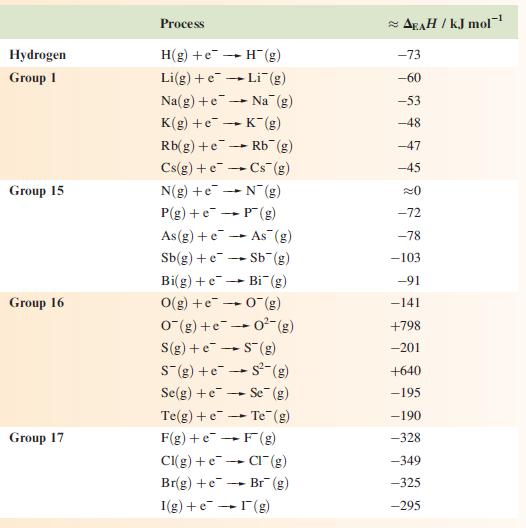
(a) Given that ∆U(0 K) and ∆fH°(298 K) for MgO are −3795 and −602 kJ mol−1 respectively, derive a value for ∆EAH°(298 K) for the reaction:Other data: see Appendices. (b) Compare the calculated value with that obtained using electron affinity data from Appendix 9, and suggest reasons
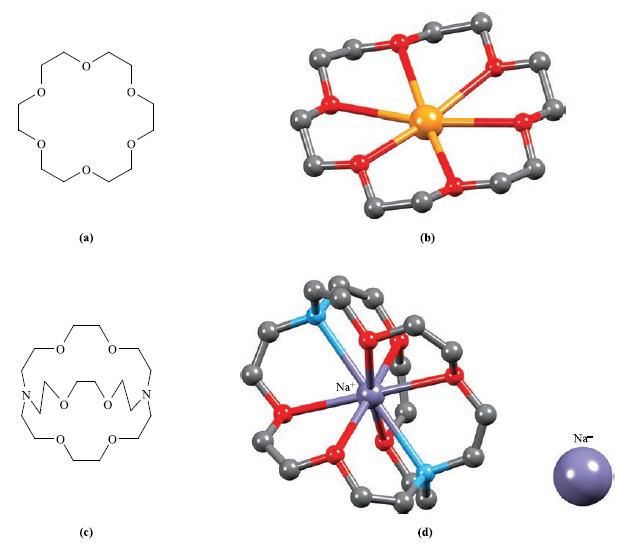
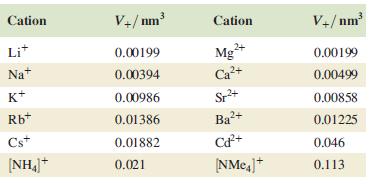
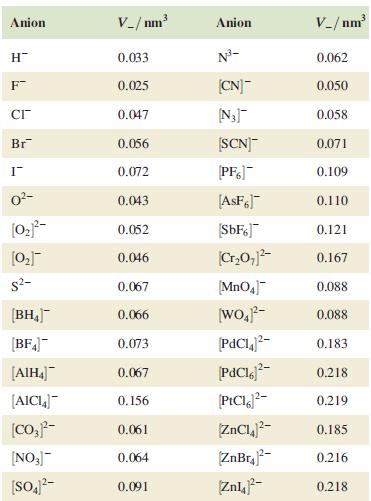
Cryptands such as crypt-[222] (see Fig. 11.9) are encapsulating ligands for s-block metal ions. Use the VBT approach to estimate values for the lattice energies of KMnO4 and [K(crypt-[222])][MnO4]. Comment on difference between the values. Data: see Tables 6.5 and 6.6; V(K(crypt-[222])+) = 0:531
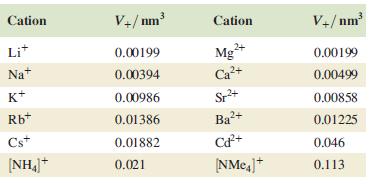
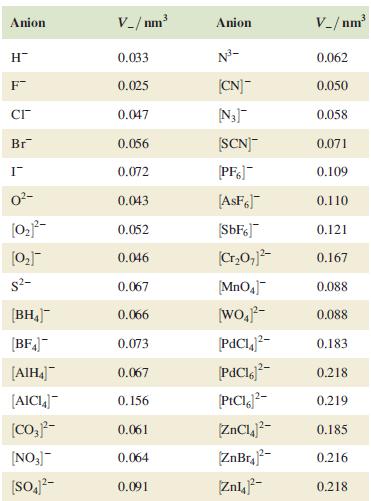
Use data in Tables 6.5 and 6.6 to estimate the lattice energies of crystalline (a) [NH4][PF6], (b) K2[Cr2O7] (c) BaS.Table 6.5Table 6.6.
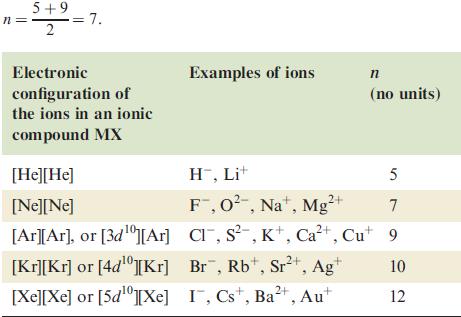
Data from Tables 6.3 and 6.4 are needed for this problem. (a) Estimate the lattice energy of CsCl if the Cs—Cl internuclear distance is 356.6 pm.(b) Now consider a polymorph of CsCl that crystallizes with an NaCl structure. Estimate its lattice energy given that the Cs—Cl distance is 347.4
Using data from the Appendices and the fact thatcalculate a value for the lattice energy of BaCl2. Outline any assumptions that you have made. AH°(298K) = -859 kJ mol-¹,
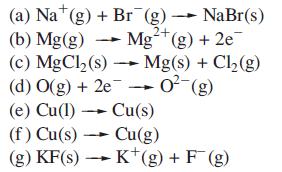
Which of the following processes are expected to be exothermic? Give reasons for your answers. (a) Na¹ (g) + Br (g) → NaBr(s) (b) Mg(g) Mg²+ (g) + 2e 2+ (c) MgCl₂ (s) →→→ Mg(s) + Cl₂(g) (d) O(g) + 2e 0² (g) (e) Cu(1)→ Cu(s) (f) Cu(s)→ Cu(g) (g) KF(s) → K+ (g) + F(g)
When nickel(II) oxide is heated in O2, some of the cations are oxidized and vacant cation sites are formed according to the equation:where h+ denotes a vacant cation site and (s) denotes an ion in the solid. Account for the fact that the electrical conductivity of the product is, for small
Discuss the interpretation of the following:(a) ∆fHo(298 K) becomes less negative along the series LiF, NaF, KF, RbF, CsF, but more negative along the series LiI, NaI, KI, RbI, CsI.(b) The thermal stability of the isomorphous sulfates of Ca, Sr and Ba with respect to decomposition into the metal
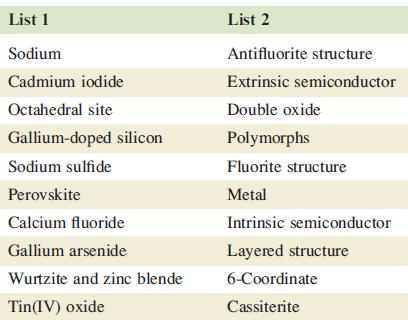
The first list below contains words or phrases, each of which has a ‘partner’ in the second list, e.g. ‘sodium’ in the first list can be matched with ‘metal’ in the second list. Match the ‘partners’; there is only one match for each pair of words or phrases. List 1 Sodium Cadmium
Salts containing the [N5]+ and [N3]‾ ions are known (see Section 15.5), but (as of 2016) the ionic salt [N5]+ [N3]‾ has not been isolated. (a) Use the VBT approach to estimate the lattice energy of [N5]+[N3]‾. Data: V (N5+) = 0.051 nm3; V(N3‾) = 0.058 nm3. (b) Given that
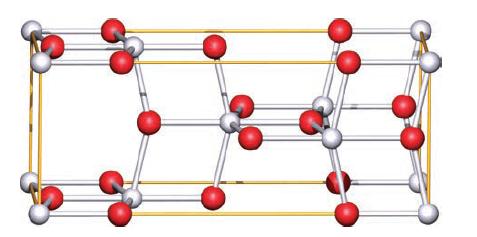
TiO2 occurs naturally as three polymorphs: rutile (Fig. 6.24), anatase (Fig. 6.32) and brookite. (The unit cells of rutile and anatase can be viewed in 3D by going to www.pearsoned.co.uk/housecroft and following the links to the figures.) Rutile is commercially important as a white pigment in
Explain what is meant by Frenkel and Schottky defects in an NaCl structure type.
(a) How many ion-pairs are present in a unit cell of NaCl? (b) A unit cell length of 564 pm for NaCl has been determined by X-ray diffraction studies. Determine the volume of a unit cell of NaCl.(c) Using the data from part (b), determine the density of NaCl. (d) By comparing your answer
(a) VO, TiO and NiO all have defect rock salt structures. Explain what this statement means. (b) In NiO, the Ni–O internuclear separation is 209 pm. Determine the volume of a unit cell of NiO, and its density, assuming a non-defect structure. Given that the observed density of NiO is 6.67 g
Explain what is meant by (a) A Schottky defect in CaCl2, (b) A Frenkel defect in AgBr. (c) Suggest what effect doping crystals of AgCl with CdCl2 might have on the AgCl lattice structure.
Why are d-block metal oxides much more frequently non-stoichiometric than are non-d-block metal oxides?
Suggest why doping NiO with Li2O in air (or the presence of O2) leads to an increase in electrical conductivity, and comment on the dependence of this increase on the amount of lithium dopant.
Comment on each of the following: (a) The difference between extrinsic and intrinsic defects; (b) why CaO is added to ZrO2 used in refractory materials; (c) The formation of solid solutions of Al2O3 and Cr2O3.
Comment on the structural and compositional implications of (a) The Fe-deficiency of iron(II) oxide, (b) The anion-excess nature of uranium(IV) oxide.
Give explanations for the following observations.(a) Raising the temperature of a sample of α-Fe from 298K to 1200K (at 1 bar pressure) results in a change of coordination number of each Fe atom from 8 to 12.(b) Although a non-metal, graphite is often used as an electrode material.(c) The
ReO3 is a structure-prototype. Each Re(VI) centre is octahedrally sited with respect to the O2− centres. The unit cell can be described in terms of a cubic array of Re(VI) centres, with each O2− centre at the centre of each edge of the unit cell. Draw a representation of the unit cell and use
Suggest an explanation for each of the following observations.(a) The Cr and Ni content of stainless steels used to make knife blades is different from that used in the manufacture of spoons.(b) There is a poor match between experimental and calculated (Born–Lande´) values of the lattice energy
Despite the worldwide dependence on Si as a semiconductor, by far the major uses of Si are in the metallurgy industries. By reference to sections in this book, comment on the importance of silicon to the iron and steel industry, and to the Mg manufacturing industry.
Almost all natural diamonds are impure and contain substitutional nitrogen. Clusters of N atoms are present in Type 1a diamonds (the most common defect structure), while Type 1b diamonds contain well-separated N atoms. (a) What is meant by ‘substitutional nitrogen’? (b) In what type
The mineral brucite, Mg(OH)2, adopts a CdI2-type structure, and substitution of Al3+ for Mg2+ results in a series of materials of general formulawhere x ≈ 0.10–0.35. (a) With the aid of a diagram, describe the CdI2 prototype structure. Detail the interactions that operate within and between
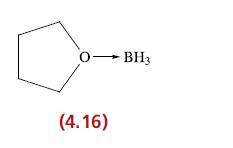
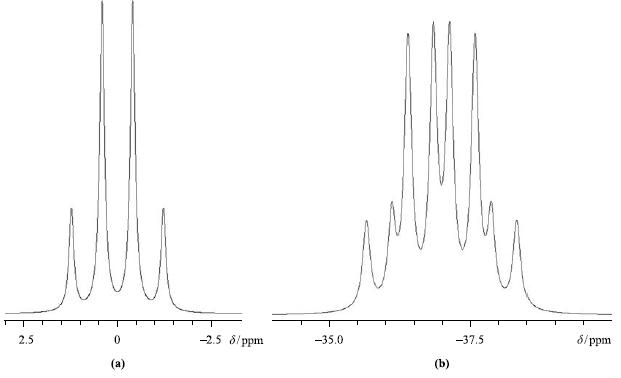
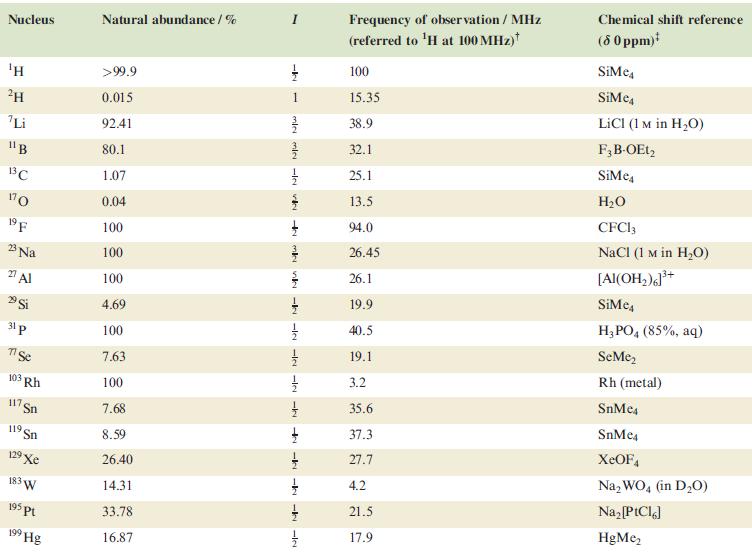
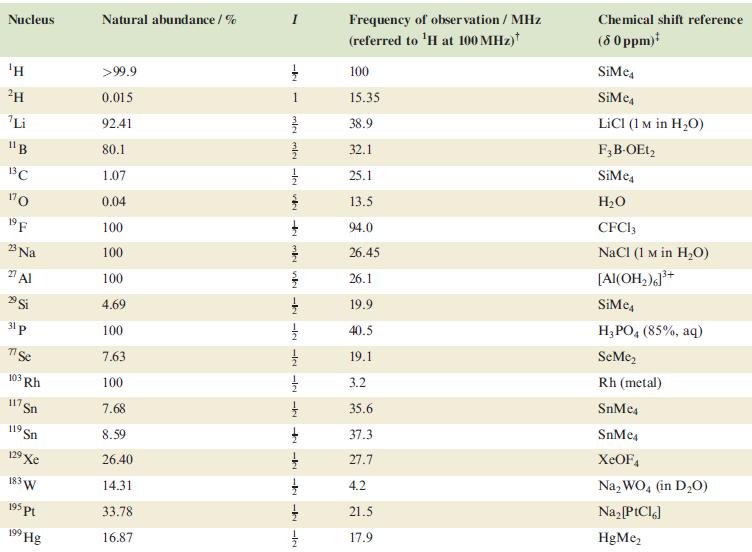
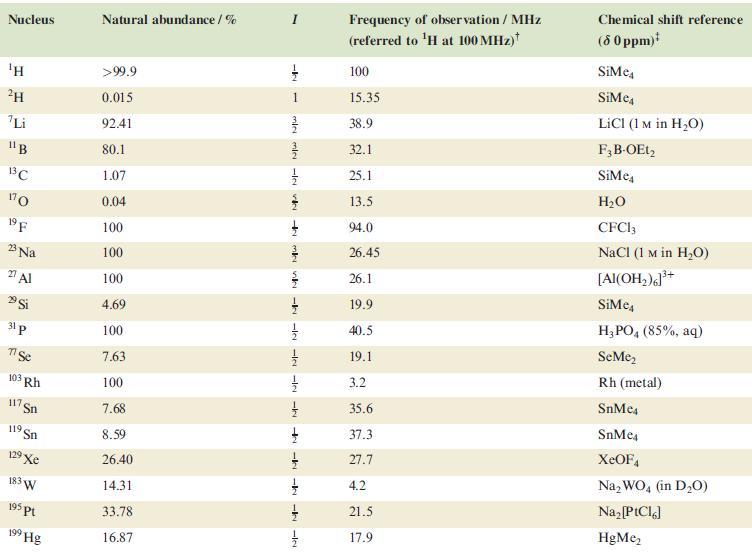
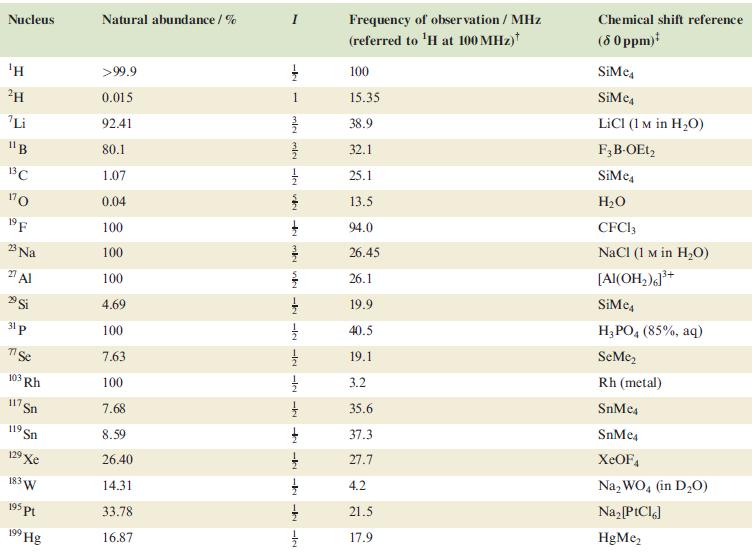
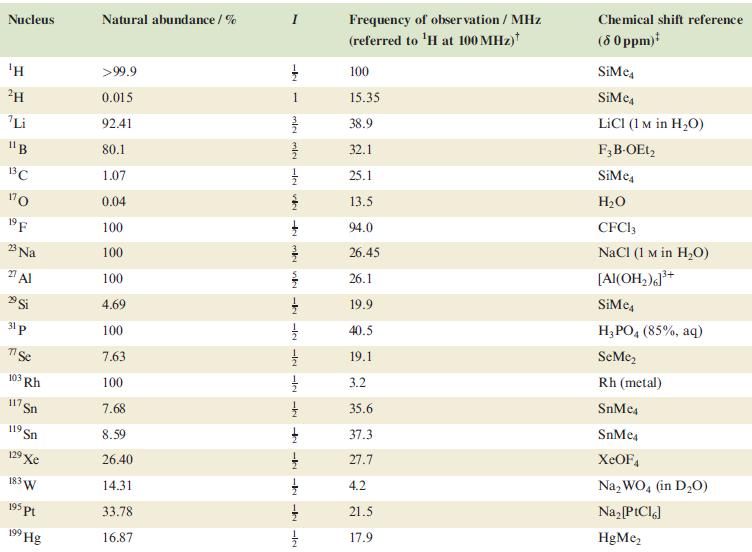
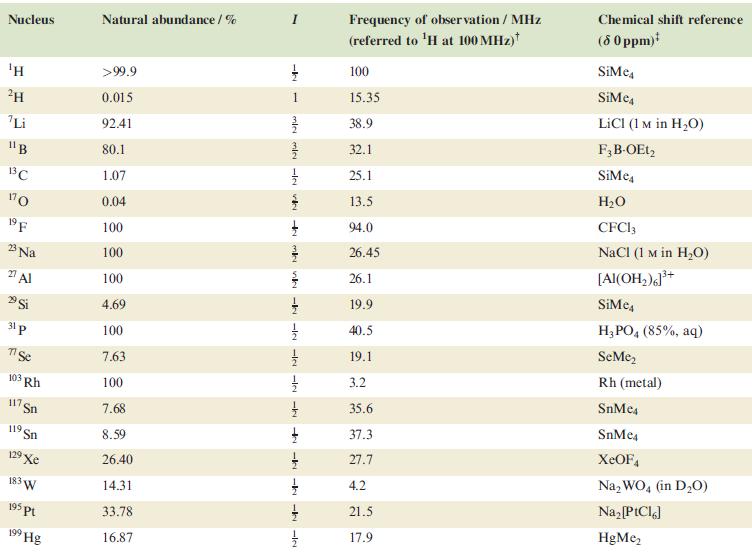
In problems 4.28 to 4.51, refer to Table 4.3 for isotopic abundances where needed.Figure 4.39 shows the 11B NMR spectra of (a) THF·BH3 (4.16)(b) PhMe2P·BH3. Interpret the observed coupling patterns and mark on the figure where you would measure relevant coupling constants.Figure 4.39Table 4.3
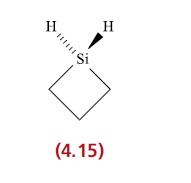
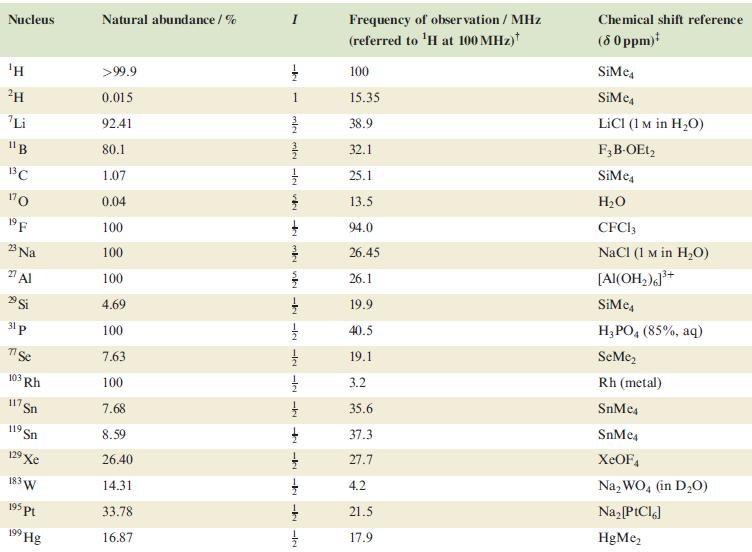
In problems 4.28 to 4.51, refer to Table 4.3 for isotopic abundances where needed.The 29Si NMR spectrum of compound 4.15 shows a triplet with a coupling constant of 194 Hz. (a) Rationalize these data (b) Predict the nature of the signal in the 1H NMR spectrum of 4.15 that is assigned to the
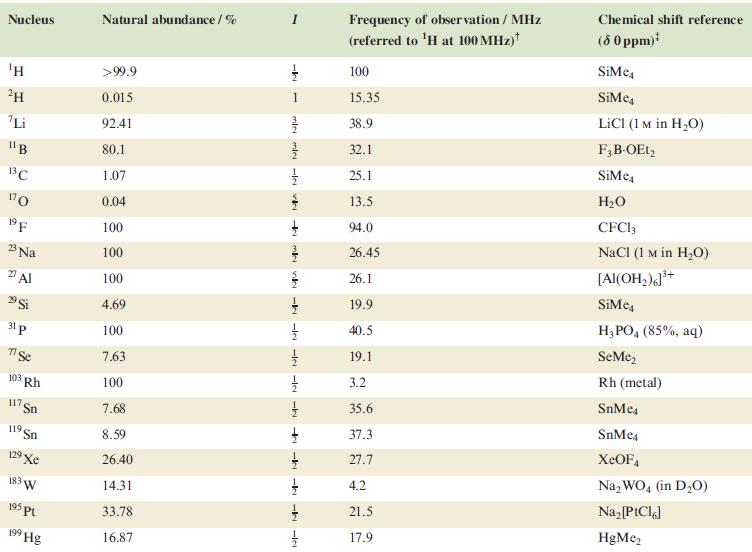
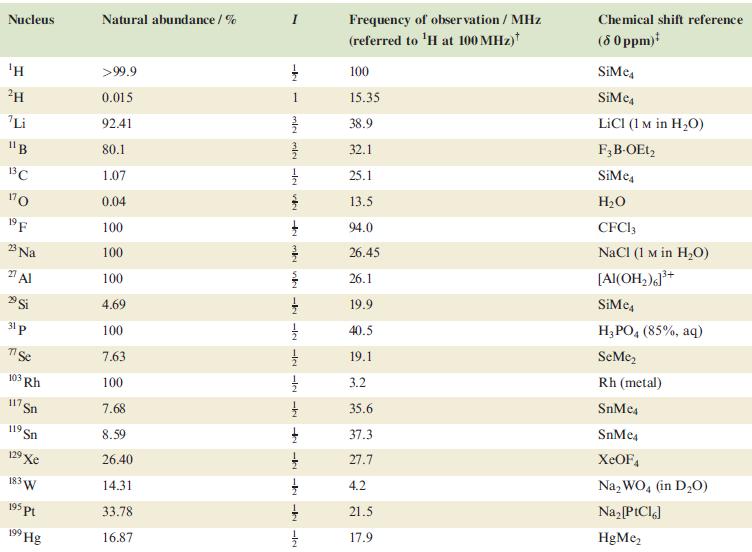
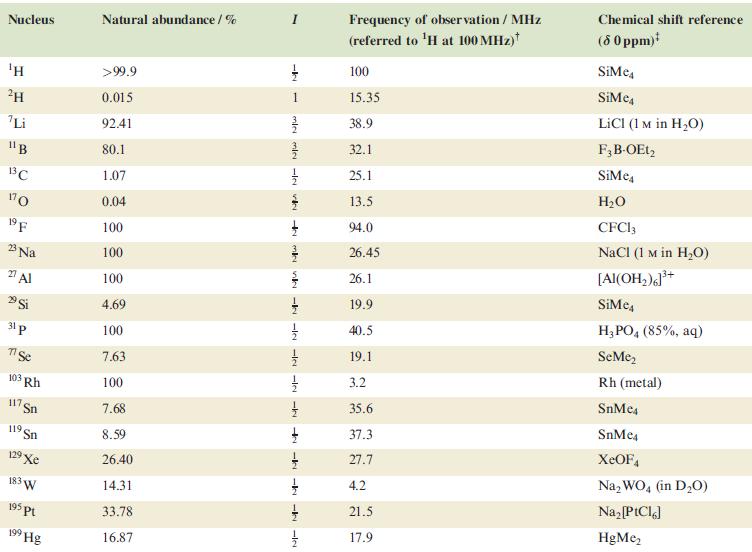
In problems 4.28 to 4.51, refer to Table 4.3 for isotopic abundances where needed.The 31P NMR spectrum of PMe3 consists of a binomial decet (J 2.7 Hz). (a) Account for this observation. (b) Predict the nature of the 1H NMR spectrum of PMe3.Table 4.3 Nucleus ΤΗ ²H Li 11B 13C 170 19 F 23 Na 2
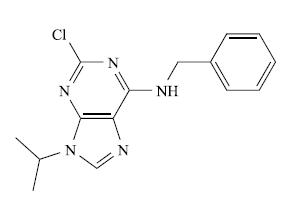
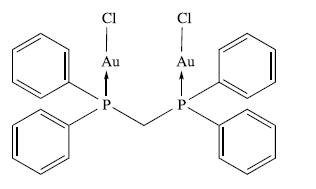
1.0mmol of the ligand, L, shown below was reacted with 0.50 mmol of PtCl2. The positive mode MALDI-TOF mass spectrum of the purified product was run in α-cyano-4-hydroxycinnamic acid matrix. The most intense peaks in the peak envelopes in the mass spectrum were m/z 891.1, 869.1, 833.2 and 302.1.
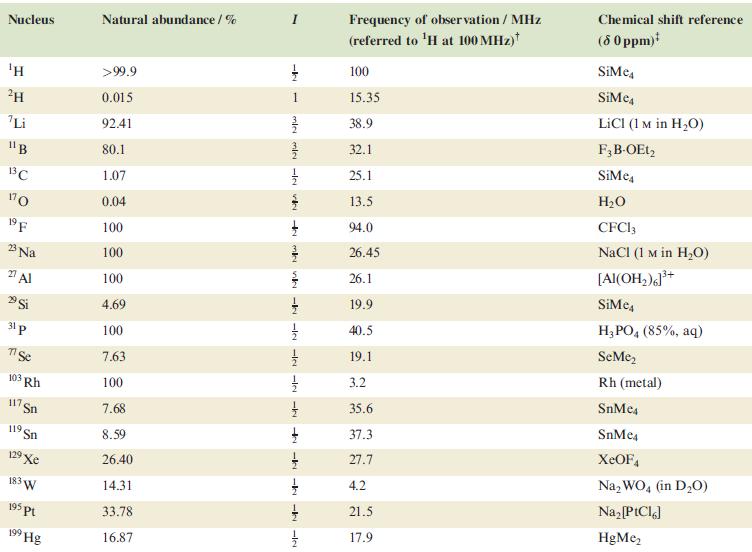
In problems 4.28 to 4.51, refer to Table 4.3 for isotopic abundances where needed.The 19F NMR spectrum of each of the following molecules exhibits one signal. For which species is this observation consistent with a static molecular structure as predicted by the VSEPR model: (a) SiF4; (b)
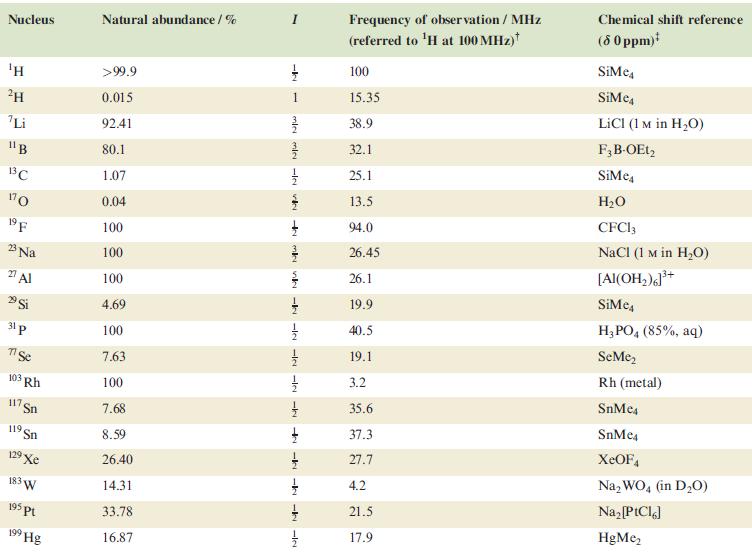
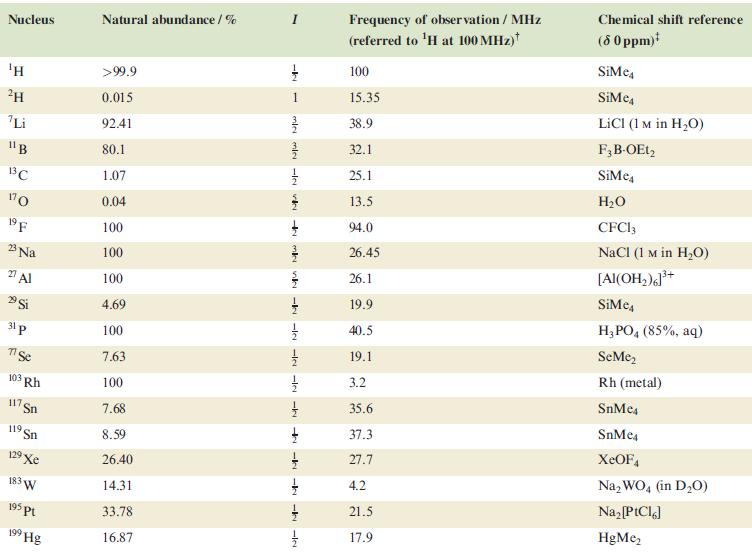
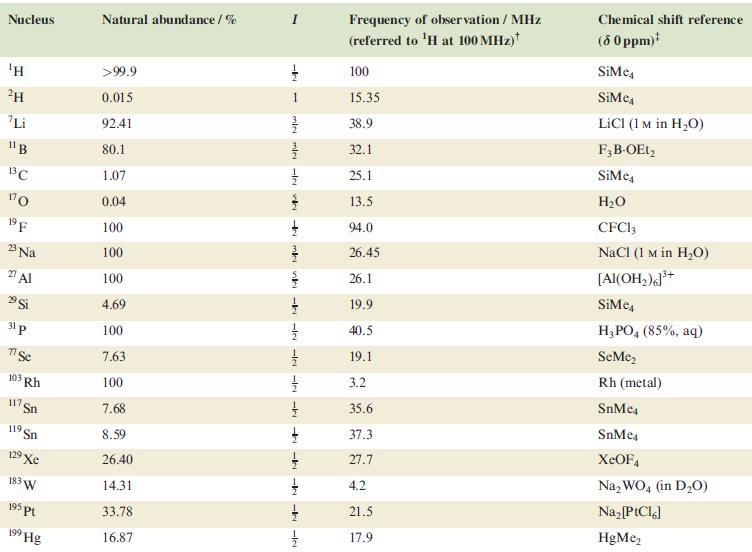
In problems 4.28 to 4.51, refer to Table 4.3 for isotopic abundances where needed.Outline the mechanism of Berry pseudo-rotation, giving two examples of molecules that undergo this process.Table 4.3 Nucleus ΤΗ ²H Li 11B 13C 170 19 F 23 Na 2 Al 29 Si 31 p 7 Se 103 Rh 117. Sn 119 Sn 19 Xe 183
In problems 4.28 to 4.51, refer to Table 4.3 for isotopic abundances where needed.(a) Predict the structure of SF4 using the VSEPR model. (b) Account for the fact that at 298K and in solution the 19F NMR spectrum of SF4 exhibits a singlet but that at 175 K, two equal-intensity triplets are
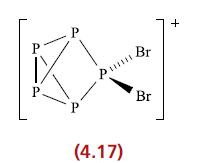
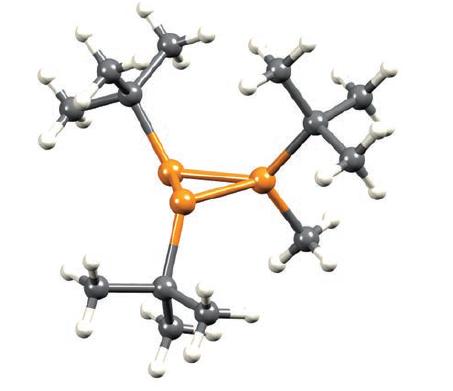
In problems 4.28 to 4.51, refer to Table 4.3 for isotopic abundances where needed.The structure of [P5Br2]+ is shown in diagram 4.17. Account for the fact that the 31P NMR spectrum of this cation at 203K consists of a doublet of triplets (J 321 Hz, 149 Hz), a triplet of triplets (J 321 Hz, 26 Hz)
In problems 4.28 to 4.51, refer to Table 4.3 for isotopic abundances where needed.Is it correct to interpret the phrase ‘static solution structure’ as meaning necessarily rigid? Use the following molecules to exemplify your answer: PMe3; OPMe3; PPh3; SiMe4.Table 4.3
Use the VSEPR model to predict the structures of(a) H2Se, (b) [BH4]−, (c) NF3, (d) SbF5, (e) [H3O]+,(f) IF7, (g) [I3]−, (h) [I3]+, (i) SO3.
In problems 4.28 to 4.51, refer to Table 4.3 for isotopic abundances where needed.Account for the fact that the 29Si NMR spectrum of a mixture of SiCl4 and SiBr4 that has been standing for 40 h contains five singlets which include those assigned to SiCl4 (δ –19 ppm) and SiBr4 (δ – 90
In problems 4.28 to 4.51, refer to Table 4.3 for isotopic abundances where needed.(a) In the 1H NMR spectrum of compound 4.21, there is a triplet at δ 3.60 ppm (J 10.4 Hz). Assign the signal and explain the origin of the coupling. What would you observe in the 31P{1H} NMR spectrum of compound
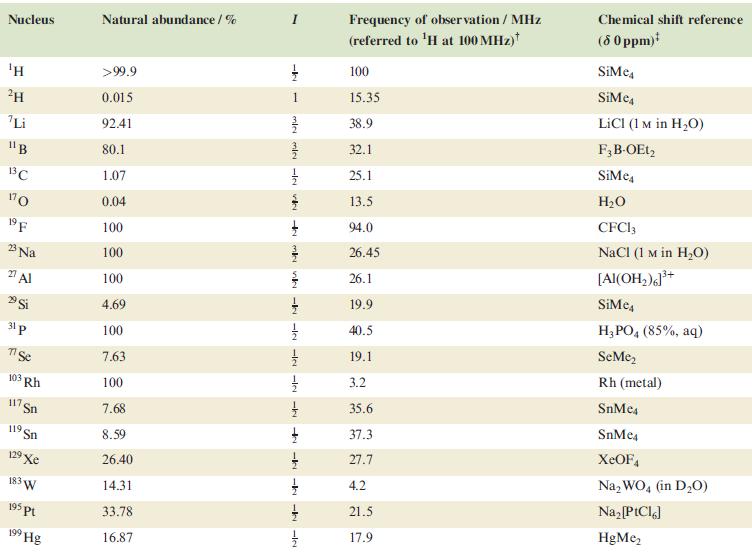
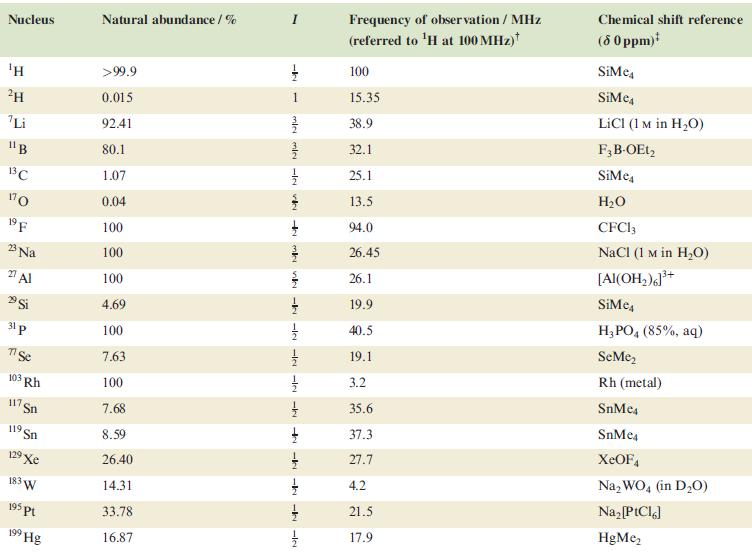
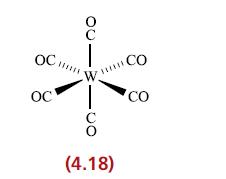
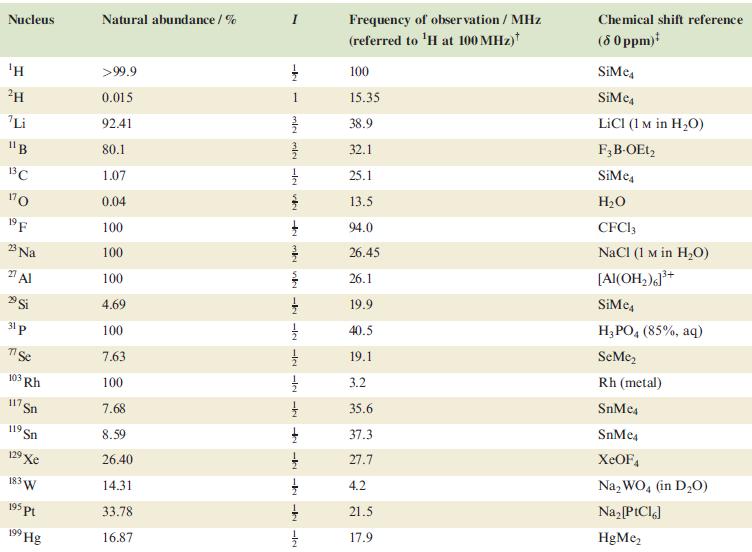
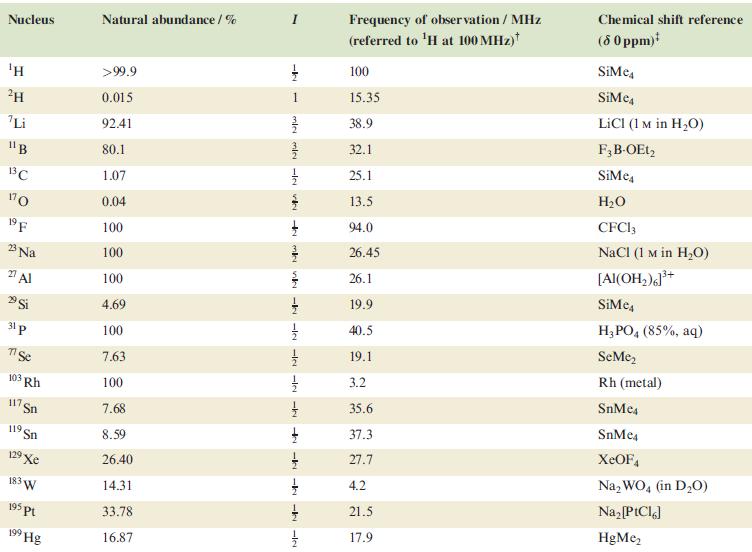
In problems 4.28 to 4.51, refer to Table 4.3 for isotopic abundances where needed.Tungsten hexacarbonyl (4.18) contains six equivalent CO ligands. With reference to Table 4.3, suggest what you would expect to observe in the 13C NMR spectrum of a 13C-enriched sample of W(CO)6.Table 4.3
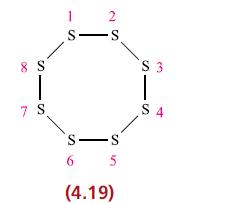
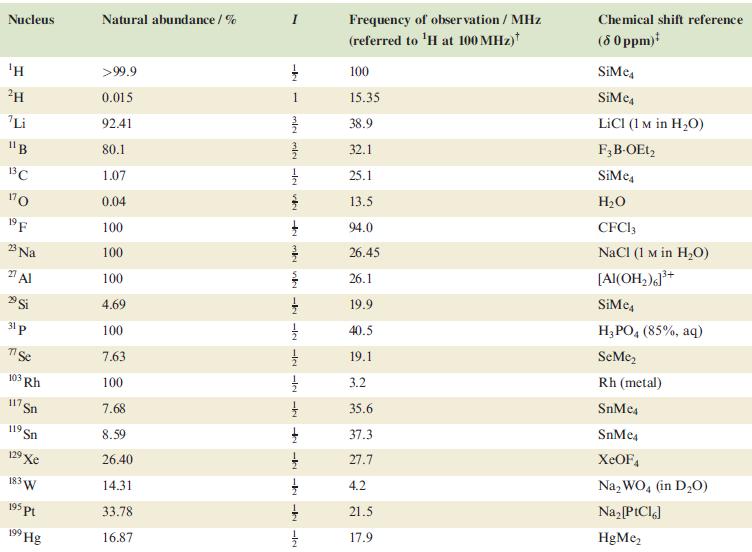
In problems 4.28 to 4.51, refer to Table 4.3 for isotopic abundances where needed.The compounds SenS8–n with n = 1–5 are structurally similar to S8. Structure 4.19 shows a representation of the S8 ring (it is actually non-planar) and the atom numbering scheme; all the S atoms are equivalent.
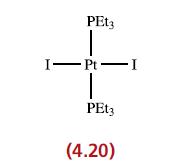
In problems 4.28 to 4.51, refer to Table 4.3 for isotopic abundances where needed.(a) Explain why the 19F NMR spectrum of [PF6]– appears as a doublet. (b) The 31P{1H} NMR spectrum of trans-[PtI2(PEt3)2] (4.20) shows a three line pattern, the lines in which have relative integrals of ≈ 1 : 4
In problems 4.28 to 4.51, refer to Table 4.3 for isotopic abundances where needed.Explain why the 19F NMR spectrum of BFCl2 consists of an approximate 1 :1 :1 :1 quartet. What would you expect to observe in the 19F NMR spectrum of BF2Cl?Table 4.3 Nucleus ΤΗ ²H Li 11B 13C 170 19 F 23 Na 2 Al 29
In problems 4.28 to 4.51, refer to Table 4.3 for isotopic abundances where needed.Rationalize the fact that at 173 K, 1H NMR spectroscopy shows that SbMe5 possesses only one type of Me group.Table 4.3 Nucleus ΤΗ ²H Li 11B 13C 170 19 F 23 Na 2 Al 29 Si 31 p 7 Se 103 Rh 117. Sn 119 Sn 19 Xe 183
In problems 4.28 to 4.51, refer to Table 4.3 for isotopic abundances where needed.MeCN solutions of NbCl5 and HF contain a mixture of octahedral [NbF6]−, [NbF5Cl]−, [NbF4Cl2]−, [NbF3Cl3]− and [NbF2Cl4]−. Predict the number and coupling patterns of the signals in the 19F NMR spectrum of
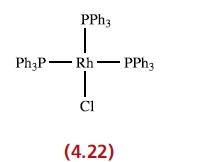
In problems 4.28 to 4.51, refer to Table 4.3 for isotopic abundances where needed.The 31P{1H} NMR spectrum of a CDCl3 solution of the square planar rhodium(I) complex 4.22 exhibits a doublet of doublets (J 38 Hz, 145 Hz) and a doublet of triplets (J 38 Hz, 190 Hz). Rationalize these data.Table 4.3
In problems 4.28 to 4.51, refer to Table 4.3 for isotopic abundances where needed.The 19F NMR spectrum of the octahedral ion [PF5Me]‾ shows two signals (δ – 45.8 and –57.6 ppm). Why are two signals observed? From these signals, three coupling constants can be measured: JPF = 829 Hz, JPF =
(a) If Na has the ground state electronic configuration of [Ne]3s1, why is NaCl EPR silent? (b) Sketch an EPR spectrum for an isotropic system in which an electron interacts with a 14N (I = 1) nucleus.
In problems 4.28 to 4.51, refer to Table 4.3 for isotopic abundances where needed.(a) Predict what you would expect to see in the 15N NMR spectrum of the isotopically labelled compound cis-[Pt(15NH3)2Cl2]. (b) The observed coupling constants for this compound are J15N1H = 74 Hz and J15N195Pt = 303
Vanadium has two isotopes (50V, 0.25%; 51V, 99.75%). The EPR spectrum of an aqueous solution of [VO(OH2)5]2+ shows an 8-line pattern, and g-values of gzz = 1.932, gxx = 1.979 and gyy = 1.979 were determined. What can you deduce from the data?
What are the features that distinguish X-ray quality single crystals, a polycrystalline solid and an amorphous solid?
Molecular structures determined by X-ray diffraction are often represented in the form of ORTEP diagrams showing thermal ellipsoids for non-hydrogen atoms.(a) What do you understand by a thermal ellipsoid ?(b) Why are H atoms usually represented isotropically?
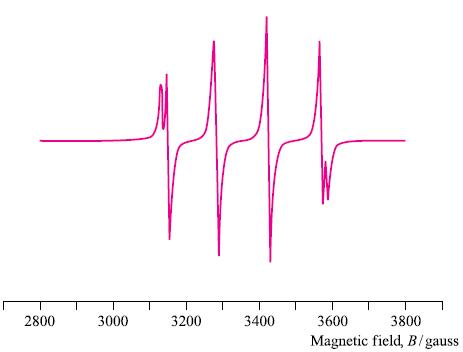
Figure 4.41 shows the single crystal EPR spectrum arising from Cu2+ doped into CaCd(O2CMe)4 · 6H2O for one orientation of the crystal relative to the external magnetic field. The spectrum illustrates the presence of both isotopes of Cu (63Cu and 65Cu, natural abundances 69.15% and 30.85%,
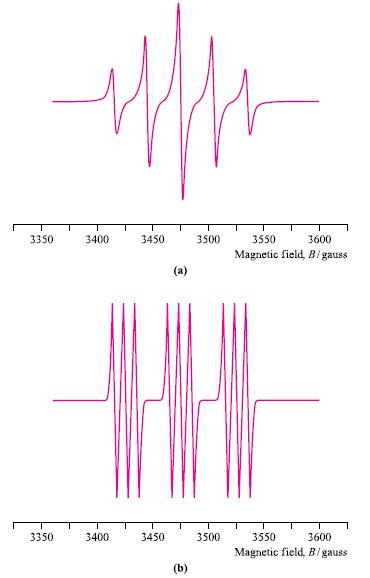
Figure 4.42 shows the EPR spectra for two isotropic systems in which the unpaired electron interacts with two 14N nuclei (I = 1). (a) Use Fig. 4.42a to calculate the gyromagnetic factor of the paramagnetic species if the spectrum was measured at 9.75GHz. (b) Which EPR spectrum in Fig. 4.42
Predict what you expect to observe in the EPR spectrum of a species in which an unpaired electron interacts with one 14N nucleus (I = 1) and one 1H nucleus (I = 1/2) if the hyperfine coupling constants are (a) A(14N) = A(1H) = 30 G; (b) A(14N) = 30 G, A(1H) = 10 G.
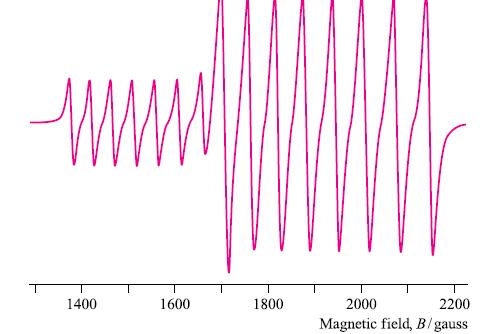
Figure 4.43 shows the 9.214GHz EPR spectrum arising from the two sites of Co2+ (59Co, 100% abundant, I = 7/2) doped into magnesium acetate. The sites differ slightly in their effective hyperfine coupling constants, and more significantly in their g-values. (a) Calculate the g-values for the two
Suggest a suitable technique for investigating the presence of Fe2+ and/or Fe3+ ions in clays, and for distinguishing between tetrahedrally and octahedrally sited Fe centres. Give reasons for your choice.
(a) Explain why the location of H atoms by X-ray diffraction is difficult. (b) What technique (and why) is used for the accurate determination of H atom positions in a structure? Comment on any limitations of this method.
Comment on ways in which you can ensure that the X-ray crystal structure of a compound that you have prepared is representative of the bulk sample of the compound.
You have prepared the complex [Ru(py)6][BF4]2 (py = pyridine). (a) What information can you obtain from the elemental analysis? (b) How would you confirm the presence of the [BF4]‾ ion? (c) How would you confirm that all the pyridine ligands were in the same environment in
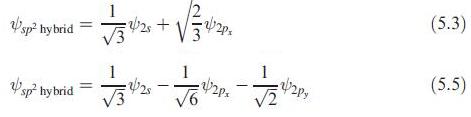
(a) State what is meant by the hybridization of atomic orbitals. (b) Why does VB theory sometimes use hybrid orbital rather than atomic orbital basis sets?(c) Show that eqs. 5.1 and 5.2 correspond to normalized wavefunctions.Equations Usp hybrid = (1/25 + 2/20₂) (5.1)
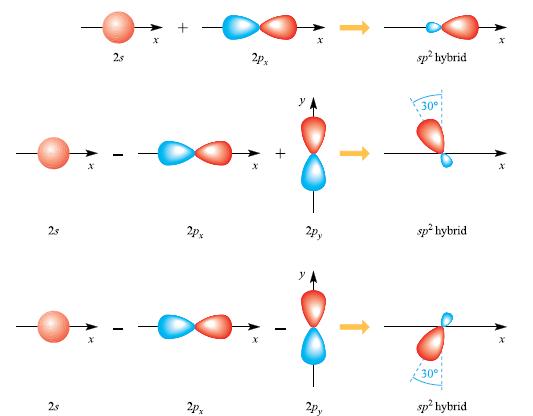
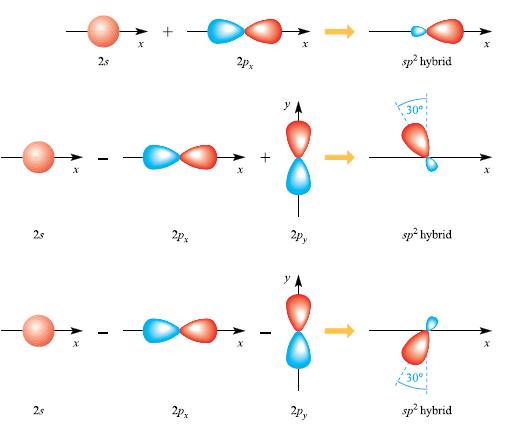
Figure 5.4 shows the formation of three sp2 hybrid orbitals (see eqs. 5.3–5.5). (a) Confirm that the directionalities of the three hybrids are as specified in the figure. (b) Show that eqs. 5.3 and 5.5 correspond to normalized wavefunctions.Equations Figure 5.4. sp hybrid 2/25 + 2/20 Psp
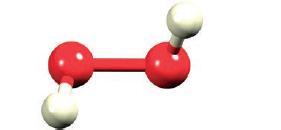
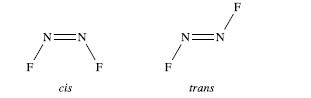
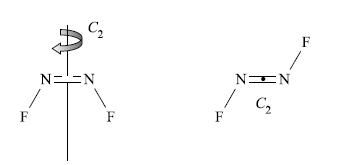
(a) The structures of cis- and trans-N2F2 were shown in worked example 3.1. Give an appropriate hybridization scheme for the N atoms in each isomer. (b) What hybridization scheme is appropriate for the O atoms in H2O2 (Fig. 2.1)?Figure 2.1Data from Example 3.1How do the rotation axes and planes of
The question of whether you have synthesized a monomeric (X) or dimeric (X2) species can be solved in a number of ways. (a) Will elemental analysis help you? (b) The compound contains an organic unit that can be probed by 1H NMR spectroscopy. Will this technique distinguish between
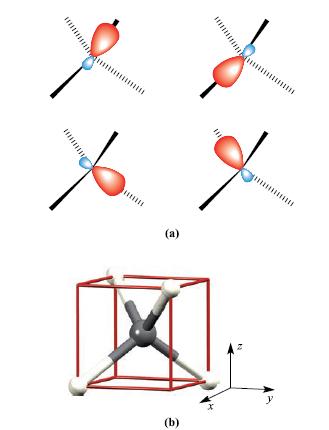
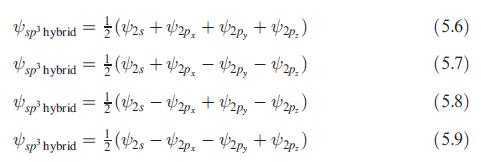
Use the information given in Fig. 5.6b and eqs. 5.6 to 5.9 to reproduce the directionalities of the four sp3 hybrid orbitals shown in Fig. 5.6a.Figure 5.6Equations mun (a) 77 (b) HI y ******
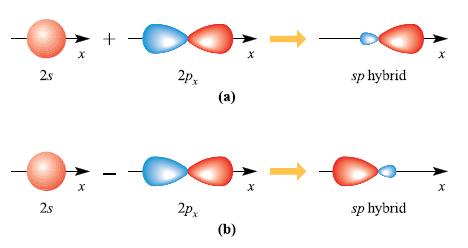
(a) Derive a set of diagrams similar to those in Figs. 5.2 and 5.4 to describe the formation of sp2d hybrid orbitals. (b) What is the percentage character of each sp2d hybrid orbital in terms of the constituent atomic orbitals?Figure 5.2.Figure 5.4. 2s 2.s X X 2px 2px (a) (b) X sp hybrid sp
A student has prepared a sample of [Zn(en)3]Cl2 (en=H2NCH2CH2NH2) but is worried that the complex appears blue when [Zn(en)3]Cl2 should be colourless. The student wonders if she picked up a bottle of nickel(II) chloride instead of zinc(II) chloride. The experimental CHN analysis for the
NMR spectroscopy is considered to be one of the most powerful, routine analytical tools for the characterization of new compounds. Comment on the validity of this statement.
Portable mass spectrometers are now available for monitoring gaseous emissions from volcanoes. Analyses after the eruption of the Turrialba Volcano in Costa Rica in January 2010 showed the presence of [M]+ ions (i.e. atomic ions and nonfragmented molecular ions) at m/z 64, 44, 40, 34, 32, 28 and
Ultramarines are bright blue pigments based on a zeolite (sodalite) that hosts the colour centres [S2]‾ and [S3]‾. Ultramarines include lapis lazuli and have been in use for over 5500 years. The UV-VIS spectrum of [S2]‾ exhibits a broad band centred at 370 nm, while [S3]‾ absorbs at 595
Suggest an appropriate hybridization scheme for the central atom in each of the following species: (a) SiF4;(b) [NO2]+; (c) NF3; (d) F2O; (e) [H3O]+; (f) AlH3;(g) CS2; (h) BF3.
(a) PF5 has D3h symmetry. What is its structure?(b) Suggest an appropriate bonding scheme for PF5 within VB theory, giving appropriate resonance structures.
(a) Draw the structure of [CO3]2‾. (b) If all the C—O bond distances are equal, write a set of resonance structures to describe the bonding in [CO3]2‾.(c) Describe the bonding in [CO3]2‾ in terms of a hybridization scheme and compare the result with that obtained in part (b).
Showing 1700 - 1800
of 1950
First
6
7
8
9
10
11
12
13
14
15
16
17
18
19
20
Step by Step Answers

 Get 50% OFF
Claim Now
Get 50% OFF
Claim Now