New Semester
Started
Get
50% OFF
Study Help!
--h --m --s
Claim Now
Question Answers
Textbooks
Find textbooks, questions and answers
Oops, something went wrong!
Change your search query and then try again
S
Books
FREE
Study Help
Expert Questions
Accounting
General Management
Mathematics
Finance
Organizational Behaviour
Law
Physics
Operating System
Management Leadership
Sociology
Programming
Marketing
Database
Computer Network
Economics
Textbooks Solutions
Accounting
Managerial Accounting
Management Leadership
Cost Accounting
Statistics
Business Law
Corporate Finance
Finance
Economics
Auditing
Tutors
Online Tutors
Find a Tutor
Hire a Tutor
Become a Tutor
AI Tutor
AI Study Planner
NEW
Sell Books
Search
Search
Sign In
Register
study help
sciences
introductory chemistry atoms first
Introductory Chemistry Atoms First 5th Edition Steve Russo And Michael Silver - Solutions
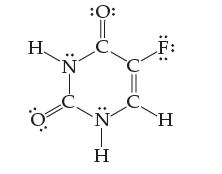
Fluorouracil is a compound administered to cancer patients as a part of chemotherapy. Assign an oxidation state to every atom: H 0 -Z: N :Z-H :: H
Assign an oxidation state to each carbon in:(a) H3CCH3(b) H2CCH2(c) HCCH
Assign an oxidation number to each atom and identify the oxidizing agent and reducing agent: 3 Na2SO3 + 2 KMnO4 + H₂O → 3 Na₂SO4 + 2 MnO₂ + 2 KOH
The spontaneous redox reaction Mn + Cd2+ → Mn2+ + Cd takes place in a battery.(a) What is the oxidizing agent?(b) What is the reducing agent?(c) Which metal is the cathode?(d) Which metal is the anode?
You are trying to determine the identity of an unknown metal. You place a strip of it in a solution of Mg2+ , and no reaction occurs. You then place a strip of it in a solution of Zn2+, and zinc metal plates out on the strip. Name one possibility for the identity of the unknown metal.
Use the shortcut rules to assign an oxidation state to each atom:(a) PF6–(b) Mo2O72–(c) HPbO2– (d) HC2O4–
When you turn on an electrical appliance, are you consuming electrons?
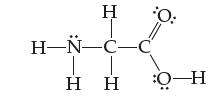
Assign an oxidation state to each atom in the amino acid glycine: Η Η- H-N-C-C T Η Η O-H 0:
Identify the oxidizing agent and reducing agent in the reaction IO + 71 + 8 H→412 + 4 H₂O
You create a battery using a zinc anode in a solution of Zn2+ ions connected to a nickel cathode in a solution of Ni2+ ions. The two beakers are also connected with a salt bridge containing K+ ions and Cl– ions.(a) Toward which electrode do K+ ions flow?(b) Toward which electrode do Cl– ions
The black tarnish that forms on silver is silver sulfide, Ag2S. The tarnish can be removed by wrapping the silver with a piece of aluminum foil and placing it in a solution of NaHCO3 (baking soda) to allow for the flow of ions.Explain how the aluminum foil aids in removing the tarnish.
Under what circumstances does fluorine not have an oxidation state of –1?
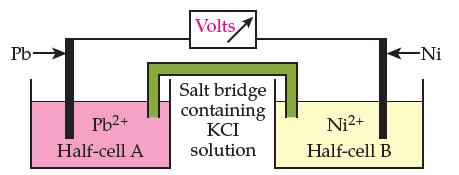
Here is a diagram of a battery made from nickel and lead:(a) In the diagram above, label the anode and the cathode and draw an arrow above the voltmeter to show the direction of the electron flow.(b) Write the net ionic equation for the spontaneous reaction that occurs in this battery.(c) In which
Why is it never a reasonable approximation to ignore intermolecular forces in liquids and solids?
An “empty” 0.500-gallon milk carton sits in a room where the temperature is 25.20°C. The barometric pressure is exactly 1 atm.(a) What is the Kelvin temperature of the air inside the carton?(b) What is the pressure in millimeters of mercury of the air inside the carton?(c) What is the volume
In a gas, which one of the following is true?(a) The molecules are in constant contact with one another.(b) The molecules move in straight-line motion in random directions.(c) The molecules create pressure by colliding with each other.(d) The molecules do not attract one another at all in the gas
Design and then draw a device that allows you to increase the temperature of a gas without increasing its pressure.
Draw two boxes like this one, making one larger than the other. Put a single fast-moving ideal gas particle inside each box (traveling at the same speed in both boxes). Show the path of the particle over the same time interval for both boxes, and make your interval long enough to allow for several
A container is evacuated with a vacuum pump and its mass is measured. Then it is filled with H2 gas and its mass is measured again. If the mass increase is 10.50 g, how many moles of H2 gas are in the container?
Which one of the following is true for an ideal gas?(a) It is called ideal because the molecules do not move.(b) It is called ideal because the molecules travel at ideal velocities.(c) It is called ideal because its pressure is independent of temperature.(d) It is called ideal because there are no
List everything you need to know about a gas to determine its molar mass without having knowledge of the molecular formula. Then develop a set of instructions that tells someone how to calculate the molar mass.
A steel tank contains 12.992 kg of oxygen gas, O2. Measurements indicate that the pressure of the gas is 100.0 atm and its temperature is 300.0K. The internal volume of the tank is 100.0 L. Evaluate the numeric value of PV/nT (include units in your answer), and compare what you get with the
The gas in a pressurized container is at five times normal atmospheric pressure.(a) What is the gas pressure in millimeters of mercury?(b) What is the gas pressure in inches of mercury? (2.54 cm = 1 in.)
A gas produces pressure because:(a) All gases have an urge to escape.(b) Its molecules are heavier than air.(c) Its molecules collide with the container walls.(d) Its molecules are constantly accelerating.
A mercury barometer develops a leak, allowing some air to enter the glass tube. Will such a barometer read too high or too low a pressure? Explain your answer.
If a sample of gas in a steel container has its temperature increased:(a) Its pressure will increase because the number of moles will increase.(b) Its pressure will increase because the molecules move faster.(c) Its pressure will increase because the electrons in the gas molecules get excited.(d)
According to the ideal gas law, what happens to the pressure of a gas in a container when:(a) You double the absolute temperature of the gas?(b) You double the number of liters the container can hold?(c) You double the number of moles of the gas?(d) You double both the absolute temperature of the
The statement that for a gas, P = constant/V tells us that:(a) Volume is proportional to pressure.(b) Pressure is constant when V changes.(c) There is not enough information in the equation to say anything.(d) Pressure in inversely proportional to volume.
Suppose that 3.00 g of gaseous nitrogen, N2, is placed in a 2.00 L container. The pressure is measured to be 450.5 mm Hg. What is the Celsius temperature of the gas?
An inverse proportionality between variables means:(a) They are independent of one another but still related by a negative sign.(b) As one variable gets larger, so does the other.(c) As one variable gets smaller, so does the other.(d) As one variable gets larger, the other gets smaller.
An automobile tire is filled with O2 gas to a total pressure of 40.0 lb/in.2. The temperature is 22.5 °C. The inside volume of the inflated tire is 10.5 gallons. How many grams of O2 are in the tire? (760 mm Hg = 14.696 lb/in.2; 1 gallon = 3.785 L.
The pressure of a gas is proportional to the number of moles of gas because:(a) More moles results in more forceful collisions with the container walls.(b) More moles results in more collisions per unit time with the container walls.(c) More moles causes repulsions between gas molecules, which
A steel cylinder contains 0.01378 kg of an unknown gas. Combustion analysis indicates that the gas has the empirical formula H2S. The volume of the cylinder is 2.20 × 10³ mL, and the pressure inside the cylinder is 3.42 × 103 mm Hg. The cylinder is stored in a closet at 25.0°C. What is the
According to the ideal gas law, at STP, which one of the following is true?(a) All gases will have the same molar volume.(b) All gases will have molecules moving with the same average velocity.(c) All gases will have a volume equal to 1-L.(d) All gases will condense into a liquid.
Suppose you have a sample of CO2 gas and want to know its mass without bothering to use a balance. How could you do this?
If you measure P, V, n, and T for any sample of an ideal gas, the following will be true:(a) PV/nRT = 1(b) PV/nRT = R(c) P/V = n/T(d) nT/PV = R
A sample of hydrogen gas, H2, is in an outdoor 1000.0-gallon tank. It is winter, and the temperature is –4.50 °C. A pressure gauge indicates that the pressure inside the tank is 32.6 atm. How many pounds of hydrogen are left in the tank?
We can always write PiVi/niTi = PfVf/nfTf for an ideal gas because:(a) Ideal gases are non compressible.(b) The quantity PV/nT will always equal R.(c) The quantity PV/nT will always equal 1.(d) Some of the variables are guaranteed to cancel.
What do you get when you divide the mass in grams of a sample of a pure substance by the molar mass of the substance? Prove your answer is correct.
A steel cylinder is filled with a gas. The initial pressure of this gas is 5.00 atm, and the initial temperature is 200.00 °C. The cylinder is heated to a final temperature of 400.00 °C. It appears that the temperature has doubled, but the final pressure is not 10.0 atm. Why doesn’t the
A steel cylinder initially contains some amount of O2 gas at 500.0 K. Additional O2 gas is added until the number of moles of gas has doubled. The cylinder is then cooled to 250.0 K. What happened to the pressure inside the cylinder?
A gas initially at Pi = 2.00 atm, Ti = 200.0 K, and Vi = 50.0 mL is in a cylinder that has a movable piston. The cylinder is heated to Tf = 220.0 K and then the piston is pushed down so that the volume of the gas is decreased to Vf = 25.0 mL.(a) Calculate the final pressure Pf of the gas, leaving
Why is it proper to think of the gas phase of matter as being more chaotic than either of the condensed phases?
What assumption is made for an ideal gas, and what gives us the right to make that assumption?
Consider a container of gas with the pressure inside the container the same as the room pressure outside the container. If a tiny hole is punched in the side of the container, will the gas leak out? Explain your answer.
How does a gas create pressure?
Why does liquid rise up a straw when you suck on the liquid through the straw?
Describe how a mercury barometer works.
What is the value of normal atmospheric pressure in millimeters of mercury? In atmospheres?
True or false? 1 atm = 76 mm Hg = 760 cm Hg. If false, fix it.
A weather forecaster reports the barometric pressure as 29.7 inches of mercury. [1 in. = 2.54 cm](a) How many millimeters of mercury is this?(b) How many atmospheres is this?
The pressure in a tank of oxygen is 2000.5 lb/in.2 [760.00 mm Hg = 14.696 lb/in.2].(a) How many millimeters of mercury is this?(b) How many atmospheres is this?
How do you convert from °C to K? Convert room temperature (22.0 °C) to Kelvin.
Regarding temperatures in kelvins:(a) Convert –100.5°C to kelvins.(b) What is wrong with someone telling you the temperature of something is –100.5 K?(c) What is the coldest possible temperature in °C?
A balloon of methane gas, CH4, has a temperature of –2.0 °C and contains 2.35 g of the gas. What is the temperature of the gas in Kelvin? How many moles of the gas does the balloon contain?
A tank of acetylene gas (C2H2) contains 48.5 lb of the gas and is at a pressure of 600.2 lb/in.2. Express the pressure of the gas in atmospheres and the amount of gas in moles. [760.0 mm Hg = 14.696 lb/in.2, 453.6 g = 1 lb]
What happens to the pressure of a gas when the volume of its container is increased? Explain with pictures and words.
What happens to the pressure of a gas when its temperature is decreased? Explain with pictures and words.
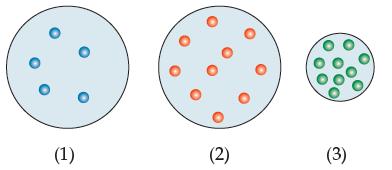
Consider the following diagrams representing different gas samples all at the same temperature:(a) Which gas is at the lowest pressure? Explain.(b) Which gas is at the highest pressure? Explain. (1) (2) (3)
What happens to the pressure of a gas when the amount of gas inside the container is increased? Explain with pictures and words.
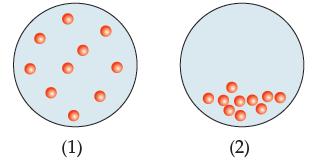
Which of the two “gas” samples below is at the lower temperature? Explain, and also tell why we put the word gas in quotation marks. (1) (2)
State how the pressure of a gas depends on its volume at constant moles and temperature both with a mathematical relationship and an English statement. Also, make a graph that demonstrates the mathematical relationship.
State how the pressure of a gas at constant moles and volume depends on its temperature both with a mathematical relationship and an English statement. Also, make a graph that demonstrates the mathematical relationship.
State how the pressure of a gas at constant volume and temperature depends on the amount of gas present both with a mathematical relationship and an English statement. Also, make a graph that demonstrates the mathematical relationship.
What do we mean by inverse proportionality? By direct proportionality? Give an example of each using the way the pressure of a gas depends on something else.
Suppose the variable x is proportional to 1/y. What does this tell you about how the numeric value of x changes as the numeric value of y changes?
“The older I get, the fewer hairs I have on my head.” What kind of relationship (proportion or inverse proportion) exists between this gentleman’s age and his hair? Explain your answer.
What kind of relationship (proportion or inverse proportion) exists between the strength of intermolecular forces and the distance between molecules? Explain your answer.
What are the units used in this book for the ideal gas constant R? Why are they important?
Rewrite the ideal gas law solving for V. Also show how all units cancel to leave you with just units of volume.
Rewrite the ideal gas law solving for T. Also show how all units cancel to leave you with just units of temperature.
Rewrite the ideal gas law solving for n. Also show how all units cancel to leave you with just units of moles.
According to the ideal gas law:(a) If you measured P, V, n, and T for any gas sample and then calculated the quantity PV/nT, what would be the units and numerical value of the result?(b) If you measured P, V, n, and T for any gas sample and then calculated PV/nRT, what would be the units and
According to the ideal gas law, what would happen to the pressure of a gas if you doubled the amount of gas in a container while also decreasing the volume of the container to one-half its initial volume? Explain.
According to the ideal gas law, what would happen to the pressure of a gas if you doubled the amount of gas in a container while also tripling the Kelvin temperature of the gas? Explain.
A student thinks he remembers reading that if you double the temperature of an ideal gas, its pressure doubles. He is given a problem where he has an ideal gas at 25.0°C and 2.5 atm. He is asked what the temperature must be raised to in order to double the pressure to 5.0 atm. He answers,
The gas inside a balloon is characterized by the following measurements: pressure = 745.5 mm Hg; volume = 250.0 mL; temperature = 25.5 °C. What is the number of moles of gas in the balloon?
A gas is in a container whose volume is variable. The container is in an ice bath at 0.00 °C, and there are 2.0 moles of gas in it. What must the volume in liters be if the gas has a pressure of 2.5 atm?
What must the Celsius temperature be if 2.0 moles of a gas in a 4.0-L steel container has a measured pressure of 100 atm?
According to the ideal gas law, what would be the volume of a gas at absolute zero (0 K)? Does the answer make sense? Describe what really happens to any gas as it is cooled toward this temperature.
An automobile tire at 22°C with an internal volume of 20.0 L is filled with air to a total pressure of 30 psi (pounds per square inch). [1 atm = 14.696 lb/in.2] (a) What is the amount in moles of air in the tire?(b) If the air were entirely nitrogen (N2), how many grams of it would be in the
Why are the results that are calculated using the ideal gas law not exactly equal to the “true” results obtained by an experimental measurement?
Suppose you want to carry out the chemical reaction: H2(g) + Cl2(g) → 2HCl(g) and you have 1 mole of Cl2 gas.(a) What volume in liters of H2 gas would you need in order to have 1 mole of H2, given that the H2 pressure and temperature are 1.00 atm and 22.5°C?(b) What would the volume of the
Given some mass m of a known pure substance, what is the quickest way to determine the number of moles n you have of the substance?
A 7.24-g sample of gas is contained in a 4.00-L flask. Its pressure is 765.0 mm Hg, and its temperature is 25.0 °C. What is the molar mass of this gas?
A 1.56-g sample of gas is contained in a 250.0-mL cylinder. Its pressure is 1255.6 mm Hg, and its temperature is 22.7°C.(a) What is the molar mass of the gas?(b) Combustion analysis reveals the empirical formula of this gas to be NO2. What is the molecular formula?
A balloon is filled with H2 gas to a volume of 1610.2 mL. The pressure of the gas in the balloon is 745.4 mm Hg, and the temperature is 22.7°C. What is the mass in grams of the H2 in the balloon?
In a room at 24.5°C, a balloon is filled with helium gas until the pressure inside the balloon is 768.0 mm Hg. What is the density of the gas in grams per liter and in grams per milliliter?
A balloon filled with He gas and another balloon filled with H2 gas have the same values for P and T.(a) The density of the He gas is greater than the density of the H2 gas. How can you prove this using the ideal gas law?(b) How much more dense than the H2 gas is the He gas?
Carbon dioxide and carbon monoxide are very different gases. For example, you exhale CO2, but CO is extremely toxic. Suppose you have two balloons, one filled with 1.00 mole of CO and the other filled with 1 mole of CO2. Both gases are at 1.00 atm and 25.0°C.(a) What is the volume in liters of
A tank of O2 gas is stored in a cool basement (T = 10.0°C). Its pressure gauge reads 50.5 lb/in.2. Diver Dan then places the tank in his truck, where the sun warms it to 20.0°C. What does the pressure gauge read at this elevated temperature?
In Problem 11.63, the temperature doubles but the pressure does not.(a) Explain why the pressure does not double as well.(b) To what temperature in °C would Diver Dan have to warm the tank in order to double the pressure?Data from Problem 11.63A tank of O2 gas is stored in a cool basement (T =
On an atomic basis, and given that the average kinetic energy of motion of molecules in the gas phase is given by KE = 3RT/2, explain why the pressure of a gas doubles when its temperature in Kelvin is doubled.
A tank initially at a pressure of 6.70 atm contains 20.0 moles of oxygen gas at 25.0°C. Its temperature is then increased to 45.0 °C, and an additional 10.0 moles of gas are added. What is the final pressure in the tank?
The Kelvin temperature of a gas is doubled. At the same time, its volume is cut in half by compressing it with a piston. What happens to the pressure of the gas?
Consider the reaction 2H2(g) + O2(g) → 2H2O(g) If this reaction takes place at STP, what volume in liters of H2 gas would be required to react completely with 22.4 L of O2 gas? What volume in liters of H2O(g) would be produced? Explain how you arrived at your answers.
Consider the reaction 2SO2(g) + O2(g) →2 SO3(g)(a) What volume in liters of oxygen gas at STP is required to produce 2 moles of sulfur trioxide gas?(b) What volume in liters of oxygen gas at 25.0 °C and 1 atm pressure is required to produce 2 moles of sulfur trioxide gas?
To produce 500.0 g of gaseous H2O, what volumes in liters of hydrogen gas and oxygen gas, both at STP, must combine via the reaction2H2(g) + O2(g) → 2H2O(g)
Zinc metal reacts with hydrochloric acid to form hydrogen gas via the reactionZn(s) + 2HCl(aq) → ZnCl2(aq) + H2(g)How many grams of zinc would be required to produce enough hydrogen gas to fill a 50.0-L cylinder to a pressure of 10.0 atm at 25.0°C?
Consider two samples of water vapor, one at 101°C and the other at 200°C. Which behaves more ideally and why?
Showing 700 - 800
of 3073
1
2
3
4
5
6
7
8
9
10
11
12
13
14
15
Last
Step by Step Answers

 Get 50% OFF
Claim Now
Get 50% OFF
Claim Now