New Semester
Started
Get
50% OFF
Study Help!
--h --m --s
Claim Now
Question Answers
Textbooks
Find textbooks, questions and answers
Oops, something went wrong!
Change your search query and then try again
S
Books
FREE
Study Help
Expert Questions
Accounting
General Management
Mathematics
Finance
Organizational Behaviour
Law
Physics
Operating System
Management Leadership
Sociology
Programming
Marketing
Database
Computer Network
Economics
Textbooks Solutions
Accounting
Managerial Accounting
Management Leadership
Cost Accounting
Statistics
Business Law
Corporate Finance
Finance
Economics
Auditing
Tutors
Online Tutors
Find a Tutor
Hire a Tutor
Become a Tutor
AI Tutor
AI Study Planner
NEW
Sell Books
Search
Search
Sign In
Register
study help
sciences
organic chemistry 6th
Organic Chemistry 6th Edition Marc Loudon, Jim Parise - Solutions
Treatment of (S)-(+)-5-methyl-2-cyclohexenone with lithium dimethylcuprate gives, after protonolysis, a good yield of a mixture containing mostly a dextrorotatory ketone A and a trace of an optically inactive isomer B. Treatment of A with zinc amalgam and HCl affords an optically active,
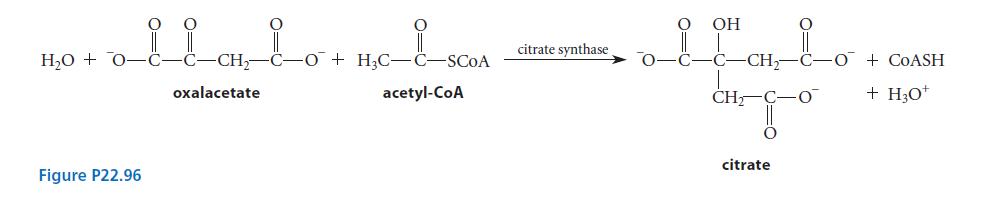
In the Krebs cycle (tricarboxylic acid, or citric acid, cycle), the enzyme citrate synthase catalyzes the synthesis of citrate from oxaloacetate and acetyl-CoA as shown in Fig. P22.96. Assuming that acids and bases are provided as needed in the enzyme active site, propose a curvedarrow mechanism
Ethyl vinyl ether, EtO—CH=CH2, hydrolyzes in weakly acidic water to acetaldehyde and ethanol. Under the same conditions, diethyl ether does not hydrolyze. Quantitative comparisons of the hydrolysis rates of the two ethers under comparable conditions show that ethyl vinyl ether hydrolyzes about
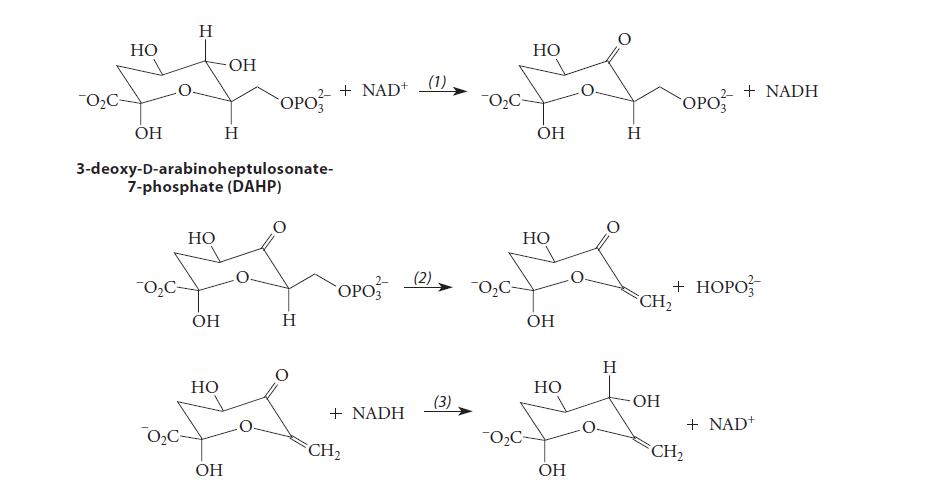
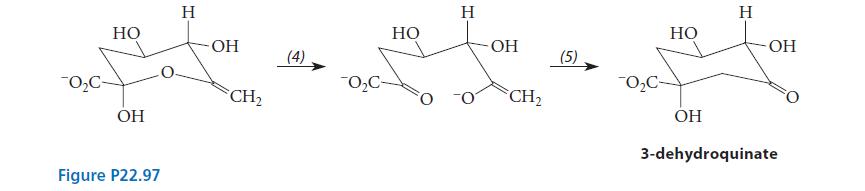
The enzyme dehydroquinate synthase catalyzes reactions (1) and (3) in the sequence shown in Fig. P22.97, which is part of the pathway for the biosynthesis of aromatic amino acids such as tryptophan; reactions (2), (4), and (5) occur spontaneously.(a) Assuming that acids and bases are present as
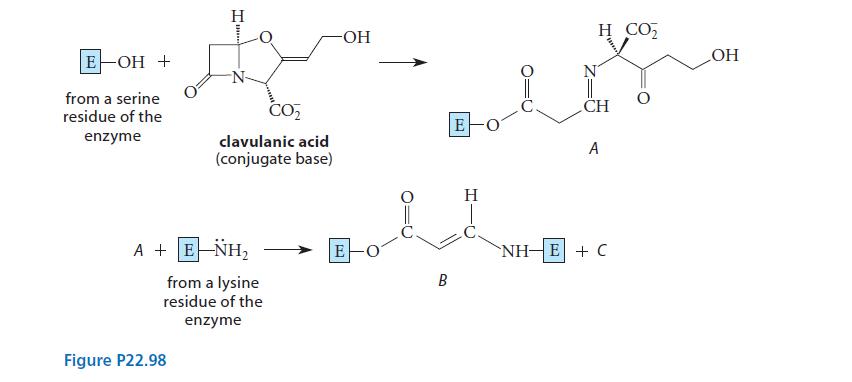
Clavulanic acid (Fig. P22.98) is an inhibitor of b-lactamase enzymes, which cause penicillin resistance.Clavulanic acid inhibits b-lactamases by first reacting with the side-chain hydroxy group of an active-site serine residue (abbreviated as shown in Fig. P22.98). The resulting derivative A then
Arrange the following three amines in order of increasing basicity. Cl- -NH₂ Cl- -NH₂ p-chloroaniline 4-chlorocyclohexanamine -NH₂ aniline
Draw the structure of each of the following compounds.(a) N-isopropylaniline (b) Tert-butylamine(c) 3-methoxypiperidine (d) 2,2-dimethyl-3-hexanamine(e) Ethyl 2-(diethylamino)pentanoate (f) N,N-diethyl-3-heptanamine
A chemist has treated p-chloroaniline with acetic anhydride and wants to separate the amide product from any unreacted amine. Design a separation based on the basicities of the two compounds.
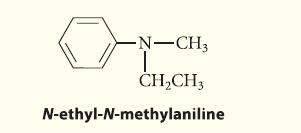
Outline a preparation of N-ethyl-N-methylaniline from suitable starting materials using a reductive amination sequence. -N-CH3 CH₂CH3 N-ethyl-N-methylaniline
Outline a preparation of p-nitroaniline from aniline and any other reagents.
Identify the compound that has an M + 1 ion at m/z = 136 in its CI mass spectrum, an IR absorption at 3279 cm–1, and the following NMR spectrum: δ 0.91 (1H, s), δ 1.07 (3H, t, J = 7 Hz), δ 2.60 (2H, q, J = 7 Hz), δ 3.70 (2H, s), δ 7.18 (5H, apparent s).
Explain how you could distinguish between the two compounds in each of the following sets using only 13C NMR spectroscopy.(a) 2,2-dimethyl-1-propanamine and 2-methyl-2-butanamine(b) Trans-1,2-cyclohexanediamine and trans-1,4-cyclohexanediamine
Arrange the amines within each set in order of increasing basicity in aqueous solution, least basic first.(a) Propylamine, ammonia, dipropylamine (b) Methyl 3-aminopropanoate, sec-butylamine, (c) Aniline, methyl m-aminobenzoate, methyl p-aminobenzoate (d) Benzylamine, p-nitrobenzylamine,
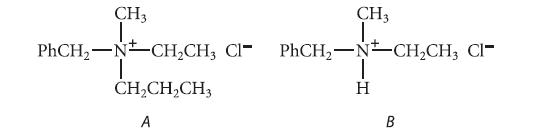
Explain why the quaternary ammonium salt A can be isolated in optically active form, but the trialkylammonium salt B cannot. CH3 T PhCH,−N*CH,CH, C1- CH₂CH₂CH3 A CH3 PhCH₂ NCH₂CH3 CI- - 1 H B
Using their solubilities in acidic or basic solution, design a separation of p-chlorobenzoic acid, p-chloroaniline, and p-chlorotoluene from a mixture containing all three compounds.
Provide reaction mechanisms for the following equations.(a) Eq. 23.17(b) Eq. 23.18(c) Suggest a reason why the reaction in Eq. 23.18 stops after two additions, and a third doesn’t occur in high yield. How might you change the reaction conditions to get a third addition? (CH3)3CNH₂ +
Provide a reaction mechanism for step 1, formation of the imine, in Eq. 23.22. EtNH₂ + H3C-C-CH3 acetone -H₂O [H₂C- NEt H3C-C-CH3 an imine (not isolated) H₂, Pt 30 psi EtOH NHET H3C-CH-CH3 (23.22) ethylisopropylamine
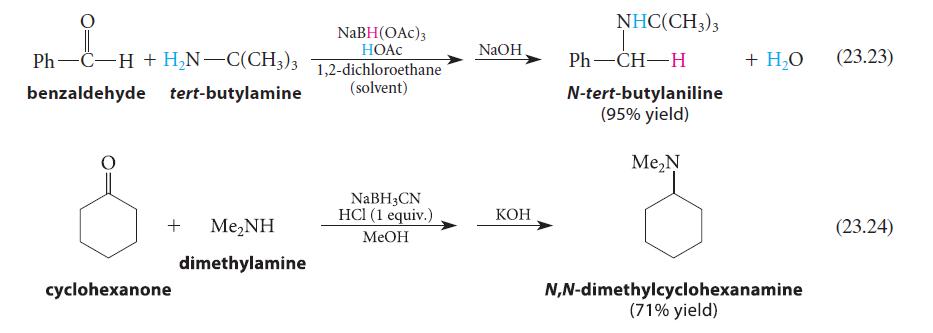
Why is base (NaOH or KOH) added as a second step in each of the reactions shown in Eqs. 23.23 and 23.24? Ph—C−H+H_N—C(CH3)3 benzaldehyde tert-butylamine + Me,NH dimethylamine cyclohexanone NaBH(OAC) 3 HOAC 1,2-dichloroethane (solvent) NaBH 3 CN HCl (1
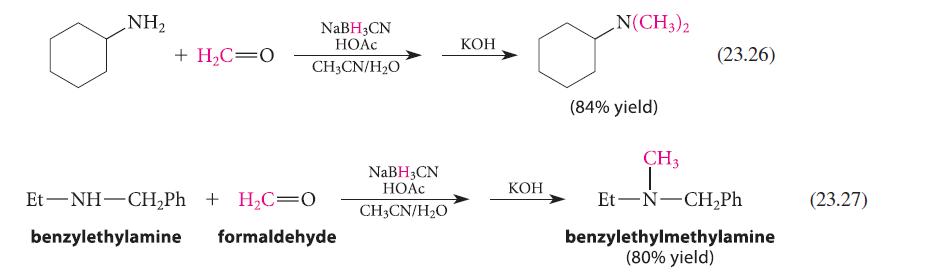
Quaternization (Sec. 23.6) does not occur in the reactions shown in Eqs. 23.26 and 23.27. Explain. NH₂ + H₂C=0 NaBH3CN HOAC CH3CN/H₂O Et—NH–CH,Ph + H,C=O benzylethylamine formaldehyde NaBH3CN НОАС CH3CN/H₂O KOH KOH N(CH3)2 (84%
Suggest two syntheses of N-ethylcyclohexanamine by reductive amination.
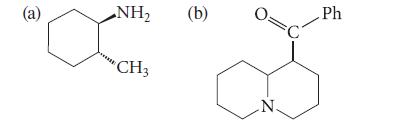
Give the major product formed when each of the following amines is treated exhaustively with methyl iodide and then heated with Ag2O. Explain your reasoning. (a) NH₂ CH3 (b) N. C Ph
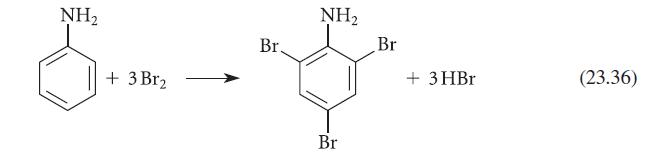
Provide a reaction mechanism for the reaction shown in Eq. 23.36. NH₂ 5- + 3 Br₂ Br NH₂ Br Br + 3HBr (23.36)
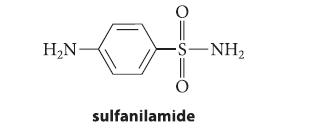
Outline a preparation of sulfanilamide, a sulfa drug, from aniline and any other reagents. H₂N- 0=5 O -S—NH, sulfanilamide
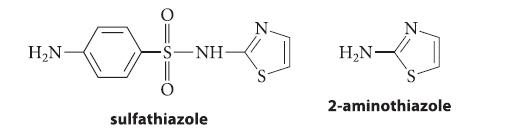
Outline a preparation of each of the following compounds from aniline and any other reagents.(a) 2,4-dinitroaniline(b) Sulfathiazole, a sulfa drug H₂N- -NH- sulfathiazole H₂N- 2-aminothiazole
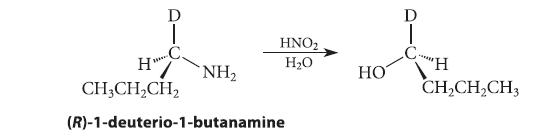
As shown in the following equation, when (R)-1-deuterio-1-butanamine is diazotized with nitrous acid in water, the alcohol product formed has the S configuration (D = 2H).(a) Give the stereochemical configuration of the diazonium ion formed as an intermediate in this reaction. Draw its
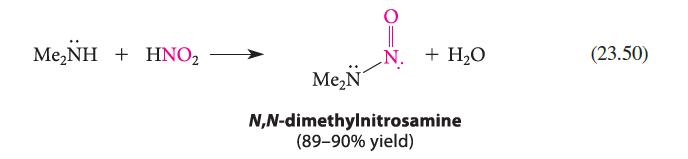
(a) Write a Lewis structure for HNO2 in Eq. 23.50.(b) Write a mechanism for the reaction shown in Eq. 23.50. Me,NH + HNO, + H₂O Me₂N N,N-dimethylnitrosamine (89-90% yield) (23.50)
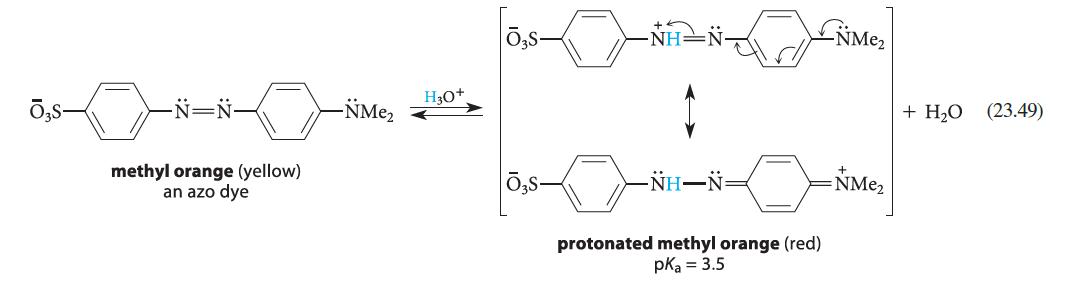
Design a synthesis of methyl orange (Eq. 23.49) using aniline as the only aromatic starting material. -N=N- methyl orange (yellow) an azo dye -NMe₂ H3O+ NH–N protonated methyl orange (red) pka = 3.5 NME₂ =NMe₂ + H₂O (23.49)
(a) Which one of the following three amines can be prepared by either the Gabriel synthesis or the Staudinger reaction: 2,2-dimethyl-1-propanamine, 3-methyl-1-pentanamine, or N-butylaniline?(b) Starting with an alkyl halide, propose a synthesis for the compound you chose in part (a), using the
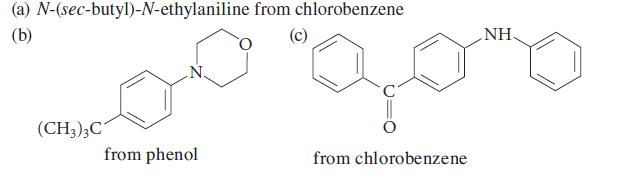
Outline a synthesis of each of the following compounds from the indicated starting material and any other reagents. (a) N-(sec-butyl)-N-ethylaniline from chlorobenzene (b) (CH3)3C from phenol NH. goo from chlorobenzene
Outline syntheses of the following compounds from the indicated starting materials.(a) P-iodoanisole from phenol and any other reagents(b) M-bromoiodobenzene from nitrobenzene
(a) Could tert-butylamine be prepared by the Gabriel synthesis? If so, write out the synthesis. If not, explain why.(b) Propose a synthesis of tert-butylamine by another route.
Write a curved-arrow mechanism for each of the following reactions.(a) Ethyl isocyanate (CH3CH2—N=C=O) with ethanol to yield ethyl N-ethylcarba mate (b) Ethyl isocyanate with ethylamine to yield N,N′-diethylurea
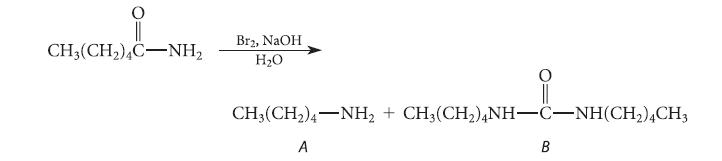
When hexanamide is subjected to the conditions of the Hofmann rearrangement, pentanamine (A) is obtained as expected. However, a significant by-product is N,N′-dipen tyl urea (B). Explain the origin of B. CH,(CH,),C…NH, Br₂, NaOH H₂O CH,(CH,)4–NH, + CH(CH,),NH–C–NH(CH,) CH, A B
What product is formed when 2-methylpropanamide is subjected to the conditions of the Hofmann rearrangement (a) In ethanol solvent? (b) In aqueous NaOH?
Illustrate the Brønsted basicity of (a) Morphine and (b) Mescaline (Fig. 23.4) by giving the structures of their conjugate acids.
Give the principal organic product(s) expected when p-chloroaniline or other compound indicated reacts with each of the following reagents.(a) Dilute HBr(b) CH3CH2MgBr in ether(c) NaNO2, HCl, 0°C(d) p-toluenesulfonyl chloride(e) Product of part (c) with H2O, Cu2O, and excess Cu(NO3)2(f) Product of
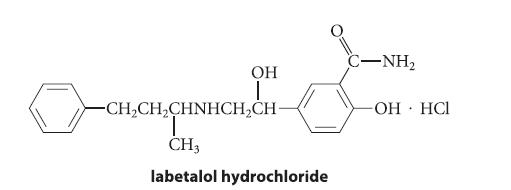
On the package insert for the drug labetalol, used in the control of blood pressure and hypertension, is given the following structure:(a) Labetalol is claimed to be a salt. Explain by giving a more detailed structure.(b) What happens to labetalol?HCl when it is treated with one equivalent of NaOH
Explain how you would distinguish the compounds within each set by a simple chemical test with readily observable results, such as solubility in acid or base, evolution of a gas, and so forth.(a) N-methylhexanamide; 1-octanamine; N,N- dimethyl-1-hexanamine(b) p-methylaniline, benzylamine, p-cresol,
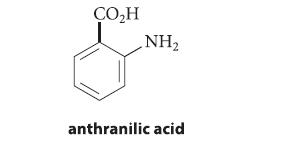
(a) When anthranilic acid is treated with NaNO2 in aqueous HCl solution, and the resulting solution is treated with N,N-dimethylaniline, a dye called methyl red is formed. Give the structure of methyl red.(b) When an acidic solution of methyl red is titrated with base, the dye behaves as a diprotic
Design a separation of a mixture containing the following four compounds into its pure components. Describe exactly what you would do and what you would expect to observe.nitrobenzene, aniline, p-chlorophenol, and p-nitrobenzoic acid
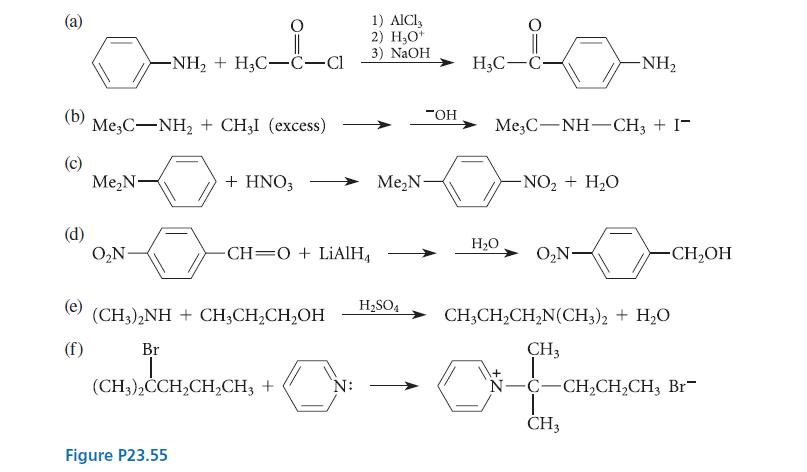
Amanda Amine, an organic chemistry student, has proposed the reactions given in Fig. P23.55. Indicate in each case why the reaction would not succeed as written. (a) (b) (d) -NH₂ H3C-C-Cl TH Me3C-NH₂ + CH3I (excess) (e) (f) Me₂N- O₂N- + HNO3 (CH3)2NH + CH3CH₂CH₂OH Figure
Outline a sequence of reactions that would bring about the conversion of aniline into each of the following compounds.(a) Benzylamine(b) Benzyl alcohol(c) 2-phenylethanamine(d) N-phenyl-2-butanamine(e) p-chlorobenzoic acid(f) Diphenylamine
Give an explanation for each of the following facts.(a) The barrier to internal rotation about the N-phenyl bond in N-methyl-p-nitroaniline is considerably higher (42–46 kJ mol–1, or 10–11 kcal mol–1) than that in N-methylaniline itself (about 25 kJ mol–1, or 6 kcal mol–1).(b) Cis- and
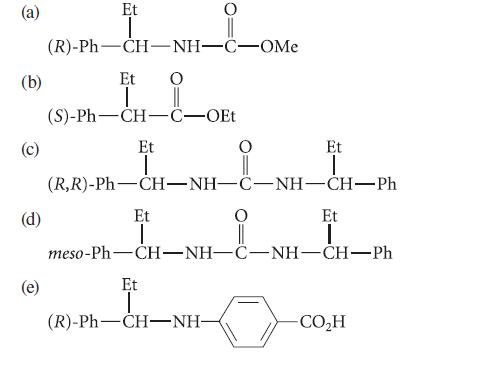
Imagine that you have been given a sample of racemic 2-phenylbutanoic acid. Outline steps that would allow you to obtain pure samples of each of the following compounds from this starting material and any other reagents. (a) (b) (c) (d) (e) Et T (R)-Ph-CH-NH-C-OMe Et
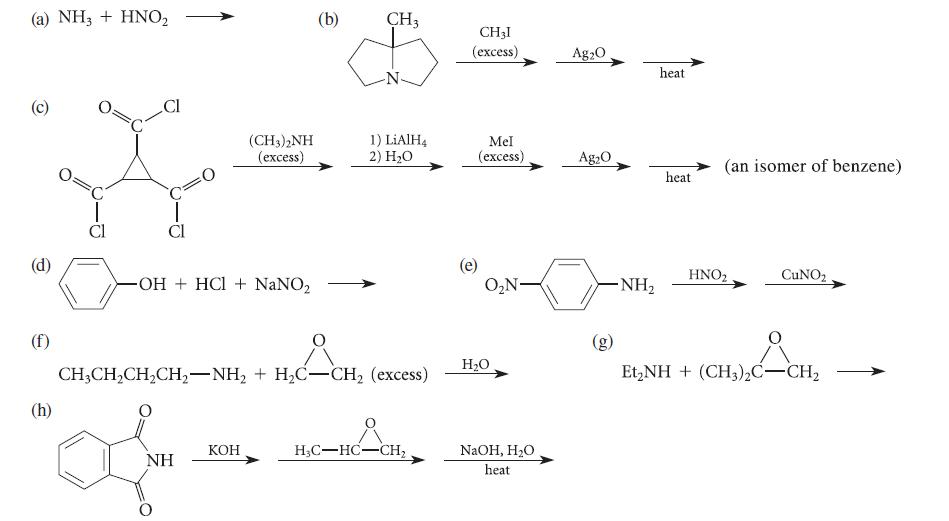
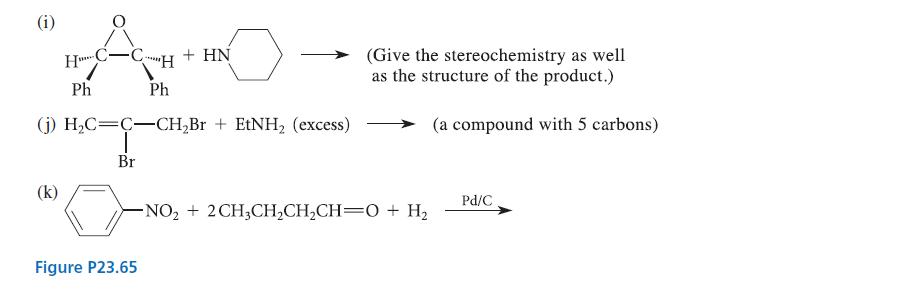
Complete the reactions given in Fig. P23.65 by giving the structure(s) of the major product(s). Explain how you arrived at your answers. (a) NH3 + HNO₂ (d) (f) (h) Cl CI Cl -OH + HCl + NaNO₂ (CH3)2NH (excess) NH KOH CH3 Œ H&CH CH3CH₂CH₂CH₂-NH₂ + H₂C-CH₂ (excess) 1) LiAlH4 2)
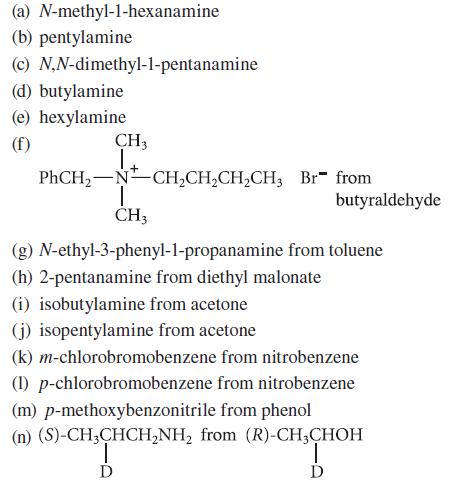
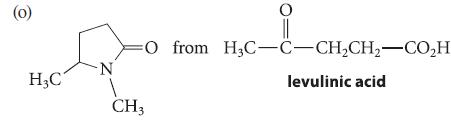
Outline a synthesis for each of the following compounds from the indicated starting materials and any other reagents. The starting material for the compounds in parts (a) through (e) is pentanoic acid. (a) N-methyl-1-hexanamine (b) pentylamine (c) (d) butylamine (e)
Offer an explanation for each of the following observations, including the structure of each product and the role of the quaternary ammonium salt.(a) When sodium benzenethiolate, Na+ PhS–, is mixed with 1-bromooctane in water, no reaction takes place. However, when 1–2 mole percent tetrabutyl
A compound A (C22H27NO) is insoluble in acid and base but reacts with concentrated aqueous HCl and heat to give a clear aqueous solution from which, on cooling, benzoic acid precipitates. When the supernatant solution is made basic, a liquid B separates. Compound B is achiral. Treatment of B with
In the NMR spectrum of a concentrated (4.5 M) aqueous solution of methylamine, the methyl group appears as a quartet when the solution pH = 1. At intermediate pH, the methyl group appears as a broad line. At pH = 9 the methyl group is observed as a single sharp line. Explain these observations.
Aniline has a UV spectrum with peaks at λmax 5 230 nm (ϵ = 8600) and 280 nm (ϵ = 1430). In the presence of dilute HCl, the spectrum of aniline changes dramatically: λmax 5 203 (ϵ = 7500) and 254 (ϵ = 160). This spectrum is nearly identical to the UV spectrum of benzene.Account for the effect
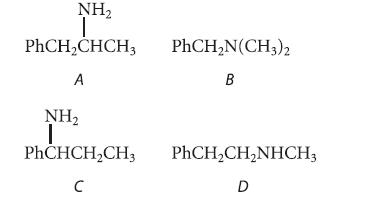
Imagine that you have samples of the following four isomeric amines, but you don’t know which is which. Explain how you could use proton NMR to distinguish among them. NH₂ PhCH₂CHCH3 A NH₂ I PhCHCH₂CH3 C PhCH₂N(CH3)2 B PhCH₂CH₂NHCH3 D
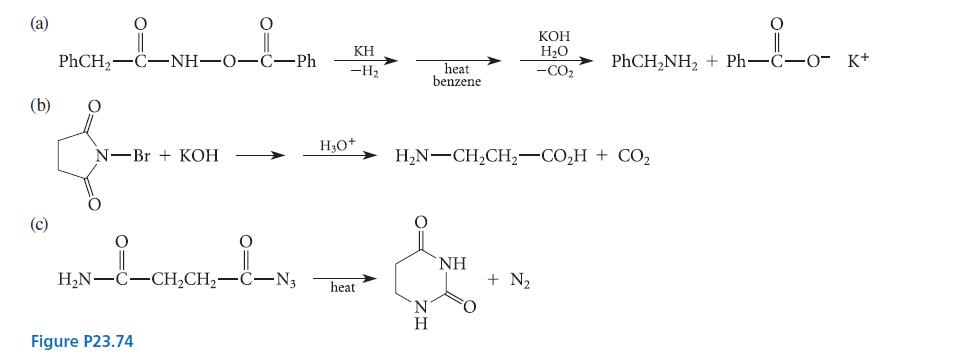
Draw a curved-arrow mechanism for each of the rearrangement reactions given in Fig. P23.74. (a) PhCH,C-NH–O–C–Ph (b) Z N-Br+ KOH H₂N-C-CH₂CH₂-C-N3 Figure P23.74 KH -H₂ H₂O+ heat ZI heat benzene H HẸN–CH,CH,—CO,H + CO, ΝΗ KOH H₂O -CO₂ + N₂ || PhCH,NH, + Ph—C-O- K*
(a) Propose a structure for an amine A (C4H9N), which liberates a gas when treated with NaNO2 and HCl. The 13C NMR spectrum of A is as follows, with attached protons in parentheses: δ 14(2), δ 34.3(2), δ 50.0(1).(b) Propose a structure for an amine B (C4H9N), which does not liberate a gas when
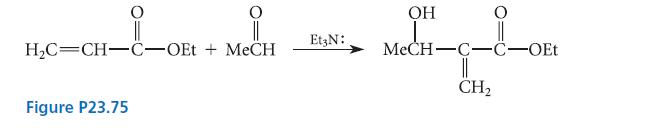
Provide a curved-arrow mechanism for the example of the Bayliss –Hilman reaction shown in Fig. P23.75. Be sure that the role of the triethylamine catalyst is clearly indicated. H₂C=CH-C-OEt + MeCH Figure P23.75 Et3N: OH L MeCH-C-C-OEt || CH₂
A chemist, Mada Meens, treated ammonia with pentanal in the presence of hydrogen gas and a catalyst in the expectation of obtaining 1-pentanamine by reductive amination.In addition to 1-pentanamine, however, she also obtained dipentylamine and tripentylamine (see Fig. P23.76). Explain how the
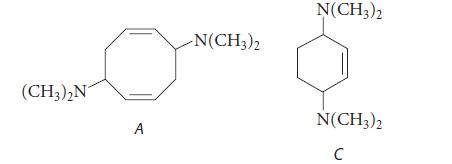
Around 1912, Swiss chemist Richard Willstätter (who subsequently was awarded the 1915 Nobel Prize in Chemistry) treated diamine A with methyl iodide and then with Ag2O and heat, whereupon a hydrocarbon B, C8H8, distilled from the reaction mixture. Compound B reacted rapidly with Br2 under mild
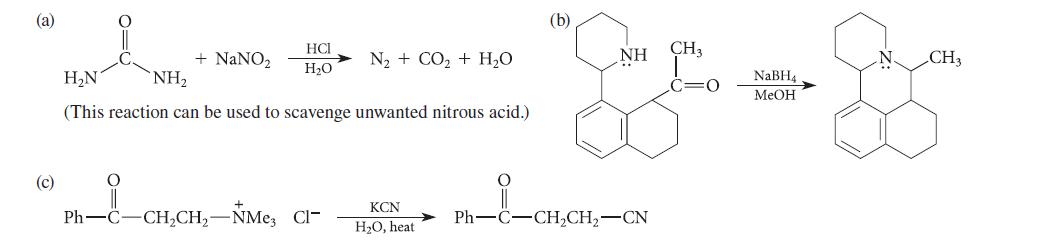
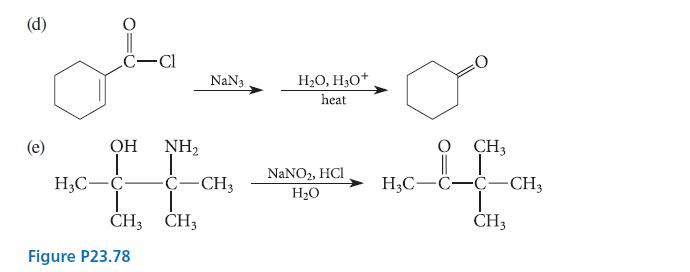
Explain the transformations shown in Fig. P23.78 by showing relevant intermediates, providing analogies to known reactions, and, where appropriate, giving curved-arrow mechanisms. (a) (c) + NaNO₂ HCI H₂O Nz + CO, + HẠO H₂N NH₂ (This reaction can be used to scavenge unwanted nitrous
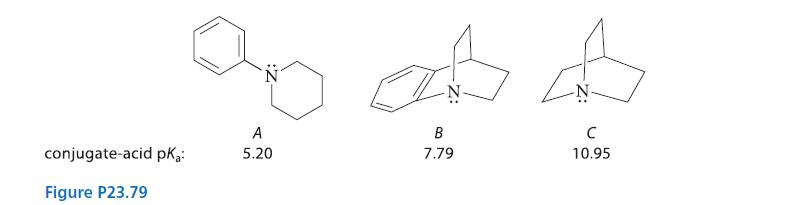
Explain the fact that the amines shown in Fig. P23.79, despite their similarities in structure, have considerably different basicities. conjugate-acid pka: Figure P23.79 N A 5.20 of A C 10.95 B 7.79
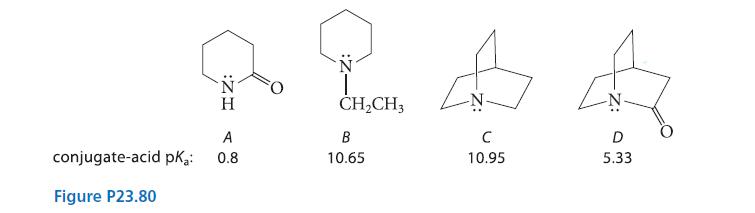
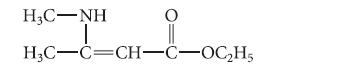
Amide A, δ-valerolactam, is a typical amide with a conjugate-acid pKa of 0.8. The two cyclic tertiary amines B and C also have typical conjugate-acid pKa values. In contrast, the conjugate-acid pKa of amide D is unusually high for an amide, and it hydrolyzes much more rapidly than other amides.
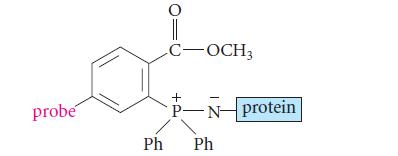
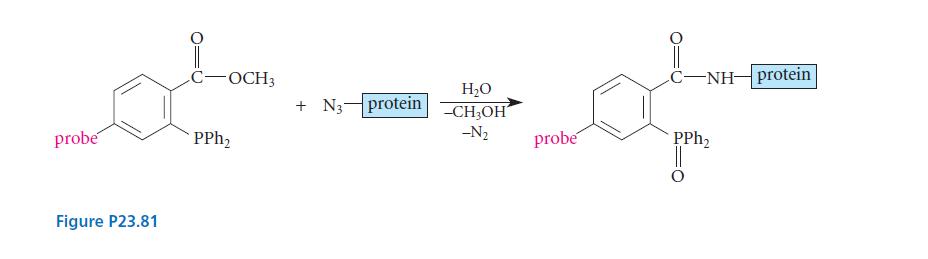
The Staudinger ligation is a method that has found increasing use in the growing field of chemical biology for labeling biomolecules, such as proteins, with fluorescent probes. Proteins possessing an azide functional group can be ligated onto a phosphine bearing the probe.(a) Using your knowledge
The rates of the reactions in Eqs. 10.71a–b are increased when the thiol is ionized by a base such as sodium ethoxide.Suggest a mechanism for Eq. 10.71a that is consistent with this observation, and explain why the presence of base makes the reaction faster. EtSH ethanethiol + PrS-SPr dipropyl
Outline a synthesis of each of the following compounds from the indicated starting material. Begin each synthesis with a retrosynthetic analysis. (a) 2-methyl-3-pentanol from 2-methyl-2-pentanol (c) -CO₂H from =CH₂ (b) CH3CH₂CH₂CH₂CH₂CH₂D from 1-hexanol (d) CH3CH₂CH₂CHCH=0 from.
The primary alcohol 2-methoxyethanol, CH3O—CH2CH2—OH, can be oxidized to the corresponding carboxylic acid with aqueous nitric acid (HNO3).The by-product of the oxidation is nitric oxide, NO. How many moles of HNO3 are required to oxidize 0.1 mole of the alcohol?
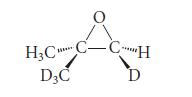
(a) Suppose 2,2-dimethyloxirane reacts with water that has been enriched with the oxygen isotope 18O. Indicate how the hydrolysis product would differ under acidic and basic conditions.(b) Show how the stereochemistry of the products will differ (if at all) when the following enantiomerically pure
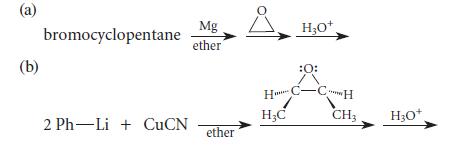
Complete the following reactions by giving the structures of the alcohol products. In part (b), show the stereochemistry of the product as well. (a) (b) bromocyclopentane 2Ph—Li + CuCN Mg ether ether H₂O+ :0: H… C−C…H H3C CH₂ H3O+
(a) From what Grignard reagent can 3-methyl-1-pentanol be prepared by reaction with ethylene oxide, then aqueous acid?(b) From what epoxide and what higher-order cuprate reagent can 3-ethyl-3-heptanol be prepared?
What organic product is formed (including its stereochemistry) when each of the following alkenes is treated with NMMO in the presence of H2O and a catalytic amount of OsO4?(a) 1-methylcyclopentene (b) Trans-2-butene
Tell whether each of the following compounds can be prepared by the reaction of a Grignard reagent with ethylene oxide. If so, show the reaction; if not, explain why and give a different synthesis that uses a different epoxide starting material.(a) 2-pentanol (b) 1-pentanol
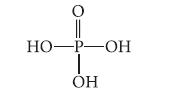
Phosphoric acid, H3PO4, has the following structure.(a) Draw the structure of trimethyl phosphate.(b) Draw the structure of the monoethyl ester of phosphoric acid. 0 HO-P-OН OH
Draw both the complete structure and the abbreviated structure, and give another name for each of the following compounds.(a) Isopropyl methanesulfonate (b) Methyl p-toluenesulfonate (c) Phenyl tosylate (d) Cyclohexyl mesylate
An important class of substitution reactions that you will study in Chapter 21 is called nucleophilic acyl substitution. Substitution reactions of this type occur at the carbon of a carbonyl (C = O) group. An important laboratory example is the reaction of nucleophiles (ammonia in the example
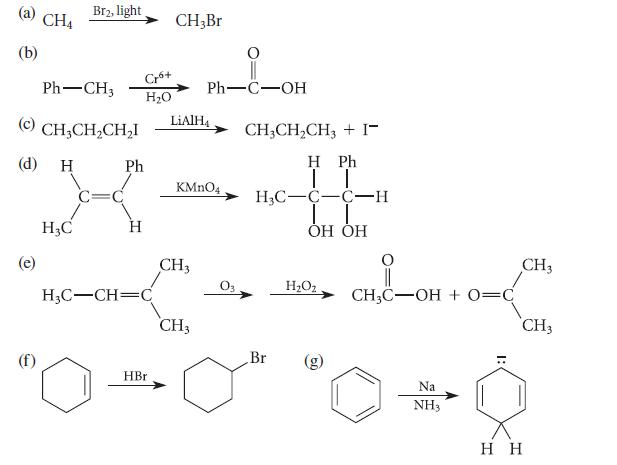
Considering the organic compound, classify each of the following transformations, some of which may be unfamiliar, as an oxidation, a reduction, or neither. For those that are oxidations or reductions, tell how many electrons are gained or lost. (a) CH4 (b) Ph—CH, (c)
Give the structure of two secondary alcohols that could be converted by HBr/H2SO4 into the corresponding alkyl bromide without rearrangement.
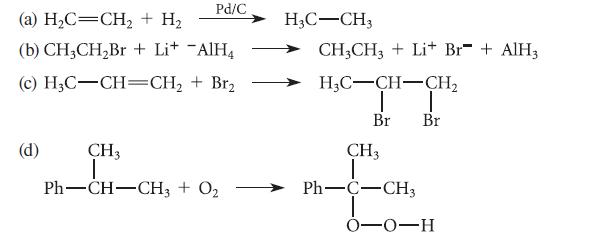
For each of the following balanced oxidation–reduction reactions, indicate which compound(s) are oxidized and which are reduced. Pd/C (a) H₂C=CH₂ + H₂ (b) CH3CH₂Br + Li+ AlH4 (c) H3C-CH=CH₂ + Br₂ (d) CH3 T Ph–CH–CH3 + O2 H3C-CH3 CH3CH3 +Li+ Br+AlH3 H3C-CH-CH₂ I T Br
Contrast the products expected when 2-methyl-3-pentanol is treated with (a) HBr/H2SO4 or (b) Ph3PBr2. Explain.
How many moles of permanganate are required to oxidize one mole of toluene to benzoic acid? (Use H2O and protons to balance the equation.) Ph-CH3 + MnO toluene permanganate Ph-CO₂H + MnO₂ benzoic acid manganese dioxide
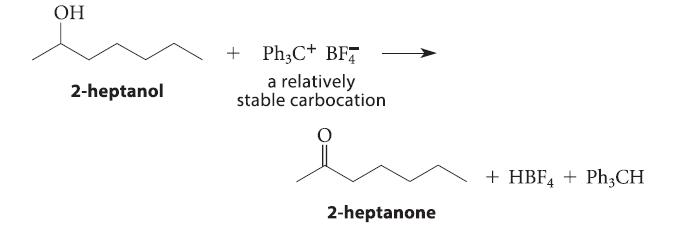
Write a curved-arrow mechanism for the following oxidation of 2-heptanol, which proceeds in 82% yield. OH 2-heptanol + Ph3C+ BFT a relatively stable carbocation 2-heptanone + HBF4 + Ph3CH
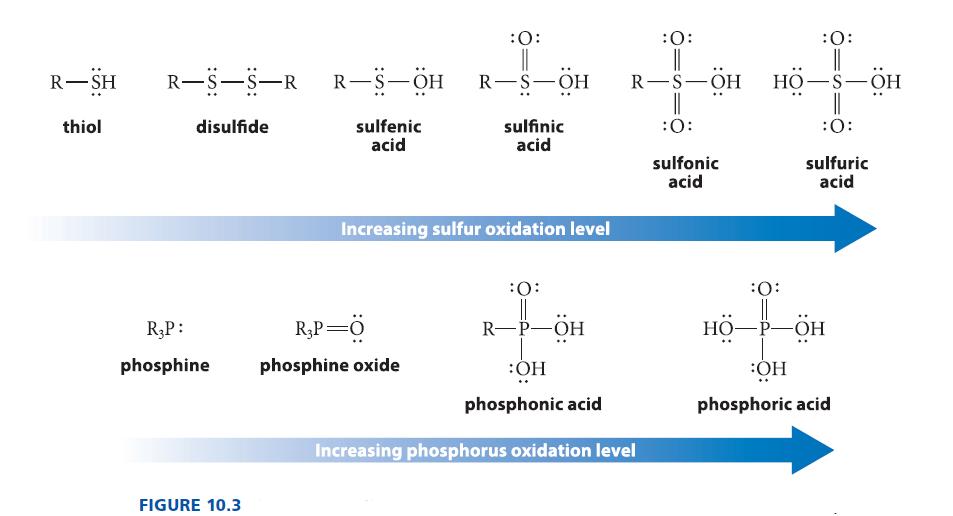
How many electrons are involved in the oxidation of 1-propanethiol to each of the following compounds. (See Fig. 10.3 for detailed Lewis structures.)(a) 1-propanesulfonic acid, CH3CH2CH2SO3H (b) 1-propanesulfenic acid, CH3CH2CH2S—OH
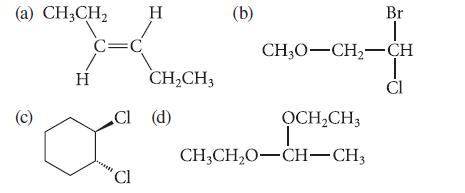
How many chemically nonequivalent sets of hydrogens are in each of the following structures? (a) CH3CH₂ (c) H C=C CI Cl Cl H CH₂CH3 (d) (b) CH3O-CH₂-CH ỌCH₂CH3 Br T CH3CH₂O-CH-CH3 CI
(a) How many electrons are involved in the oxidation of triphenylphosphine (Ph3P;) to triphenylphosphine oxide (Ph3P = O)? Show your reasoning.(b) Draw a resonance structure for triphenylphosphine oxide in which phosphorus obeys the octet rule.(c) Draw a Lewis structure for trimethylamine oxide
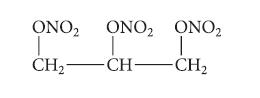
The following triester is a powerful explosive, but is also a medication for angina pectoris (chest pain). From what inorganic acid and what alcohol is it derived? ONO₂ T CH₂- ONO₂ ONO₂ L I -CH-CH₂
Give the product expected, if any, when 1-butanol (or other compound indicated) reacts with each of the following reagents.(a) Concentrated aqueous HBr, H2SO4 catalyst, heat (b) Cold aqueous H2SO4(c) Pyridinium chlorochromate (PCC) in CH2Cl2(d) NaH(e) Product of part (d) + CH3I in DMSO(f)
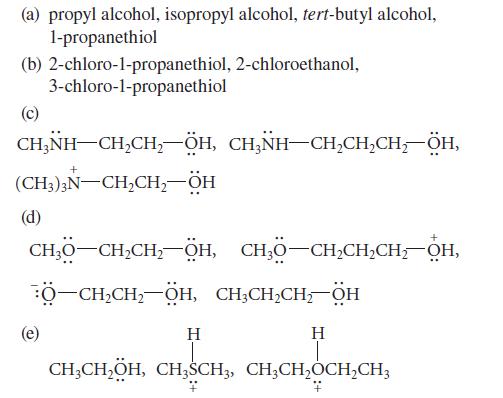
Arrange the compounds or ions within each set in order of increasing acidity (decreasing pKa) in solution. Explain your reasoning. (a) propyl alcohol, isopropyl alcohol, tert-butyl alcohol, 1-propanethiol (b) 2-chloro-1-propanethiol, 3-chloro-1-propanethiol (c) CHÍNH–CH,CH, OH,
When tert-butyl alcohol is treated with H218O (water containing the heavy oxygen isotope 18O) in the presence of a small amount of acid, and the tert-butyl alcohol is re-isolated, it is found to contain 18O. Write a curvedarrow mechanism consisting of Brønsted acid–base reactions, Lewis
Outline a synthesis for the conversion of enantiomerically pure (R)-CH3CH2CHD—OH into each of the following isotopically labeled compounds. Assume that Na18OH or H218O is available as needed.(a) (S)-CH3CH2CHD—18OH(b) (R)-CH3CH2CHD—18OH
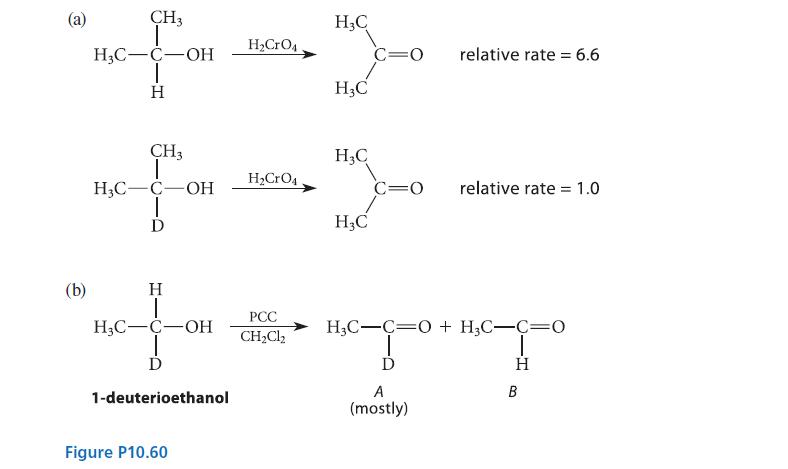
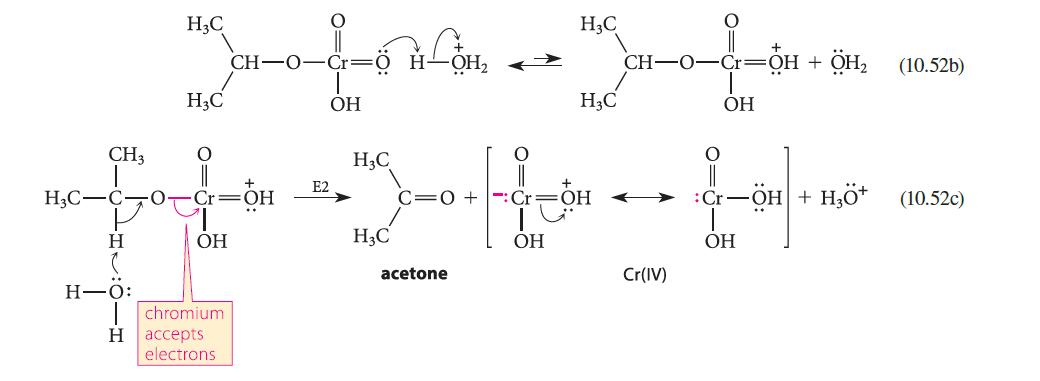
(a) When the rate of oxidation of isopropyl alcohol to acetone is compared with the rate of oxidation of a deuterated derivative, a primary isotope effect (Sec. 9.5D) is observed (see part (a) of Fig. P10.60). Assuming that the mechanism is the same as the one shown in Eqs. 10.52a–c, which step
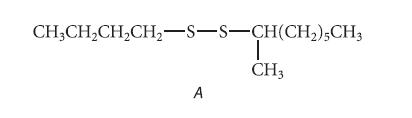
Chemist Stench Thiall, intending to prepare the disulfide A, has mixed one mole each of 1-butanethiol and 2-octanethiol with I2 and base. Stench is surprised at the low yield of the desired compound and has come to you for an explanation. Explain why Stench should not have expected a good yield in
A police officer, Lawin Order, has detained a driver, Bobbin Weaver, after observing erratic driving behavior. Administering a breathalyzer test, Officer Order collects 52.5 mL of expired air from Weaver and finds that the air reduces 0.507 * 10–6 mole of K2Cr2O7 to Cr3+. Assuming that 2100 mL of
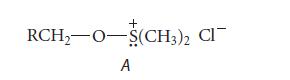
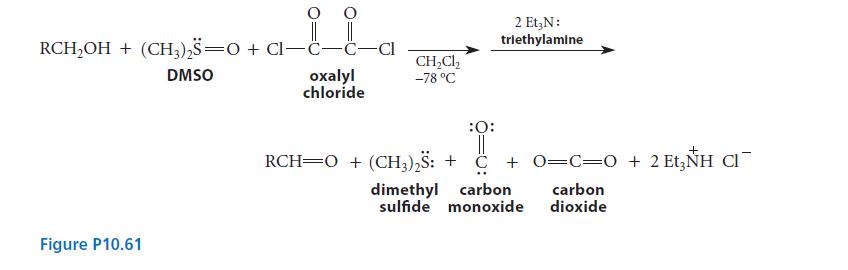
The Swern oxidation, shown in Fig. P10.61, is a very mild two-step procedure for the oxidation of primary and secondary alcohols.(a) How many electrons are involved in this oxidation? Explain.(b) What is the oxidizing agent?(c) The following intermediate A is formed prior to the addition of the
In a laboratory are found two different compounds: A (melting point 24.7°C) and B (melting point 21°C). Both compounds have the same molecular formula (C7H14O), and both can be resolved into enantiomers. Both compounds give off a gas when treated with NaH. Treatment of either A or B with tosyl
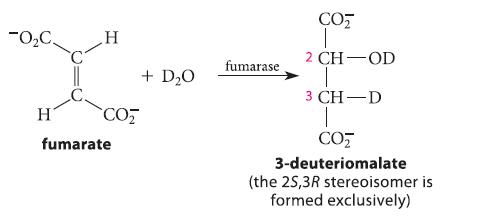
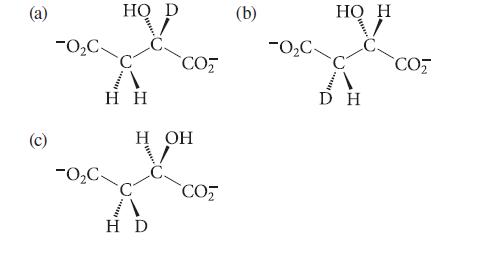
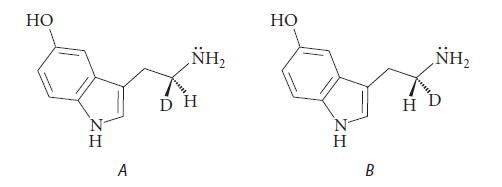
When the hydration of fumarate is catalyzed by the enzyme fumarase in D2O, only (2S,3R)-3-deuteriomalate is formed as the product. (Each—CO–2 group is the conjugate base of a carboxylic acid group.)This reaction can also be run in reverse. By applying the principle of microscopic reversibility,
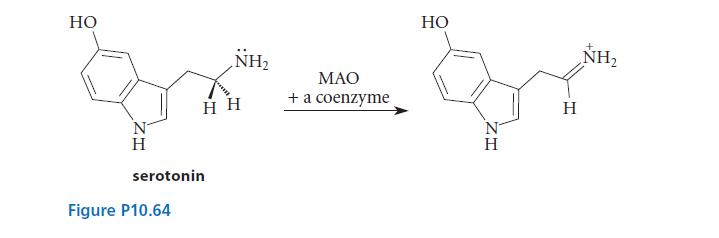
Monoamine oxidase (MAO) is an enzyme that catalyzes the oxidation of certain biologically important amines. One form of the enzyme catalyzes the following oxidation of serotonin, an important neurotransmitter (Fig. P10.64; a number of antidepressants inhibit this reaction).(a) How many electrons
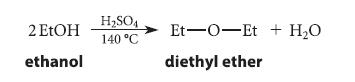
Primary alcohols, when treated with H2SO4, do not dehydrate to alkenes under the usual conditions. However, they do undergo another type of “dehydration” to form ethers if heated strongly in the presence of H2SO4. The reaction of ethyl alcohol to give diethyl ether is typical:Using the
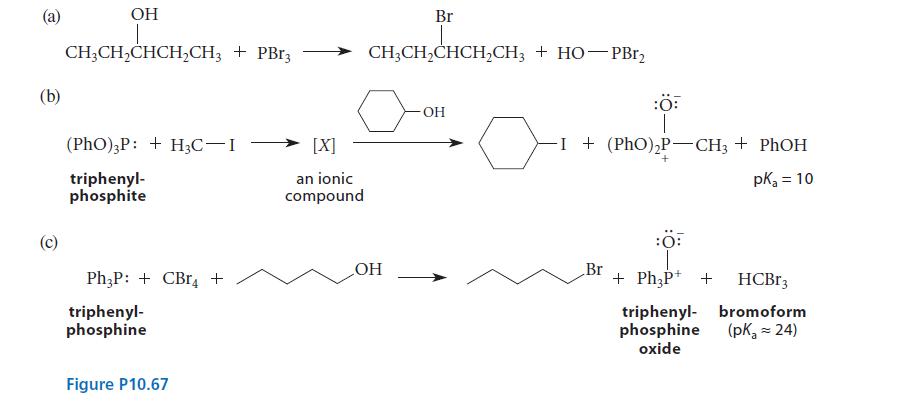
The reactions shown in Fig. P10.67 all involve conversion of the alcohol oxygen into a good leaving group, followed by the reaction of the resulting compound with a nucleophile provided by the reagent. Write curved-arrow mechanisms for each reaction. (a) (b) OH CH3CH₂CHCH₂CH3 + PBr3 (PhO)3P:
Buster Bluelip, a student repeating organic chemistry for the fifth time, has observed that alcohols can be converted into alkyl bromides by treatment with concentrated HBr. He has proposed that, by analogy, alcohols should be converted into nitriles (organic cyanides, R—C‚ ≡ N) by treatment
The trichloromethyl anion, –:CCl3, which is the conjugatebase anion of chloroform (HCCl3), is stabilized not only by the polar effect of the chlorines but also by resonance:Show the orbital overlap between carbon and chlorine that is implied by the resonance structures. apa aca :cl: :CI: (similar
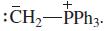
(a) Describe the π bond for the double bond in Ph3P=CH2; that is, what orbitals are involved on carbon and phosphorus?(b) Draw a resonance structure for the compound in part (a) that maintains the octet rule on both carbon and phosphorus.(c) This compound is a strong base that reacts rapidly with
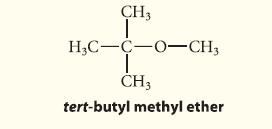
Outline a Williamson ether synthesis for tert-butyl methyl ether. CH3 H3C-C-0-CH3 I CH3 tert-butyl methyl ether
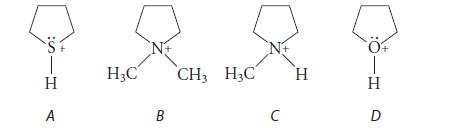
Arrange the ions in the following list in order of increasing acidity, and explain your reasoning. | Н A H3C B CH3 H3C C H С Н D
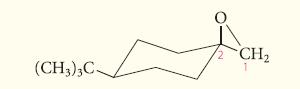
Predict the major product in each case that would be obtained when the following epoxide reacts with water under (a) Basic conditions; (b) Acidic conditions. (CH3)3C- CH₂
Showing 600 - 700
of 1324
1
2
3
4
5
6
7
8
9
10
11
12
13
14
Step by Step Answers

 Get 50% OFF
Claim Now
Get 50% OFF
Claim Now





![CH3(CH)3CH=0+ NH3 + H Figure P23.76 catalyst CH3(CH)3CHNH + [CH3(CH)3CH)2NH + [CH3(CH)3CH] 3N](https://dsd5zvtm8ll6.cloudfront.net/images/question_images/1701/9/3/0/475657165ebce3f81701930474798.jpg)