New Semester
Started
Get
50% OFF
Study Help!
--h --m --s
Claim Now
Question Answers
Textbooks
Find textbooks, questions and answers
Oops, something went wrong!
Change your search query and then try again
S
Books
FREE
Study Help
Expert Questions
Accounting
General Management
Mathematics
Finance
Organizational Behaviour
Law
Physics
Operating System
Management Leadership
Sociology
Programming
Marketing
Database
Computer Network
Economics
Textbooks Solutions
Accounting
Managerial Accounting
Management Leadership
Cost Accounting
Statistics
Business Law
Corporate Finance
Finance
Economics
Auditing
Tutors
Online Tutors
Find a Tutor
Hire a Tutor
Become a Tutor
AI Tutor
AI Study Planner
NEW
Sell Books
Search
Search
Sign In
Register
study help
sciences
organic chemistry 6th
Organic Chemistry 6th Edition Marc Loudon, Jim Parise - Solutions
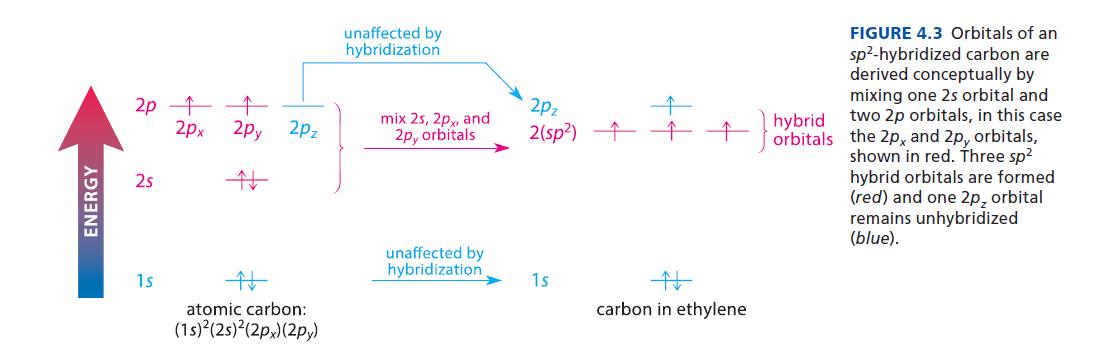
Use the principles of Sec. 1.3B to predict the geometry of BF3. What hybridization of boron is suggested by this geometry? Draw an orbital diagram for hybridized boron similar to that for the carbons in ethylene shown in Fig. 4.3, and provide a hybrid orbital description of the bonding in BF3.
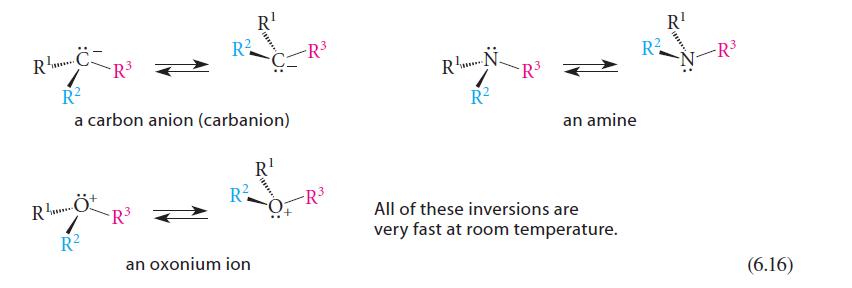
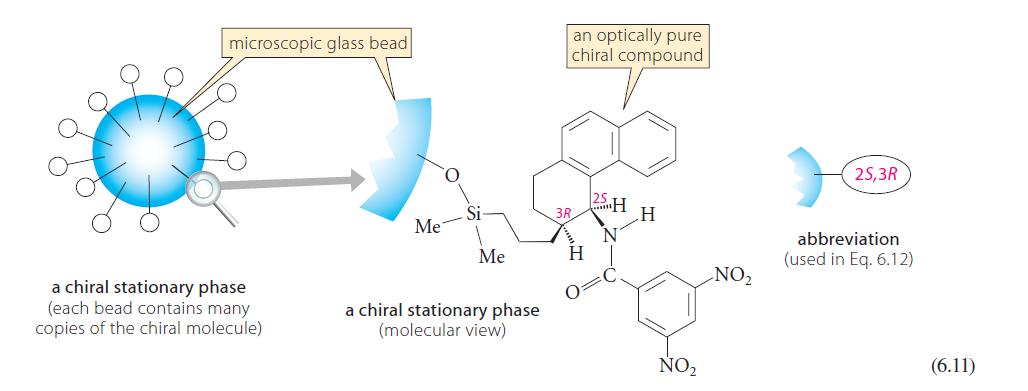
The enantiomeric resolution in Fig. 6.16 used the chiral stationary phase (CSP) in Eq. 6.11. How would the enantiomeric resolution in Fig. 6.16 be affected if (a) The enantiomer of the CSP in Eq. 6.11 were used?(b) The racemate of the CSP in Eq. 6.11 were used? CR²³ 3+ R... R² a carbon anion
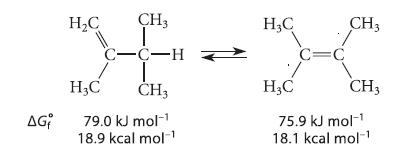
The difference in the standard free energies of formation for 1-butene and 2-methylpropene is 13.4 kJ mol–1 (3.2 kcal mol–1). (See the previous problem for a definition of ΔG°f .)(a) Which compound is more stable? Why?(b) The standard free energy of activation for the hydration of
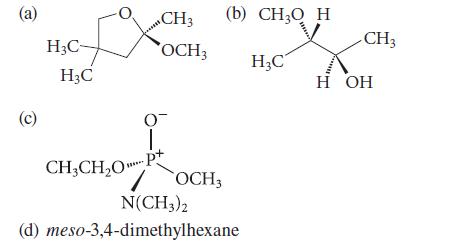
Tell whether the configuration of each asymmetric atom in the following compounds is R or S. (a) (c) H₂C- H3C CH3 (b) CH3Q H OCH3 0 1. CH3CH₂OP+ OCH3 N(CH3)2 (d) meso-3,4-dimethylhexane H₂C mund CH3 H OH
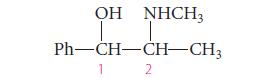
(a) Draw sawhorse projections of ephedrine (Problem 6.31) about the C1—C2 bond for all three staggered and all three eclipsed conformations.(b) Examine each conformation for chirality. How do the chiralities of these conformations relate to the overall chirality of ephedrine?Problem 6.31Ephedrine
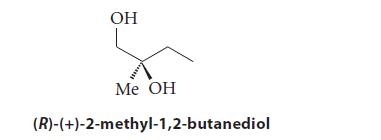
Enantiomerically pure (R)-(+)-2-methyl-1,2-butanediol has a specific rotation [α]20D + 19.3 degrees mL g–1 dm–1 in chloroform solution.(a) What is the EE of a mixture of (+)- and (-)-2-methyl-1,2-butanediol that has an apparent specific rotation of 26.3 degrees mL g–1 dm–1 under the same
For which of the following alkenes would oxymercuration–reduction give (a) A single compound; (b) Two diastereomers;(c) More than one constitutional isomer? Explain. A B -CH3 с CH3 CH3 H₂C a H" D
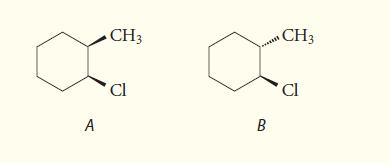
Give the predominant product of the E2 reaction when each of the following diastereomers is allowed to react with potassium tert-butoxide in DMSO. Explain your reasoning. A CH3 Cl B CH3 Cl
The crown ether [18]-crown-6 has a strong affinity for the methylammonium ion, CH3+NH3. Propose a structure for the complex between [18]-crown-6 and this ion. Show the important interactions between the crown ether and the ion.
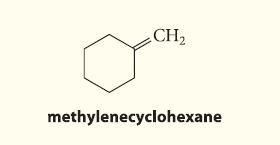
Which alkyl halide and what conditions should be used to prepare the following alkene in good yield by an E2 elimination? CH₂ methylenecyclohexane
What is the expected nucleophilic substitution product when(a) Methyl iodide reacts with Na+ CH3CH2CH2CH2S–?(b) Ethyl iodide reacts with ammonia?
Write the equation for the reaction in Problem 9.1a as a net ionic equation.Problem 9.1aWhat is the expected nucleophilic substitution product when(a) Methyl iodide reacts with Na+ CH3CH2CH2CH2S–?
What products are formed, and by what mechanisms, in each of the following cases?(a) Methyl iodide and sodium cyanide (NaCN) in ethanol.(b) 2-bromo-3-methylbutane in hot ethanol.(c) 2-bromo-3-methylbutane in anhydrous acetone at room temperature.(d) 2-bromo-3-methylbutane in ethanol containing an
What product(s) are expected in the ethoxide-promoted b-elimination reaction of each of the following compounds?(a) 2-bromo-2,3-dimethylbutane (b) 1-chloro-1-methylcyclohexane
Tell whether each of the following reactions favors reactants or products at equilibrium. (Assume that all reactants and products are soluble.) (a) CH₂Cl + F- (b) CH3CI + N3 (c) CH₂Cl + OCH3 CH₂F+CI- CH₂N3+CI (Hint: The pK, of HN3 is 4.72.) CH3OCH3 + CI™
What substitution and elimination products (if any) might be obtained when each of the following alkyl halides is treated with sodium methoxide in methanol?(a) Trans-1-bromo-3-methylcyclohexane (b) Methyl iodide (c) (bromomethyl)cyclopentane
For each of the following reactions, (1) what is the overall kinetic order of the reaction, (2) what is the order in each reactant, and (3) what are the dimensions of the rate constant?(a) An addition reaction of bromine to an alkene with the rate law(b) A substitution reaction of an alkyl halide
(a) What is the ratio of rate constants kA/kB at 25 °C for two reactions A and B if the standard free energy of activation of reaction A is 14 kJ mol–1 (3.4 kcal mol–1) less than that of reaction B?(b) What is the difference in the standard free energies of activation at 25°C of two reactions
What prediction does the rate law in Eq. 9.18 make about how the rate of the reaction changes as the reactants D and E are converted into F over time? Does the rate increase, decrease, or stay the same? Explain. Use your answer to sketch a plot of the concentrations of starting materials and
The reaction of acetic acid with ammonia is very rapid and follows the simple rate law shown in the following equation. Propose a mechanism that is consistent with this rate law. Lo HỌC−C=O-H+:NH, acetic acid HỌC–C−O +NH, 3 || rate = K[H₂C-C-OH][NH₂]
What rate law would be expected for the reaction of cyanide ion (–;CN) with ethyl bromide by the SN2 mechanism?
Methyl iodide (0.1 M) and hydriodic acid (HI, 0.1 M) are allowed to react in ethanol solution with 0.1 M sodium ethoxide. What products are observed?
The following hydroxide-catalyzed b-elimination takes place by a carbon–anion stepwise mechanism. Show the carbon–anion intermediate and explain its stability. Think in terms of a polar effect (Sec. 3.6C). Recalling also that resonance structures imply heightened stability (Sec. 1.4), draw a
Which nucleophile, ;N(C2H5)3 or ;P(C2H5)3, reacts most rapidly with methyl iodide in ethanol solvent? Explain, and give the product formed in each case.
In each of the following series, arrange the compounds in order of increasing reactivity in the E2 reaction with Na+ EtO–. CH3 H₂C-C-Br CH3 A CD3 D3C-C-Cl T CD3 B CH3 H₂C-C-Cl CH3 C (b) CH3 H3C-C-F CH3 A CH3 H₂C-C-I CH3 B
What nucleophile or base and what type of solvent could be used for the conversion of isobutyl bromide into each of the following compounds? (a) (CH3)₂CHCH₂S (CH3)2 Br (b) (CH3)₂CHCH₂SCH₂CH3 (c) (CH,),C=CH,
Arrange the following four alkyl halides in descending order with respect to the E2 elimination to SN2 substitution product ratio expected in their reactions with sodium ethoxide in ethyl alcohol. Explain your answers. CH,I (CH3)2CHCH₂-Br A B (CH3)3CCH₂CH₂CH₂-Br C (CH3)2CHCH-Br I CH3 D
Arrange the following four bases in descending order with respect to the E2 elimination to SN2 substitution product ratio expected when they react with isobutyl bromide. Explain your answers. (CH3)2CH-O- A CH₂O B (C₂H5)3C-O- C CI- D
Write a curved-arrow mechanism for formation of the rearrangement product shown in Eq. 9.60. CH3 CH3 I T H3C-C- Ī CH 3 -CH-Cl EtOH 80 °C CH3 CH3 | I H3C-C- | OEt + -CH-CH3 EtOH₂ Cl + other products (9.60)
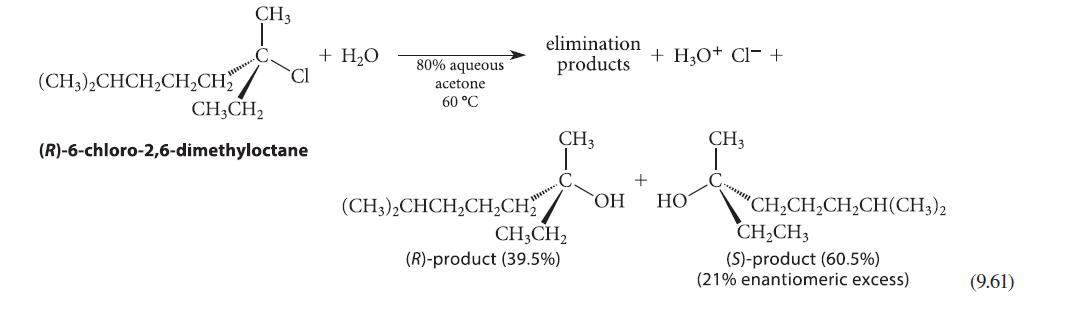
The optically active alkyl halide in Eq. 9.61 reacts at 60 °C in anhydrous methanol solvent to give a methyl ether A plus alkenes.The substitution reaction is reported to occur with 66% racemization and 34% inversion. Give the structure of ether A and state how much of each enantiomer of A is
Give the products of the following reactions. Show the curved-arrow notation for each. (a) H₂C-Li + CH₂OH (b) (CH,),CHCH, —MgCl + H,O
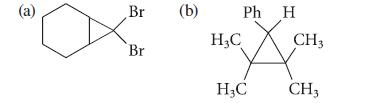
What alkyl halide and what alkene would yield each of the following cyclopropane derivatives in the presence of a strong base? (a) Br Br (b) Ph H Ă H₂C H₂C CH 3 CH3
(a) Give the structures of two isomeric alkylmagnesium bromides that would react with water to give propane.(b) What compounds would be formed from the reactions of the reagents in (a) with D2O?
Give the structure of the organic product expected when CH2I2 reacts with each of the following alkenes in the presence of a Zn–Cu couple: (a) (Z)-3-methyl-2-pentene (b) CH-CH3
Predict the products that result when each of the following alkenes reacts with chloroform and potassium tert-butoxide. Give the structures of all product stereoisomers, and, if more than one stereoisomer is formed, indicate whether they are formed in the same or different amounts.(a)
Give the free-radical chain mechanism for the formation of ethyl bromide from ethane and bromine in the presence of light.
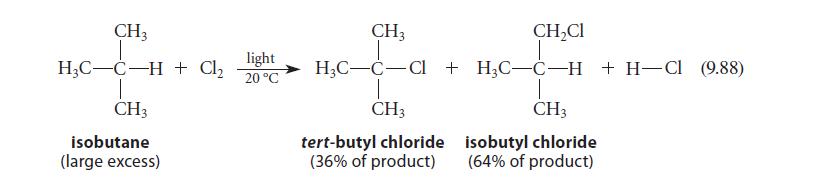
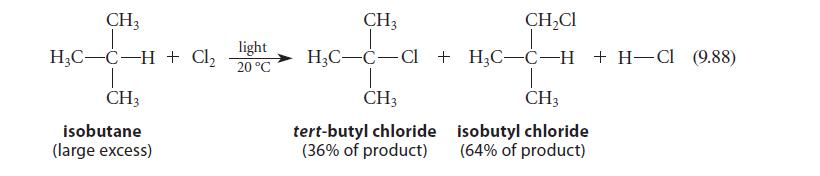
Given the product distribution in Eq. 9.88, calculate the relative rate of abstraction (per hydrogen) of a tertiary and a primary hydrogen by a chlorine atom. CH3 H₂C-C-H + Cl₂ T CH3 isobutane (large excess) light 20 °C CH3 T CH₂Cl T H₂C-C-Cl + H₂C-C-H + H-CI (9.88) CH3 tert-butyl
Explain why butane is formed as a minor by-product in the free-radical bromination of ethane.
Two monobromination products are obtained in roughly equal amounts when pentane is treated with bromine and light. What are they? Explain your reasoning.
(a) What is the major monobromination product obtained when methylcyclohexane is treated with bromine and light? Explain your reasoning.(b) The tertiary/primary relative reactivity per hydrogen at 215 °C in the photochlorination of triptane (2,2,3-trimethylbutane) is 4.5. What are the relative
Choose the alkyl halide(s) from the following list of C6H13Br isomers that meet each criterion below.(1) 1-bromohexane(2) 3-bromo-3-methylpentane(3) 1-bromo-2,2-dimethylbutane(4) 3-bromo-2-methylpentane(5) 2-bromo-3-methylpentane(a) The compound(s) that can exist as enantiomers(b) The compound(s)
Give the products expected when isopentyl bromide (1-bromo-3-methylbutane) or the other substances indicated react with the following reagents.(a) KI in aqueous acetone(b) KOH in aqueous ethanol(c) K+ (CH3)3C—O¯ in (CH3)3C—OH(d) Product of part (c) 1 HBr(e) CsF in N,N-dimethylformamide (a
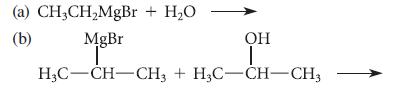
Identify the gas evolved in each of the following reactions. (a) CH3CH₂MgBr + H₂O (b) MgBr OH T I H3C-CH-CH3 + H3C-CH-CH3
Give the products expected when 2-bromo-2-methylhexane or the other substances indicated react with the following reagents.(a) Warm 1:1 ethanol–water(b) Sodium ethoxide in ethanol(c) KI in aqueous acetone(d) Product(s) of part (b) + HBr in the presence of peroxides(e) Product(s) of part (b) +
Give the structure that meets the criteria given in each of the following cases:(a) A compound C6H14 that gives only two products of monochlorination, one of which is chiral.(b) Four stereoisomeric compounds C4H8O, all optically active, that contain no double bonds and evolve a gas when treated
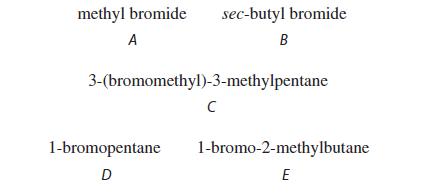
Rank the following compounds in order of increasing SN2 reaction rate with KI in acetone. methyl bromide sec-butyl bromide A B 3-(bromomethyl)-3-methylpentane с 1-bromopentane 1-bromo-2-methylbutane E D
In each of the following series, order the atoms, compounds, or ions in order of increasing polarizability, and explain your choices.(a) Se, O, S(b) Chloroform, fluoroform, iodoform(c) I–, Br–, Cl–, F–
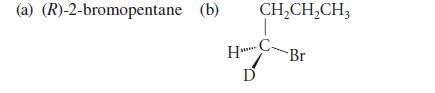
Give all of the product(s) expected, including pertinent stereochemistry, when each of the following compounds reacts with sodium ethoxide in ethanol. (D = deuterium = 2H, an isotope of hydrogen.) (a) (R)-2-bromopentane (b) CH₂CH₂CH3 HBr C D
In the Williamson ether synthesis, an alkoxide reacts with an alkyl halide to give an ether.You are in charge of a research group for a large company, Ethers Unlimited, and you have been assigned the task of synthesizing tert-butyl methyl ether, (CH3)3C—O—CH3. You have decided to delegate this
Propose a synthesis of ethyl neopentyl ether, C2H5OCH2C(CH3)3, from an alkyl bromide and any other reagents.
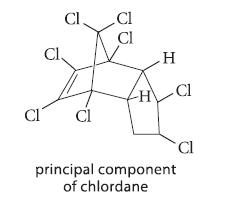
The banned insecticide chlordane is reported to lose some of its chlorine and to be converted into other compounds when exposed to alkaline conditions. Explain. CI CI Cl, Cl Cl CI H H\ Cl principal component of chlordane Cl
When 2,3-dimethylbutane is treated with Br2 in the presence of light, the bromine-containing compounds obtained in greatest amount are compound A (C6H13Br) and compound B (C6H12Br2). Propose structures for these compounds and explain your reasoning.
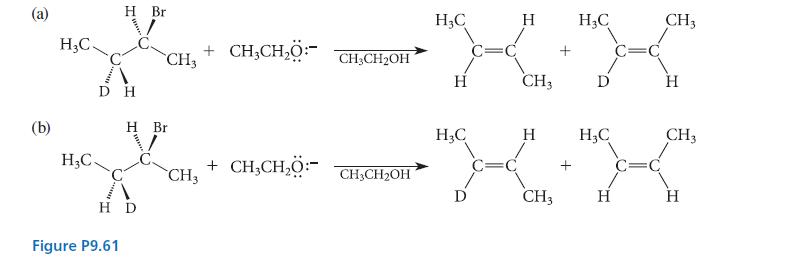
(a) Explain why the compound given in part (a) of Fig. P9.61 reacts to give a mixture of 2-butene stereoisomers in which only the Z isomer contains deuterium.(b) Explain why the compound given in part (b) of Fig. P9.61 reacts to give a mixture of 2-butene stereoisomers in which only the E isomer
What products are expected, including their stereochemistry, when (2S,3R)-2-bromo-3-methylpentane is subjected to each of the following conditions? Explain.(a) Methanol containing an excess of sodium methoxide (b) Hot methanol containing no sodium methoxide
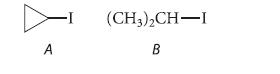
Which of the following secondary alkyl halides reacts faster with –CN in the SN2 reaction? A (CH3)2CH-I B
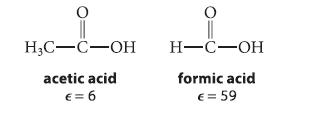
Tert-butyl chloride undergoes solvolysis in either acetic acid or formic acid.Both solvents are protic, donor solvents, but they differ substantially in their dielectric constants ϵ.(a) What is the SN1 solvolysis product in each solvent?(b) In one solvent, the SN1 reaction is 5000 times faster
Explain each of the following observations.(a) When benzyl bromide (Ph—CH2—Br) is added to a suspension of potassium fluoride in benzene, no reaction occurs. However, when a catalytic amount of the crown ether [18]-crown-6 (Sec. 8.7B) is added to the solution, benzyl fluoride can be isolated in
Suppose that CH3I is added to an ethanol solution containing an excess of both Na+ CH3CH2O– and K+ CH3CH2S– in equimolar amounts.(a) What is the major product that will be isolated from the reaction? Explain.(b) How would your answer change (if at all) if the experiment were conducted in
Consider the following equilibrium:In each case (a) and (b), choose the solvent in which the equilibrium would lie farther to the right. Explain. (Assume that the products are soluble in all solvents considered.)(a) Ethanol or diethyl ether (b) N,N-dimethylacetamide (a polar, aprotic solvent, ϵ =
Although Grignard reagents are normally insoluble in hydrocarbon solvents, they can be dissolved in such solvents if a tertiary amine (a compound with the general structure R3N;) is added. Explain.
When methyl bromide is dissolved in methanol and an equimolar amount of sodium iodide is added, the concentration of iodide ion quickly decreases, and then slowly returns to its original value. Explain.
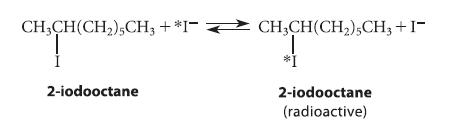
The first demonstration of the stereochemistry of the SN2 reaction was carried out in 1935 by Prof. E. D. Hughes and his colleagues at the University of London. They allowed (R)-2-iodooctane to react with radioactive iodide ion (*I¯).The rate of substitution (rate constant kS) was determined by
Consider the following experiments with trityl chloride, Ph3C—Cl, a very reactive tertiary alkyl halide:(1) In aqueous acetone, the reaction of trityl chloride follows a rate law that is first order in the alkyl halide, and the product is trityl alcohol, Ph3C—OH.(2) In another reaction, when
An optically active compound A has the formula C8H13Br. Compound A gives no reaction with Br2 in CH2Cl2, but it reacts with K+(CH3)3C—O– to give a single new compound B in good yield. Compound B decolorizes Br2 in CH2Cl2 and takes up hydrogen over a catalyst. When compound B is treated with
In the laboratories of the firm “Halides ‘R’ Us,” a compound A has been found in a vial labeled only “achiral alkyl halide C10H17Br.” The management feels that the compound might be useful as a pesticide, but they need to know its structure. You have been called in as a consultant at a
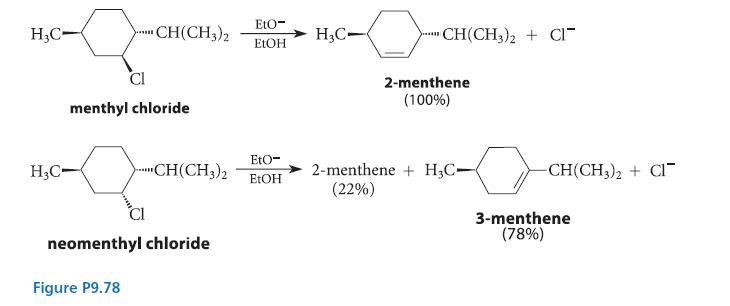
When menthyl chloride (see Fig. P9.78) is treated with sodium ethoxide in ethanol, 2-menthene is the only alkene product observed. When neomenthyl chloride is subjected to the same conditions, the alkene products are mostly 3- menthene (78%) along with some 2-menthene (22%).Explain why different
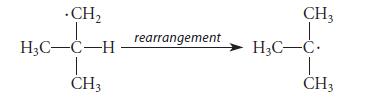
Knowing that carbocations rearrange, chemists H. C. Brown and Glenn A. Russell at Purdue University in the early 1950s investigated whether free-radical rearrangements might also occur:They carried out light-promoted free-radical chlorination of isobutane-2d, in which the tertiary hydrogen of
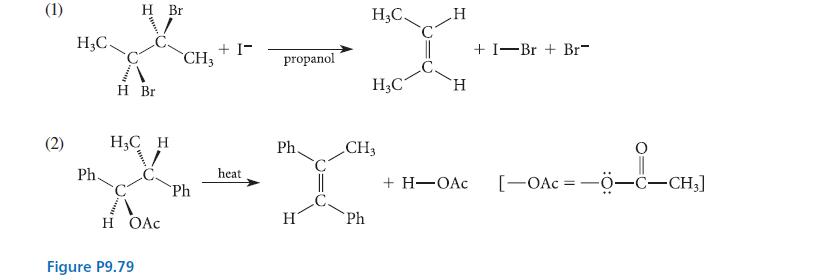
(a) Tell whether each of the eliminations shown in Fig. P9.79 is syn or anti.(b) Reaction (2) shows first-order kinetics. Draw a curved-arrow mechanism for this reaction that is consistent with its kinetic order and with its stereochemistry. (1) (2) H₂C. Ph. H Br H Br H₂C H H OAC Figure
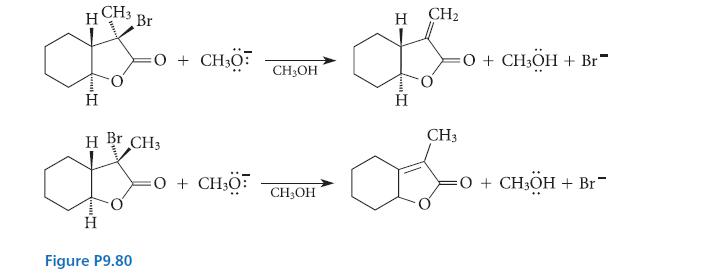
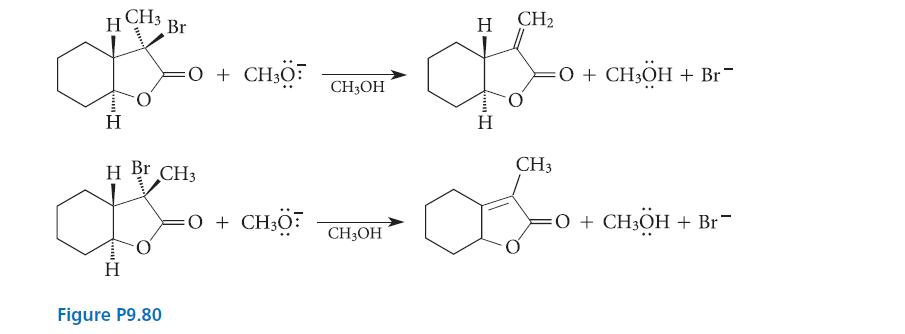
Explain why each alkyl halide stereoisomer gives a different alkene in the E2 reactions shown in Fig. P9.80. It will probably help to build models or draw out the conformations of the two starting materials. H¹ Br **** H H Br CH3 H =O + CH3O Figure P9.80 =O + CH3O CH3OH CH3OH H CH₂ H =O + CH3ÖH
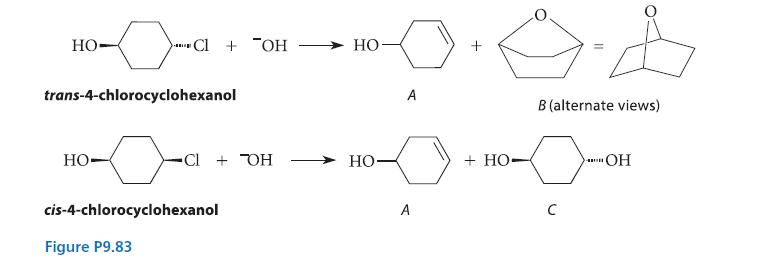
The cis and trans stereoisomers of 4-chlorocyclohexanol give different products when they react with OH–, as shown in the reactions given in Fig. P9.83.(a) Give a curved-arrow mechanism for the formation of each product.(b) Explain why the bicyclic material B is observed in the reaction of the
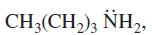
The reaction of butylamine, with 1-bromobutane in 60% aqueous ethanol follows the rate law rate 5 k[butylamine][1-bromobutane]The product of the reaction isThe following very similar reaction, however, has a first-order rate law:Give a mechanism for each reaction that is consistent with its rate
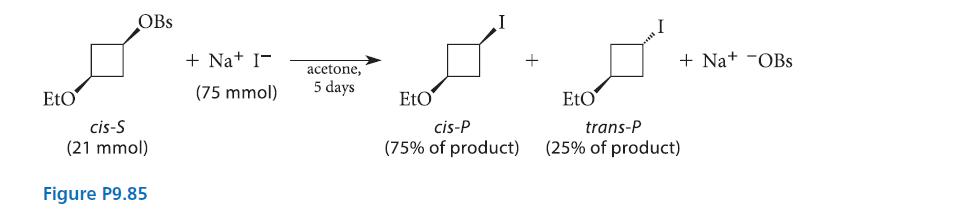
In 1975, a report was published in which the reaction given in Fig. P9.85 was observed. The—OBs (brosylate) group is a leaving group conceptually like halide. (Think of this group as you would—Br.) Notice that the reaction conditions favor an SN2 reaction.(a) This result created quite a stir
Account for each of the results, shown in Fig. P9.87, with a mechanism. In part (a), note that the reaction is not observed in the absence of NaOH. In part (b), note that organolithium reagents are strong bases and that the hydrogens on a carbon adjacent to a benzene ring are relatively acidic. (a)
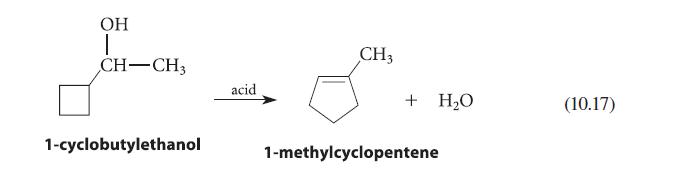
Provide a curved-arrow mechanism and a rationale for the rearrangement shown in Eq. 10.17. (Use H—A as a general abbreviation for the catalyzing acid.) OH 1 CH-CH3 1-cyclobutylethanol acid CH3 + H₂O 1-methylcyclopentene (10.17)
Give the structure of each of the following compounds.(a) Sodium isopropoxide(b) Potassium tert-butoxide(c) Magnesium 2,2-dimethyl-1-butanolate
Outline a sequence of reactions for the conversion of 3-pentanol into 3-bromopentane.
Write the transformation of Eq. 10.39 as a balanced half-reaction. H3C-CH₂-OH ethanol H3C-C-OH acetic acid (10.39)
Name the following compounds.(a) Ca(OCH3)2 (b) CuSCH2CH3
In each of the following sets, arrange the compounds in order of increasing acidity (decreasing pKa). Explain your choices. (a) CICH₂CH₂OH, Cl₂CHCH₂OH, CI(CH₂)3OH (b) CICH₂CH₂SH, CICH₂CH₂OH, CH₂CH₂OH (c) CH₂CH₂CH₂CH₂OH, CH₂OCH₂CH₂OH
Use oxidation numbers to verify that the transformation in Eq. 10.39 (also shown below) is an oxidation. H₂C-CH₂-OH ethanol O || H₂C-C-OH acetic acid (10.39)
What alkene(s) are formed in the acid-catalyzed dehydration of each of the following alcohols? (a) 3-methyl-3-heptanol (b) OH ī PhCHCH₂Ph
Outline a synthesis of hexanal from 1-hexene. CH3CH₂CH₂CH₂CH=CH₂ 1-hexene CHỊCH,CH,CH,CH,CH=O hexanal
Verify that the acid-catalyzed hydration of 2-methylpropene is neither an oxidation nor a reduction.
Identify the major alkene product(s) in part (a) of Problem 10.4.Problem 10.4.What alkene(s) are formed in the acid-catalyzed dehydration of each of the following alcohols?
Write a curved-arrow mechanism for the reaction in Eq. 10.16. OH 3,3-dimethyl-2-butanol acid + 2,3-dimethyl-1-butene 2,3-dimethyl-2-butene (29%) (71%) (10.16)
Write the structure of the carbocation intermediate involved in the acid-catalyzed dehydration of 3-ethyl-3-pentanol.
Suggest an alcohol starting material and the conditions for the preparation of each of the following alkyl halides. Br CH3CHCH₂CH3 (b) CH3 (c) I-CH₂CH₂CH₂CH₂CH₂ I Cl
A certain reaction is carried out in methanol with H2SO4 as a catalyst.(a) What Brønsted acid is present in highest concentration in such a solution?(b) If a base is involved in the reaction mechanism, what is the basic species?
Using models if necessary, draw at least two other line-and-wedge structures of dichloromethane.
Redraw the structures in Problem 2.14 using abbreviations for substituent groups. For structure (a), draw one structure that shows as many abbreviated methyl groups as possible.Problem 2.14Represent each of the following compounds with a skeletal structure.
How many hydrogens are in an alkane of n carbons containing (a) Two rings? (b) Three rings? (c) M rings?
How many rings does an alkane have if its formula is (a) C8H10? (b) C7H12? Explain how you know.
Draw a structural formula for each of the following compounds. (Several formulas may be possible in each case.)(a) A carboxylic acid with the molecular formula C2H4O2(b) An alcohol with the molecular formula C5H10O
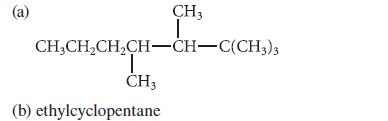
Draw structures that correspond to the following names.(a) 4-isobutyl-2,5-dimethylheptane(b) 2,3,5-trimethyl-4-propylheptane (skeletal structure)(c) 5-sec-butyl-6-tert-butyl-2,2-dimethylnonane
Sketch a diagram of potential energy versus angle of rotation about the carbon–carbon bond of chloroethane, H3C—CH2—Cl. The magnitude of the energy barrier to internal rotation is 15.5 kJ mol–1 (3.7 kcal mol–1). Label this barrier on your diagram.
The anti conformation of 1,2-dichloroethane, Cl—CH2—CH2—Cl, is 4.81 kJ mol–1 (1.15 kcal mol–1) more stable than the gauche conformation. The two energy barriers (measured relative to the energy of the gauche conformation) for carbon–carbon bond rotation are 21.5 kJ mol–1 (5.15 kcal
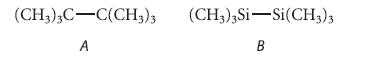
Which of the following compounds should have the larger energy barrier to internal rotation about the indicated bond?Explain your reasoning carefully. (CH3)3C-C(CH3)3 (CH3)3 Si-Si(CH3)3 A B
(a) Draw Newman projections of the most stable conformations about each of the carbon–carbon bonds in the principal chain of 2,2-dimethylpentane. Use models!(b) Combine these to predict the most stable conformation of 2,2-dimethylpentane.(c) Draw a line-and-wedge structure of the conformation you
From what you learned in Sec. 1.3B about the relative lengths of C¬C and C¬O bonds, predict which of the following compounds should have the larger energy difference between gauche and anti conformations about the indicated bond. Explain. CH3O-CH₂CH3 CHỊCH,—CH,CH3 A B
(a) What value is expected for the dipole moment of the anti conformation of 1, 2-dibromoethane, Br—CH2—CH2—Br? Explain.(b) The dipole moment μ of any compound that undergoes internal rotation can be expressed as a weighted average of the dipole moments of each of its conformations by the
Showing 900 - 1000
of 1324
1
2
3
4
5
6
7
8
9
10
11
12
13
14
Step by Step Answers

 Get 50% OFF
Claim Now
Get 50% OFF
Claim Now




![rate = k[alkene][Br]](https://dsd5zvtm8ll6.cloudfront.net/images/question_images/1701/2/4/0/5346566ded614bb61701240533227.jpg)
![rate = k[alkyl halide]](https://dsd5zvtm8ll6.cloudfront.net/images/question_images/1701/2/4/0/5426566dede7e3531701240541834.jpg)
![rate = k[D] (9.18)](https://dsd5zvtm8ll6.cloudfront.net/images/question_images/1701/2/4/0/6136566df251d2db1701240612168.jpg)
![Lo HCC=O-H+:NH, acetic acid HCCO +NH, 3 || rate = K[HC-C-OH][NH]](https://dsd5zvtm8ll6.cloudfront.net/images/question_images/1701/2/4/0/6366566df3c2e8c21701240635245.jpg)












![NH -Br A + NH Br rate = k[A]](https://dsd5zvtm8ll6.cloudfront.net/images/question_images/1701/2/5/0/727656706a77a7eb1701250725567.jpg)