New Semester
Started
Get
50% OFF
Study Help!
--h --m --s
Claim Now
Question Answers
Textbooks
Find textbooks, questions and answers
Oops, something went wrong!
Change your search query and then try again
S
Books
FREE
Study Help
Expert Questions
Accounting
General Management
Mathematics
Finance
Organizational Behaviour
Law
Physics
Operating System
Management Leadership
Sociology
Programming
Marketing
Database
Computer Network
Economics
Textbooks Solutions
Accounting
Managerial Accounting
Management Leadership
Cost Accounting
Statistics
Business Law
Corporate Finance
Finance
Economics
Auditing
Tutors
Online Tutors
Find a Tutor
Hire a Tutor
Become a Tutor
AI Tutor
AI Study Planner
NEW
Sell Books
Search
Search
Sign In
Register
study help
sciences
organic chemistry 6th
Organic Chemistry 6th Edition Marc Loudon, Jim Parise - Solutions
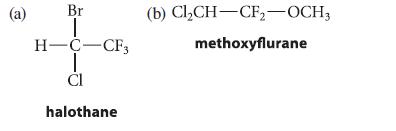
Give the IUPAC substitutive name for each of the following compounds, which have been used as general anesthetics. (a) Br I H-C-CF3 I Cl halothane (b) Cl₂CH-CF₂-OCH3 methoxyflurane
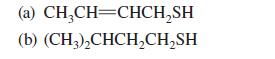
Thiols of low molecular mass are known for their extremely foul odors. In fact, the following two thiols are the active components in the scent of the skunk. Give the IUPAC substitutive names for these compounds. (a) CH₂CH=CHCH₂SH (b) (CH3)₂CHCH₂CH₂SH
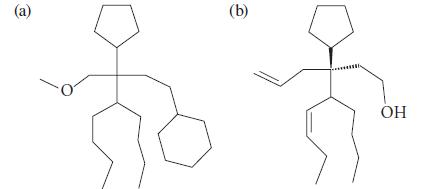
Give an IUPAC name for each of the following compounds, which may have been isolated from the shoes of a tennis player. Ignore stereochemistry in (a). (a) (b) HO
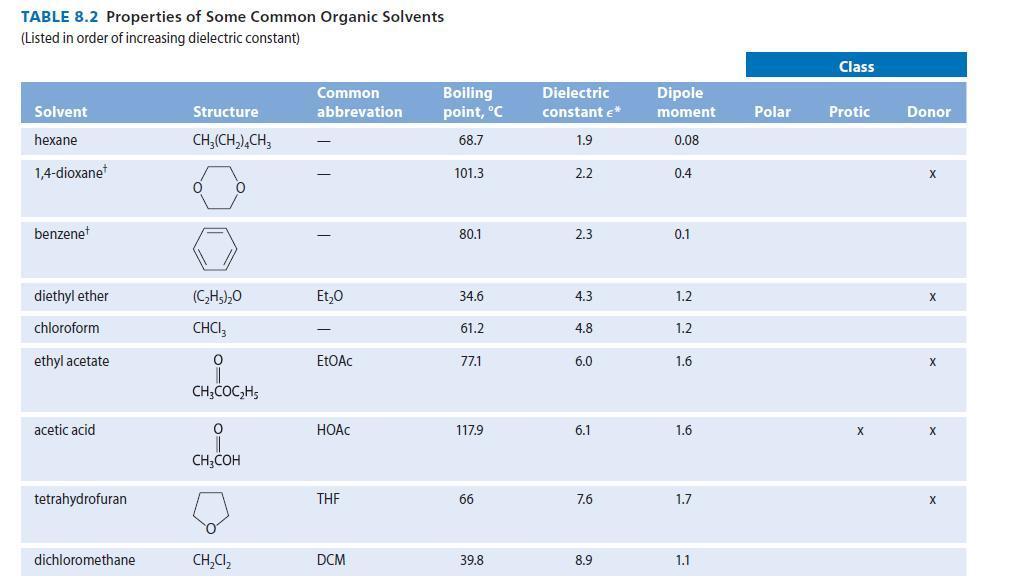
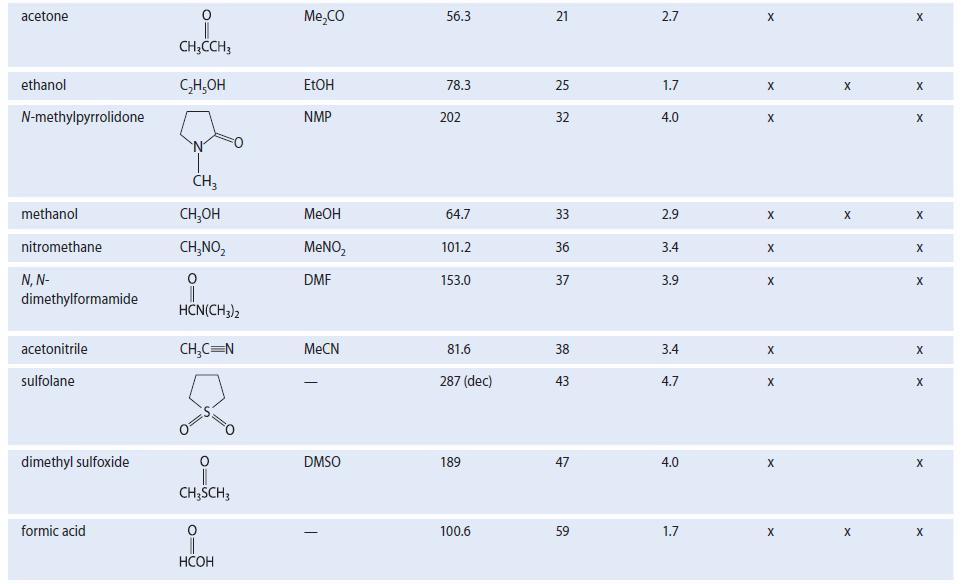
For the following problems, see Table 8.2 for structures and dipole moments. Explain your reasoning in each case.(a) With which one of the following solvents is DMSO not miscible: water, acetone, hexane, or acetonitrile?(b) With which one of the following solvents is hexane not miscible: methanol,
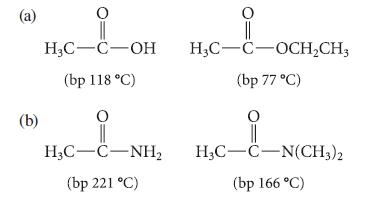
In each of the following parts, explain why the first compound has a higher boiling point than the second, despite a lower molecular mass. (a) (b) H₂C-C-OH (bp 118 °C) O H3C-C-NH₂ (bp 221 °C) H₂C-C-OCH₂CH3 (bp 77 °C) O H3C-C-N(CH3)2 (bp 166 °C)
Without consulting tables, arrange the compounds within each of the following sets in order of increasing boiling point, and give your reasoning.(a) 1-hexanol, 2-pentanol, tert-butyl alcohol(b) 1-hexanol, 1-hexene, 1-chloropentane(c) Diethyl ether, propane, 1,2-propanediol(d) Cyclooctane,
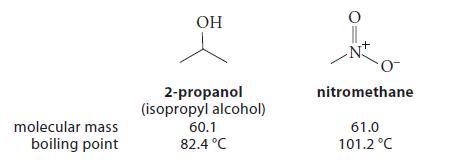
The molecules nitromethane and 2-propanol have roughly the same shape and molecular mass.Liquid 2-propanol contains hydrogen bonds, but liquid nitromethane does not. Yet nitromethane has the higher boiling point. Why does nitromethane have such a high boiling point? What physical properties of the
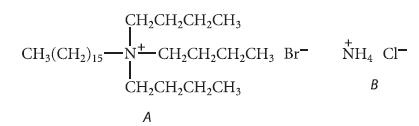
(a) One of the following compounds is an unusual example of a salt that is soluble in hydrocarbon solvents. Which one is it? Explain your choice.(b) Which of the following would be present in greater amount in a hexane solution of the compound in part (a): separately solvated ions, or ion pairs and
The pKa of water is 15.7. Titration of an aqueous solution containing Cu2+ ion suggests the presence of a species that acts as a Brønsted acid with pKa 5 8.3. Suggest a structure for this species.
Show the types of solvation interactions that might be expected in each solution. Consider the solvation of both the cation and the anion.(a) A solution of the salt ammonium chloride in ethanol (b) A solution of the salt sodium chloride in N-methylpyrrolidone
The dissociation constant Kd of the complex between a crown ether and a metal ion M+ is given byExplain why the complex of the crown ether [18]-crown-6 with potassium ion has a much larger dissociation constant in water than it does in ether. K₁² = [crown ether][M*] [crown ether-M* complex]
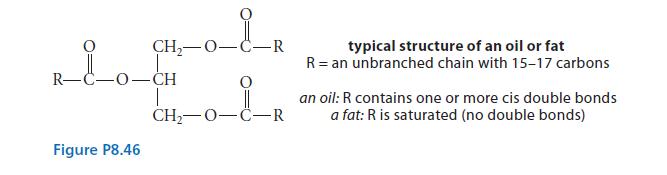
When salad oil is mixed with water and shaken, two layers quickly separate, the oily layer on top and the water layer on the bottom.When an egg yolk (which is rich in lecithin, a phospholipid) is added and the mixture shaken, an emulsion is formed.This means that the oil is suspended (not
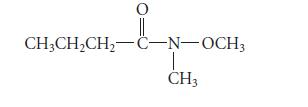
Suggest a structure for a constitutional isomer of the following compound that should have greater water solubility, and explain your reasoning. The structure should not be an enol, because enols are not stable. O || CH3CH₂CH₂-C-N-OCH3 CH3
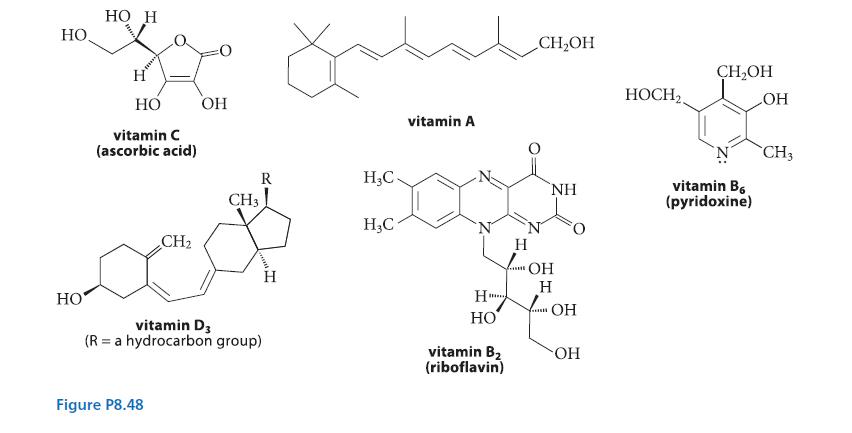
Vitamins can be classified as “fat-soluble” or “watersoluble.” Fat-soluble vitamins can be stored in fatty tissues, whereas water-soluble vitamins can be excreted in the urine.(a) The structures of some vitamins are given in Fig. P8.48 Using their structures to guide you, classify each as
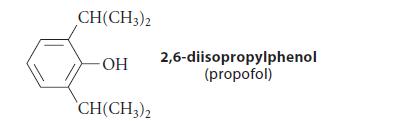
Propofol is used as a general anesthetic in the first stages of surgery.Propofol is insoluble in water, but it has to be administered by intravenous injection. For this reason, propofol is formulated as a mixture with soybean oil and lecithin. (This milky formulation is sometimes jokingly called
Ethyl alcohol in the solvent CCl4 forms a hydrogen-bonded complex with an equilibrium constant Keq = 11.(a) What happens to the concentration of the complex as the concentration of ethanol is increased? Explain.(b) What is the standard free-energy change for this reaction at 25°C?(c) If one mole
In each of the following pairs, one compound has a melting point that is much higher than the other, but the two have very similar boiling points. Choose the compound with the greater melting point, and explain your reasoning.(a) (reported melting points 62–65°C, 17°C)(b) (reported melting
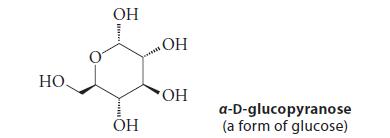
Offer explanations for each of the following.(a) Ethanol and 1-propanol disrupt the lipid bilayer of cell membranes.(b) Sugars such as glucose do not diffuse freely through the cell membrane.(c) The ΔS° for transfer of the salt Bu4N+ Cl– from water to DMSO is strongly positive (1130 J K–1
The boiling points of tert-butyl alcohol (2-methyl-2-propanol) and 1-butanol differ by 36°C (82° and 118°). Before proceeding, draw their structures.(a) Which has the higher boiling point? Give a reason for this difference.(b) How would the differences in their structures affect the ΔSs
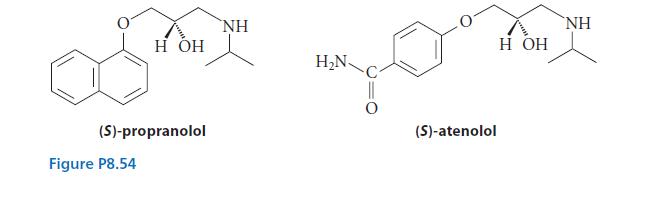
(S)-Propranolol and (S)-atenolol (Fig. P8.54) are two well-known drugs used as β-blockers. They suppress the “fight-or-flight” response and are sometimes used to treat panic in examination or performance situations. Drugs such as these are often characterized by their octanol–water partition
If hydrophobic bonding is driven by a highly positive DS°, how would you expect the equilibrium constant for an association reaction driven by hydrophobic bonding to change with increasing temperature? That is, would it become greater, become smaller, or stay the same? Explain.
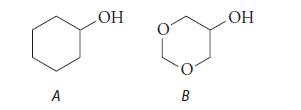
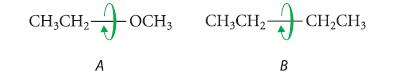
Offer an explanation for each of the following observations.(a) Compound A exists mostly in a chair conformation with an equatorial —OH group, but compound B prefers a chair conformation with an axial —OH group.(b) The racemate of 2,2,5,5-tetramethyl-3,4- hexanediol exists with a strong
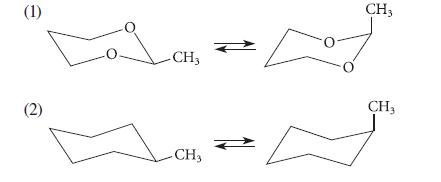
(a) Use the relative bond lengths of the C—C and C—O bonds to predict which of the following two equilibria lies farther to the right. (That is, predict which of the two compounds contains more of the conformation with the axial methyl group.)(b) Which one of the following compounds contains
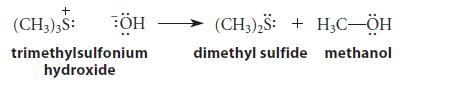
Consider the reaction analyzed in Study Problem 3.2 (p. 91), reproduced below. Identify the nucleophilic center, the electrophilic center, and the leaving group in the forward direction. (Don’t hesitate to draw out the bonds between the sulfurs and each methyl group, if necessary.) + (CH3)3S:
In each of the following sets, show how the second resonance structure can be derived from the first by the curved-arrow notation. (4) CHO–CH, CHO=CH, methoxymethyl cation (b) :0: K- H₂C-N H₂C-N nitromethane :0
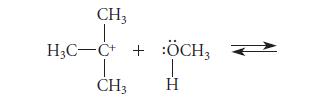
(a) Using the curved-arrow notation to guide you, complete the following Lewis acid–base association reaction.(b) After you have completed the reaction, give the curved-arrow notation for the reverse direction.(c) Identify the nucleophilic center, the electrophilic center, and the leaving group
Assign a formal charge to each of the atoms in the tetrafluoroborate ion, [BF4]–, which has the structure.
How many valence electrons are found in each of the following species?(a) Na (b) Ca (c) O2– (d) Br+
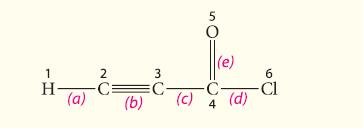
Estimate each bond angle in the following molecule, and order the bonds according to length, beginning with the shortest. 1 H(a) 2 -C= 3 C- (b) 5 O (e) 6 -C- -Cl (c) 4 (d)
Draw a Lewis structure for the covalent compound methanol, CH4O. Assume that the octet rule is obeyed, and that none of the atoms have formal charges.
Describe the electronic configuration of the sulfur atom. Identify the valence electrons and valence orbitals.
Write two reasonable Lewis structures corresponding to the formula C2H6O. Assume that all bonding adheres to the octet rule, and that no atom bears a formal charge.
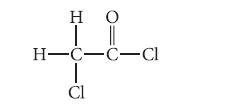
Analyze the polarity of each bond in the following organic compound. Which bond, other than the C—C bond, is the least polar one in the molecule? Which carbon has the most partial positive character? Η Ο H=C=C=Cl Cl
Use molecular orbital theory to explain why He2 does not exist. The molecular orbitals of He2 are formed in the same way as those of H2.
Which of the following ions require(s) dihedral angles to specify its structure completely? Explain. + H₂C-NH3 A PF6 B HO-O: C
(a) Draw a resonance structure for the allyl anion that shows, along with the following structure, that the two CH2 carbons are equivalent and indistinguishable.(b) According to the resonance structures, how much negative charge is on each of the CH2 carbons?(c) Draw a single hybrid structure for
Sketch a plot of the wavefunction ψ = sin nx for the domain 0 ≤ x ≤ π for n = 1, 2, and 3. What is the relationship between the “quantum number” n and the number of nodes in the wavefunction?
Use the trends in orbital shapes you’ve just learned to describe the general features of (a) A 3s orbital (b) A 4s orbital
Referring to your solution to Problem 1.17d, calculate the bond order of the covalent bond in the H2+ ion. How does this result bear on the answer to Problem 1.18?Problem 1.17dDraw an orbital interaction diagram corresponding to Fig. 1.14 for each of the following species. Indicate which are likely
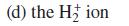
The bond dissociation energy of H2 is 435 kJ mol–1 (104 kcal mol–1); that is, it takes this amount of energy to dissociate H2 into its atoms. Estimate the bond dissociation energy of H2+ and explain your answer.
In each of the following sets, specify the one compound that is likely to have completely ionic bonds in its solid state. (a) CC14 (b) CS₂ HCI CsF Na At HF K₂ XeF₂ BF₁
(a) Construct a hybrid orbital picture for the water molecule using oxygen sp3 hybrid orbitals.(b) Predict any departures from tetrahedral geometry that you might expect from the presence of two unshared electron pairs.Explain your answer.
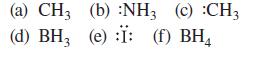
Which of the non-hydrogen atoms in each of the following species has a complete octet? What is the formal charge on each? Assume all unshared valence electrons are shown. (a) CH3 (b) :NH3 (c) :CH3 (d) BH, (e) :Ï: (f) BH4 3
Draw one Lewis structure for each of the following compounds; show all unshared electron pairs. None of the atoms in the compounds bears a formal charge, and all atoms have octets (hydrogens have duets).(a) C2H3Cl(b) Ketene, C2H2O, which has a carbon–carbon double bond(c) Acetonitrile, C2H3N,
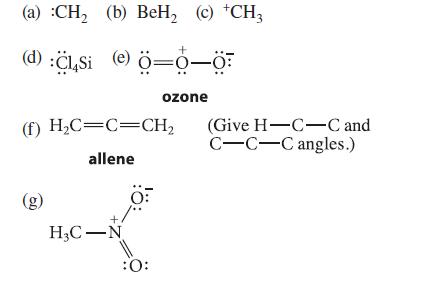
Predict the approximate bond angles in each of the following molecules, and explain your reasoning. (a) :CH₂ (b) BeH₂ (c) *CH3 (d):CLSi (e) Ö-0-0 (f) H₂C=C=CH₂ allene H₂C-N OF ozone :O: (Give H-C-C and C-C-C angles.)
Give the electronic configuration of (a) The chlorine atom;(b) The silicon atom (Si); (c) The argon atom; (d) The magnesium atom. Indicate the valence electrons and the valence orbitals of Si.
Which of the following orbitals is (are) not permitted by the quantum theory of the hydrogen atom? Explain.2s 6s 5d 2d 3p
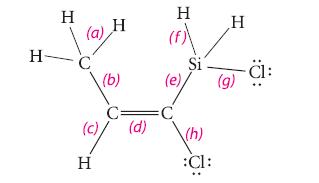
Estimate each of the bond angles and order the bond lengths (smallest first) in the following molecule. State any points of ambiguity and explain H- H (a) C H (b) C= (c) (d) H H (e), =C Si \(h) :Cl: H (g) -ä:
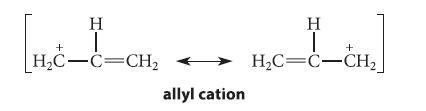
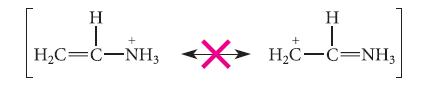
The allyl cation can be represented by the following resonance structures.(a) What is the bond order of each carbon–carbon bond in the allyl cation?(b) How much positive charge resides on each carbon of the allyl cation?(c) Although the preceding structures are reasonable descriptions of the
(a) Two types of nodes occur in atomic orbitals: spherical surfaces and planes. Examine the nodes in 2s, 2p, and 3p orbitals, and show that they agree with the following statements:1. An orbital of principal quantum number n has n - 1 nodes.2. The value of ml gives the number of planar nodes.(b)
Sketch a 4p orbital. Show the nodes and the regions of wave peaks and wave troughs.
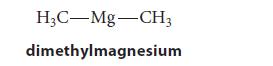
(a) Draw an appropriate bond dipole for the carbon–magnesium bond in dimethylmagnesium(b) What is the geometry of dimethylmagnesium? Explain.(c) What conclusion can you draw about the dipole moment of dimethylmagnesium? H₂C-Mg-CH3 dimethylmagnesium
Account for the fact that H3C—Cl (dipole moment 1.94 D) and H3C—F (dipole moment 1.82 D) have almost identical dipole moments, even though fluorine is considerably more electronegative than chlorine.
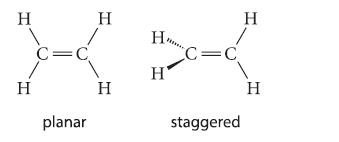
The principles for predicting bond angles do not permit a distinction between the following two conceivable forms of ethylene.The dipole moment of ethylene is zero. Does this experimental fact provide a clue to the preferred dihedral angles in ethylene? Why or why not?
Three possible dihedral angles for H2O2 (0°, 90°, and 180°) are shown in Fig. 1.6.(a) Assume that the H2O2 molecule exists predominantly in one of these arrangements. Which of the dihedral angles can be ruled out by the fact that H2O2 has a large dipole moment (2.13 D)? Explain.(b) The bond
A well-known chemist, Havno Szents, has heard you apply the rules for predicting molecular geometry to water; you have proposed a bent geometry for this compound. Dr. Szents is unconvinced by your arguments and continues to propose that water is a linear molecule.He demands that you debate the
Bring two 2s orbitals together to a bonding distance. (The wave troughs will overlap at this distance.) Form bonding and antibonding molecular orbitals, and show the electron occupancy diagram for the Li2 molecule.
When a hydrogen molecule absorbs light, an electron jumps from the bonding molecular orbital to the antibonding molecular orbital. Explain why this light absorption can lead to the dissociation of the hydrogen molecule into two hydrogen atoms. (This process, called photodissociation, can sometimes
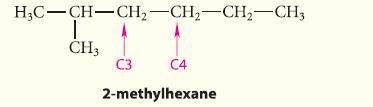
Draw a Newman projection for the anti conformation about the C3–C4 bond of 2-meth yl hexane, viewing the bond so that C3 is nearest the observer. H3C-CH-CH₂-CH₂-CH₂-CH3 I CH3 C3 C4 2-methylhexane
Suppose you take a trip to a distant universe and find that the periodic table there is derived from an arrangement of quantum numbers different from the one on Earth. The rules in that universe are1. Principal quantum number n = 1, 2, . . . (as on Earth);2. Angular momentum quantum number l = 0,
Which of the following four structures represent constitutional isomers of the same molecule, and which one is neither isomeric nor identical to the others? Explain your answers. CH3 CH3CHCHCH3 CH3 A CH3 CH3CHCHCH₂CH3 CH3 B CH3CH₂CHCH3 T CH H₂C C CH3 CH3CHCH₂CH₂CH₂CH3 CH3 D
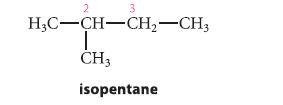
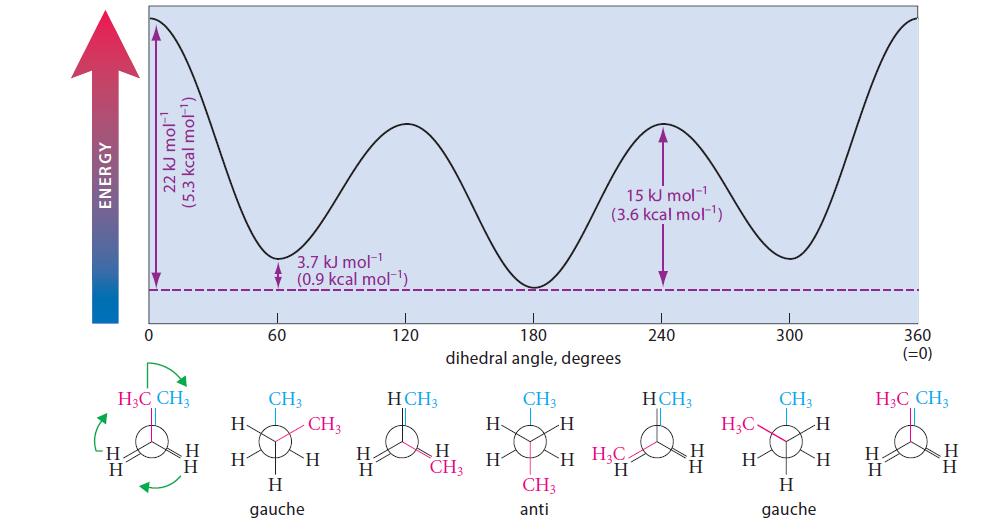
(a) Draw a Newman projection for each staggered and eclipsed conformation about the C2–C3 bond of isopentane, a compound containing a branched carbon chain.Show all staggered and eclipsed conformations.(b) Sketch a curve of potential energy versus dihedral angle for isopentane, similar to that of
Name the following compound, and give the name of the unbranched alkane of which it is a constitutional isomer. HỌC–CH,–CH,—CH–CH,–CH, CH3 I CH-CH3 I CH3
Give the structural formula and estimate the boiling point of tridecane, C13H28.
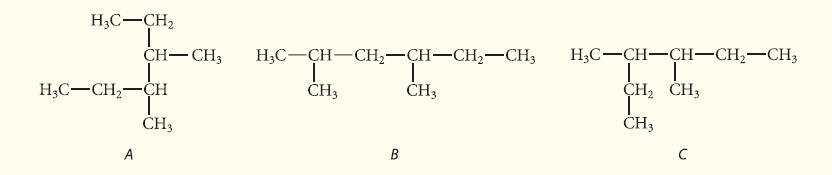
Which two of the following structures represent the same compound? Name the compound. H₂C-CH₂ T CH-CH3 H3C-CH₂-CH A CH3 HỌC-CH-CH,–CH–CH, CH3 T CH3 T CH3 B H3C-CH-CH-CH₂-CH3 | I CH₂ CH3 [ CH3 с
Repeat the analysis in Problem 2.3 for either one of the terminal C—C bonds of butane.Problem 2.3(a) Draw a Newman projection for each staggered and eclipsed conformation about the C2–C3 bond of isopentane, a compound containing a branched carbon chain.Show all staggered and eclipsed
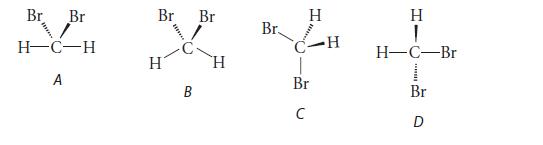
(a) Use the procedures described in this section to draw the line-and-wedge and sawhorse conformations of both gauchebutane conformations projected about the central carbon–carbon bond. Don’t hesitate to use models.(b) Which of the following line-and-wedge structures of dibromomethane (H2CBr2)
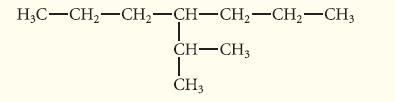
Write the Lewis structure of 4-sec-butyl-5-ethyl-3-methyloctane. Then write the structure in a condensed form
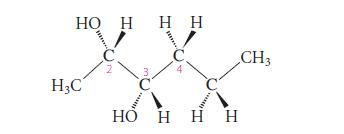
(a) Using models when necessary, draw a Newman projection and a sawhorse projection corresponding to the following lineand-wedge structure. Project the C2–C3 bond, with carbon-2 nearer the observer, and simplify your structures by abbreviating large groups.(b) In your Newman projection, rotate
Draw a skeletal structure of tert-butylcyclohexane.
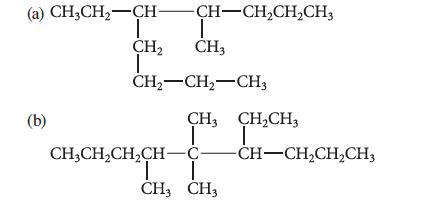
Name the following compounds. Be sure to designate the principal chain properly before constructing the name. (a) CH3CH₂-CH-CH-CH₂CH₂CH3 T CH3 (b) | CH₂ T CH₂ CH₂ CH3 CH3 1 CH3CH₂CH₂CH-C- T T CH3 CH3 CH₂CH3 T CH–CH,CH,CH
Draw structures for all isomers of (a) Hexane and (b) Heptane. Give their systematic names.
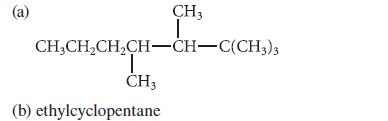
Represent each of the following compounds with a skeletal structure. (a) CH3 I CHỊCH,CH,CH–CH–C(CH3)3 T CH3 (b) ethylcyclopentane
Draw a structure for (CH3CH2CH2)2CHCH(CH2CH3)2 in which all carbon–carbon bonds are shown explicitly; then name the compound.
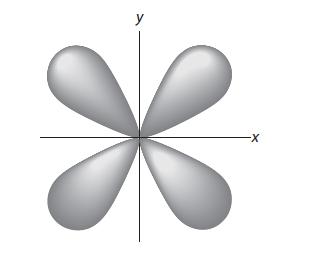
The shape of one of the five energetically equivalent 3d orbitals follows. From your answer to Problem 1.33, sketch the nodes of this 3d orbital, and associate a wave peak or a wave trough with each lobe of the orbital.Problem 1.33Two types of nodes occur in atomic orbitals: spherical surfaces and
Which of the following statements about cis- and trans-decalin (Sec. 7.6B) are true? Explain your answers.(a) They are different conformations of the same molecule.(b) They are constitutional isomers.(c) They are diastereomers.(d) At least one chemical bond would have to be broken to convert one
Which of the following would distinguish (in principle) between methylcyclohexane and (E)-4-methyl-2-hexene? Explain your reasoning.(a) Molecular mass determination(b) Uptake of H2 in the presence of a catalyst(c) Reaction with Br2(d) Determination of the molecular formula(e) Determination of the
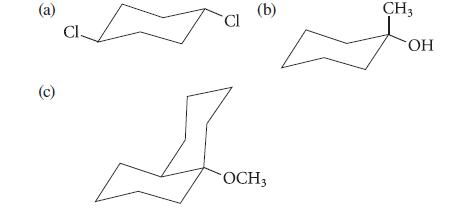
Draw the structure of each of the following molecules after it undergoes the chair interconversion. (a) (c) Cl. cl (b) OCH3 CH3 OH
Draw the structures of the following compounds.(a) A bicyclic alkane with six carbon atoms(b) (S)-4-cyclobutylcyclohexeneName the compound whose structure you drew in part (a).
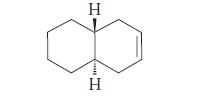
Anti-addition of bromine to the following bicyclic alkene gives two separable dibromides. Suggest structures for each. (Remember that trans-decalin derivatives cannot undergo the chair interconversion.) H Η
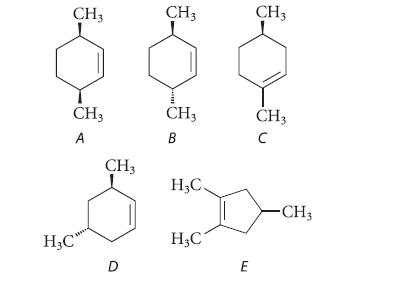
An optically active compound X with molecular formula C8H14 undergoes catalytic hydrogenation to give an optically inactive product. Which of the following structures for X is (are) consistent with all of the data? CH3 CH3 A H₂C CH3 D CH3 CH 3 B H₂C. H₂C E דו CH3 CH3 C -CH3
When 1,4-cyclohexadiene reacts with two equivalents of Br2, two separable compounds with different melting points are formed. Account for this observation.
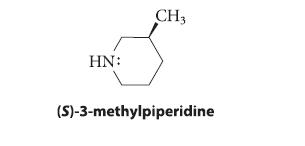
Draw a chair conformation for (S)-3-methylpiperidine showing the sp3 orbital that contains the nitrogen unshared electron pair. How many chair conformations of this compound are in rapid equilibrium? HN: CH3 (S)-3-methylpiperidine
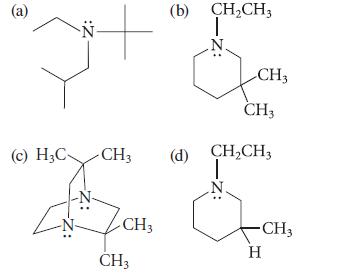
Which of the following compounds can be resolved into enantiomers at room temperature? Explain. (a) Z: (c) H₂C- CH3 CH3 CH3 (b) CH₂CH3 T CH3 CH3 (d) CH₂CH3 ☆ - CH3 H
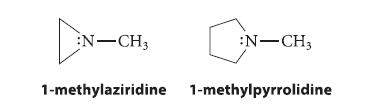
Explain why 1-methylaziridine undergoes amine inversion much more slowly than 1-methylpyrrolidine. (What are the hybridization and bond angles at nitrogen in the transition state for inversion?) N-CH3 :N-CH3 1-methylaziridine 1-methylpyrrolidine
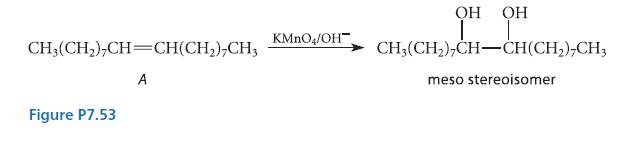
Alkaline potassium permanganate (KMnO4) can be used to bring about the addition of two ¬OH groups to an alkene double bond. This reaction has been shown in several cases to be a stereospecific syn-addition. Given the stereochemistry of the product shown in Fig. P7.53, what stereoisomer of alkene A
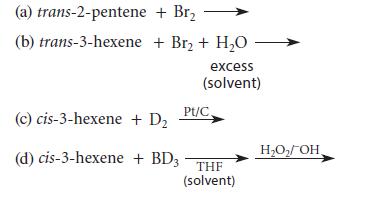
Give the structure and stereochemistry of all products formed in each of the following reactions. Tell whether stereoisomeric products are formed in the same or different amounts. (a) trans-2-pentene (b) trans-3-hexene + Br₂ + Br₂ + H₂O excess (solvent) (c) cis-3-hexene + D₂ (d)
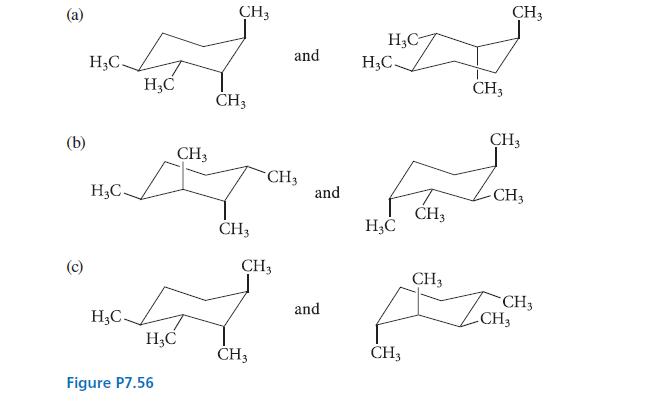
By answering the following questions, indicate the relationship between the two structures in each of the pairs in Fig. P7.56. Are they chair conformations of the same molecule? If so, are they conformational diastereomers, conformational enantiomers, or identical? If they are not conformations of
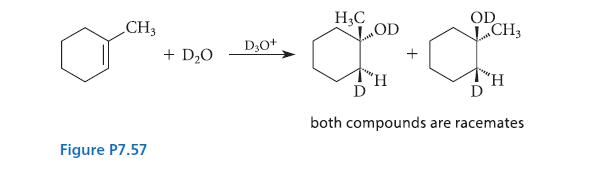
When 1-methylcyclohexene undergoes hydration in D2O, the product is a mixture of diastereomers; the hydration is thus not a stereoselective reaction. (See Fig. P7.57)(a) Show why the accepted mechanism for this reaction is consistent with these stereochemical results.(b) Why must D2O (rather than
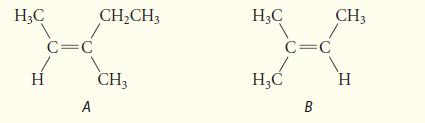
Tell whether each of the following molecules has a double-bond stereoisomer. If so, identify its stereocenters. H₂C Н C=C A CH₂CH3 CH3 H3C H3C C=C B CH3 H
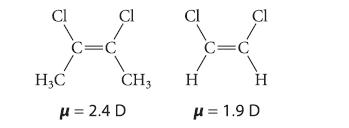
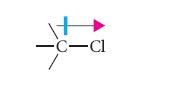
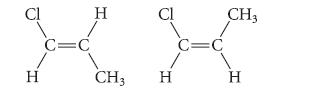
Consider the following compounds and their dipole moments:Assume that the C—Cl bond dipole is oriented as follows in each of these compounds.(a) According to the preceding dipole moments, which is more electron-donating toward a double bond, methyl or hydrogen? Explain.(b) Which of the following
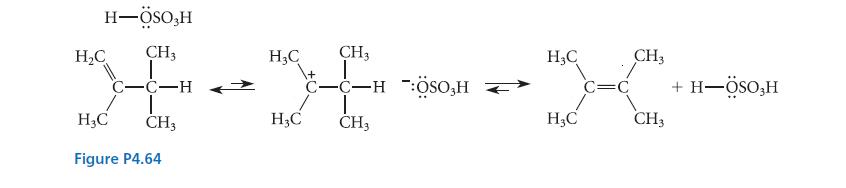
Supply the curved-arrow notation for the acid- catalyzed isomerization shown in Fig. P4.64. H-ÖSO,H H₂C CH3 H₂C 24-34 C-C-H H3C CH3 H₂C CH3 Figure P4.64 CH3 C-C-H ÖSO,H H₂C H₂C C=C CH3 CH3 + H-ÖSO3H
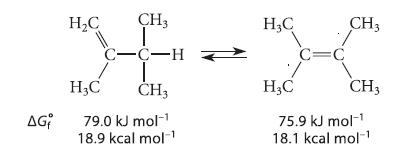
The standard free energy of formation, ΔG°f, is the freeenergy change for the formation of a substance at 25 °C and 1 atm pressure from its elements in their natural states under the same conditions.(a) Calculate the equilibrium constant for the interconversion of the following alkenes, given
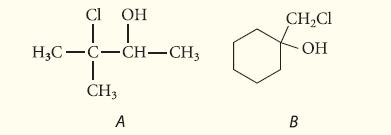
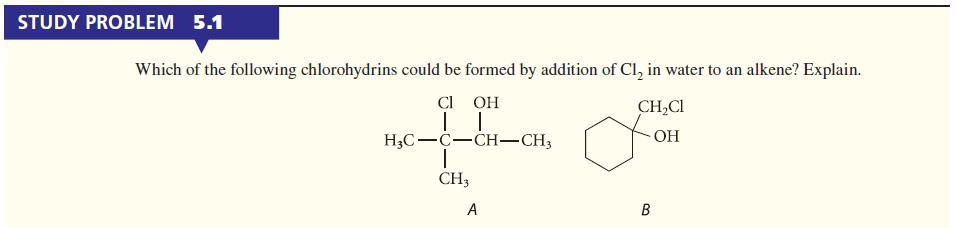
Which of the following chlorohydrins could be formed by addition of Cl2 in water to an alkene? Explain. CI OH II H3C-C-CH-CH3 I CH3 A CH₂Cl OH B
(a) Iodine azide, I—N3, adds to isobutylene in the following manner:Which group is the electrophilic group to which the π bond donates electrons? How do you know? Does this result fit the electronegativity pattern for electrophilic additions? Explain.(b) Predict the product of the following
Give the products, and the mechanisms for their formation, when 2-methyl-1-hexene reacts with each of the following reagents.(a) Br2(b) Br2 in H2O(c) Iodine azide (I—N3)
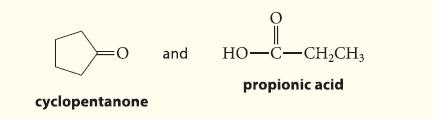
Alkene X of unknown structure gives the following products after treatment with ozone followed by aqueous H2O2:What is the structure of X? =0 cyclopentanone and HỌ–C–CH,CH3 propionic acid
Give the structure of the alkene that could be used as a starting material to form chlorohydrin B in Study Problem 5.1. STUDY PROBLEM 5.1 Which of the following chlorohydrins could be formed by addition of Cl₂ in water to an alkene? Explain. CI OH TI H3C-C-CH-CH3 1 CH3 A CH₂Cl OH B
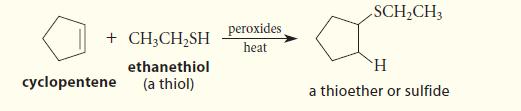
Alkenes undergo the addition of thiols at high temperature in the presence of peroxides or other free-radical initiators. The following reaction is an example.Propose a mechanism for this reaction. +CH3CH₂SH ethanethiol (a thiol) cyclopentene peroxides heat SCH₂CH3 H a thioether or sulfide
Estimate the standard enthalpies of the reactions shown in Eqs. 5.67 and 5.68. (CH3)3C-O + H-Br tert-butoxy radical (CH3)3C-O-Br + .H (5.68)
Showing 1200 - 1300
of 1324
1
2
3
4
5
6
7
8
9
10
11
12
13
14
Step by Step Answers

 Get 50% OFF
Claim Now
Get 50% OFF
Claim Now



![K = [crown ether][M*] [crown ether-M* complex]](https://dsd5zvtm8ll6.cloudfront.net/images/question_images/1701/2/3/6/4156566cebf186c31701236414288.jpg)




![HC=CH-CH allyl anion ]](https://dsd5zvtm8ll6.cloudfront.net/images/question_images/1700/7/1/6/770655ee0e2bb2c81700716770765.jpg)

![[] HC-N :O: HC-N :O: \.. (1.6)](https://dsd5zvtm8ll6.cloudfront.net/images/question_images/1700/7/2/2/425655ef6f90a04a1700722419352.jpg)