New Semester
Started
Get
50% OFF
Study Help!
--h --m --s
Claim Now
Question Answers
Textbooks
Find textbooks, questions and answers
Oops, something went wrong!
Change your search query and then try again
S
Books
FREE
Study Help
Expert Questions
Accounting
General Management
Mathematics
Finance
Organizational Behaviour
Law
Physics
Operating System
Management Leadership
Sociology
Programming
Marketing
Database
Computer Network
Economics
Textbooks Solutions
Accounting
Managerial Accounting
Management Leadership
Cost Accounting
Statistics
Business Law
Corporate Finance
Finance
Economics
Auditing
Tutors
Online Tutors
Find a Tutor
Hire a Tutor
Become a Tutor
AI Tutor
AI Study Planner
NEW
Sell Books
Search
Search
Sign In
Register
study help
sciences
organic chemistry 6th
Organic Chemistry 6th Edition Marc Loudon, Jim Parise - Solutions
Outline a synthesis of p-bromonitrobenzene from benzene.
Draw the structure of each of the following compounds.(a) P-chlorophenol (b) m-nitrotoluene (c) 3,4-dichlorotoluene(d) 1-bromo-2-propylbenzene(e) Methyl phenyl ether(f) Benzyl methyl ether (g) P-xylene (h) o-cresol(i) 2,4,6-trichloroanisole (a compound present in tainted wine corks)
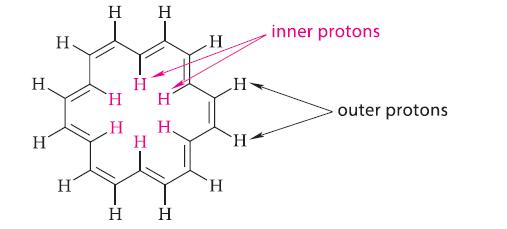
(a) Verify that the following compound meets the Hückel criteria for aromaticity.(b) The NMR spectrum of this compound consists of two sets of multiplets: one at δ 9.28 and the other at δ (22.99); the latter resonance is at 3 ppm lower chemical shift than that of TMS—that is, to the right of
Predict the approximate boiling point of(a) Ethylbenzene (b) Propylbenzene (c) P-xylene
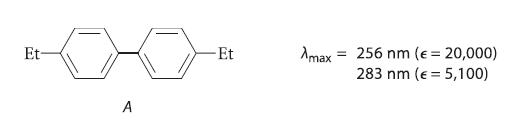
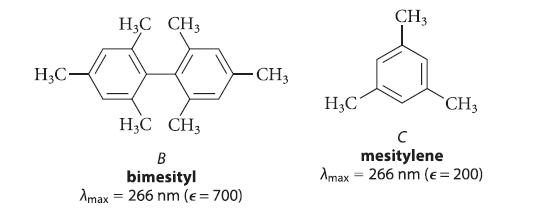
(a) Explain why compound A has a UV spectrum with considerably greater λmax values and intensities than are observed for ethylbenzene.(b) In view of your answer to part (a), explain why the UV spectra of compounds B and C are virtually identical. Et A Et Amax 256 nm (e = 20,000) 283 nm (e 5,100) =
A benzene derivative known to be a methyl ether with the formula C7H6OCl2 has five lines in its proton-decoupled 13C NMR spectrum. Propose two possible structures for this compound that fit these facts.
How could you distinguish styrene (Ph—CH = CH2) from ethylbenzene by UV spectroscopy?
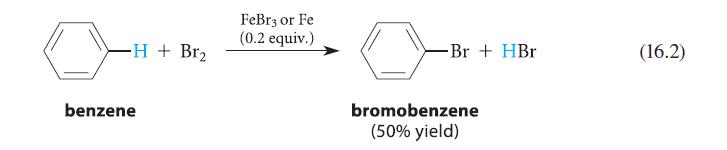
A small amount of a by-product, p-dibromobenzene, is also formed in the bromination of benzene shown in Eq. 16.2. Write a curved-arrow mechanism for the formation of this compound. -H+ Br₂ benzene FeBr3 or Fe (0.2 equiv.) -Br + HBr bromobenzene (50% yield) (16.2)
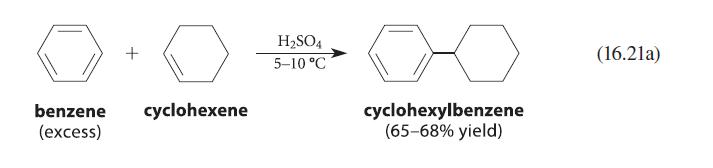
(a) Draw a curved-arrow mechanism for the reaction in Eq. 16.21a.(b) Draw a curved-arrow mechanism for the reaction in Eq. 16.21b. + benzene cyclohexene (excess) H₂SO4 5-10 °C cyclohexylbenzene (65-68% yield) (16.21a)
A second sulfonation mechanism involves protonated sulfur trioxide as the electrophile. Show the protonation of SO3, and draw a curved-arrow mechanism for the reaction of protonated SO3 with benzene to give benzenesulfonic acid.
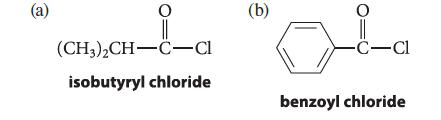
Give the structure of the product expected from the reaction of each of the following compounds with benzene in the presence of one equivalent of AlCl3, followed by treatment with water. (a) 1-1-₁ (CH3)2CH-C-Cl isobutyryl chloride (b) -C-Cl benzoyl chloride
The following compound reacts with AlCl3 followed by water to give a ketone A with the formula C10H10O. Give the structure of A and draw a curved-arrow mechanism for its formation. H₂C- O -CH₂CH₂-C-Cl
Biphenyl (phenylbenzene) undergoes the Friedel–Crafts acylation reaction, as shown by the following example.(a) On the basis of this result, what is the directing effect of the phenyl group?(b) Using resonance arguments, explain the directing effect of the phenyl group. biphenyl + Cl-C-CH3 1)
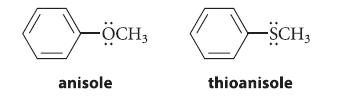
Explain why the nitration of anisole is much faster than the nitration of thioanisole under the same conditions. -ÖCH3 anisole -SCH3 thioanisole
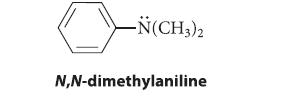
Which should be faster: bromination of benzene or bromination of N,N-dimethylaniline? Explain your answer carefully. -N(CH3)2 N,N-dimethylaniline
Write the two half-reactions that correspond to the oxidation of iodide ion in Eq. 16.36. H₂O + I + H₂O₂ iodide ion hydrogen peroxide thyroid peroxidase (enzyme) I-OH + hypoiodous acid 2 H₂O (16.36)
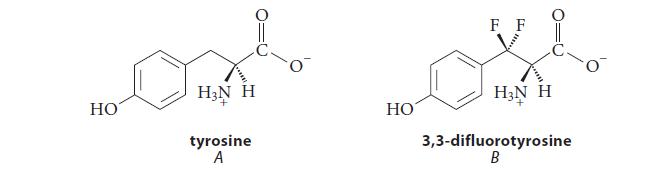
The iodination reaction discussed in this section can be carried out on the amino acid tyrosine and related compounds in the laboratory with iodide ion in the presence of the enzyme thyroid oxidase. Which would undergo iodination more rapidly: tyrosine (A) or 3,3-difluorotyrosine (B)? Explain.
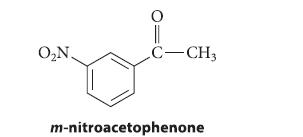
Outline a synthesis of m-nitroacetophenone from benzene; explain your reasoning. O₂N. C-CH3 m-nitroacetophenone
Predict the predominant product(s) from:(a) Monosulfonation of m-bromotoluene (b) Mononitration of m-bromoiodobenzene
In each of the following sets, rank the compounds in order of increasing harshness of the reaction conditions required to accomplish the indicated reaction.(a) Sulfonation of benzene, m-xylene, or p-dichlorobenzene(b) Friedel–Crafts acylation of chlorobenzene, anisole, or toluene
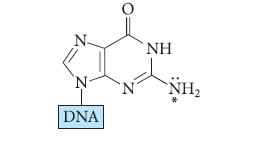
The group in DNA that reacts with the diol-epoxide has the following general structure. Using mechanistic reasoning, show how the amino group indicated by the asterisk (*) might react with the epoxide group of the diol-epoxide in Eq. 16.50. benzo[a]pyrene living tissue (enzymes,
Using benzene and any other reagents, outline a synthesis of each of the following compounds.(a) Cyclohexylcyclohexane (b) Tert-butylcyclohexane
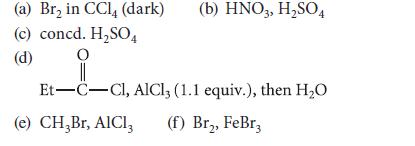
Give the products expected (if any) when ethylbenzene reacts under the following conditions. (a) Br₂ in CCl4 (dark) (c) concd. H₂SO4 O (d) (b) HNO3, H₂SO4 Et-C-Cl, AlCl3 (1.1 equiv.), then H₂O (e) CH₂Br, AlCl3 (f) Br₂, FeBr3
Which of the following compounds cannot contain a benzene ring? How do you know? C10H16 A C8H6Cl₂ B C5H4 C C10H15N D
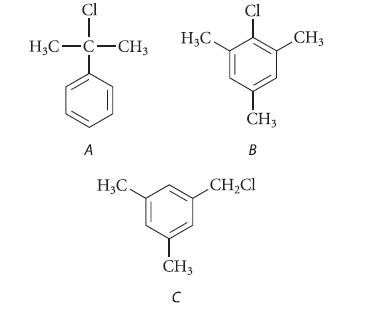
Explain how you would distinguish each of the following isomeric compounds from the others using NMR spectroscopy. Be explicit. Cl T H3C-C-CH3 A H₂C. H₂C. CH3 C Cl CH3 B CH₂Cl CH3
(a) Arrange the three isomeric dichlorobenzenes in order of increasing dipole moment (smallest first).(b) Assuming that the dipole moment is the principal factor governing their relative boiling points, arrange the compounds from part (a) in order of increasing boiling point (smallest first).
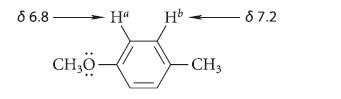
Show how resonance interaction of the electron pairs on the oxygen with the ring π electrons can account for the fact that the chemical shift of protons Ha in p-methoxytoluene is smaller than that of protons Hb in spite of the fact that the oxygen has a greater electronegativity than the methyl
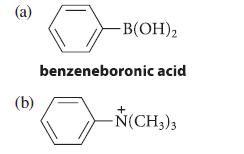
Indicate whether each of the following compounds should be nitrated more rapidly or more slowly than benzene, and give the structure of the principal mononitration product in each case. Explain your reasoning. (a) (b) -B(OH)₂ benzeneboronic acid + -N(CH3)3
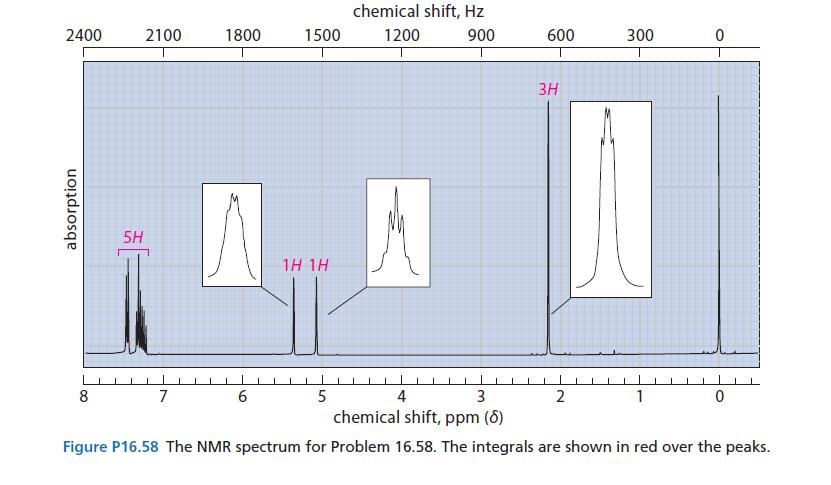
An optically active compound A (C9H11Br) reacts with sodium ethoxide in ethanol to give an optically inactive hydrocarbon B (NMR spectrum in Fig. P16.58). Compound B undergoes hydrogenation over a Pd/C catalyst at room temperature to give a compound C, which has the formula C9H12. Give the
When styrene is treated with a sulfonic acid catalyst (RSO3H) in cyclohexane solvent, an alkene X (C16H16) is formed that is slowly transformed into isomeric compounds Y and Z (Fig. P16.56). Provide a curved-arrow mechanism for the formation of Y and Z, which should include a structure for alkene
Two alcohols, A and B, have the same molecular formula C9H10O and react with sulfuric acid to give the same hydrocarbon C. Compound A is optically active, and compound B is not. Catalytic hydrogenation of C gives a hydrocarbon D, C9H10, which gives two and only two products when nitrated once with
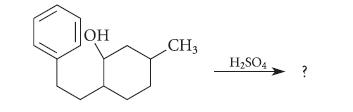
When the following compound is treated with H2SO4, the product of the resulting reaction has the formula C15H20 and does not decolorize Br2 in CCl4. Suggest a structure for this product and give a curved-arrow mechanism for its formation. он CH3 H2SO4 ?
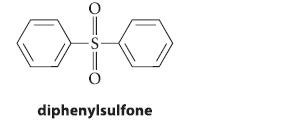
Diphenylsulfone is a by-product that is formed in the sulfonation of benzene. Give a curved-arrow mechanism for its formation. oto diphenylsulfone
Suggest a reason that the lmax values and intensities of the UV absorptions of styrene (PhCH = CH2) and phenylacetylene (PhC ≡ CH) are essentially identical even though phenyl acetylene contains an additional π bond.
The solvolysis reaction of 2-bromooctane in ethanol is relatively slow. However, this reaction is accelerated by the addition of silver ion (as AgNO3), and one of the products is AgBr. Explain how Ag+ accelerates the reaction.
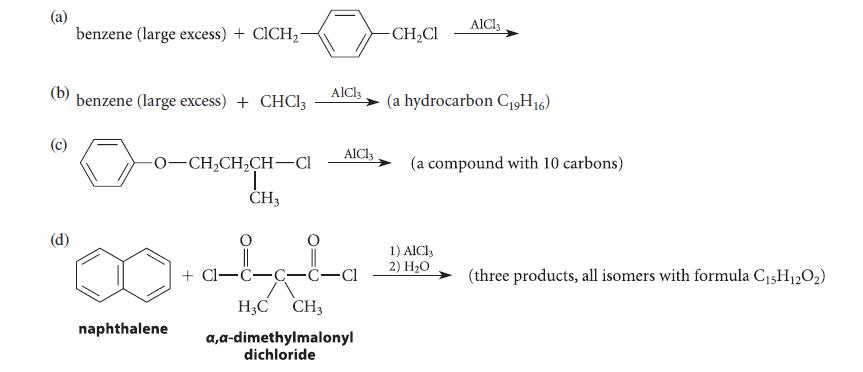
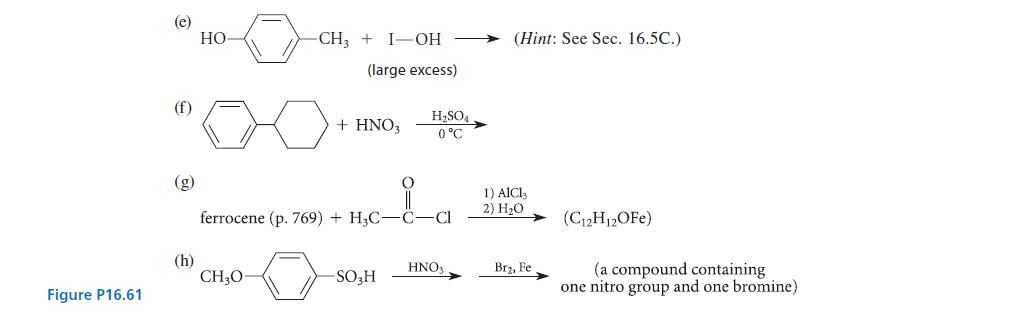
Give the structures of the principal organic product(s) expected in each of the reactions given in Fig. P16.61, and explain your reasoning. (b) (d) benzene (large excess) + ClCH₂- benzene (large excess) + CHCl3 -0-CH₂CH₂CH-Cl T CH3 naphthalene AlCl3 AlCl3 +Cl-C-C-C-Cl H3C
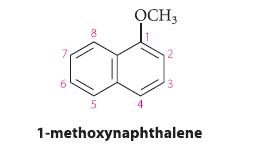
Would 1-methoxynaphthalene nitrate more rapidly or more slowly than naphthalene at (a) Carbon-4; (b) Carbon-5; (c) Carbon-6? Explain your reasoning. 5 OCH3 N 3 1-methoxynaphthalene
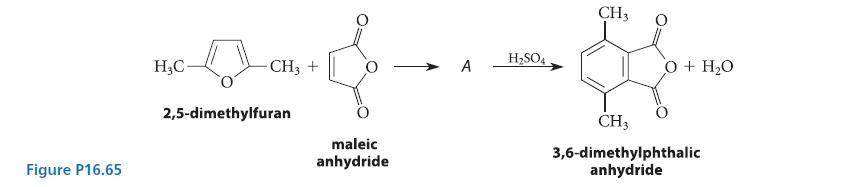
A Diels–Alder reaction of 2,5-dimethylfuran and maleic anhydride gives a compound A that undergoes acidcatalyzed dehydration to give 3,6-dimethyl phthalic anhydride (see Fig. P16.65).(a) Deduce the structure of compound A.(b) Give a curved-arrow mechanism for the conversion of A into
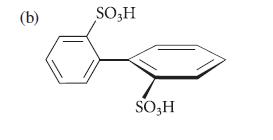
Each of the following compounds can be resolved into enantiomers. Explain why each is chiral, and why compound (b) racemizes when it is heated. (a) hexahelicene [a] =3700 degrees mL g-¹ dm-¹
Given that anisole (methoxybenzene) protonates primarily on oxygen in concentrated H2SO4, explain why 1,3,5-trimethoxybenzene protonates primarily on a carbon of the ring. As part of your reasoning, draw the structure of each conjugate acid.
Propose a curved-arrow mechanism for the reaction given in Fig. P16.66. Figure P16.66 (CH3)3C- -C(CH3)3 + HNO3 (CH3)3C- -NO₂ + (CH3)2C=CH₂
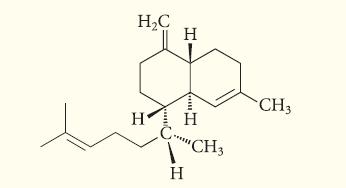
Determine whether the following compound, isolated from the frontal gland secretion of a termite soldier, is a terpene. H₂C Η Η mm) H Η: Η 'CH, `CH,
What products are expected in the reaction of H2C = CHCH2CH2CH2CH3 (1-hexene) with NBS in CCl4 in the presence of peroxides? Explain your answer.
Identify the benzylic carbons in each of the following structures. (a) H3C CH3 (b) H₂C
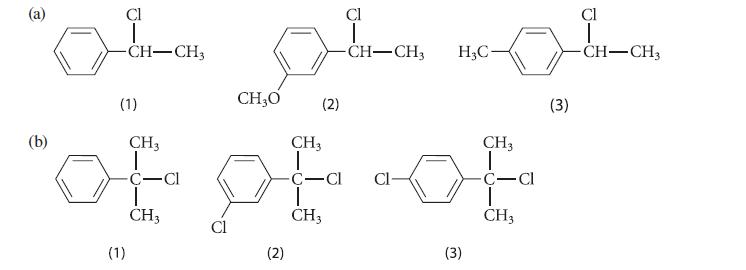
Predict the order of relative reactivities of the compounds within each series in SN1 solvolysis reactions, and explain your answers carefully. (a) (b) مله مام مام Cl T -CH- CH3 (1) CH3 of CH3 (1) -C-Cl CH₂O (2) (2) Cl -CH-CH3 H3C - CH3 fo C-Cl Cl- CH3 (3) CH3 C-Cl CH3 (3) Cl T -CH-CH3
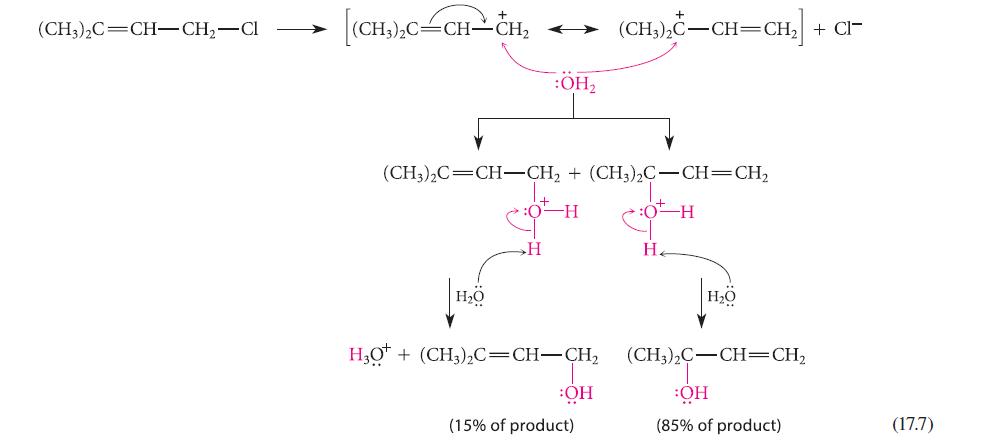
Give the structure of an isomer of the allylic halide reactant in Eq. 17.7 that would react with water in an SN1 solvolysis reaction to give the same two products. Explain your reasoning. (CH3)2C=CH-CH₂-Cl (CH,),C=CH–CH, H₂O :OH₂ (CH3)2C=CH-CH₂ + (CH3)2C-CH=CH₂ :0 H 0-H H HO* +
What product(s) are expected when each of the following compounds reacts with one equivalent of NBS in CCl4 in the presence of light and peroxides? Explain your answers.(a) cyclohexene(b) 3,3-dimethylcyclohexene(c) Trans-2-pentene(d) 4-tert-butyltoluene(e) 1-isopropyl-4-nitrobenzene
What product(s) are formed when a Grignard reagent prepared from each of the following alkyl halides is treated with D2O? CH₂Br 1-(bromomethyl)cyclohexene (b) CH3 Br 6-bromo-1-methylcyclohexene
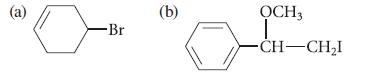
Predict the major product that is obtained when each of the following alkyl halides is treated with potassium tert- butoxide. Explain your reasoning. (a) -Br (b) OCH3 T CH-CH₂I
In each case, give the structure of a starting material that would give the product shown by MnO2 oxidation @ CH=O (b) O (c) HOCH₂-
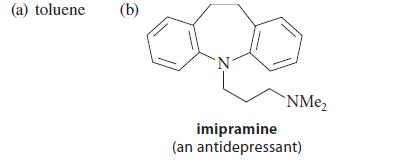
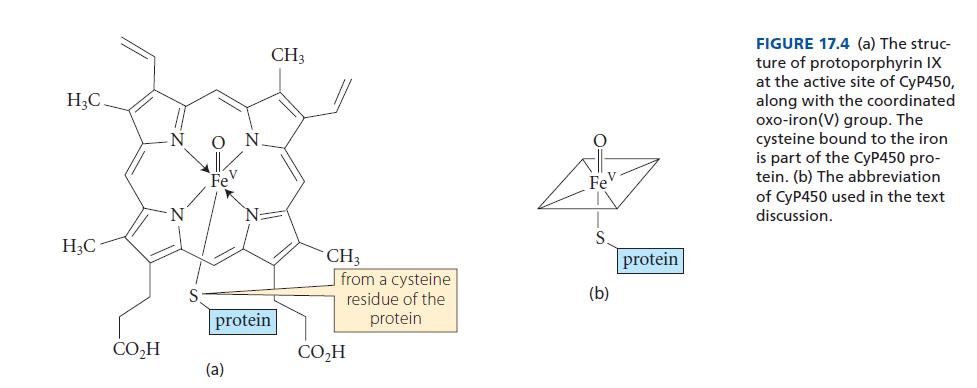
What is the major CyP450-promoted hydroxylation product of each of the following compounds? Assume that benzylic hydroxylation occurs, and neglect stereochemistry. (a) toluene (b) N NMe₂ imipramine (an antidepressant)
Explain how and why the product(s) would differ in the following reactions of trans-2-buten-1-ol.(1) Reaction with concentrated aqueous HBr(2) Conversion into the tosylate, then reaction with NaBr in acetone
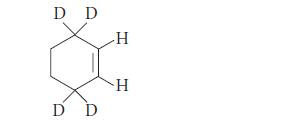
When a deuterium-substituted cyclohexene is subjected to CyP450-promoted oxidation, two different allylic alcohols are formed. Explain. D D D D H H
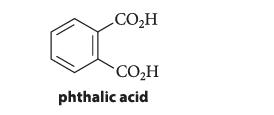
(a) A compound A has the formula C8H10. After vigorous oxidation, it yields phthalic acid. What is the structure of A?(b) A compound B has the formula C8H10. After vigorous oxidation, it yields benzoic acid (structure in Eq. 17.40). What is the structure of B? CO₂H CO₂H phthalic acid
Give the products of vigorous KMnO4 oxidation of each of the following compounds.(a) p-nitrobenzyl alcohol (b) 1-butyl-4-tert-butylbenzene
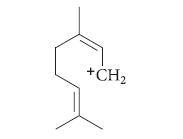
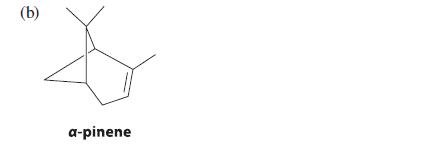
(a) Give a biosynthetic mechanism for the formation of the cyclic terpene limonene (Fig. 17.4) beginning with an intramolecular reaction of the following carbocation. (Assume acids and bases are present as necessary.)(b) Draw a curved-arrow mechanism for the biosynthesis of the carbocation
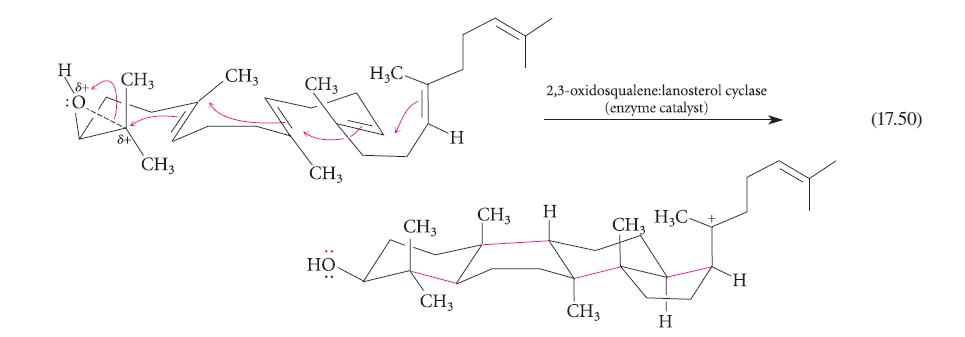
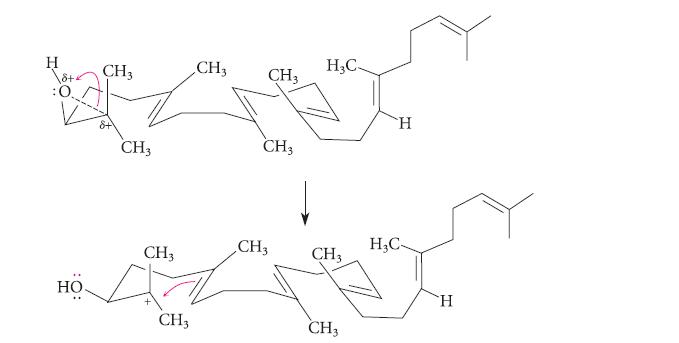
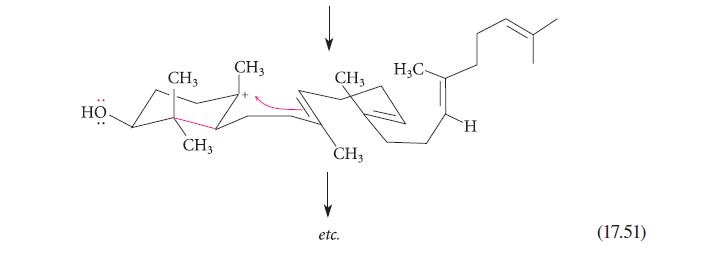
(a) Complete the stepwise mechanism shown in Eq. 17.51 to give the product carbocation of Eq. 17.50.(b) Examine each of the carbocations in the stepwise process you drew in part (a). What problem do you see with the stepwise mechanism? H \8+ :0 CH3 CH
Propose a biosynthetic pathway for each of the following natural products. Assume acids and bases are present as necessary. (a) farnesol OH
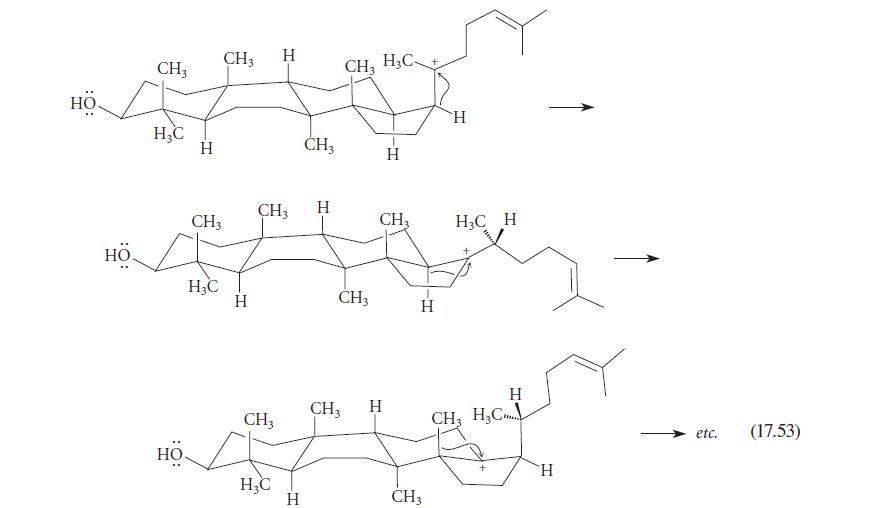
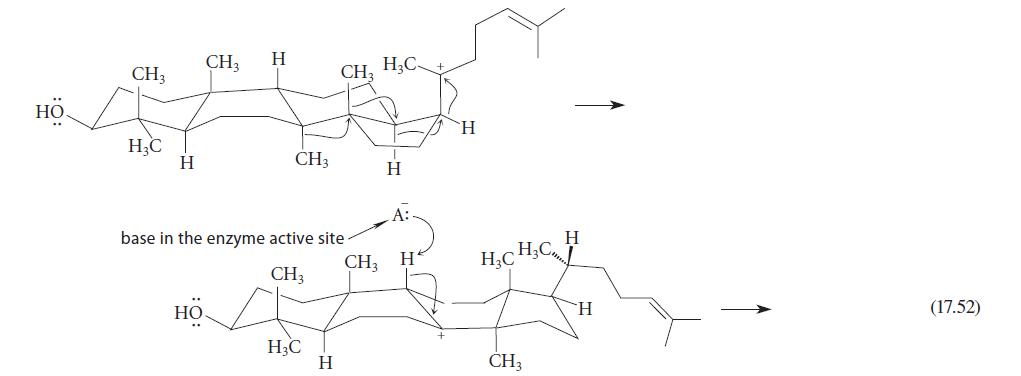
Complete the stepwise process shown in Eq. 17.53 to give lanosterol, the product of Eq. 17.52. НО НО CH3 H3C H HO CH3 H CH3 H p! CH3 H3C Н T CH3 CH3 H3C H CH3 H3C- CH3 Н CH3 + Н CH3 H комедия CH3 H3CC. CH3 Н H3C H + Н H etc. (17.53)
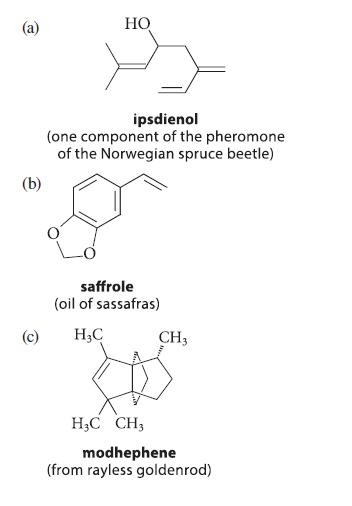
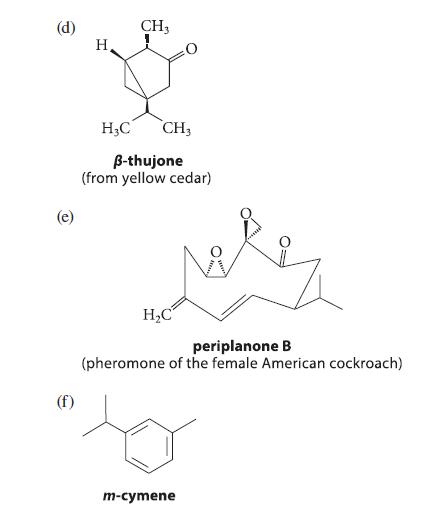
Which of the following compounds, all known in nature, can be classified as terpenes? Show the isoprene skeletons in each terpene. (b) (c) HO ipsdienol (one component of the pheromone of the Norwegian spruce beetle) saffrole (oil of sassafras) H₂C CH3 H3C CH3 modhephene (from rayless goldenrod)
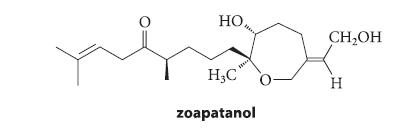
(a) Determine whether the following compound (zoapatanol, used as a fertility-regulating agent in Mexican folk medicine) is a terpene.(b) What product is obtained when zoapatanol is subjected to MnO2 oxidation? HO, H3C zoapatanol CH₂OH H
Give the principal organic product(s) expected when trans-2-butene or another compound indicated reacts under the following conditions. Assume one equivalent of each reagent reacts in each case.(a) Br2 in CH2Cl2, dark(b) N-bromosuccinimide in CCl4, light(c) Product(s) of part (b), solvolysis in
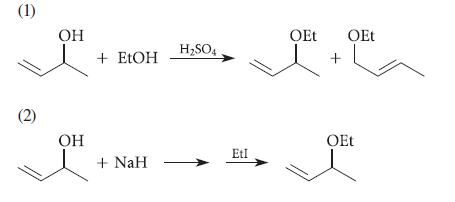
Explain why two products are formed in the first ether synthesis, but only one in the second. (1) OH i (2) OH + EtOH + NaH H₂SO4 Etl OEt OEt + OEt
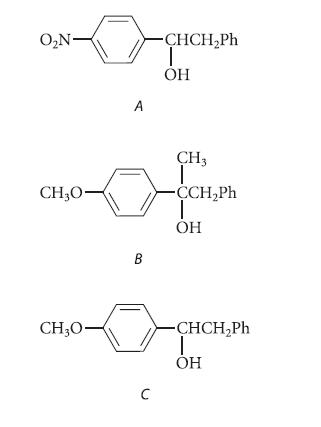
Arrange the following alcohols according to increasing rates of their acid-catalyzed dehydration to alkene (smallest rate first), and explain your reasoning. O₂N- CH₂0- CH₂0- A B C -CHCH₂Ph T OH CH3 T -CCH₂Ph T OH -CHCH₂Ph T OH
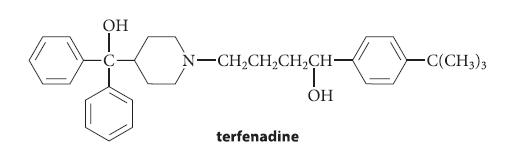
Terfenadine is an antihistaminic drug that contains two alcohol functional groups. Suppose terfenadine were to undergo acid-catalyzed alcohol dehydration (Sec. 10.2).Which alcohol would dehydrate most rapidly? Why? What would be the dehydration product?
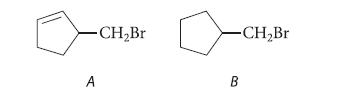
Predict which of the following compounds should undergo the more rapid reaction with K+(CH3)3C—O¯, explain your reasoning, and give the product of the reaction. -CH₂Br A -CH₂Br B
A hydrocarbon A, C9H10, is treated with N-bromosuccinimide to give a single monobromo compound B. When B is dissolved in aqueous acetone it reacts to give two nonisomeric compounds: C and D. Catalytic hydrogenation of D gives back A, and C can be separated into enantiomers. When optically active C
When benzyl alcohol (λmax = 258 nm, ϵ = 520) is dissolved in H2SO4, a colored solution is obtained that has a different UV spectrum: λmax = 442 nm, ϵ = 53,000. When this solution is added to cold NaOH, the original spectrum of benzyl alcohol is restored. Suggest a structural basis for these
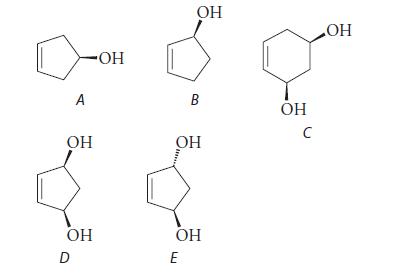
Match one or more of the structures below with each of the following statements.(a) An optically active compound that is oxidized by MnO2 to an optically inactive compound.(b) An optically active compound that is oxidized by MnO2 to an optically active compound.(c) An optically inactive compound
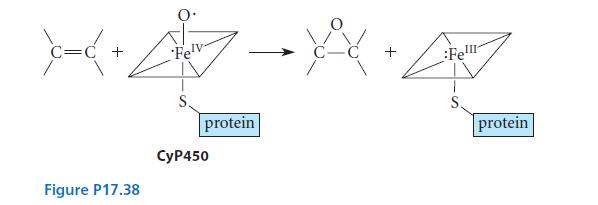
Draw a variation on the “rebound” hydroxylation mechanism that accounts for the formation of epoxides from some alkenes by CyP450 as shown in Fig. P17.38. C=C +47 +47 Felv Fell S S. Figure P17.38 protein CyP450 protein
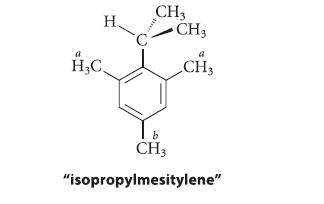
At 36°8C the NMR resonances for the ring methyl groups of “isopropylmesitylene” (protons Ha and Hb in the following structure) are two singlets at δ 2.25 and δ 2.13 with a 2 : 1 intensity ratio, respectively. When the spectrum is taken at 260°8C, however, it shows three singlets of equal
Doreen Dimwhistle has proposed the following variations on the Chichibabin reaction:She is shocked to find that neither of these reactions works as planned and has come to you for an explanation.Explain what reaction, if any, occurs instead in each case. (a) indole + NaNH₂2-aminoindole (b)
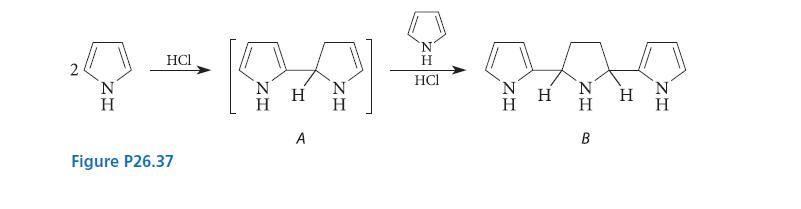
When pyrrole is treated with 5.5 M HCl at 0 °C for 30 s, a crystalline product B is obtained (see Fig. P26.37).A likely intermediate in this reaction is compound A.(a) Draw a curved-arrow mechanism for the formation of A.(b) Draw a curved-arrow mechanism for the formation of B from A, pyrrole, and
A peptide P with the amino acid composition (A,E,F,G2,H,K,L,M,P,R,V,Y) did not yield to MS–MS sequencing, so it was hydrolyzed with trypsin to three peptides, T1, T2, and T3, which were found by MS–MS to have the following structures:(The parentheses in T3 mean that the order of L and P could
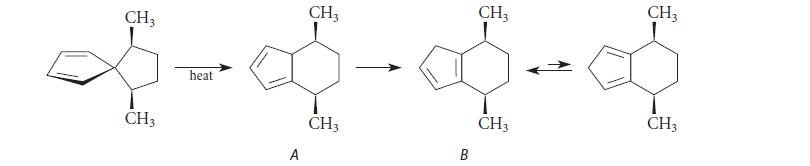
(a) Carry out an orbital symmetry analysis to show that suprafacial [1,5] carbon migrations should occur with retention of configuration in the migrating group.(b) Indicate what type of sigmatropic reactions are involved in the following transformations. Is the stereochemistry of the first step in
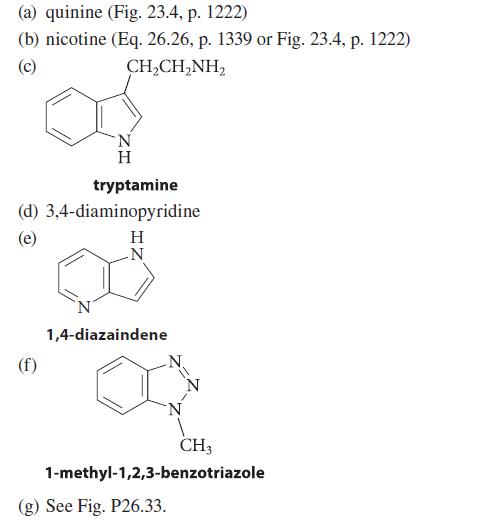
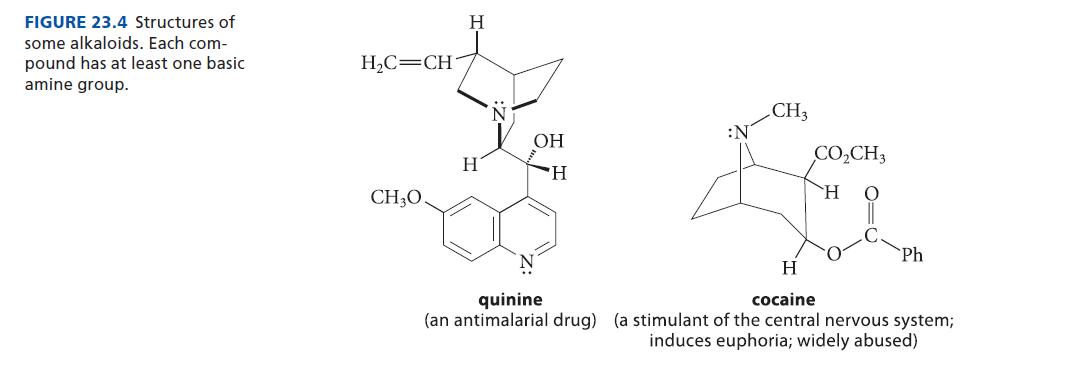
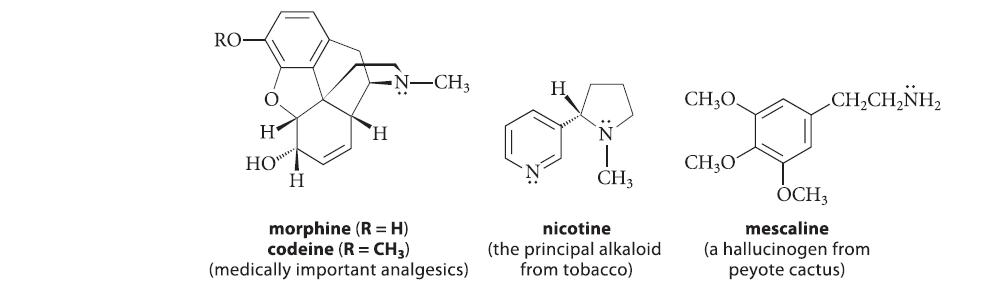
Draw the structure of the major form of each of the following compounds present in an aqueous solution containing initially one molar equivalent of 1 M HCl. Explain your reasoning. (a) quinine (Fig. 23.4, p. 1222) (b) nicotine (Eq. 26.26, p. 1339 or Fig. 23.4, p.
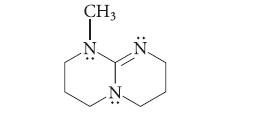
The following compound is a very strong base; its conjugate acid has a pKa of about 13.5. Give the structure of its conjugate acid and show that it is stabilized by resonance. CH3 -Z:
Which should be more reactive in nitration: β-picoline or α-picoline? Explain using resonance structures, and give the major nitration product(s) in each case.
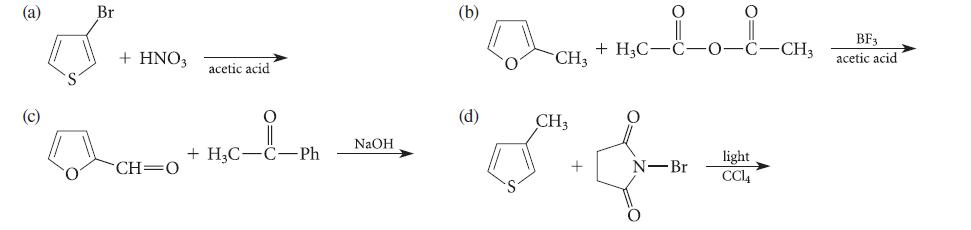
Complete each of the following reactions by giving the principal organic product(s). For (b), write a curved-arrow mechanism that shows the arenium ion intermediate and its resonance structures. (a) (c) Br + HNO3 CH=0 acetic acid O -&-ph + H₂C-C-Ph NaOH (b) (d) CH3 +
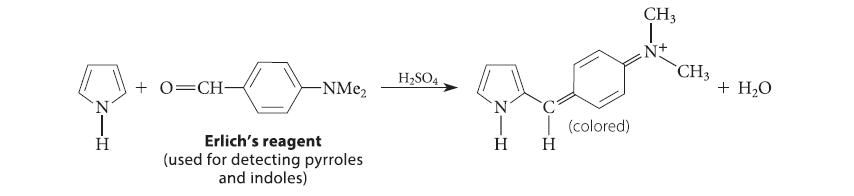
Write a curved-arrow mechanism for the following reaction. +0=CH- -NMe₂ Erlich's reagent (used for detecting pyrroles and indoles) H₂SO4 CH3 N+ CH3 Bos (colored) H H N + H₂O
(a) Draw a curved-arrow mechanism for the reduction of pyridine-N-oxide by ;PCl3.(b) This is an oxidation–reduction reaction. What is oxidized and what is reduced? How many electrons are involved in this redox reaction?
(a) Pyridoxal catalysis of Eq. 26.53 involves the following transformations. (Running these reactions in the reverse direction with a different a-keto acid completes Eq. 26.53.)Using bases (B;) and acids (+BH) as needed, provide curved-arrow mechanisms for these reactions. Your mechanism should
Give the structure of the product and a curved-arrow mechanism for its formation in the reaction of 4-chloropyridine with sodium methoxide. Draw all important resonance structures for the addition intermediate.
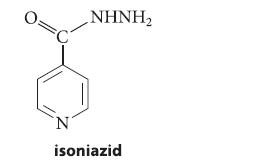
Isoniazid is an antituberculosis drug that operates by reacting with pyridoxal phosphate in the causative Mycobacterium. Show how isoniazid reacts with pyridoxal phosphate. .NHNH, N isoniazid
Which compound should readily undergo substitution of the bromine by phenolate anion: 4- bromopyridine or 3-bromopyridine? Explain, and give the structure of the product.
Give the principal organic product in the reaction of quinoline with each of the following reagents.(a) 30% H2O2 (b) NaNH2, heat; then H2O (c) Product of part (a), then HNO3, H2SO4
Draw and label the syn and anti conformations of the nucleoside guanosine about the C1´–N´ bond.
Draw the structure of (a) Deoxythymidine monophosphate (dTMP); (b) GDP.
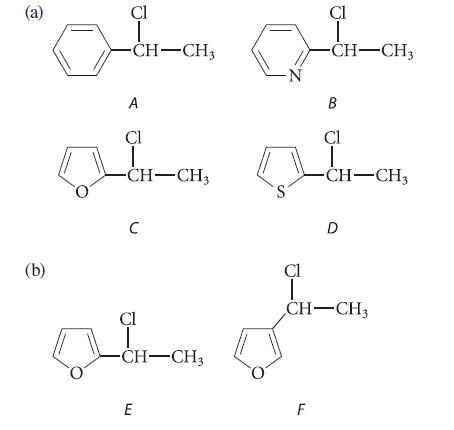
Rank each of the following compounds in order of increasing SN1 solvolysis reactivity in ethanol, and explain your choices by drawing suitable structures. (a) (b) Cl T -CH-CH3 A Cl CH-CH3 C Cl -CH-CH₂ E -N S Cl T -CH-CH3 F B Cl T -CH-CH3 D Cl T CH-CH3
Would you expect Chargaff’s first parity rule to apply within an individual strand of DNA? Explain.
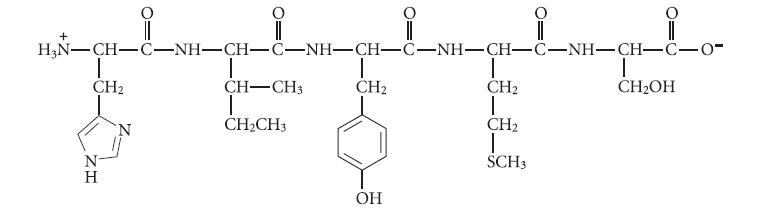
Using three-letter abbreviations for the amino acid residues, name the following peptide. H₂N-CH- & CH₂ HẠN–CH–C–NH–CH-C–NH–CH–C-NH-CH-C–NH–CH-C−O- I CH₂ ZI I CH-CH3 T CH₂CH3 Balo I CH₂OH OH I CH₂ 1 CH₂ T SCH3
Draw the structures of the following peptides.(a) Tryptophylglycylisoleucylaspartic acid (b) Glu-Gln-Phe-Arg (or E-Q-F-R)
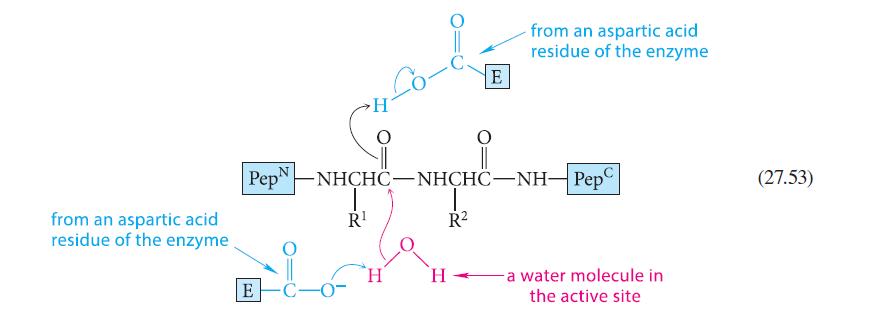
Eq. 27.53 shows the first step in the curved-arrow mechanism of peptide hydrolysis catalyzed by HIV protease. Complete the mechanism, using the two aspartic acid residues as catalytic groups. from an aspartic acid residue of the enzyme Pep E fo- R¹ E H O -NHCHC–NHCHC–NH–Pep R² from an
(a) Give all of the mRNA codes for the peptide Phe-Arg-Gly-His-Trp.(b) What are the DNA codes for the same peptide?(c) What is the anticodon sequence in the tRNA for the Trp residue?
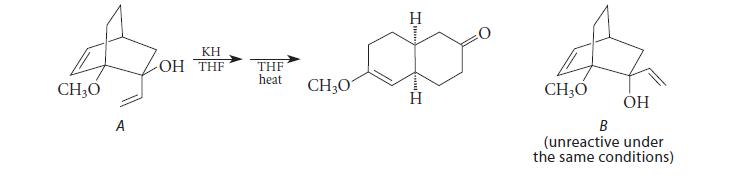
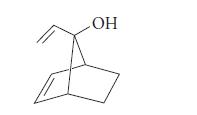
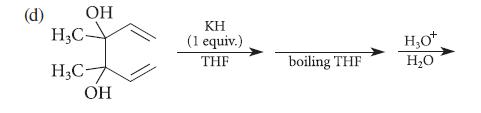
(a) Give the curved-arrow mechanism for the anionic oxyCope reaction of compound A, and explain why the stereoisomer B does not react under the same conditions.(b) Give the structure of the product, including its stereochemistry, expected from the anion oxyCope reaction of the following compound.
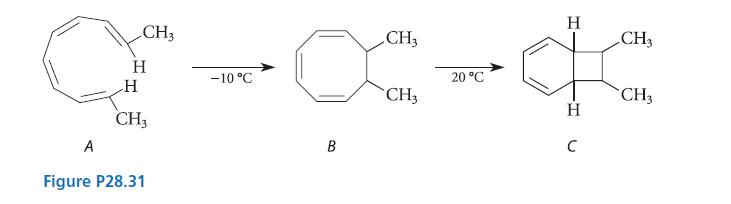
(a) Predict the stereochemistry of compounds B and C in Fig. P28.31.(b) What stereoisomer of A also gives compound C on heating? A CH3 H H CH3 Figure P28.31 -10 °C H CH3 ·x-da 20 °C CH3 B H C CH3 CH3
Show by an orbital symmetry analysis that a [3,3] sigmatropic reaction that is antarafacial on both components is allowed. Would you expect such a reaction to be very common? Why?
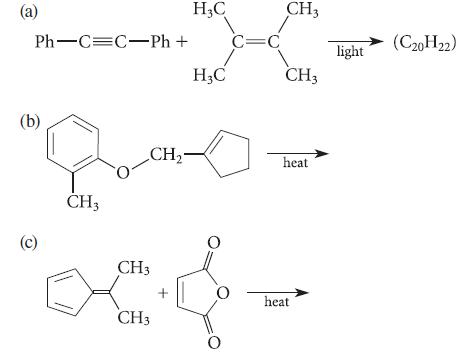
Complete the following reactions by giving the major organic product(s), including stereochemistry. (a) Ph-C=C-Ph+ (b) (c) CH3 0- CH₂ CH3 CH3 + H₂C H₂C O C=C CH3 CH3 heat heat light (C20H22)
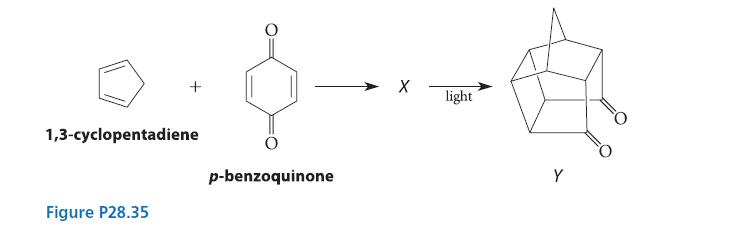
When 1,3-cyclopentadiene and p-benzoquinone are allowed to react at room temperature, a compound X is obtained. Irradiation of compound X gives compound Y (see Fig. P28.35). Give the structure and stereochemistry of X and explain its conversion into Y + 1,3-cyclopentadiene Figure
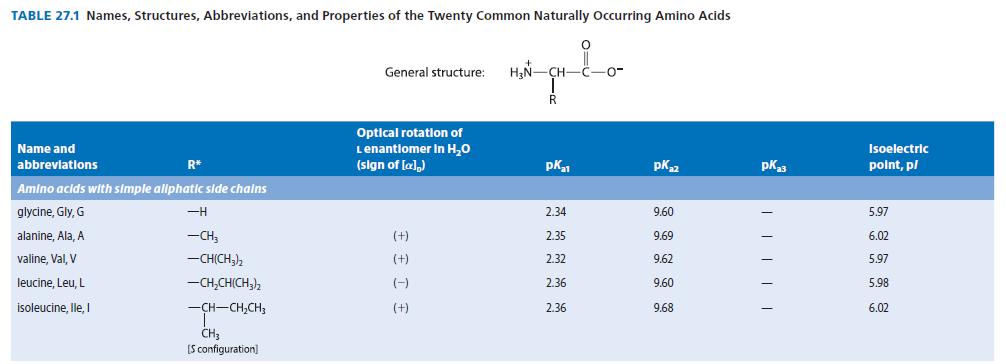
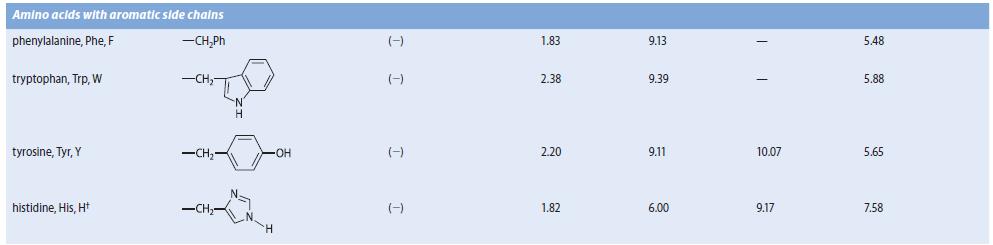
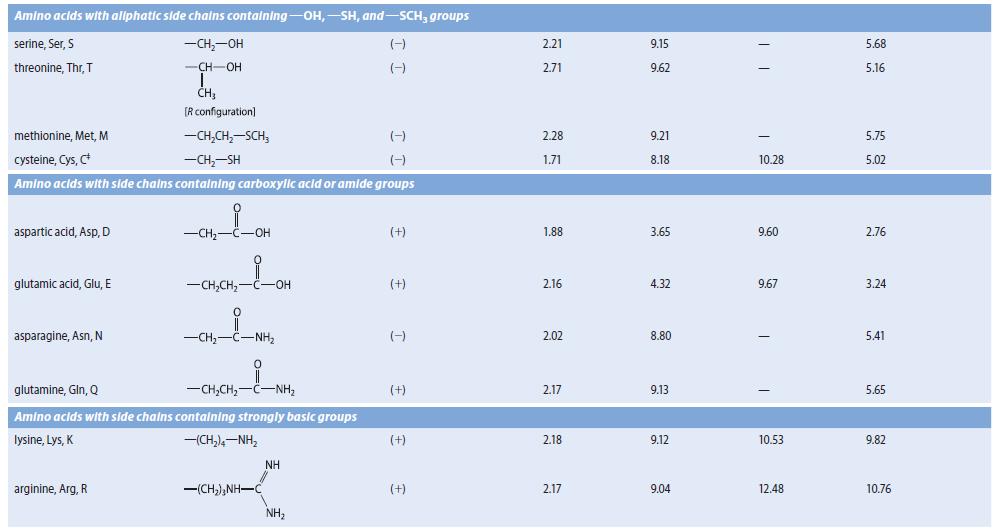
Obtain the three pKa values of the a-amino acid histidine from Table 27.1. Because there are three pKa values, the dissociation equilibria contain four species.(a) With the species present at low pH on the left, and the fully dissociated species on the right, draw and label by letter all of the
Showing 200 - 300
of 1324
1
2
3
4
5
6
7
8
9
10
11
12
13
14
Step by Step Answers

 Get 50% OFF
Claim Now
Get 50% OFF
Claim Now






![benzo[a]pyrene living tissue (enzymes, O) HO" OH benzo[a]pyrene diol-epoxide (16.50)](https://dsd5zvtm8ll6.cloudfront.net/images/question_images/1701/6/6/6/340656d5e24769351701666338943.jpg)

![2 -CH=CH styrene Figure P16.56 RSOH RSO3H [X] (C16H16) Y CH3 Ph N CH3 Ph](https://dsd5zvtm8ll6.cloudfront.net/images/question_images/1701/6/6/7/208656d6188f0a891701667207159.jpg)
![(a) hexahelicene [a] =3700 degrees mL g- dm-](https://dsd5zvtm8ll6.cloudfront.net/images/question_images/1701/6/7/0/302656d6d9ee8e731701670301706.jpg)