New Semester
Started
Get
50% OFF
Study Help!
--h --m --s
Claim Now
Question Answers
Textbooks
Find textbooks, questions and answers
Oops, something went wrong!
Change your search query and then try again
S
Books
FREE
Study Help
Expert Questions
Accounting
General Management
Mathematics
Finance
Organizational Behaviour
Law
Physics
Operating System
Management Leadership
Sociology
Programming
Marketing
Database
Computer Network
Economics
Textbooks Solutions
Accounting
Managerial Accounting
Management Leadership
Cost Accounting
Statistics
Business Law
Corporate Finance
Finance
Economics
Auditing
Tutors
Online Tutors
Find a Tutor
Hire a Tutor
Become a Tutor
AI Tutor
AI Study Planner
NEW
Sell Books
Search
Search
Sign In
Register
study help
sciences
organic chemistry 6th
Organic Chemistry 6th Edition Marc Loudon, Jim Parise - Solutions
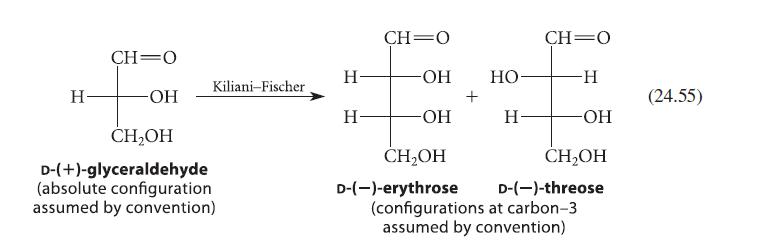
Given the structure of D-glyceraldehyde, how would you assign a structure to each of the two aldoses obtained from it by Eq. 24.55, assuming that these compounds were previously unknown? H CH O -OH Kiliani-Fischer CH₂OH D-(+)-glyceraldehyde (absolute configuration assumed by convention) H H- CH
An aldopentose A can be oxidized with dilute HNO3 to an optically active aldaric acid. A Kiliani–Fischer synthesis starting with A gives two new aldoses: B and C. Aldose B can be oxidized to an achiral, and therefore optically inactive, aldaric acid, but aldose C is oxidized to an optically
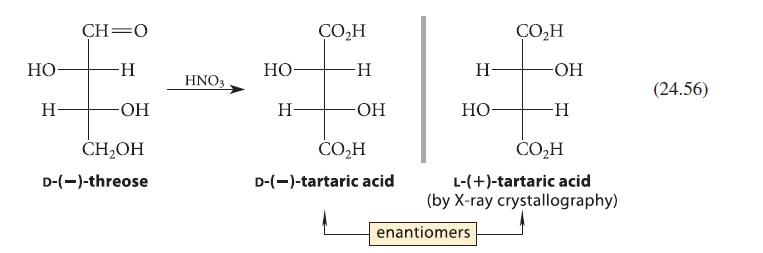
Imagine that a scientist reexamines the crystallographic work that established the absolute configuration of (+)-tartaric acid and finds that the structure of this compound is the mirror image of the one given in Eq. 24.56. What changes would have to be made in Fischer’s structure of
What products are expected from each of the following reactions? (a) lactobionic acid (Eq. 24.58) + 1 M aqueous HCI- (b) (+)-lactose + dimethyl sulfate, NaOH (c) product of part (b) + 1 M aqueous H₂SO4-
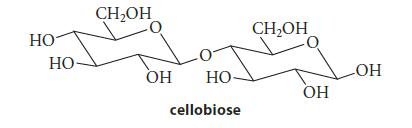
Consider the structure of cellobiose, a disaccharide obtained from the hydrolysis of the polysaccharide cellulose. Into what monosaccharide(s) is cellobiose hydrolyzed by aqueous HCl? HO НО CH₂OH ОН НО- cellobiose CH₂OH ОН -ОН
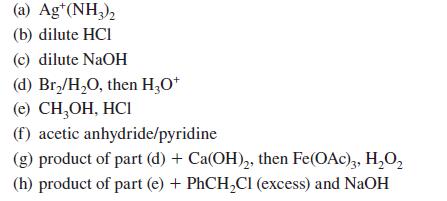
Give the product(s) expected when d-mannose (or other compound indicated) reacts with each of the following reagents. (Assume that cyclic mannose derivatives are pyranoses.) (a) Ag¹(NH3)₂ (b) dilute HCI (c) dilute NaOH (d) Br₂/H₂O, then H3O+ (e) CH₂OH, HCI (f) acetic anhydride/pyridine (g)
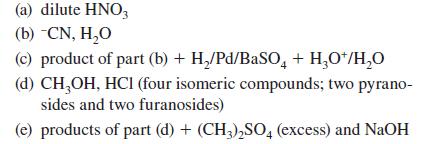
Give the products expected when D-ribose (or other compound indicated) reacts with each of the following reagents. (a) dilute HNO3 (b) -CN, H₂O (c) product of part (b) + H₂/Pd/BaSO4 + H₂O+/H₂O (d) CH₂OH, HCI (four isomeric compounds; two pyrano- sides and two furanosides) (e) products of
What product(s) would be obtained when cellulose is treated first exhaustively with dimethyl sulfate/NaOH, then with 1 M aqueous HCl?
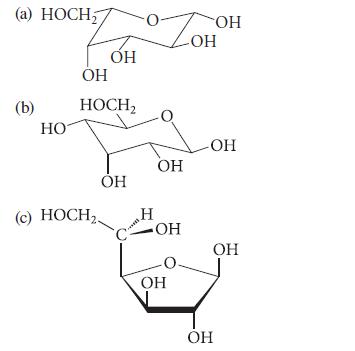
Name the specific form of each aldose shown here. (a) HOCH2 (b) HO он OH HOCH₂ (c) HOCHz. ОН ~OZOHo OH Н -ОН OH OH -OH OH OH
Draw the indicated type of structure for each of the following compounds.(a) α-D-talopyranose (chair)(b) Propyl β-l-arabinopyranoside (chair)
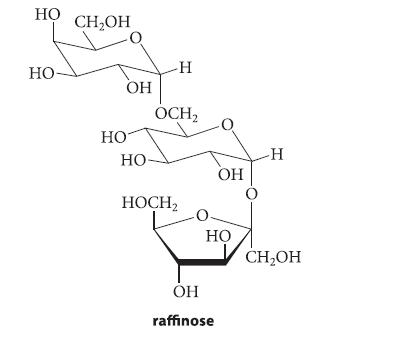
Consider the structure of raffinose, a trisaccharide found in sugar beets and a number of higher plants.(a) Classify raffinose as a reducing or nonreducing sugar, and tell how you know.(b) Identify the glycoside linkages in raffinose, and classify each as either α or β.(c) Name the
Draw the structure(s) of(a) All the 2-ketohexoses(b) An achiral ketopentose C5H10O5(c) α-D-galactofuranose(d) β-D-idofuranose
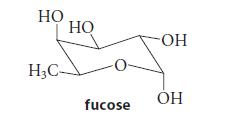
Fucose, a carbohydrate with the following structure, has been identified as a component of the cell-surface antigens of certain tumor cells.(a) Is this the D- or L-enantiomer of fucose? Explain.(b) Is this the α- or β-anomer?(c) Is fucose an aldose, a ketose, or neither? Explain.(d) Draw a
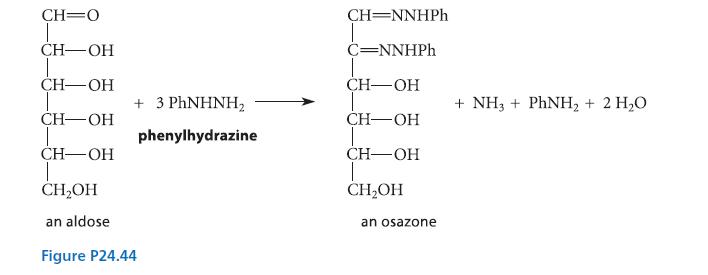
An important reaction used by Emil Fischer in his research on carbohydrate chemistry was the reaction of aldoses and ketoses with phenylhydrazine to give osazones, shown in Fig. P24.44. Osazones, unlike many carbohydrates, form crystalline solids that are useful in characterizing carbohydrates.(a)
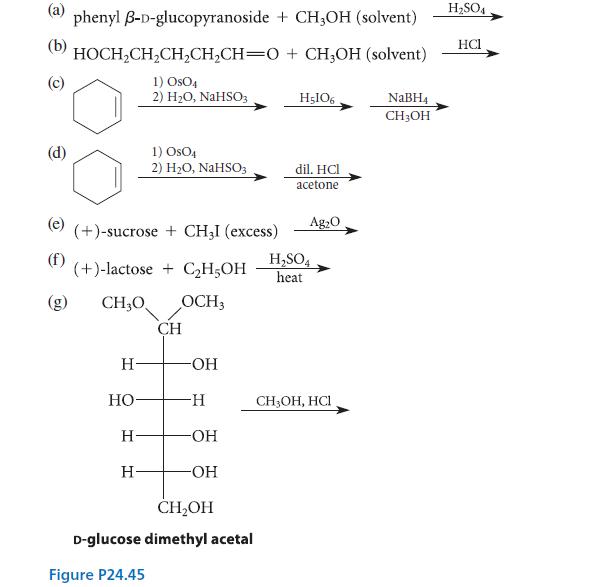
Complete the reactions shown in Fig. P24.45 by giving the major organic product(s). (a) (b) (e) phenyl B-D-glucopyranoside + CH3OH (solvent) HOCH₂CH₂CH₂CH₂CH=O + CH3OH (solvent) 1) OsO4 2) H₂O, NaHSO3 (+)-sucrose + CH3I (excess) (+)-lactose +
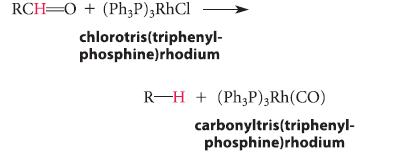
Chlorotris(triphenylphosphine)rhodium brings about the decarbonylation of aldehydes:(a) What product is obtained when this reaction is applied to D-galactose?(b) Suggest a reason why the reaction of an aldose requires a much higher temperature (130°C) than the same reaction of an ordinary aldehyde
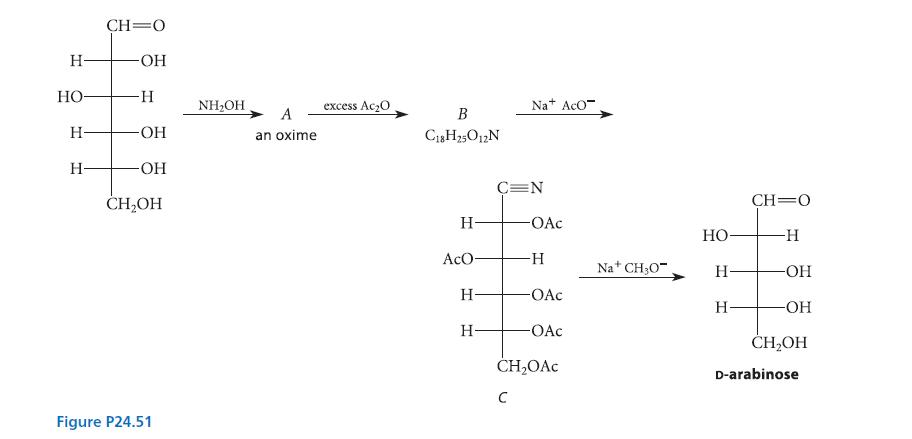
The Wohl degradation, shown in Fig. P24.51, can be used to convert an aldose into another aldose with one fewer carbon. Give the structure of the missing compounds as well as the curved-arrow mechanisms for the conversion of B to C and C to arabinose. H- НО- H H CH O -OH -H -OH -OH CH₂OH Figure
Compound A, known to be a monomethyl ether of D-glucose, can be oxidized to a carboxylic acid B with bromine water. When the calcium salt of B is subjected to the Ruff degradation, another aldose monomethyl ether is obtained that can also be oxidized with bromine water.When A is subjected to the
The sequence of reactions shown in Fig. P24.52, called the Weerman degradation, can be used to degrade an aldose to another aldose with one less carbon atom. Using glucose as the aldose, explain what is happening in each step of the sequence. Your explanation should include the identity of
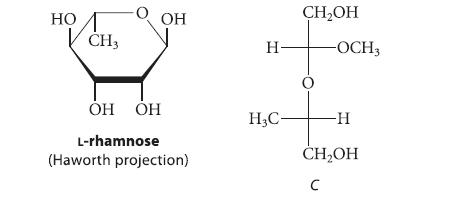
L-Rhamnose is a 6-deoxyaldose with the following structure. When a methyl glycoside of l-rhamnose, methyl a-l-rhamnopyranoside, was treated with periodic acid, compound A, C6H12O5, was obtained that showed no evidence of a carbonyl group in its IR spectrum. Treatment of A with CH3I/Ag2O gave a
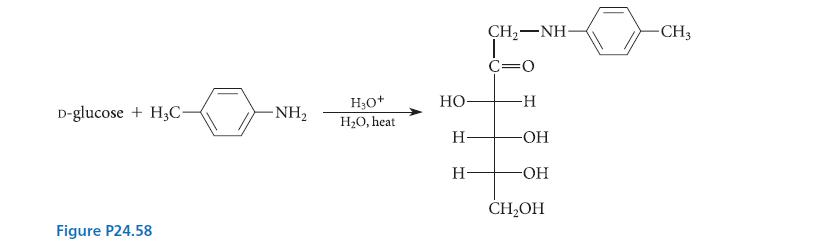
Outline a mechanism for the reaction shown in Fig. P24.58, which is an example of the Maillard reaction followed by the Amadori rearrangement. D-glucose+H3C- Figure P24.58 -NH₂ H₂O + H₂O, heat HO- H- H- CH, NH T C=O -H -OH -OH CH₂OH -CH3
Maltose is a disaccharide obtained from the hydrolysis of starch. Maltose can be hydrolyzed to two equivalents of glucose and can be oxidized to an acid, maltobionic acid, with bromine water. Treatment of maltose with dimethyl sulfate and sodium hydroxide, followed by hydrolysis of the product in
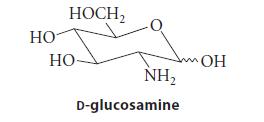
Explain with a curved-arrow mechanism why treatment of the 2-deoxy-2-amino derivative of D-glucose (d-glucosamine) with aqueous NaOH liberates ammonia. HOCH, НО НО- NH, D-glucosamine OH
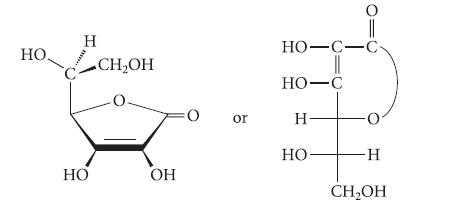
L-Ascorbic acid (vitamin C) has the following structure:(a) Ascorbic acid has pKa = 4.21, and is thus about as acidic as a typical carboxylic acid. Identify the acidic hydrogen and explain.(b) Thousands of tons annually of ascorbic acid are made commercially from d-glucose. In the synthesis shown
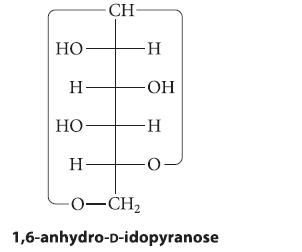
At 100 °C, d-idose exists mostly (about 86%) as a 1,6-anhydropyranose:(a) Draw the chair conformation of this compound.(b) Explain why d-idose has more of the anhydro form than d-glucose. (Under the same conditions, glucose contains only 0.2% of the 1,6-anhydro form.)
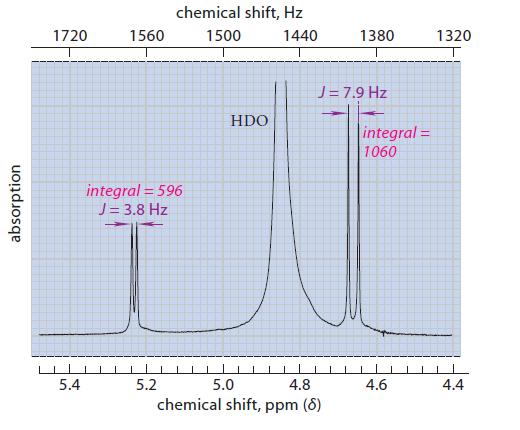
The proton NMR of the C1 proton region of D-glucopyranose shows that both anomers are present. (The large peak in the middle is residual HDO in the H2O solvent.) The integrals are given in arbitrary units.(a) Which is the resonance of the a-anomer, and which is the resonance of the β-anomer? How
The ΔG°´ for ATP hydrolysis is 230.5 kJ mol–1 (27.3 kcal mol–1). In the red blood cell at 37°C (310 K) the concentrations of ATP, ADP, and phosphate are 2.25, 0.25, and 1.65 mM, respectively. Show that these are not the equilibrium concentrations, and calculate the actual ΔG´ under these
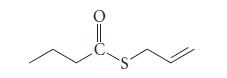
Provide both common and IUPAC systematic names for the following thioester: O C. S
Draw a structure for each of the following thioesters:(a) Cyclohexyl thiobenzoate(b) S-isopropyl butanethioate(c) S-phenyl cyclohexanecarbothioate
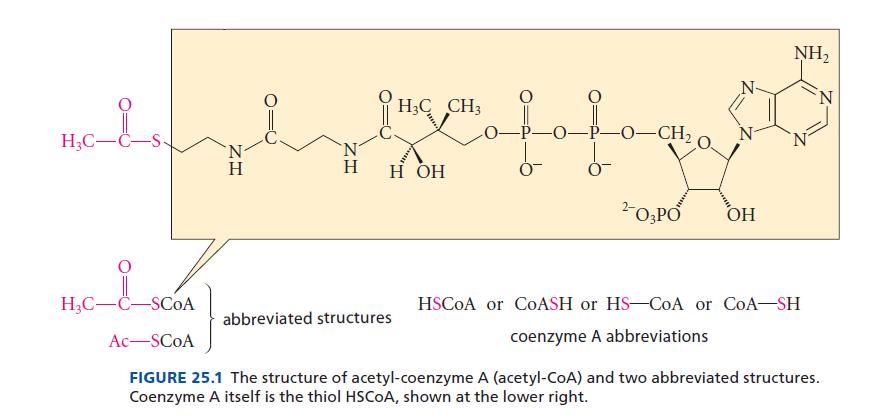
In the structure of acetyl-CoA (Fig. 25.1), point out and identify the phosphorus-containing functional groups. H₂C-C- H₂C-C-SCOA Ac-SCOA ZH Η H3C CH3 slave fofagart —O–CH, H H OH 2- O3PO OH abbreviated structures NH₂ HSCOA or COASH or HS-CoA or CoA-SH coenzyme A abbreviations N FIGURE
Given the pKa values of methyl phosphate shown in this section, calculate the percentage of the un-ionized form, the monoanion form, and the di-anion form at pH 7.4.
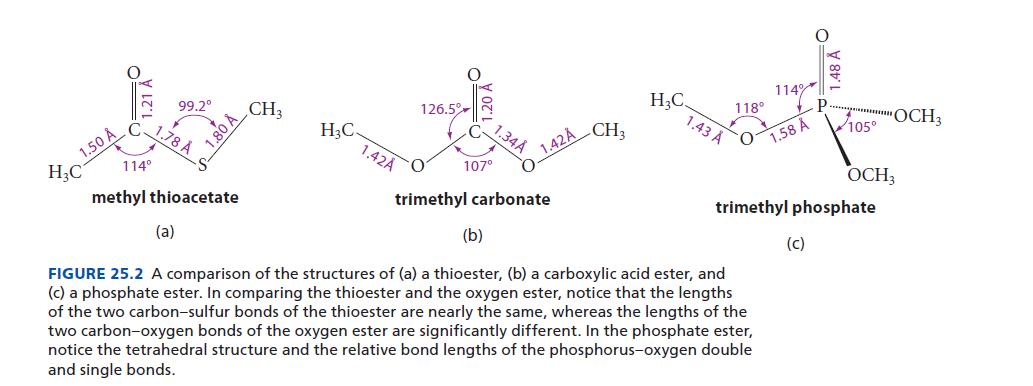
In Fig. 25.2, the C—O—P bond angle (118°) suggests that the oxygen is sp2-hybridized. Use resonance structures to show why this hybridization and geometry is reasonable. 1.50 Å H₂C 114⁰ 99.2° 1.78 Å (a) 1.80 Å methyl thioacetate CH3 H₂C. 1.42A 126.5% O 107° 1.34Å O 1.42Å trimethyl
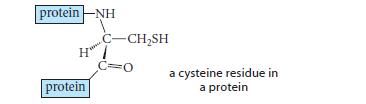
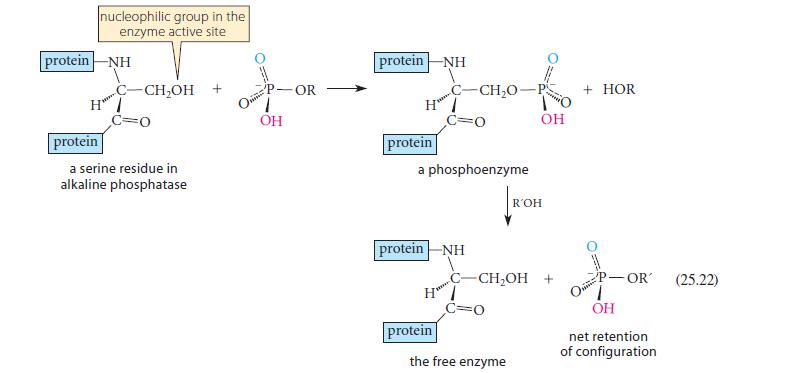
The hydrolysis of phosphotyrosine esters in proteins is catalyzed by a family of enzymes called protein phosphotyrosine phosphatases.These hydrolyses in many cases involve phosphoenzyme intermediates. The nucleophilic group of the phosphatase (the enzyme) is the thiol group of a cysteine residue in
The side chain —R of the amino acid serine is —CH2OH. Draw the structure of the phosphate monoester of serine.
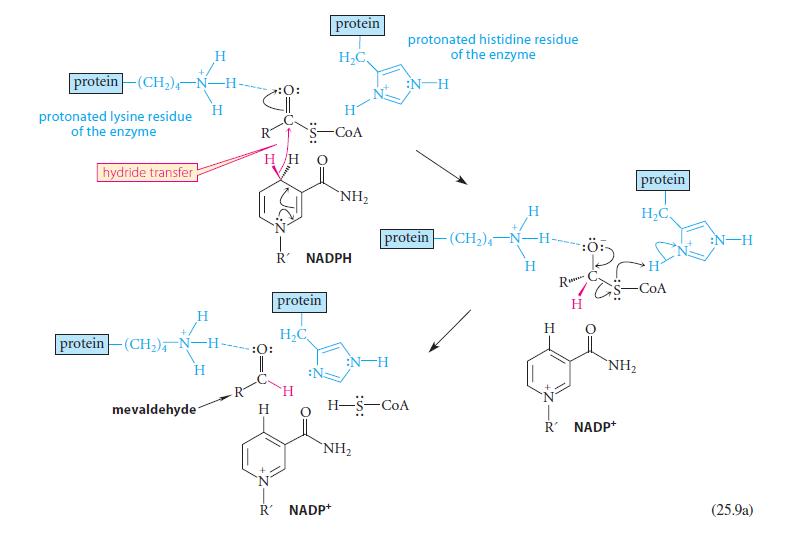
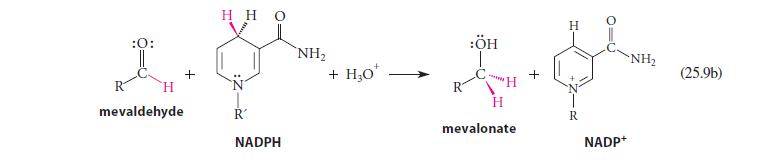
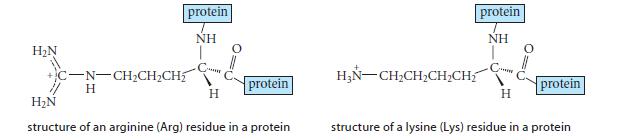
Using abbreviated structures like the ones in Eq. 25.9a, give a curved-arrow mechanism for the reduction of mevaldehyde shown in Eq. 25.9b. protein (CH₂)-N-H- protonated lysine residue of the enzyme hydride transfer H mevaldehyde H H protein (CH₂),
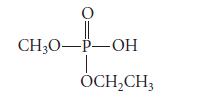
The following chiral phosphate ester cannot be isolated in optically active form. Explain. O CH3O-P-OH OCH₂CH3
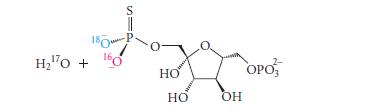
The stereochemistry of substitutions in phosphate esters is sometimes studied with compounds in which sulfur is used in place of one oxygen. For example, the F16BP-catalyzed hydrolysis of fructose-1,6-bisphosphate in H217O was studied with the following sulfur-substituted analog:a. Why is the
Describe the splitting expected in the proton resonance of the —CH2— group in triethyl phosphate. (The coupling constants for H–H splitting and P–H splitting happen to be identical in this case.)
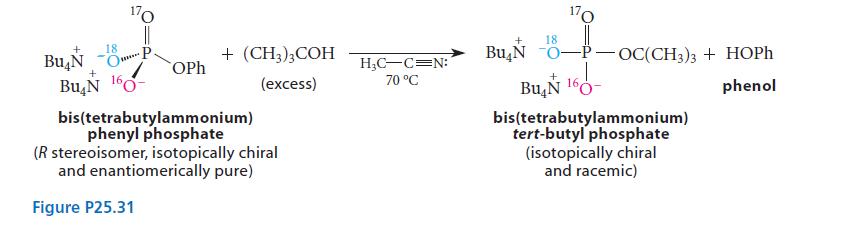
The tetrabutylammonium salt of isotopically chiral phenyl phosphate was heated in the polar aprotic solvent acetonitrile containing excess tert-butyl alcohol, and isotopically substituted tert-butyl phosphate was isolated. An analysis of its stereochemistry showed that it was completely
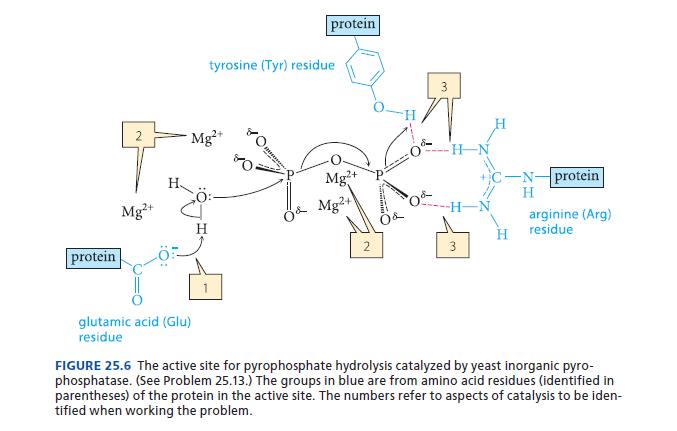
The transition state for enzyme-catalyzed pyrophosphate hydrolysis, deduced from the structure of the enzyme inorganic pyrophosphatase, is shown in Fig. 25.6.(a) Indicate the catalytic role of each numbered feature—that is, how each feature enhances catalysis.(b) If the stereochemistry of the
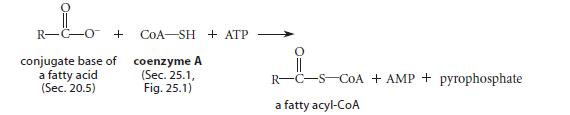
The conversion of a fatty acid into a fatty acyl-CoA is one step in the utilization of fats:This process occurs in two steps. In the first step, the fatty acid is adenylated by a nucleophilic reaction of the carboxylate with the a-phosphate group of ATP. In the second step, the fatty acyl adenylate
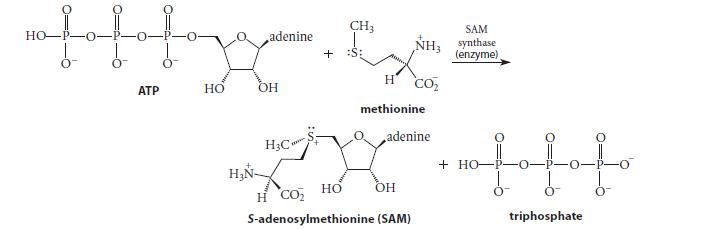
In the biosynthesis of S-adenosylmethionine (SAM; Sec. 11.7B), the amino acid methionine undergoes an enzyme-catalyzed reaction with ATP to give SAM and triphosphate. (This is one of only two known biochemical reactions in which triphosphate serves as a leaving group.)(a) Give a curved-arrow
Sucrose synthase is a plant enzyme that catalyzes the biosynthesis of the disaccharide sucrose from UDP-glucose and β-D-fructofuranose.(a) Draw the structure of UDP-glucose, assuming it has the same stereochemistry at the anomeric carbon as UDP-galactose.(b) Draw out the reaction for sucrose
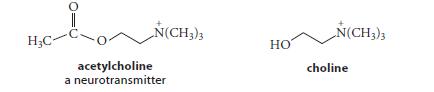
The ΔG°´ for ester hydrolysis of the neurotransmitter acetylcholine is 225.1 kJ mol–1 (26.0 kcal mol–1), and the ΔG°´ for the hydrolysis of acetyl-CoA is 231.4 kJ mol–1 (27.5 kcal mol–1).(a) Draw a free-energy diagram that shows how the ΔG°´ for the biosynthesis of acetylcholine
(a) Phosphocreatine (creatine phosphate) is a compound in muscle tissue that serves as a reservoir of high-energy phosphate. It reacts with ADP to replenish ATP stores in muscle:The ΔG°´ for this reaction is 212.5 kJ mol–1 (23.0 kcal mol–1). Calculate the ΔG°´ for the hydrolysis of
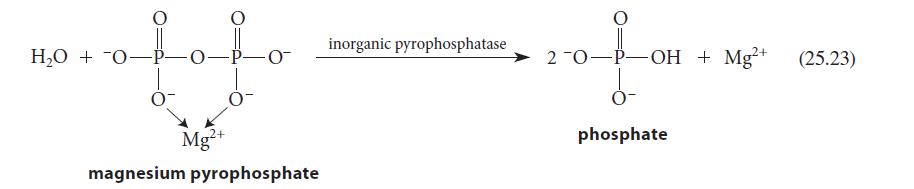
This question refers to the biosynthesis of S-adenosylmethionine (SAM) introduced in Problem 25.15. The hydrolysis of the triphosphate leaving group in this reaction is catalyzed by the enzyme SAM synthase, and the hydrolysis of the pyrophosphate product of this hydrolysis is hydrolyzed by
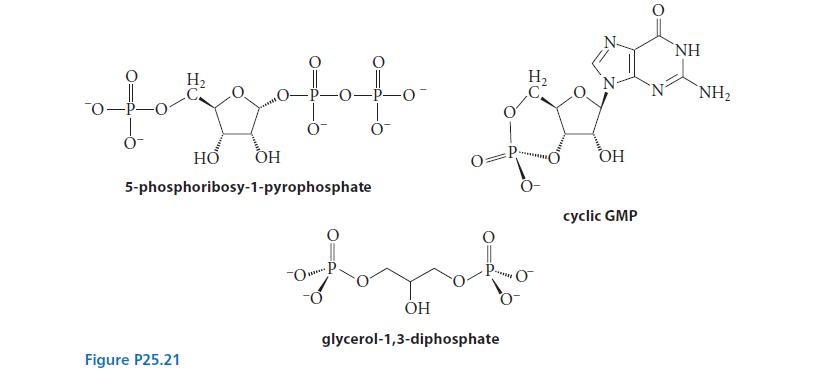
Identify the phosphorus-containing functional groups in each of the biologically occurring compounds shown in Fig. P25.21. Choose between phosphate monoester, phosphate diester, phosphate anhydride, and pyrophosphate monoester. of H₂ Figure
What would the ΔG´ be for ATP hydrolysis in a cell in which the concentrations of ATP, ADP, and phosphate were all 1 mM?
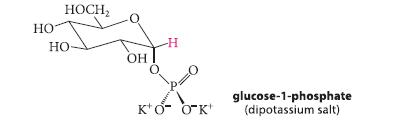
The anomeric proton (red) in the a-anomer of glucose-1-phosphate in the proton NMR spectrum appears at δ 5.45. It is split into a doublet of doublets—four lines of equal size—with coupling constants of 3.5 Hz and 7.3 Hz. Explain the origin of each splitting. HO HOCH₂ HO- OH -H Κ'0
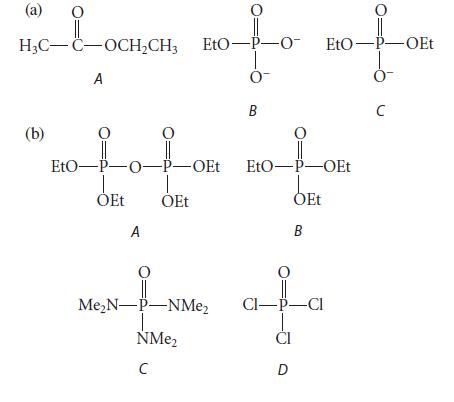
In each of the following sets, arrange the three compounds in order of increasing reactivity toward base-promoted hydrolysis, least reactive first, and explain your reasoning. (a) nofo H₂C-C-OCH₂CH3
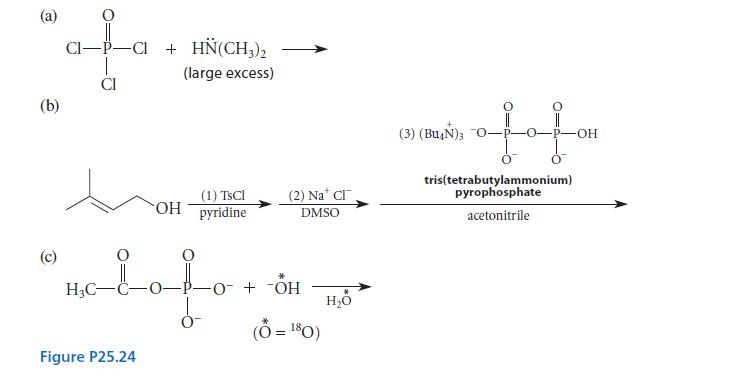
Complete the reactions shown in Fig. P25.24 by drawing the structures of the products, and explain your reasoning. (b) (c) afa CI H3C- + HN(CH,), (large excess) Holofo Figure P25.24 (1) TsCl OH pyridine (2) Na* CI™ DMSO -0- + -ÕH OH (0 = ¹80) H₂Ö (3) (Bu4N)3 of
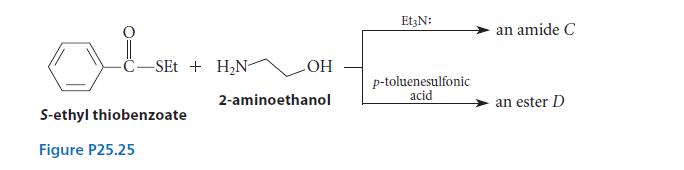
When S-ethyl thiobenzoate (A) is allowed to react with 2-aminoethanol (B), an amide C is formed if one equivalent of triethylamine (Et3N:) is included in the reaction mixture, but an ester D is formed if one equivalent of a strong acid such as p-toluenesulfonic acid is added as a catalyst. (See
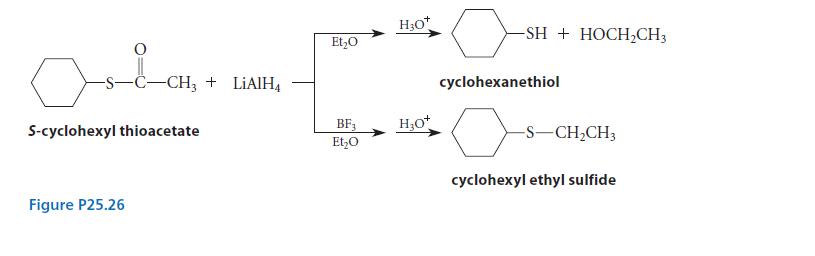
When S-cyclohexyl thioacetate is reduced by LiAlH4 in ether, followed by protonolysis, cyclohexanethiol is formed. However, when a large excess of the Lewis acid BF3 is added to the reaction mixture before the reduction, cyclohexyl ethyl sulfide is formed (Fig. P25.26). Account mechanistically for
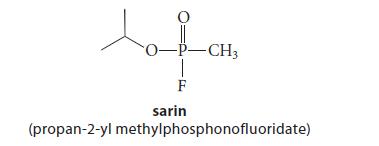
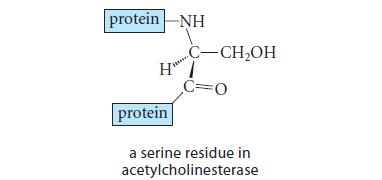
Sarin is an acid fluoride and ester of methylphosphonic acid.Sarin is a deadly nerve gas that was outlawed by the Chemical Weapons Convention of 1993. However, it has been used at various times as a weapon of mass destruction by terrorists, including a 1995 attack in the Tokyo metro and a 2013
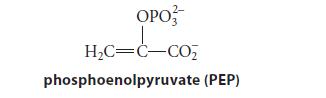
(a) Give the products that result from the hydrolysis of the phosphate ester group of phosphoenolpyruvate (PEP), an important compound in the glycolysis pathway.(b) The ΔG°´ for the hydrolysis of PEP is 261.9 kJ mol–1 (14.8 kcal mol–1), which puts it well into the category of a
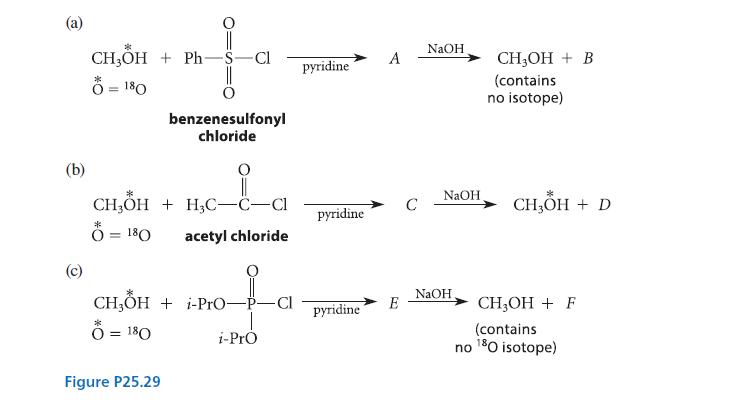
Methanol containing the oxygen isotope 18O is allowed to react, in separate reactions, with each of the acid chlorides shown in Fig. P25.29a–c, and each of the resulting compounds A, C, and E is treated with one equivalent of sodium hydroxide. This treatment regenerates methanol in all three
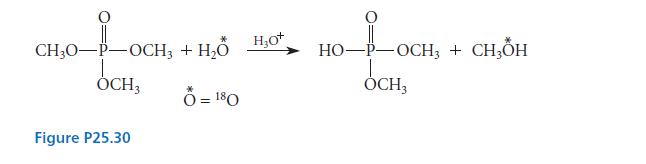
Account with a mechanism for the fact that the hydrolysis of trimethyl phosphate to dimethyl phosphate in acidic solution containing 18O-labeled water gives methanol containing 18O and dimethyl phosphate containing no isotope, as shown in Fig. P25.30. 40-100 CH₂0-P-OCH3 OCH3 Figure P25.30 +
The reaction of water with metaphosphate ion is shown in Eq. 25.19b. Could nitrate ion undergo an analogous reaction with aqueous NaOH? If so, draw the structure of the product. If not, explain why. H₂Ö: :O: metaphosphate H₂O P ***** :0 H₂O HÖP. ******* phosphate H30* (25.19b) + H₂0
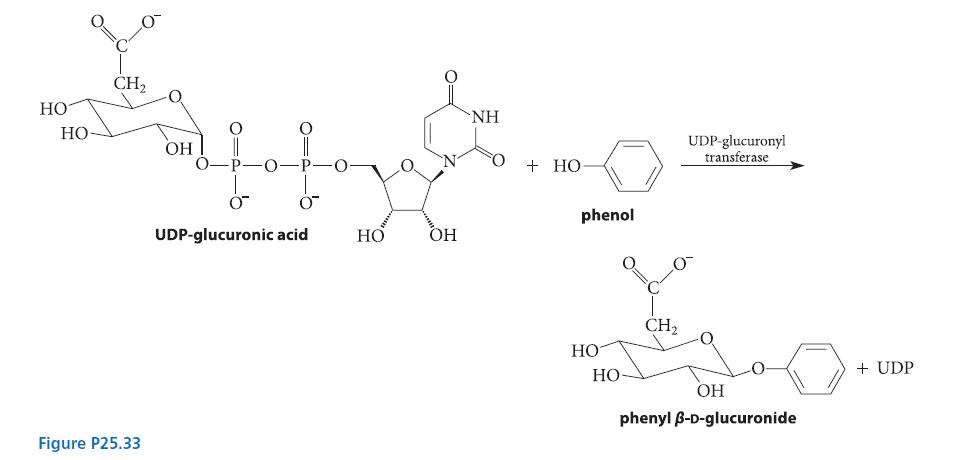
The conjugation of alcohols containing nonpolar groups (for example, phenol) to glucuronic acids is a key process by which these alcohols can be transformed into, and excreted as, water-soluble derivatives called glucuronides in phase II metabolism. These conjugation reactions involve the reaction
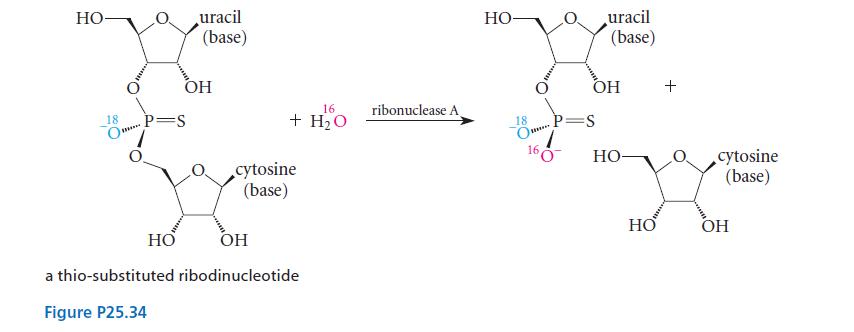
Ribonuclease A, a well-characterized enzyme from beef pancreas, catalyzes the hydrolysis of RNA into its component ribonucleic acids. When this reaction is studied with an isotopically chiral sulfur analog, as shown in Fig. P25.34, the reaction occurs with overall retention of stereochemistry. No
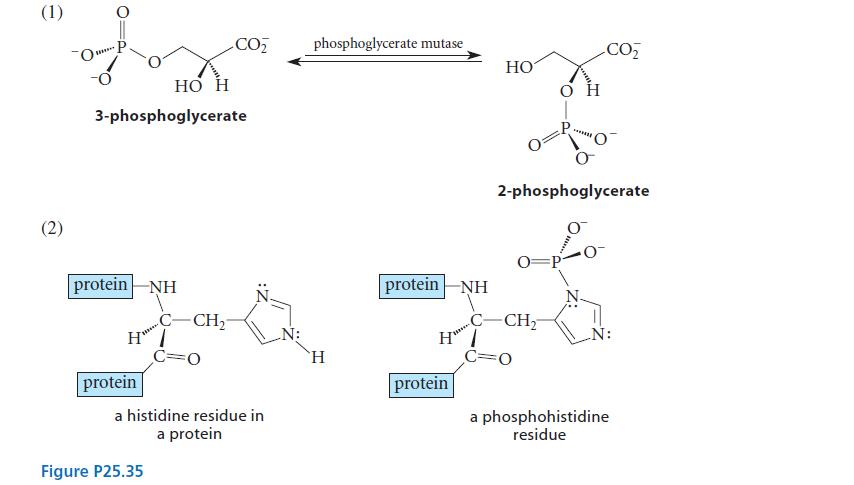
Phosphoglycerate mutase catalyzes the interconversion of (R)-3-phosphoglycerate and (R)-2-phosphoglycerate, as shown in reaction (1) of Fig. P25.35. The enzyme contains a histidine residue in its active site, and the reaction involves a phosphohistidine intermediate, as shown in reaction (2) of
The enzyme-catalyzed formation of fatty acyl-carnitine from fatty acyl-CoA (Fig. P25.36) is an early step in the metabolism of fatty acids. The ΔG°´ for the hydrolysis of an acyl-CoA is 231.4 kJ mol–1 (–7.5 kcal mol–1), and the ΔG°´ for the hydrolysis of an acyl-carnitine is –17.4 kJ
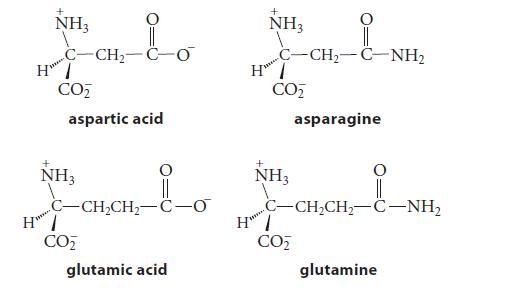
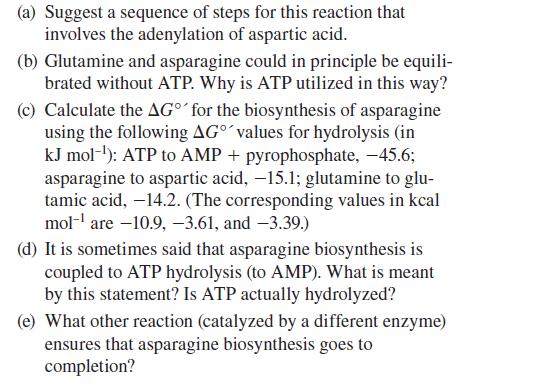
Aspartic acid and glutamic acid are the two naturally occurring a-amino acids that have carboxylate groups in their side chains. Asparagine and glutamine are the corresponding a-amino acids in which the side chains are primary amides. (All of these amino acids have the S configuration.)Asparagine
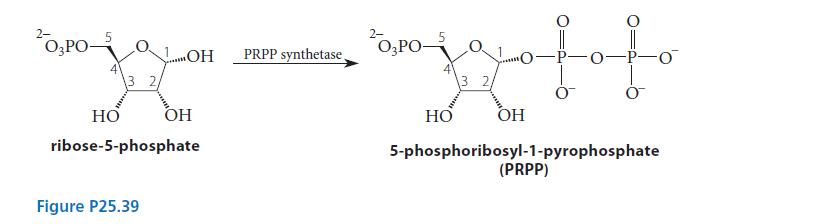
The enzyme phosphoribosyl pyrophosphate synthetase (PRPP synthetase) catalyzes the conversion of ribose-5-phosphate into its 1-pyrophosphate derivative, as shown in Fig. P25.39. The pyrophosphate group in the product is provided by ATP, not shown in the figure.(a) At which phosphate of ATP does the
Calculate the ΔG°´ for the reaction of acetyl phosphate with CoA—SH, given that the ΔG°´ for the hydrolysis of acetyl phosphate is 243.1 kJ mol–1 (210.3 kcal mol–1) and the ΔG°´ for the hydrolysis of acetyl-CoA is 231.4 kJ mol–1 (27.52 kcal mol–1). As part of your calculation,
The pKa of the thiol group of CoASH is 9.6. How would the DG° for the hydrolysis of acetyl-CoA change (relative to its value at pH = 7) if the hydrolysis were carried out at pH = 11? Explain.
Imidazole is a base; the pKa of its conjugate acid is 6.95. On which nitrogen does imidazole protonate?
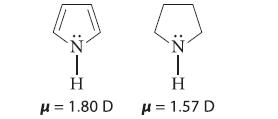
(a) The dipole moments of pyrrole and pyrrolidine are similar in magnitude but have opposite directions. Explain, indicating the direction of the dipole moment in each compound.(b) Explain why the dipole moments of furan and pyrrole have opposite directions.(c) Should the dipole moment of
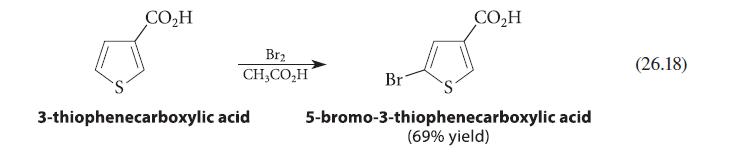
Explain the position of substitution observed in the bromination of thiophene-3-carboxylic acid shown in Eq. 26.18. Draw the arenium ion intermediates for all possible positions of substitution and show that the intermediate in the observed substitution is the most stable one.
Draw the structure of(a) 4-(dimethylamino)pyridine (b) 4-ethyl-2-nitroimidazole
Using the nitration of pyrrole as an example, predict whether electrophilic aromatic substitution occurs predominantly at carbon-2 or carbon-3.
Draw the important resonance structures for pyrrole.
Protonation of aniline causes a dramatic shift of its UV spectrum to lower wavelengths, but protonation of pyridine has almost no effect on its UV spectrum. Explain the difference.
Each of the following NMR chemical shifts goes with a proton at carbon-2 of either pyridine, pyrrolidine, or pyrrole. Match each chemical shift with the appropriate heterocyclic compound, and explain your answer: δ 8.51; δ 6.41; and δ 2.82.
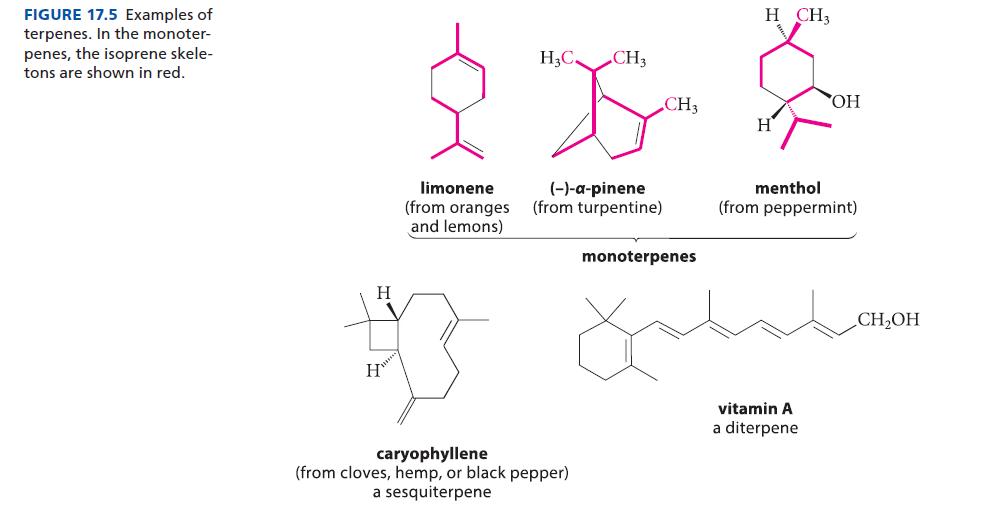
Show the isoprene skeletons within the following compounds of Fig. 17.5.(a) Vitamin A (b) Caryophyllene FIGURE 17.5 Examples of terpenes. In the monoter- penes, the isoprene skele- tons are shown in red. H H H3C CH3 limonene (-)-a-pinene (from oranges (from turpentine) and
Which of the following alcohols could be prepared free of constitutional isomers by (a) Hydroboration–oxidation, (b) Oxymercuration–reduction, (c) Either method, or (d) Neither method? Explain your answers and give the structure of the alkene starting material for the cases in which a
Calculate the number of pounds of CO2 released into the atmosphere when 15 gallons of gasoline is burned in an automobile engine. Assume complete combustion. Also assume that gasoline is a mixture of octane isomers and that the density of gasoline is 0.692 g mL–1. (This assumption ignores about
Draw the structure of the alkyl halide product expected (if any) in each of the following reactions. (a) 1-propanol + HBr in the presence of H₂SO4 catalyst (c) OH I Me3C-CH-CH3 + excess HBr heat (b) HOCH₂CH₂CH₂OH + excess HI (d) (CH3)3CCH₂OH + HCl 25 °C heat
(a) The reagent tributyltin hydride, Bu3Sn—H, brings about the rapid conversion of 1-bromo-1-methylcyclohexane into methylcyclohexane. The reaction is particularly fast in the presence of AIBN (Sec. 5.6C). Suggest a mechanism for this reaction.(b) Suggest two other reaction sequences using other
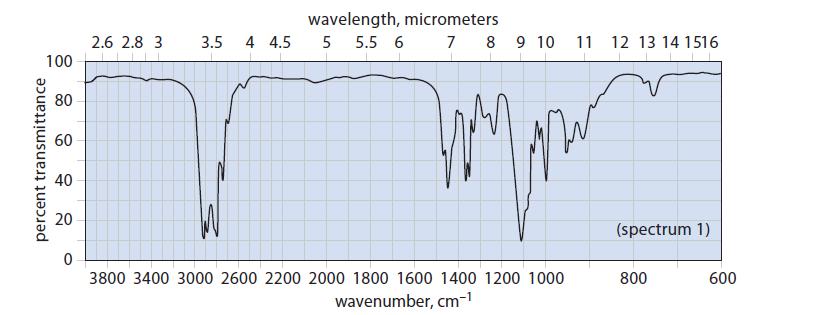
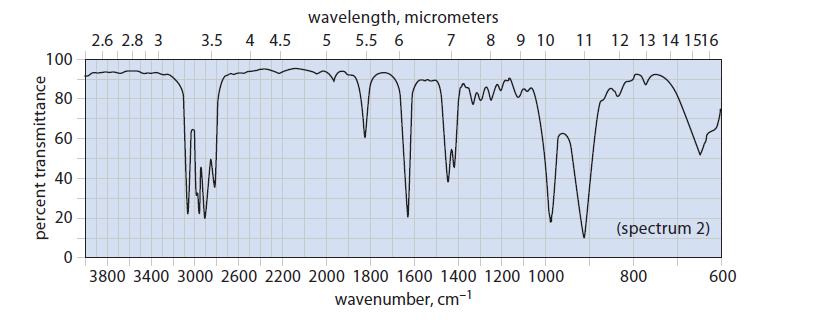
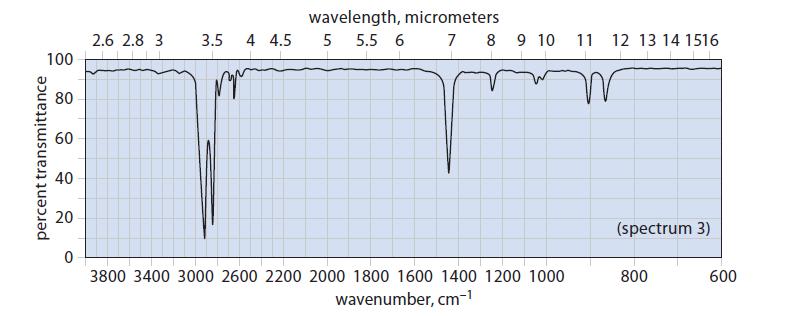
Match each of the IR spectra in Fig. P12.27 to one of the following compounds. (Notice that there is no spectrum for two of the compounds.)(a) 1,5-hexadiene (b) 1-methylcyclopentene (c) 1-hexen-3-ol (d) Dipropyl ether (e) Trans-4-octene (f) Cyclohexane (g) 3-hexanol percent
Write the transformation in Problem 10.26b as a balanced half- reaction. Complete the following sentence: This reaction is a ______ (how many)-electron ______ (oxidation or reduction).Problem 10.26bConsidering the organic compound, classify each of the following transformations, some of which may
Suggest a preparation of cyclohexyl mesylate from the appropriate alcohol.
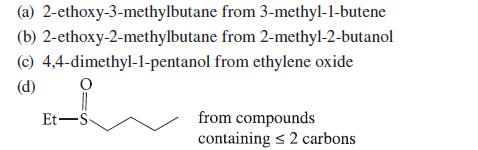
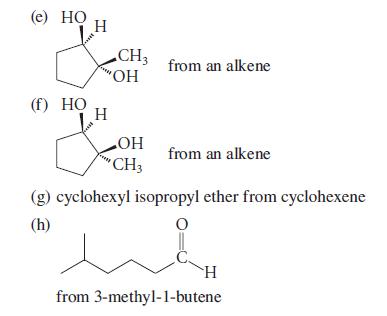
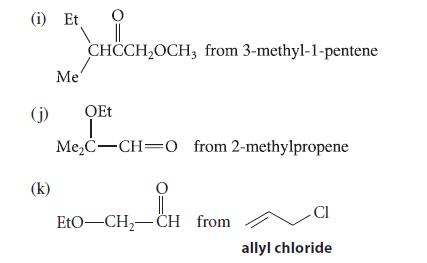
Outline a synthesis for each of the following compounds from the indicated starting material and any other reagents. [All chiral compounds should be prepared as racemates except in parts (1) and (m).] (a) 2-ethoxy-3-methylbutane (b) 2-ethoxy-2-methylbutane (c) 4,4-dimethyl-1-pentanol (d) O from
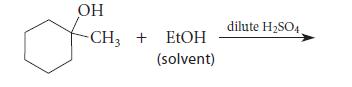
Draw the structure of two alkenes, either of which when treated with dilute H2SO4 and ethanol will give the same ether product as the reaction in Problem 11.9.Problem 11.9Complete the following reaction by giving the major organic product. OH -CH3 + EtOH (solvent) dilute H₂SO4
Outline preparations of cis-1,2-cyclohexanediol and (±)-trans-1,2-cyclohexanediol from cyclohexene.
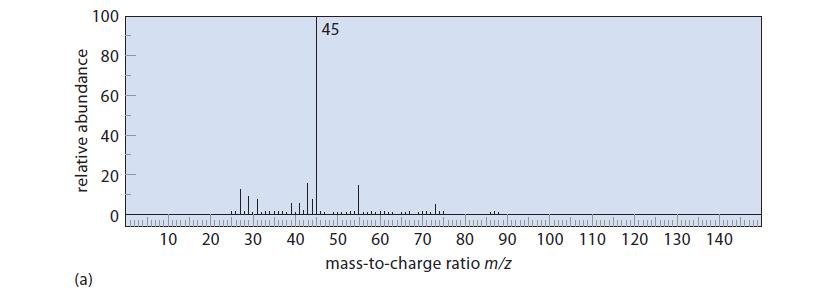
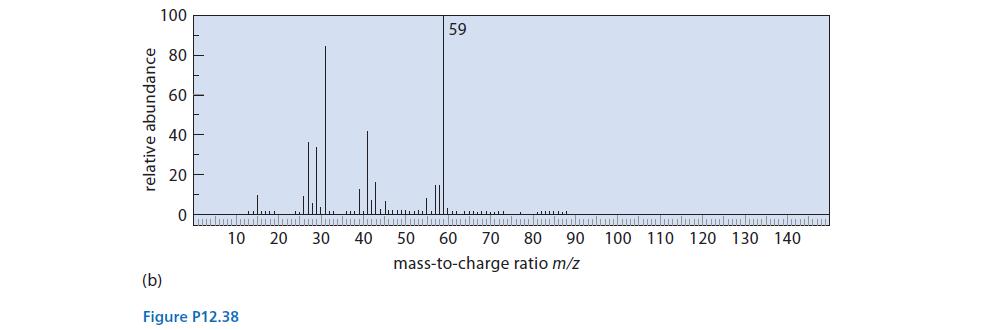
A chemist, Ilov Boronin, carried out a reaction of trans-2-pentene with BH3 in THF followed by treatment with H2O2Y–OH. Two products were separated and isolated.Desperate to know their structures, Ilov took his compounds to the spectroscopy laboratory and found that only the mass spectrometer was
In the nucleophilic substitution reaction of the following radioactively labeled compound with water, what labeling pattern should be observed in the product (a) if the neighboring-group participation does not occur and (b) if neighboring-group participation does occur? EtS-CH₂CH₂-Cl C = ¹4C
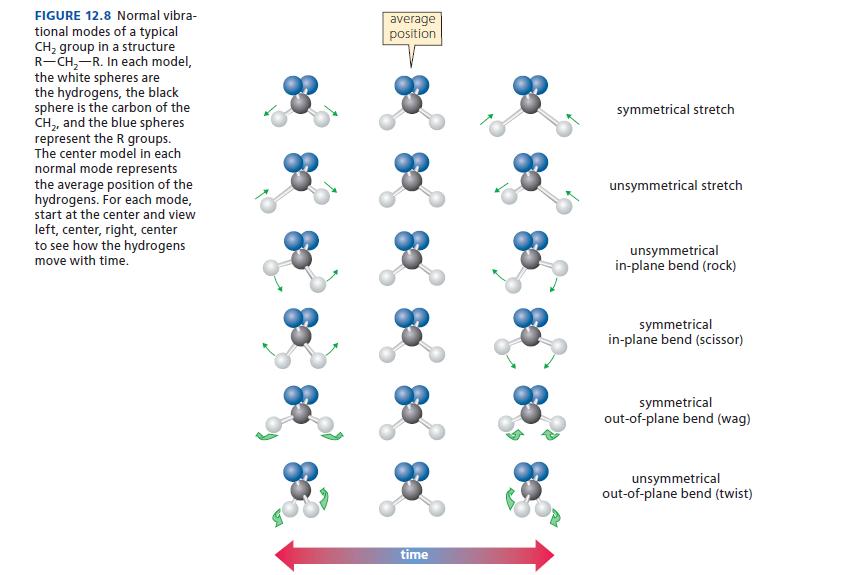
Which one of the following molecular vibrations is infrared-inactive? (a) The C = O symmetrical stretch of CO2;(b) The C = O unsymmetrical stretch of CO2. (See Fig. 12.8) FIGURE 12.8 Normal vibra- tional modes of a typical CH₂ group in a structure R-CH₂-R. In each model, the white spheres
Give the structure of a compound C7H16O3 with the following NMR spectrum: δ 1.30 (3H, s); δ 1.93 (2H, t, J = 7.3 Hz); δ 3.18 (6H, s); δ 3.33 (3H, s); δ 3.43 (2H, t, J = 7.3 Hz). Its IR spectrum shows no O—H stretching absorption.
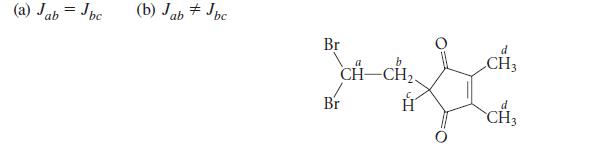
The following compound is unknown, but you are contemplating its synthesis and characterization. Predict its NMR spectrum under each of the following assumptions: (a) Jab = Jbc (b) Jab Jbc. Br b CH-CH₂ d CH3 Lich d CH3 Br
When 3-bromopropene is allowed to react with HBr in the presence of peroxides, a compound A is formed that has the following NMR spectrum: δ 3.60 (4H, t, J = 6 Hz); δ 2.38 (2H, quintet, J = 6 Hz).(a) From the reaction, what do you think A is?(b) Use the NMR spectrum to confirm or refute your
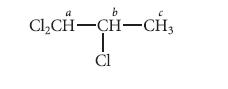
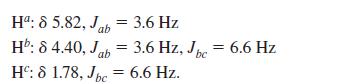
The three absorptions in the NMR spectrum of 1,1,2-trichloropropane have the following characteristics:Using bars to represent lines in the spectrum and a splitting diagram to determine the appearance of the Hb absorption, sketch the appearance of the spectrum. b Cl₂CH-CH-CH3 Cl
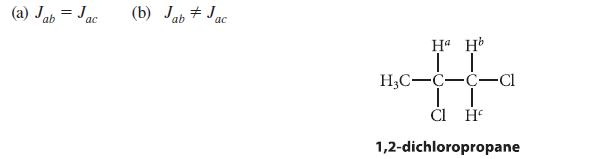
Predict the complete NMR spectrum of 1,2-dichloropropane under each of the following assumptions. Notice that protons Hb and Hc are diastereotopic and chemically nonequivalent. (a) Jab = Jac (b) Jab Jac Ha Hb TI H₂C-C-C-Cl T Cl Hº 1,2-dichloropropane
The d 1.2–1.5 region of the 300-MHz NMR spectrum of 1-chlorohexane, given in Fig. 13.13, is complex and not first-order.Assuming you could synthesize the needed compounds, explain how to use deuterium substitution to determine the chemical shifts of the protons that absorb in this region of the
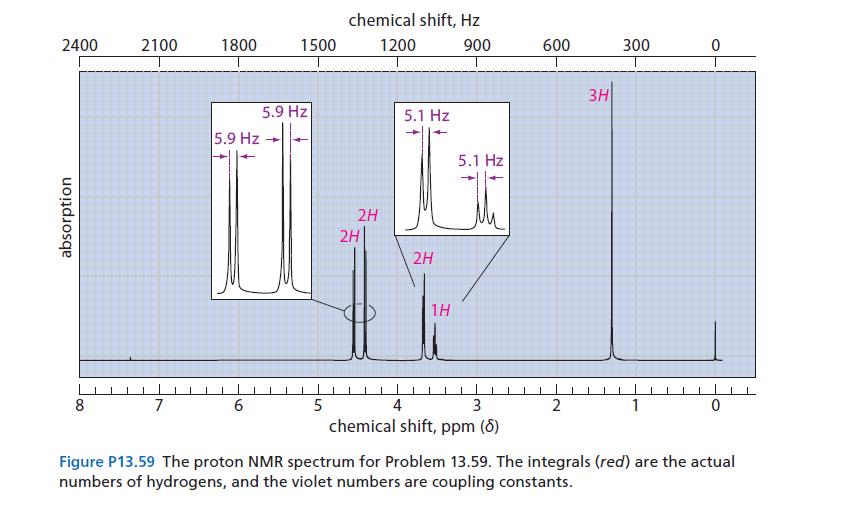
A compound X with the molecular formula C5H10O2 has an IR spectrum with strong absorption in the 1000–1100 cm–1 region; very strong, broad absorption in the 3000–3600 cm–1 region; and no absorption in the 1600–1700 cm–1 region. The proton NMR spectrum of X is given in Fig. P13.59. When
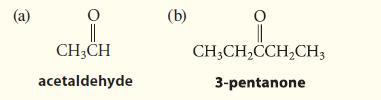
Which one of the following compounds could be prepared by the hydration of alkynes so that it is uncontaminated by constitutional isomers? Explain your answer. (a) ||| CH3CH acetaldehyde (b) CH₂CH₂CCH₂CH3 3-pentanone
An initiation step in the free-radical co-polymerization of styrene and 1,3-butadiene is the free-radical addition of a peroxidederived radical to a double bond of 1,3-butadiene:(a) Use the fishhook curved-arrow notation to derive the missing resonance structure.(b) Use this resonance structure as
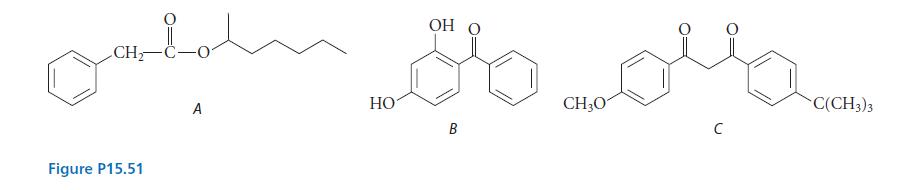
Two of the compounds in Fig. P15.51 are used in sunscreens, and one is not. Identify the compound that does not act as a sunscreen; explain. CH₂ pulan Gool CH₂01 A Figure P15.51 HO OH O B с C(CH3)3
This problem describes the result that established the intrinsic preference for 1,2-addition in the reaction of hydrogen halides with conjugated dienes.(a) What is the relationship between the products of 1,2- and 1,4-addition in the following reaction?(b) How does the use of DCl change this
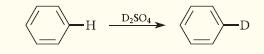
Give a curved-arrow mechanism for the following electrophilic substitution reaction. -H D₂SO4 -D
Showing 100 - 200
of 1324
1
2
3
4
5
6
7
8
9
10
11
12
13
14
Step by Step Answers

 Get 50% OFF
Claim Now
Get 50% OFF
Claim Now














![FIGURE 13.13 The NMR spectrum for Study Problem 13.4. 2400 absorption 2100 | I [] 8 7 1800 C6H13Cl 6 1500 5](https://dsd5zvtm8ll6.cloudfront.net/images/question_images/1701/6/7/1/763656d7353ca7f81701671763013.jpg)