New Semester
Started
Get
50% OFF
Study Help!
--h --m --s
Claim Now
Question Answers
Textbooks
Find textbooks, questions and answers
Oops, something went wrong!
Change your search query and then try again
S
Books
FREE
Study Help
Expert Questions
Accounting
General Management
Mathematics
Finance
Organizational Behaviour
Law
Physics
Operating System
Management Leadership
Sociology
Programming
Marketing
Database
Computer Network
Economics
Textbooks Solutions
Accounting
Managerial Accounting
Management Leadership
Cost Accounting
Statistics
Business Law
Corporate Finance
Finance
Economics
Auditing
Tutors
Online Tutors
Find a Tutor
Hire a Tutor
Become a Tutor
AI Tutor
AI Study Planner
NEW
Sell Books
Search
Search
Sign In
Register
study help
sciences
organic chemistry 6th
Organic Chemistry 6th Edition Marc Loudon, Jim Parise - Solutions
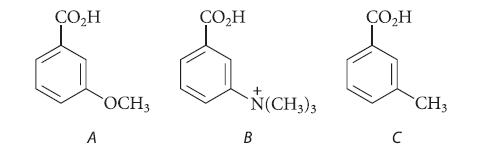
Rank the following compounds in order of increasing acidity. Explain your answers. ÇO₂H A OCH3 ÇO₂H + N(CH3)3 B CO₂H C CH3
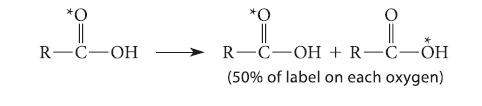
Explain why all efforts to synthesize a carboxylic acid containing the isotope oxygen-18 at only the carbonyl oxygen fail and yield instead a carboxylic acid in which the labeled oxygen is distributed equally between both oxygens of the carboxy group. (*O = 18O) *O R-C-OH *O || R-C-OH + R-C-OH (50%
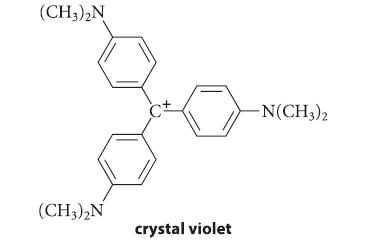
(a) The relatively stable carbocation crystal violet has a deep blue-violet color in aqueous solution. When NaOH is added to the solution, the blue color fades because the carbocation reacts with sodium hydroxide in about 1–2 min to give a colorless product.Show the reaction of crystal violet
A graduate student, Al Kane, has been given by his professor a very precious sample of (2)-3-methylhexane, along with optically active samples of both enantiomers of 4-methylhexanoic acid, each of known absolute configuration.Kane has been instructed to determine the absolute configuration of
Because the radioactive isotope carbon-14 is used at very low (“tracer”) levels, its presence cannot be detected by spectroscopy. It is generally detected by counting its radioactive decay in a device called a scintillation counter.The location of carbon-14 in a chemical compound must be
You are a chemist for Chlorganics, Inc., a company specializing in chlorinated organic compounds. A process engineer, Turner Switchback, has accidentally mixed the contents of four vats containing, respectively, p-chlorophenol, 4-chlorocyclohexanol, p-chlorobenzoic acid, and chlorocyclohexane. The
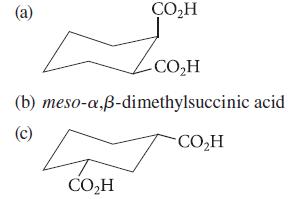
In each case, draw the structure of the cyclic anhydride that forms when the dicarboxylic acid is heated. (a) (b) (c) CO₂H 4 CO₂H CO₂H meso-a,ß-dimethylsuccinic acid CO₂H
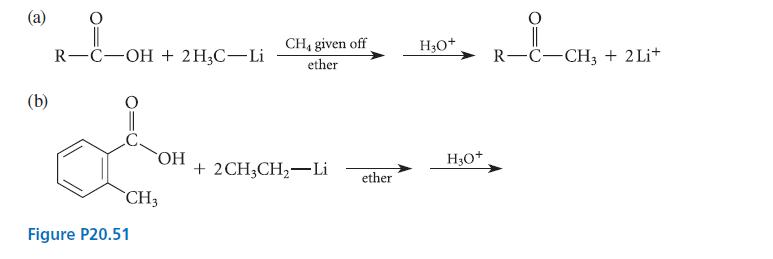
(a) Organolithium reagents such as methyllithium (CH3Li) react with carboxylic acids to give ketones. Two equivalents of the lithium reagent are required, and the ketone does not react further. Suggest a mechanism for this reaction that accounts for these facts.(b) Give the product of the reaction
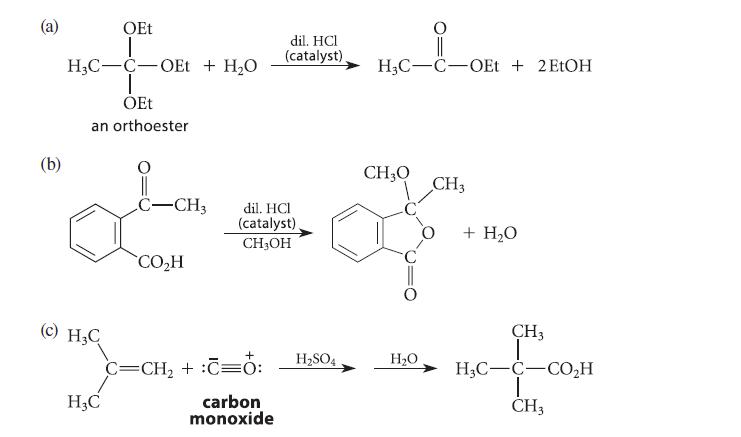
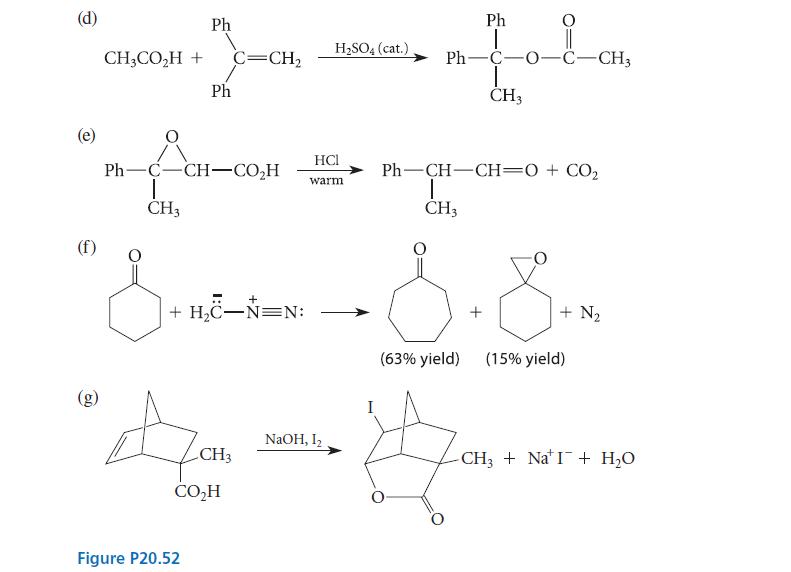
Give a curved-arrow mechanism for each of the reactions given in Fig. P20.52. (a) (b) OEt 1 H3C-C-OEt + H₂O T OEt an orthoester (c) H₂C H3C C-CH3 CO₂H dil. HCl (catalyst) CH3OH + C=CH₂ + :C=O: dil. HCI (catalyst) carbon monoxide H₂SO4 H₂C-C-OEt + 2 EtOH CH₂O H₂O CH3 +
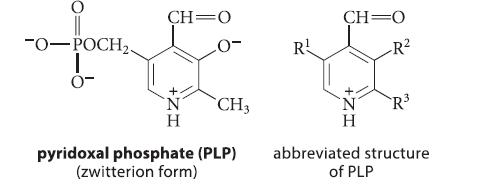
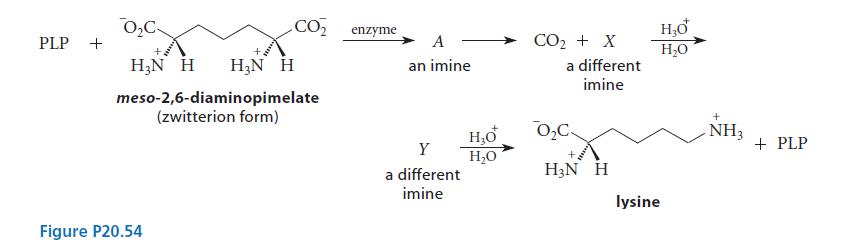
Pyridoxal phosphate (PLP) is a form of vitamin B6.PLP serves as a coenzyme in the enzyme-catalyzed decarboxylation of meso-2,6-diaminopimelic acid, which is the last step in the biosynthesis of the amino acid lysine. The sequence of reactions involved in this process is shown in Fig. P20.54.(a) In
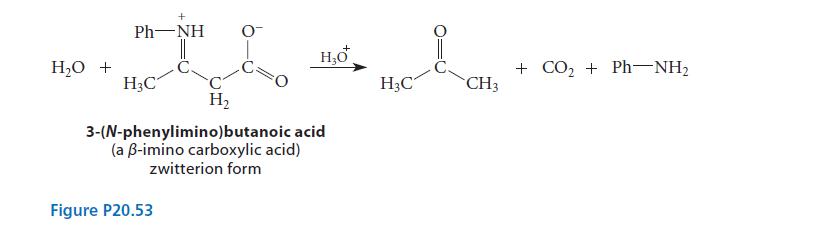
β-Imino carboxylic acids such as the one in Fig. P20.53 decarboxylate very rapidly provided that the pH is neither too low nor too high.(a) Give a curved-arrow mechanism for the decarboxylation reaction shown in Fig. P20.53.(b) Explain why very low or very high pH values reduce the rate of this
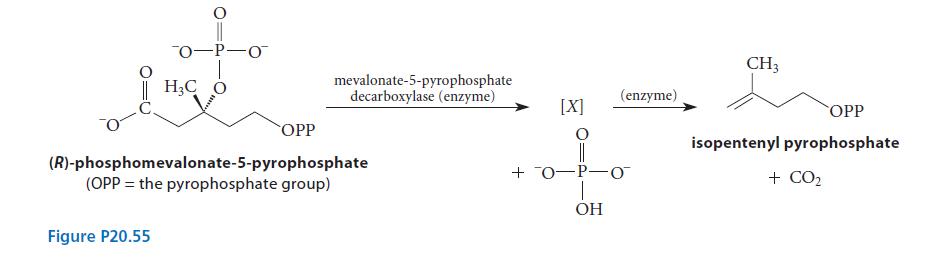
Isopentenyl pyrophosphate, the starting material for isoprenoid and steroid biosynthesis (Sec. 17.6B), is formed biosynthetically by the decarboxylation reaction of (R)-phosphomevalonate-5-pyrophosphate catalyzed by the enzyme mevalonate-5-pyrophosphate decarboxylase, shown in Fig. P20.55. When a
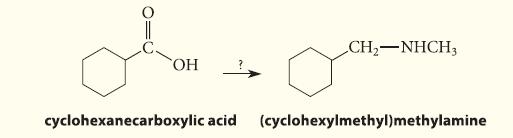
Outline a synthesis of (cyclohexylmethyl)methylamine from cyclohexanecarboxylic acid. 010 OH CH₂-NHCH3 cyclohexanecarboxylic acid (cyclohexylmethyl)methylamine
A water-insoluble hydrocarbon A decolorizes a solution of Br2 in CH2Cl2. The base peak in the EI mass spectrum of A occurs at m/z = 67. The proton NMR of A is complex, but integration shows that about 30% of the protons have chemical shifts in the δ1.8–2.2 region of the spectrum.Treatment of A
Outline a synthesis of pentanoic acid (valeric acid) from 1-butanol. CH3CH₂CH₂CH₂-OH 1-butanol CH3CH₂CH₂CH₂-C-OH pentanoic acid
Give a structure for each of the following compounds. (a) 5-cyanopentanoic acid (b) Isopropyl valerate (c) Ethyl methyl malonate(d) Cyclohexyl acetate (e) N,N-dimethylformamide (f) g-valerolactone(g) Glutarimide (h) a-chloroisobutyryl chloride (i) 3-ethoxycarbonylhexanedioic acid
From what ester and Grignard reagent could 3-methyl-3-pentanol be prepared by a single reaction, followed by protonolysis?
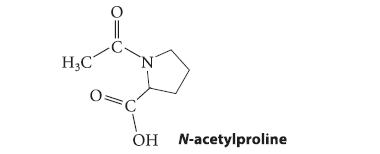
Shown below is one conformation of the amino acid derivative N-acetylproline about the amide bond.(a) Is this the E or the Z conformation about the amide bond?(b) Draw the other conformation about the amide bond. H₂C 0= C 0=C OH N-acetylproline
Draw the structure of an amide that must exist in an E conformation about the carbonyl–nitrogen bond.
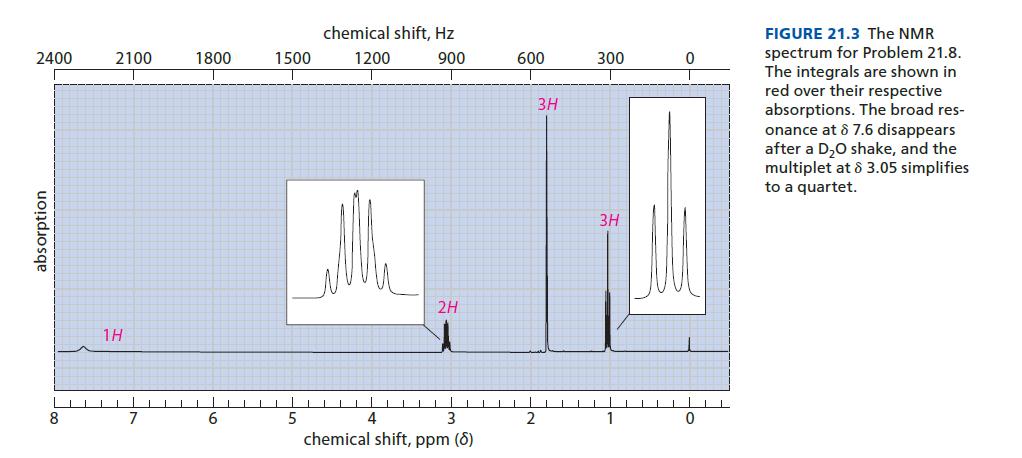
Identify the compound C4H9NO with the proton NMR spectrum given in Fig. 21.3. This compound has IR absorptions at 3300 and 1650 cm–1. 2400 absorption 8 2100 18 7 1800 6 1500 5 chemical shift, Hz 1200 900 T 2H 4 3 chemical shift, ppm (8) 600 2 3H 300 3H 1 0 0 FIGURE 21.3 The NMR spectrum for
(a) Assuming that the difference in the relative boiling points of methyl acetate and 2-butanone (see display above) is caused by the difference in their dipole moments, predict which compound has the greater dipole moment.(b) Use a vector analysis of bond dipoles to show why your answer to part
How would you differentiate between the compounds in each of the following pairs?(a) p-ethylbenzoic acid and ethyl benzoate by IR spectroscopy(b) 2,4-dimethylbenzonitrile and N-methylbenzamide by proton NMR spectroscopy(c) Methyl propionate and ethyl acetate by proton NMR spectroscopy(d)
Show in detail the curved-arrow mechanism for the hydrolysis of N-methylbenzamide (a) In acidic solution; (b) In aqueous NaOH. Assume that each mechanism involves a tetrahedral addition intermediate.
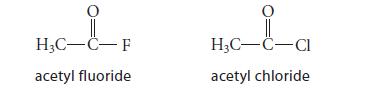
The hydrolysis of acetyl chloride is 7800 times faster than the hydrolysis of acetyl fluoride.Which factor is more important in determining the relative hydrolysis rate: resonance stabilization of the carbonyl compound or polar stabilization of the transition state? Explain how you know.
Using an acid chloride synthesis as a first step, outline a conversion of hexanoic acid into each of the following compounds.(a) Ethyl hexanoate (b) N-methylhexanamide
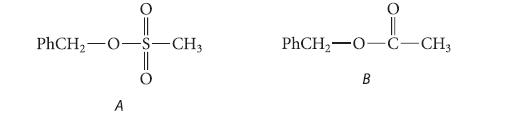
Give the structure of the product in the reaction of each of the following esters with isotopically labeled sodium hydroxide, Na+ 18OH– and explain your reasoning. PhCH₂-O- A -CH3 PhCH₂-0-C-CH3 B
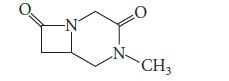
(a) Draw the structure of the product that is formed when the following compound is heated with one equivalent of sodium methoxide in methanol. Explain your reasoning.(b) What would the product be if the same compound were heated with a large excess of aqueous H2SO4? -N N 0 CH3
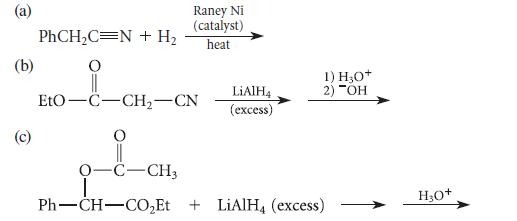
Complete the following reactions by giving the principal organic product(s). (b) (c) Raney Ni (catalyst) heat PhCH₂C=N + H₂ O II EtO-C-CH₂-CN LiAlH4 (excess) 1) H3O+ 2) "OH 0-C-CH3 T Ph-CH-CO₂Et + LiAlH4 (excess) H₂O+
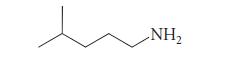
Give the structures of two compounds that would give the following amine after LiAlH4 reduction. NH₂
(a) In the catalytic hydrogenation of some nitriles to primary amines, secondary amines are obtained as by-products:Suggest a mechanism for the formation of this by-product.(b) Explain why ammonia added to the reaction mixture prevents the formation of this by-product.
Which polymer should be more resistant to strong base: nylon-6,6 or the polyester in Eq. 21.73? Explain. ndio HOCH₂CH₂OH + HOC- ethylene glycol -COH terephthalic acid -H₂O heat -OCH₂CH₂0-C- poly(ethylene terephthalate) (a polyester) (21.73)
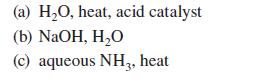
Give the principal organic product(s) expected when ethyl benzoate or the other compound indicated reacts with each of the following reagents. (a) H₂O, heat, acid catalyst (b) NaOH, H₂O (c) aqueous NH3, heat
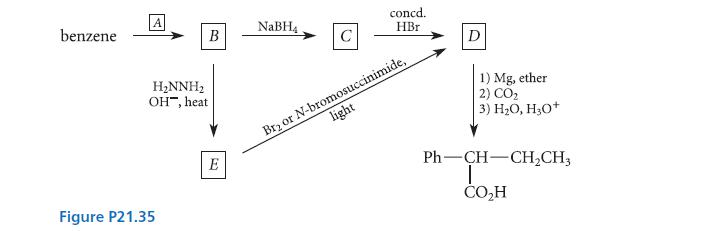
Complete the diagram shown in Fig P21.35 by filling in all missing reagents or intermediates. benzene A B H₂NNH₂ OH, heat Figure P21.35 E NaBH₁ C concd. HBr light Br₂ or N-bromosuccinimide, D 1) Mg, ether 2) CO₂ 3) H₂O, H3O+ Ph–CH–CH,CH, ī CO₂H
Contrast the results to be expected when levulinic acid (4-oxopentanoic acid) is treated in the following different ways: (a) With excess LiAlH4, then H3O+; (b) With excess NaBH4 in methanol, then H3O+.
Give the structures of the aldol addition products expected from the base-catalyzed reaction of acetaldehyde and propionaldehyde.
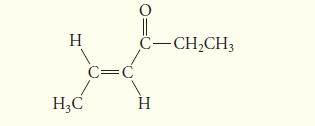
Determine whether the following α,β-unsaturated ketone can be prepared by an aldol reaction. н H3C c= C-CH₂CH3 H
Give the structures of (a) Diethyl malonate (pKa = 12.9) (b) Ethyl acetoacetate (ethyl 3-oxobutanoate, pKa = 10.7), identify the acidic hydrogen in each, and explain why these compounds are much more acidic than ordinary esters.
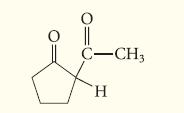
Determine whether the following compound can be prepared by a Claisen condensation or one of its variations; if so, give the possible starting materials. O 0 C-CH3 H
Which is more acidic: the diamide of succinic acid or the imide succinimide? Why?
Write a mechanism involving an enolate ion intermediate for the reaction shown in Eq. 22.6. Explain why only the a-hydrogens are replaced by deuterium. سلك H H H L D₂O/dioxane Et3N: (a base) heat, 48 h D D (22.6)
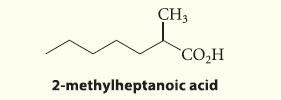
Outline a malonic ester synthesis of the following carboxylic acid: CH3 CO₂H 2-methylheptanoic acid
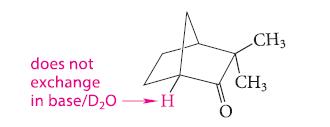
Explain why the following compound does not undergo base-catalyzed exchange in D2O even though it has an a-hydrogen. does not exchange in base/D₂OH O CH3 CH3
Sketch the proton NMR spectrum of 2-butanone, and explain how this spectrum would change if the compound were treated with D2O and a base.
Outline a preparation of 2-methyl-3-pentanone by a reaction sequence that involves at least one Claisen condensation.
Outline a preparation of 2-octanone by a conjugate-addition reaction.
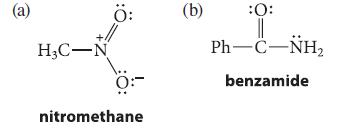
Draw the “enol” isomers of the following compounds. (The “enol” of a nitro compound is called an aci-nitro compound, and the “enol” of an amide is called an imidic acid.) (a) H₂C-N Ö: nitromethane (b) :O: || Ph—C—NH, benzamide
Draw all of the enol forms of 2-butanone. Which is the least stable? Explain why?
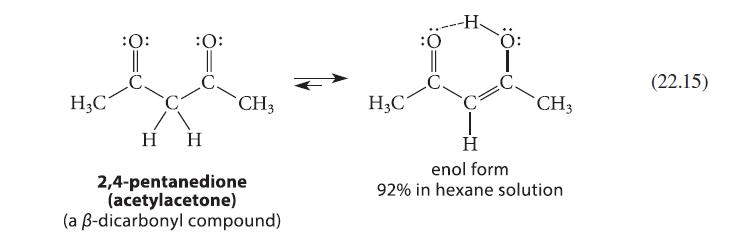
(a) Explain why 2,4-pentanedione (Eq. 22.15) contains much less enol form in water (15%) than it does in hexane (92%).(b) Explain why the same compound has a strong UV absorption in hexane solvent (λmax = 272 nm, ϵ = 12,000), but a weaker absorption in water (λmax = 274 nm, ϵ = 2050).
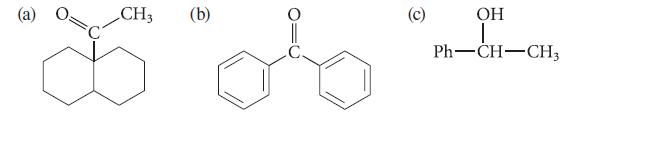
Give the products expected (if any) when each of the following compounds reacts with Br2 in NaOH. CH3 (b) OH T Ph—CH–CH3
Explain why:(a) The rate of iodination of optically active 1-phenyl-2-methyl-1-butanone in acetic acid/HNO3 is identical to its rate of racemization under the same conditions.(b) The rates of bromination and iodination of acetophenone are identical at a given acid concentration.
Give a curved-arrow mechanism for the reaction in Eq. 22.34. Your mechanism should show why two equivalents of NaOH must be used. -OH+CI-CH₂-CO₂H chloroacetic acid 2,4-dichlorophenol (ionized by NaOH) 1) NaOH (2 equiv.) 2) H3O+ Cl O–CH2–COH + 2,4-dichlorophenoxyacetic acid (2,4-D, a
Give the structure of a compound C6H10O2 that gives succinic acid and iodoform on treatment with a solution of I2 in aqueous NaOH, followed by acidification.
What product is formed when(a) Phenylacetic acid is treated first with Br2 and one equivalent of PBr3, then with a large excess of ethanol?(b) Propionic acid is treated first with Br2 and one equivalent of PBr3, then with a large excess of ammonia?
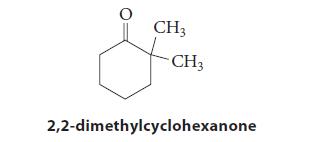
(a) Give the simplified (nonaggregated) ionic structure of the enolate formed by treatment of 2,2-dimethylcyclohexanone with LDA; then, give the product of its directed aldol reaction with acetaldehyde following acidic workup.(b) Two diastereomers of the product in part (a) are formed. Explain. Are
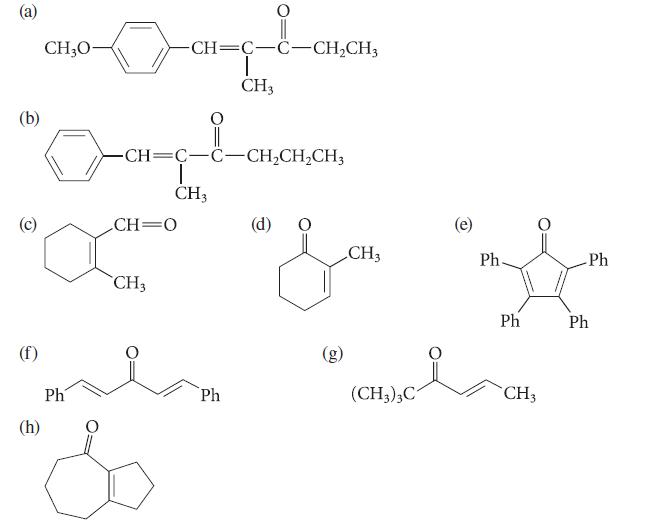
Some of the following molecules can be synthesized in good yield using an aldol condensation (or an aldol addition followed by a dehydration). Identify these and give the structures of the required starting materials. Others cannot be synthesized in good yield by an aldol condensation. Identify
Use the reaction mechanism to deduce the product of the aldol addition reaction of (a) PhCH2CH = O (phenylacetaldehyde);(b) Propionaldehyde.
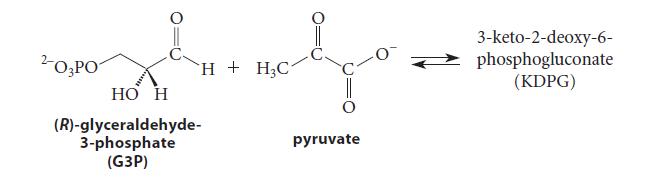
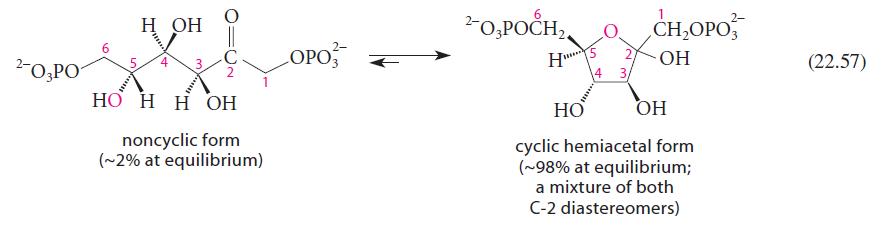
(a) The enzyme “KDPG aldolase” catalyzes the aldol addition reaction between pyruvate and glyceraldehyde-3-phosphate.The reaction is known to involve the formation of an imine (Schiff base) between a lysine residue of the enzyme and pyruvate. Give the product of the reaction (KDPG) and outline
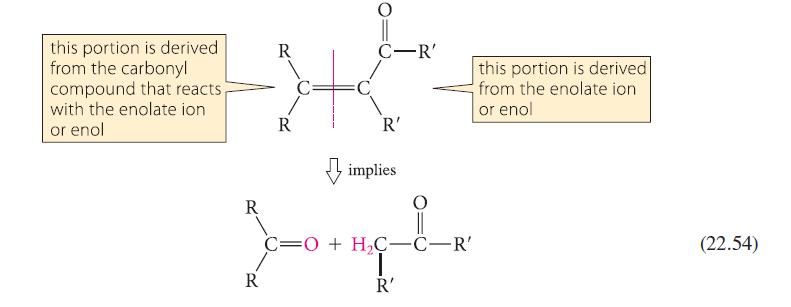
Analyze the aldol condensation in Eq. 22.53 using the method given in Eq. 22.54. Show that four possible aldol condensation products might in principle result from the starting material. Explain why the observed product is the most reasonable one. CH₂CH₂CCH3 O H3C- -SO3H (acid catalyst) CH₂
The following reaction is known to involve enamine formation between the amine catalyst and the carbonyl marked with an asterisk (*).Draw a curved-arrow mechanism for this reaction, using the following steps as your guide.(a) Begin your mechanism by showing the formation of enamine X.(b) Complete
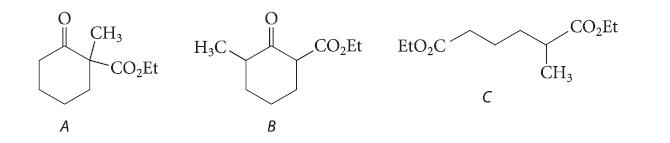
(a) Explain why compound A, when treated with one equivalent of NaOEt, followed by acidification, is completely converted into compound B.(b) Write a curved-arrow mechanism for this conversion.(c) Give the structure of the only product formed when diethyl a-methyladipate (compound C) reacts in the
Give the Claisen condensation product formed in the reaction of each of the following esters with one equivalent of NaOEt, followed by neutralization with acid.(a) Ethyl phenylacetate (b) Ethyl butyrate
Hydroxide ion is about as basic as ethoxide ion. Would NaOH be a suitable base for the Claisen condensation of ethyl acetate?Explain by writing suitable equations.
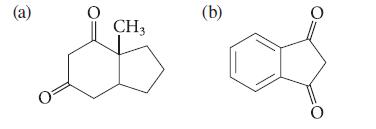
Give the starting material required for the synthesis of each of the following compounds by a Dieckmann condensation. (a) CH3 (b) 0
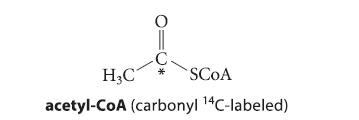
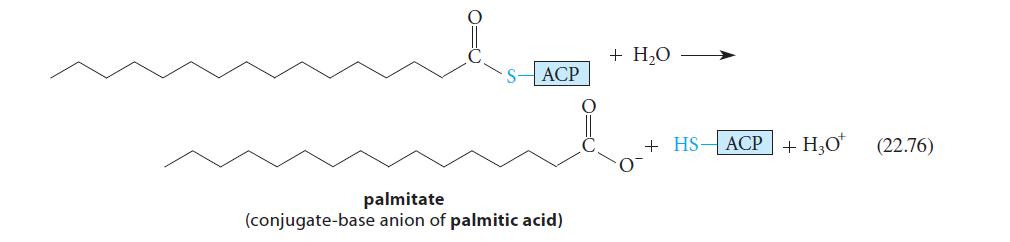
Suppose a sample of acetyl-CoA labeled at the carbonyl carbon with the radioisotope 14C is introduced into the fatty-acid synthase system, and palmitic acid (the 16-carbon fatty acid; Eq. 22.76) is isolated. Which carbons of palmitic acid should be radiolabeled? O į H₂C acetyl-CoA (carbonyl
Using abbreviated structures like the ones used in this section, outline the steps that convert hexanoyl-ACP into octanoyl-ACP during fatty-acid biosynthesis.
Fatty acids are degraded to acetyl-CoA in fatty-acid metabolism. The enzyme that catalyzes this conversion, acyl-CoA acetyl transferase, contains a nucleophilic thiol group in its active site and catalyzes the following reactions (enzyme = E):(a) What is species X?(b) Assuming that acids and bases
Outline a synthesis of each of the following compounds from either diethyl malonate or ethyl acetate. Because the branched amide bases are relatively expensive, you may use them in only one reaction. CH–COH T CH3 (b) -CO,H valproic acid (used in treatment of
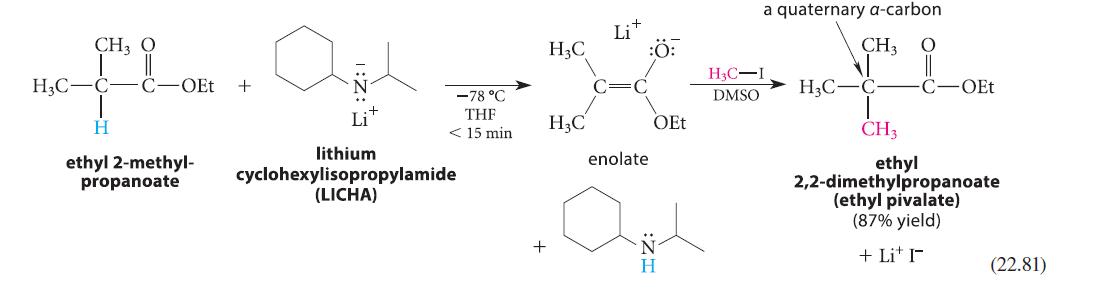
Predict the product formed when the conjugate-base enolate ion of ethyl 2-methylpro panoate (shown in Eq. 22.81) is treated with bromobenzene and a catalytic amount of Pd[P(t-Bu)3]4, and explain the role of the catalyst. CH3 O floo. Agh Lit H3C-C- C -OEt + H ethyl 2-methyl- propanoate -78 °C THF <
Indicate whether each of the following compounds could be prepared by a malonic ester synthesis. If so, outline a preparation from diethyl malonate and any other reagents. If not, explain why.(a) 3-phenylpropanoic acid (b) 2-ethylbutanoic acid (c) 3,3-dimethylbutanoic acid
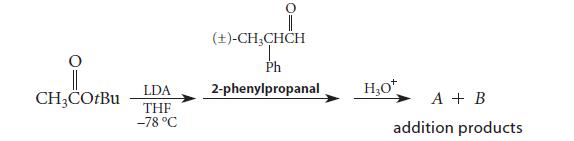
The following aldol addition gives two diastereomeric addition products, A and B, in different amounts. Compounds A and B are both racemates. Give their structures and the mechanisms for their formation. CH3COtBu LDA THF -78 °C (+)-CH₂CHCH Ph 2-phenylpropanal H₂O* A + B addition products
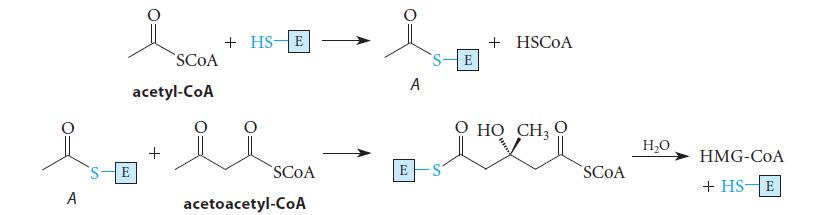
In HMG-CoA biosynthesis (Eq. 22.94), the first step is transfer of the acetyl group from acetyl-CoA to a thiol group of HMGCoA synthase, the catalyzing enzyme (5 E in the equations below). The resulting thioester undergoes aldol addition to acetoacetyl-CoA followed by hydrolysis of the enzyme
Give the addition or condensation products of each of the following reactions indicated by letter, and explain your reasoning. CH3CHCOEt + Zn + Br benzene, heat A
Outline a synthesis of each of the following compounds from ethyl acetoacetate and any other reagents.(a) 5-methyl-2-hexanone (b) 4-phenyl-2-butanone
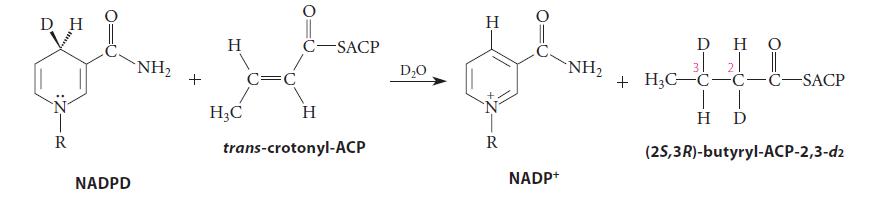
The reducing agent in the double-bond reduction step of fatty-acid biosynthesis (the last step of Eq. 22.74, repeated below) is NADPH. (ACP 5 acyl carrier protein.)(a) Using an abbreviated structure for NADPH, and assuming that acids and bases are available as needed in the enzyme active site, draw
Give the product expected when methyl methacrylate (methyl 2-methylpropenoate) reacts with each of the following reagents.(a) –CN and HCN in MeOH(b) C2H5SH and NaOMe catalyst in MeOH(c) HBr(d) NaOH
Show how ethyl 2-butenoate can be used as a starting material to prepare (a) Ethyl butanoate and (b) 2-buten-1-ol.
Outline a synthesis of each of the following compounds from mesityl oxide (4-methyl-3-penten-2-one). Use an organometallic reagent in at least one step of each synthesis. i (CH3)3CCH₂-C-CH3 (b) OH I (CH3)2C=CH-C(CH3)2 (c) CH3CH₂ CH 3 I C C—CH=C(CH3)2 T CH3
Give the principal organic product expected when 3-buten-2-one (methyl vinyl ketone) reacts with each of the following reagents.(a) HBr(b) H2, Pt (cat.)(c) LiAlH4, then H2O(d) HCN in water, pH 10(e) Et2CuLi, then H3O+(f) Diethyl malonate and NaOEt, then H3O+(g) Ethylene glycol, HCl (cat.)(h)
Give the structure of a compound that meets each criterion.(a) An optically active compound C6H12O that racemizes in base(b) An achiral compound C6H12O that does not give a positive Tollens test(c) An optically active compound C6H12O that neither racemizes in base nor gives a positive Tollens
Give the structure of a compound that meets each criterion.(a) A carbonyl compound C4H8O that gives a precipitate of iodoform with I2 in base.(b) A carbonyl compound C4H8O that does not give a precipitate of iodoform with I2 in base.(c) An alcohol C4H8O that gives a precipitate of iodoform with I2
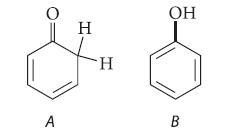
(a) Draw the structure of the conjugate base of each of the following compounds. What is the relationship between the two conjugate bases?(b) Which compound is more acidic? Use an energy diagram to explain your reasoning. 0 A Н Н ОН B
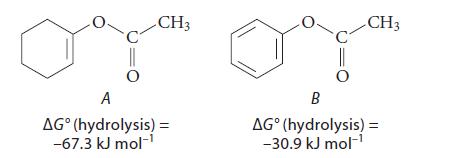
(a) Give the products that result from the ester hydrolysis of 1-cyclohexenyl acetate (compound A) below.(b) As the above data show, the ΔG° for hydrolysis of A is much more negative than the ΔG° for hydrolysis of phenyl acetate (B). Explain why the equilibrium for the hydrolysis of A is much
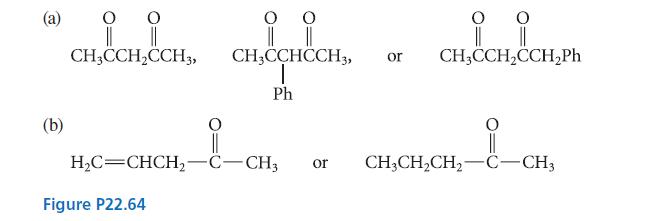
Which compound in each of the sets shown in Fig. P22.64 is most acidic? Explain. (b) O O H₂C=CHCH₂- Figure P22.64 °° O O CH3CCHCCH3, or CH3CCH₂CCH₂Ph T Ph CH3CCH₂CCH3 CH₂C || -C-CH3 || or CH3CH₂CH₂-C-CH3
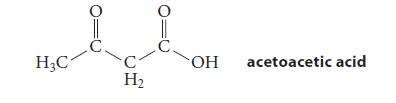
When acetoacetic acid is decarboxylated in the presence of bromine, bromoacetone is isolated (see Fig. P22.68).The rate of appearance of bromoacetone is described by the following rate law:(The reaction rate is zero order in bromine.) Suggest a mechanism for the reaction that is consistent with
(a) Give the structures of the three separable monobromo derivatives that could form when 2-methylcyclohexanone is treated with Br2 in the presence of HBr.(b) In fact, only one of these derivatives is formed. Assuming that this derivative results from bromination of the more stable enol, predict
When 1,3-diphenyl-2-propanone is treated with Br2 in acid, 1,3-dibromo-1,3-diphenyl-2-propanone is obtained in good yield. On further characterization, however, this product proves to have a very broad melting point (79–87 °C), a fact suggesting a mixture of compounds.Account for this
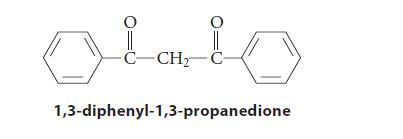
Account for the fact that treatment of 1,3-diphenyl-1,3-propanedione with I2 and NaOH gives a precipitate of iodoform even though it is not a methyl ketone.Besides iodoform, the other product of the reaction, after acidification, is two equivalents of benzoic acid.
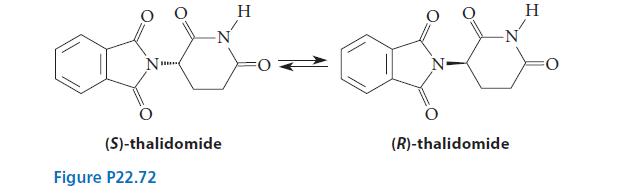
Although one enantiomer of the drug thalidomide is a sedative, the other is teratogenic (causes birth defects). Unfortunately, thalidomide is racemized in the body and, for that reason, both enantiomers are teratogenic. (See Fig.) Assuming the availability of acids and bases as needed, give a
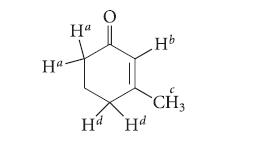
In 3-methyl-2-cyclohexenone the eight hydrogens Ha, Hb, Hc, and Hd can be exchanged for deuterium in CH3O–/CH3OD.(a) Write curved-arrow mechanisms for the basecatalyzed exchange of hydrogens Ha, Hc, and Hd.(b) Explain why hydrogen Hb is much less acidic than hydrogens Ha, Hc, and Hd, even though
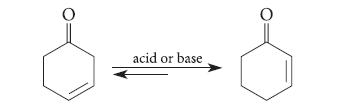
In either acid or base, 3-cyclohexenone comes to equilibrium with 2-cyclohexenone:(a) Explain why the equilibrium favors the α,β-unsaturated ketone over its β,γ-unsaturated isomer.(b) Give a mechanism for this reaction in aqueous NaOH.(c) Give a mechanism for the same reaction in dilute aqueous
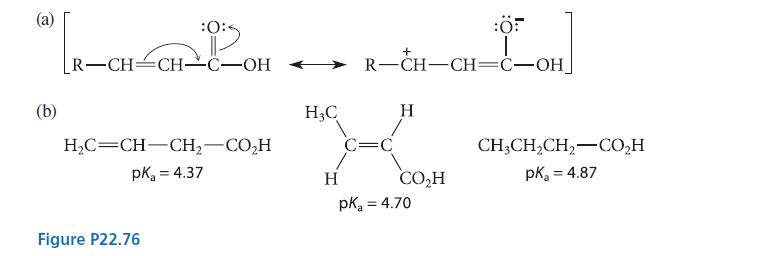
(a) The resonance structures shown in part (a) of Fig. P22.76 can be written for an α,β-unsaturated carboxylic acid. Would this type of resonance interaction increase or diminish the acidity of an α,β- unsaturated carboxylic acid relative to that of an ordinary carboxylic acid? Explain.(b)
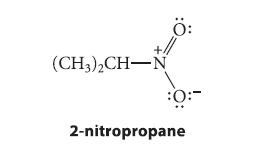
(a) The pKa of 2-nitropropane is 10. Give the structure of its conjugate base, and suggest reason(s) why 2-nitropropane has a particularly acidic C—H bond.(b) When the conjugate base of 2-nitropropane is protonated, an isomer of 2-nitropropane is formed, which, on standing, is slowly converted
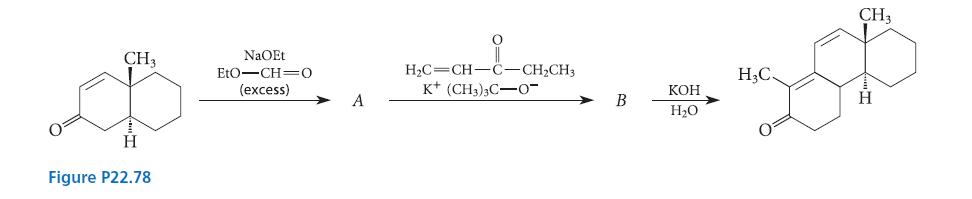
Identify the intermediates A and B in the transformation shown in Fig. P22.78, and show how they are formed. CH₂ H Figure P22.78 NaOEt EtO-CH=0 (excess) A HỌC=CH-C−CH,CH3 K+ (CH3)3C-0- B KOH H₂O H₂C CH3 H
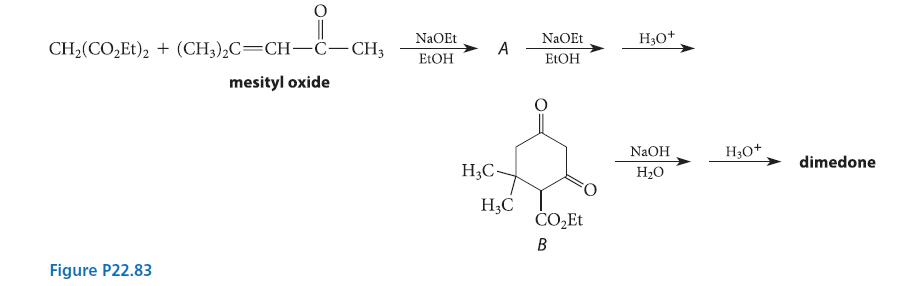
A useful diketone, dimedone, can be prepared in high yield by the synthesis shown in Fig. P22.83. Provide structures for both the intermediate A (a Michael-addition product) and dimedone, and give a curved-arrow mechanism for each step up to compound B. CH,(CO,Et)2 + (CH3)C=CH–C—CH, mesityl
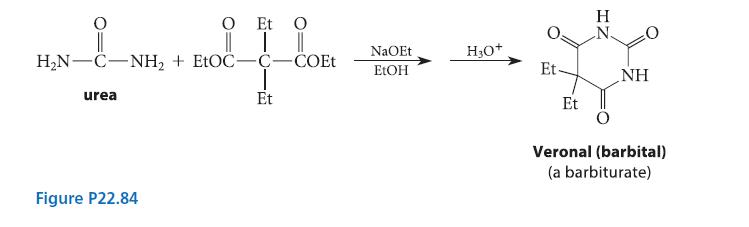
When the diethyl ester of a substituted malonic acid is treated with sodium ethoxide and urea, Veronal, a barbiturate, is formed (see Fig. P22.84). (Barbiturates are hypnotic drugs; some are actively used in modern anes-thesia.) Using the curved-arrow notation, give a mechanism for the Veronal
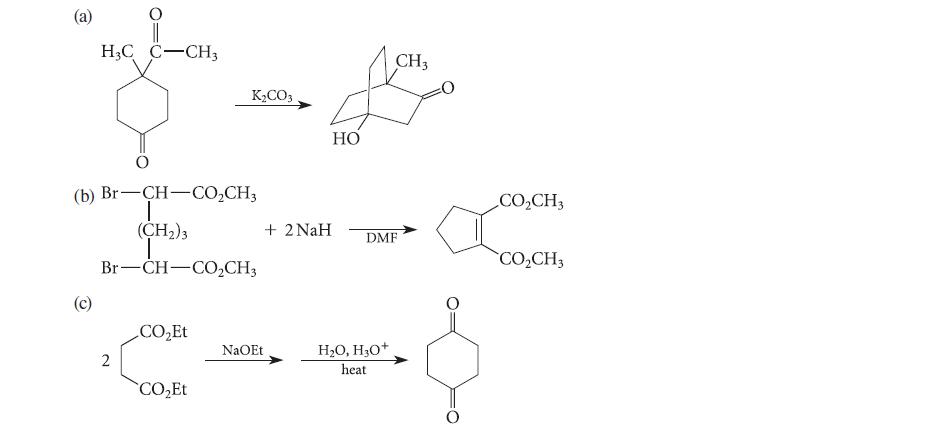
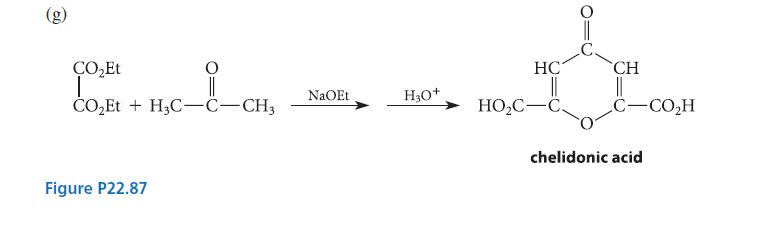
Using the curved-arrow notation, provide mechanisms for each of the reactions given in Fig. P22.87. H3C C-CH3 (c) (b) Br—CH—CO,CH3 I (CH₂)3 T Br–CH–CO,CH3 2 CO₂Et K₂CO3 CO₂Et NaOEt + 2 NaH HO CH3 DMF H₂O, H3O+ heat CO₂CH3 CO₂CH3
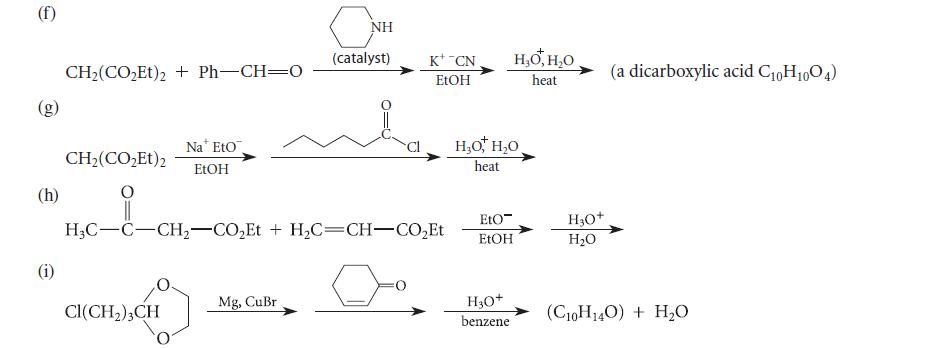
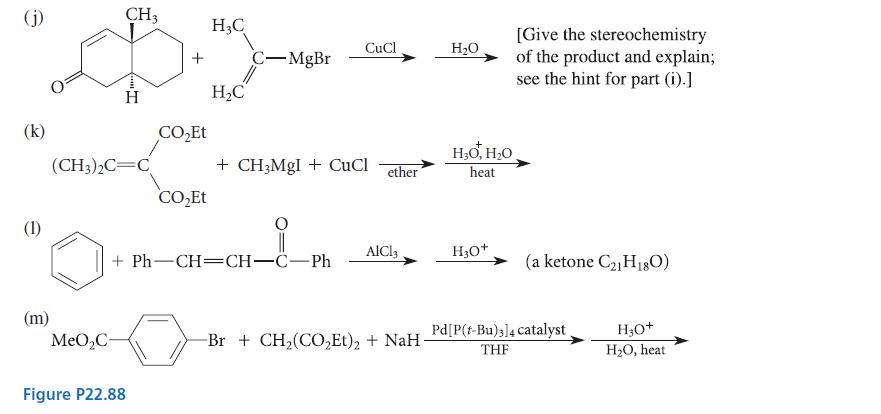
Complete the reactions given in Fig. P22.88 by giving the major organic products. Explain your reasoning. Ⓡ (b) (c) (d) (e) 1-CH₂-i H3C-C-CH₂-C-OEt + Br(CH₂)4Br & y-butyrolactone Cl NO₂ CH3 NO₂ Li* [(CH3)zCH],N: +Na+ :CH(CO₂Et) 2 C-CH3 1) LiAlH4 2) H3O+ CH 31 NaOEt -CO₂Et +
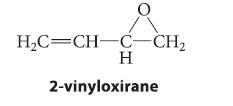
When the epoxide 2-vinyloxirane reacts with lithium dibutylcuprate, followed by protonolysis, a compound A is the major product formed. Oxidation of A with PCC yields B, a compound that gives a positive Tollens test and has an intense UV absorption around 215 nm. Treatment of B with Ag2O, followed
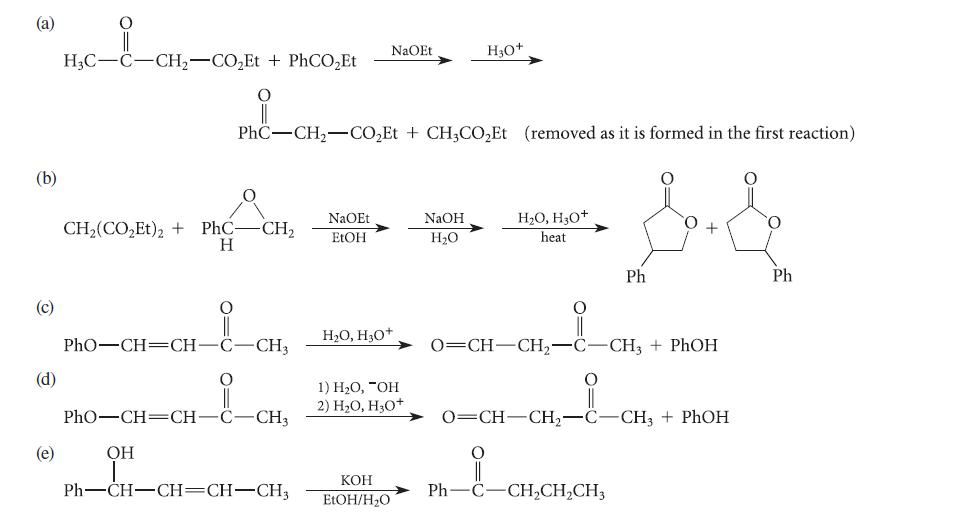
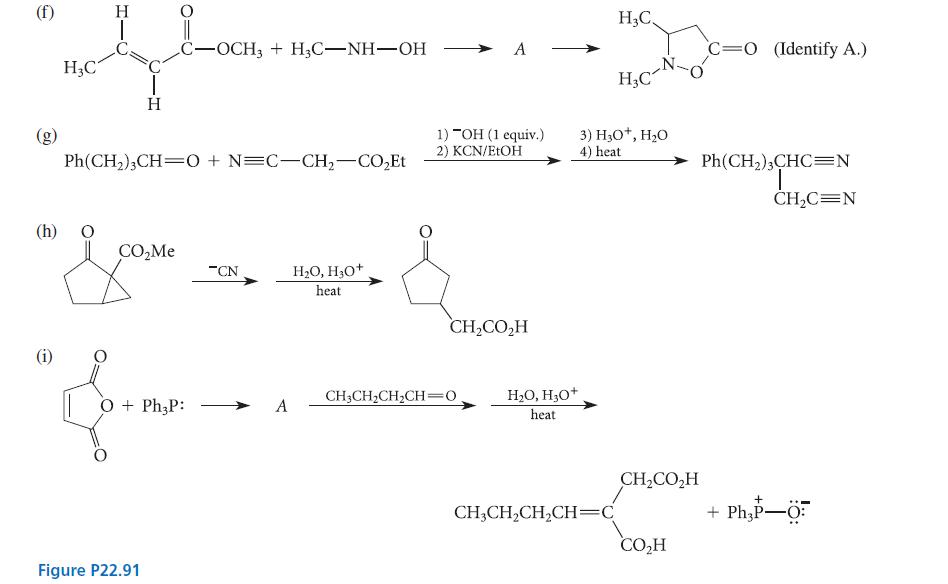
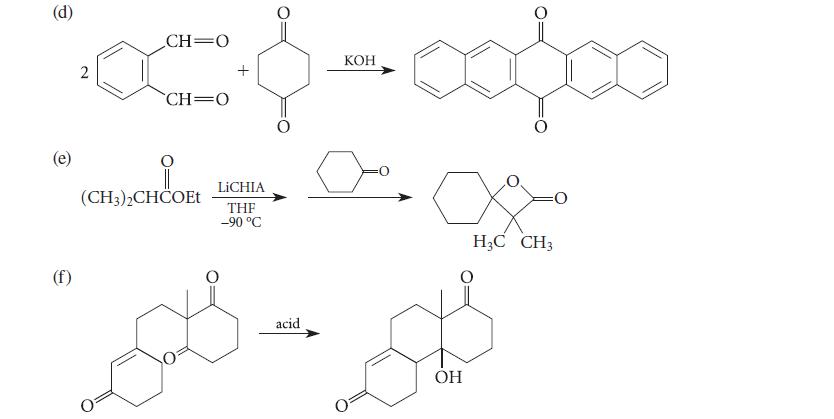
Using the curved-arrow notation, provide mechanisms for each of the reactions given in Fig. P22.91. (a) (b) (c) (d) (e) i H3C-C-CH₂-CO₂Et + PhCO₂Et CH,(CO,Et), + PhC- H PhO—CH=CH OH PhC-CH₂-CO₂Et + CH3CO₂Et (removed as it is formed in the first reaction) && PhO-CH=CH-C
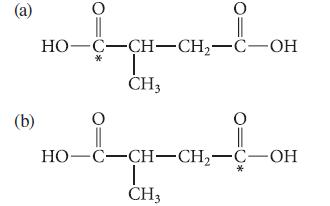
A biochemist, Sal Monella, has come to you to ask your assistance in testing a promising biosynthetic hypothesis. She wishes to have two samples of methylsuccinic acid specifically labeled with 14C as shown in the following structures. The source of the isotope, for financial reasons, is to be the
Showing 500 - 600
of 1324
1
2
3
4
5
6
7
8
9
10
11
12
13
14
Step by Step Answers

 Get 50% OFF
Claim Now
Get 50% OFF
Claim Now

















![rate = k[acetoacetic acid]](https://dsd5zvtm8ll6.cloudfront.net/images/question_images/1701/8/6/1/637657059054d51a1701861634620.jpg)

![(b) (c) (d) (e) 1-CH-i H3C-C-CH-C-OEt + Br(CH)4Br & y-butyrolactone Cl NO CH3 NO Li* [(CH3)zCH],N: +Na+](https://dsd5zvtm8ll6.cloudfront.net/images/question_images/1701/8/6/4/5986570649613da71701864595336.jpg)