New Semester
Started
Get
50% OFF
Study Help!
--h --m --s
Claim Now
Question Answers
Textbooks
Find textbooks, questions and answers
Oops, something went wrong!
Change your search query and then try again
S
Books
FREE
Study Help
Expert Questions
Accounting
General Management
Mathematics
Finance
Organizational Behaviour
Law
Physics
Operating System
Management Leadership
Sociology
Programming
Marketing
Database
Computer Network
Economics
Textbooks Solutions
Accounting
Managerial Accounting
Management Leadership
Cost Accounting
Statistics
Business Law
Corporate Finance
Finance
Economics
Auditing
Tutors
Online Tutors
Find a Tutor
Hire a Tutor
Become a Tutor
AI Tutor
AI Study Planner
NEW
Sell Books
Search
Search
Sign In
Register
study help
physics
modern physics
Modern Physics 6th Edition Paul A. Tipler, Ralph Llewellyn - Solutions
Show that N0 ≈ 1/a for small values of a as asserted in the paragraph above Equation 8-52. *~1-(7) N 3/2 8-52
If the Sun were to become cooler (without changing its radius), the energy density at the surface would decrease according to Equation 8-56. Suppose the Sun’s temperature were to decrease by 5 percent. Compute the fractional change in the rate at which solar energy arrives at Earth. (Assume that
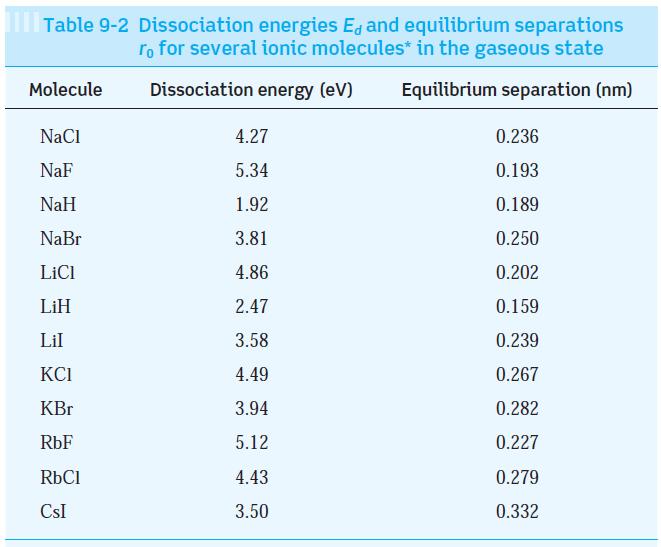
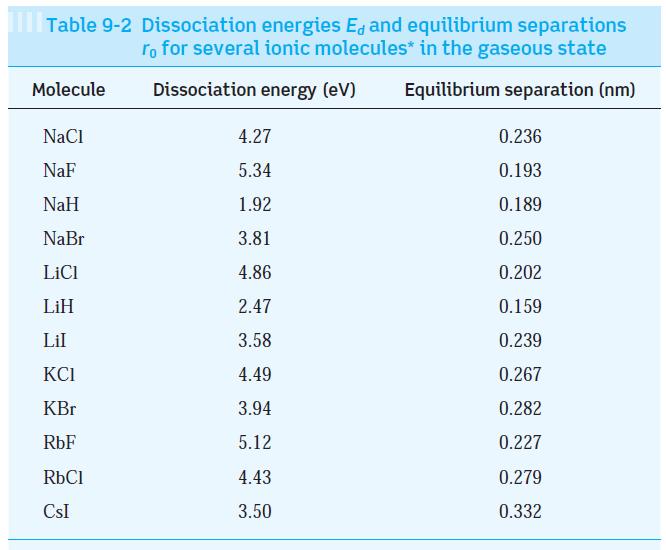
Note in Table 9-2 that the equilibrium separation of the KBr and RbCl molecules is very nearly equal. Compute the exclusion-principle repulsion for these molecules. Table 9-2 Dissociation energies E, and equilibrium separations ro for several ionic molecules* in the gaseous state Dissociation
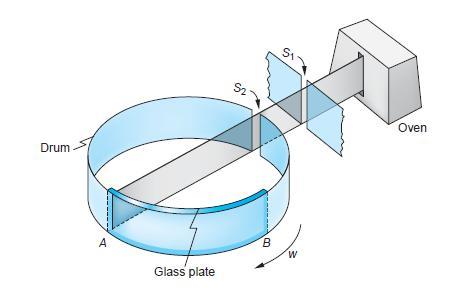
An early method testing Maxwell’s theoretical prediction for the distribution of molecular speeds is shown in Figure 8-34. In 1925 Otto Stern used a beam of Bi2 molecules emitted from an oven at 850 K. The beam defined by slit S1 was admitted into the interior of a rotating drum via slit S2 in
Recalling that the Fermi-Dirac distribution function applies to all fermions, including protons and neutrons, each of which have spin 1/2, consider a nucleus of 22Ne consisting of 10 protons and 12 neutrons. Protons are distinguishable from neutrons, so two of each particle (spin up, spin down) can
What is the ground-state energy of 10 non-interacting bosons in a one-dimensional box of length L?
Make a plot of fFD(E) versus E for(a) T = 0.1TF and (b) T = 0.5TF, where TF = EF/k.
Compute the fraction of helium atoms in the superfluid state at (a) T = Tc /2 and(b) T = Tc /4.
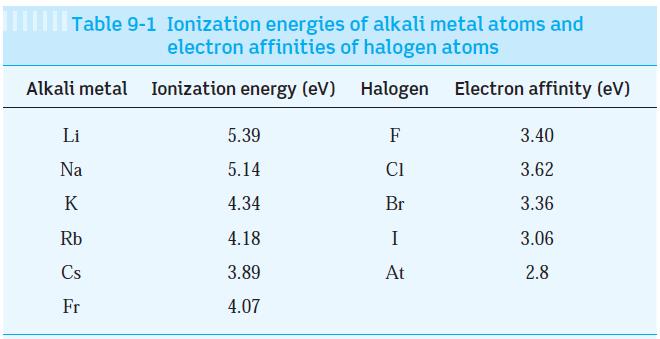
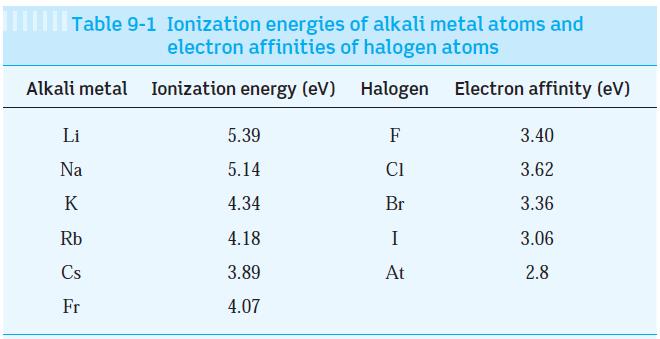
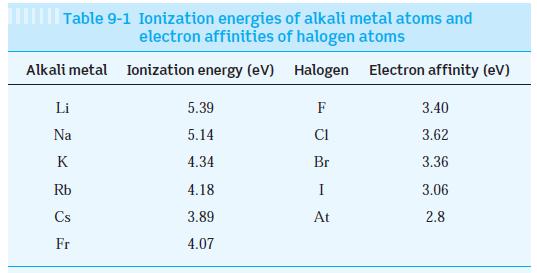
Using the data in Table 9-1, compute the net energy required to transfer an electron between the following pairs of atoms: Cs to F, Li to I, and Rb to Br. Table 9-1 Ionization energies of alkali metal atoms and electron affinities of halogen atoms Ionization energy (eV) Halogen Electron affinity
The depth of the potential well for free electrons in a metal can be accurately determined by observing that the photoelectric work function is the energy necessary to remove an electron at the top of the occupied states from the metal; an electron in such a state has the Fermi energy. Assuming
Carry out the integration indicated in Equation 8-43 to show that a is given by Equation 8-44. N = √ √ ² ₁². ng(E) dE= = √ BBC 0 0 SB(E)fg(E) dE= Гво 8B(E)e e dE 8-43
The speed distribution of molecules in a container is the Maxwell distribution vm, (v) , and vrms. The number with speed v that hit the wall in a given time is proportional to the speed v and to f (v). Thus, if there is a very small hole in the wall (too small to have much effect on the
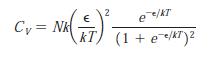
Consider a system of N particles that has only two possible energy states, E1 = 0 and E2 = ∈. The distribution function is fi = Ce-Ei/kT.(a) What is C for this case?(b) Compute the average energy (E) and show that (E) → 0 as T → 0 and (E) → ∈/2 as T → ∞. (c) Show that the heat
This problem is related to the equipartition theorem. Consider a system in which the energy of a particle is given by E = Au2, where A is a constant and u is any coordinate or momentum that can vary from - ∞ to + ∞.(a) Write the probability of the particle having u in the range du and calculate
If the exclusion-principle repulsion in Problem 9-6 is given by Equation 9-2, compute the coefficient A and the exponent n.Problem 9-6Compute the Coulomb energy of the KBr molecule at the equilibrium separation. Use that result to compute the exclusion-principle repulsion at r0. Eex || 9-2
Using the data in Tables 9-1 and 9-2, estimate the dissociation energy of the three ionically bonded molecules CsI, NaF, and LiI. Your results are probably all higher than those in Table 9-2. Explain why.Tables 9-1Tables 9-2 Table 9-1 Ionization energies of alkali metal atoms and electron
Calculate the average value of the magnitude of vx from the Maxwell distribution.
Show that fFD(E) → fB (E) for E >> EF.
Compute the Coulomb energy of the KBr molecule at the equilibrium separation. Use that result to compute the exclusion-principle repulsion at r0.
Hydrogen can bond covalently with many atoms besides those listed in Tables 9-3 and 9-5, including sulfur, tellurium, phosphorus, and antimony. What would you expect to be the chemical formula of the resulting molecules?
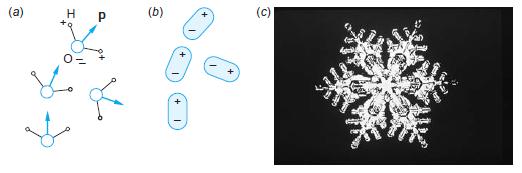
The dipole moment p of the water molecule, illustrated in Figure 9-19, is actually the vector sum of two equal dipoles p1 and p2 directed from the oxygen atom to each of the hydrogen atoms. The measured value of the angle between the two hydrogen atoms is 104.5°, the O–H bond length is 0.0956
The polarizability of Ne is 1.1 x 10-37 m . C2/N.(a) At what separation would the dipole-dipole energy between a molecule of H2O and an atom of Ne in the atmosphere be sufficient to withstand collision with an N2 molecule moving with the average kinetic energy for T = 300 K? (b) At what
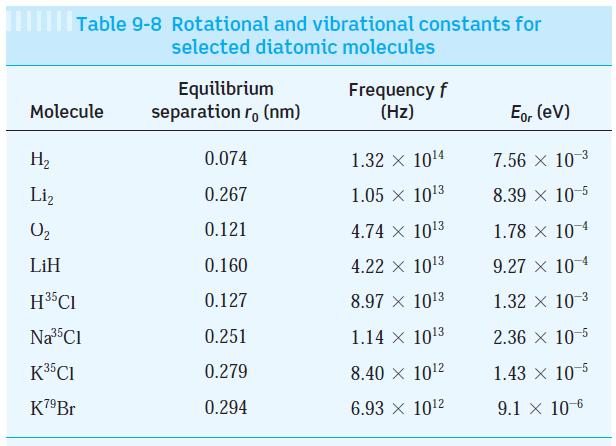
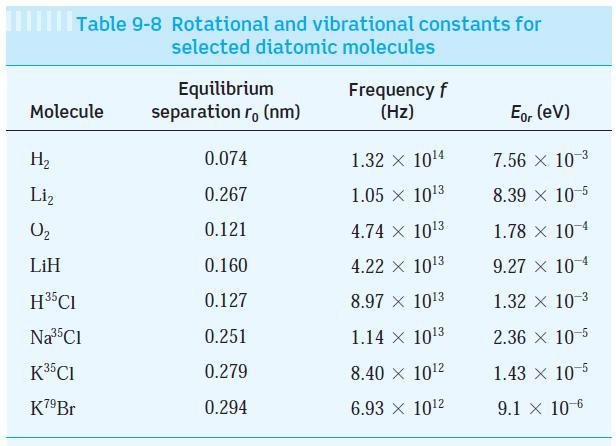
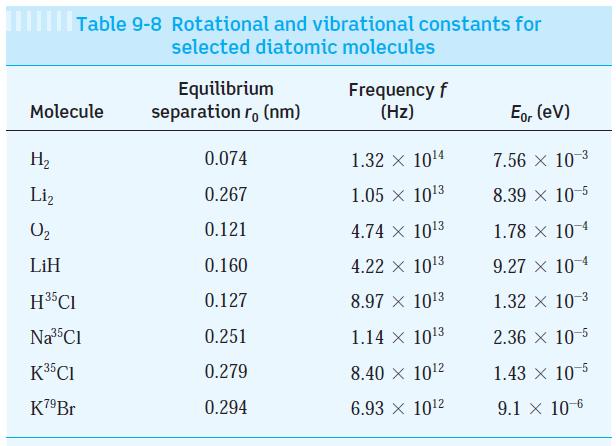
Use the data from Table 9-8 to find the force constant for(a) The H35Cl and (b) The K79Br molecules. Table 9-8 Rotational and vibrational constants for selected diatomic molecules Molecule H₂ Liz 0₂ LiH H³5Cl Na ³5C1 K35Cl K7⁹Br Equilibrium separation r,
Using data from Table 9-8,(a) Compute the vibrational energy of the LiH molecule in its lowest vibrational state.(b) Compute the reduced mass of LiH.(c) Determine the force constant for LiH.(d) From those results, compute an estimate of the LiH bond length and compare your result with the value in
The hydrogen bonds linking the two helical strands of the DNA have bond strengths of about 0.3 eV, or approximately 15 percent of the strengths of the ionic/covalent bonds along the strands.(a) What is the wavelength of a photon with sufficient energy to break this bond? (b) In what part of
Would you expect the following molecules to be polar or nonpolar? Explain your answer in each case.(a) NaCl;(b) O2.
For the O2 molecule, the separation of the atoms is 0.121 nm. Calculate the characteristic rotational energy E0r = ћ2/2I in eV.
The CO molecule undergoes a transition from the v = 1 vibrational state to the v = 0 state.(a) What is the wavelength of the emitted photon? (b) At what temperature would 1 percent of the CO molecules be in the v = 1 vibrational state?
Calculate the reduced mass in unified mass units for(a) H2, (b) N2, (c) CO, and(d) HCl.
The characteristic rotational energy E0r = ћ2/2I for KCl is 1.43 x 10⁻⁵ eV.(a) Find the reduced mass for the KCl molecule. (b) Find the separation distance of the K+ and Cl- ions.
The equilibrium separation of HBr is 0.141 nm. Treating the Br atom as fixed, compute the four lowest rotational energies of the HBr molecule and show them in a carefully sketched energy-level diagram.
The vibrational spectrum of Li2 consists of a series of equally spaced lines in the microwave region 1.05 x 10¹³ Hz apart. Compute the equilibrium separation for Li2.
Compute the difference in the rotational energy E0r for K35Cl and K37Cl.
What type of bonding mechanism would you expect for(a) NaF,(b) KBr, (c) N2, and (d) Ne?
For NaCl compute (a) The energy in eV necessary to excite the first rotational state and (b) The wavelength and frequency of the photon emitted in the transition back to the ground state. (Assume that the molecule is in the electronic and vibrational ground states.)
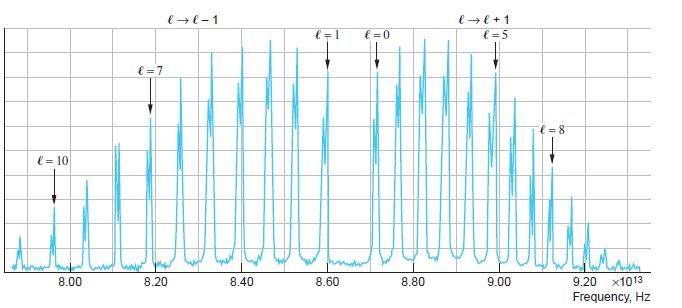
A sample of HCl is illuminated with light of wavelength 435.8 nm. (a) Compute the wavelengths of the four lines in the rotational Raman spectrum that are closest to that of the incident light. (b) Compare the difference in their frequencies with the corresponding lines in Figure
The five lowest levels of a certain monatomic gas have the values E1 = 0, E2 = 3.80 eV, E3 = 4.30 eV, E4 = 7.2 eV, and E5 = 7.5 eV.(a) If the temperature is high enough that all levels are occupied and the gas is illuminated with light of wavelength 2400 nm, what transitions can occur?(b) Which of
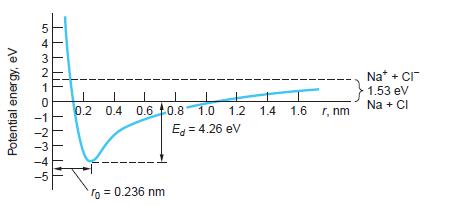
(a) Calculate the electrostatic potential energy of Na+ and Cl- ions at their equilibrium separation distance of 0.24 nm, assuming the ions to be point charges. (b) What is the energy of repulsion at this separation? (c) Assume that the energy of repulsion is given by Equation 9-2. From
A hydrogen discharge tube is operated at about 300 K in the laboratory in order to produce the Balmer series. Compute the ratio of the probability for spontaneous emission of the Ha line to that for stimulated emission.
Determine the ratio of the number of molecules in the v = 1 state to the number in the v = 0 state for a sample of O2 molecules at 273 K. Repeat the calculation for 77 K. (Ignore rotational motion.)
(a) Find the exclusion-principle repulsion for NaCl. (b) Use Equation 9-2 to find A and n. Ex
The nuclei in the F2 molecule are separated by 0.14 nm.(a) Compute the energy separations and sketch an energy level diagram for the lowest four rotational levels with v = 0. (b) What are the wavelengths of possible transitions between these levels?
Use data from Table 9-8 to compute the first excited vibrational and the first excited rotational states of (a) The Li2 and (b) The K79Br molecules. Table 9-8 Rotational and vibrational constants for selected diatomic molecules Molecule H₂ Liz 0₂ LiH H³5Cl Na
A particular atom has two energy levels with a transition wavelength of 420 nm. At 297 K there are 2.5 x 10²¹ atoms in the lower state. (a) How many atoms are in the upper state? (b) Suppose that 1.8 x 10²¹ of the atoms in the lower state are pumped to the upper state. How much energy
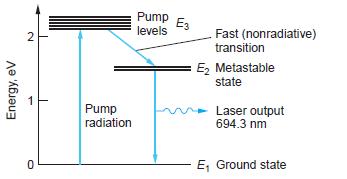
Notice in Figure 9-33d that the level E2 in Cr3+ is a doublet, the pair of states being separated by only 0.0036 eV. (a) Assume that all of the Cr3+ ions in a certain laser are in the three states E1 and E2 (doublet) and compute the relative populations of these levels.(b) If only the lower
The angular width of a ruby laser beam is determined by Rayleigh’s criterion (see Problem 9-39). For this laser the diameter of the ruby rod is 1.0 cm and λ = 694.3 nm.(a) What is the diameter of the spot projected by the ruby laser at a distance of 1.0 km?(b) If the laser is emitting 1018
An H2 in its ground electronic, vibrational, and rotational state absorbs a photon of frequency 1.356 x 10¹⁴ Hz, undergoing a transition to the v = 1, ℓ = 1 state while remaining in the electronic ground state. It then undergoes a transition to the v = 0, ℓ = 2 state, emitting a photon of
The microwave spectrum of CO has lines at 0.86 mm, 1.29 mm, and 2.59 mm.(a) Compute the photon energies and carefully sketch the energy-level diagram that corresponds. What molecular motion produces these lines?(b) Compute the equilibrium separation (bond length) of CO.
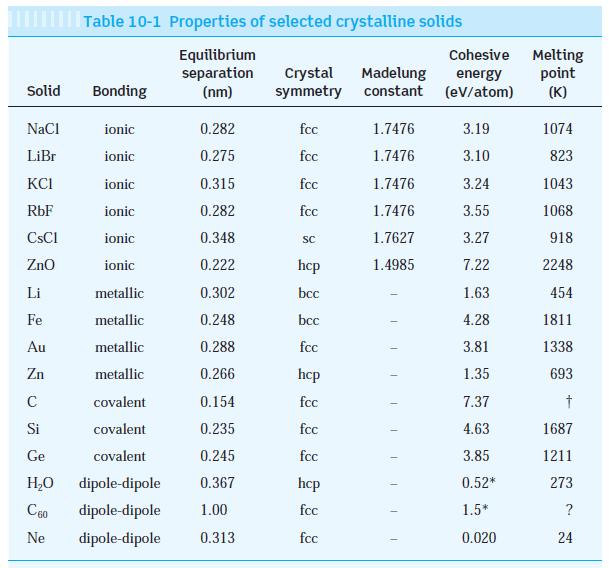
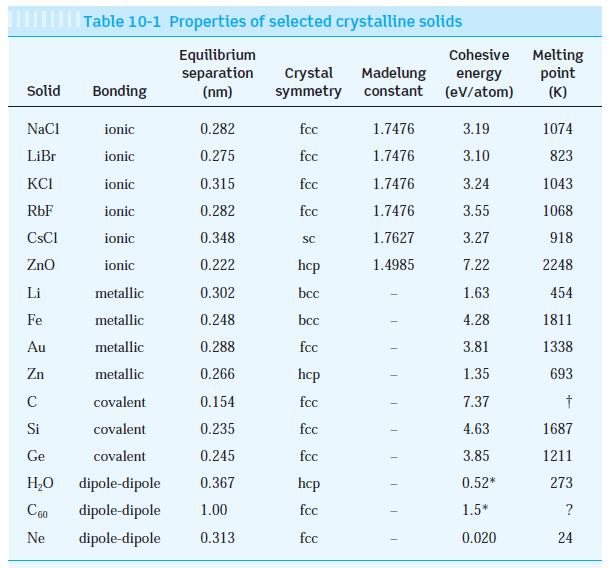
Using the data for ionic and metallic crystals from Table 10-1, (a) Graph cohesive energy versus melting point and put the best straight line through the points.(b) Determine the cohesive energies of cobalt, silver, and sodium, whose melting temperatures are 1495°C, 962°C, and 98°C,
The crystal structure of KCl is the same as that of NaCl. (a) Calculate the electrostatic potential energy of attraction of KCl, assuming that r0 is 0.314 nm.(b) Assuming that n = 9 in Equation 10-6, calculate the dissociation energy in eV per ion pair and in kcal/mol. (c) The measured
The observed dissociation energy of solid LiBr is 788 kJ/mol. Compute the cohesive energy of LiBr and compare the result with the value in Table 10-1. (Ionization energies for Li and Br are in Table 9-1.)Table 10-1Table 9-1
(a) Using λ = 0.37 nm and (v) = 1.08 x 10⁵ m/s at T = 300 K, calculate σ and ρ for copper from Equations 10-13. Using the same value of λ, find σ and ρ at (b) T = 200 K and(c) T = 100 K. Р me(v) nex and σ пе² me(v) 10-13
Figure 10-56 shows a one-dimensional ionic lattice consisting of doubly charged positive ions and twice as many singly charged negative ions. Compute the Madelung constant for this “crystal” to within 1 percent.Figure 10-56 © a
The density of NaCl (an fcc crystal) is 2.16 g/cm3. Find the distance between ions that are nearest neighbors.
Use Equation 10-29 with a = π2/4 to calculate the average energy of an electron in copper at T = 300 K. Compare your result with the average energy at T = 0 and the classical result of (3/2)kT. 3 kT U = NEF + aNkT EF 10-29
Find (a) The current density and (b) The drift velocity if there is a current of 1 mA in a No. 14 copper wire. (The diameter of No. 14 wire, which is often used in household wiring, is 0.064 in = 0.163 cm.)
Find the average energy of the electrons at T = 0 K in(a) Copper (EF = 7.06 eV) and (b) Li (EF = 4.77 eV).
The magnetic polarization P of any material is defined as P = (ρ+ - ρ-) /ρ. Compute the high-temperature polarization of a paramagnetic solid at T = 200 K in a magnetic field of 2.0 T.
For what value of bias voltage Vb does the exponential in Equation 10-49 have the value (a) 5 and(b) 0.5 for T = 200 K? Inet Io(eteVkT-1) = 10-49
(a) The energy gap between the valence band and the conduction band in silicon is 1.14 eV at room temperature. What is the wavelength of a photon that will excite an electron from the top of the valence band to the bottom of the conduction band? Do the same calculation for(b) Germanium, for which
(a) The energy-band gap in germanium is 0.72 eV. What wavelength range of visible light will be transmitted by a germanium crystal? (Think about it carefully!)(b) Now consider a crystal of an insulator whose energy band gap is 3.6 eV. What wavelength range of visible light will this crystal
A strip of tin is 10 mm wide and 0.2 mm thick. When a current of 20 A is established in the strip and a uniform magnetic field of 0.25 T is oriented perpendicular to the plane of the strip, a Hall voltage of 2.20 mV is measured across the width of the strip. Compute(a) The density of charge
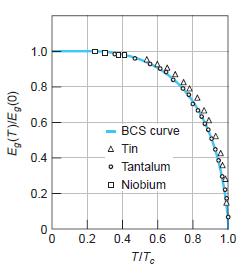
Use the BCS curve in Figure 10-53 to estimate the energy gaps in (a) Tin, (b) Niobium, (c) Aluminum, and(d) Zinc, all at T = 0.5Tc. Eg(T)/Eg(0) 1.0 0.8 0.6 0.4 0.2 0 0 00 00 0.2 • Dolob & Polo 68. - BCS curve A Tin • Tantalum □ Niobium 0.4 0.6 TIT 0.8 1.0
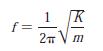
The quantity k is the force constant for a “spring” consisting of a line of alternating positive and negative ions. If these ions are displaced slightly from their equilibrium separation r0, they will vibrate with a frequency(a) Use the values of a, n, and r0 for NaCl and the reduced mass for
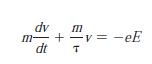
Consider a model for a metal in which the lattice of positive ions forms a container for a classical electron gas with n electrons per unit volume. In equilibrium, the average electron velocity is zero, but the application of an electric field produces an acceleration of the electrons. If we use a
Compute the fractional change in the current through a pn junction diode when the forward bias is changed from +0.1 V to +0.2 V.
When light of wavelength no larger than 484 nm illuminates a CdS solar cell, the cell produces electric current. Determine the energy gap in CdS.
Expressing the temperature T as a fraction of the critical temperature Tc, according to BCS theory at what temperature is(a) Bc(T) = 0.1Bc(0), (b) Bc(T) = 0.5Bc(0), (c) Bc(T) = 0.9Bc(0)?
Estimate the Fermi energy of zinc from its electronic molar heat capacity of (3.74 x 10⁻⁴ J/mol . K)T.
Imagine a cubic crystal like NaCl, with a negative charge at the center of a Cartesian coordinate system with scale units equal to the interatomic distance.(a) Show that an ion at a position r units along the x axis, s units along the y axis, and t units along the z axis has a charge of e(-1)r .
High-purity germanium (HPGe) crystals are used as detectors for x rays and gamma rays. On interacting with the crystal, incoming photons produce electron-hole pairs, exciting many electrons across the 0.72 eV energy gap into the conduction band. The decay of the radioisotope Co results in the
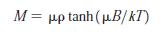
(a) Show that for a paramagnetic solid with electron energies given by Equation 10-33, the magnetization per unit volume M is given by(b) For μB << kT show that the susceptibility is given by Equation 10-35. M= up tanh(uB/KT)
Find the de Broglie wavelength of a neutron of kinetic energy 0.02 eV (this is of the order of magnitude of kT at room temperature).
A free proton moves back and forth between rigid walls separated by a distance L = 0.01 nm. (a) If the proton is represented by a one-dimensional standing de Broglie wave with a node at each wall, show that the allowed values of the de Broglie wavelength are given by λ = 2L/n, where n is a
What must be the kinetic energy of an electron if the ratio of its de Broglie wavelength to its Compton wavelength is (a) 102, (b) 0.2, and (c) 10-3?
Compute the wavelength of a cosmic-ray proton whose kinetic energy is (a) 2 GeV(b) 200 GeV.
What is the Bragg scattering angle φ for electrons scattered from a nickel crystal if their energy is (a) 75 eV,(b) 100 eV?
Compute the kinetic energy of a proton whose de Broglie wavelength is 0.25 nm. If a beam of such protons is reflected from a calcite crystal with crystal plane spacing of 0.304 nm, at what angle will the first-order Bragg maximum occur?
(a) The scattering angle for 50 eV electrons from MgO is 55.6º. What is the crystal spacing D? (b) What would be the scattering angle for 100 eV electrons?
A certain crystal has a set of planes spaced 0.30 nm apart. A beam of neutrons strikes the crystal at normal incidence and the first maximum of the diffraction pattern occurs at φ = 42º. What are the de Broglie wavelength and kinetic energy of the neutrons?
Two harmonic waves travel simultaneously along a long wire. Their wave functions are y1 = 0.002cos (8.0x - 400t) and y2 = 0.002cos (7.6x - 380t), where y and x are in meters and t in seconds.(a) Write the wave function for the resultant wave in the form of Equation 5-15. (b) What is the phase
A beam of electrons with kinetic energy 350 eV is incident normal to the surface of a KCl crystal, which has been cut so that the spacing D between adjacent atoms in the planes parallel to the surface is 0.315 nm. Calculate the angle φ at which diffraction peaks will occur for all orders possible.
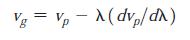
(a) Starting from Equation 5-1, show that the group velocity can also be expressed as(b) The phase velocity of each wavelength of white light moving through ordinary glass is a function of the wavelength; that is, glass is a dispersive medium. What is the general dependence of vp on λ in glass? Is
Information is transmitted along a cable in the form of short electric pulses at 100,000 pulses/s. (a) What is the longest duration of the pulses such that they do not overlap?(b) What is the range of frequencies to which the receiving equipment must respond for this duration?
In one of G. Gamow’s Mr. Tompkins tales, the hero visits a “quantum jungle” where h is very large. Suppose that you are in such a place where h = 50 J . s. A cheetah runs past you a few meters away. The cheetah is 2 m long from nose to tail tip and its mass is 30 kg. It is moving at 40 m/s.
The decay of excited states in atoms and nuclei often leave the system in another, albeit lower-energy, excited state. (a) One example is the decay between two excited states of the nucleus of Ti. The upper state has a lifetime of 1.4 ps, the lower state 3.0 ps. What is the fractional
The London “bobby” whistle has a frequency of 2500 Hz. If such a whistle is given a 3.0 s blast, (a) What is the uncertainty in the frequency? (b) How long is the wave train of this blast? (c) What would be the uncertainty in measuring the wavelength of this blast? (d) What
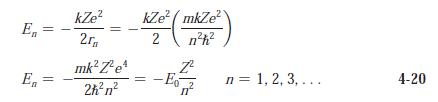
Show that Equation 4-19 for the radius of the first Bohr orbit and Equation 4-20 for the magnitude of the lowest energy for the hydrogen atom can be written aswhere λc = h/mc is the Compton wavelength of the electron and a = ke2/ћc is the fine-structure constant. Use these expressions to check
If the angular momentum of Earth in its motion around the Sun were quantized like a hydrogen electron according to Equation 4-17, what would Earth’s quantum number be? How much energy would be released in a transition to the next lowest level? Would that energy release (presumably as a gravity
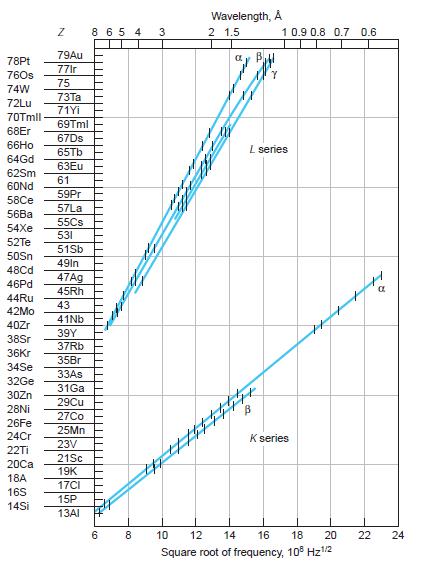
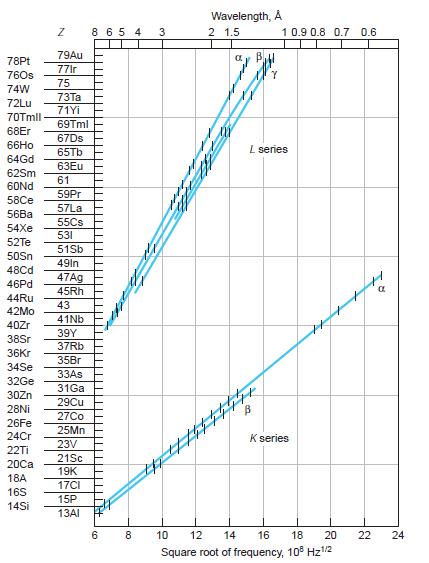
Moseley pointed out that elements with atomic numbers 43, 61, and 75 should exist and (at that time) had not been found. (a) Using Figure 4-19, what frequencies would Moseley’s graphical data have predicted for the Ka x ray for each of these elements?(b) Compute the wavelengths for these
On the average, a hydrogen atom will exist in an excited state for about 10-8s before making a transition to a lower energy state. About how many revolutions does an electron in the n = 2 state make in 10-8s?
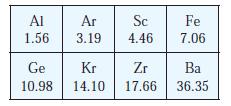
Construct a Moseley plot similar to Figure 4-19 for the Kβ x rays of the elements listed below (the x-ray energies are given in keV):Determine the slope of your plot, and compare it with the Kβ line in Figure 4-19.Figure 4-19 Al Ar 1.56 3.19 Ge Kr 10.98 14.10 Sc 4.46 Zr 17.66 Fe 7.06 Ba 36.35
The wavelength of the Ka x-ray line for an element is measured to be 0.0794 nm. What is the element?
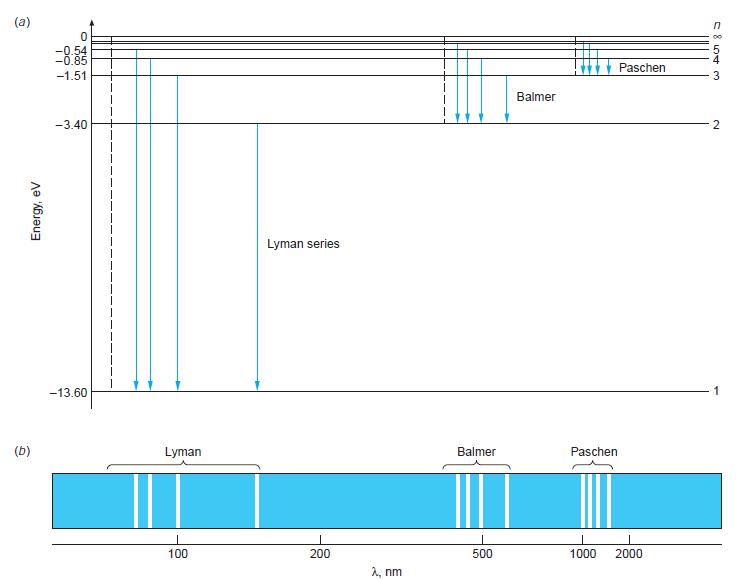
Singly ionized helium He+ is hydrogenlike. (a) Construct a carefully scaled energy-level diagram for He+ similar to that in Figure 4-16, showing the levels for n = 1, 2, 3, 4, 5, and ∞. (b) What is the ionization energy of He+? (c) Compute the difference in wavelength between each
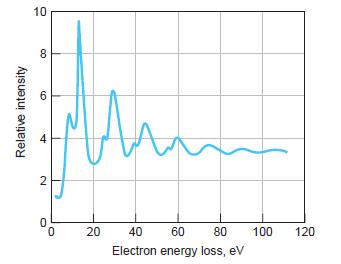
Using the data in Figure 4-24b and a good ruler, draw a carefully scaled energy-level diagram covering the range from 0 eV to 60 eV for the vibrational states of this solid. What approximate energy is typical of the transitions between adjacent levels corresponding to the larger of each pair of
An electron in the K shell of Fe is ejected by a high-energy electron in the target of an x-ray tube. The resulting hole in the n = 1 shell could be filled by an electron from the n = 2 shell, the L shell; however, instead of emitting the characteristic Fe Ka x ray, the atom ejects an Auger
In a particular x-ray tube, an electron approaches the target moving at 2.25 x 10⁸ m/s. It slows down on being deflected by a nucleus of the target, emitting a photon of energy 32.5 keV. Ignoring the nuclear recoil, but not relativity, compute the final speed of the electron.
(a) What is the de Broglie wavelength of a 1 g mass moving at a speed of 1 m per year? (b) What should be the speed of such a mass if its de Broglie wavelength is to be 1 cm?
Compute the de Broglie wavelengths of (a) An electron, (b) A proton, and (c) An alpha particle of 4.5 keV kinetic energy.
If the kinetic energy of a particle is much greater than its rest energy, the relativistic approximation E ≈ pc holds. Use this approximation to find the de Broglie wavelength of an electron of energy 100 MeV.
Showing 300 - 400
of 585
1
2
3
4
5
6
Step by Step Answers

 Get 50% OFF
Claim Now
Get 50% OFF
Claim Now