New Semester
Started
Get
50% OFF
Study Help!
--h --m --s
Claim Now
Question Answers
Textbooks
Find textbooks, questions and answers
Oops, something went wrong!
Change your search query and then try again
S
Books
FREE
Study Help
Expert Questions
Accounting
General Management
Mathematics
Finance
Organizational Behaviour
Law
Physics
Operating System
Management Leadership
Sociology
Programming
Marketing
Database
Computer Network
Economics
Textbooks Solutions
Accounting
Managerial Accounting
Management Leadership
Cost Accounting
Statistics
Business Law
Corporate Finance
Finance
Economics
Auditing
Tutors
Online Tutors
Find a Tutor
Hire a Tutor
Become a Tutor
AI Tutor
AI Study Planner
NEW
Sell Books
Search
Search
Sign In
Register
study help
sciences
chemistry a molecular approach
Chemistry A Molecular Approach 5th Edition Nivaldo Tro - Solutions
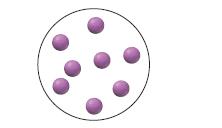
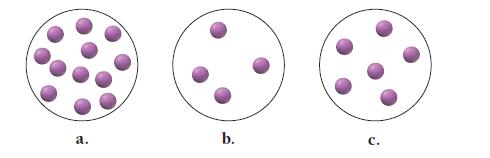
The following circle represents 1.0 liter of a solution with a solute concentration of 1 M:Explain what you would add (the amount of solute or volume of solvent) to the solution to obtain a solution represented by each diagram:
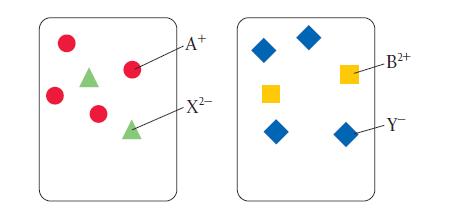
Consider the generic ionic compounds with the formulas A2X and BY2 and the following solubility rules:A2X soluble; BY2 soluble; AY insoluble; BX soluble.Assume A+ ions are circles, B2 + ions are squares, X2 - ions are triangles, and Y - ions are diamonds. Solutions of the two compounds (A2X and
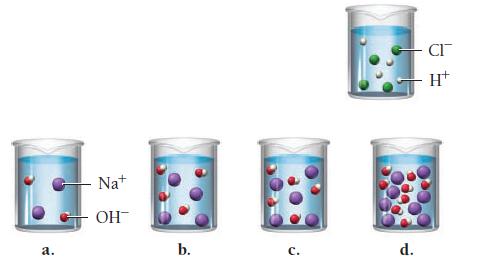
A hydrochloric acid solution will neutralize a sodium hydroxide solution. Look at the molecular views showing one beaker of HCl and four beakers of NaOH. Which NaOH beaker will just neutralize the HCl beaker? Begin by writing a balanced chemical equation for the neutralization reaction.
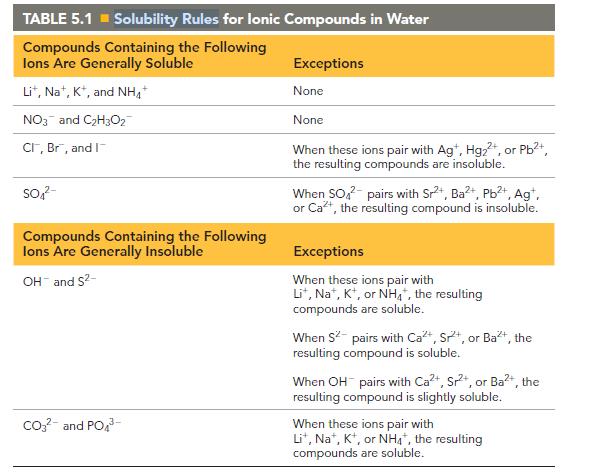
Review the solubility rules. Without referring back to the rules, have each group member list two ionic compounds that are expected to be soluble and two that are expected to be insoluble.Include at least one exception. Check the work of the other members of your group. TABLE 5.1 = Solubility Rules
Write a detailed set of instructions for making two solutions:(1) 100 mL of 12 M NaOH from solid sodium hydroxide and (2) 1.00 L of 0.1 M NaOH from your first solution. You have in your lab: volumetric flasks marked to contain 100.0 mL and 1.000 L, a graduated cylinder, and a balance.
Define and give an example of each of the following classes of reactions: precipitation, acid–base, gas-evolution, and redox.Each group member can do one, and then present his or her reaction to the group.
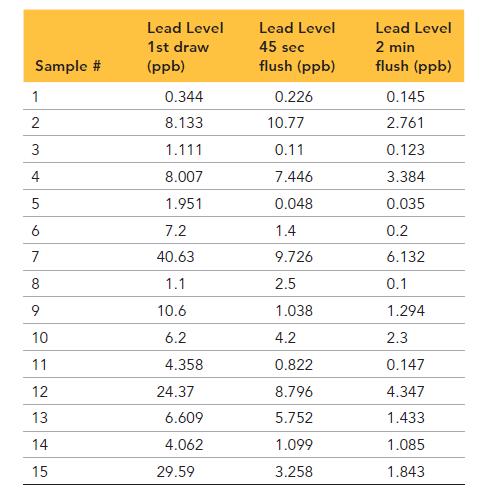
In April of 2014, in an effort to save money, officials in Flint, Michigan, changed their water source from Lake Huron to the Flint River. In subsequent months, residents began complaining about the quality of the water, and General Motors stopped using the water in manufacturing processes because
Using group members to represent atoms, ions, or electrons, act out the reaction Zn(s) + Fe2 + (aq) → Zn2 + (aq) + Fe(s).Which group member is oxidized? Which is reduced? Which is the oxidizing agent? Which is the reducing agent?
The pressure exerted on a sample of a fixed amount of gas is doubled at constant temperature, and then the temperature of the gas in kelvins is doubled at constant pressure. What is the final volume of the gas?(a) The final volume is twice the initial volume.(b) The final volume of the gas is four
A gas sample has an initial pressure of 547 mmHg and an initial volume of 0.500 L. What is the pressure (in atm) when the volume of the sample is decreased to 225 mL? (Assume constant temperature and constant number of moles of gas.)a) 1.60 * 10-3 atm b) 1.60 atmc) 0.324 atm d) 1.22 atm
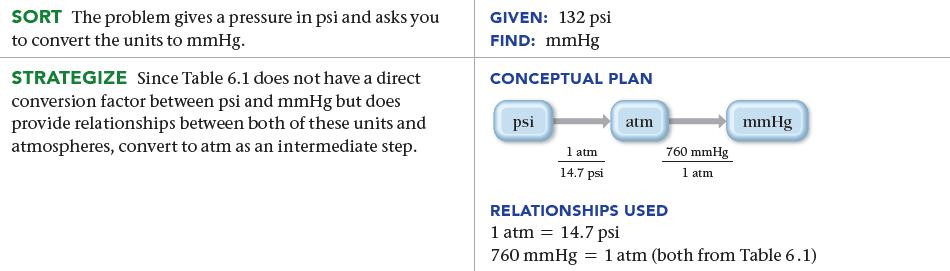
A high-performance road bicycle tire is inflated to a total pressure of 132 psi. What is this pressure in mmHg? SORT The problem gives a pressure in psi and asks you to convert the units to mmHg. STRATEGIZE Since Table 6.1 does not have a direct conversion factor between psi and mmHg but
Which action causes the volume of a gas sample to increase?(a) Decreasing the pressure (at constant temperature and number of moles).(b) Decreasing the temperature (at constant pressure and number of moles).(c) Decreasing the number of moles of gas (at constant temperature and pressure).(d) None of
A gas sample has a volume of 178 mL at 0.00 °C. The temperature is raised (at constant pressure) until the volume is 211 mL. What is the temperature of the gas sample in °C at this volume?a) 0.00 °C b) 324 °Cc) -43 °C d) 51 °C
Explain what happens when a person inhales. What forces air into the lungs?
A woman has an initial lung volume of 2.75 L, which is filled with air at an atmospheric pressure of 1.02 atm. If she increases her lung volume to 3.25 L without inhaling any additional air, what is the pressure in her lungs?
Assuming ideal behavior, which of these gas samples has the greatest volume at STP?(a) 1 g of H2 (b) 1 g of O2 (c) 1 g of Ar
What is the pressure of 1.78 g of nitrogen gas confined to a volume of 0.118 L at 25 °C?a) 13.2 atm b) 369 atmc) 1.10 atm d) 26.3 atm
Explain what happens when a person exhales. What forces air out of the lungs?
A sample of gas has a volume of 2.80 L at an unknown temperature. When the sample is submerged in ice water at T = 0.00 °C, its volume decreases to 2.57 L. What was its initial temperature (in K and in °C)?
What is the density of a sample of argon gas at 55 °C and 765 mmHg?a) 2.99 g/L b) 1.13 * 103 g/Lc) 1.49 g/L d) 8.91 g/L
What are the common units of pressure? List them in order of smallest to largest unit.
A male athlete in a kinesiology research study has a lung volume of 6.15 L during a deep inhalation. At this volume, his lungs contain 0.254 mol of air. During exhalation, his lung volume decreases to 2.55 L. How many moles of gas did the athlete exhale? Assume constant temperature and pressure.
A gas mixture contains an equal number of moles of He and Ne. The total pressure of the mixture is 3.0 atm. What are the partial pressures of He and Ne?(a) PHe = 2.0 atm; PNe = 1.0 atm (b) PHe = 1.0 atm; PNe = 2.0 atm(c) PHe = 1.5 atm; PNe = 1.5 atm
Which gas sample has the greatest volume at STP?a) 10.0 g Ar b) 10.0 g Krc) 10.0 g Xed) None of the above (They all have the same volume.)
What is a manometer? How does it measure the pressure of a sample of gas?
Calculate the volume occupied by 0.845 mol of nitrogen gas at a pressure of 1.37 atm and a temperature of 315 K.
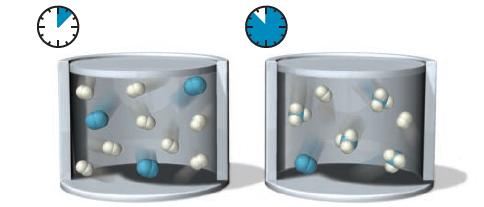
Nitrogen and hydrogen react to form ammonia according to the following equation:Consider the following representations of the initial mixture of reactants and the resulting mixture after the reaction has been allowed to react for some time:If the volume is kept constant, and nothing is added to the
A 1.25-g gas sample occupies 663 mL at 25 °C and 1.00 atm.What is the molar mass of the gas?a) 0.258 g/mol b) 0.0461 g/mol c) 3.87 g/mol d) 46.1 g/mol
Summarize each of the simple gas laws (Boyle’s law, Charles’s law, and Avogadro’s law). For each, explain the relationship between the two variables and also state which variables must be kept constant.
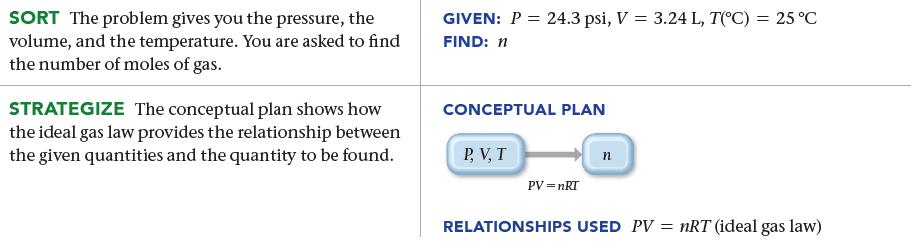
Calculate the number of moles of gas in a 3.24-L basketball inflated to a total pressure of 24.3 psi at 25 °C. The total pressure is not the same as the pressure read on a pressure gauge such as the type used for checking a car or bicycle tire.That pressure, called the gauge pressure, is the
How does the approximate root mean square velocity of neon compare to that of krypton at the same temperature?(a) The root mean square velocity of Ne is approximately four times that of Kr.(b) The root mean square velocity of Ne is approximately two times that of Kr.(c) The root mean square
A 255-mL gas sample contains argon and nitrogen at a temperature of 65 °C. The total pressure of the sample is 725 mmHg, and the partial pressure of argon is 231 mmHg. What mass of nitrogen is present in the sample?a) 0.324 g nitrogen b) 0.167 g nitrogenc) 0.0837 g nitrogen d) 0.870 g nitrogen
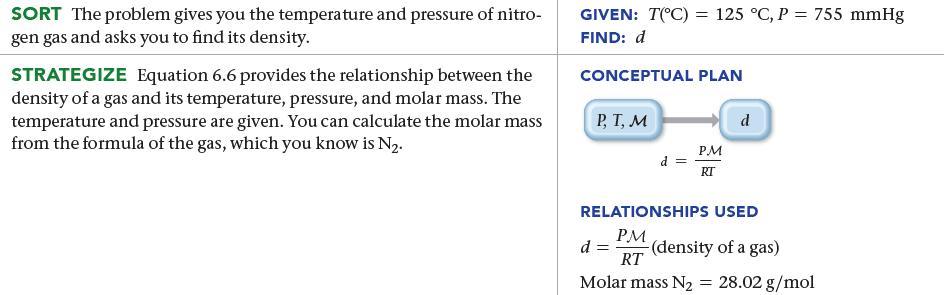
Calculate the density of nitrogen gas at 125 °C and a pressure of 755 mmHg. SORT The problem gives you the pressure, the volume, and the temperature. You are asked to find the number of moles of gas. STRATEGIZE The conceptual plan shows how the ideal gas law provides the relationship between the
Explain why people may experience ear pain after a rapid change in altitude.
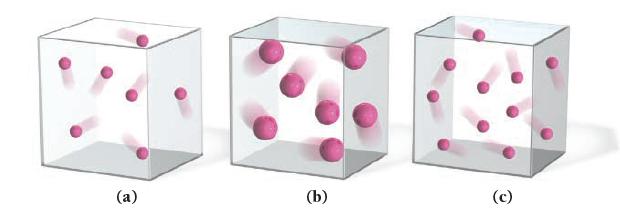
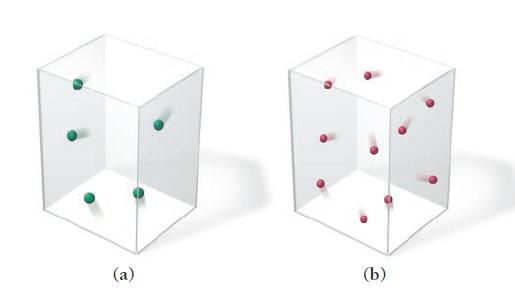
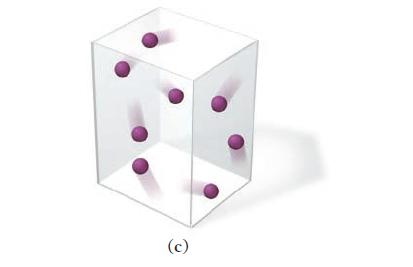
Which sample of an ideal gas has the greatest pressure? Assume that the mass of each particle is proportional to its size and that all the gas samples are at the same temperature. (a) (b) (c)
A sample of gas has a mass of 0.311 g. Its volume is 0.225 L at a temperature of 55 °C and a pressure of 886 mmHg. Find its molar mass. SORT The problem gives you the temperature and pressure of nitro- gen gas and asks you to find its density. STRATEGIZE Equation 6.6 provides the relationship
A gas mixture in a 1.55-L container at 298 K contains 10.0 g of Ne and 10.0 g of Ar. Calculate the partial pressure (in atm) of Ne and Ar in the container.a) PNe = 10.5 atm, PAr = 5.29 atmb) PNe = 5.83 atm, PAr = 2.95 atmc) PNe = 5.88 atm, PAr = 5.88 atmd) PNe = 7.82 atm, PAr = 3.95 atm
Explain why scuba divers should never hold their breath when they ascend to the surface.
A glass tube contains an equal number of moles of helium and argon. After five minutes, half of the particles escape through a small hole in the glass. What are the relative amounts of helium and argon in the tube at five minutes?(a) The tube still contains an equal number of moles of helium and
A gas sample at STP contains 1.15 g oxygen and 1.55 g nitrogen. What is the volume of the gas sample?a) 1.26 L b) 2.04 Lc) 4.08 L d) 61.0 L
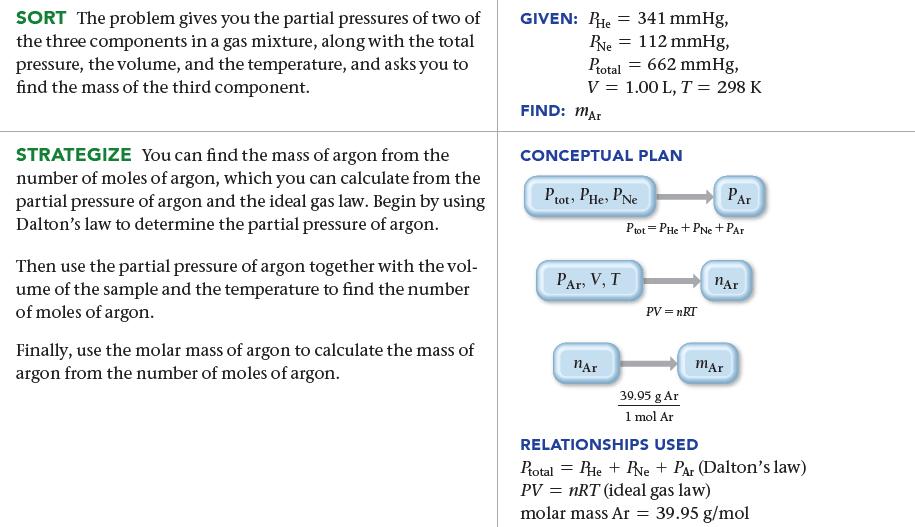
A 1.00-L mixture of helium, neon, and argon has a total pressure of 662 mmHg at 298 K. If the partial pressure of helium is 341 mmHg and the partial pressure of neon is 112 mmHg, what mass of argon is present in the mixture? SORT The problem gives you the partial pressures of two of the three
Why is it impossible to breathe air through an extra-long snorkel (longer than a couple of meters) while swimming under water?
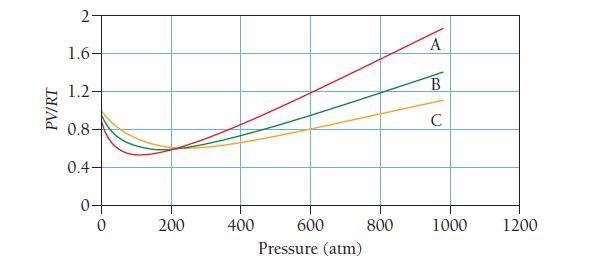
The graph shows PV/RT for carbon dioxide at three different temperatures. Rank the curves in order of increasing temperature.(a) C (b) A (c) B (d) C PV/RT 2. 1.6- 1.2- 0.8- 0.4- 0- 0 200 400 600 Pressure (atm) 800 A B C 1000 1200
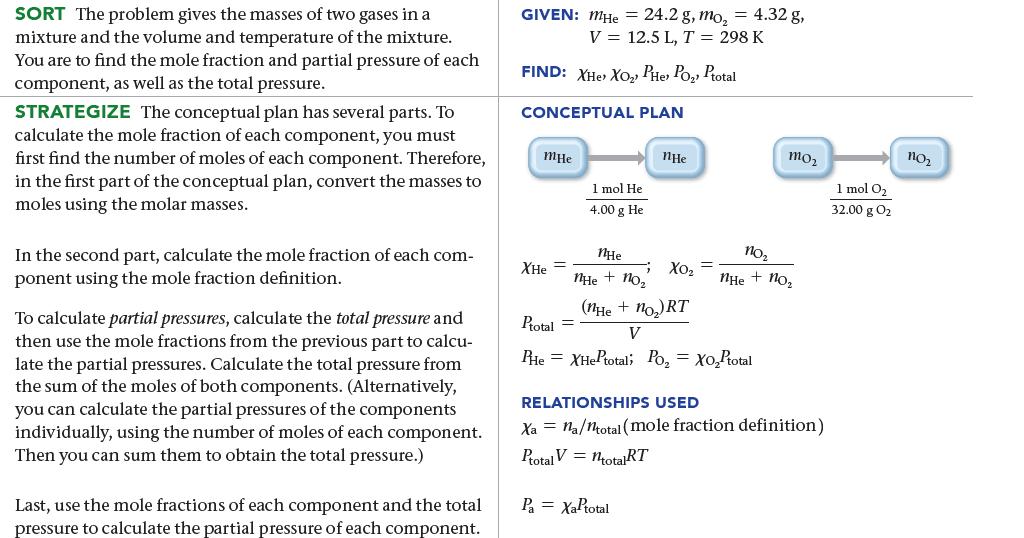
A 12.5-L scuba diving tank contains a helium–oxygen (heliox) mixture made up of 24.2 g of He and 4.32 g of O2 at 298 K. Calculate the mole fraction and partial pressure of each component in the mixture and the total pressure of the mixture. SORT The problem gives the masses of two gases in
Aluminum reacts with chlorine gas to form aluminum chloride.What minimum volume of chlorine gas (at 298 K and 225 mmHg) is required to completely react with 7.85 g of aluminum?a) 36.0 L b) 24.0 L c) 0.0474 L d) 16.0 L 2 Al(s) + 3 Cl₂(g) → 2 AIC13(s)
Explain why hot-air balloons float above the ground and why the second story of a two-story home is often warmer than the ground story.
Calculate the root mean square velocity of I2( g) at 373 K.a) 19.0 m/s b) 191 m/sc) 6.05 m/s d) 99.1 m/s
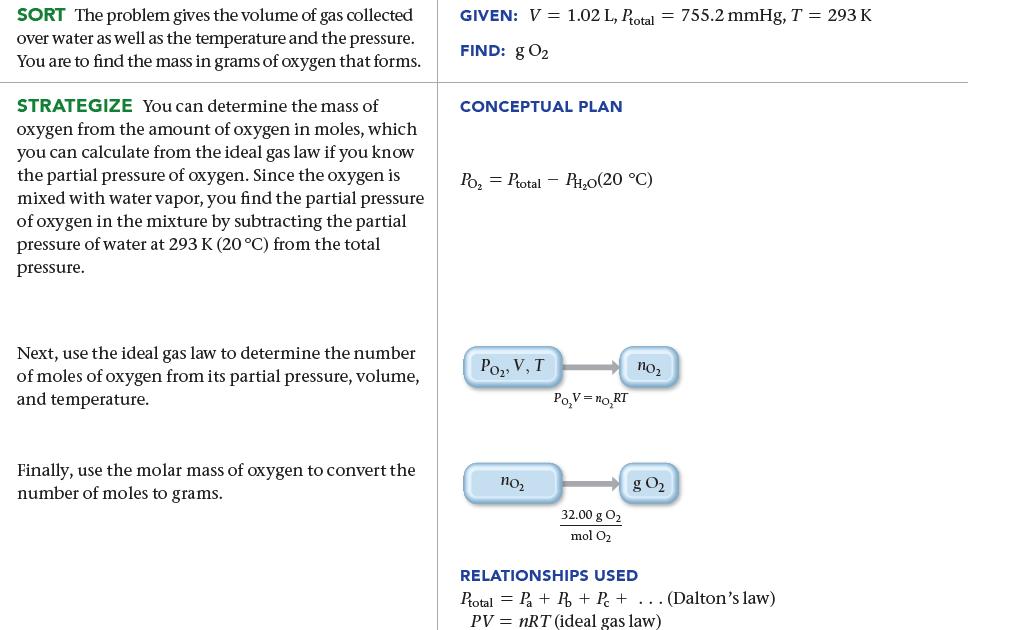
In order to determine the rate of photosynthesis (the conversion by plants of carbon dioxide and water into glucose and oxygen), the oxygen gas emitted by an aquatic plant is collected over water at a temperature of 293 K and a total pressure of 755.2 mmHg. Over a specific time period, a total of
What is the ideal gas law? Why is it useful?
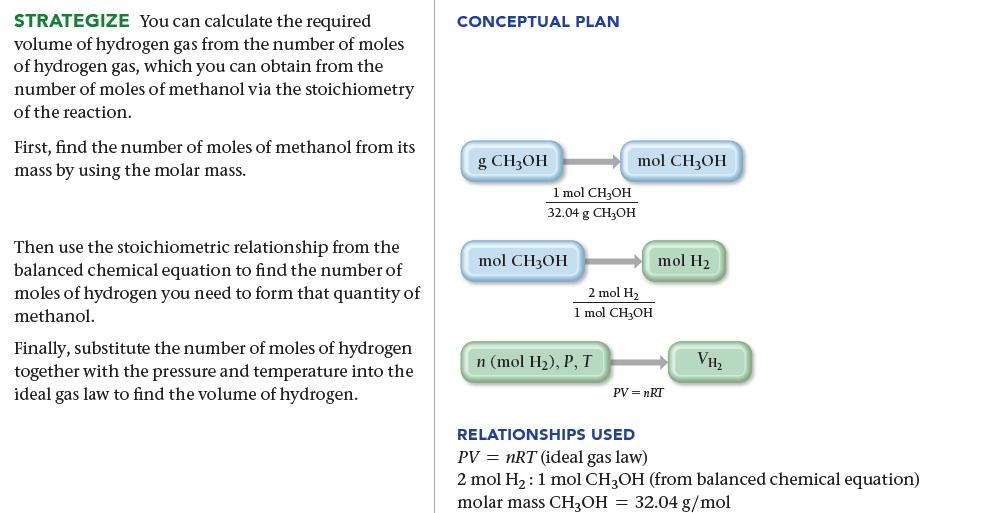
Methanol (CH3OH) can be synthesized by the reaction:What volume (in liters) of hydrogen gas, at a temperature of 355 K and a pressure of 738 mmHg, is needed to synthesize 35.7 g of methanol? CO(g) + 2 H₂(8) CH3OH(g)
Which gas has the greatest kinetic energy at STP?a) He b) Ne c) Ard) None of the above (All have the same kinetic energy.)
Explain how the ideal gas law contains within it the simple gas laws (show an example).
A sample of Xe takes 75 seconds to effuse out of a container.An unknown gas takes 37 seconds to effuse out of the identical container under identical conditions. What is the most likely identity of the unknown gas?a) He b) O2c) Br2 d) Kr
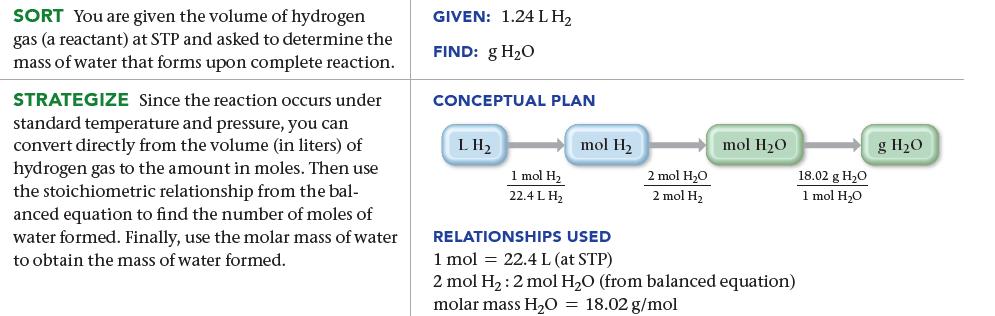
How many grams of water form when 1.24 L of H2 gas at STP completely reacts with O2? 2 H₂(g) + O2(8) 2 H₂O(g)
Define molar volume and list its value for a gas at STP.
Consider the generic reaction: 2 A(g) + B(g) → 2 C(g). If a flask initially contains 1.0 atm of A and 1.0 atm of B, what will be the pressure in the flask if the reaction proceeds to completion? (Assume constant volume and temperature.)a) 1.0 atm b) 1.5 atm c) 2.0 atm d) 3.0 atm
Rank the gases Ar, N2, CH4, and C2H6 in order of increasing density at STP. a) CH4 < C₂H6 < N₂ < Ar b) CH4 < N₂ < Ar < C₂H6 c) Ar < C₂H6 < N₂ < CH4 d) CH4 < N₂ < C₂H6 < Ar
How does the density of a gas depend on temperature? Pressure?How does it depend on the molar mass of the gas?
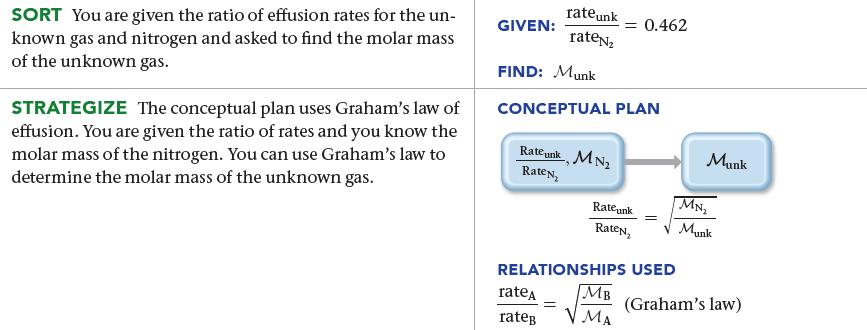
An unknown gas effuses at a rate that is 0.462 times that of nitrogen gas (at the same temperature). Calculate the molar mass of the unknown gas in g/mol. SORT You are given the ratio of effusion rates for the un- known gas and nitrogen and asked to find the molar mass of the unknown
What is partial pressure? What is the relationship between the partial pressures of each gas in a sample and the total pressure of gas in the sample?
When a gas is collected over water, is the gas pure? Why or why not? How can the partial pressure of the collected gas be determined?
Why do deep-sea divers breathe a mixture of helium and oxygen?
If a reaction occurs in the gas phase at STP, we can determine the mass of a product from the volumes of reactants. Explain.
Explain how Boyle’s law, Charles’s law, Avogadro’s law, and Dalton’s law all follow from kinetic molecular theory.
What are the basic postulates of kinetic molecular theory?How does the concept of pressure follow from kinetic molecular theory?
Describe how the molecules in a perfume bottle travel from the bottle to your nose. What is mean free path?
How is the kinetic energy of a gas related to temperature?How is the root mean square velocity of a gas related to its molar mass?
Deviations from the ideal gas law are observed at high pressure and low temperature. Explain this in light of kinetic molecular theory.
Explain the difference between diffusion and effusion. How is the effusion rate of a gas related to its molar mass?
The pressure in Denver, Colorado (elevation 5280 ft), averages about 24.9 in Hg. Convert this pressure to each indicated unit.a. Atm b. MmHg c. Psi d. Pa
The world record for lowest pressure (at sea level) was 652.5 mmHg recorded inside Typhoon Tip on October 12, 1979, in the western Pacific Ocean. Convert this pressure to each indicated unit.a. Torr b. Atm c. In Hg d. Psi
The pressure on top of Mount Everest (29,029 ft) averages about 235 mmHg. Convert this pressure to each indicated unit.a. Torr b. Psi c. In Hg d. Atm
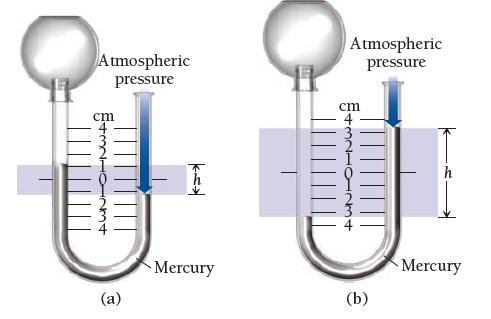
Given a barometric pressure of 751.5 mmHg, calculate the pressure of each gas sample as indicated by the manometer. Atmospheric pressure cm (a) I Mercury Atmospheric pressure cm 4 MNOHY+ (b) Mercury
The North American record for highest recorded barometric pressure is 31.85 in Hg, set in 1989 in Northway, Alaska. Convert this pressure to each indicated unit.a. MmHgb. Atmc. Torrd. KPa (kilopascals)
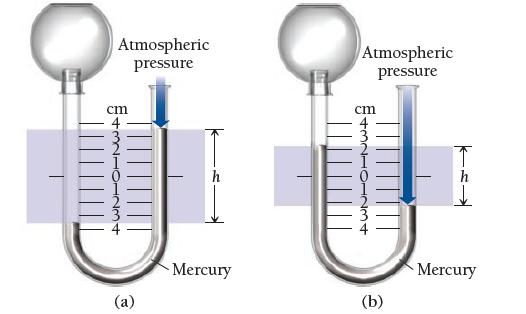
Given a barometric pressure of 762.4 mmHg, calculate the pressure of each gas sample as indicated by the manometer. Atmospheric pressure cm (a) Mercury Atmospheric pressure cm 11 (b) Mercury
A sample of gas has an initial volume of 5.6 L at a pressure of 735 mmHg. If the volume of the gas is increased to 9.4 L, what is its pressure?
A sample of gas has an initial volume of 13.9 L at a pressure of 1.22 atm. If the sample is compressed to a volume of 10.3 L, what is its pressure?
A balloon contains 0.158 mol of gas and has a volume of 2.46 L.If an additional 0.113 mol of gas is added to the balloon (at the same temperature and pressure), what is its final volume?
A cylinder with a moveable piston contains 0.553 mol of gas and has a volume of 253 mL. What is its volume if an additional 0.365 mol of gas is added to the cylinder?
What volume is occupied by 0.118 mol of helium gas at a pressure of 0.97 atm and a temperature of 305 K? Would the volume be different if the gas was argon (under the same conditions)?
What volume is occupied by 12.5 g of argon gas at a pressure of 1.05 atm and a temperature of 322 K? Would the volume be different if the sample were 12.5 g of helium (under identical conditions)?
What is the pressure in a 10.0-L cylinder filled with 0.448 mol of nitrogen gas at a temperature of 315 K?
What is the pressure in a 15.0-L cylinder filled with 32.7 g of oxygen gas at a temperature of 302 K?
A cylinder contains 28.5 L of oxygen gas at a pressure of 1.8 atm and a temperature of 298 K. How much gas (in moles) is in the cylinder?
What is the temperature of 0.52 mol of gas at a pressure of 1.3 atm and a volume of 11.8 L?
An automobile tire has a maximum rating of 38.0 psi (gauge pressure). The tire is inflated (while cold) to a volume of 11.8 L and a gauge pressure of 36.0 psi at a temperature of 12.0 °C. On a hot day, the tire warms to 65.0 °C, and its volume expands to 12.2 L. Does the pressure in the tire
A weather balloon is inflated to a volume of 28.5 L at a pressure of 748 mmHg and a temperature of 28.0 °C. The balloon rises in the atmosphere to an altitude of approximately 25,000 ft, where the pressure is 385 mmHg and the temperature is -15.0 °C. Assuming the balloon can freely expand,
A piece of dry ice (solid carbon dioxide) with a mass of 28.8 g sublimes (converts from solid to gas) into a large balloon. Assuming that all of the carbon dioxide ends up in the balloon, what is the volume of the balloon at 22 °C and a pressure of 742 mmHg?
A 1.0-L container of liquid nitrogen is kept in a closet measuring 1.0 m by 1.0 m by 2.0 m. Assuming that the container is completely full, that the temperature is 25.0 °C, and that the atmospheric pressure is 1.0 atm, calculate the percent (by volume) of air that is displaced if all of the liquid
Cyclists sometimes use pressurized carbon dioxide inflators to inflate a bicycle tire in the event of a flat. These inflators use metal cartridges that contain 16.0 g of carbon dioxide. At 298 K, to what pressure (in psi) can the carbon dioxide in the cartridge inflate a 3.45-L mountain bike tire?
A wine-dispensing system uses argon canisters to pressurize and preserve wine in the bottle. An argon canister for the system has a volume of 55.0 mL and contains 26.0 g of argon. Assuming ideal gas behavior, what is the pressure in the canister at 295 K?When the argon is released from the
Which gas sample has the greatest pressure? Assume that all the samples are at the same temperature. Explain. (a) (b)
This picture represents a sample of gas at a pressure of 1 atm, a volume of 1 L, and a temperature of 25 °C. Draw a similar picture showing what would happen to the sample if the volume were reduced to 0.5 L and the temperature were increased to 250 °C. What would happen to the pressure?
Aerosol cans carry clear warnings against incineration because of the high pressures that can develop upon heating. Suppose that a can contains a residual amount of gas at a pressure of 755 mmHg and a temperature of 25 °C. What would the pressure be if the can were heated to 1155 °C?
A sample of nitrogen gas in a 1.75-L container exerts a pressure of 1.35 atm at 25 °C. What is the pressure if the volume of the container is maintained constant and the temperature is raised to 355 °C?
Use the molar volume of a gas at STP to determine the volume (in L) occupied by 33.6 g of neon at STP.
Use the molar volume of a gas at STP to calculate the density (in g/L) of nitrogen gas at STP.
A 55.0-mL sample of a 0.102 M potassium sulfate solution is mixed with 35.0 mL of a 0.114 M lead(II) acetate solution and this precipitation reaction occurs:The solid PbSO4 is collected, dried, and found to have a mass of 1.01 g. Determine the limiting reactant, the theoretical yield, and the
A 25.0-mL sample of a 1.20 M potassium chloride solution is mixed with 15.0 mL of a 0.900 M lead(II) nitrate solution, and this precipitation reaction occurs:The solid PbCl2 is collected, dried, and found to have a mass of 2.45 g. Determine the limiting reactant, the theoretical yield, and the
A gas mixture with a total pressure of 745 mmHg contains each of the following gases at the indicated partial pressures: CO2, 125 mmHg; Ar, 214 mmHg; and O2, 187 mmHg. The mixture also contains helium gas. What is the partial pressure of the helium gas? What mass of helium gas is present in a
Showing 2200 - 2300
of 4045
First
16
17
18
19
20
21
22
23
24
25
26
27
28
29
30
Last
Step by Step Answers

 Get 50% OFF
Claim Now
Get 50% OFF
Claim Now