New Semester
Started
Get
50% OFF
Study Help!
--h --m --s
Claim Now
Question Answers
Textbooks
Find textbooks, questions and answers
Oops, something went wrong!
Change your search query and then try again
S
Books
FREE
Study Help
Expert Questions
Accounting
General Management
Mathematics
Finance
Organizational Behaviour
Law
Physics
Operating System
Management Leadership
Sociology
Programming
Marketing
Database
Computer Network
Economics
Textbooks Solutions
Accounting
Managerial Accounting
Management Leadership
Cost Accounting
Statistics
Business Law
Corporate Finance
Finance
Economics
Auditing
Tutors
Online Tutors
Find a Tutor
Hire a Tutor
Become a Tutor
AI Tutor
AI Study Planner
NEW
Sell Books
Search
Search
Sign In
Register
study help
engineering
introduction to chemical engineering thermodynamics
Introductory Chemical Engineering Thermodynamics 2nd Edition J. Elliott, Carl Lira - Solutions
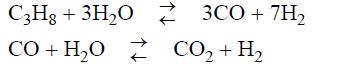
Write and balance the chemical reaction of carbon monoxide forming solid carbon and carbon dioxide vapor. Determine the equilibrium constant at 700 K and 750 K. Will solid carbon form at the conditions of problem 17.14?Data from problem 17.14Hydrogen gas can be produced by the following reactions
Catalytic converters on automobiles are designed to minimize the NO and CO emissions derived from the engine exhaust. They generally operate between 400°C and 600°C at 1 bar of pressure. K.C. Taylor (1993. Cat. Rev. Sci. Eng. 35:457.) gives the following compositions (in ppm, molar basis) for
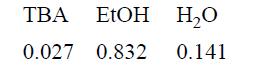
Habenicht et al. (1995. Ind. Eng. Chem. Res., 34:3784) report on the reaction of t-butyl alcohol (TBA) and ethanol (EtOH) to form ethyltertiary-butyl ether (ETBE). The reaction is conducted at 170°C. A typical feed stream composition (in mole fraction) is:Isobutene is the only significant
Styrene can be hydrogenated to ethyl benzene at moderate conditions in both the liquid and the gas phases. Calculate the equilibrium compositions in the vapor and liquid phases of hydrogen, styrene, and ethyl benzene at each of the following conditions:(a) 3 bar pressure and 298 K, with a starting
Limestone (CaCO3) decomposes upon heating to yield quicklime (CaO) and carbon dioxide. At what temperature does limestone exert a decomposition pressure of 1 bar?
Ethyl acetate is to be produced by a liquid phase reaction.(a) Use the shortcut van’t Hoff equation to calculate the expected conversion of HOAc for equimolar feeds of EtOH and HOAc in a batch reactor at 80°C.(b) Repeat part (a) with a 3:1 ratio of EtOH to HOAc at 80°C. AH(1) (kJ/mol) AG(1)
Two-tenths of a gram of CaCO3(s) is placed in a 100°cm3 pressure vessel. The vessel is evacuated of all vapor at 298 K and sealed. The reaction CaCO3(s) = CaO(s) + CO2(g) occurs as the temperature is raised. At what temperature will the conversion of CaCO3 be 50%, and what will the pressure be?
One suggestion for sequestering CO2 is to synthesize carbonate polymers. Polycarbonate is well known for its strength and transparency. To gauge the feasibility of this approach, consider the synthesis of dimethyl carbonate (DMC) from methanol and CO2 at 350 K.(a) Write a balanced stoichiometric
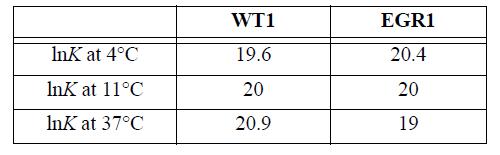
Hamilton, et al., have studied the binding of DNA chromosomes to proteins WT1 and EGR1. WT1 uses a zinc binding site to suppress a certain type of kidney tumor. EGR1 binds to regulate cell proliferation. There may be an important regulatory link between the two proteins.(a) Use the binding data
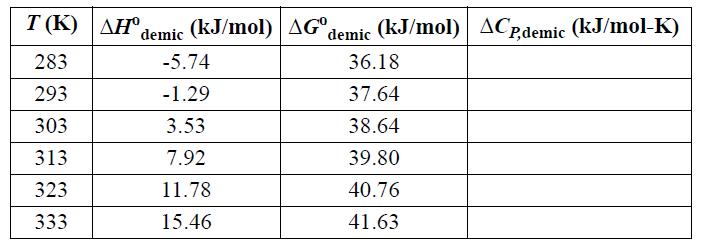
The enthalpy of reaction for many biological reactions and surfactants is strongly temperature- dependent, but instead of using full heat capacities, the temperature dependence can be characterized by differences in heat capacities ΔCP = CP,prod – CP,react, typically assumed to be independent of
Lysozyme (MW = 14.313 kDa) undergoes a phase transition from a native folded (N) to unfolded state (U) that can be considered a reversible reaction, N(aq) ⇆ U(aq), where the subscript (aq) indicates that the protein is in an aqueous solution. At high temperature the protein is in state U and at
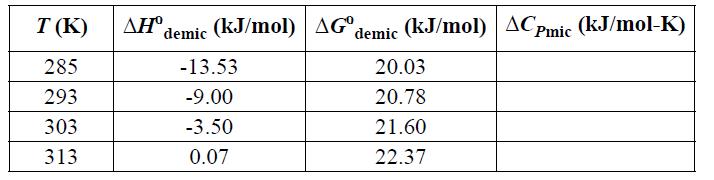
Micelle formation in surfactants is described in problem 17.26. Solve the problem using the data for sodium docecyl sulfate, SDS in water.SDS data:Data from problem 17.26:Surfactants clump together to form organized structures called micelles that can be spheres, rods, and so forth. The formation
Surfactants clump together to form organized structures called micelles that can be spheres, rods, and so forth. The formation of the clump can be modeled as a “chemical” reaction, though there are no chemical bonds formed or broken. When surfactants are in solution below the critical micelle
For nonylglucoside, NG, thermodynamic data for demicellization in water are presented in problem 17.26. Model the micelle reaction as nS ⇆ Mn where S is free surfactant and Mn is a micelle. Treat the solution as an ideal solution. Vary the total concentration of NG from 0 up to 20 mmol/L. Water
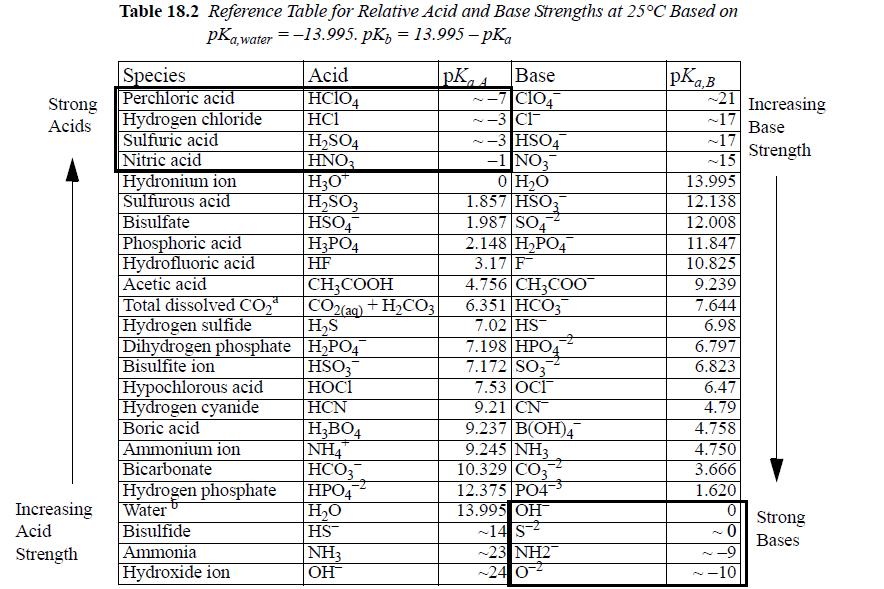
Ammonia is a weak base, as indicated by the pKa,A and pKa,B values in Table 18.2. Determine the percentage of NH3 dissociated at pH 7 and pH 1.5 when the apparent amount of NH3 in aqueous solution is 0.15 m. Assume ideal solutions. Strong Acids Increasing Acid Strength Table 18.2 Reference Table
(a) Compute the freezing point depression for an aqueous solutions that is 3 wt% NaCl.(b) Compute the boiling point elevation for an aqueous solutions that is 3 wt% NaCl.(c) Compute the osmotic pressure for an aqueous solutions that is 3 wt% NaCl.
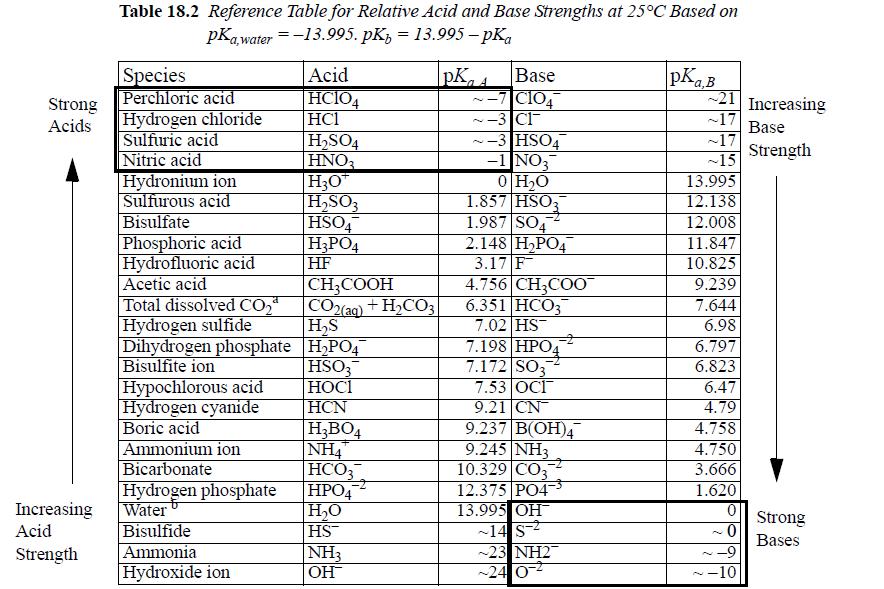
Sodium fluoride, NaF, is dissolved in water at an apparent concentration of CB = 10-3 mol/L. Construct a Sillèn diagram and estimate the pH. Refer to the pKa,A and pKa,B values in Table 18.2. Strong Acids Increasing Acid Strength Table 18.2 Reference Table for Relative Acid and Base Strengths at
Calcium chloride is used occasionally as an alternative to sodium chloride for de-icing walkways. It is rumored to maintain puddles even a day or so after all evidence of sodium chloride has disappeared.(a) Compute the freezing point depression for aqueous solutions that are 5 wt% CaCl2 and
A solution of NaHCO3 and HCl is prepared such that the total carbon concentration is 1E-3 M and the total Cl concentration is 2E-3 M. Calculate the pH and concentrations of species present. Assume that the pressure is sufficiently that any evolved CO2 remains in solution. Estimate the partial
Plot the “apparent molality” of Cl2 in solution against the partial pressure of Cl2. The apparent molality is the sum of all Cl species in solution (Cl2 counts twice) divided by 2 (to put it on a Cl2 basis). Compare your plot to the experimental data of Whitney and Vivian (1941).
Model a soft drink as a solution of water with CO2 dissolved at 298.15 K. In this way we ignore the sugar, flavor, and color. The Henry’s law constant for CO2 at 298.15 K is 0.035 (mol/kg-bar).(a) What pH and composition exist when the vapor phase is 3.5 bar absolute at room temperature ignoring
Sodium bicarbonate, NaHCO3, commonly known as baking soda, is dissolved in water at 10–2 m at 298.15 K. Assume ideal solutions.(a) Determine the pH and the dominant species concentrations. For this part of the problem, ignore the potential loss of CO2 escaping from the solution as vapor.(b) Now
Sodium carbonate is mixed into a solution of acetic acid and the container is rapidly closed before the container components react. The amount of sodium carbonate is such that the total sodium concentration is 1E-2 m and the total acetate concentration is also 1E-2 m. When the mixture equilibrates,
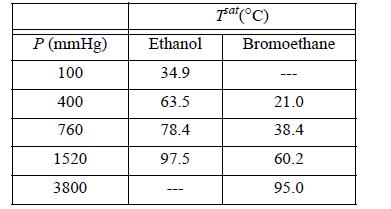
The system ethanol(1) + bromoethane(2) forms an azeotrope containing 93.2 mol% bromoethane and having a minimum boiling point of 37.0°C at 760 mmHg. The following vapor pressure data are available:(a) Use all of the available data to determine coefficients for equation log10Psat = A + B/T by
Benzaldehyde is known in the flavor industry as bitter almond oil. It has a cherry or almond essence. It may be possible to recover it using CO2 for a portion of the processing. Explore the phase behavior of the CO2(1) + benzaldehyde(2) system, using the Peng-Robinson equation to categorize the
Express in terms of P, V, T, CP, CV, and their derivatives. Your answer may include absolute values of S if it is not a derivative constraint or within a derivative.(a) (∂H/∂S)V(b) (∂H/∂P)V(c) (∂G/∂H)P
Nitrogen (N2) at 0.1 MPa and T > 150 K approximates ideal gas behavior. At T < 300 K, the covalent bond is fairly rigid, so the higher heat capacity relative to a spherical molecule results from the possibility of rotation. That is, since the molecule is linear, spinning around its axis does not
Express in terms of P, V, T, CP, CV, and their derivatives. Your answer may include absolute values of S if it is not a derivative constraint or within a derivative.(a) (∂G/∂P)T(b) (∂P/∂A)V(c) (∂T/∂P)S(d) (∂H/∂T)U(e) (∂T/∂H)S(f) (∂A/∂V)P(g) (∂T/∂P)H(h) (∂A/∂S)P(i)
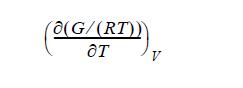
Express the following in terms of U, H, S, A, and their derivatives. (RT), V (2(G/(RT)) OT
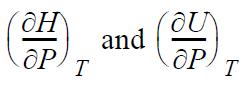
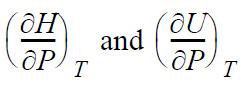
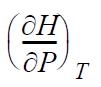
(a) Deriveandin terms of measurable properties.(b) dH = dU + d(PV) from the definition of H. Apply the expansion rule to show the difference betweenis the same as the result from part (a). он OP T
In Chapter 2, internal energy of condensed phases was stated to be more weakly dependent on pressure than enthalpy. This problem evaluates that statement.(a) Derivein terms of measurable properties.(b) Evaluateand compare the magnitude of the terms contributing tofor the fluids listed in problem
Expressin terms of αP and/or κT. (OH) V T
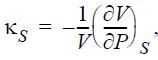
Express the adiabatic compressibility,in terms of measurable properties. Ks || 1а ИӘР S
Express the Joule-Thomson coefficient in terms of measurable properties for the following:(a) Van der Waals equation given in Example 6.6(b) An ideal gas. Example 6.6 Accounting for T and Vimpacts on energy au Derive an expression for Cou (b) Evaluate for the van der Waals equation of state, P =
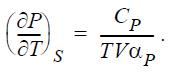
(a) Prove(b) For an ideal gas along an adiabat, (P/Pi) = (T/ Ti)CP/R. Demonstrate that this equation is consistent with the expression from part (a). JP OT S || P TVOp
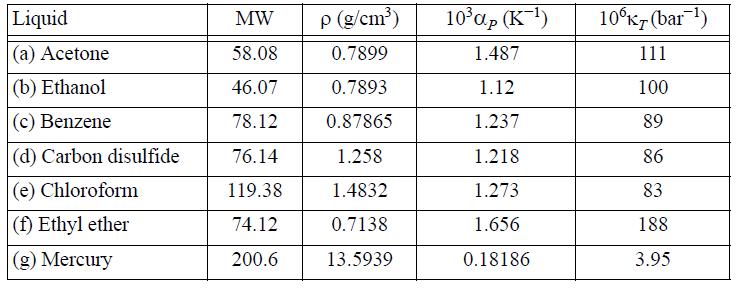
Determine the difference CP - CV for the following liquids using the data provided near 20°C. Liquid (a) Acetone (b) Ethanol (c) Benzene (d) Carbon disulfide (e) Chloroform (f) Ethyl ether (g) Mercury MW 58.08 46.07 78.12 76.14 119.38 74.12 200.6 p
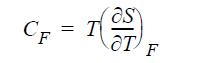
The fundamental internal energy relation for a rubber band is dU = TdS - FdL where F is the system force, which is negative when the rubber band is in tension. The applied force is given by Fapplied = k(T)(L – Lo) where k(T ) is positive and increases with increasing temperature. The heat
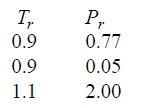
For Tr r ≈ Prsat, the Peng-Robinson equation of state has three roots corresponding to compressibility factors between zero and 10. The smallest root is the compressibility factor of the liquid. The largest root is the compressibility factor of the vapor and the middle root has no physical
The compressibility factor chart provides a quick way to assess when the ideal gas law is valid. For the following fluids, what is the minimum temperature in K where the fluid has a gas phase compressibility factor greater than 0.95 at 30 bar?(a) Nitrogen(b) Carbon dioxide(c) Ethanol
(a) Estimate the value of the compressibility factor, Z, for neon at Pr = 30 and Tr = 15.(b) Estimate the density of neon at Pr = 30 and Tr = 15.
A container having a volume of 40 L contains one of the following fluids at the given initial conditions. After a leak, the temperature and pressure are remeasured. For each option, determine the kilograms of fluid lost due to the leak, using:(a) Compressibility factor charts(b) The Peng-Robinson
Above the critical point or far from the saturation curve, only one real root to the cubic equation exists. If we are using Newton’s method, we can check how many phases exist by trying the two different initial guesses and seeing if they both converge to the same root. If they do, then we can
Estimate the liquid density (g/cm3) of propane at 298 K and 10 bar. Compare the price per kilogram of propane to the price per kilogram of regular gasoline assuming the cost of 5 gal of propane for typical gas grills is roughly $20. The density of regular gasoline can be estimated by treating it as
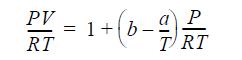
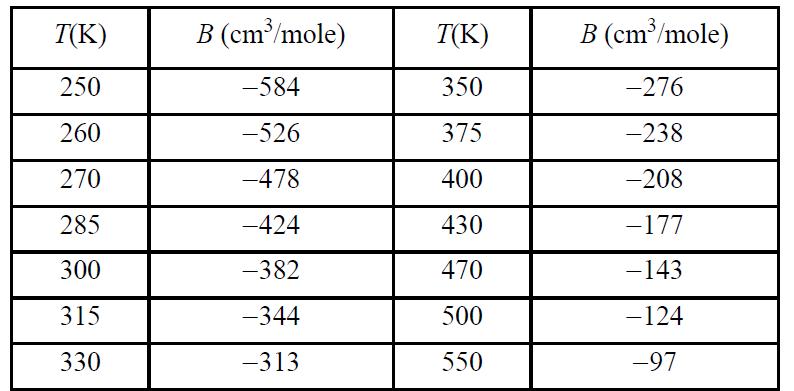
From experimental data it is known that at moderate pressures the volumetric equation of state may be written as PV = RT + B · P, where the second virial coefficient B is a function of temperature only. Data for methane are given by Dymond and Smith (1969) as,(a) Identify the Boyle temperature
A rigid vessel is filled to one-half its volume with liquid methane at its normal boiling point (111 K). The vessel is then closed and allowed to warm to 77°F. Calculate the final pressure using the Peng-Robinson equation.
4 m3 of methane at 20°C and 1 bar is roughly equivalent to 1 gal of gasoline in an automotive engine of ordinary design. If methane were compressed to 200 bar and 20°C, what would be the required volume of a vessel to hold the equivalent of 10 gal of gasoline?
Data for hydrogen are given by Dymond and Smith (1969) as,(a) Plot these data versus T-1and compare to the results from the generalized virial equation (Eqn. 7.7). Suggest a reason that this specific compound does not fit the generalized equation very accurately. Use points without lines for the
A carbon dioxide cylinder has a volume of 0.15 m3 and is filled to 100 bar at 38°C. The cylinder cools to 0°C. What is the final pressure in the cylinder and how much more CO2 can be added before the pressure exceeds 100 bar? If you add that much CO2 to the cylinder at 0°C, what will the
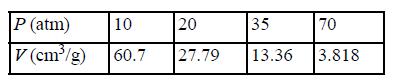
N.B. Vargaftik (1975)23 lists the following experimental values for the specific volume of isobutane at 175°C. Compute theoretical values and their percent deviations from experiment by the following:(a) The generalized charts(b) The Peng-Robinson equation P (atm) V
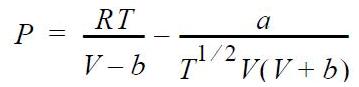
Evaluatefor the Redlich-Kwong equation of statewhere a and b are temperature-independent parameters. др OT V
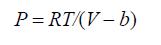
Evaluate (∂P/∂V)T for the equation of state where b is a constant: P = RT/(V-b)
Evaluate (∂P/∂V)V for the equation of state where a and b are constants: P=RT/(V-b) + a/T³/2
(a) The derivative (∂V/∂T)P is tedious to calculate by implicit differentiation of an equation of state such as the Peng-Robinson equation. Show that calculus permits us to find the derivative in terms of derivatives of pressure, which are easy to find, and provide the formula for this equation
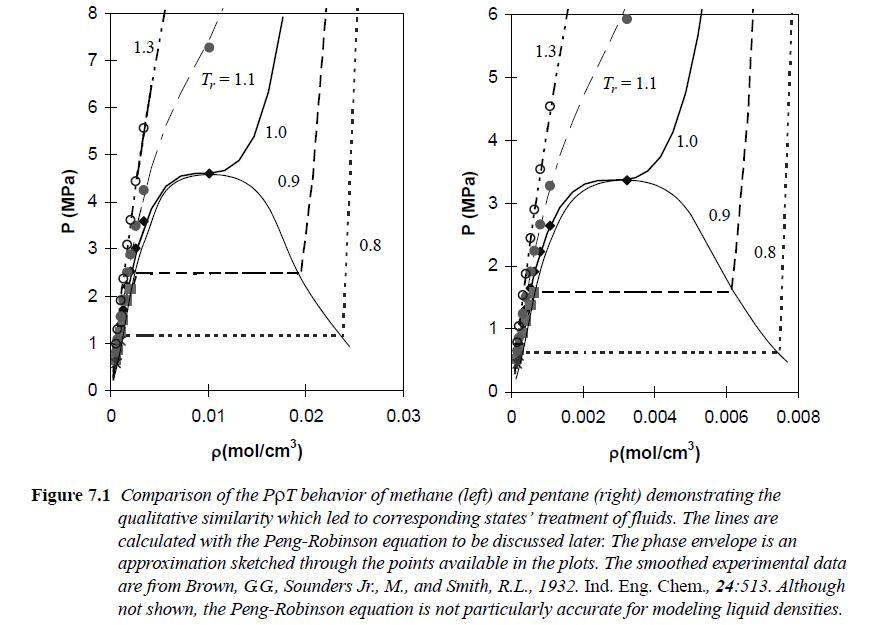
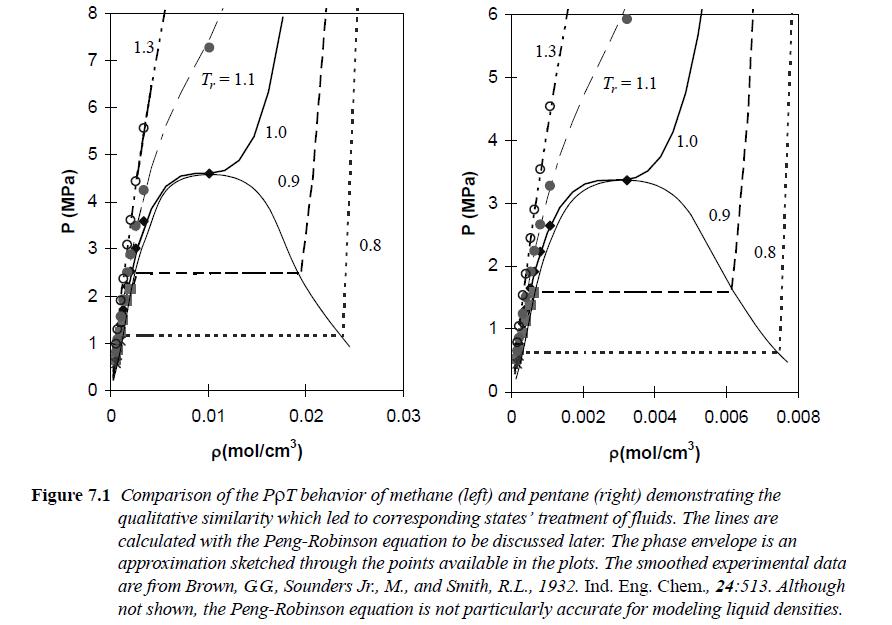
Plot Pr versus ρr for the Peng-Robinson equation with Tr = [0.7,0.9,1.0], showing both vapor and liquid roots in the two-phase region. Assume ω = 0.040 as for N2. Include the entire curve for each isotherm, as illustrated in Fig. 7.1. Also show the horizontal line that connects the vapor and
When cubic equations of state give three real roots for Z , usually the smallest root is the liquid root and the largest is the vapor root. However, the Peng-Robinson equation can give real roots at high pressure that differ from this pattern. To study this behavior, tabulate all the roots found
Within the two-phase envelope, one can draw another envelope representing the limits of supercooling of the vapor and superheating of liquid that can be observed in the laboratory; along each isotherm these are the points for which (∂P/∂ρ)T = 0. Obtain this envelope for the Peng-Robinson
The Soave-Redlich-Kwong equation is given by:where ρ = molar density = n/VTc, Pc, and ω are reducing constants according to the principle of corresponding states. Solve for the parameters at the critical point for this equation of state (ac, bc, and Zc) and list the next five significant figures
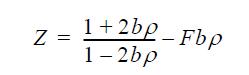
Determine the values of ε/kTc, Zc, and bc in terms of Tc and Pc for the equation of state given bywhere F = exp(ε/kT) - 1. The first term on the right-hand side is known as the Scott equation for the hard-sphere compressibility factor. Z = 1+2bp-Fbp 1-2bp
Develop a spreadsheet that computes the values of the compressibility factor as a function of reduced pressure for several isotherms of reduced temperature using the Lee-Kesler (1975) equation of state (AIChE J., 21:510). A tedious but straightforward way to do this is to tabulate reduced densities
Show that Bc = bPc/RTc = 0.07780 for the Peng-Robinson equation by setting up the cubic equation for Bc analogous to the van der Waals equation and solving analytically as described in Appendix B.
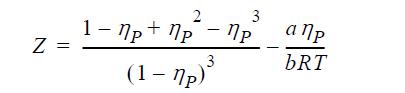
Consider the equation of statewhere ηP = b/V. The first term on the right-hand side is known as the Carnahan-Starling equation for the hard-sphere compressibility factor.(a) Determine the relationships between a, b, c and Tc , Pc, Zc.(b) What practical restrictions are there on the values of Zc
The ESD equation of state is given byηP = bρ, c is a “shape parameter” which represents the effect of non-sphericity on the repulsive term, and q = 1 + 1.90476(c - 1). A value of c = 1 corresponds to a spherical molecule. Y is a temperature-dependent function whose role is similar to the
A molecular simulation sounds like an advanced subject, but it is really quite simple for hard spheres. Furthermore, modern software is readily available to facilitate performing simulations, after an understanding of the basis for the simulations has been demonstrated. This problem provides an
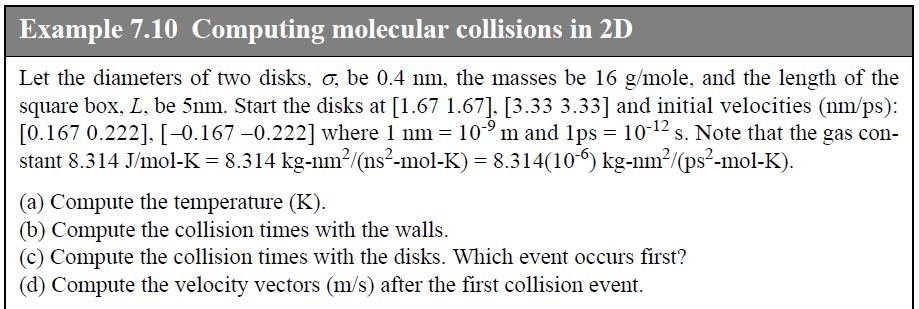
Suppose you had a program to simulate the motions of four molecules moving in 2D slowly enough that you could clearly see the velocities of all disks. (The Piston-Cylinder applet in the DMD module at Etomica.org is an example of such a program when kept in “adiabatic” mode.)(a) Let the disk
Suppose you had a program to simulate the motions of N molecules moving in 2D. (The 2D applet in the DMD module at Etomica.org is an example of such a program when kept in “adiabatic” mode.)(a) Simulate the motions of the disks using each potential model (ideal gas, hard disk, square well) for
Sphere and disk collisions can be expressed more compactly and computed more conveniently in vector notation. Primarily, this involves converting the procedures of Example 7.10 to use the dot product of the relative position and relative velocity. (You may find useful information in the DMD module
The discussion in the chapter focuses on the square-well fluid, but the same reasoning is equally applicable for any model potential function. Illustrate your grasp of this reasoning with some sketches analogous to those in the chapter.(a) Sketch the radial distribution function versus radial
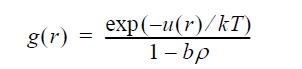
Suppose that a reasonable approximation to the radial distribution function iswhere x = r/σ, F = exp(ε/kT) - 1 and b = πNAσ3/6. Derive an expression for the equation of state of the square-well fluid based on this approximation. Evaluate the equation of state at bρ = 0.6 and ε/kT = 1.
The truncated virial equation (density form) is Z = Bρ + 1 According to Eqn. 7.52, the virial coefficient is given bywhere the low pressure limit of g(r) given by Eqn. 7.57 is to be used. Another commonly cited equation for the virial coefficient is Eqn. 7.59. Show that the two equations are
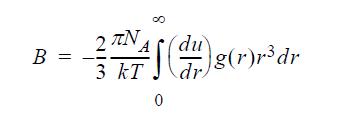
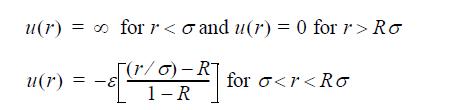
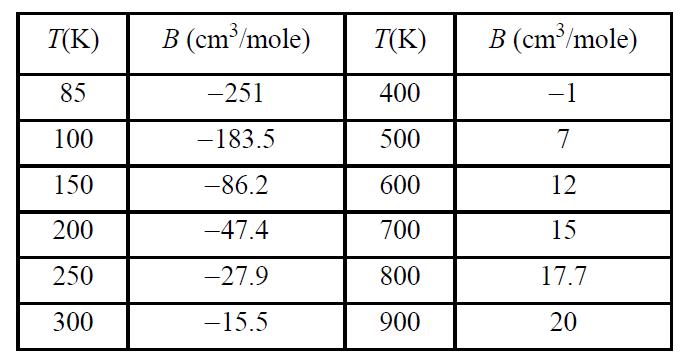
One suggestion for a simple pair potential is the triangular potentialDerive the second virial coefficient and fit the parameters σ, ε, and R to the virial coefficient data for argon tabulated in problem 7.30.Data from Problem 7.30The virial coefficient can be related to the pair potential by
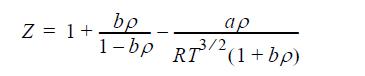
Develop an expression for the Gibbs energy departure function based on the Redlich- Kwong (1958) equation of state: Z = 1 + bp ap 1-bp RT³/(1+bp)
What forms does the derivative (∂CV /∂V)T have for a van der Waals gas and a Redlich- Kwong gas? Comment on the results.
The virial coefficient can be related to the pair potential by Eqn. 7.59.(a) Derive the integrated expression for the second virial coefficient in terms of the square well potential parameters ε/k, σ, and R.(b) Fit the parameters to the experimental data for argon(c) Fit the parameters to the
Molecular simulation can be used to explore the accuracy and significance of individual contributions to an equation of state. Here we explore how the σ parameter relates to experimental data.(a) Erpenbeck and Wood have reported precise simulation results for hard spheres as listed below. Plot
Molecular simulation can be used to explore the accuracy and significance of individual contributions to an equation of state. Use the DMD module at Etomica.org to tune Xe’s ε and σ parameters.(a) According to the Carnahan-Starling (CS) model, what value do you obtain for ZHS at ηP=0.375?(b)
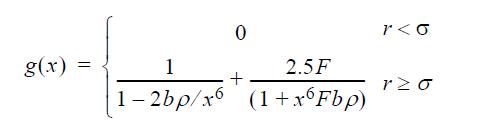
Suppose that a reasonable approximation for the radial distribution function is g(r) = 0 for r < σ, andfor r ≥ σ where u is the square-well potential and b = πNAσ3/6. Derive an equation of state for the square-well fluid based on this approximation.
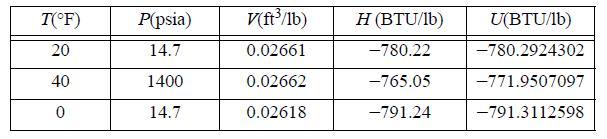
Estimate CP, CV, and the difference CP - CV in (J/mol-K) for liquid n-butane from the following data. T(°F) 20 40 0 P(psia) 14.7 1400 14.7 V(ft³/1b) 0.02661 0.02662 0.02618 H (BTU/lb) -780.22 -765.05 -791.24 U(BTU/1b) -780.2924302 -771.9507097 -791.3112598
For certain fluids, the equation of state is given by Z = 1 - bρ/Tr. Develop an expression for the enthalpy departure function for fluids of this type.
In our discussion of departure functions we derived Eqn. 8.14 for the internal energy departure for any equation of state.(a) Derive the analogous expression for (CV - CVig)/R.(b) Derive an expression for (CV - CVig)/R in terms of a, b, ρ, and T for the equation of state: Z=1+ bp 1+bp -
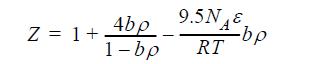
Even in the days of van der Waals, the second virial coefficient for square-well fluids (λ = 1.5) was known to be B/b = 4 + 9.5 [exp(NAε/RT) -1]. Noting that ex ~ 1 + x + x2/2 + …, this observation suggests the following equation of state:Derive an expression for the Helmholtz energy departure
Estimate CP, CV, and the difference CP - CV in (J/mol-K) for saturated n-butane liquid at 298 K n-butane as predicted by the Peng-Robinson equation of state. Repeat for saturated vapor.
Derive the integrals necessary for departure functions for U, G, and A for an equation of state written in terms of Z = f (T,P) using the integrals provided for H and S in Section 8.6. P H-Hig (FRF) --1¹), # RT OT p P = P (S-siz) (S-5²³) = -√ [ (z - 1) + 7 (²/17), ] / (Z- T OT PJ P 0 8.29 8.30
Making use of the Peng-Robinson equation, calculate ΔH, ΔS, ΔU, and ΔV for 1 gmol of 1,3-butadiene when it is compressed from 25 bar and 400 K to 125 bar and 550 K.
The Soave-Redlich-Kwong equation is presented in problem 7.15. Derive expressions for the enthalpy and entropy departure functions in terms of this equation of state.Data from problem 7.15:The Soave-Redlich-Kwong equation is given by:where ρ = molar density = n/VTc, Pc, and ω are reducing
(a) Derive the enthalpy and entropy departure functions for a van der Waals fluid.(b) Derive the formula for the Gibbs energy departure.
Ethane at 425 K and 100 bar initially is contained in a 1 m3 cylinder. An adiabatic, reversible turbine is connected to the outlet of the tank and exhausted to atmosphere at 1 bar absolute.(a)Estimate the temperature of the first gas to flow out of the turbine.(b)Estimate the rate of work per mole
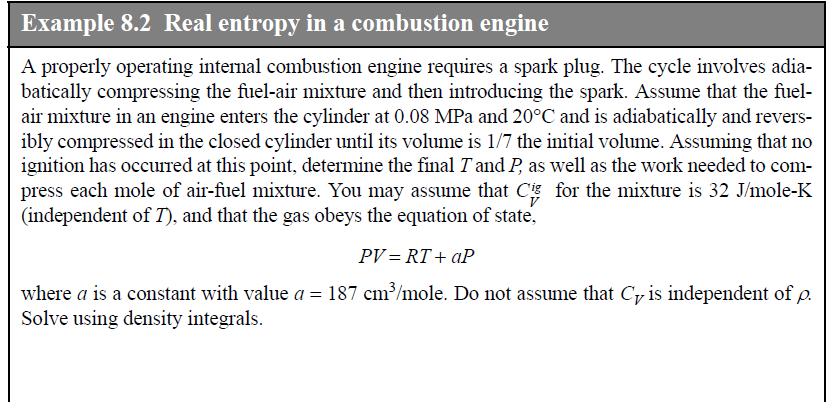
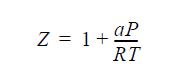
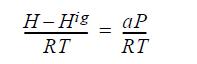
In Example 8.2 we wrote the equation of state in terms of Z = f (T,ρ). The equation of state is also easy to rearrange in the form Z = f (T,P). Rearrange the equation in this form, and apply the formulas from Section 8.6 to resolve the problem using departures at fixed T and P. Example 8.2 Real
Ethylene at 350°C and 50 bar is passed through an adiabatic expander to obtain work and exits at 2 bar. If the expander has an efficiency of 80%, how much work is obtained per mole of ethylene, and what is the final temperature of the ethylene? How does the final temperature compare with what
The ESD equation is presented in problem 7.19. Derive expressions for the enthalpy and entropy departure functions in terms of this equation of state.Data from Problem 7.19The ESD equation of state is given byηP = bρ, c is a “shape parameter” which represents the effect of non-sphericity on
A Rankine cycle is to operate on methanol. The boiler operates at 200°C (Psat = 4.087 MPa), and a superheater further heats the vapor. The turbine outlet is saturated vapor at 0.1027 MPa, and the condenser outlet is saturated liquid at 65 °C (Psat = 0.1027 MPa). What is the maximum possible
A gas has a constant-pressure ideal-gas heat capacity of 15R. The gas follows the equation of state,over the range of interest, where a = -1000 cm3/mole.(a) Show that the enthalpy departure is of the following form:(b) Evaluate the enthalpy change for the gas as it undergoes the state change: Z = 1
An ordinary vapor-compression cycle is to be designed for superconductor application using N2 as refrigerant. The expansion is to 1 bar. A heat sink is available at 105 K. A 5 K approach should be sufficient. Roughly 100 Btu/hr must be removed. Compute the coefficient of performance (COP) and
Derive the integrated formula for the Helmholtz energy departure for the virial equation (Eqn. 7.7), where B is dependent on temperature only. Express your answer in terms of B and its temperature derivative. where B(T) = (B° + B¹)RT/P 7.7
Suppose ethane was compressed adiabatically in a 70% efficient continuous compressor. The downstream pressure is specified to be 1500 psia at a temperature not to exceed 350°F. What is the highest that the upstream temperature could be if the upstream pressure is 200 psia?
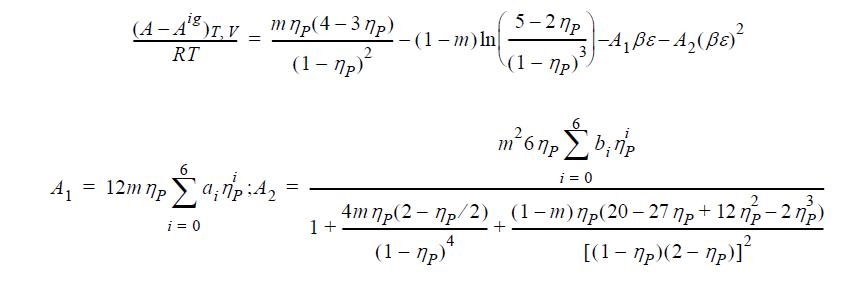
Recent research suggests the following equation of state, known as the PC-SAFT model.(a) Derive an expression for Z.(b) Derive the departure function for (U-Uig).ηP = b; m = constant proportional to molecular weight; ai, bi are constants. (A - A°)T, V mnp(4-3np) ig. = RT 2 (1-7p)² = A₁ 12m
P-V-T behavior of a simple fluid is found to obey the equation of state given in problem 8.14.(a) Derive a formula for the enthalpy departure for the fluid.(b) Determine the enthalpy departure at 20 bar and 300 K.(c) What value does the entropy departure have at 20 bar and 300 K?Data from Problem
As part of a liquefaction process, ammonia is throttled to 80% quality at 1 bar. If the upstream pressure is 100 bar, what must be the upstream temperature?
An alternative to the pressure equation route from the molecular scale to the macroscopic scale is through the energy equation (Eqn. 7.51). The treatment is similar to the analysis for the pressure equation, but the expression for the radial distribution function must now be integrated over the
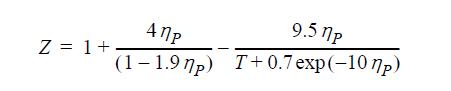
Recent research in thermodynamic perturbation theory suggests the following equation of state.(a) Derive the departure function for (A – Aig)T,V.(b) Derive the departure function for (U – Uig). 2 = 1 + 9.5 Пр АПР (1-1.97p) T+ 0.7 exp(-10 np)
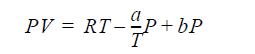
A gas is to be compressed in a steady-state flow reversible isothermal compressor. The inlet is to be 300 K and 1 MPa and the gas is compressed to 20 MPa. Assume that the gas can be modeled with equation of statewhere a = 385.2 cm3-K/mol and b = 15.23 cm3/mol. Calculate the required work per mole
Showing 1400 - 1500
of 2105
First
8
9
10
11
12
13
14
15
16
17
18
19
20
21
22
Step by Step Answers

 Get 50% OFF
Claim Now
Get 50% OFF
Claim Now




![T AGR (77) + ACp[(T-TR) - Tln (77)]- [T-TR T R T R AHR TR AGT= AGR](https://dsd5zvtm8ll6.cloudfront.net/si.question.images/images/question_images/1696/2/4/2/685651a9bfdd0f751696242682781.jpg)
![[U] [M] -ACP R T [(-4) - ()]-[-4] 1- Inf T TRASR AS TR Tr R](https://dsd5zvtm8ll6.cloudfront.net/si.question.images/images/question_images/1696/2/4/2/840651a9c986dd071696242839477.jpg)

















![RT a=a_a; a = 0.42748- q=0.4274 2 C a = [1 + K(1-T)] Pc RT b=0.08664- K = 0.480+ 1.574 - 0.1760 Po C 7.66](https://dsd5zvtm8ll6.cloudfront.net/si.question.images/images/question_images/1696/0/5/9/7416517d15d432b31696059738510.jpg)



![u(r) exp[-] lim g(r) exp P0 7.57](https://dsd5zvtm8ll6.cloudfront.net/si.question.images/images/question_images/1696/0/6/2/5176517dc35409411696062515236.jpg)



![Z=1+ bp 1+bp -p[exp(a/T)-1]](https://dsd5zvtm8ll6.cloudfront.net/si.question.images/images/question_images/1696/0/6/3/5796517e05b227361696063579933.jpg)

![P H-Hig (HF) --1), # RT OT p P = P (S-siz) (S-5) = - [ (z - 1) + 7 (7) ] / -107), (Z- T P 0 8.29 8.30](https://dsd5zvtm8ll6.cloudfront.net/si.question.images/images/question_images/1696/0/7/3/397651806b580e1a1696073366000.jpg)