New Semester
Started
Get
50% OFF
Study Help!
--h --m --s
Claim Now
Question Answers
Textbooks
Find textbooks, questions and answers
Oops, something went wrong!
Change your search query and then try again
S
Books
FREE
Study Help
Expert Questions
Accounting
General Management
Mathematics
Finance
Organizational Behaviour
Law
Physics
Operating System
Management Leadership
Sociology
Programming
Marketing
Database
Computer Network
Economics
Textbooks Solutions
Accounting
Managerial Accounting
Management Leadership
Cost Accounting
Statistics
Business Law
Corporate Finance
Finance
Economics
Auditing
Tutors
Online Tutors
Find a Tutor
Hire a Tutor
Become a Tutor
AI Tutor
AI Study Planner
NEW
Sell Books
Search
Search
Sign In
Register
study help
physics
fundamentals momentum heat
Fundamentals Of Momentum Heat And Mass Transfer 6th Edition James Welty, Gregory L. Rorrer, David G. Foster - Solutions
A spherical pellet containing pure solid A is suspended in a flowing liquid stream at 20°C. The initial diameter of the pellet is 1.0 cm, and the bulk liquid velocity is 10.0 cm/s. Component A is soluble in the liquid, and as time progresses, the diameter of pellet decreases. The dissolved solute
A spherical drug capsule dispenses Dicyclomine (an irritable bowel syndrome drug) to the body’s gastrointestinal tract over time. Initially, 2.00 mg of Dicyclomine (mAo) is loaded into the 0.50-cm-diameter capsule. In the bulk fluid surrounding the capsule, the Dicyclomine has a residual
A spherical silica gel adsorbent particle of 0.20 cm diameter in placed in a rapidly flowing air stream at a velocity of 50 cm/s containing 1.0 mole% of H2O vapor at total system pressure of 1.0 atm and temperature of 25°C. At 25°C, the equilibrium of H2O vapor with silica gel is described by the
An engineer proposes to use the mass-transfer equipment shown in the figure (next page) to prepare a water stream containing dissolved oxygen. Liquid water containing no dissolved oxygen is fed to the tank at a rate of 50 gmole/s. The inlet water is passed through a flow diffuser that makes the
An aeration basin is used to oxygenate wastewater at 283 K. The basin is filled to a depth of 4.55 m with 283 m3 wastewater of 0.050 mmole/L initial dissolved oxygen (O2) concentration. The filled basin is then aerated with six spargers, with each sparger delivering compressed air to bottom of the
A 1.75-cm diameter naphthalene mothball is suspended in an air stream at 280 K, 1.0 atm, and constant velocity of 1.4 m/s. Solid naphthalene exerts a vapor pressure of 2.8 Pa at 280 K. Consequently, the naphthalene very slowly sublimes into the passing air stream, with the rate limited by
Investigators studying the mass transfer from single spheres recommended the generalized equation Sh = 2.0 + C RemSc1/3 As discussed in Section 30.1, the value of 2.0 can be derived theoretically by considering the molecular diffusion from a sphere into a large volume of stagnant fluid.
Pure liquid benzene (C6H6) at 290 K flows as a thin film down the outside of a vertical, 0.08-m-diameter cylinder at a flow rate of 4.0 kg/hr. Dry air at 290 K and 1.0 atm flows perpendicular to the cylinder at a velocity of 4.0 m/s. The liquid benzene exerts a vapor pressure of 8100 Pa. Determine
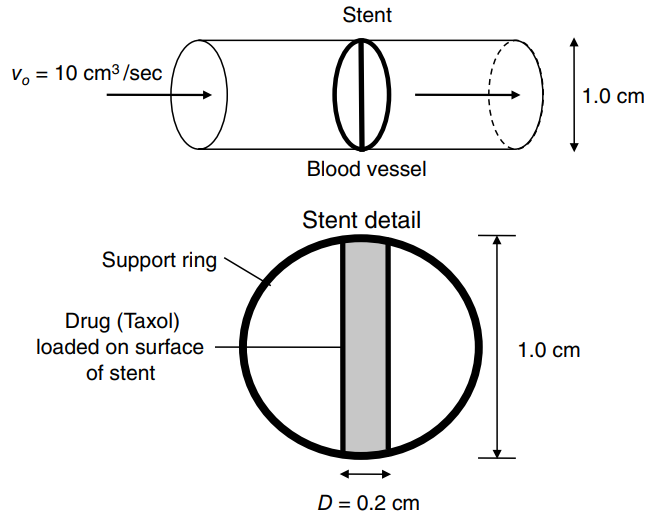
A €œstent€ is used to €œprop up€ a clogged artery to allow blood to pass through it. But stents can also be loaded with drugs to facilitate the timed release of the drug into the body, especially if the drug is not very soluble in body fluids. Consider the
Beaver Brewing Corporation has received a contract to produce carbonated beverages. A packed-bed absorption tower will be used for dissolving carbon dioxide (CO2) gas into water. In the present process, pure CO2 gas at 2.0 atm constant total system pressure is fed into the tower at a flow rate of
A packed tower, 2.0 ft in diameter and 4.0 ft in packed height, is used to produce a solution of dissolved oxygen in water for a biochemical process. The tower will be pressured to 5.0 atm with pure oxygen (O2) gas. There is no gas outlet, and pure oxygen gas will enter the tower only to maintain
An aeration basin is used to oxygenate wastewater at 283 K. The basin is filled to a depth of 4.55 m with 283 m3 wastewater of 0.050 mmole/L initial dissolved oxygen (O2) concentration. The filled basin is then aerated with six spargers, with each sparger delivering compressed air to bottom of the
An ozone (O3) treatment system is proposed to oxidize organic materials from wastewater. The first step in this process is to dissolve O3 in the wastewater. The wastewater has been stripped of all dissolved oxygen and ozone-demanding substances, and the pH is sufficiently low that the ozone
A gas stream of flow rate 10.0 lbmole/ft2· h contains 6.0% sulfur dioxide (SO2) by volume in air. It is desired to reduce the SO2level in the treated gas to no greater than 0.5% in a counter current packed tower operating at 30°C and 1.0 atm total system pressure, using water containing
A natural gas stream with a total volumetric flow rate of 880 standard cubic meters (SCM) per hour (std m3/h), temperature of 40°C, and total system pressure of 405 kPa is contaminated with 1.0 mole % hydrogen sulfide (H2S). A packed-bed gas absorption tower of 2.0 m diameter is used to lower
Exit gas from an amination reactor contains 10 mole% ammonia (NH3) vapor in a nitrogen (N2) carrier gas. This gas mixture is fed into the bottom of a packed tower at a molar flow rate of 2.0 kgmole/s. The NH3will be absorbed into water at neutral pH within a packed tower operating in counter
The cooled exhaust gas from a reactor that makes silicon by the chemical vapor deposition of trichlorosilane contains 8.0 mole% anhydrous HC1 vapor and 92.0 mole % hydrogen (H2) gas at 25°C. The total gas flow rate is 1.25 kgmole/h. It is desired to scrub out the HC1 vapor from this gas stream
Wastewater contaminated with 1,2,2-trichioroethane (C2H3C13, molecular weight 133.5 g/gmole) will be treated in a counter current packed tower using contaminant-free air as the stripping gas. In the present process, 100 kgmole/h of this liquid feed stream will be treated at 20°C and 1.65 atm total
Acetone, a solvent used for cleaning of silicon wafers, is highly volatile with a vapor pressure of 185 mm Hg at 20°C and 148 mm Hg at 15°C. An air handling system at 20°C captures the acetone vapors from the cleaning equipment, which must then be scrubbed out of the air. In the present
A process waste gas stream containing 5.0 mole% of benzene (solute A) enters the bottom of a packed tower. The tower is packed with 0.5-inch ceramic Raschig rings, and the diameter of the tower is 2.0 ft. The inlet gas flow rate is 32.0 lbmole/h (1006 lb/hr). The waste gas exiting the tower
A pilot-scale tower packed to a height of 6.0 ft with 5/8- inch ceramic Raschig rings is used to study the absorption of carbon disulfide (CS2, solute A) from nitrogen gas (N2) into a liquid absorbent solution at 24°C. The diameter of the tower is 0.50 ft. An inlet gas stream of total molar flow
A packed-bed liquid stripping process will be designed to remove benzene from contaminated wastewater. A liquid wastewater stream containing dissolved benzene of concentration 693 mg benzene/L (mole fraction 1.6 × 10⁻⁴) is sent to the top of a packed tower at a flow rate of 100 lbmole/ft2 · h.
A packed tower is used to remove component A from a gas stream mixture containing 12.0 mole% A and 88.0 mole% inerts. The gas mixture is fed to the bottom of the tower, and the desired superficial molar velocity of the gas stream into the tower (G1) is 5.0 kgmole/m2· h. Solvent containing no
It is desired to remove 83.3% of dissolved NH3from an aqueous stream containing 10.7 mole% NH3in water using a packed tower in counter current flow at 1.0 atm and 30°C. The flow rate of this entering liquid stream is 2.0 kgmole/s. The inlet air stream contains no NH3. Equilibrium distribution
An aqueous waste stream containing 1.0 mole% of hydrogen sulfide (H2S) dissolved in water will be treated by stripping the liquid with air in a counter current packed tower at 20°C and 12.50 atm total system pressure. The total flow rate of this liquid feed stream is 100 lbmole/h. Compressed air
A liquid stream of total molar flow rate 100 lbmole/h that contains 0.20 mole A/mole solvent must be reduced to 0.050 moles A/moles solvent. It is proposed to use a packed tower for this purpose. A 100% air stream (no solute A) is introduced into the bottom of the tower, and contacts the liquid
A waste gas of total inlet flow rate 10.0 lbmole/ft2· h containing 0.050 moles solute A/mole carrier gas is treated counter currently in packed tower with a nonvolatile, solute- free absorbing oil in order to scrub out 80% of solute A from the gas. It is desired to operate the process at a
An aeration basin is filled to a volume of 425 m3with wastewater containing dissolved hydrogen sulfide (H2S) of initial concentration 0.300 gmole/m3. The aeration basin is equipped with 10 gas spargers, with each injection nozzle located 3.2 m below the liquid surface. It is desired to remove the
A crystalline silicon wafer of 10 cm diameter and 1.0 mm thickness is coated with a thin film of elemental arsenic metal (As), which is a semiconductor dopant. The As-coated silicon wafer is “baked” in a diffusion furnace at 1050oC to allow the arsenic molecules to diffuse into the silicon. At
One step in the processing of cucumbers to pickles is the pickling process itself. In one method of making pickles, young cucumbers with no waxy skins are soaked in a NaC1 solution overnight. To initiate the pickling process, acetic acid is added to the salt solution to make the pickling
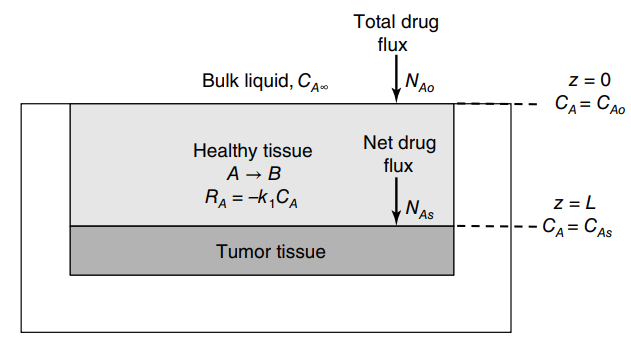
Consider the physical system shown in the figure on page 532. which represents a simplified scenario for the treatment of tumor (cancer) tissue. In this experiment, a slab of living tissue is in contact with liquid medium bearing a constant concentration of anti-tumor drug A, which serves as a
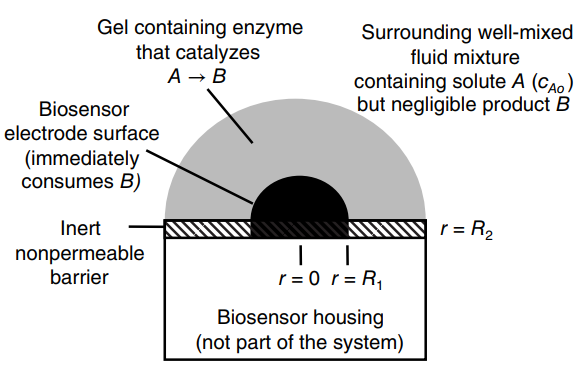
A biosensor is a device that uses a biological mechanism to aid in the detection of a solute (A) within a mixture. Consider the hemispherical-shaped biosensor tip shown in the figure on page 529. The biosensor consists of two sections. In the first section, an enzyme that recognizes only solute A
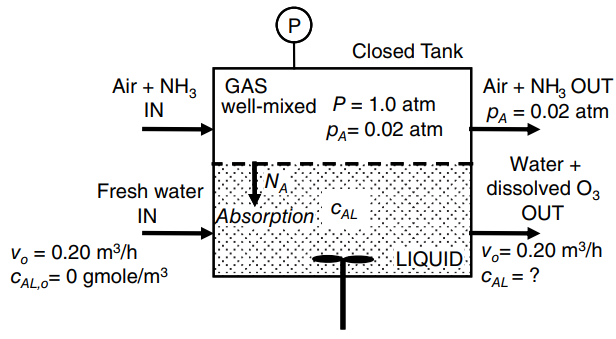
Ammonia (NH3) in air is being absorbed into water within the enclosed tank shown in the figure (next page). The liquid and gas phases are both well mixed, and mass-transfer occurs only at the exposed gas€“liquid interface. The diameter of the cylindrical tank is 4.0 m, and the total
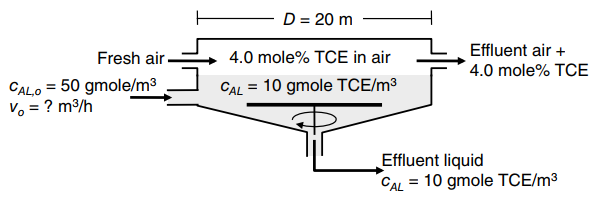
Consider the waste treatment process shown in the figure below. In this process, wastewater containing a dissolved TCE concentration of 50 gmole/m3enters a clarifier, which is essentially a shallow, well-mixed tank with an exposed liquid surface. The overall diameter of the tank is 20.0 m, and the
Jasmone (molecular formula C11H16O) is a valuable specialty chemical that is obtained from the jasmine plant. A common method of manufacture is to extract the plant material in water, and then use benzene to concentrate the jasmone in a simple liquid-liquid extraction process. Jasmone (species A)
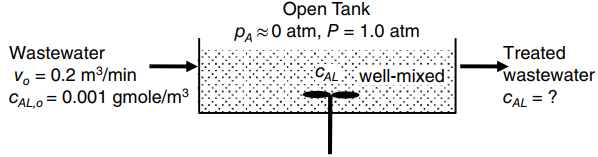
Wastewater containing solute A at concentration of 1.0 · 10 gmole/m3enters an open tank at a volumetric flow rate of 0.20 m3/min, and exits at the same rate, as shown in the figure below. Solute A is released wastewater surface to the surrounding air by a gas€”liquid interface
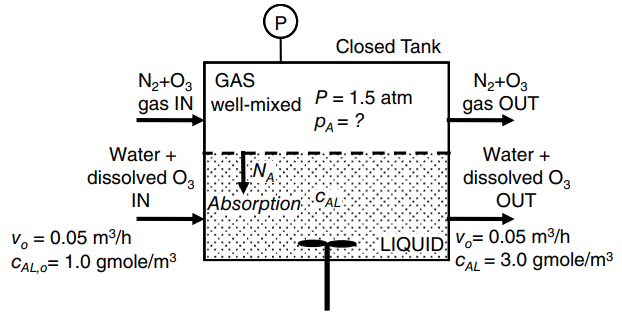
Ozone gas (O3, solute A) dissolved in high-purity water is commonly used in wet cleaning processes associated with semiconductor device fabrication. It is desired to produce a liquid water stream containing 3.0 gmole O3/m3(238 mg/L) by a process that does not create any gas bubbles. One
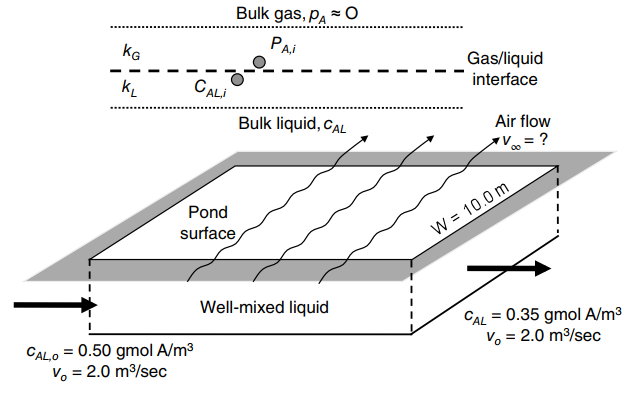
Wastewater containing volatile species A dissolved in the water at a dilute inlet concentration of 0.50 gmole A/m3(cAL,0) is pumped into a well-mixed open holding pond at a volumetric flow rate (v0) of 2.0 m3/s, as shown in the figure below. The volatile species A partitions into the atmosphere by
At a particular location in a counter current stripper for removal of solute A from a liquid stream, the mole fraction of solute A in the gas phase is 0.010, and the mole fraction of this species in the liquid phase is 0.035. Equilibrium distribution data at the temperature and pressure of the
An engineer at a pulp mill is considering the feasibility of removing chlorine gas (C12, solute A) from an air steam using water, which will be reused for a pulp bleaching operation. The process will be carried out in a counter current flow gas absorption tower filled with inert packing, where
At a particular location in a counter current gas absorber, the mole fraction of the transferring species (solute A) in the gas phase is 0.030, and the mole fraction of this species in the liquid phase is 0.0 10. The gas film mass-transfer coefficient is given ky1.0 lb-mole/ft2· hr, and 80%
A packed-bed tower is used for absorption of sulfur dioxide (SO2) from an air stream using water as the solvent. At one point in the tower, the composition of SO2 is 10% (by volume) in the gas phase, and 0.30 wt% in the liquid phase, which has a mass density 61.8 Ibm/ft3. The tower is isothermal at
In a gas€“liquid interface mass-transfer process, the bulk mole fraction composition of solute A in the inert carrier gas is 0.010, and the bulk mole fraction composition of solute A in the inert liquid solvent is 0.040. Equilibrium distribution data at the temperature and pressure of the
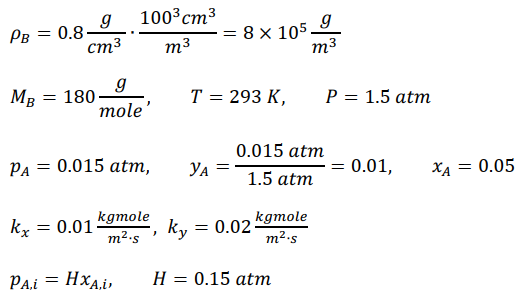
It is desired to recover hexane vapor (solute A) from air using an absorption process. The absorption solvent is a nonvolatile mineral oil, which has a mass density of 0.80 g/cm3and a molecular weight of 180 g/gmole. In the dilute concentration range, the equilibrium relationship for the
A gas–liquid convective mass-transfer process involves the transfer of the industrial contaminant methylene chloride (solute A) between air and water at 20°C and 2.20 atm total system pressure. Air is the inert carrier gas, and water is the inert solvent. At the present conditions of operation,
Consider an inter phase mass-transfer process for the chlorine dioxide (C1O2)-air-water system at 20°C, where ClO2, gas (solute A) is sparingly soluble in water. At the current conditions of operation, the mole fraction of ClO2, in the bulk gas phase is yA= 0.040 and the mole fraction of C1O2in
A wetted wall tower is used to “aerate” water using air at 2.0 atm total system pressure and 20°C. The molar composition of air is 21% O2, 78% N2, and 1% other gases. Let solute A = O2. At 20°C, the Henry’s law constant for dissolution of O2 gas in water is H = 40,100 atm based on the
A wetted wall tower is used to “aerate” water using air at 2.0 atm total system pressure and 20°C. The molar composition of air is 21% O2, 78% N2, and 1% other gases. Let solute A = O2. At 20°C, the Henry’s law constant for dissolution of O2 gas in water is H = 40,100 atm based on the
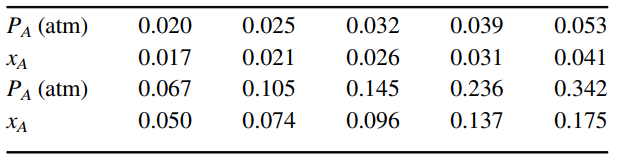
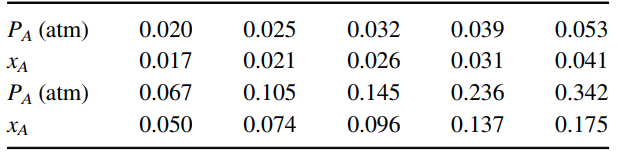
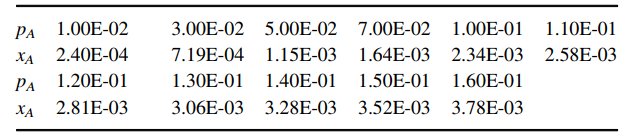
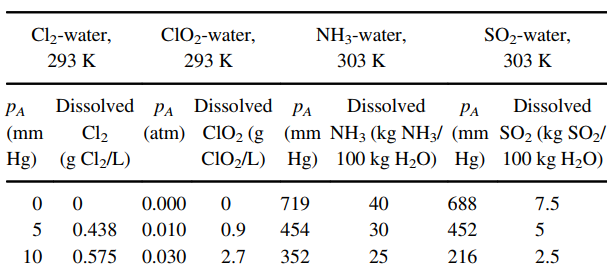
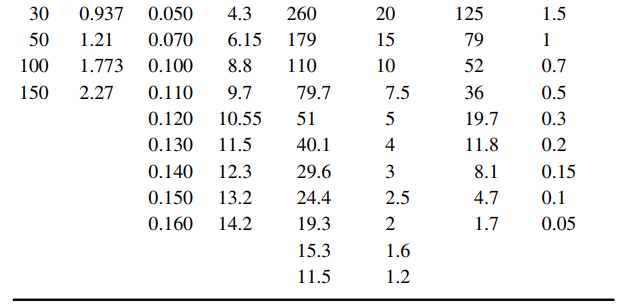
The table below presents equilibrium distribution data for four gaseous solutes dissolved in water, using air as the carrier gas:a. Using a spreadsheet to perform the calculations, prepare a graph of the equilibrium distribution data for each solute as partial pressure in the gas vs. molar
Please refer to Problem 28.16 above. At 600 K and 1.0 atm, under a new velocity for gas flow, the heat-transfer coefficient (h) is now 50 W/m2 · K.a. Compare average mass-transfer coefficient for CO mass transfer (kc) using the Reynolds and Chilton–Colburn analogies. Based on the assumptions for
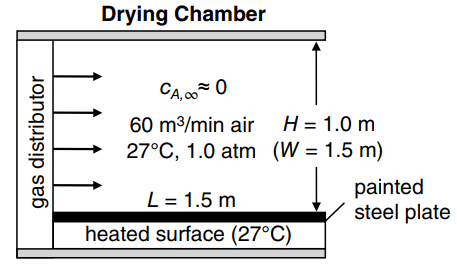
A thin (1.0-mm-thick) coat of fresh paint has just been sprayed over a 1.5-m by 1.5-m square steel body part, which approximates a flat surface. The paint contains a volatile solvent that initially constitutes 30 wt% of the wet paint. The initial density of the wet paint is 1.5 g/cm3. The freshly
Compare the Schmidt number (Sc) tor O2 gas in air at 300 K and 1.0 atm with Sc for dissolved O2 in liquid water at 300 K. Then compare these values for CO2 gas in air at 300 K and 1.0 atm, and dissolved CO2 in liquid water at 300 K. You may assume that O2 and CO2 are dilute with respect to air as
As society searches for technical solutions to global warming, one approach to sequester carbon-dioxide rich greenhouse gases is to capture the CO2within an adsorbent material at high pressure. An experiment designed to evaluate a candidate adsorbent material is presented in the figure below, which
A spherical gel capsule of 0.50 cm diameter is used a drug delivery device. Initially, there is a total drug amount 0.005 mmole uniformly loaded into the gel material. The capsule is ingested, and within the gastrointestinal tract, the bulk con cent-ration of the drug A within the gastrointestinal
Consider a rectangular-shaped gel tablet of thickness 0.125 cm and width 0.50 cm. The edges of the gel tablet are sealed so that diffusion only occurs along the thickness of the tablet. The initial concentration of the drug Dramamine (species A) in the gel is 64 mg/cm3, to provide a total drug
Consider a rectangular-shaped gel tablet of thickness 0.652 cm and width 1.0 cm loaded with the drug Dramamine. The edges of the gel tablet are sealed so that diffusion of Dramamine occurs only along the thickness of the gel tablet. The initial concentration of the drug Dramamine (solute A) in the
A small spherical bead is used as a controlled drug release capsule in the gastrointestinal system (i.e., your stomach). In this particular case, a 0.10-cm diameter bead has a uniform initial concentration of 0.20 mmole/L of the drug griseofulvin (species A). The diffusion coefficient of
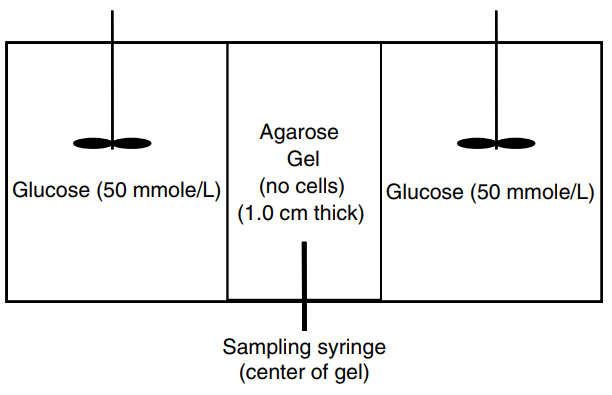
Living cells immobilized within an agarose gel require glucose to survive. An important aspect of the biochemical system design is the effective diffusion coefficient of glucose into the agarose gel itself, which you may consider as a homogeneous material that is mostly liquid water. Consider the
Spherical polymer beads of 3.0 mm (0.3 cm) diameter contain residual solvent from the polymer-casting process. Initially, the bead contains 0.20 wt% of residual solvent uniformly distributed within the polymer. The residual solvent will be removed from the bead material by drying the beads in a
A polymer coating of 6.0 mm thickness is cast onto a nonporous flat surface. The coating contains a residual amount of casting solvent, which is uniform at 1.0 wt % within the coating. The mass transfer of solvent through the polymer coating is controlled by molecular diffusion. The air flowing
A novel metal ion adsorbent material based on the bio polymer poly glucosamine is cast into a gel bead. The amine groups on the bio polymer have a high affinity for transition metal ions at parts-per-million (mg/L) concentrations. When water containing metal ions contacts the gel, the metal ions
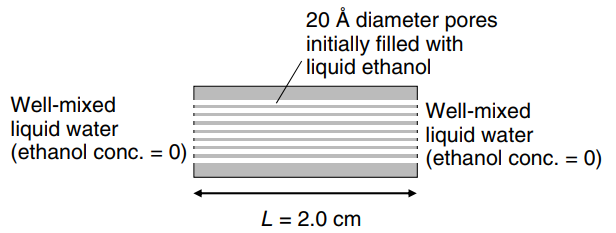
Consider the porous slab shown in the figure below. Very tiny pores of 20 A diameter run through the 2.0 cm slab in parallel array. This device will ultimately serve as a drug delivery vehicle for a drug that is soluble in ethanol. As part of the device development, we are interested in diffusion
Consider the cylindrical shaped absorbent material designed to selectively remove solute A from solution. The uptake of solute A through the homogeneous absorbent material is limited by the molecular diffusion. Furthermore, the absorbent has a higher affinity for solute A relative to the
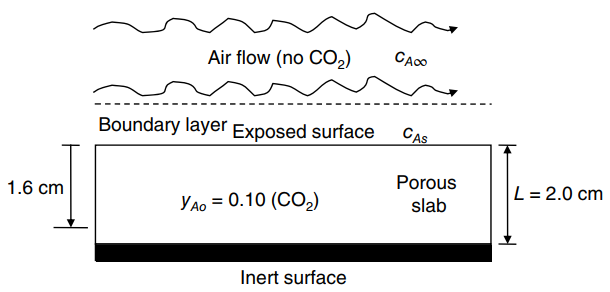
We are interested in the diffusion of CO2gas out of a randomly porous adsorbent material slab of 2.0 cm thickness, as shown in the figure below. Initially, the gas space inside the porous material contains 10% mole CO2(A) and 90 mole% air (B). The process is maintained at 25oC and total system
A common procedure for increasing the moisture content of air is to bubble it through a column of water. The air bubbles are assumed to be spheres, each having a radius of 1.0 mm, and are in thermal equilibrium with water at 298 K. Determine how long the bubble should remain in the water to achieve
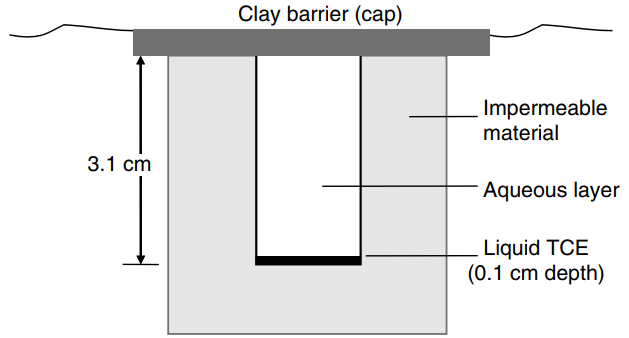
The contamination of water-saturated soils with toxic organic solvents is an important environmental problem. The organic solvents can dissolve into to the water and diffuse through the water-saturated soil by molecular diffusion, resulting in contamination of the soil and the water. The figure
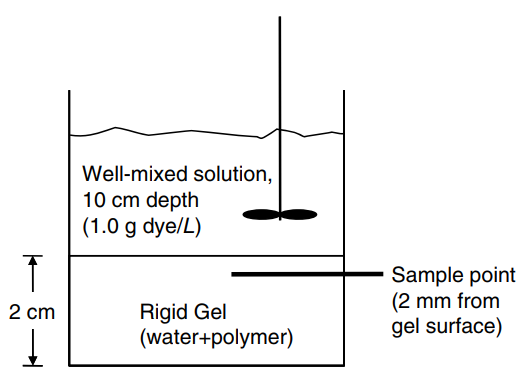
A simple experiment is set up to measure the effective diffusion coefficient of blue dextran dye into a rigid agarose gel. An aqueous, well-mixed solution of liquid height 10 cm con taining 1.0 g/L (1.0 × 10⁻³g/cm3) of the dye rests over the rigid gel of 2.0 cm thickness, as shown in
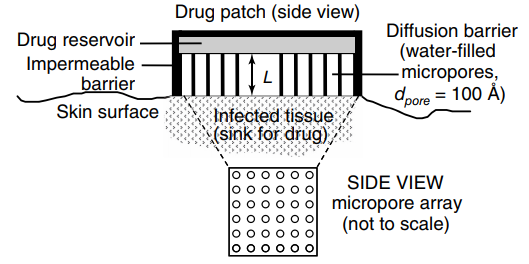
A “drug patch” is designed to slowly deliver a drug (species A) through the body tissue to an infected zone of tissue beneath the skin. The drug patch consists of a sealed reservoir containing the drug encapsulated within a porous polymer matrix. The patch is implanted just below the skin. A
Hydrogen embrittlement weakens the mechanical strength of cast iron. This phenomenon frequently occurs in cast-iron pressure vessels containing hydrogen (H2) gas. The H2 gas dissolves into the iron metal (Fe) and diffuses into the solid nonporous Fe by an interstitial diffusion mechanism. The H2
A preheated piece of mild steel, having an initial concentration of 0.20% by weight of carbon, is exposed to a carbonizing atmosphere for 1.0 h. Under the processing conditions, the surface concentration of carbon is 0.70% by weight. If the diffusivity of carbon through steel is 1.0 × 10⁻¹¹ m2/s
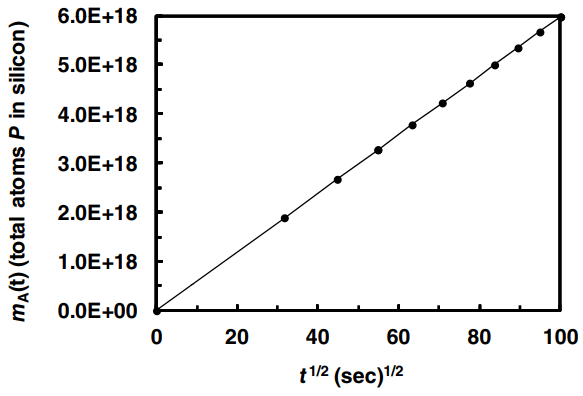
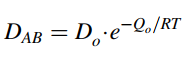
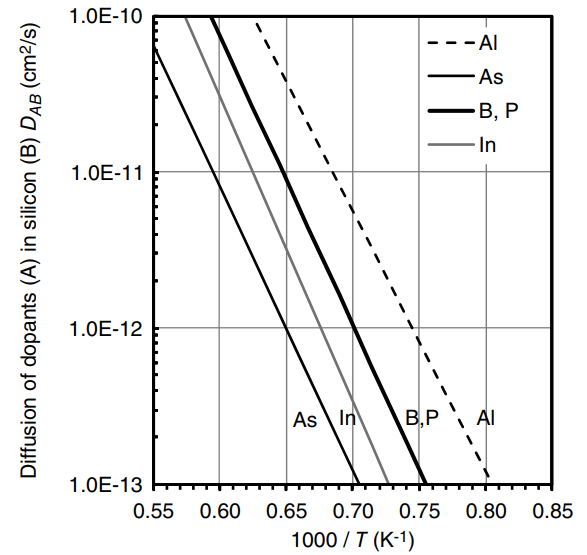
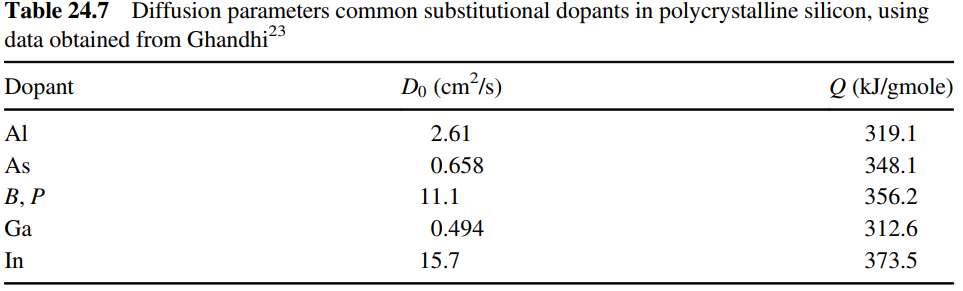
One step of the manufacturing of silicon solar cells is the molecular diffusion (doping) of elemental phosphorous (P) into crystalline silicon to make an n-type semiconductor. This Pdoped layer needs to be at least 0.467 μm into the 200-μm thick wafer. The present
In the fabrication of a p-type semiconductor, elemental boron is diffused a small distance into a solid crystalline silicon wafer. The boron concentration within the solid silicon deter mines semiconducting properties of the material. A physical vapor deposition process keeps the concentration of
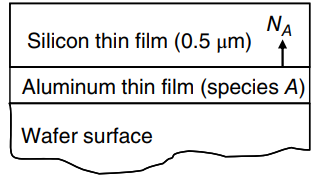
Aluminum is the primary conductor material for fabrication of microelectronic devices. Consider the composite thin film shown in the figure below. A thin film of solid aluminum is sputter-coated onto a wafer surface. Then, a 0.50-μm thin film of silicon is added on top of the aluminum
The transient concentration profile cA(z,t) resulting from transient one-dimensional diffusion in a slab under conditions of negligible surface resistance is described by equation (27.16). Use this equation to develop an equation for predicting the average concentration, c̅A, within the control
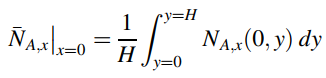
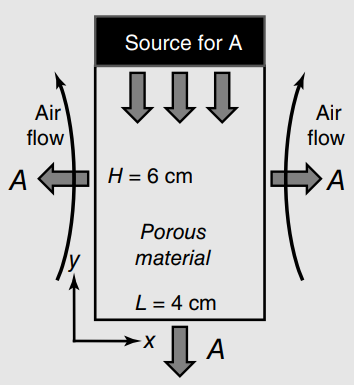
Please refer to example 5 of this chapter. Estimate the total transfer rate of solute A from the mass-transfer system shown in Figure 26.14, in units of gmole/h. As part of this analysis, consider the following steps:a. Differentiate the analytical solution for cA(x,y) with respect to the
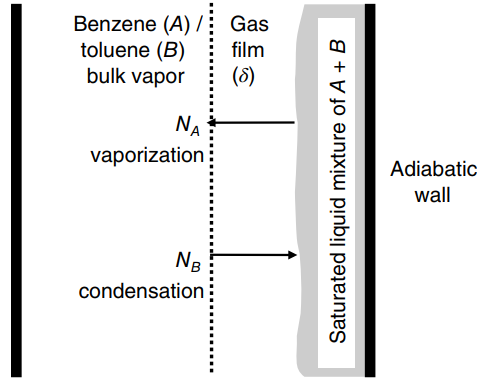
In the distillation of a benzene/toluene mixture, a vapor richer in the more volatile component benzene is produced from the benzene/toluene liquid solution. Benzene is transferred from the liquid to the vapor phase, and the less volatile toluene is transferred in the opposite direction, as shown
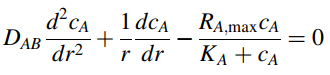
Recall from example 3, Chapter 25, that the differential model for the radial concentration profile of dissolved oxygen within one cylindrical engineered tissue bundle (Figure 25.8) iswith boundary conditionsOften, KA is very small relative to cA so that the homogeneous reaction term approaches a
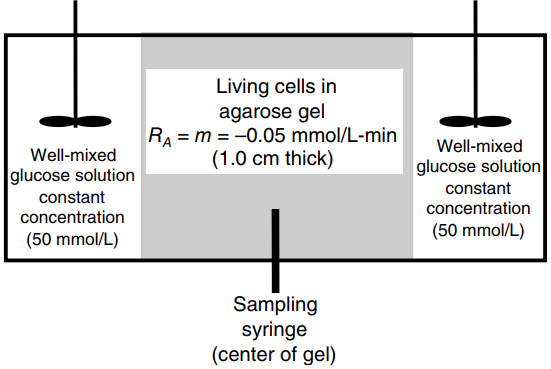
Many bio catalytic reactions are carried out with living cells as the bio catalyst. In some processes, the cells are immobilized within an agarose gel. However, living cells uniformly distributed within an agarose gel require glucose to survive, and the glucose must diffuse through the gel material
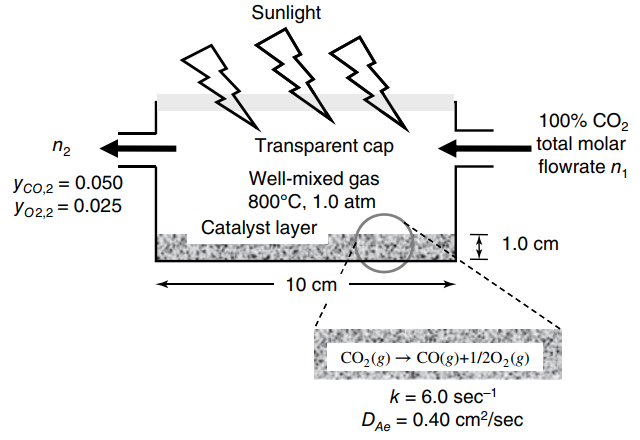
Carbon dioxide (CO2) from waste sources is a sustain able feed stock for chemicals production if new technologies can be developed to carry out the reduction of CO2, the most oxidized form of carbon, to a more reactive molecule. Recently, solar-energy driven reactor concepts have emerged that
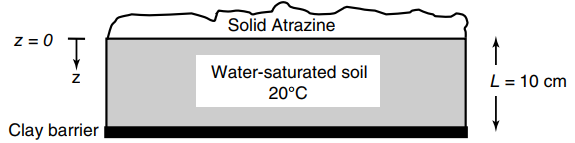
The pesticide Atrazine (C8H14C1N5, mol wt. 216 g/ mol) degrades in soil by a first-order reaction process. Consider the situation shown in the figure below, where there is a spill of solid Atrazine rests on top of a 10-cm-thick layer of water- saturated soil at 20°C. The solid Atrazine
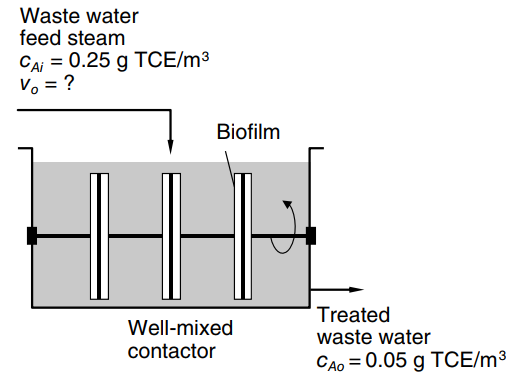
A bio film reactor with a well-mixed liquid phase shown below will be used to treat wastewater contaminated with trichioroethylene (TCE) at a concentration 0.25 mg/L (1.9 mmole/m3, MTCE = 131.4 g/gmole). If the available surface area of the bio film in the reactor is 800 m2, and the volumetric flow
A bio film reactor with a well-mixed liquid phase shown below will be used to treat wastewater contaminated with trichioroethylene (TCE) at a concentration 0.25 mg/L (1.9 mmole/m3, MTCE= 131.4 g/gmole). The available surface area of the bio film in the reactor is 800 m2, and the desired outlet
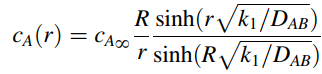
Consider a spherical gel bead containing a bio catalyst uniformly distributed within the gel. Within the gel bead, a homogeneous, first-order reaction A †’k1D is promoted by the bio catalyst. The gel bead is suspended within water containing a known, constant, dilute concentration of
A “bio film” (component B) coats the surface of a nonporous inert sphere. The diameter of the nonporous inert core is 4.0 mm, and the overall diameter of the spherical bio film particle is 8.0 mm. The spherical bio film particle is suspended within water containing a known, constant, dilute
The €œdrug patch€ shown in the figure in the next column releases a water-soluble epidermal growth factor (species A) to repair a specific region of wounded tissue on the human body. A slow release of the drug is critical for regulating the rate of tissue repair. The drug layer
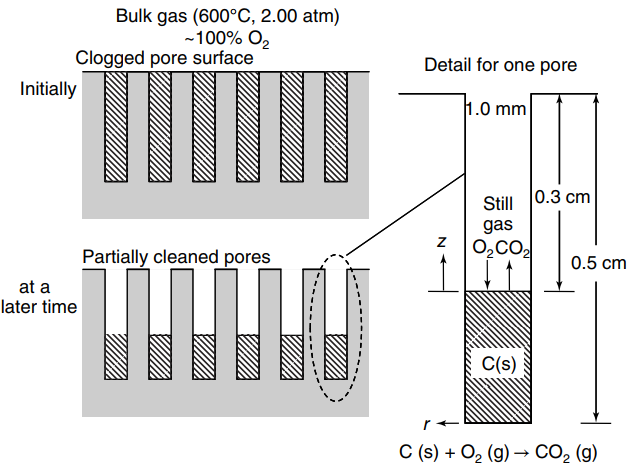
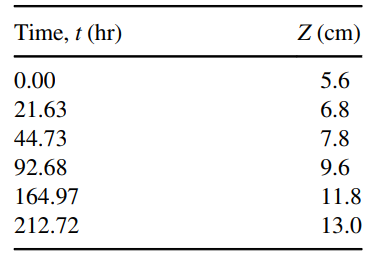
A flat surface containing many parallel pores is clogged with €œcoke€ from a manufacturing process, as shown in the figure below. Pure oxygen gas (O2) at high temperature is used to oxidize the coke, which is mainly solid carbon, to carbon dioxide (CO2) gas. This process will
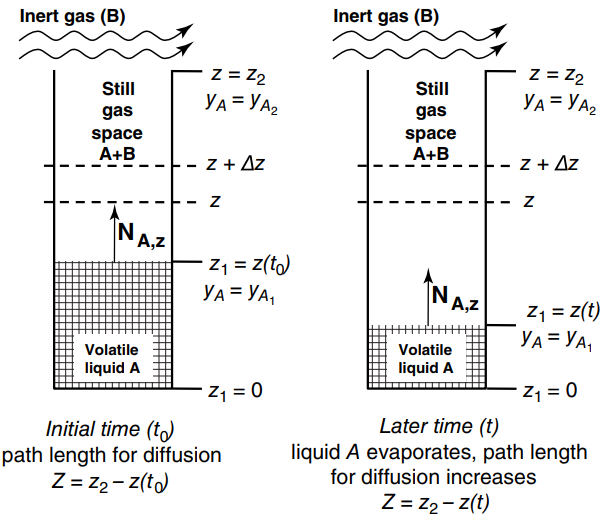
The Arnold Diffusion Cell shown in Figure 26.5 is a simple device used to measure gas-phase diffusion coefficients for volatile substrates in air. In the present experiment, liquid acetone is loaded to the bottom of a glass tube of 3.0 mm inner diameter. The tube and the liquid acetone in the tube
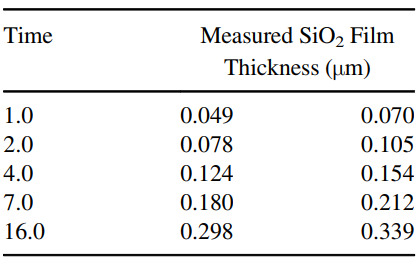
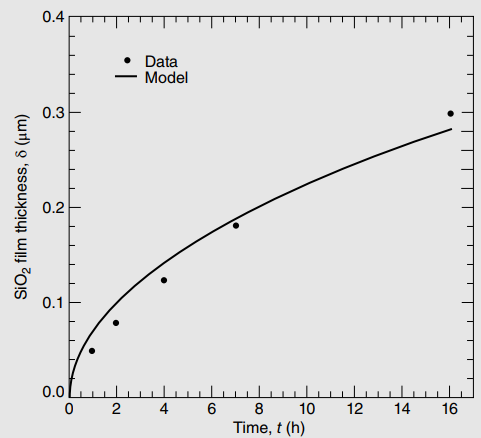
The data provided in Figure 26.7 are based on the diffusion of O2into SiO2formed from the oxidation of (100) crystalline silicon at 1000°C. Estimate the diffusion coefficient of O2in SiO2formed from the oxidation of (111) crystalline silicon at 1000°C, using the data in the table below,
A cylindrical graphite rod (pure solid carbon, density 2.25 g/cm3) of length 25 cm and initial diameter of 2.0 cm is inserted into a flowing air stream at 1100 K and 2.0 atm total system pressure. The flowing gas creates a stagnant gas boundary layer 5.0 mm thick around the external surface of the
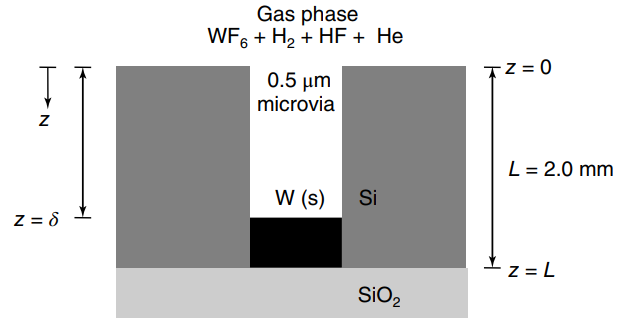
€œMicrovia€ are microscopic passages between two thin films on a microelectronic device. Often, microvia are filled with a conductive metal to make a microscopic conductor for the flow of electrons between the two thin films. In one particular process, tungsten is deposited
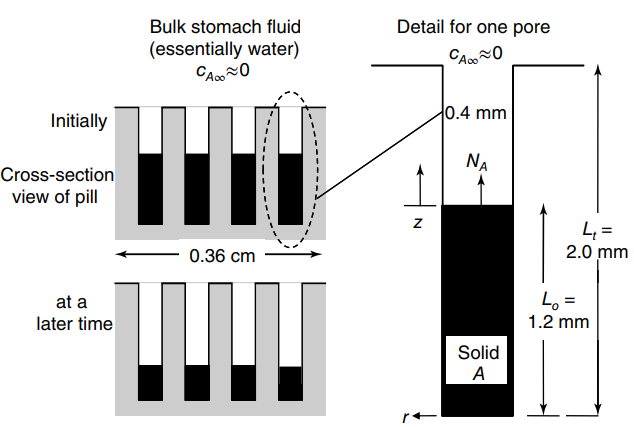
Consider the timed drug release pill shown in the figure below. The pill is ingested into the stomach. The pill is a slab of 0.36 cm per side, which has an array of 16 cylindrical pores in it. Each pore is 0.4 mm (0.04 cm) in diameter and 2.0 mm (0.20 cm) deep. Pure solid drug (species A) is loaded
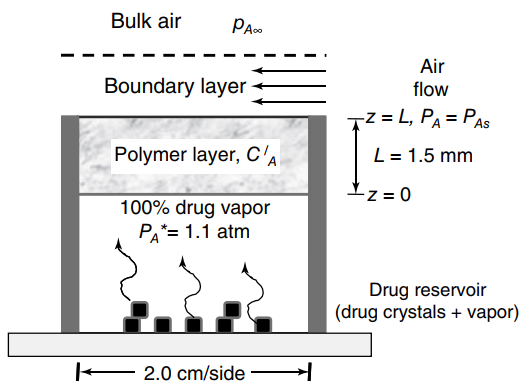
The mass transfer device shown in the figure at the top of the next column is used to carry out the controlled release of a vapor-phase pheromone drug used in pest control. The solid drug sublimes at a vapor pressure P*Awithin the gas space of the reservoir. A polymer layer of thickness L = 0.15 cm
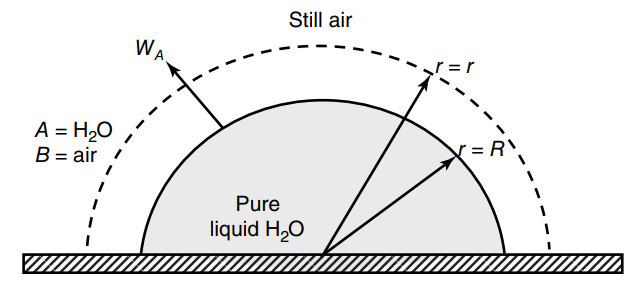
Consider a hemispherical droplet of liquid water residing on a flat surface, as shown in the figure on page 526. Still air surrounds the droplet. At an infinitely long distance from the gas film, the concentration of water vapor in the air is effectively zero (dry air). At a constant temperature of
A spherical ball of solid, nonporous naphthalene, a “mothball,” is suspended in still air. The naphthalene ball slowly sublimes, releasing the naphthalene vapor into the surrounding air by molecular diffusion-limited process. Estimate the time required to reduce the diameter from 2.0 to 0.50 cm
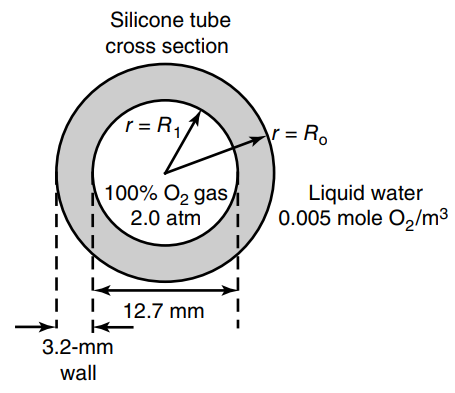
Tubular membranes of silicone rubber can be used for €œbubble less€ aeration of water. A cross section of the tube is shown in the figure (right-hand column). Pure oxygen (O2) gas is pressurized to 2.0 atm inside a section of silicone rubber tubing of inner diameter 12.7 mm and
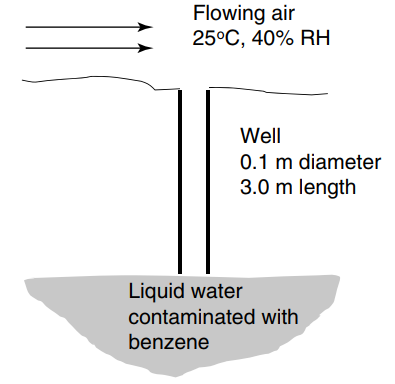
An open well contains water contaminated with volatile benzene at the bottom of the well, with dimensions shown in the figure on page 525. The concentration of dissolved benzene in the water is 156 g/m3, and remains constant. The system is isothermal at 25ºC. We are interested in determining
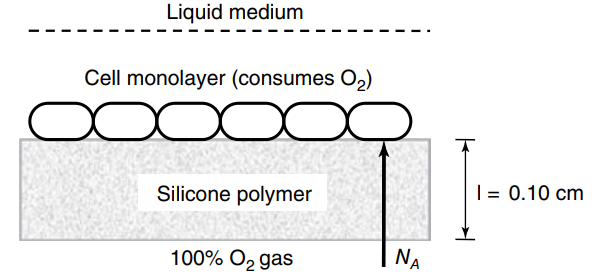
A cell mono layer used in a tissue engineering scaffold adheres onto the top surface of a silicone rubber (polymer) sheet of 0.10 cm thickness, as shown in the figure below. The rectangular sheet is 5.0 cm by 10.0 cm. The underside of the silicone polymer layer is in contact with pure O2gas. The
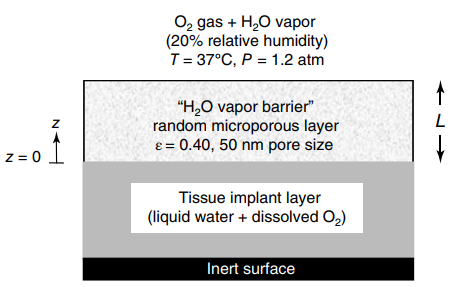
A porous €˜water vapor barrier€ is placed over the tissue implant shown in the figure in the next column. The purpose of the porous €œwater vapor barrier€ is to allow O2gas direct access to the tissue while minimizing the diffusion-limited rate of
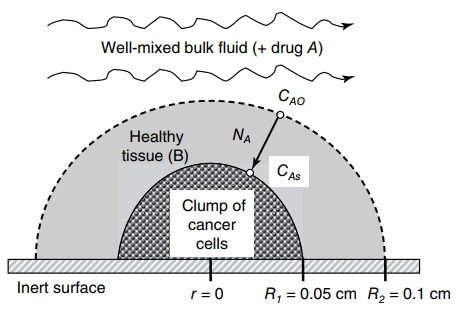
We are interested analyzing the diffusion processes associated with the treatment of cancer cells. Consider the experimental system shown in the figure on page 524. A hemispherical clump of cancer tissue is surrounded by a hemispherical layer of healthy tissue. Surrounding the healthy tissue is a
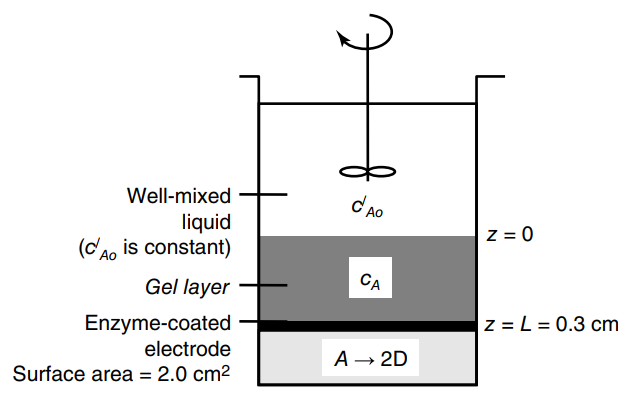
Consider the biosensor device shown in the figure in the next column. The biosensor is designed to measure the concentration of solute A in the well-mixed liquid phase. At the base of the device is an electrode of surface area 2.0 cm2. The electrode is coated with an enzyme that catalyzes the
Showing 100 - 200
of 972
1
2
3
4
5
6
7
8
9
10
Step by Step Answers

 Get 50% OFF
Claim Now
Get 50% OFF
Claim Now