New Semester
Started
Get
50% OFF
Study Help!
--h --m --s
Claim Now
Question Answers
Textbooks
Find textbooks, questions and answers
Oops, something went wrong!
Change your search query and then try again
S
Books
FREE
Study Help
Expert Questions
Accounting
General Management
Mathematics
Finance
Organizational Behaviour
Law
Physics
Operating System
Management Leadership
Sociology
Programming
Marketing
Database
Computer Network
Economics
Textbooks Solutions
Accounting
Managerial Accounting
Management Leadership
Cost Accounting
Statistics
Business Law
Corporate Finance
Finance
Economics
Auditing
Tutors
Online Tutors
Find a Tutor
Hire a Tutor
Become a Tutor
AI Tutor
AI Study Planner
NEW
Sell Books
Search
Search
Sign In
Register
study help
sciences
general chemistry principles
General Chemistry Principles And Modern Applications 11th Edition Ralph Petrucci, Jeffry Madura, F. Herring, Carey Bissonnette - Solutions
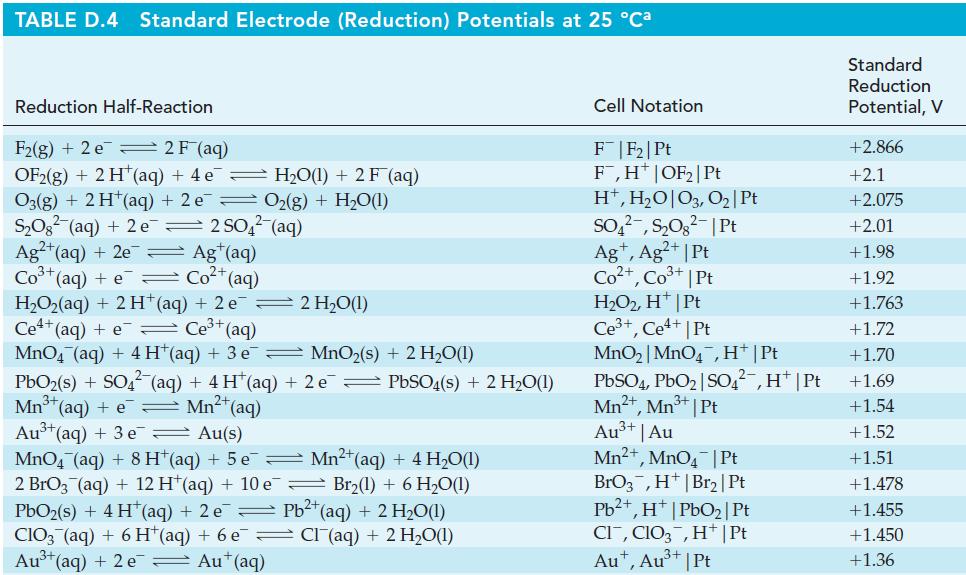
Show by calculation whether the reaction 2 HOCl(aq) → HClO2(aq) + H+(aq) + Cl–(aq) will go essentially to completion as written for standard state conditions.
Predict the geometric structures of (a) BrF3;(b) IF5;(c) Cl3IF–. (The central atom is underlined.)
When iodine is added to an aqueous solution of iodide ion, the I3– ion is formed, according to the reaction below:The equilibrium constant for the reaction above is K = 7.7 x 10² at 25 °C.(a) What is E° for the reaction above?(b) If a 0.0010 mol sample of I2 is added to 1.0 L of 0.0050 M
Which of the following species has a linear structure: ClF2+, IBrF–, OCl2, ClF3, or SF4? (The central atom is underlined.) Do any two of these species have the same structure?
Ozone is a powerful oxidizing agent. Using ozone as the oxidant, write equations to represent oxidation of (a) Br–(aq) to BrO–(aq) (hypobromite); (b) NO(g) to NO2(g); (c) Fe2+(aq) to Fe3+(aq) in acidic solution;(d) Ag(s) to AgO(s); (e) [Fe(CN)6]4– to [Fe(CN)6]3– in basic solution. The
The trichloride ion, Cl3–, is not very stable in aqueous solution. The equilibrium constant for the following dissociation reaction is 5.5 at 25 °C:(a) Draw a Lewis structure for the Cl3– ion and predict the geometry.(b) Calculate the equilibrium concentration of Cl3– if 0.0010 moles each
Each of the following compounds decomposes to produce O2(g) when heated: (a) HgO(s); (b) KClO4(s).Write plausible equations for these reactions.
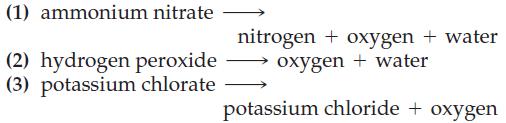
Without performing detailed calculations, determine which decomposition yields the most O2(g) (a) Per mole and (b) Per gram of substance. (1) ammonium nitrate (2) hydrogen peroxide (3) potassium chlorate nitrogen + oxygen + water oxygen + water potassium chloride + oxygen
Without performing detailed calculations, determine which of the following compounds has the greatest percent oxygen by mass: dinitrogen tetroxide, aluminum oxide, tetraphosphorus hexoxide, or carbon dioxide.
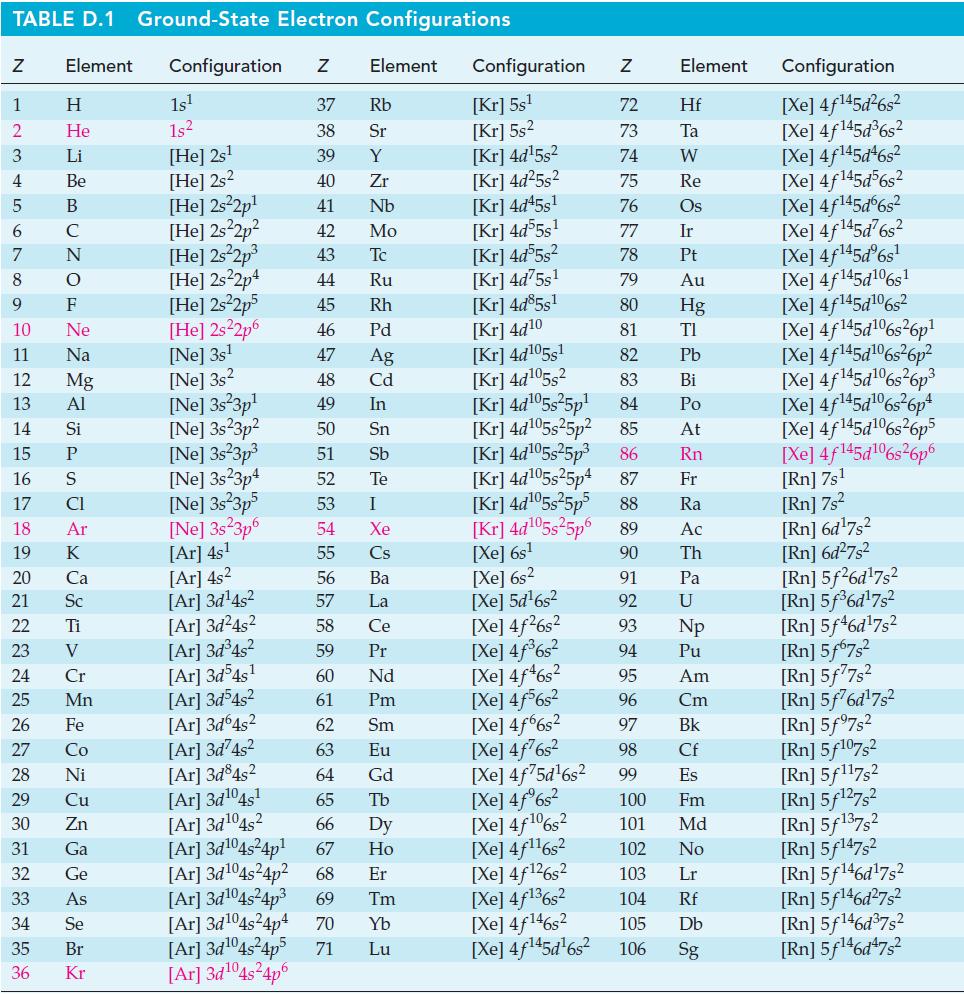
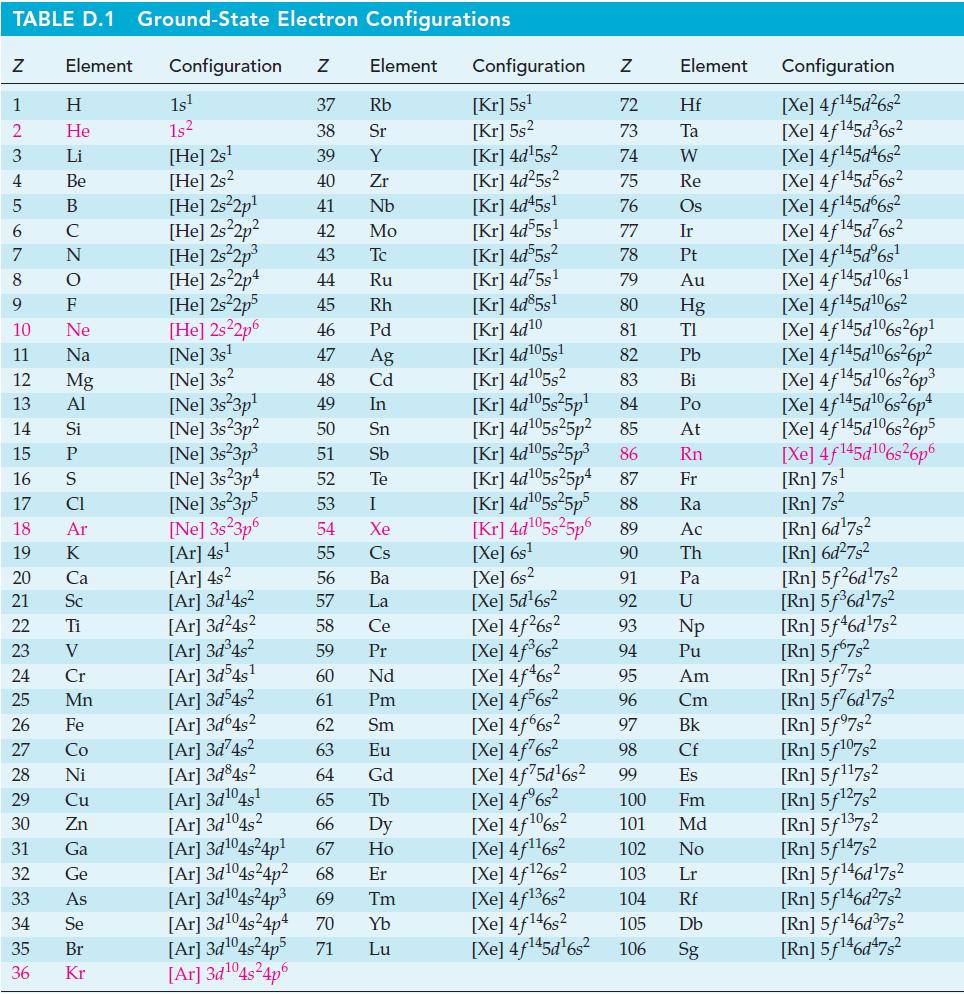
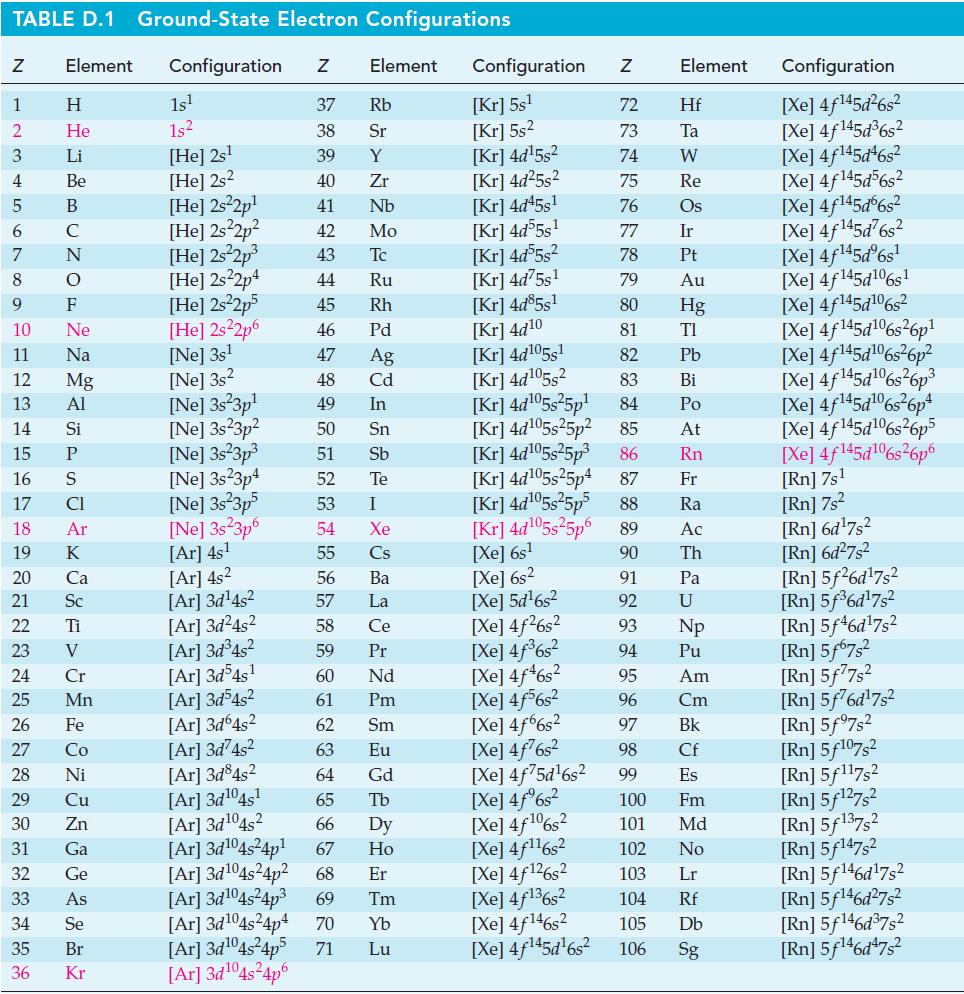
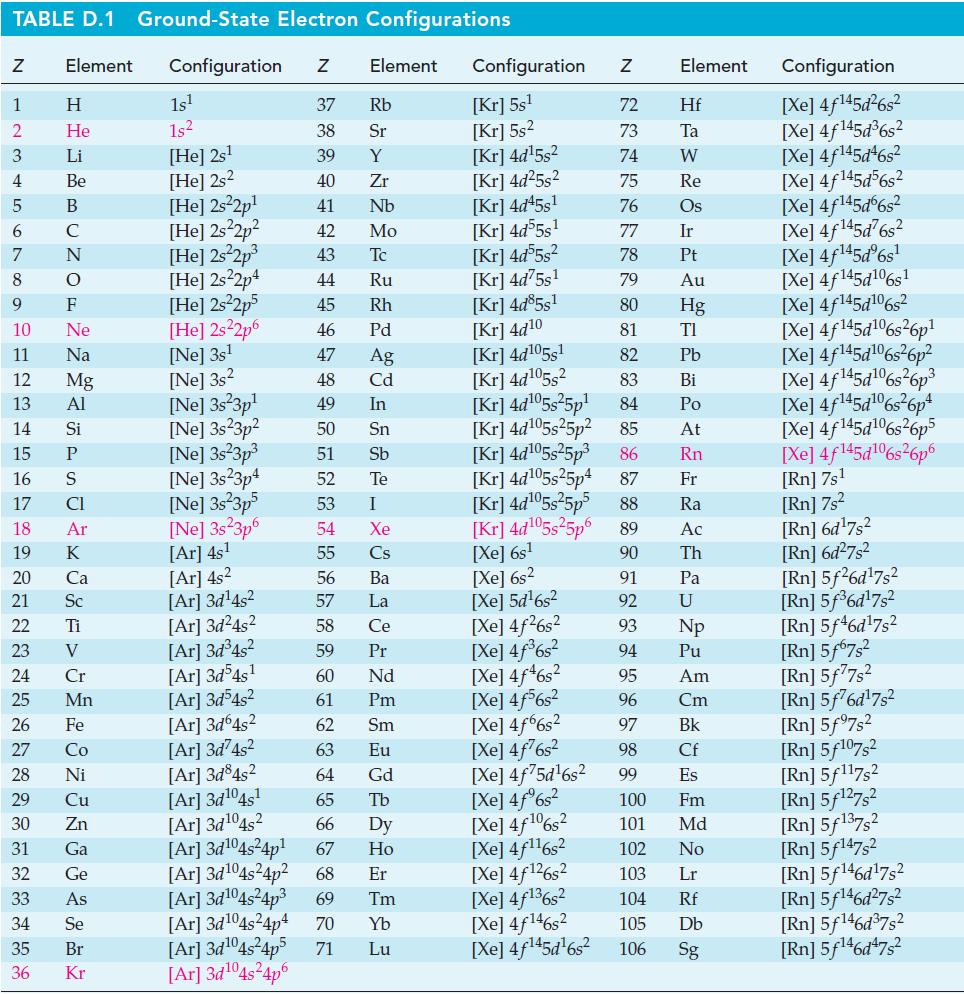
The conversion of O2(g) to O3(g) can be accomplished in an electric discharge, 3 O2(g) → 2 O3(g). Use a bond dissociation energy of 498 kJ mol–1 for O2(g) and data from Appendix D to calculate an average oxygen-to-oxygen bond energy in O3(g). TABLE D.1 Ground-State Electron
The natural abundance of O3 in unpolluted air at ground level is about 0.04 parts per million (ppm) by volume. What is the approximate partial pressure of O3 under these conditions, expressed in millimeters of mercury?
A typical concentration of O3 in the ozone layer is 5 x 10¹² O3 molecules cm–3. What is the partial pressure of O3, expressed in millimeters of mercury, in that layer? Assume a temperature of 220 K.
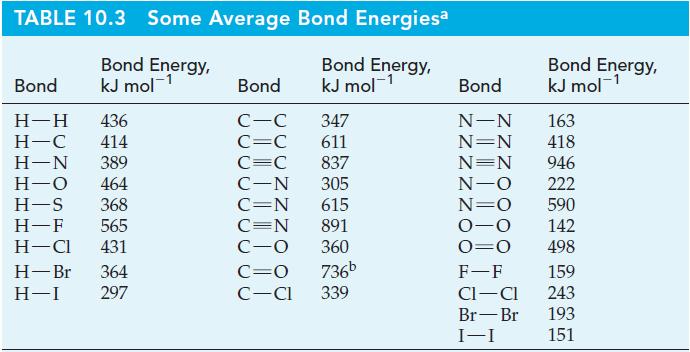
Estimate the average bond energy in O3(g) from the structure and data in Table 10.3. Compare this result with that of Exercise 35.Table 10.3Exercise 35The conversion of O2(g) to O3(g) can be accomplished in an electric discharge, 3 O2(g) → 2 O3(g). Use a bond dissociation energy of 498 kJ mol–1
Explain why the volumes of H2(g) and O2(g) obtained in the electrolysis of water are not the same.
Hydrogen peroxide is a somewhat stronger acid than water. For the ionizationpKa = 11.75. Calculate the expected pH of a typical antiseptic solution that is 3.0% H2O2 by mass. H2Oz(aq) + H2O(1) H3O+ (aq) + HO₂ (aq)
In the electrolysis of a sample of water 22.83 mL of O2(g) was collected at 25.0 °C at an oxygen partial pressure of 736.7 mmHg. Determine the mass of water that was decomposed.
In water, O2–(aq) is a strong base. If 100.0 mg of K2O(s) is dissolved in 1.25 L of aqueous solution, what will be the pH of the solution?
Which of the following reactions are likely to go to completion or very nearly so?(a)(b)(c)(d) H₂O₂(aq) + 21¯(aq) + 2 H¹(aq) I2(s) + 2 H₂O(1)
Use Lewis structures and other information to explain the observation that (a) H2S is a gas at room temperature, whereas H2O is a liquid.(b) O3 is diamagnetic.
Use Lewis structures and other information to explain the observation that (a) The oxygen-to-oxygen bond lengths in O2, O3, and H2O2 are 121, 128, and 148 pm, respectively.(b) The oxygen-to-oxygen bond length of O2 is 121 pm and for O2+ is 112 pm. Why is the bond length for O2+ so much shorter
Each of the following compounds produces O2(g) when strongly heated: (a) Hg(NO3)2(s);(b) H2O2(aq).Write a plausible equation for the reaction that occurs in each instance.
In the laboratory, small quantities of oxygen gas can be prepared by heating potassium chlorate, KClO3(s), in the presence of MnO2(s) a catalyst. What volume of oxygen, measured at 25 °C and 101 kPa, is obtained from the decomposition of 1.0 g KClO3(s)? The other product of the reaction is KCl(s).
Joseph Priestley, a British chemist, was credited with the discovering oxygen in 1774. In his experiments, he generated oxygen gas by heating HgO(s). The other product of the decomposition reaction is Hg(l). What volume of wet O2(g) is obtained from the decomposition of 1.0 g HgO(s), if the gas is
Give an appropriate name to each of the following compounds:(a) MgS; (b) H2S; (c) Ca(HSO3)2; (d) Na2S2O3;(e) S4N4.
Give an appropriate formula for each of the following compounds: (a) Calcium sulfate dihydrate; (b) Hydro-sulfuric acid; (c) Sodium hydrogen sulfate; (d) Disulfuric acid.
Give a specific example of a chemical equation that illustrates the (a) Reaction of a metal sulfide with HCl(aq);(b) Action of a nonoxidizing acid on a metal sulfite;(c) Oxidation of SO2(aq) to SO42–(aq) by MnO2(s) in acidic solution;(d) Disproportionation of S2O32– in acidic solution.
Show how you would use elemental sulfur, chlorine gas, metallic sodium, water, and air to produce aqueous solutions containing (a) Na2SO3;(b) Na2SO4;(c) Na2S2O3.You will have to use information from other chapters as well as this one.
Describe a chemical test you could use to determine whether a white solid is Na2SO4 or Na2S2O3. Explain the basis of this test using a chemical equation or equations.
Explain why sulfur can occur naturally as sulfates, but not as sulfites.
Mg(HSO4)2 is a very efficient acid catalyst that is used for a variety of organic transformations. What is the pH of a 250 mL aqueous solution containing 16.5 g of Mg(HSO4)2? For H2SO4, Ka2 = 1.1 x 10⁻².
What mass of Na2SO3 was present in a sample that required 26.50 mL of 0.0510 M KMnO4 for its oxidation to Na2SO4 in an acidic solution? MnO4– is reduced to Mn2+.
A 1.500 g sample of iron ore is dissolved, and the Fe3+(aq) is treated with excess KI. The liberated I2(aq) requires 15.25 mL of 0.100 M Na2S2O3 for its titration. What is the mass percent of iron in the ore?
A 25.0 L sample of a natural gas, measured at 25 °C and 740.0 Torr, is bubbled through Pb2+(aq), yielding 0.535 g of PbS(s). What mass of sulfur can be recovered per cubic meter of this natural gas?
What is the oxidation state of sulfur in the following compounds? (a) MgSO3; (b) SCl4; (c) MgSO4; (d) S2I2;(e) S4N4.
What is the oxidation state of sulfur in the following compounds? (a) S2Br2;(b) SCl2;(c) Na2S2O3;(d) (NH4)2S4O6.
One reaction that competes with reaction (22.41), the Ostwald process, is the reaction of gaseous ammonia and nitrogen monoxide to produce gaseous nitrogen and gaseous water. Use data from Appendix D to determine ΔrH° for this reaction, per mole of ammonia consumed.Reaction (22.41) 4 NH3(g) + 5
Write balanced equations for the following important commercial reactions involving nitrogen and its compounds.(a) The principal artificial method of fixing atmospheric N2;(b) Oxidation of ammonia to NO;(c) Preparation of nitric acid from NO.
When heated, each of the following substances decomposes to the products indicated. Write balanced equations for these reactions.(a) NH4NO3(s) to N2(g), O2(g), and H2O(g);(b) NaNO3(s) to sodium nitrite and oxygen gas;(c) Pb(NO3)2(s) to lead(II) oxide, nitrogen dioxide, and oxygen.
Sodium nitrite can be made by passing oxygen and nitrogen monoxide gases into an aqueous solution of sodium carbonate. Write a balanced equation for this reaction.
Concentrated HNO3(aq) used in laboratories is usually 15 M HNO3 and has a density of 1.41 g mL–1. What is the percent by mass of HNO3 in this concentrated acid?
Use information from this chapter and previous chapters to write plausible chemical equations to represent the following:(a) The reaction of silver metal with HNO3(aq);(b) The complete combustion of the rocket fuel, unsymmetrical dimethylhydrazine, (CH3)2NNH2;(c) The preparation of sodium
Use information from this chapter and previous chapters to write chemical equations to represent the following:(a) Equilibrium between nitrogen dioxide and dinitrogen tetroxide in the gaseous state; (b) The reduction of nitrous acid by N2H5+ forming hydrazoic acid, followed by the reduction of
Draw plausible Lewis structures for (a) Monomethylhydrazine, CH3(NH)NH2;(b) Dimethylhydrazine, (CH3)2NNH2;(c) Dinitrogen tetroxide, N2O4;(d) Phosphoric acid, H3PO4;(e) Nitryl chloride, ClNO2 (N is the central atom).
Both nitramide and hyponitrous acid have the formula H2N2O2. Hyponitrous acid is a weak diprotic acid; nitramide contains the amide group (—NH2). Draw plausible Lewis structures for these two substances.
Supply an appropriate name for each of the following:(a) HPO42–; (b) Ca2P2O7; (c) H6P4O13.
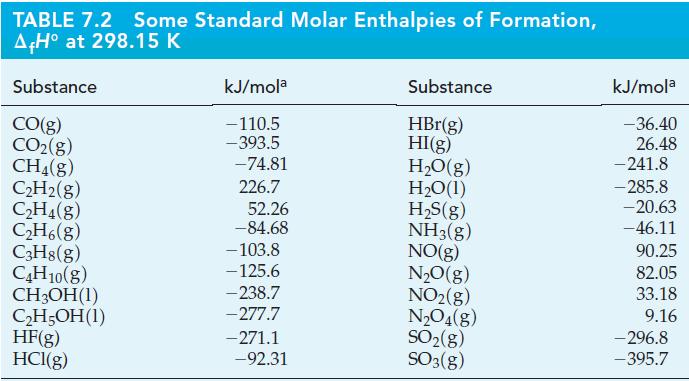
Use data from Table 7.2 to calculate the standard enthalpies of combustion of the four alkane hydrocarbons listed there.Table 7.2 TABLE 7.2 Some Standard Molar Enthalpies of Formation, A+H° at 298.15
Based on the results of Exercise 71, which alkane evolves the greatest amount of heat upon combustion on (a) A per mole basis and (b) A per gram basis? Which is the most desirable alkane from the standpoint of reducing the emission of carbon dioxide to the atmosphere? Explain.Exercise 71Use data
The structures of the NH3 and NF3 molecules are similar, yet the dipole moment for the NH3 molecule is rather large (1.47 debye) and that of the NF3 molecule is rather small (0.24 debye). Provide an explanation for this difference in the dipole moments.
Write chemical equations for the following reactions:(a) The displacement of H2(g) from HCl(aq) by Al(s);(b) The re-forming of propane gas (C3H8) with steam; (c) The reduction of MnO2(s) to Mn(s) with H2(g).
Write equations to show how to prepare H2(g) from each of the following substances: (a) H2O;(b) HI(aq);(c) Mg(s); (d) CO(g).Use other common laboratory reactants as necessary, that is, water, acids or bases, metals, and so on.
What volume of H2(g) at 25 °C and 752 mmHg is required to hydrogenate oleic acid, C17H33COOH(l), to produce one mole of stearic acid, C17H35COOH(s)? Assume reaction (22.52) proceeds with a 95% yield.Reaction (22.52) CH3(CH₂)7CH=CH(CH₂)7COOH + H₂(g) Oleic acid Ni CH3(CH2) 16COOH Stearic
CaH2(s) reacts with water to produce Ca(OH)2 and H2(g). Ca(s) reacts with water to produce the same products. Na(s) reacts with water to form NaOH and H2(g). Without doing detailed calculations, determine(a) Which of these reactions produces the most H2 per liter of water used,(b) Which
How many grams of CaH2(s) are required to generate sufficient H2(g) to fill a 235 L weather observation balloon at 722 mmHg and 19.7 °C? CaH₂(s) + 2 H₂O(1) Ca(OH)2(aq) + 2 H₂(g)
Without doing detailed calculations, explain in which of the following materials you would expect to find the greatest mass percent of hydrogen: seawater, the atmosphere, natural gas (CH4), ammonia.
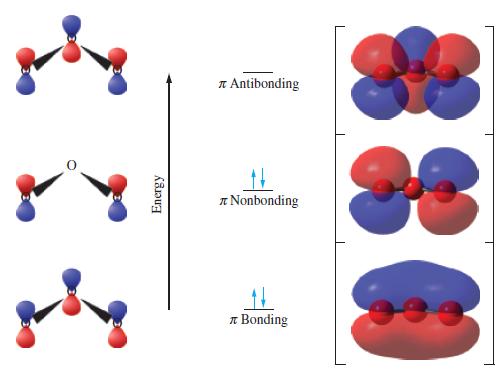
The amide anion NH2– is a very strong base. On the basis of molecular orbital theory, would you expect NH2– to be linear or bent?
On the basis of molecular orbital theory, would you expect NH2+ to be linear or bent?
The boiling points of oxygen and argon are –183 °C and –189 °C, respectively. Because the boiling points are so similar, argon obtained from the fractional distillation of liquid air is contaminated with oxygen. The following three-step procedure can be used to obtain pure argon from the
In 1988, G. J. Schrobilgen, professor of chemistry at McMaster University in Canada, reported the synthesis of an ionic compound, [HCNKrF][AsF6], which consists of HCNKrF+ and AsF6– ions. In the HCNKrF+ ion, the krypton is covalently bonded to both fluorine and nitrogen. Draw Lewis structures
Suppose that no attempt is made to separate the H2(g) and O2(g) produced by the electrolysis of water. What volume of a H2—O2 mixture, saturated with H2O(g) and collected at 23 °C and 755 mmHg, would be produced by electrolyzing 17.3 g water? Assume that the water vapor pressure of the dilute
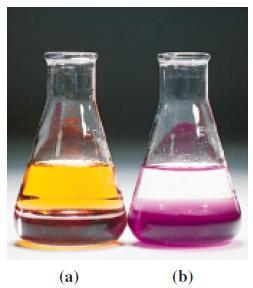
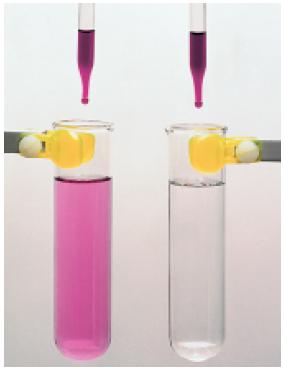
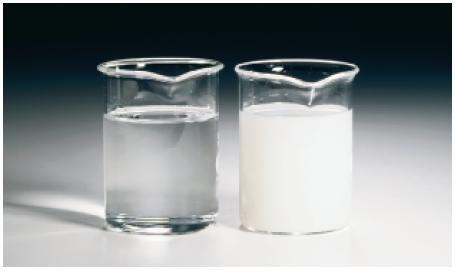
The photograph was taken after a few drops of a deep-purple acidic solution of KMnO4(aq) were added to NaNO3(aq) (left) and to NaNO2(aq) (right). Explain the difference in the results shown.
Zn can reduce NO3– to NH3(g) in basic solution. (The following equation is not balanced.)The NH3 can be neutralized with an excess of HCl(aq). Then, the unreacted HCl can be titrated with NaOH. In this way a quantitative determination of NO3– can be achieved. A 25.00 mL sample of nitrate
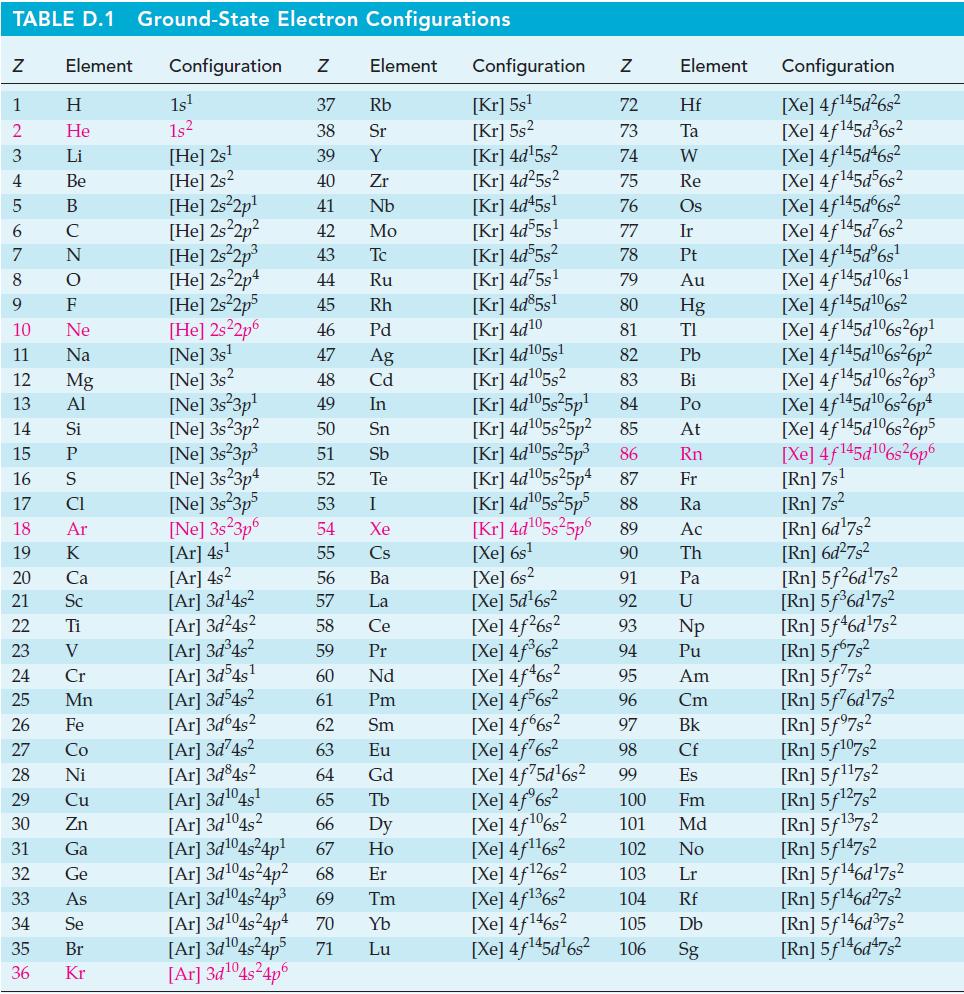
The standard electrode potential of fluorine cannot be measured directly because F2 reacts with water, displacing O2. Using thermodynamic data from Appendix D, obtain a value of E°F2/F–. TABLE D.1 Ground-State Electron Configurations Element Configuration Z Z 1 2 3 4 6 7 8 9 5
Oxygen atoms are an important constituent of the thermosphere, a layer of the atmosphere with temperatures up to 1500 K. Calculate the average translational kinetic energy of O atoms at 1500 K.
One reaction for the production of adipic acid, HOOC(CH2)4COOH, used in the manufacture of nylon, involves the oxidation of cyclohexanone, C6H10O, in a nitric acid solution. Assume that dinitrogen monoxide is also formed, and write a balanced equation for this reaction.
Estimate the percent dissociation of Cl2(g) into Cl(g) at 1 atm total pressure and 1000 K. Use data from Appendix D and equations found elsewhere in this text, as necessary. TABLE D.1 Ground-State Electron Configurations Element Configuration Z Z 1 2 3 4 5 6 7 8 9 HIG&LUZONSUZ SE> 0 ≤ 2 8 2 3 5 3
Despite the fact that it has the higher molecular mass, XeO4 exists as a gas at 298 K, whereas XeO3 is a solid. Give a plausible explanation for this observation.
The text mentions that ammonium perchlorate is an explosion hazard. Assuming that NH4ClO4 is the sole reactant in the explosion, write a plausible equation(s) to represent the reaction that occurs.
The following bond energies are given for 298 K: O2, 498; N2, 946; F2, 159; Cl2, 243; ClF, 251; OF (in OF2), 213; ClO (in Cl2O), 205; and NF (in NF3), 280 kJ mol–1. Calculate ΔfH° at 298 K for (a) ClF(g); (b) OF2(g);(c) Cl2O(g);(d) NF3(g).
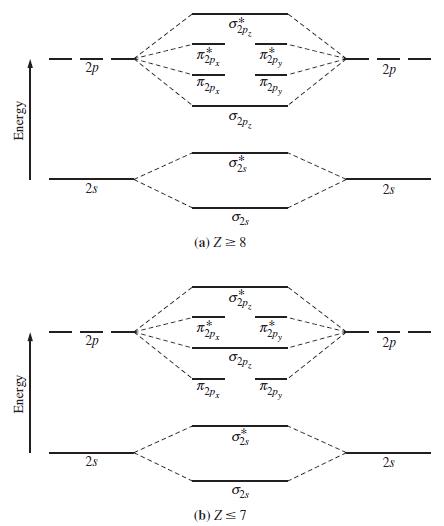
Refer to Figure 11-25 to arrange the following species in the expected order of increasing (a) Bond length;(b) Bond strength (energy): O2, O2+, O2–, O22–. State the basis of your expectation.Figure 11-25 Energy Energy 2p 28 2p 2s Tips โ ส Tips ni (a) Z =
Polonium is the only element known to crystallize in the simple cubic form. In this structure, the interatomic distance between a Po atom and each of its six nearest neighbors is 335 pm. Use this description of the crystal structure to estimate the density of polonium.
One reaction of a chlorofluorocarbon implicated in the destruction of stratospheric ozone is(a) What is the energy of the photons (hν)required to bring about this reaction, expressed in kilojoules per mole?(b) What is the frequency and wavelength of the light necessary to produce the reaction? In
The composition of a phosphate mineral can be expressed as % P, % P4O10, or % BPL [bone phosphate of lime, Ca3(PO4)2].(a) Show that % P = 0.436 x (% P4O10) and % BPL = 2.185 x (% P4O10).(b) What is the significance of a % BPL greater than 100?(c) What is the % BPL of a typical phosphate rock?
Peroxonitrous acid is an unstable intermediate formed in the oxidation of HNO2 by H2O2. It has the same formula as nitric acid, HNO3. Show how you would expect peroxonitrous and nitric acids to differ in structure.
In the extraction of bromine from seawater (reaction 22.3), seawater is first brought to a pH of 3.5 and then treated with Cl2(g). In practice, the pH of the seawater is adjusted with H2SO4, and the mass of chlorine used is 15% in excess of the theoretical. Assuming a seawater sample with an
The structure of N(SiH3)3 involves a planar arrangement of N and Si atoms, whereas that of the related compound N(CH3)3 has a pyramidal arrangement of N and C atoms. Propose bonding schemes for these molecules that are consistent with this observation.
Refer to the Integrative Example. Assume that the disproportionation of S2O32– is no longer spontaneous when the partial pressure of SO2(g) above a solution with [S2O32–] = 1 M has dropped to 1 x 10⁻⁶ atm. Show that this condition is reached while the solution is still acidic.Integrative
A handbook gives the value E° = 0.174 V for the reduction half-reaction S + 2 H+ + 2 e– → H2S(g). In Figure 22-13, the value given for the segment S—H2S(aq) is 0.144 V. Why are these E° values different? Can both be correct?Figure 22-13 Acidic solution ([H+] = 1 M): +6 +5 -0.22
The bond energies of Cl2 and F2 are 243 and 159 kJ mol–1, respectively. Use these data to explain why XeF2 is a much more stable compound than XeCl2.
Write plausible half-equations and a balanced oxidation–reduction equation for the disproportionation of XeF4 to Xe and XeO3 in aqueous acidic solution. Xe and XeO3 are produced in a mole ratio, and O2(g) is also produced.
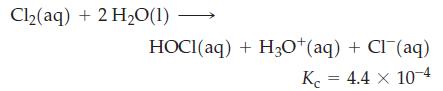
The solubility of Cl2(g) in water is 6.4 g L–1 at 25 °C. Some of this chlorine is present as Cl2, and some is found as HOCl or Cl–. For the hydrolysis reactionFor a saturated solution of Cl2 in water, calculate [Cl2], [HOCl], [H3O+], and [Cl–]. Cl₂(aq) + 2 H₂O(1) HOCI(aq) + H3O+(aq) +
Not shown in Figure 22-17 are electrode potential data involving hydrazoic acid. Given that E° = -3.09 V for the reduction of HN3 to N2 in acidic solution, what is E° for the reduction of HN3 to NH4+ in acidic solution?Figure 22-17 Acidic solution ([H+] = 1 M): +5 +4 +3 +2 +1 0 -1 0.803 V 1.065
The heavier halogens (Cl, Br, and I) form compounds in which the central halogen atom, X, is bonded directly to oxygen and to fluorine. Several examples are known, including those with formulas of the type FXO2, FXO3, and F3XO. The structures of these molecules are all consistent with the VSEPR
Draw Lewis structures for O3 and SO2. In what ways are the structures similar? In what ways do they differ?
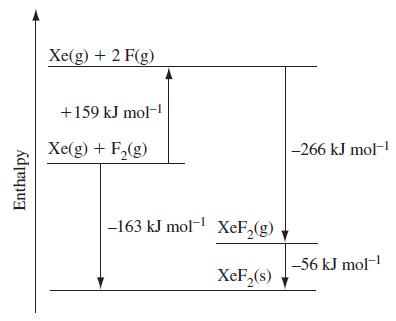
Refer to Figure 22-3 and then construct an enthalpy diagram for forming XeO3(g) from Xe(g) and O2(g). For XeO3, the average bond enthalpy is about 36 kJ mol–1, and for O2, the bond enthalpy is 498 kJ mol–1 What is ΔfH° for XeO3(g)? Does your result support the observation that Xe(g) does not
Chemists have successfully synthesized the ionic compound [N5][SbF6], which consists of N5+ and SbF6– ions. Draw Lewis structures for these ions and assign formal charges to the atoms in your structures. Describe the structures of these ions. [Hint: The skeleton structure for N5+ is
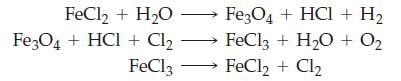
Various thermochemical cycles are being explored as possible sources of H2(g). The object is to find a series of reactions that can be conducted at moderate temperatures (about 500 °C) and that results in the decomposition of water into H2 and O2. Show that the following series of reactions meets
We have stressed the relationship between E° values and thermodynamic properties. We can use this relationship to add some missing features to an electrode potential diagram. For example, note that ClO2(g), which has Cl in the oxidation state +4, is not included in Figure 22-4. Using data from
The decomposition of aqueous hydrogen peroxide is catalyzed by Fe3+(aq). A proposed mechanism for this catalysis involves two reactions. In the first reaction, Fe3+ is reduced by H2O2. In the second, the iron is oxidized back to its original form, while hydrogen peroxide is reduced. Write an
A yellow-brown saturated solution of I2 in water (a) Is initially brought into contact with colorless CCl4(l) (bottom layer in (a)). Once the system reaches equilibrium(b) We observe that I2 is considerably more soluble in CCl4(l) (violet, bottom layer) than it is in H2O(l) (colorless, top layer).
A description of bonding in XeF2 based on the valence bond model requires the 5d orbitals of Xe. A more satisfactory description uses a molecular orbital approach involving three-center bonds. Assume that bonding involves the 5pz orbital of Xe and the 2pz orbitals of the two F atoms. These three
The so-called pyroanions, X2O7n-, form a series of structurally similar polyatomic anions for the elements Si, P, and S.(a) Draw the Lewis structures of these anions, and predict the geometry of the anions. What is the maximum number of atoms that can lie in a plane?(b) Each pyroanion in part (a)
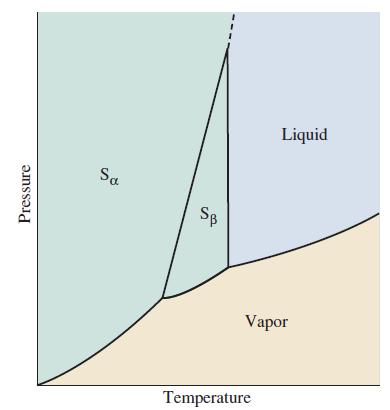
The sketch is a portion of the phase diagram for the element sulfur. The transition between solid orthorhombic (Sα) and solid monoclinic (Sβ) sulfur, in the presence of sulfur vapor, is at 95.3 °C. The triple point involving monoclinic sulfur, liquid sulfur, and sulfur vapor is at 119 °C.(a)
In your own words, define the following terms:(a) Polyhalide ion; (b) Polyphosphate; (c) Interhalogen;(d) Disproportionation.
Briefly describe each of the following terms: (a) Frasch process; (b) Water gas reactions; (c) Eutrophication;(d) Electrode potential diagram.
Explain the important distinctions between each pair of terms: (a) Acid salt and acid anhydride; (b) Azide and nitride; (c) White phosphorus and red phosphorus;(d) Ionic hydride and metallic hydride.
Which of the following can oxidize Br– to Br2 in solution?(a) I2(aq);(b) Cl2(aq);(c) H2(g);(d) Cl–(aq);(e) I3–(aq).
All of the following compounds yield O2(g) when heated to about 1000 K except (a) KClO3;(b) KClO4;(c) N2O;(d) CaCO3;(e) Pb(NO3)2.
All of the following substances are bases except for (a) H2NNH2;(b) NH3;(c) HN3;(d) NH2OH;(e) CH3NH2.
The best reducing agent of the following substances is (a) H2S;(b) O3;(c) H2SO4;(d) NaF; (e) H2O.
Of the following substances, the one that is unimportant is the production of fertilizers is (a) NH3;(b) Phosphate rock; (c) HNO3;(d) Na2CO3;(e) H2SO4.
Showing 400 - 500
of 4008
1
2
3
4
5
6
7
8
9
10
11
12
13
14
15
Last
Step by Step Answers

 Get 50% OFF
Claim Now
Get 50% OFF
Claim Now











![NO3(aq) + Zn(s) + OH(aq) + HO(1) [Zn(OH)4] (aq) + NH3(g)](https://dsd5zvtm8ll6.cloudfront.net/images/question_images/1701/2/6/1/432656730782fa451701261431664.jpg)


![Acidic solution ([H+] = 1 M): +6 +5 -0.22 V SO4- -S06- 0.158 V SO4-- 0.564 V -0.936 V Basic solution ([OH-] =](https://dsd5zvtm8ll6.cloudfront.net/images/question_images/1701/3/2/0/659656817d357a171701320657675.jpg)
![Acidic solution ([H+] = 1 M): +5 +4 +3 +2 +1 0 -1 0.803 V 1.065 V 0.996 V 1.591 V 1.766 V -1.87 V 1.275 V](https://dsd5zvtm8ll6.cloudfront.net/images/question_images/1701/3/2/1/0056568192de8cfc1701321004592.jpg)
![Acidic solution ([H+] = 1 M): +7 +5 CIO4 1.189 V CIO4 CIO3 0.374 V Basic solution ([OH-] = 1 M): +7 +5 1.181](https://dsd5zvtm8ll6.cloudfront.net/images/question_images/1701/3/2/2/23065681df67f4d71701322229081.jpg)