New Semester
Started
Get
50% OFF
Study Help!
--h --m --s
Claim Now
Question Answers
Textbooks
Find textbooks, questions and answers
Oops, something went wrong!
Change your search query and then try again
S
Books
FREE
Study Help
Expert Questions
Accounting
General Management
Mathematics
Finance
Organizational Behaviour
Law
Physics
Operating System
Management Leadership
Sociology
Programming
Marketing
Database
Computer Network
Economics
Textbooks Solutions
Accounting
Managerial Accounting
Management Leadership
Cost Accounting
Statistics
Business Law
Corporate Finance
Finance
Economics
Auditing
Tutors
Online Tutors
Find a Tutor
Hire a Tutor
Become a Tutor
AI Tutor
AI Study Planner
NEW
Sell Books
Search
Search
Sign In
Register
study help
sciences
general chemistry principles
General Chemistry Principles And Modern Applications 11th Edition Ralph Petrucci, Jeffry Madura, F. Herring, Carey Bissonnette - Solutions
To 0.350 L of 0.150 M NH3 is added 0.150 L of 0.100 M MgCl2. How many grams of (NH4)2SO4 should be present to prevent precipitation of Mg(OH)2(s)?
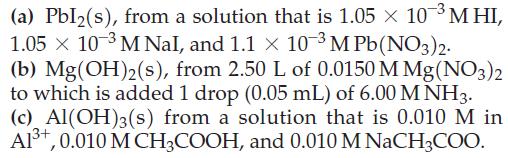
Will the following precipitates form under the given conditions? (a) Pbl₂(s), from a solution that is 1.05 × 10-³ MHI, 1.05 × 10⁻³ M Nal, and 1.1 x 10⁻³ M Pb(NO3)2. (b) Mg(OH)2(s), from 2.50 L of 0.0150 M Mg(NO3)2 to which is added 1 drop (0.05 mL) of 6.00 MNH3. (c) Al(OH)3(s) from a solution
PbCl2(s) is considerably more soluble in HCl(aq) than in pure water, but its solubility in HNO3(aq) is not much different from what it is in water. Explain this difference in behavior.
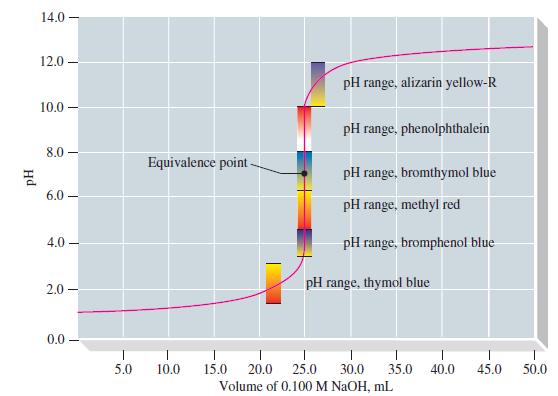
Thymol blue in its acid range is not a suitable indicator for the titration of HCl by NaOH. Suppose that a student uses thymol blue by mistake in the titration of Figure 17-8 and that the indicator end point is taken to be pH = 2.0.(a) Would there be a sharp color change, produced by the addition
Solution (a) Is 100.0 mL of 0.100 M HCl and solution; (b) Is 150.0 mL of 0.100 M NaCH3COO. A few drops of thymol blue indicator are added to each solution. What is the color of each solution? What is the color of the solution obtained when these two solutions are mixed?
You are asked to prepare a buffer solution with a pH of 3.50. The following solutions, all 0.100 M, are available to you: HCOOH, CH3COOH, H3PO4, NaHCOO, NaCH3COO, and NaH2PO4. Describe how you would prepare this buffer solution.
If 0.35 mL of 15 M NH3 is added to 0.750 L of the buffer solution in Exercise 16(a), what will be the pH of the resulting solution?Exercise 16(a)You prepare a buffer solution by dissolving 2.00 g each of benzoic acid, C6H5COOH, and sodium benzoate, NaC6H5COO, in 750.0 mL of water.(a) What is the pH
Calculate the change in pH that results from adding (a) 0.100 mol NaNO2 to 1.00 L of 0.100 M HNO2(aq);(b) 0.100 mol NaNO3 to 1.00 L of 0.100 M HNO3(aq).Why are the changes not the same?
3.00 mol of calcium chlorite is dissolved in enough water to produce 2.50 L of solution. Ka = 2.9 x 10⁻⁸ for HClO, and Ka = 1.1 x 10⁻² for HClO2. Compute the pH of the solution.
Propionic acid, CH3CH2COOH, is 0.42% ionized in 0.80 M solution. The Ka for this acid is (a) 1.42 x 10⁻⁵;(b) 1.42 x 10⁻⁷;(c) 1.77 x 10⁻⁵;(d) 6.15 x 10⁴;(e) None of these.
For H2SO3(aq), Ka1 = 1.3 x 10⁻² and Ka2 = 6.3 x 10⁻⁸ . In 0.10 M H2SO3(aq), (a) [HSO3] = 0.013 M; (b) [SO3²] = 6.3 × 10⁸ M; (c) [H3O¹] = 0.10 M; (d) [H3O¹] = 0.013 M; (e) [SO3²-] = 0.036 M.
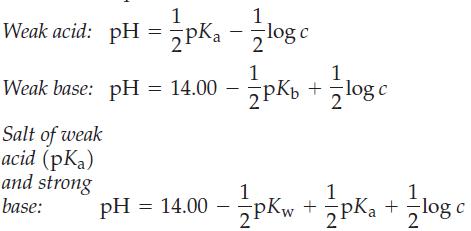
It is possible to write simple equations to relate pH, pK, and concentrations (c) of various solutions. Three such equations are shown here.(a) Derive these three equations, and point out the assumptions involved in the derivations.(b) Use these equations to determine the pH of 0.10 M CH3COOH(aq),
For the ionization of phenylacetic acid, C₂H₂CH₂CO₂H + H₂O — H3O+ + C²H5CH₂CO₂¯¯ Ka 4.9 x 10-5 = (a) What is [C6H5CH₂CO2¯] in 0.186 M C6H5CH₂CO₂H? (b) What is the pH of 0.121 M C6H5CH₂CO₂H?
What are the [H3O+] and pH of 0.085 M C2H5NH2?
25.00 mL of a HNO3(aq) solution with a pH of 2.12 is mixed with 25.00 mL of a KOH(aq) solution with a pH of 12.65. What is the pH of the final solution?
50.00 mL of 0.0155 M HI(aq) is mixed with 75.00 mL of 0.0106 M KOH(aq). What is the pH of the final solution?
In a manner similar to equation (16.3), represent the self-ionization of the following liquid solvents:(a) NH3;(b) HF; (c) CH3OH;(d) CH3COOH;(e) H2SO4.Eq. 16.3 2 H₂O(1) H₂O (aq) + OH(aq) (16.3)
Use your knowledge of electronegativities, but do not refer to tables or figures in the text, to arrange the following bonds in terms of increasing ionic character: C—H, F—H, Na—Cl, Br—H, K—F.
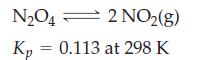
In the equilibrium described in Example 15-12, the percent dissociation of N2O4 can be expressed asWhat must be the total pressure of the gaseous mixture if N2O4(g) is to be 10.0% dissociated at 298 K?(for pressures in atmospheres).Example 15-12A 0.0240 mol sample of N2O4(g) is allowed to come to
Refer to Example 15-13. Suppose that 0.100 L of the equilibrium mixture is diluted to 0.250 L with water. What will be the new concentrations when equilibrium is re-established?Example 15-13Solid silver is added to a solution with these initial concentrations: [Ag+] = 0.200 M, [Fe2+] = 0.100 M, and
Explain why the percent of molecules that dissociate into atoms in reactions of the type I2(g) ⇌ 2 I(g) always increases with an increase in temperature.
1.00 g each of CO, H2O, and H2 are sealed in a 1.41 L vessel and brought to equilibrium at 600 K. How many grams of CO2 will be present in the equilibrium mixture? CO(g) + H₂O(g) = CO₂(g) CO₂(g) + H₂(g) Kc = 23.2 C
1.10 g of an unknown compound reduces the freezing point of 75.22 g benzene from 5.53 to 4.92°C. What is the molar mass of the compound?
6.00 M sulfuric acid, H2SO4(aq), has a density of 1.338 g/mL. What is the percent by mass of sulfuric acid in this solution?
Based on data presented in the text, would you expect diamond or graphite to have the greater density? Explain.
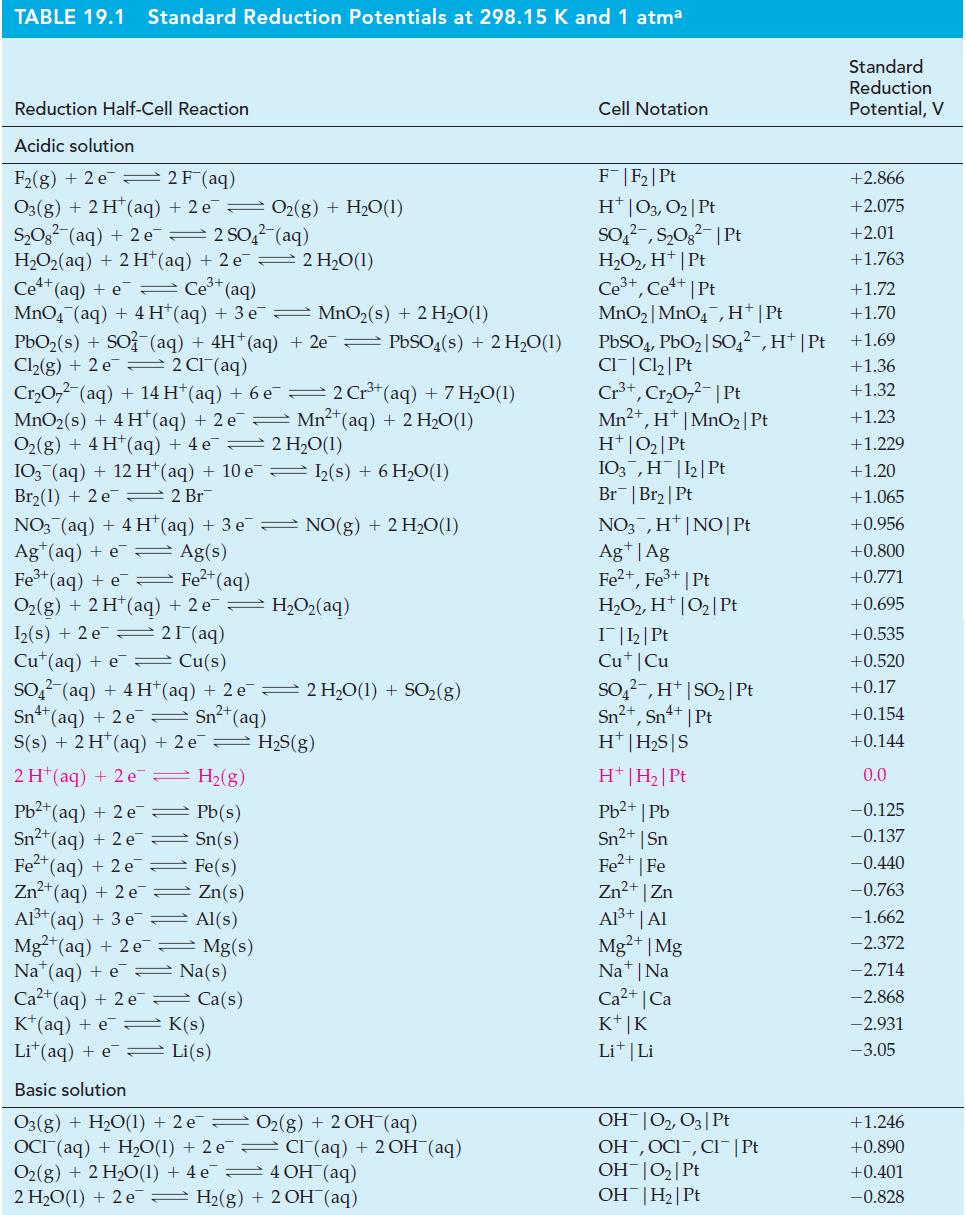
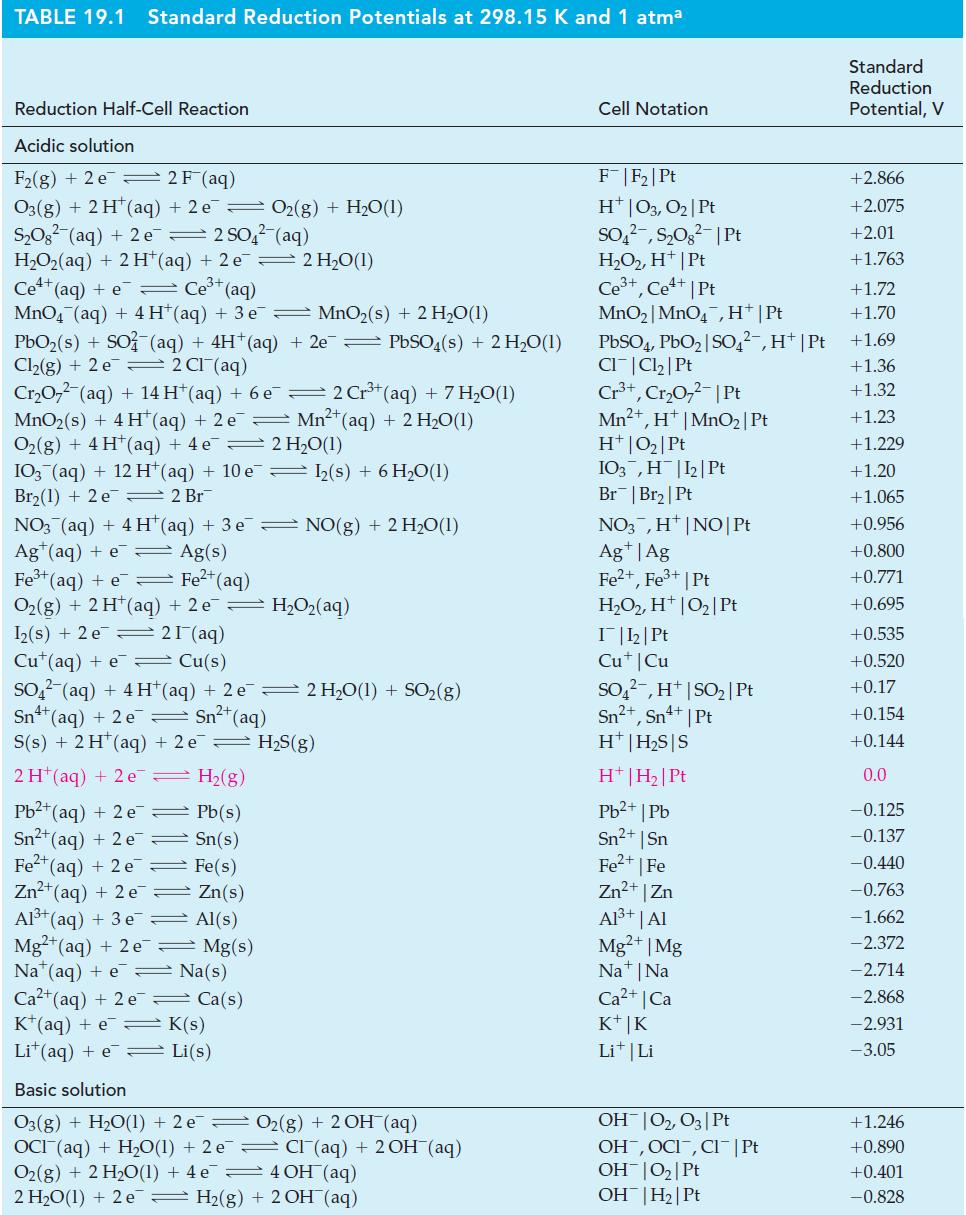
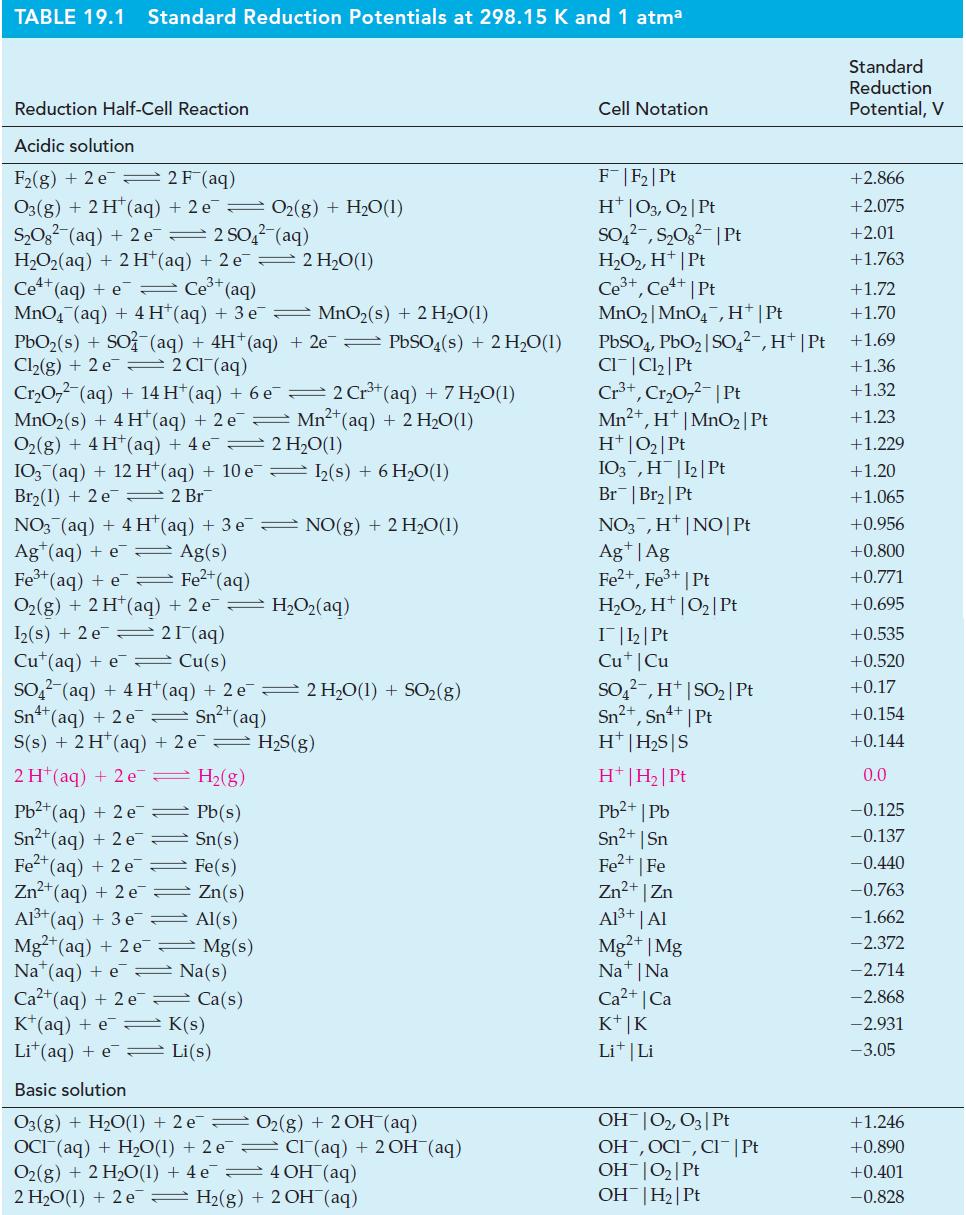
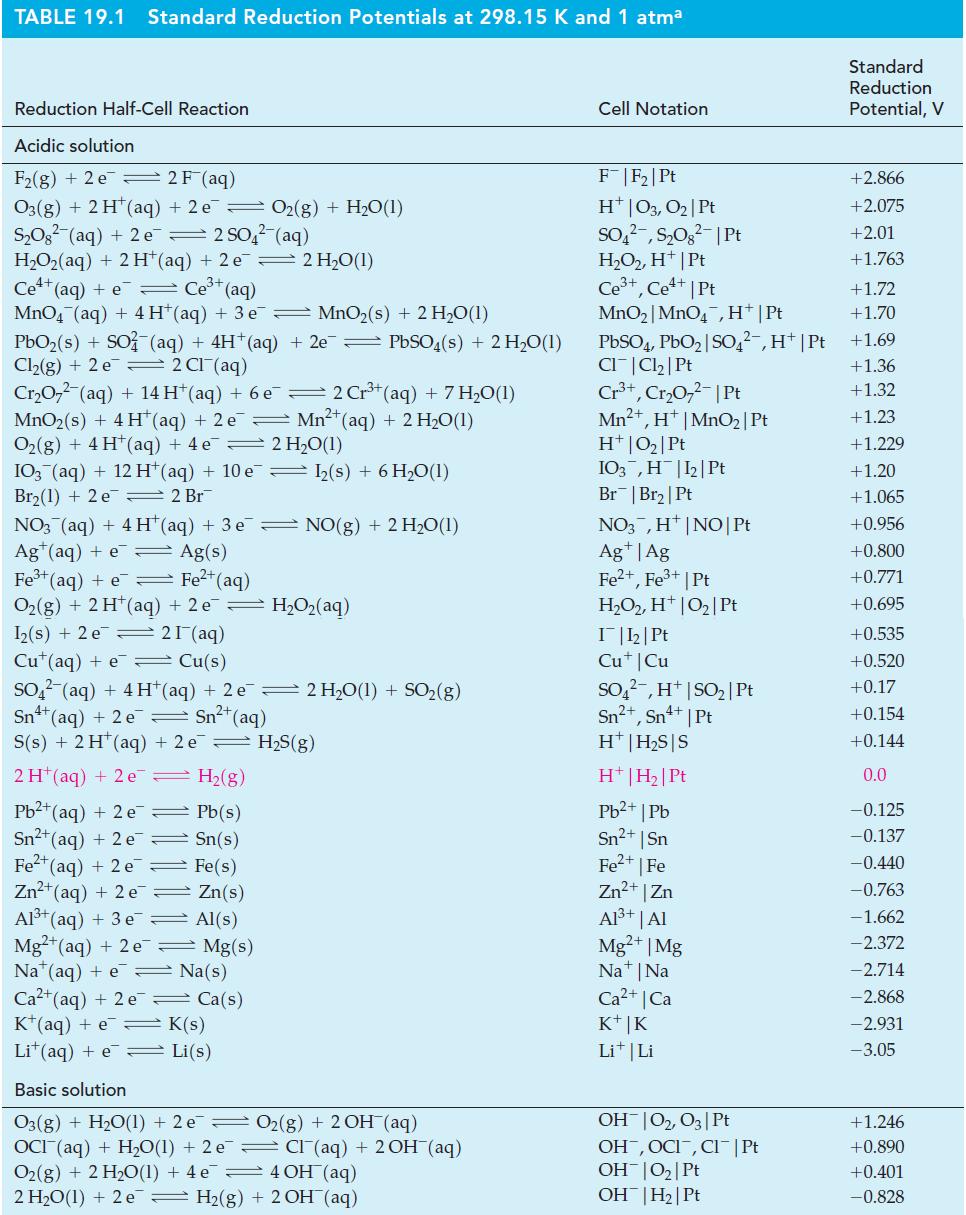
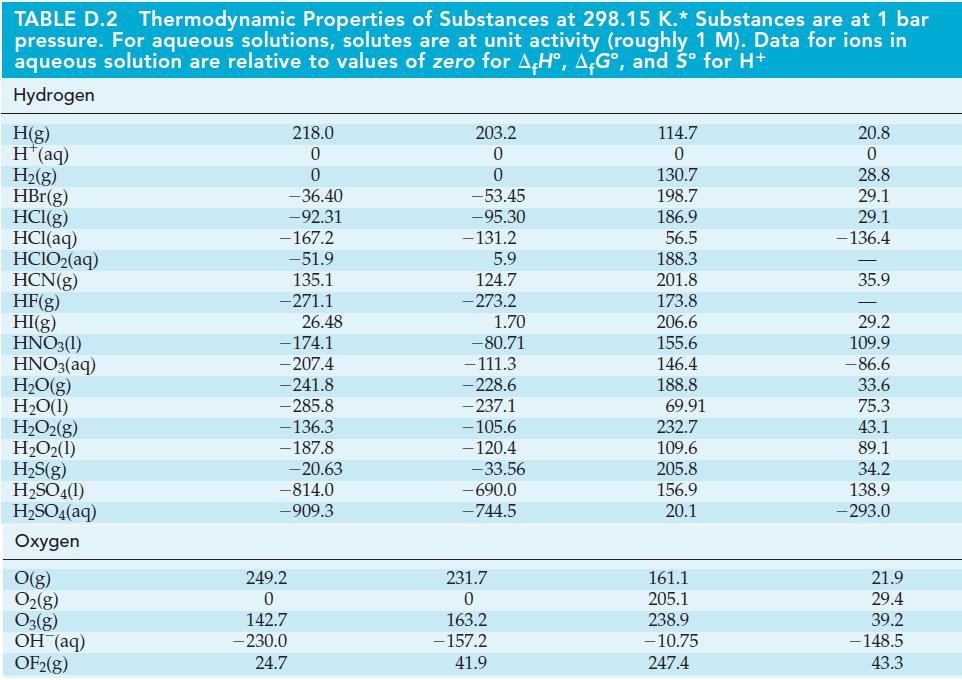
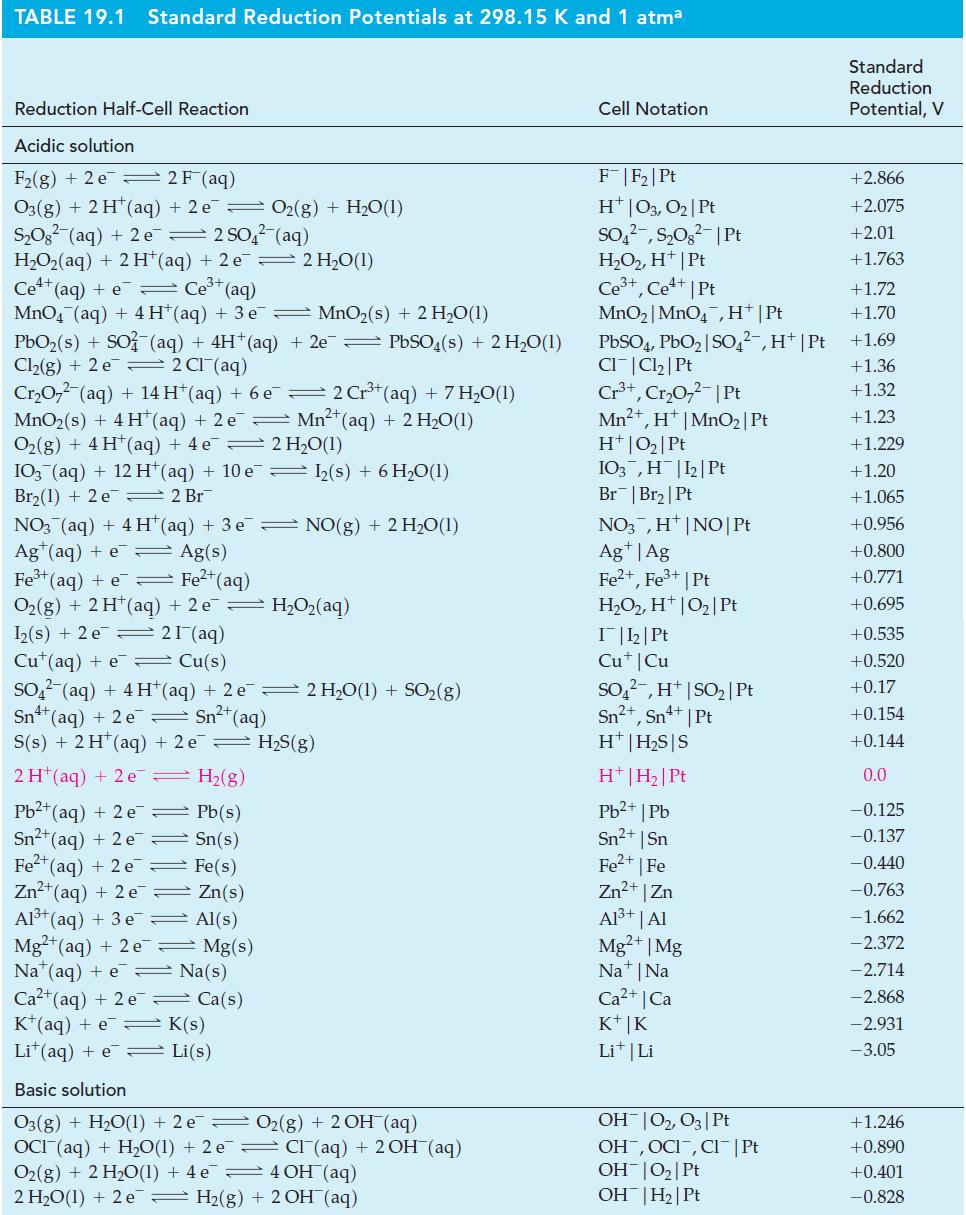
In one type of Breathalyzer (alcohol meter), the quantity of ethanol in a sample is related to the amount of electric current produced by an ethanol–oxygen fuel cell. Use data from Table 19.1 and Appendix D to determine (a) E°cell and (b) E° for the reduction of CO2(g) to CH3CH2OH(g).Table
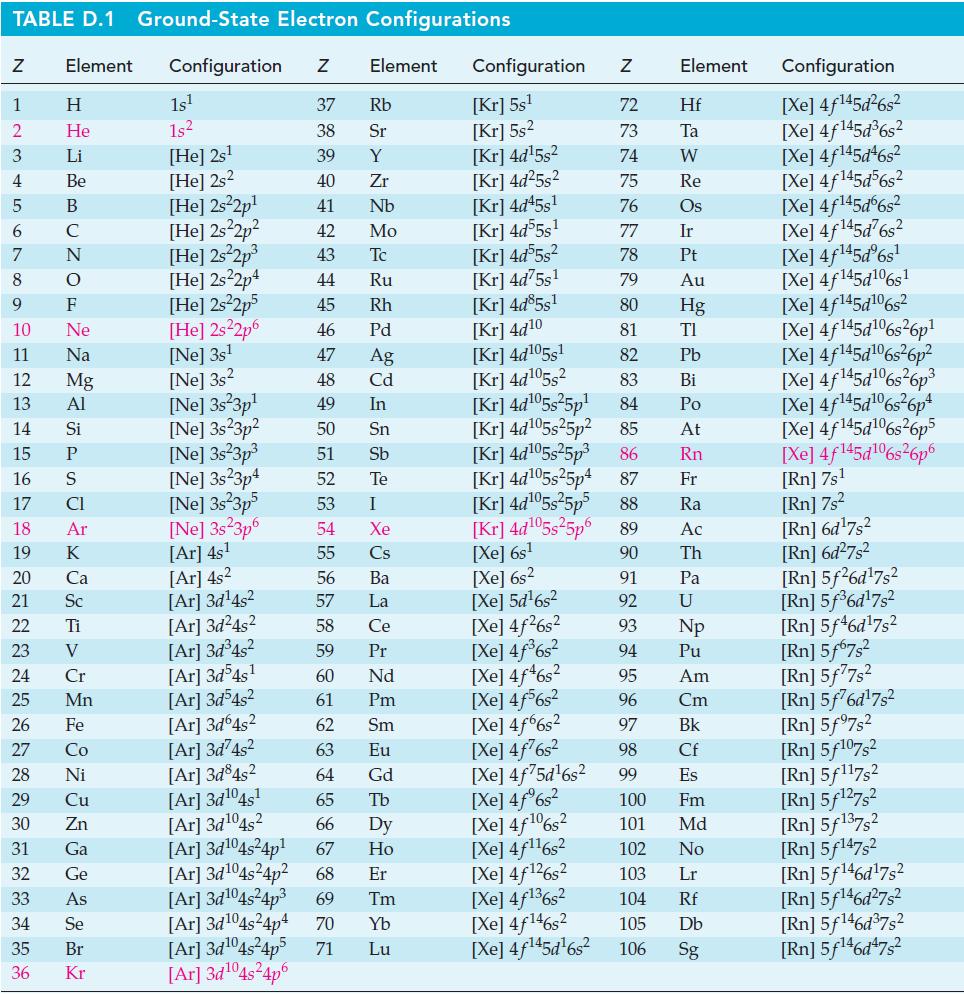
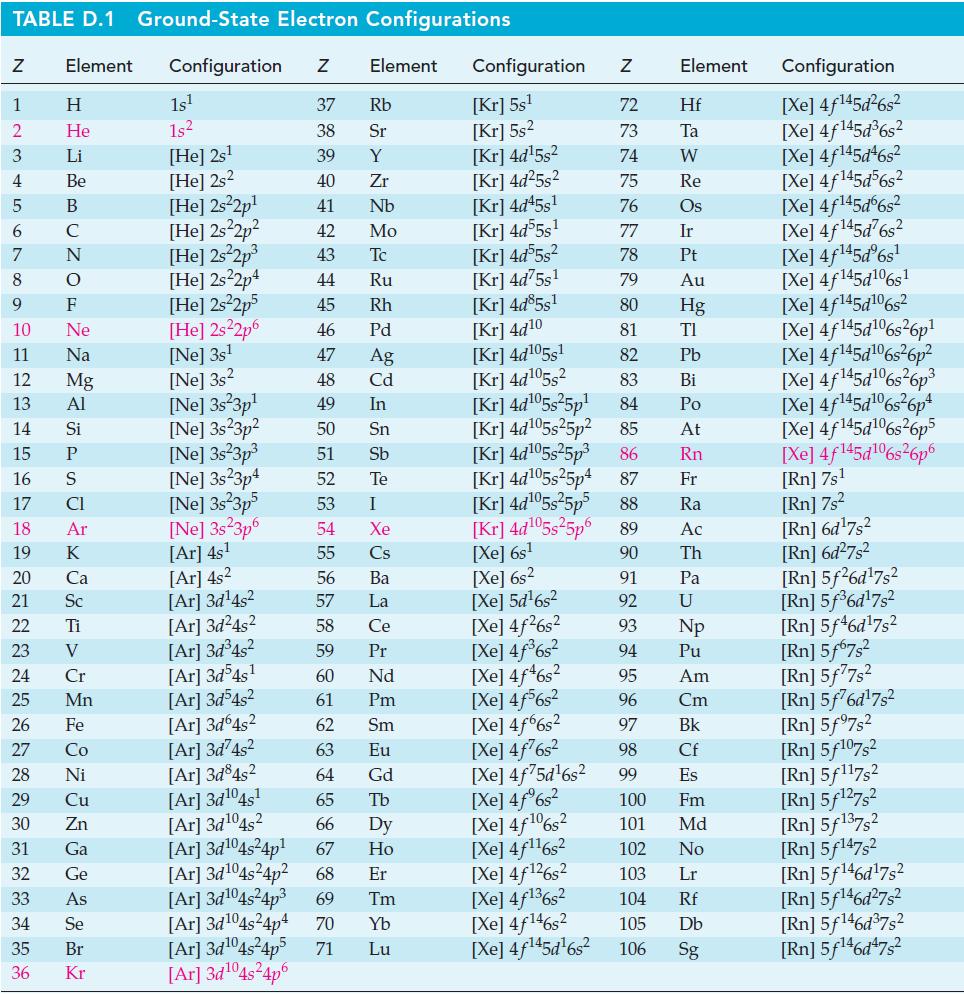
Show that for some fuel cells the efficiency value, e = ΔrG°/ΔrH°,can have a value greater than 1.00. Can you identify one such reaction? Use data from Appendix d. TABLE D.1 Ground-State Electron Configurations Element Configuration Z Z 1 2 3 4 5 6 7 8 9 HIG&LUZONES JY SE > 0 ≤ 2 3 2 3 5 3 3
It is sometimes possible to separate two metal ions through electrolysis. One ion is reduced to the free metal at the cathode, and the other remains in solution. In which of these cases would you expect complete or nearly complete separation? Explain. (a) Cu2+ and K+;(b) Cu2+ and Ag+; (c) Pb2+
Assume that the volume of each solution in Figure 19-22 is 100.0 mL. The cell is operated as an electrolytic cell, using a current of 0.500 A. Electrolysis is stopped after 10.00 h, and the cell is allowed to function as a voltaic cell. What is Ecell at this point?Figure 19-22
You prepare 1.00 L of a buffer solution that is 1.00 M NaH2PO4 and 1.00 M Na2HPO4. The solution is divided in half between the two compartments of an electrolytic cell. Both electrodes used are Pt. Assume that the only electrolysis is that of water. If 1.25 A of current is passed for 212 min, what
A common reference electrode consists of a silver wire coated with AgCl(s) and immersed in 1 M KCl. (a) What is E°cell when this electrode is a cathode in combination with a standard zinc electrode as an anode?(b) Cite several reasons why this electrode should be easier to use than a standard
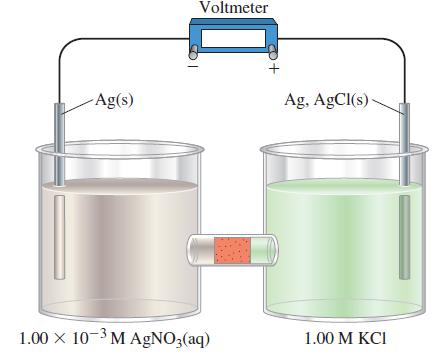
The electrodes in the following electrochemical cell are connected to a voltmeter as shown. The half-cell on the right contains a standard silver–silver chloride electrode (see Exercise 88). The half-cell on the left contains a silver electrode immersed in 100.0 mL of 1.00 x 10⁻³ M AgNO3(aq). A
Use data from Table 19.1, as necessary, to predict the probable products when Pt electrodes are used in the electrolysis of (a) CuCl2(aq);(b) Na2SO4(aq);(c) BaCl2(l);(d) KOH(aq).Table 19.1 TABLE 19.1 Standard Reduction Potentials at 298.15 K and 1 atma Reduction Half-Cell Reaction Acidic
An important source of Ag is recovery as a by-product in the metallurgy of lead. The percentage of Ag in lead was determined as follows. A 1.050-g sample was dissolved in nitric acid to produce Pb2+(aq) and Ag+(aq). The solution was then diluted to 500.0 mL with water, a Ag electrode was immersed
The following voltaic cell registers an Ecell = 0.108 V. What is the pH of the unknown solution? Pt H₂(g, 1 bar) H¹ (x M)||H* (1.00 M)|H₂(g, 1 bar) Pt
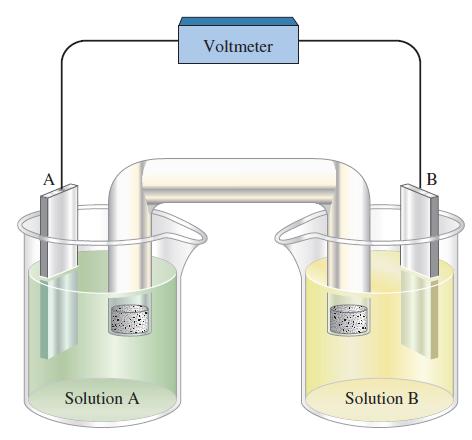
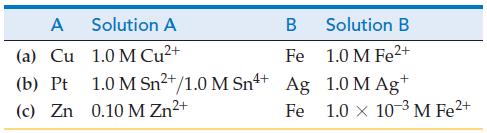
For each of the following combinations of electrodes (A and B) and solutions, indicate • The overall cell reaction • The direction in which electrons flow spontaneously (from A to B, or from B to A)• The magnitude of the voltage read on the voltmeter, V A Solution A Voltmeter Solution B B
For the reaction Zn(s) + H+(aq) + NO3-(aq) → Zn2+(aq) + H2O(l) + NO(g), describe the voltaic cell in which it occurs, label the anode and cathode, use a table of standard electrode potentials to evaluate E°cell, and balance the equation for the cell reaction.
Construct a concept map illustrating the relationship between batteries and electrochemical ideas.
Construct a concept map illustrating the principles of electrolysis and its industrial applications.
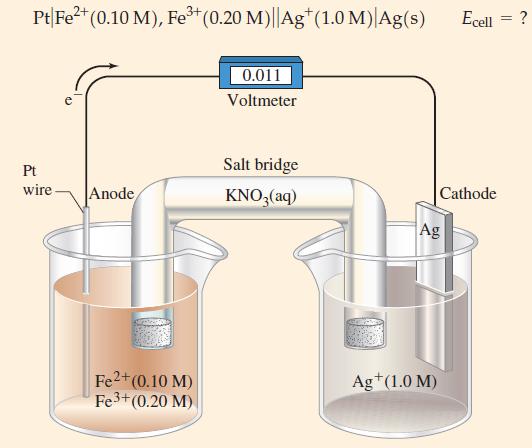
What is the value of Ecell for the voltaic cell pictured in Figure 19-10 and diagrammed as follows? Pt Fe²+ (0.10 M), Fe³+ (0.20 M)|| Agt (1.0M) Ag(s) Pt wire Anode Fe2+ (0.10 M) Fe3+ (0.20 M) 0.011 Voltmeter Salt bridge KNO3(aq) Ag Ag (1.0 M) Ecell = ? Cathode
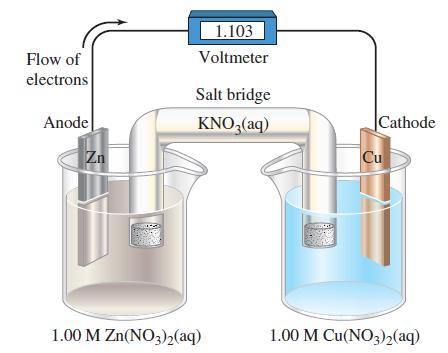
Add appropriate arrows to Figure 19-4 to show the direction of migration of ions through the electrochemical cell.Figure 19-4 Flow of electrons Anode Zn 1.103 Voltmeter Salt bridge KNO3(aq) 1.00 M Zn(NO3)2(aq) Cathode Cu 1.00 M Cu(NO3)₂(aq)
Aluminum metal displaces zinc(II) ion from aqueous solution.(a) Write oxidation and reduction half-cell equations and an overall equation for this redox reaction.(b) Write a cell diagram for a voltaic cell in which this reaction occurs.
(A) Write the overall equation for the redox reaction that occurs in the voltaic cell(B) Draw a voltaic cell in which silver ion is displaced from solution by aluminum metal. Label the cathode, the anode, and other features of the cell. Show the direction of flow of electrons. Also, indicate the
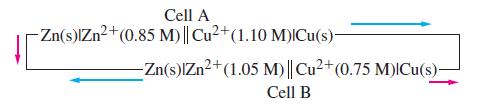
Two electrochemical cells are connected as shown.(a) Do electrons flow in the direction of the red arrows or the blue arrows?(b) What are the ion concentrations in the half-cells at the point at which current ceases to flow? Cell A -Zn(s)IZn²+ (0.85 M)|| Cu2+(1.10 M) Cu(s)- -Zn(s)IZn²+ (1.05 M)||
The cell diagram for an electrochemical cell is written asWrite the equations for the half-cell reactions that occur at the electrodes. Balance the overall cell reaction. Ni(s) NiCl₂(aq)||Ce(C1O4)4(aq), Ce(C1O4)3(aq) Pt(s)
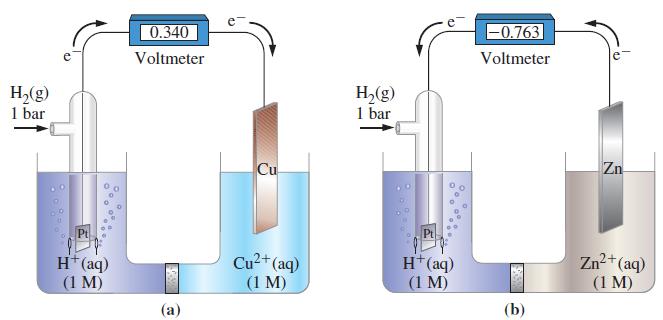
For Figure 19-6, describe any changes in mass that might be detected at the Pt, Cu, and Zn electrodes as electric current passes through the electrochemical cells.Figure 19-6 H₂(g) 1 bar Pt H+ (aq) (1 M) 0.340 Voltmeter (a) Cu Cu²+ (aq) (1 M) H₂(g) 1 bar H+ (aq) (1
(A) The cell diagram for an electrochemical cell is written asWrite the equations for the half-cell reactions that occur at the electrodes. Balance the overall cell reaction.(B) The cell diagram for an electrochemical cell is written asWrite the equations for the half-cell reactions that occur at
(A) What is E°cell for the reaction in which Cl2(g) oxidizes Fe2+(aq) to Fe3+(aq)?(B) Use data from Table 19.1 to determine E°cell for the redox reaction in which Fe2+(aq) is oxidized to Fe3+(aq) by MnO4-(aq) in acidic solution.Table 19.1 3+ 2 Fe2+ (aq) + Cl₂(g) — 2 Fe³+ (aq) + 2 CI¯
A new battery system currently under study for possible use in electric vehicles is the zinc–chlorine battery. The overall reaction producing electricity in this cell is Zn(s) + Cl2(g) → ZnCl2(aq). What is E°cell of this voltaic cell?
For the half-cell reaction ClO4-(aq) + 8 H+(aq) + 7 e- → 1/2 Cl2(g) + 4 H2O(l), what are the standard-state conditions for the reactants and products?
Cadmium is found in small quantities wherever zinc is found. Unlike zinc, which in trace amounts is an essential element, cadmium is an environmental poison. To determine cadmium ion concentrations by electrical measurements, we need the standard electrode potential for the Cd2+/Cd electrode. The
(A) In acidic solution, dichromate ion oxidizes oxalic acid, H2C2O4(aq), to CO2(g) in a reaction with E°cell = 1.81 V.Use the value of E°cell for this reaction, together with appropriate data from Table 19.1, to determine E° for the CO2(g)/H2C2O4(aq) electrode.Table 19.1(B) In an acidic
When two cell reactions with reactants and products in their standard states are compared, one is found to have a negative value of E°cell and the other a positive value. Which cell reaction will proceed toward the formation of more products to establish equilibrium? Will a net cell reaction occur
(A) Use electrode potential data to determine ΔG° for the reaction(B) The hydrogen–oxygen fuel cell is a voltaic cell with a cell reaction of 2 H2(g) + O2(g) → 2 H2O(l). Calculate E°cell for this reaction. Use thermodynamic data from Appendix D (Table D-2). (aq, 1 M) + 6 Br (aq, 1 M) 2 Al(s)
Given that E° = 2.121 V, determine ΔrG° for the reaction Zn(s) + Cl2(g, 1 bar) → ZnCl2(aq, 1 M).
Describe two sets of conditions under which the measured Ecell for a reaction is equal to E°cell.
Will aluminum metal displace Cu2+ ion from aqueous solution? That is, will a spontaneous reaction occur in the forward direction for the following reaction? 2 Al(s) + 3 Cu²+ (1 M) 3 Cu(s) + 2 A1³+ (1 M)
The following cell is set up under standard-state conditions.When sodium sulfate is added to the anode half-cell, formation of a white precipitate is observed, accompanied by a change in the value of Ecell. Explain these observations, and predict whether the new Ecell is greater or less than
(A) Name one metal ion that Cu(s) will displace from aqueous solution, and determine E°cell for the reaction.(B) When sodium metal is added to seawater, which has [Mg2+] = 0.0512 M, no magnesium metal is obtained. According to E° values, should this displacement reaction occur? What reaction
Peroxodisulfate salts, such as Na2S2O8, are oxidizing agents used in bleaching. Dichromates such as K2Cr2O7 have been used as laboratory oxidizing agents. Which is the better oxidizing agent in acidic solution under standard conditions, S2O82- or Cr2O72-?
Write a cell diagram for a possible voltaic cell in which the cell reaction is Cl-(0.50 M) → Cl-(0.10 M). What would be Ecell for this reaction?
(A) An inexpensive way to produce peroxodisulfates would be to pass O2(g) through an acidic solution containing sulfate ion. Is this method feasible under standard conditions?(B) Consider the following observations: (1) Aqueous solutions of Sn2+ are difficult to maintain because atmospheric oxygen
What is the value of the equilibrium constant K for the reaction between copper metal and iron(III) ions in aqueous solution at 25 °C? 3+ Cu(s) + 2 Fe³+ (aq) Cu²+ (aq) + 2 Fe²+ (aq) K = ?
Why do the calomel standard reduction potential and the saturated calomel electrode have different potentials?
(A) Should the displacement of Cu2+ from aqueous solution by Al(s) go to completion? Base your assessment on the value of K for the displacement reaction. We determined E°cell for this reaction in Example 19-6.Example 19-6Will aluminum metal displace Cu2+ ion from aqueous solution? That is, will a
(A) Calculate Ecell for the following voltaic cell.(B) Calculate Ecell for the following voltaic cell. 2+ Al(s) A1³+ (0.36 M)||Sn4+ (0.086 M), Sn²+ (0.54 M) Pt
Why do dry cells and lead-acid cells “run down” during use? Do you think a fuel cell runs down? Explain.
Will the cell reaction proceed spontaneously as written for the following cell? Ag(s) Ag+ (0.075 M)||Hg2+ (0.85 M) Hg(1)
Of the metals Al, Cu, Ni, and Zn, which could act as a sacrificial anode for iron?
(A) Will the cell reaction proceed spontaneously as written for the following cell?(B) For what ratio of [Ag+]2/[Hg2+] will the cell reaction in Example 19-10 not be spontaneous in either direction?Example 19-10Will the cell reaction proceed spontaneously as written for the following cell? 3+ Cu(s)
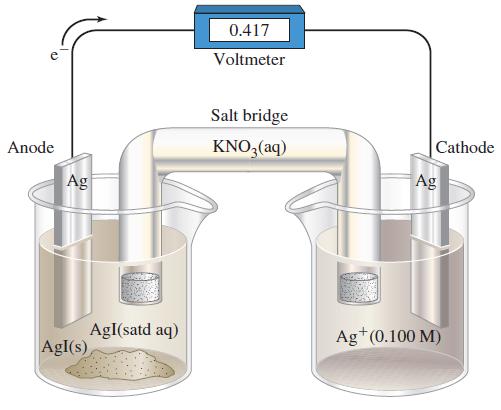
With the data given for reaction (19.23), calculate Ksp for AgI.Reaction (19.23) AgI(s) Ag+ (aq) + (aq) Ksp = ?
(A) Use data from Table 19.1 to predict the probable products when Pt electrodes are used in the electrolysis of KI(aq).Table 19.1(B) In the electrolysis of AgNO3(aq), what are the expected electrolysis products if the anode is silver metal and the cathode is platinum? TABLE 19.1 Standard Reduction
(A) Ksp for AgCl = 1.8 x 10⁻¹⁰. What would be the measured Ecell for the voltaic cell in Example 19-11 if the contents of the anode half-cell were saturated AgCl(aq) and AgCl(s)?Example 19-11With the data given for reaction (19.23), calculate Ksp for AgI.Reaction (19.23)(B) Calculate the Ksp for
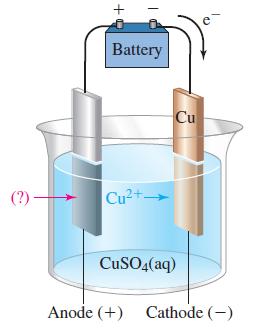
Refer to Figure 19-23. Predict the electrode reactions and the overall reaction when the anode is made of (a) Copper and (b) Platinum.Figure 19-23 (?)- Battery cass Cu2+ Cu CuSO4(aq) Anode (+) Cathode (-)
The electrodeposition of copper can be used to determine the copper content of a sample. The sample is dissolved to produce Cu2+(aq), which is electrolyzed. At the cathode, the reduction half-cell reaction is Cu2+(aq) + 2 e- → Cu(s). What mass of copper can be deposited in 1.00 hour by a current
(A) If 12.3 g of Cu is deposited at the cathode of an electrolytic cell after 5.50 h, what was the current used?(B) For how long would the electrolysis in Example 19-13 have to be carried out, using Pt electrodes and a current of 2.13 A, to produce 2.62 L O2(g) at 26.2 °C and 738 mmHg pressure at
For the reaction 2 NO(g) + Cl2(g) ⇌ 2 NOCl(g), the equilibrium constant is Kc = 3.7 x 10⁸ at 25 °C. What are the equilibrium amounts of all gases, at 25 °C, if 0.100 mol each of NO and Cl2 are placed in a 1.00 L container?
Bromoacetic acid, BrCH2COOH, has pKa = 2.902. Calculate the expected values of (a) The freezing point of 0.0500 M BrCH2COOH(aq) and (b) The osmotic pressure at 25 °C of 0.00500 M BrCH2COOH(aq).
Calculate the equilibrium concentration and the percent ionization of HA in 1.00 M HA(aq) at 25 °C, assuming Ka is equal to (a) 1.00 x 10⁵; (b) 1.00 x 10⁻⁵.
(A) Sodium fluoride, NaF, is found in some toothpaste formulations as an anticavity agent. What is the pH of 0.10 M NaF(aq)?(B) The pH of an aqueous solution of NaCN is 10.38. What is [CN-] in this solution?
According to the Lewis theory, each of the following is an acid–base reaction. Which species is the acid and which is the base? BF4 (a) BF3 + F- (b) OH(aq) + CO₂(aq) HCO3(aq)
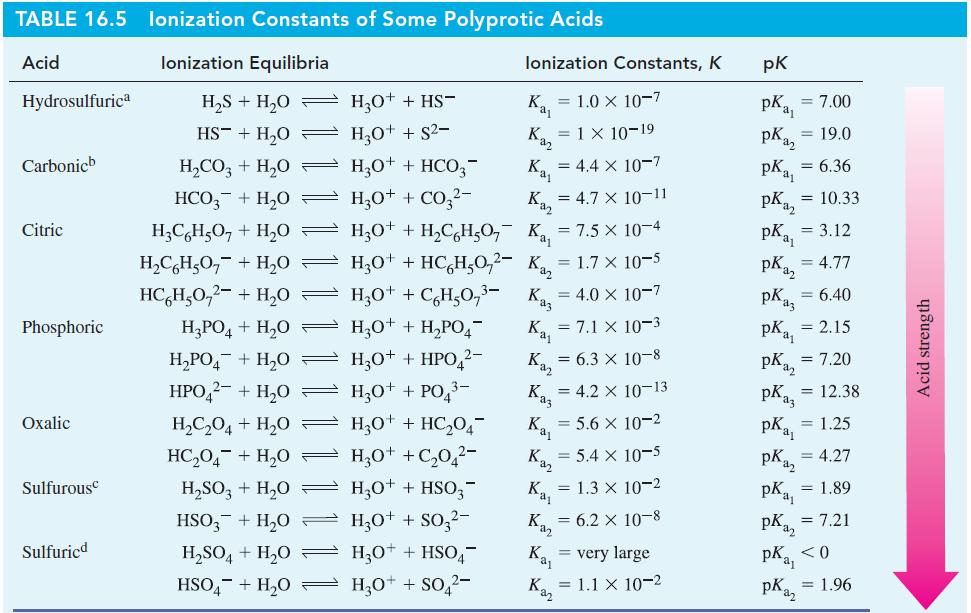
(A) The solubility of CO2(g) in H2O at 25 °C and under a CO2(g) pressure of 1 atm is 1.45 g CO2/L. Air contains 0.037% CO2 by volume. Use this information, together with data from Table 16.5, to show that rainwater saturated with CO2 has a pH ≈ 5.6 (the normal pH for rainwater).Table 16.5(B)
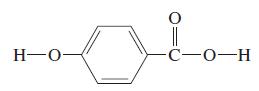
The structural formula shown is para-hydroxybenzoic acid, a weak diprotic acid used as a food preservative. Titration of 25.00 mL of a dilute aqueous solution of this acid requires 16.24 mL of 0.0200 M NaOH to reach the first equivalence point. The measured pH after the addition of 8.12 mL of the
(1) Given that an indicator is itself a weak acid or base, why does adding it to a solution not change the nature of the equilibrium?(2) Starting with about 10 mL of dilute NaCl(aq) containing a couple of drops of phenol red indicator, what color would the solution be for each of the following
What are the effects on the pH of adding (a) 0.0060 mol HCl and (b) 0.0060 mol NaOH to 0.300 L of a buffer solution that is 0.250 M CH3COOH and 0.560 M NaCH3COO?
What is the pH at each of the following points in the titration of 25.00 mL of 0.100 M HCl with 0.100 M NaOH?(a) Before the addition of any NaOH (initial pH)(b) After the addition of 24.00 mL 0.100 M NaOH (before the equivalence point)(c) After the addition of 25.00 mL 0.100 M NaOH (the equivalence
What is the pH at each of the following points in the titration of 25.00 mL of 0.100 M CH3COOH with 0.100 M NaOH?(a) Before the addition of any NaOH (initial pH)(b) After the addition of 10.00 mL 0.100 M NaOH (before equivalence point)(c) After the addition of 12.50 mL 0.100 M NaOH
Sodium phosphate, Na3PO4, is an ingredient of some preparations used to clean painted walls before they are repainted. What is the pH of 0.025 M Na3PO4(aq)?
A large excess of MgF2(s) is maintained in contact with 1.00 L of pure water to produce a saturated solution of MgF2. When an additional 1.00 L of pure water is added to the mixture and equilibrium re-established, compared with the original saturated solution, will [Mg2+] be (a) The same; (b)
Write the solubility product constant expression for the solubility equilibrium of (a) Calcium fluoride, CaF2 (one of the substances used when a fluoride treatment is applied to teeth).(b) Copper arsenate, Cu3(AsO4)2 (used as an insecticide and fungicide).
Lime (quicklime), CaO, is obtained from the high-temperature decomposition of limestone (CaCO3). Quicklime is the cheapest source of basic substances, but it is water insoluble. It does react with water, however, producing Ca(OH)2 (slaked lime). Unfortunately, Ca(OH)2(s) has limited solubility in
(A) Write the solubility product constant expression for (a) MgCO3 (one of the components of dolomite, a form of limestone) and (b) Ag3PO4 (used in photographic emulsions).(B) A handbook lists Ksp = 1 x 10⁻⁷ for calcium hydrogen phosphate, a substance used in dentifrices and as an animal feed
Of the compounds CaF2, CaCl2, AgF, and AgCl, which would be considered insoluble? Explain.
A handbook lists the aqueous solubility of CaSO4 at 25 °C as 0.20 g CaSO4/100 mL. What is the Ksp of CaSO4 at 25 °C? CaSO4(s) = Ca²+ (aq) + SO4² (aq) Ksp ?
(A) A handbook lists the aqueous solubility of AgOCN as 7 mg/100 mL at 20 °C. What is the Ksp of AgOCN at 20 °C?(B) A handbook lists the aqueous solubility of lithium phosphate at 18 °C as 0.034 g Li3PO4/100 mL soln. What is the Ksp of Li3PO4 at 18 °C?
In the fractional precipitation pictured in Figure 18-4 and described in Example 18-7, no mention was made of the concentration of the AgNO3(aq) used. Is this concentration immaterial? Explain.Figure 18-4Example 18-7AgNO3(aq) is slowly added to a solution that has [CrO42-] = 0.010 M and [Br-] =
Lead(II) iodide, PbI2, is a dense, golden yellow, “insoluble” solid used in bronzing and in ornamental work requiring a golden color (such as mosaic gold). Calculate the molar solubility of lead(II) iodide in water at 25 °C, given that Ksp = 7.1 x 10⁻⁹.
(A) The Ksp of Cu3(AsO4)2 at 25 °C is 7.6 x 10-36. What is the molar solubility of Cu3(AsO4)2 in H2O at 25 °C?(B) How many milligrams of BaSO4 are dissolved in a 225 mL sample of saturated BaSO4(aq)? Ksp = 1.1 x 10⁻¹⁰.
Which will be affected more by the addition of a strong acid or a strong base: the solubility of CaF2 or the solubility of CaCl2? Explain.
What is the molar solubility of PbI2 in 0.10 M KI(aq)?
Showing 1100 - 1200
of 4008
First
5
6
7
8
9
10
11
12
13
14
15
16
17
18
19
Last
Step by Step Answers

 Get 50% OFF
Claim Now
Get 50% OFF
Claim Now


![(a) [HSO3] = 0.013 M; (b) [SO3] = 6.3 108 M; (c) [H3O+] = 0.10 M; (d) [H3O+] = 0.013 M; (e) [SO3-] = 0.036 M.](https://dsd5zvtm8ll6.cloudfront.net/images/question_images/1700/5/6/8/170655c9c6ae4b521.png)
![CHCHCOH + HO H3O+ + CH5CHCO Ka 4.9 x 10-5 = (a) What is [C6H5CHCO2] in 0.186 M C6H5CHCOH? (b) What is the pH](https://dsd5zvtm8ll6.cloudfront.net/images/question_images/1700/5/5/4/845655c685dba76b1700554844425.jpg)


































![-AgNO3 solution- [CrO2] = [Br] = 0.010 M 10 (b) [Ag+] 1.0 x 10⁻⁵ M [CrO2] = 0.010 M [Br] 5.0 x 10⁻⁸ M AgBr(s)](https://dsd5zvtm8ll6.cloudfront.net/images/question_images/1700/7/2/2/375655ef6c7f21e11700722375557.jpg)


