New Semester
Started
Get
50% OFF
Study Help!
--h --m --s
Claim Now
Question Answers
Textbooks
Find textbooks, questions and answers
Oops, something went wrong!
Change your search query and then try again
S
Books
FREE
Study Help
Expert Questions
Accounting
General Management
Mathematics
Finance
Organizational Behaviour
Law
Physics
Operating System
Management Leadership
Sociology
Programming
Marketing
Database
Computer Network
Economics
Textbooks Solutions
Accounting
Managerial Accounting
Management Leadership
Cost Accounting
Statistics
Business Law
Corporate Finance
Finance
Economics
Auditing
Tutors
Online Tutors
Find a Tutor
Hire a Tutor
Become a Tutor
AI Tutor
AI Study Planner
NEW
Sell Books
Search
Search
Sign In
Register
study help
sciences
organic chemistry
Organic Chemistry structure and function 6th edition K. Peter C. Vollhardt, Neil E. Schore - Solutions
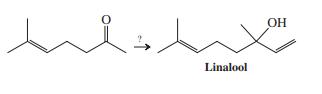
Propose two different syntheses of linalool, a terpene found in cinnamon, sassafras, and orange flower oils. Start with the eight-carbon ketone shown here and use ethyne as your source of the necessary additional two carbons in both syntheses. OH Linalool
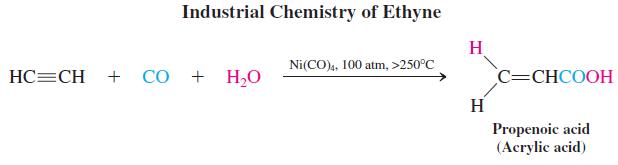
Propose a reasonable structure for calcium carbide, CaC2, on the basis of its chemical reactivity (Section 13-10). What might be a more systematic name for it?Section 13-10Ethyne chemistry underwent important commercial development in the 1930s and 1940s in the laboratories of Badische Anilin and
Show how the Heck reaction might be employed to synthesize each of the following molecules. doCH, (а) COCH3 (b)
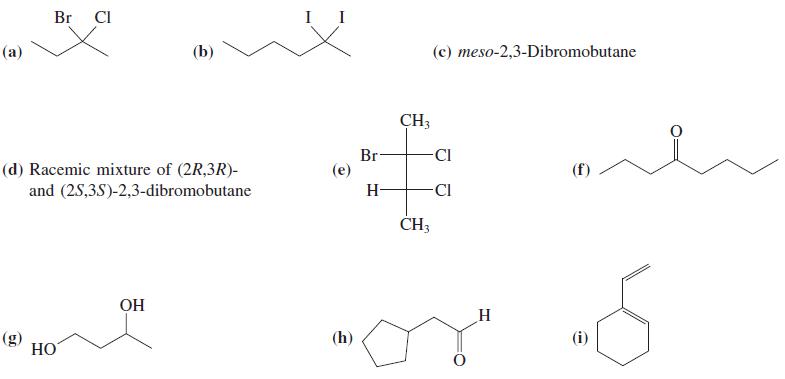
Propose reasonable syntheses of each of the following molecules, using an alkyne at least once in each synthesis. Br CI I I (a) (b) (c) meso-2,3-Dibromobutane CH3 Br- (e) -CI (d) Racemic mixture of (2R,3R)- and (2S,35)-2,3-dibromobutane H- -CI CH3 ОН (h) (i) (g) HO
Propose several syntheses of cis-3-heptene, beginning with each of the following molecules. Note in each case whether your proposed route gives the desired compound as a major or minor final product.(a) 3-Chloroheptane;(b) 4-chloroheptane;(c) 3,4-dichloroheptane;(d) 3-heptanol;(e) 4-heptanol;(f)
Give the products of the reactions of your first two answers to Problem 45 with each of the following reagents.(a) H2, Pd – C, CH3CH2OH;(b) Br2, CCl4;(c) BH3, THF, then NaOH, H2O2;(d) MCPBA, CH2Cl2;(e) OsO4, then H2S.
Write the structures of the initially formed enol tautomers in the reactions of propyne and dicyclohexylethyne with dicyclohexylborane followed by NaOH and H2O2 (Problems 44, part i, and 45, part i).(a) D2, Pd – CaCO3, Pb(O2CCH3)2, quinoline;(b) Na, ND3;(c) 1 equivalent HI;(d) 2 equivalents
What are the products of the reactions of dicyclohexylethyne with the reagents in Problem 44?(a) D2, Pd – CaCO3, Pb(O2CCH3)2, quinoline;(b) Na, ND3;(c) 1 equivalent HI;(d) 2 equivalents HI;(e) 1 equivalent Br2;(f) 1 equivalent ICl;(g) 2 equivalents ICl;(h) H2O, HgSO4, H2SO4;(i)
Give the expected major product of the reaction of propyne with each of the following reagents.(a) D2, Pd – CaCO3, Pb(O2CCH3)2, quinoline;(b) Na, ND3;(c) 1 equivalent HI;(d) 2 equivalents HI;(e) 1 equivalent Br2;(f) 1 equivalent ICl;(g) 2 equivalents ICl;(h) H2O, HgSO4, H2SO4;(i)
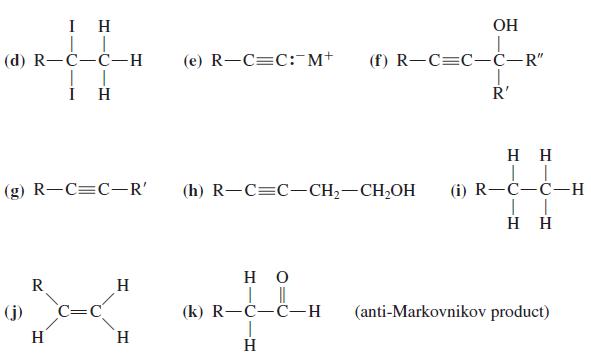
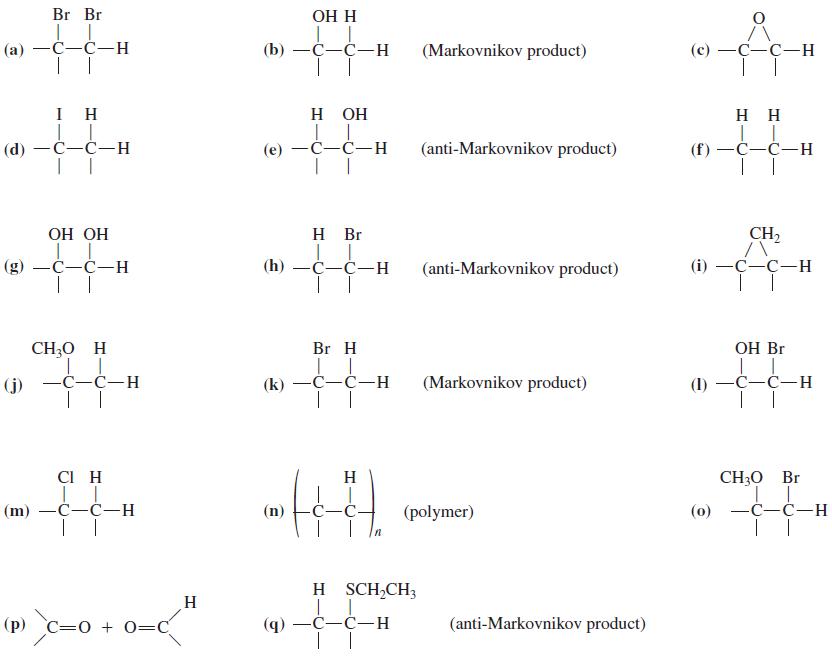
Reaction review. Without consulting the Reaction Road Map on p. 598, suggest reagents to convert a general alkyne RC≡CH into each of the following types of compounds. Br Br он I| | (с) R-С—С—Н R Br (а) C=C (b) R—C—С—Н (Markovnikov product) Br H. Br Br
Draw the structure of (R)-4-deuterio-2-hexyne. Propose a suitable retro-SN2 precursor of this compound.
Propose reasonable syntheses of each of the following alkynes, using the principles of retrosynthetic analysis. Each alkyne functional group in your synthetic target should come from a separate molecule, which may be any two-carbon compound (e.g., ethyne, ethene, ethanal). OH (d) (CH3),CC=CH [Be
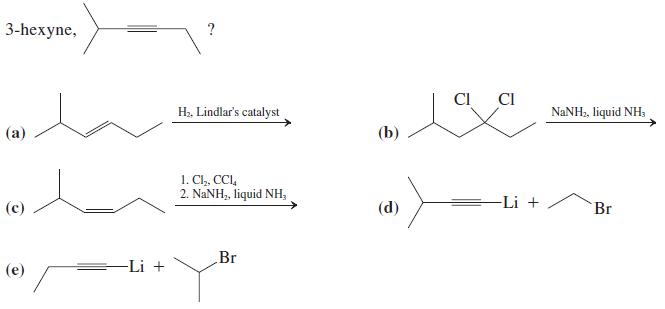
Which of the following methods is best suited as a high-yield synthesis of 2-methyl 3-hexyne, CI CI H.. Lindlar's catalyst NANH, liquid NH, (a) (b) 1. Cl,, CCI, 2. NANH,, liquid NH, -Li + (c) (d) Br Br (e) -Li +
Write the mechanism and final product for the reaction of 1-propynyllithium with trans-2,3- dimethyloxacyclopropane.
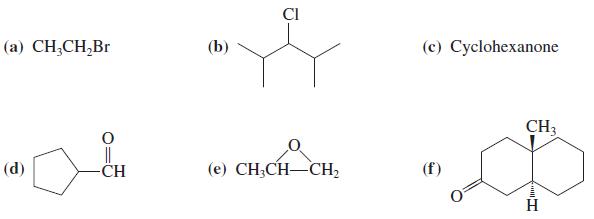
Write the expected major product of reaction of 1-propynyllithium, CH3C ≡ C-Li+, with each of the following molecules in THF. CI (а) CН,CH,Br (b) (с) Суclohexanone CH3 (d) -СH (е) CН,CH—СH (f)
(a) Write the expected product of the reaction of 3-octyne with Na in liquid NH3.(b) When the same reaction is carried out with cyclooctyne (Problem 33b), the product is cis-cyclooctene, not trans-cyclooctene. Explain, mechanistically. -C=CCH3, CH2C=CH, and
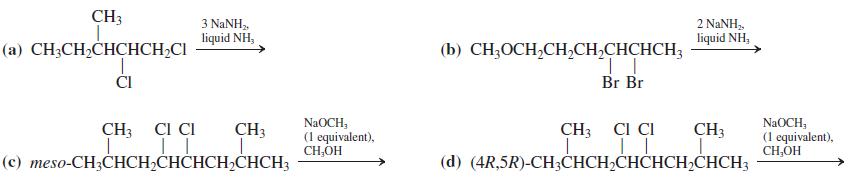
Write the expected product(s) of each of the following reactions. CH3 3 NANH, liquid NH, 2 NANH,, liquid NH, (а) CH-CH-CHCНCH-CI (b) CH,OCH,CH,CH,CHCHCH3 ČI Br Br NaOCH, (1 equivalent), CH,OH CH3 CI CI NaOCH, (1 equivalent), CH,OH CH3 CI CI CH3 CH3 (с) тeso-CH;CHCH-CНCHCH,CHСH; (d)
The IR spectrum of 1,8-nonadiyne displays a strong, sharp band at 3300 cm-1. What is the origin of this absorption? Treatment of 1,8-nonadiyne with NaNH2, then with D2O, leads to the incorporation of two deuterium atoms, leaving the molecule unchanged otherwise. The IR spectrum reveals that the
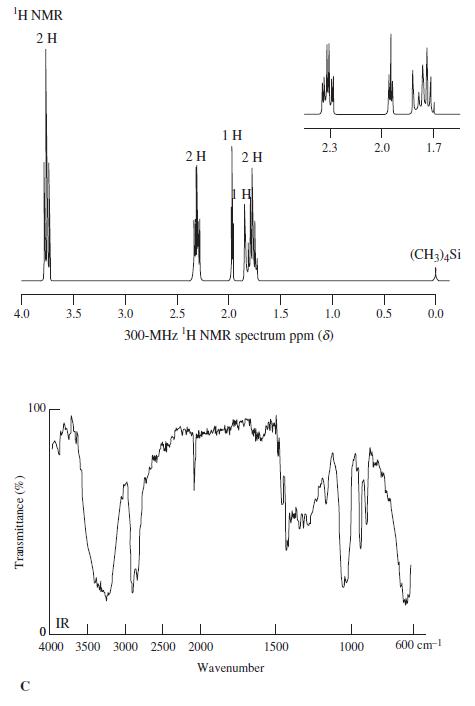
Deduce structures for each of the following.(a) Molecular formula C6H10; NMR spectrum A; no strong IR bands between 2100 and 2300 or 3250 and 3350 cm-1.(b) Molecular formula C7H12; NMR spectrum B; IR bands at about 2120 and 3330 cm-1.(c) The percentage composition is 71.41% carbon and 9.59%
Rank in order of decreasing stability.(a) 1-Heptyne and 3-heptyne(b) -C=CCH3, CH,C=CH, and
The heats of combustion for three compounds with the molecular formula C5H8 are as follows: cyclopentene, ΔHcomb = - 1027 kcal mol-1; 1,4-pentadiene, ΔHcomb = - 1042 kcal mol-1; and 1-pentyne, ΔHcomb = - 1052 kcal mol-1. Explain in terms of relative stability and bond strengths.
Predict the order of acid strengths in the following series of cationic species: CH3CH2NH3+, CH3CH=NH2+, CH3C ≡ NH+.
Compare the C2 – C3 bonds in propane, propene, and propyne. Should they be any different with respect to either bond length or bond strength? If so, how should they vary?
Compare C – H bond strengths in ethane, ethene, and ethyne. Reconcile these data with hybridization, bond polarity, and acidity of the hydrogen.
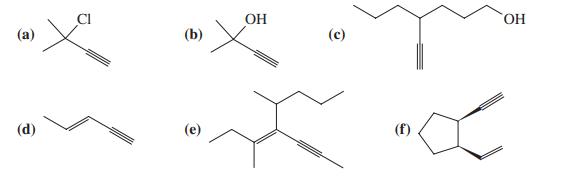
Name each of the compounds below, using the IUPAC system of nomenclature. CI OH (а) (b) (d) (е) (f)
Draw the structures of the molecules with the following names.(a) 1-Chloro-1-butyne(b) (Z)-4-Bromo-3-methyl-3-penten-1-yne(c) 4-Hexyn-1-ol
When 1-pentene is treated with mercuric acetate, followed by sodium borohydride, which of the following compounds is the resulting product?(a) 1-Pentyne;(b) pentane;(c) 1-pentanol;(d) 2-pentanol.
Which reaction intermediate is believed to be part of the following reaction?(a) Radical;(b) Carbocation;(c) Oxacyclopropane;(d) Bromonium ion. HBr, ROOR RCH=CH2 RCH,CH,Br
Trans-3-Hexene and cis-3-hexene differ in one of the following ways. Which one?(a) Products of hydrogenation;(b) Products of ozonolysis;(c) Products of Br2 addition in CCl4;(d) Products of hydroboration – oxidation;(e) Products of combustion.
A chemist reacted 300 g of 1-butene with excess Br2 (in CCl4) at 25 ºC. He isolated 418 g of 1,2 dibromobutane. What is the percent yield? (Atomic weights: C = 12.0, H = 1.00, Br = 80.0.)(a) 26;(b) 36;(c) 46;(d) 56;(e) 66.
A chiral compound, C5H8, upon simple catalytic hydrogenation, yields an achiral compound, C5H10. What is the best name for the former?(a) 1-Methylcyclobutene;(b) 3-methylcyclobutene;(c) 1,2-dimethylcyclopropene;(d) cyclopentene.
The selectivity of hydroboration increases with increasing bulkiness of the borane reagent.(a) For example, 1-pentene is selectively hydroborated in the presence of cis-and trans-2-pentene when treated with bis(1,2-dimethylpropyl)borane (disiamylborane) or with 9-borabicyclo[3.3.1]- nonane, 9-BBN.
Juvenile hormone (JH, Chemical Highlight 12-1) has been synthesized in several ways. Two intermediates are shown in (a) and (b). Propose completions for syntheses of JH that start with each of them. Your synthesis for (a) should be stereospecifi c. Also for (a), note that the double bond between
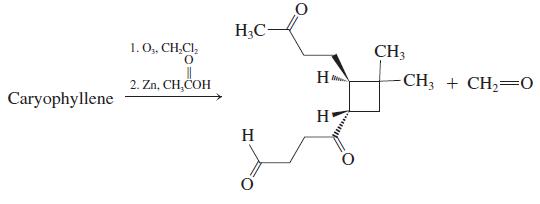
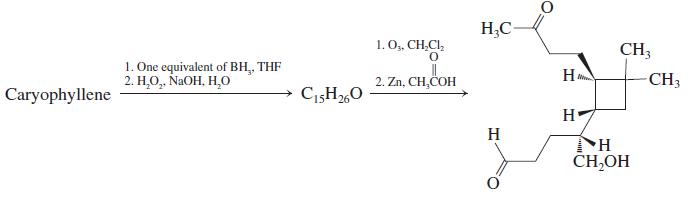
Caryophyllene (C15H24) is an unusual sesquiterpene familiar to you as a major cause of the odor of cloves. Determine its structure from the following information. (Caution: The structure is totally different from that of a-caryophyllene alcohol in Problem 72.)Reaction 1Reaction 2Reaction 3An
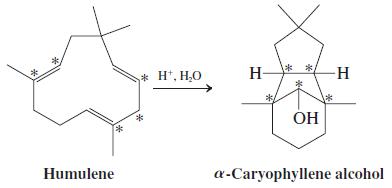
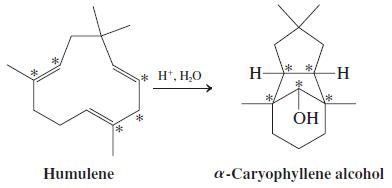
Predict the product(s) of ozonation of humulene (Problem 72), followed by reduction with zinc in acetic acid. If you had not known the structure of humulene ahead of time, would the identities of these ozonolysis products have enabled you to determine it unambiguously? * H*. H,O H- -H ОН Humulene
Humulene and a-caryophyllene alcohol are terpene constituents of carnation extracts. The former is converted into the latter by acid-catalyzed hydration in one step. Write a mechanism. * H*. H,O H- -H ОН Humulene a-Caryophyllene alcohol
Oil of marjoram contains a pleasant, lemon-scented substance, C10H16 (compound G). Upon ozonolysis, G forms two products. One of them, H, has the formula C8H14O2 and can be independently synthesized in the following way.From this information, propose reasonable structures for compounds G through J.
Both borane and MCPBA react highly selectively with molecules, such as limonene, that contain double bonds in very different environments. Predict the products of reaction of limonene with(a) One equivalent of BH3 in THF, followed by basic aqueous H2O2,(b) One equivalent of MCPBA in CH2Cl2. Explain
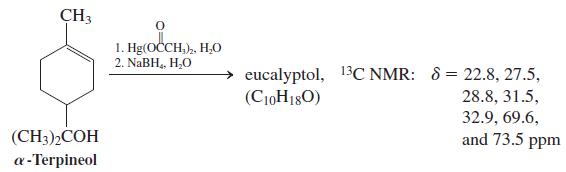
Treatment of a-terpineol (Chapter 10, Problem 60) with aqueous mercuric acetate followed by sodium borohydride reduction leads predominantly to an isomer of the starting compound (C10H18O) instead of a hydration product. This isomer is the chief component in oil of eucalyptus and, appropriately
When a cis alkene is mixed with a small amount of I2 in the presence of heat or light, it isomerizes to some trans alkene. Propose a detailed mechanism to account for this observation.
(E)-5-Hepten-1-ol reacts with the following reagents to give products with the indicated formulas. Determine their structures and explain their formation by detailed mechanisms.(a) HCl, C7H14O (no Cl!);(b) Cl2, C7H13ClO (IR: 740 cm-1; nothing between 1600 and 1800 cm-1 and between 3200 and 3700
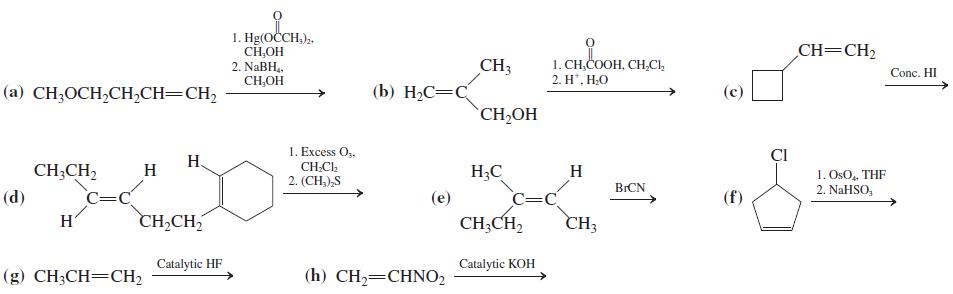
Give the expected major product(s) of each of the following reactions. 1. Hg(OČCH,),. CH,OH 2. NaBH, CH,OH CH=CH2 CH3 (b) H2C=C 1. CH,COOH, CH,CI, 2. H', Н.О Conc. HI (a) CH3OCH,CH,CH=CH2 CH,OH 1. Excess O,, CI Н. CH;CH, CH;Cl. 2. (CH,),S H H;C H 1. OsO, THF 2. NaHSO, BICN (d) C=C (e) =C (f) H
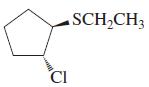
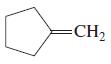
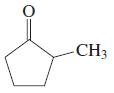
Show how you would convert cyclopentane into each of the following molecules.(a) cis-1,2-Dideuteriocyclopentane(b) trans-1,2-Dideuteriocyclopentane(c)(d)(e)(f) 1,2-Dimethylcyclopentene(g) trans-1,2-Dimethyl-1,2-cyclopentanediol SCH,CH3 CI
Plan syntheses of each of the following compounds, utilizing retrosynthetic-analysis techniques. Starting compounds are given in parentheses. However, other simple alkanes or alkenes also may be used, as long as you include at least one carbon – carbon bond-forming step in each synthesis. OH H;C,
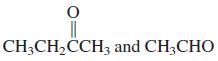
Give the structure of an alkene that will give the following carbonyl compounds upon ozonolysisfollowed by reduction with (CH3)2S.(a) CH3CHO only(b) CH3CHO and CH3CH2CHO(c) (CH3)2C P O and H2C P O(d)(e) Cyclopentanone and CH3CH2CHO CH3CH,CCH3 and CH3CHO
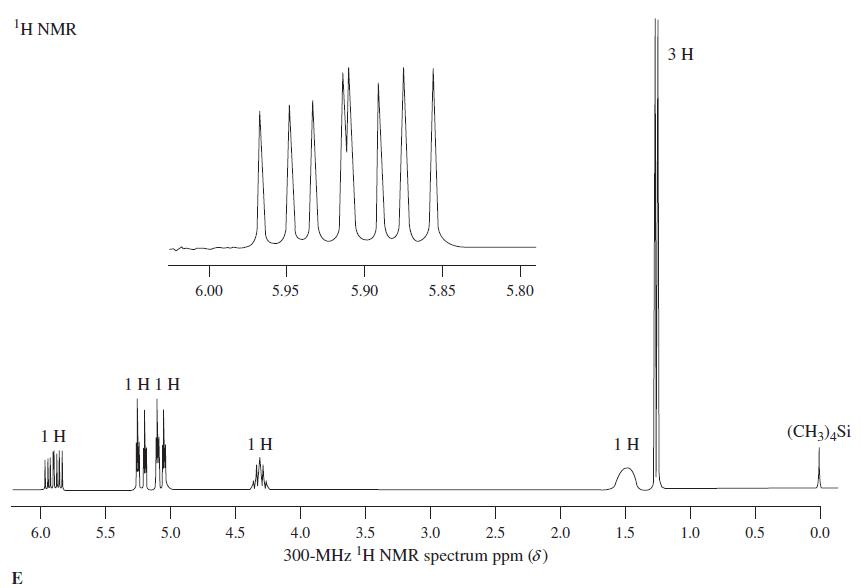
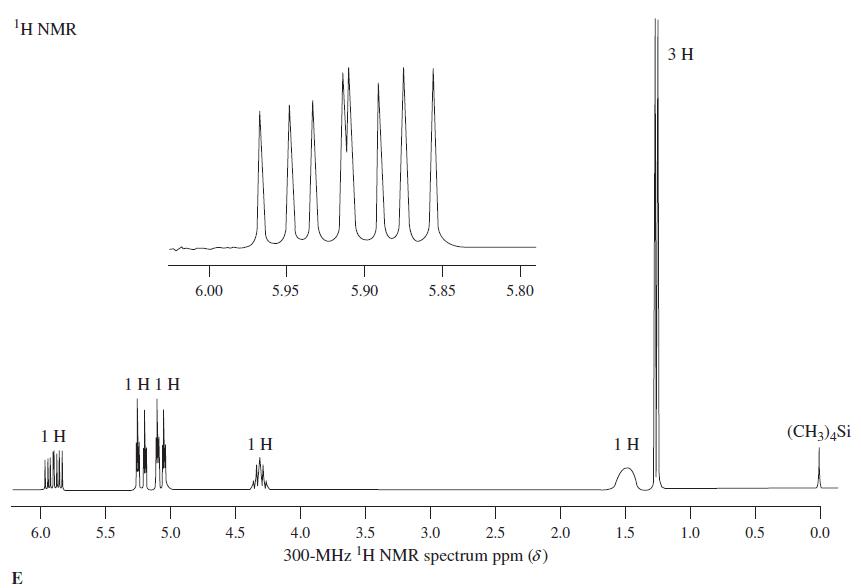
The mass spectra of both of the compounds described in Problem 61 show two molecular ion peaks, two mass units apart, in an intensity ratio of about 3 : 1. Explain.In Problem 61 1Η ΝMR 3 H 6.00 5.95 5.90 5.85 5.80 1 H1H 1 H 1 H 1 H (CH3)4Si 6.0 5.5 5.0 4.5 4.0 3.5 3.0 2.5 2.0 1.5 1.0 0.5 0.0
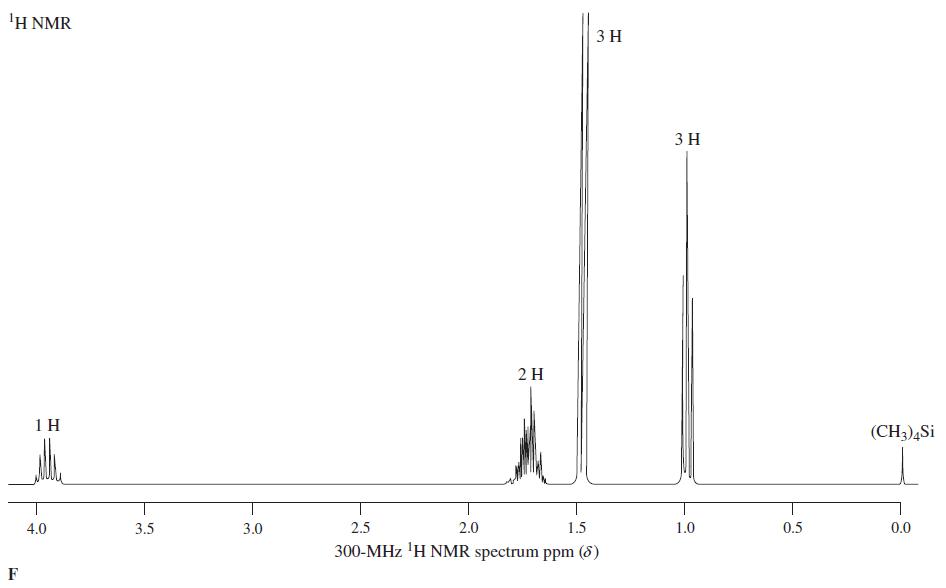
Reaction of the compound corresponding to spectrum E with SOCl2 produces a chloroalkane, C4H7Cl, whose NMR spectrum is almost identical with spectrum E, except that the broad signal at δ = 1.5 ppm is absent. Its IR spectrum shows bands at 700, 925, 985, 1640, and 3090 cm-1. Treatment with H2 over
1H NMR spectrum E corresponds to a molecule with the formula C4H8O. Its IR spectrum has important bands at 945, 1015, 1665, 3095, and 3360 cm-1.(a) Determine the structure of the unknown.(b) Assign each NMR and IR signal.(c) Explain the splitting patterns for the signals at δ = 1.3, 4.3, and 5.9
Reaction of C3H5Cl (Problem 58, spectrum A) with Cl2 in H2O gives rise to two products, both C3H6Cl2O, whose spectra are shown in B and C. Reaction of either of these products with KOH yields the same molecule C3H5ClO (spectrum D, next page). The insets show expansions of some of the multiplets.
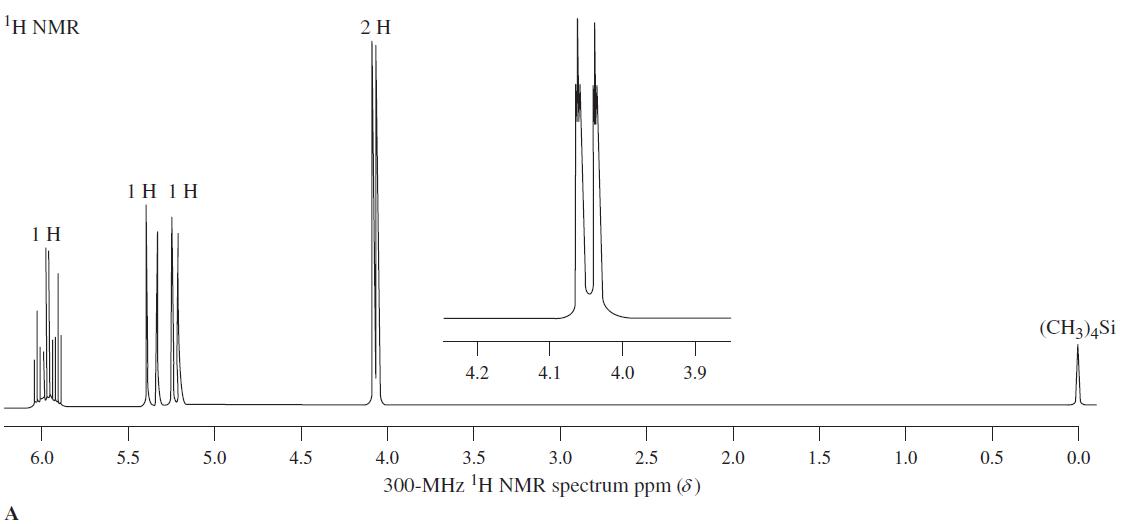
1H NMR spectrum A corresponds to a molecule with the formula C3H5Cl. The compound shows significant IR bands at 730 (see Problem 53 of Chapter 11), 930, 980, 1630, and 3090 cm-1.(a) Deduce the structure of the molecule.(b) Assign each NMR signal to a hydrogen or group of hydrogens.(c) The
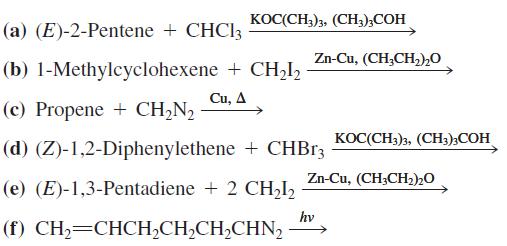
Write the expected products of each of the following reactions. KOC(CH3)3, (CH,);COH (a) (E)-2-Pentene + CHCI3 Zn-Cu, (CH,CH,)2O (b) 1-Methylcyclohexene + CH,I, Си, Д (c) Propene + CH,N, KOC(CH3)3, (CH;);COH (d) (Z)-1,2-Diphenylethene + CHB13 Zn-Cu, (CH;CH2)20 (e) (E)-1,3-Pentadiene + 2 CH2I2 hv
Propose a mechanism for the peroxide-initiated reaction of CH3SH with 1-hexene.
Give the expected major product of reaction of CH3SH in the presence of peroxides with each alkene in Problem 53.(a) 1-Hexene;(b) (Z)-3-ethyl-2-hexene;(c) (E)-3-ethyl-2-hexene;(d) (E)-3-hexene;(e) 1,2-dimethylcyclohexene.
Give the expected major product of reaction of OsO4, followed by H2S, with each alkene in Problem 53.(a) 1-Hexene;(b) (Z)-3-ethyl-2-hexene;(c) (E)-3-ethyl-2-hexene;(d) (E)-3-hexene;(e) 1,2-dimethylcyclohexene.
Give the expected major product of reaction of magnesium monoperoxyphthalate (MMPP) with each alkene. In each case, also give the structure of the material formed upon hydrolysis in aqueous acid of the initial product.(a) 1-Hexene;(b) (Z)-3-ethyl-2-hexene;(c) (E)-3-ethyl-2-hexene;(d)
Answer the question posed in Problem 51 for cyclohexylethene.(a) 50% aqueous H2SO4;(b)(c) BH3 in THF, followed by NaOH and H2O2. Hg(OCCH3), in H,O, followed by NaBH4;
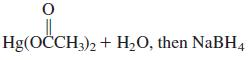
Give the expected major product from reaction of 3-methyl-1-butene with each of the following reagents. Explain any differences in the products mechanistically.(a) 50% aqueous H2SO4;(b)(c) BH3 in THF, followed by NaOH and H2O2. Hg(OCCH3), in H,O, followed by NaBH4;
What alkene monomer gives the following polymer? CH3H C-C- H H
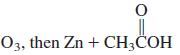
Write out detailed step-by-step mechanisms for the reactions in parts (c), (e), (f), (h), (j), (k), (m), (n), (o), and (p) of Problem 46.(c) BH3, THF then NaOH + H2O2(e) HBr(f) HBr + peroxides(h) H2SO4 + H2O(j) ICl(k) Br2 + CH3CH2OH(m) MCPBA, CH2Cl2(n) OsO4, then H2S(o)(p) O3, then Zn + CH;COH
Write the expected products of reaction of 1-ethylcyclopentene with each of the reagents in Problem 46.(a) H2, PtO2, CH3CH2OH(b) D2, Pd – C, CH3CH2OH(c) BH3, THF then NaOH + H2O2(d) HCl(e) HBr(f) HBr + peroxides(g) HI + peroxides(h) H2SO4 + H2O(i) Cl2(j) ICl(k) Br2 + CH3CH2OH(l) CH3SH +
What are the products of reaction of (E)-3-methyl-3-hexene with each of the reagents in Problem 46?(a) H2, PtO2, CH3CH2OH(b) D2, Pd – C, CH3CH2OH(c) BH3, THF then NaOH + H2O2(d) HCl(e) HBr(f) HBr + peroxides(g) HI + peroxides(h) H2SO4 + H2O(i) Cl2(j) ICl(k) Br2 + CH3CH2OH(l) CH3SH + peroxides(m)
Give the expected product of reaction of 2-methyl-1-pentene with each of the following reagents.(a) H2, PtO2, CH3CH2OH(b) D2, Pd – C, CH3CH2OH(c) BH3, THF then NaOH + H2O2(d) HCl(e) HBr(f) HBr + peroxides(g) HI + peroxides(h) H2SO4 + H2O(i) Cl2(j) ICl(k) Br2 + CH3CH2OH(l) CH3SH + peroxides(m)
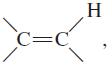
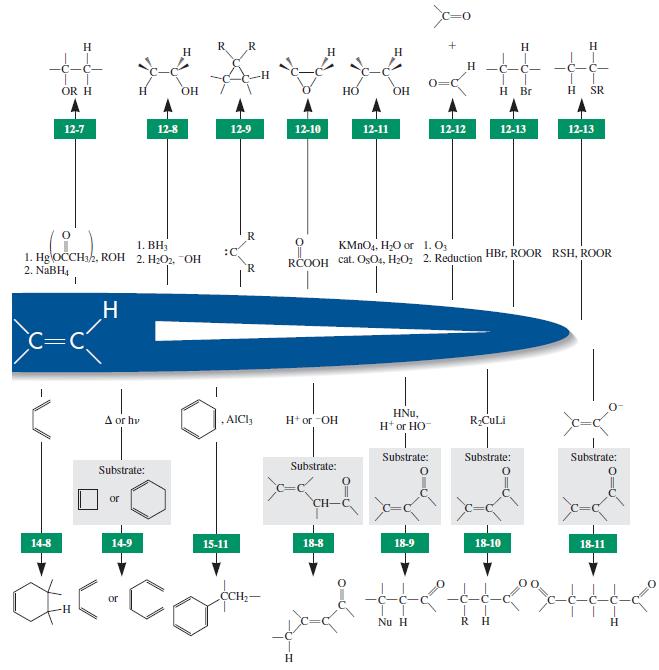
Without consulting the Reaction Road Map on pp. 556 – 557, suggest a reagent to convert a general alkene,into each of the following types of compounds. H C=C
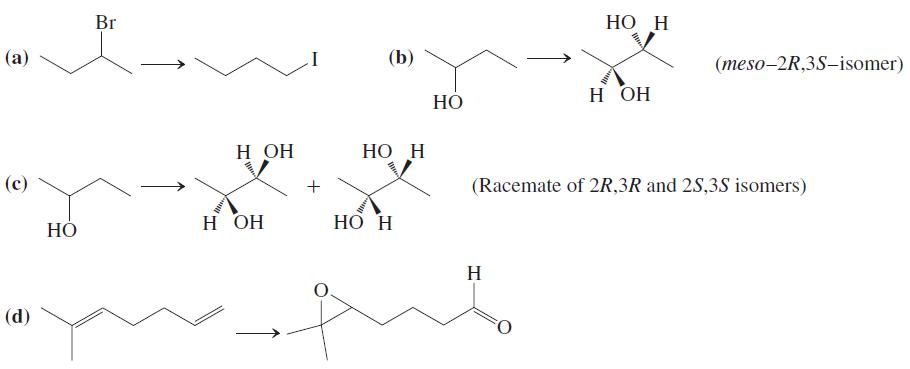
Propose efficient methods for accomplishing each of the following transformations. Most will require more than one step. Br НО Н (а) (b) (meso-2R,3S–isomer) н он НО Н ОН НО Н (с) (Racemate of 2R,3R and 2S,3S isomers) н он Hồ H НО НО Н H (d)
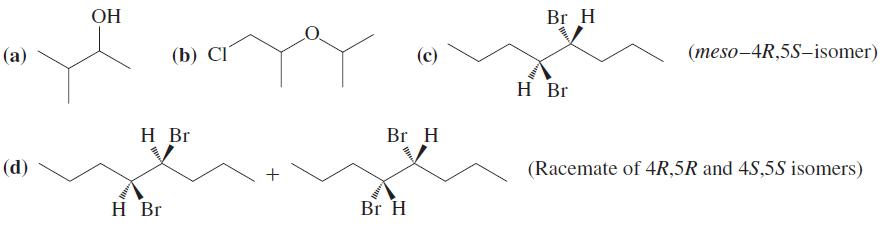
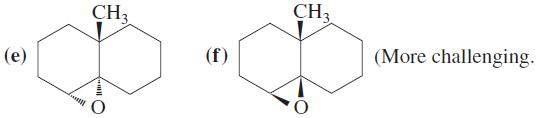
Show how you would synthesize each of the following molecules from an alkene of appropriate structure (your choice). ОН Br H (а) (b) СI (meso-4R,5S-isomer) H Br H Br Br H (d) (Racemate of 4R,5R and 4S,5S isomers) H Br Br H +
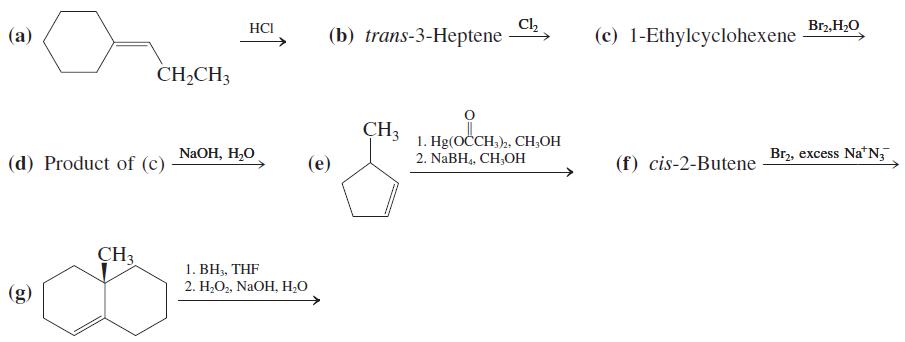
Formulate the product(s) that you would expect from each of the following reactions. Show stereochemistry clearly. Ch (b) trans-3-Heptene HCI Br2, H2O (a) (c) 1-Ethylcyclohexene CH,CH3 CH3 NaOH, H,O 1. Hg(OČCH,)2, CH,OH 2. NABH,, CH,OH Br2, excess Na'N, (d) Product of (c) (e) (f) cis-2-Butene CH3
Problem 51 of Chapter 6 presented a strategy for the synthesis of the amino acid (2S,3S)-3- hydroxyleucine, requiring as the starting material a specifi c stereoisomer of 2-bromo-3-hydroxy-4 methylpentanoic acid. Addition of bromine and water to the methyl ester of 4-methyl-2-pentenoic acid
Give the reagents and conditions necessary for each of the following transformations and comment on the thermodynamics of each(a) cyclohexanol → cyclohexene;(b) cyclohexene → cyclohexanol;(c) chlorocyclopentane → cyclopentene;(d) cyclopentene → chlorocyclopentane.
What alcohol would be obtained from treatment of each alkene in Problem 37 with aqueous sulfuric acid? Would any of these alkenes give a different product upon oxymercuration – demercuration? Upon hydroboration – oxidation?In Problem 37Give the expected major product from the reaction of each
Give the product of addition to Br2 to each alkene in Problem 37. Pay attention to stereochemistry.In Problem 37Give the expected major product from the reaction of each alkene with(i) peroxide-free HBr and(ii) HBr in the presence of peroxides.
Give the expected major product from the reaction of each alkene with(i) peroxide-free HBr(ii) HBr in the presence of peroxides.(a) 1-Hexene;(b) 2-methyl-1-pentene;(c) 2-methyl-2-pentene;(d) (Z)-3-hexene;(e) cyclohexene.
Would you expect the catalytic hydrogenation of a small-ring cyclic alkene such as cyclobutene to be more or less exothermic than that of cyclohexene?
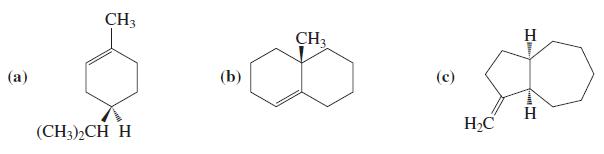
Give the expected major product of catalytic hydrogenation of each of the following alkenes. Clearly show and explain the stereochemistry of the resulting molecules. CH3 CH3 H (а) (b) (c) H H2C (CH3),CH H
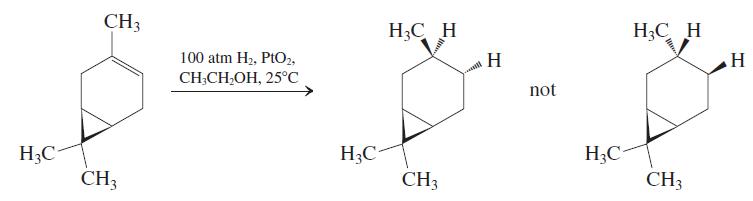
The bicyclic alkene car-3-ene, a constituent of turpentine, undergoes catalytic hydrogenation to give only one of the two possible stereoisomeric products. The product has the common name cis-carane, indicating that the methyl group and the cyclopropane ring are on the same face of the cyclohexane
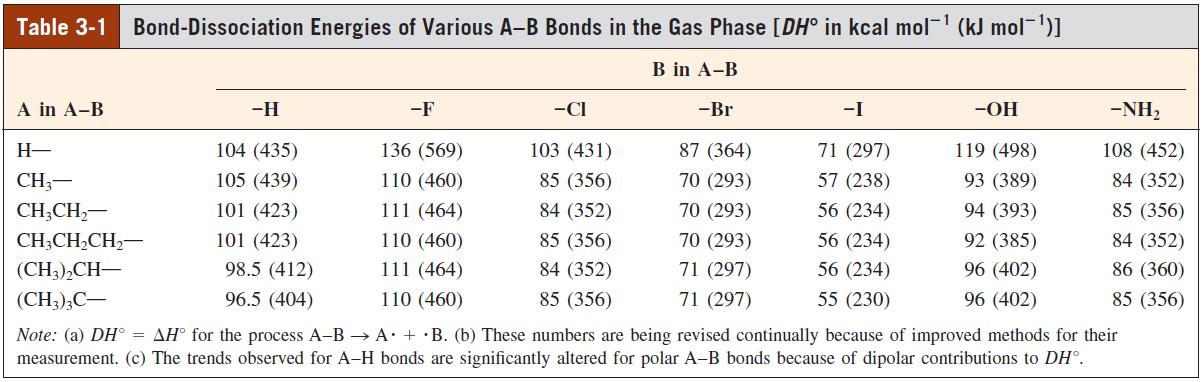
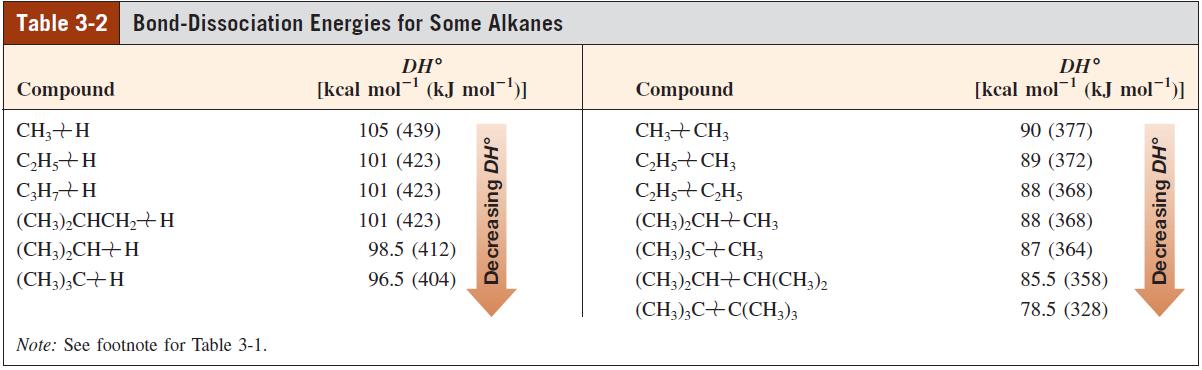
With the help of the DHº values given in Tables 3-1 and 3-4, calculate the ΔHº values for addition of each of the following molecules to ethene, using 65 kcal mol-1 for the carbon – carbon π bond strength.(a) Cl2(b) IF (DHº = 67 kcal mol-1)(c) IBr (DHº = 43 kcal mol-1)(d) HF(e) HI(f) HO –
What is the IUPAC name for compound B (see margin)?(a) (E)-2-Methyl-3-pentene;(b) (E)-3-methyl-2-pentene;(c) (Z)-2-methyl-3-pentene;(d) (Z)-3-methyl-2-pentene
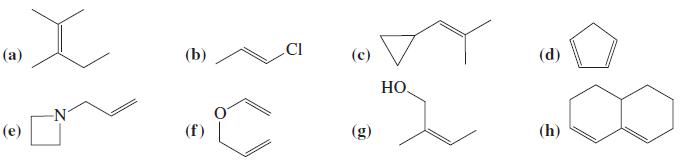
Determine the molecular formulas corresponding to each of the following structures. For each structure, calculate the number of degrees of unsaturation from the molecular formula and evaluate whether your calculations agree with the structures shown. CI (а) (b) (с) (d) HO, -N' (е) (f) (h)
You have just entered the chemistry stockroom to look for several isomeric bromopentanes. There are three bottles on the shelf marked C5H11Br, but their labels have fallen off. The NMR machine is broken, so you devise the following experiment in an attempt to determine which isomer is in which
Your team is faced with a puzzle. Four isomeric compounds, A – D, with the molecular formula C4H9BrO react with KOH to produce E – G with the molecular formula C4H8O. Molecules A and B yield compounds E and F, respectively. The NMR spectra of compounds C and D are identical, and both furnish
From each group of three molecules, choose the one whose structure is most consistent with the proton-decoupled 13C NMR data. Explain your choices.(a) CH3(CH2)4CH3, (CH3)3CCH2CH3, (CH3)2CHCH(CH3)2; δ = 19.5 and 33.9 ppm.(b) 1-Chlorobutane, 1-chloropentane, 3-chloropentane; δ = 13.2, 20.0, 34.6,
How would the DEPT 13C spectra of the compounds discussed in Problems 35 and 37 differ in appearance from the ordinary 13C spectra?Problems 35 Problems 37 Br Br Br. Br Br Br Br X. (а) (b) (с) Br (d) 'Br (е) Br
Rework Problem 37 as it pertains to 13C NMR spectroscopy.Rework Problem 37For each compound in each of the following groups of isomers, indicate the number of signals in the 1H NMR spectrum, the approximate chemical shift of each signal, and the integration ratios for the signals. Ignore spin –
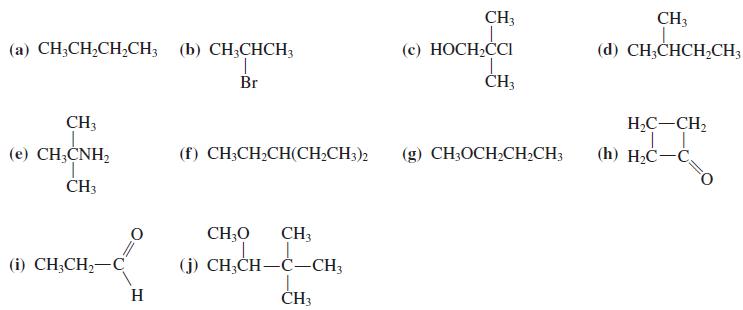
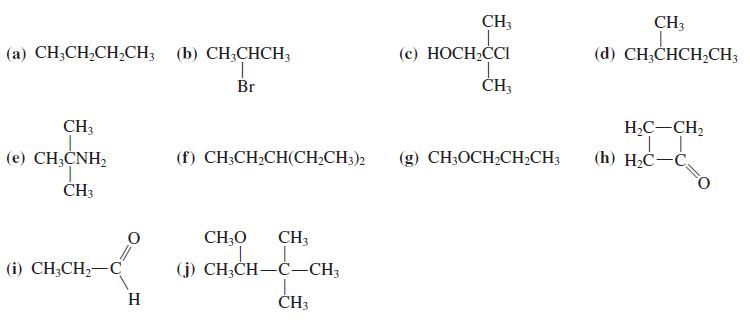
Predict the 13C NMR spectra of the compounds in Problem 36, with and without proton decoupling. CH3 CH3 (с) НОСН,СCI CH,CI (a) CH;CH,CH,CH; (b) CH;CHCH3 (d) CH;CHCH,CH3 Br ČH3 CH3 H,C-CH, (е) СН,CNH, (f) CH;CH;CH(CH;CH3)2 (g) CH3OCH;CHCH3 (h) H2C-C ČH3 CH;O CH3 (i) CH,CH— С (j)
Can the three isomeric pentanes be distinguished unambiguously from their broad-band proton-decoupled 13C NMR spectra alone? Can the five isomeric hexanes be distinguished in this way?
Describe the spin – spin splitting patterns that you expect for each signal in the 1H NMR spectra of the five bromocyclopropane derivatives illustrated in Problem 35. Note that in these compounds the geminal coupling constants (i.e., between nonequivalent hydrogens on the same carbon atom —
Sketch 1H NMR spectra for the following compounds. Estimate chemical shifts (see Section 10-4) and show the proper multiplets for peaks that exhibit spin – spin coupling.(a) CH3CH2OCH2Br;(b) CH3OCH2CH2Br;(c) CH3CH2CH2OCH2CH2CH3;(d) CH3CH(OCH3)2.
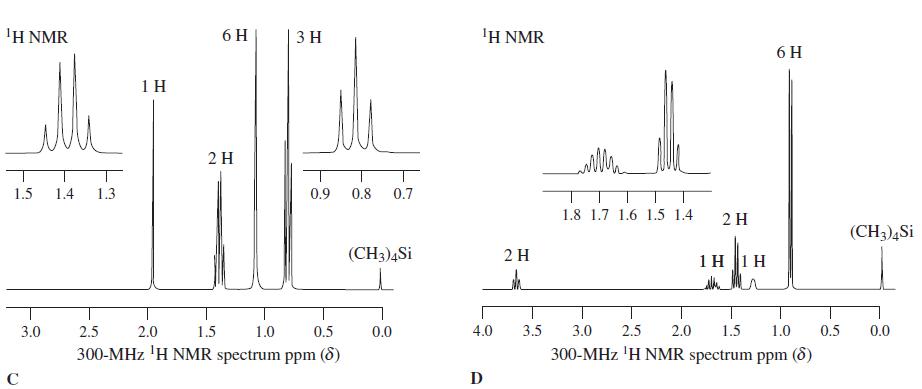
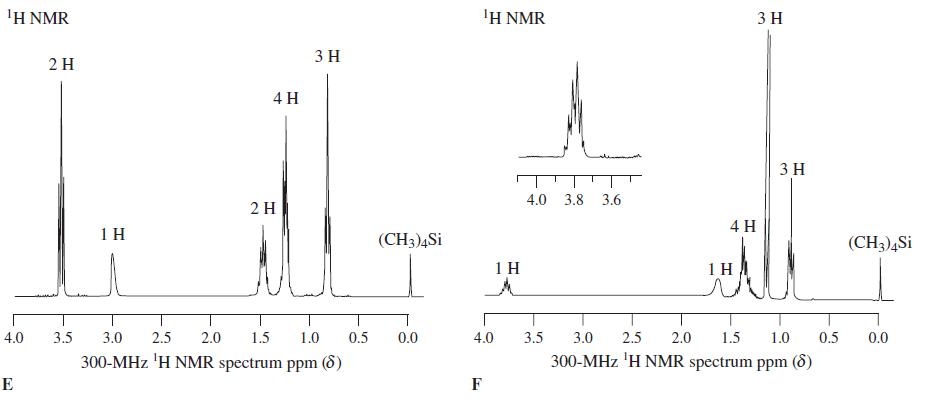
1H NMR spectra C through F (see below) correspond to four isomeric alcohols with the mole cular formula C5H12O. Try to assign their structures. 1Η ΝMR 6 H 3 H 'H NMR 6 H 1 H 2 H 1.5 1.4 1.3 0.9 0.8 0.7 1.8 1.7 1.6 1.5 1.4 2 H (CH3)4Si (CH3)4Si 2H 1 H 1 H 3.0 2.5 2.0 1.5 1.0 0.5 0.0 4.0 3.5 3.0
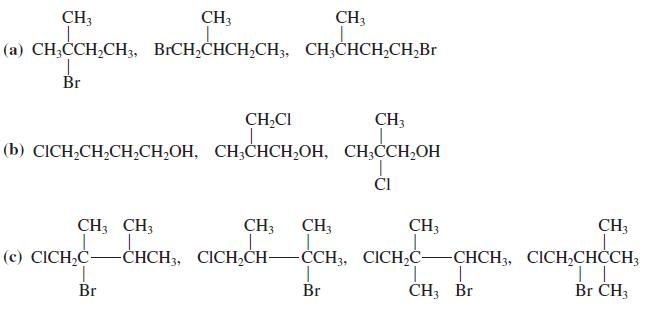
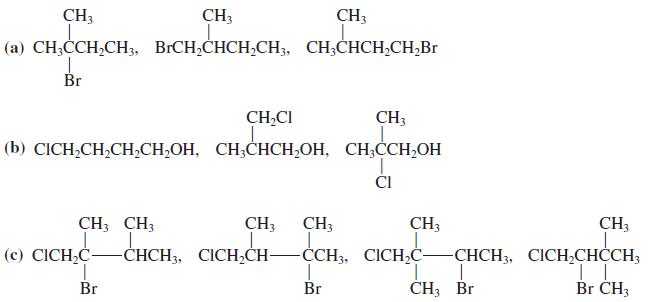
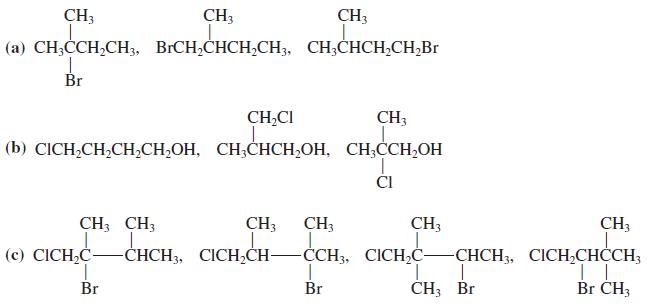
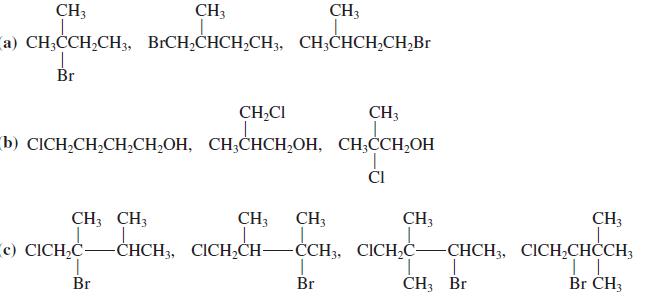
Predict the spin – spin splitting that you would expect to observe in the NMR spectra of each compound in Problem 37. CH3 CH3 CH3 (a) CH;CCH,CH3, BICH,CHCH,CH3, CH;CHCH,CH;Br Br CH,CI CH; (b) CICH,CH,CH,СH,ОН, СН,СНСH,ОH, СH,CCH,ОН 1. ČI CH; CH; CH3 CH; CH3 CH3 CH. (с) CICH-C-
Predict the spin – spin splitting that you would expect to observe in the NMR spectra of each compound in Problem 36. (Reminder: Hydrogens attached to oxygen and nitrogen do not normally exhibit spin – spin splitting.) CH3 CH3 (а) СН,СH,CH,CH; (с) НОСН,СCI (d) CH;CHCH,CH3 (b) CH;CHCH;
For each compound in each of the following groups of isomers, indicate the number of signals in the 1H NMR spectrum, the approximate chemical shift of each signal, and the integration ratios for the signals. Ignore spin – spin splitting. Indicate whether all the isomers in each group can be
There are four diastereomers (A – D, margin) of (4S)-2-bromo-4-phenylcyclohexanol. As a team, formulate their structures and draw each diastereomer in the most stable chair conformation (see Table 4-3; the DG8 value for axial versus equatorial C6H5 is 2.9 kcal mol-1). Divide your team into equal
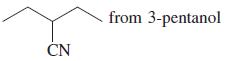
Give efficient syntheses of each of the following compounds, beginning with the indicated starting material.(a) trans-1-Bromo-2-methylcyclopentane, from cis-2-methylcyclopentanol(b)(c) 3-Chloro-3-methylhexane, from 3-methyl-2-hexanol(d) from 3-pentanol ČN
Propose syntheses of the following molecules, choosing reasonable starting materials on the basis of the principles of synthetic strategy introduced in preceding chapters, particularly in Section 8-9. Suggested positions for carbon – carbon bond formation are indicated by wavy lines.
What is the product of the reaction shown in the margin? (Pay attention to stereochemistry at the reacting centers.) What is the kinetic order of this reaction?
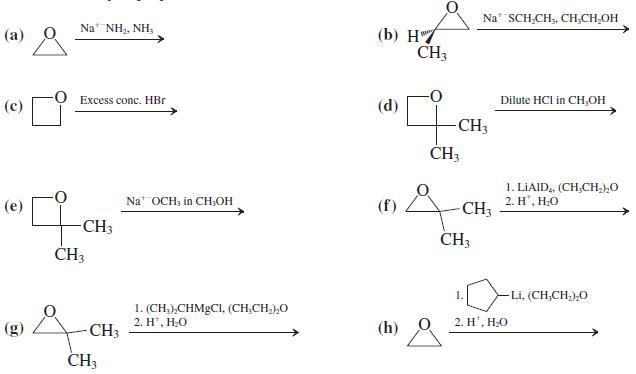
Give the major product(s) of each of the following reactions.
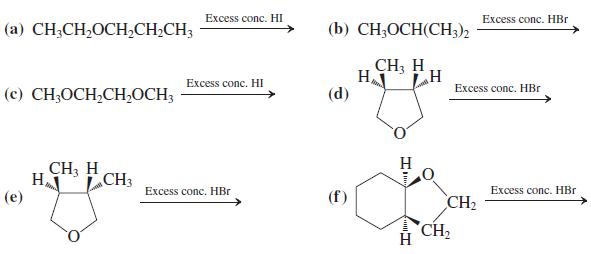
Give the major product(s) of each of the following reactions.
Propose efficient syntheses for each of the following ethers, using haloalkanes or alcohols as starting materials. CH3 CH3 CH3 (a) CH3CH,CHOCH;CH; (b) OCH,CH,CH,CH3 (c) (d) CH3
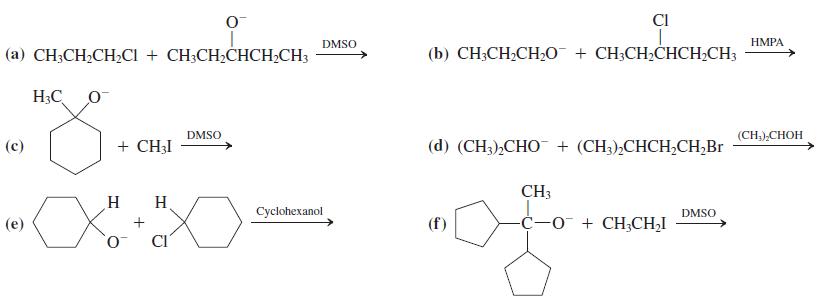
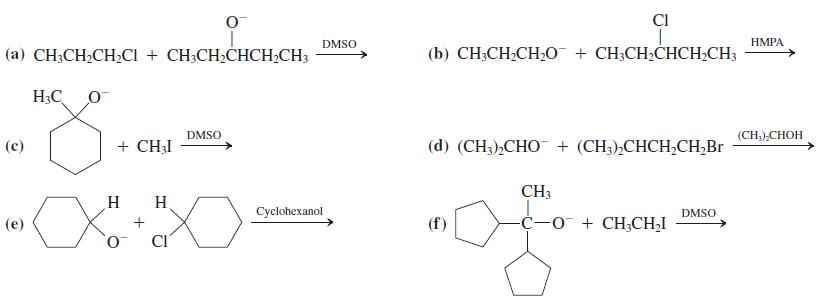
For each synthesis proposed in Problem 44 that is not likely to give a good yield of ether product, suggest an alternative synthesis beginning with suitable alcohols or haloalkanes that will give a superior result. CI DMSO НMPА (a) CH;CH2CH,CI + CH;CH2CHCH,CH3 (b) CH3CH2CHO + CH3CH2ČHCH,CH3 H3C
For each reaction in Problem 44, write out a detailed step-by-step mechanism. CI DMSO НMPА (a) CH;CH2CH,CI + CH;CH2CHCH,CH3 (b) CH3CH2CHO + CH3CH2ČHCH,CH3 H3C DMSO (CH:),CHOH (c) + CH3I (d) (CH3),CHO + (CH3),CHCH,CH;Br CH3 H Cyclohexanol DMSO (e) (f) -C-0 + CH3CH,I CI
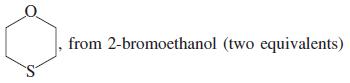
Suggest the best syntheses for each of the following ethers. Use alcohols or haloalkanes or both as your starting materials. (а) (b) (с) (d) (е) (f)
Showing 900 - 1000
of 2904
First
3
4
5
6
7
8
9
10
11
12
13
14
15
16
17
Last
Step by Step Answers

 Get 50% OFF
Claim Now
Get 50% OFF
Claim Now





![OH (d) (CH3),CC=CH [Be careful! What is wrong with (CH3);CCI + :C=CH?] (a) (b) (c) ÓH](https://dsd5zvtm8ll6.cloudfront.net/si.question.images/images/question_images/1588/5/8/3/7985eafdd76df9e11588583791708.jpg)











![OH OH A B Fast Slow H;C H;C [Note: Enols are unstable with respect to isomerization to the corresponding ketone (Chapters 13 and 18).] [HO OH Fast C,H C,H Enol OH Slow](https://dsd5zvtm8ll6.cloudfront.net/si.question.images/images/question_images/1588/2/3/8/5365eaa98c8a47af1588238531725.jpg)