New Semester
Started
Get
50% OFF
Study Help!
--h --m --s
Claim Now
Question Answers
Textbooks
Find textbooks, questions and answers
Oops, something went wrong!
Change your search query and then try again
S
Books
FREE
Study Help
Expert Questions
Accounting
General Management
Mathematics
Finance
Organizational Behaviour
Law
Physics
Operating System
Management Leadership
Sociology
Programming
Marketing
Database
Computer Network
Economics
Textbooks Solutions
Accounting
Managerial Accounting
Management Leadership
Cost Accounting
Statistics
Business Law
Corporate Finance
Finance
Economics
Auditing
Tutors
Online Tutors
Find a Tutor
Hire a Tutor
Become a Tutor
AI Tutor
AI Study Planner
NEW
Sell Books
Search
Search
Sign In
Register
study help
engineering
chemical reaction engineering
Elements Of Chemical Reaction Engineering 6th Edition H. Fogler - Solutions
It is believed, although never proven, that Bonnie murdered her first husband, Lefty, by poisoning the tepid brandy they drank together on their first anniversary. Lefty was unaware she had coated her glass with an antidote before she filled both glasses with the poisoned brandy. Bonnie married her
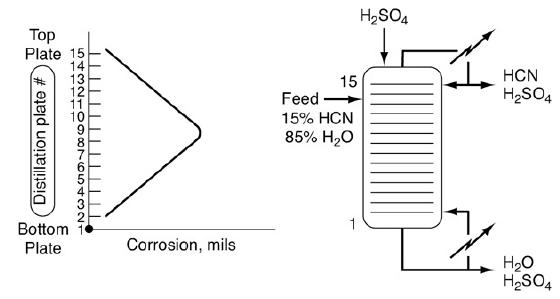
Corrosion of high-nickel stainless steel plates was found to occur in a distillation column used at DuPont to separate HCN and water. Sulfuric acid is always added at the top of the column to prevent polymerization of HCN. Water collects at the bottom of the column and HCN collects at the top. The
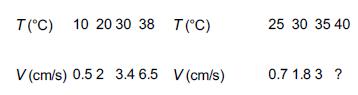
The frequency of fireflies flashing and the frequency of crickets chirping as a function of temperature follow. Source: Keith J. Laidler, “Unconventional applications of the Arrhenius law.” J. Chem. Educ., 5, 343 (1972). Copyright (c) 1972, American Chemical Society. Reprinted by permission.The
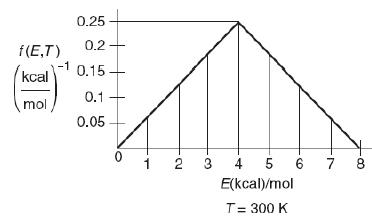
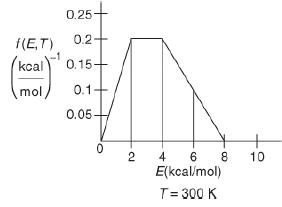
The following figures show the energy distribution function at 300 K for the reaction A + B → C.A graph of f (E, T) versus T is shown. The horizontal axis representing the energy (kilocalorie) per mole at temperature (equals 300 Kelvin) ranging from 0 to 8, in increments of 1. The vertical axis
Use Equation (3-20) to make a plot of f(E,T) as a function of E for T = 300, 500, 800, and 1200 K.a. What is the fraction of molecules that have sufficient energy to pass over a energy barrier of 25 kcal at 300, 500, 800, and 1200 K?b. For a temperature of 300 K, what is the ratio of the faction of
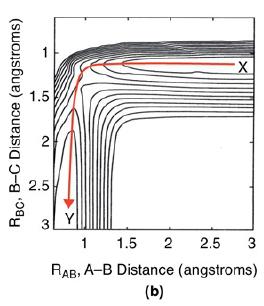
a. Use Figure 3-1(b) to sketch the trajectory over the saddle point when the BC and AB molecules vibrate with the minimum separation distance being 0.20Angstroms and the maximum separation being 0.4 Angstroms.b. At point Y, RAB = 2.8 Angstroms, sketch the potential energy as a function of the
Molecular collision energies—refer to Figure 3-4 and to the Wolfram and Python LEP 3-1. cdf Variation of Energy Distribution withTemperature.1. What fraction of molecular collisions have energies less than or equal to 2.5 kcal at 300 K? At 500 K?2. What fraction of molecular collisions have
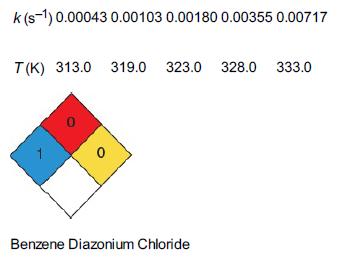
Exploring the Example Problems.1. Example 3-1. Activation Energy. In the Excel spreadsheet, replace the value of k at 312.5 K with k = 0.0009–1s and determine the new values of E and k.2. Example 3-1. Make a plot of k versus T and ln k versus (1/T) for E = 240 kJ/mol and for E = 60 kJ/mol.(1)
(a) LEP: Variation of Energy Distribution with Temperature. Wolfram and Python1. Vary temperature, T, and activation energy, E, to learn their effects on energy distribution curve. Specifically, vary the parameters between their maximum and minimum values (i.e., high T, low E; low T, low E; high T,
The experiments on reaction A → B were carried out and the conversion-rate data is given in Table P2-11.a. What are the batch reactor times to achieve 10%, 50%, and 80% for the reactor A → B when the initial concentration is 2 molar?b. Plot the reaction rate, –rA, as a function of time up to
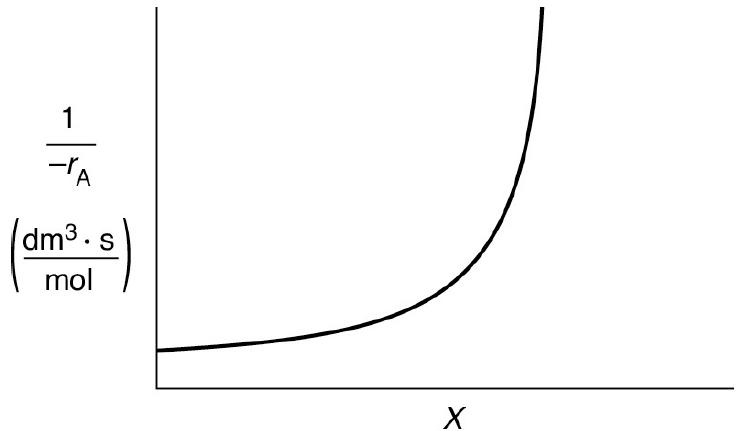
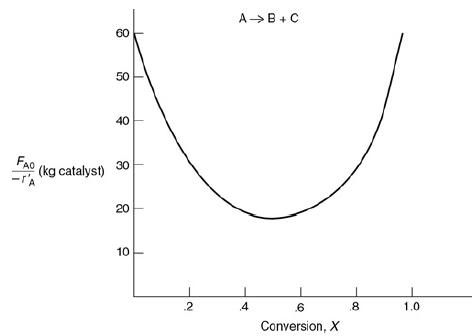
The curve shown in Figure 2-1 is typical of a reaction carried out isothermally, and the curve shown in Figure P2-10C is typical of a gas–solid catalytic exothermic reaction carried out adiabatically.Figure 2-1Figure P2-10CLevenspiel plot for an adiabatic exothermic heterogeneous reaction. A
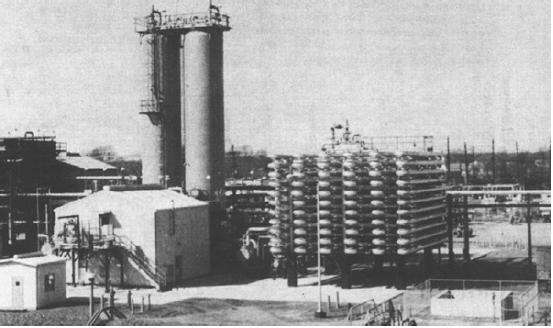
Estimate the reactor volumes of the two CSTRs and the PFR shown in the photo in Figure 2-9.Figure 2-9
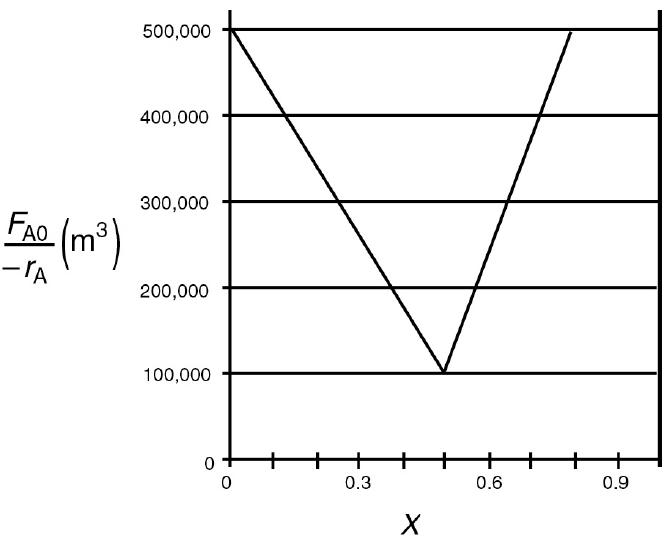
The adiabatic exothermic irreversible gas-phase reaction 2A + B → 2C is to be carried out in a flow reactor for an equimolar feed of A and B. A Levenspiel plot for this reaction is shown in Figure P2-7B.Figure P2-7BA graph plots the values of volume for different conversion values. The horizontal
Read the Web Module “Chemical Reaction Engineering of Hippopotamus Stomach” on the CRE Web site (http://www.umich.edu/~elements/6e/web_mod/hippo/index.htm).a. Work problems (1) and (2) in the Hippo Web Module.b. The hippo has picked up a river fungus, and now the effective volume of the CSTR
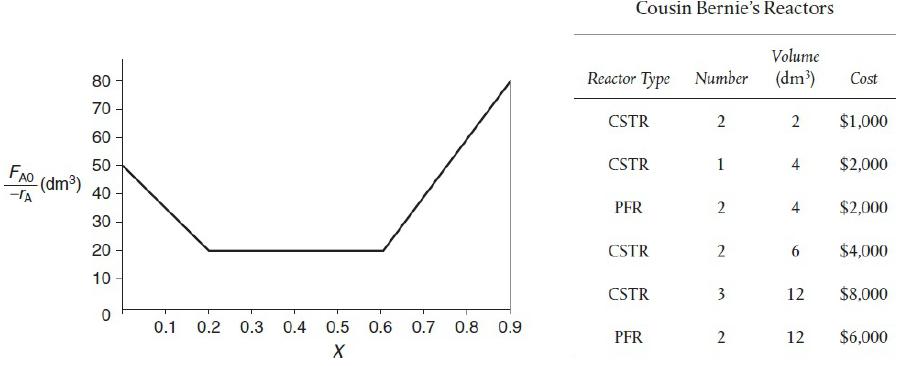
The financially important reaction to produce the valuable product B (not the real name) was carried out in Jesse Pinkman’s garage (see Breaking Bad Season 3, Episode 7). This Breaking Bad, fly-by-night company, is on a shoestring budget and has very little money to purchase equipment.
The exothermic reaction of stillbene (A) to form the economically important trospophene (B) and methane(C), that is, A → B+ C was carried out adiabatically and the following data recorded:The entering molar flow rate of A was 300 mol/min.1. Calculate the batch reactor (BR) times to achieve 40%
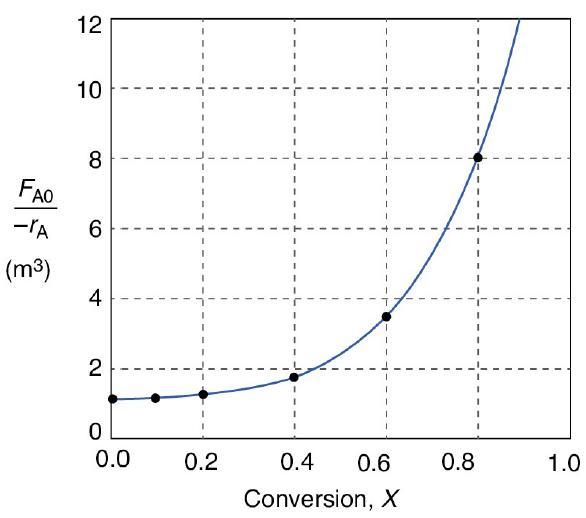
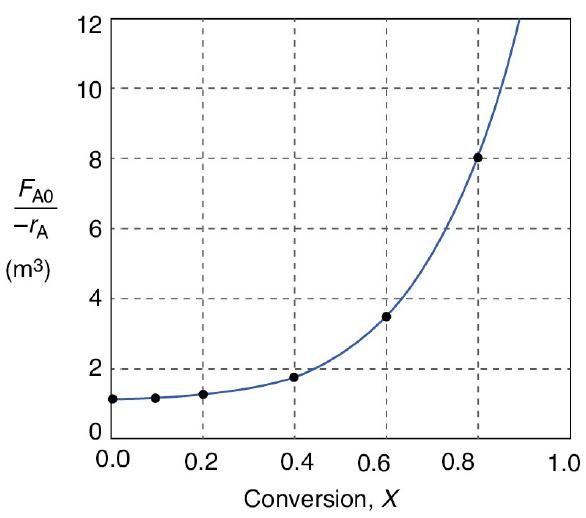
You have two CSTRs and two PFRs, each with a volume of 1.6 m3. Use Figure 2-2(b) to calculate the conversion for each of the reactors in the following arrangements.1. Two CSTRs in series.2. Two PFRs in series.3. Two CSTRs in parallel with the feed, FA0, divided equally between the two reactors.4.
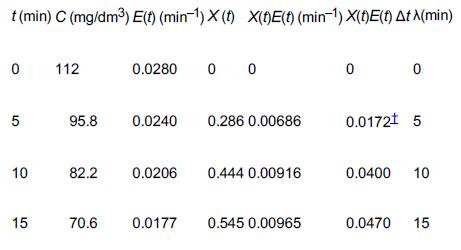
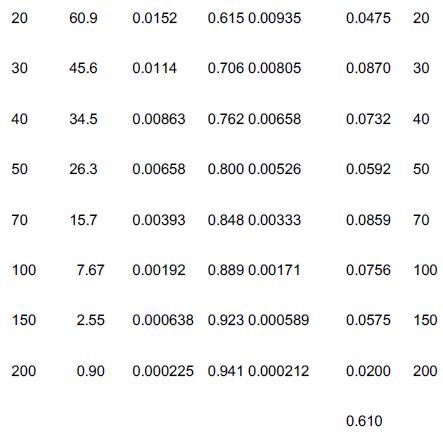
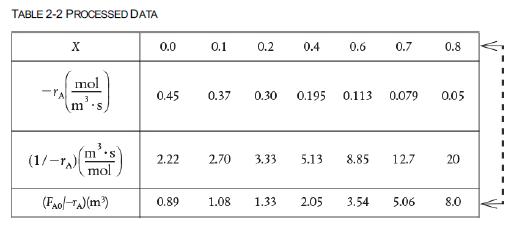
1.Revisit the data in Table 2-1 Raw Data and calculate the batch reactor (BR) times to achieve 10%, 50%, and 80% conversion when 100 moles of A are charged to a 400 dm3 reactor.Table 2-12.Revisit Examples 2-1 through 2-3. How would your answers change if the flow rate, FA0, were cut in half? If it
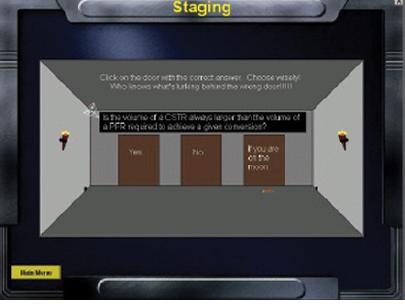
Download the Interactive Computer Game (ICG) from the CRE Web site, http://www.umich.edu/~elements/6e/icm/staging.html. Play this game and then record your performance number, which indicates your mastery of the material. Your professor has the key to decode your performance number. Note: To play
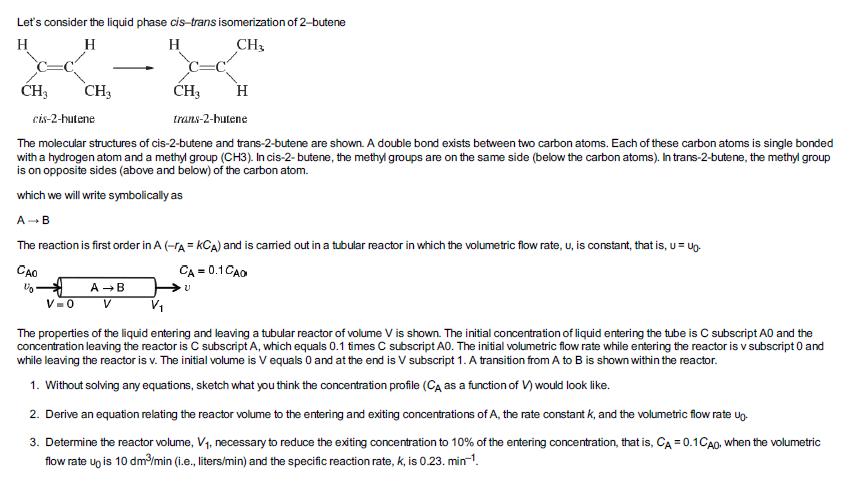
What if... the PFR in Example 1-2 were replaced by a CSTR, what would be its volume?Example 1-2 Let's consider the liquid phase cis-trans isomerization of 2-butene H H H CH3 CH CH3 CH3 cis-2-hutene trans-2-butene The molecular structures of cis-2-butene and trans-2-butene are shown. A double bond
QBR Questions Before Reading. Research has shown (J. Exp. Psychol. Learn. Mem. Cogn., 40, 106–114 (2014)) that if you ask a question of the material before reading the material you will have greater retention. Consequently, the first question of every chapter will have such a question on that
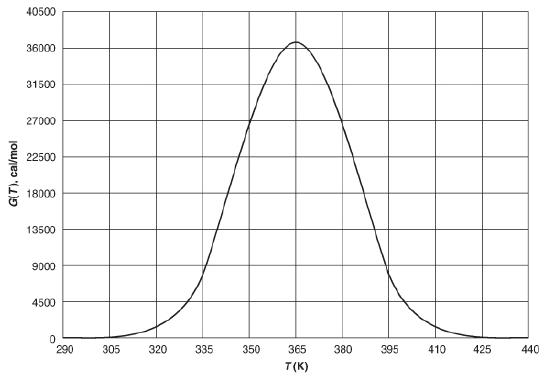
The elementary reversible liquid-phase reaction takes place in a CSTR with a heat exchanger. Pure A enters the reactor.(a) Derive an expression (or set of expressions) to calculate G(T) as a function of the heat of reaction, equilibrium constant, temperature, and so on. Show a sample calculation
Use the data in Problem P11-4A for the following reaction. The elementary, irreversible, organic liquid-phase reactionA + B → C is carried out in a flow reactor. An equal molar feed in A and B enters at 27°C, and the volumetric flow rate is 2 dm3/s and CA0 = 0.1 kmol/m3.Additional
Use the data and reaction in Problems P11-4A and P12-7B for the following reaction: A+B → C+D(a) Plot and then analyze the conversion, Qr, Qg, and temperature profiles up to a PFR reactor volume of 10 dm3 for the case when the reaction is reversible with KC = 10 m3/kmol at 450 K. Plot and then
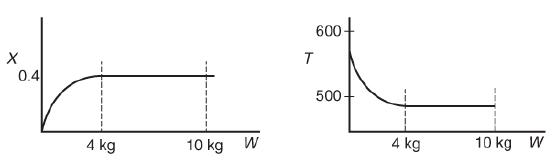
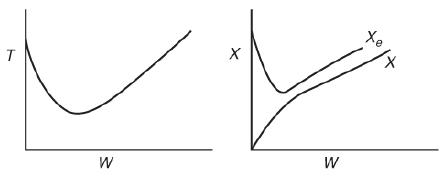
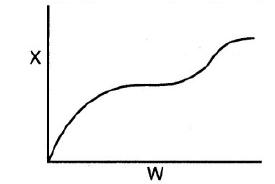
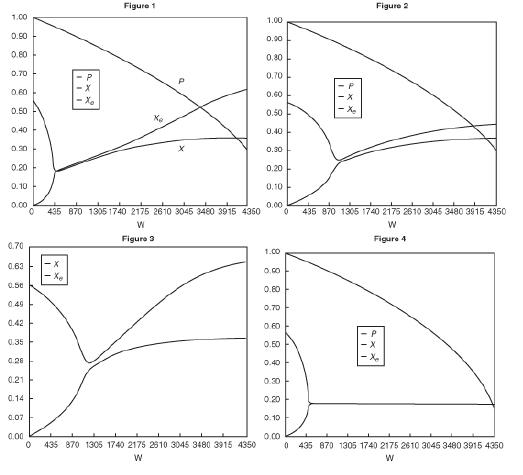
Circle the correct answer.(a) The elementary reversible isomerization of A to B was carried out in a packed-bed reactor. The following profiles were obtained:Two trend graph are shown. The horizontal axis of the first graph represents the weight W in Kg and the vertical axis of the first graph
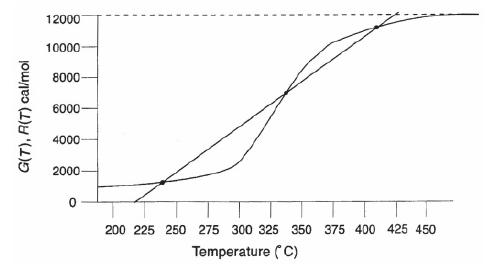
The irreversible reaction A+B → C+D is carried out adiabatically in a CSTR. The “heat generated” G(T) and the “heat removed” R(T) curves are shown in Figure P12-14A.The graph represents the data of heat-removed and heat-generated corresponding to the temperature. The horizontal axis
The first-order, irreversible, exothermic liquid-phase reaction A → B is to be carried out in a jacketed CSTR. Species A and an inert I are fed to the reactor in equimolar amounts. The molar feed rate of A is 80 mol/min.Additional information:Heat capacity of the inert: 30 cal/mol⋅∘Cτ=100
The reversible liquid-phase reaction A ⇄ B is carried out in a 12-dm3 CSTR with heat exchange. Both the entering temperature, T0, and the heat exchange fluid, Ta, are at 330 K. An equal molar mixture of inerts and A enter the reactor.(a) Choose a temperature, T, and carry out a calculation to
The elementary gas-phase reaction 2A ⇄ C is carried out in a packed-bed reactor. Pure A enters the reactor at a 450-K flow rate of 10 mol/s, and a concentration of 0.25 mol/dm3. The PBR contains 90 kg of catalyst and is surrounded by a heat exchanger for which cooling fluid is available at 500 K.
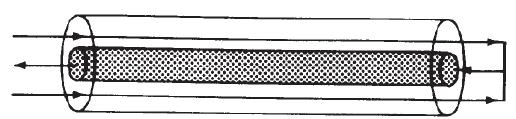
A reaction is to be carried out in the packed-bed reactor shown in Figure P12-19C.PFR with heat exchange. The reactants enter the annular space between an outer insulated tube and an inner tube containing the catalyst. No reaction takes place in the annular region. Heat transfer between the gas in
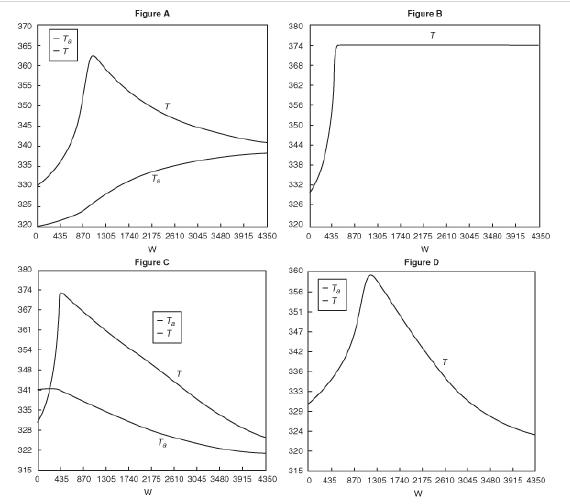
The reaction A+B←→2C is carried out in a packed-bed reactor. Match the following temperature and conversion profiles for the four different heat-exchange cases: adiabatic, constant Ta, cocurrent exchange, and countercurrent exchange.For the different heat-exchange cases that occurs in a
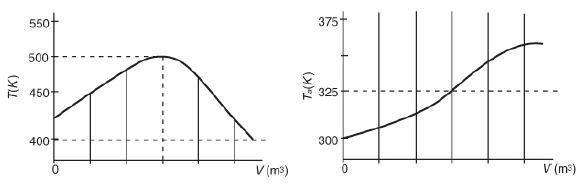
Also Hall of Fame Problem. The irreversible liquid-phase reactions Reaction(1)A + B → 2Cr1C = k1CCACBReaction(2)2B+C→Dr2D=k2DCBCC are carried out in a PFR with heat exchange. The temperature profiles shown in Figure P12-21B were obtained for the reactor and the coolant stream:Reactant
The following elementary reactions are to be carried out in a PFR with a heat exchange with constant Ta:2A+B→CΔHRx1B=−10kJmol BA→DΔHRx2A=+10kJmol AB+2C→EΔHRx3C=−20kJmol C The reactants all enter at 400 K. Only A and B enter the reactor. The entering concentration of A and B are 3 molar
The complex gas-phase reactions are elementaryand carried out in a PFR with a heat exchanger. Pure A enters at a rate of 5 mol/min, a concentration of 0.2 mol/dm3, and temperature 300 K. The entering temperature of an available coolant is 320 K.Additional information:(a) Plot (FA, FB, FC) on one
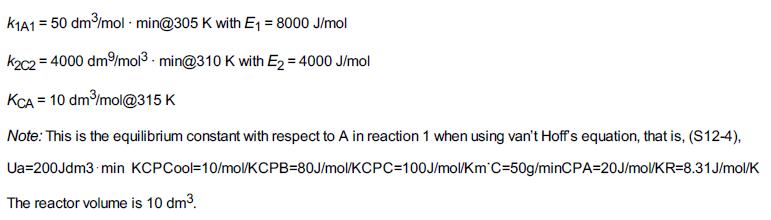
The elementary liquid-phase reactions(1) A+ 2B → 2C(2) A+C→ 2Dare carried out adiabatically in a 10 dm3 PFR. After streams A and B mix, species A enters the reactor at a concentration of CA0 = 2 mol/dm3 and species B at a concentration of 4 mol/dm3. The entering volumetric flow rate is 10
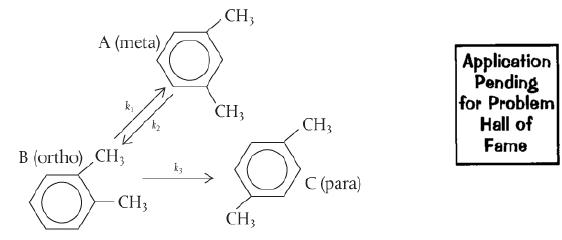
Xylene has three major isomers, m-xylene (A), o-xylene (B), and p-xylene (C). When m-xylene (A) is passed over a Cryotite catalyst, the following elementary reactions are observed. The reaction to form p-xylene is irreversible:Xylene is a 6-membered aromatic compound with two alkyl groups. The
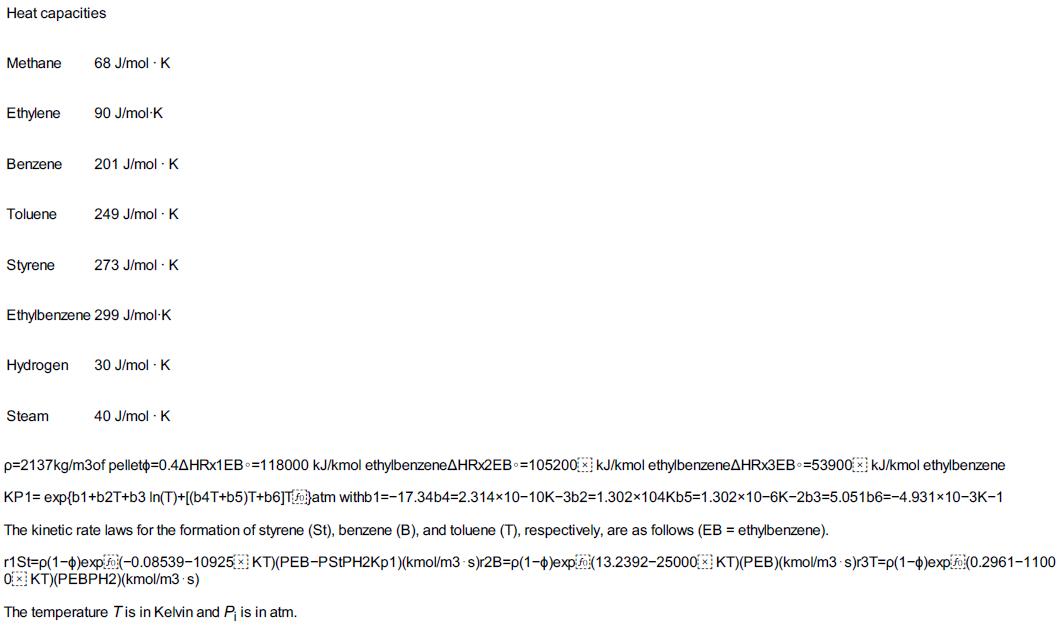
Styrene can be produced from ethylbenzene by the following reaction: ethylbenzene↔styrene+H2(1)However, several irreversible side reactions also occur:ethylbenzene → benzene + ethylene (2) ethylbenzene +H2 → toluene + methane(3)(J. Snyder and B. Subramaniam, Chem. Eng. Sci., 49, 5585 (1994)).
The liquid-phase, dimer-quadmer series addition reaction 4 A → 2A2 → A4 can be written as2A→A2−r1A=k1ACA2ΔHRx1A=−32.5kcalmol A2A2→A4−r2A2=k2A2CA22ΔHRx2A2=−27.5kcalmol A2and is carried out in a 10-dm3 PFR. The mass flow rate through the heat exchanger surrounding the reactor is
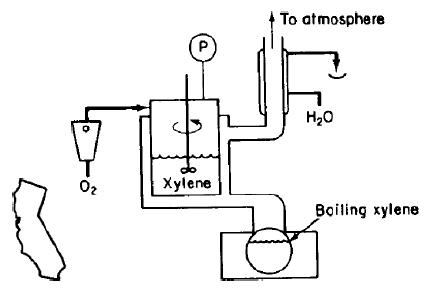
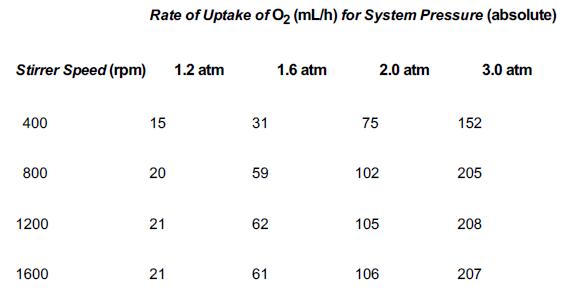
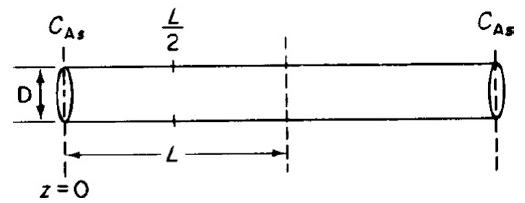
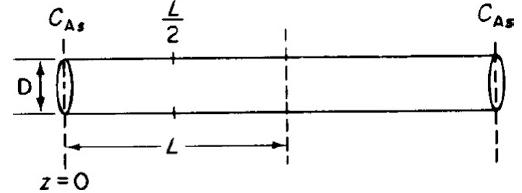
Pure oxygen is being absorbed by xylene in a catalyzed reaction in the experimental apparatus sketched in Figure P14-3B. Under constant conditions of temperature and liquid composition, the following data were obtained:In the experiment, the bottom of the apparatus is heated in a trough consists of
Derive an equation for the time necessary to completely burn a 100 μm carbon particle as a function of D0. Also calculate the burning rate constant. Use the KS values of the parameter values, for example, CA∞, given in Example 14-3.a. diffusion controlled with DAB = 10–4 m2/sb. reaction
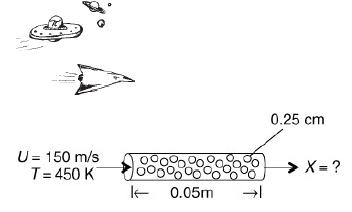
The decomposition of cyclohexane to benzene and hydrogen is mass transfer-limited at high temperatures. The reaction is carried out in a 5-cm-ID pipe 20 m in length packed with cylindrical pellets 0.5 cm in diameter and 0.5 cm in length. The pellets are coated with the catalyst only on the outside.
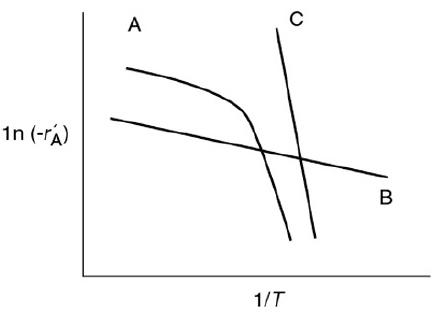
Curves A, B, and C in Figure P15-4A show the variations in reaction rate for three different reactions catalyzed by solid catalyst pellets. What can you say about each reaction?Temperature dependence of three reactions. In the graph, the vertical axis represents natural log of (negative r prime
Consider a real tubular reactor in which dispersion is occurring.a. For small deviations from plug flow, show that the conversion for a first-order reaction is given approximately as X=1−exp[−tk+(τk)2Per](P18-20.1)b. Show that to achieve the same conversion, the relationship between the volume
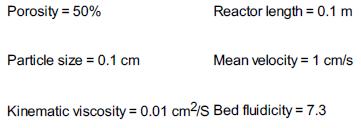
The elementary liquid-phase reaction A→B,k1k1=1.0 min−1 is carried out in a packed-bed reactor in which dispersion is present. What is the conversion?Additional information: Porosity = 50% Particle size = 0.1 cm Reactor length = 0.1 m Mean velocity = 1 cm/s Kinematic viscosity = 0.01 cm²/S Bed
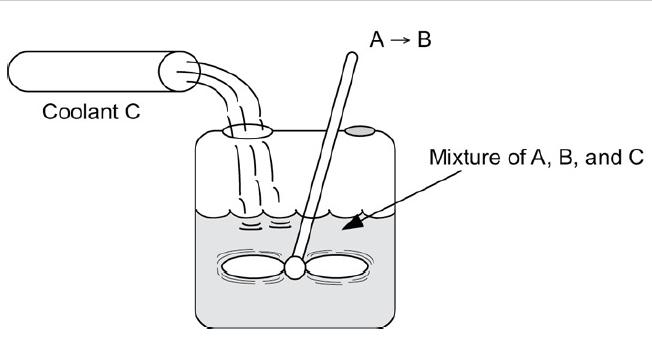
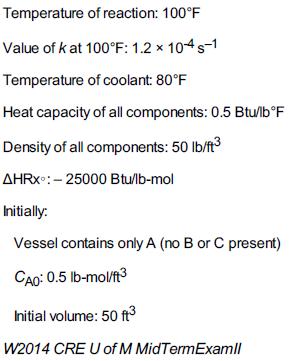
Sophia and Nic are operating a batch reactor at their grandfather’s plant in Kärläs, Jofostan. The reaction is first-order, irreversible, liquid-phase, and exothermic. An inert coolant is added to the reaction mixture to control the temperature. The temperature is kept constant by varying the
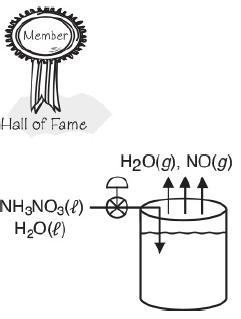
The following is an excerpt from The Morning News, Wilmington, Delaware (August 3, 1977): “Investigators sift through the debris from blast in quest for the cause [that destroyed the new nitrous oxide plant]. A company spokesman said it appears more likely that the [fatal] blast was caused by
The reaction A+B→C is carried out adiabatically in a constant-volume batch reactor. The rate law is -rA=k1CA1/2CB1/2-k2CC Plot and analyze the conversion, temperature, and concentrations of the reacting species as a function of time.Additional information: Initial Temparature = 100°C k1x (373x
The elementary irreversible liquid-phase reaction A+2B→C is to be carried out in a semi batch reactor in which B is fed to A. The volume of A in the reactor is 10 dm3, the initial concentration of A in the reactor is 5 mol/dm3, and the initial temperature in the reactor is 27°C. Species B is fed
The following reactions are taking place in a 2000-dm3 liquid-phase batch reactor under a pressure of 400 psig:The initial temperature is 450 K and the initial concentrations of A, B, and C are 1.0, 0.5, and 0.2 mol/dm3, respectively. The coolant flow rate was at its maximum value so that Ta1 = Ta2
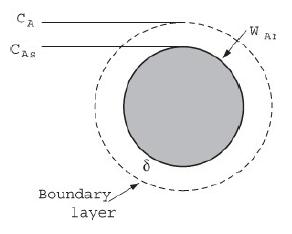
a. Example 14-1: Mass Transfer of Oxygen to a Burning Carbon Particle Wolfram and Python1. Vary each slider to find the parameter to which the flux WAr is most sensitive.2. What happens when the liquid diffusity and viscosity are both increased simultaneously?3. Vary the velocity as shown in Figure
Read over the problems at the end of this chapter. Make up an original problem that uses the concepts presented in this chapter. See Problem P5-1A for the guidelines. To obtain a solution:1. Make up your data and reaction.2. Use a real reaction and real data.The journals listed at the end of
Assume the minimum respiration rate of a chipmunk is 1.5 micromoles of O2/min. The corresponding volumetric rate of gas intake is 0.05 dm3/min at STP.a. What is the deepest a chipmunk can burrow a 3-cm diameter hole beneath the surface in Ann Arbor, Michigan? DAB = 1.8 × 10⁻⁵ m2/sb. In Boulder,
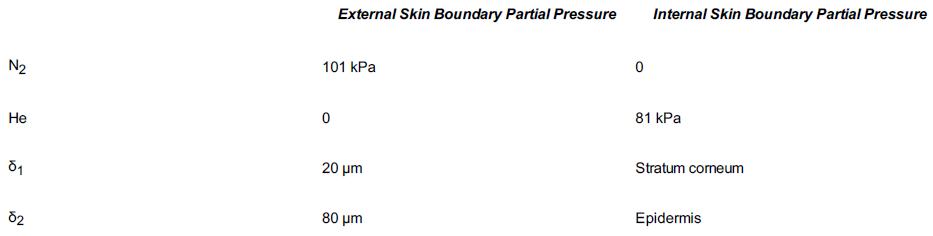
In a diving-chamber experiment, a human subject breathed a mixture of O2 and He while small areas of his skin were exposed to nitrogen gas. After some time, the exposed areas became blotchy, with small blisters forming on the skin. Model the skin as consisting of two adjacent layers, one of
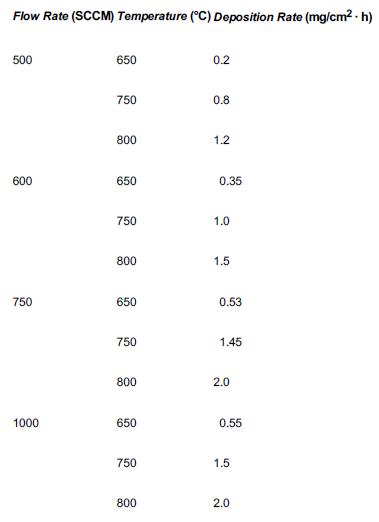
Lead titanate, PbTiO3, is a material having remarkable ferroelectric, pyroelectric, and piezoelectric properties [ J. Elec. Chem. Soc., 135, 3137 (1988)]. A thin film of PbTiO3 was deposited in a CVD reactor. The deposition rate is given below as a function of a temperature and flow rate over the
A plant is removing a trace of Cl2 from a waste-gas stream by passing it over a solid granulm absorbent in a tubular packed bed (Figure P14-8B). At present, 63.2% removal is being acomplished, but it is believed that greater removal could be achieved if the flow rate were increased by a factor of
In a certain chemical plant, a reversible fluid-phase isomerization A→←B is carried out over a solid catalyst in a tubular packed-bed reactor. If the reaction is so rapid that mass transfer between the catalyst surface and the bulk fluid is ratelimiting, show that the kinetics are described in
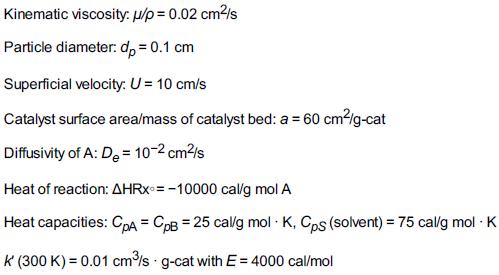
The irreversible gas-phase reaction A→cat B is carried out adiabatically over a packed bed of solid catalyst particles. The reaction is first order in the concentration of A on the catalyst surface−rAs′=k′CAsThe feed consists of 50% (mole) A and 50% inerts, and enters the bed at a
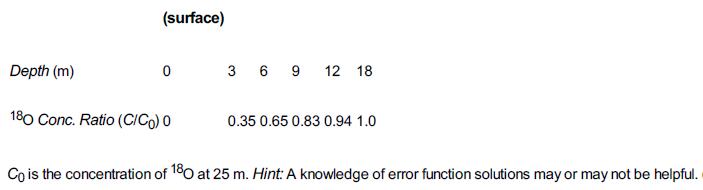
The following oxygen-18 data were obtained from soil samples taken at different depths in Ontario, Canada. Assuming that all the 18O was laid down during the last glacial age and that the transport of 18O to the surface takes place by molecular diffusion, estimate the number of years since the last
Transdermal Drug Delivery. See photo on page 781. The principles of steady-state diffusion have been used in a number of drug-delivery systems. Specifically, medicated patches are commonly attached to the skin to deliver drugs for nicotine withdrawal, birth control, and motion sickness, to name a
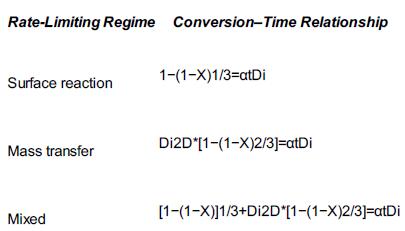
A spherical particle is dissolving in a liquid. The rate of dissolution is first order in the solvent concentration, C. Assuming that the solvent is in excess, show that the following conversion-time relationships hold. Rate-Limiting Regime Conversion-Time Relationship Surface reaction Mass
Derive the diffusion and reaction equation in spherical coordinates to describe the dissolution of a drug in the form of a spherical pellet. Plot the drug concentration as a function distance r and time t. Also plot the flux and particle diameter as a function of time.
A powder is to be completely dissolved in an aqueous solution in a large, well-mixed tank. An acid must be added to the solution to render the spherical particle soluble. The particles are sufficiently small that they are unaffected by fluid velocity effects in the tank. For the case of excess
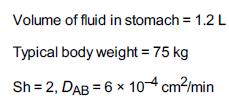
An antibiotic drug is contained in a solid inner core and is surrounded by an outer coating that makes it palatable. The outer coating and the drug are dissolved at different rates in the stomach, owing to their differences in equilibrium solubilities.a. If D2 = 4 mm and D1 = 3 mm, calculate the
If disposal of industrial liquid wastes by incineration is to be a feasible process, it is important that the toxic chemicals be completely decomposed into harmless substances. One study carried out concerned the atomization and burning of a liquid stream of “principal” organic hazardous
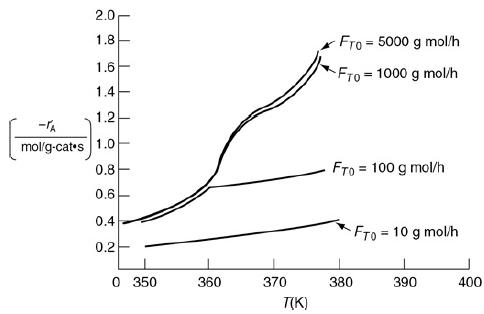
The catalytic reaction A → B takes place within a fixed bed containing spherical porous catalyst X22. Figure P15-2B shows the overall rates of reaction at a point in the reactor as a function of temperature for various entering total molar flow rates, FT0.Reaction rates in a catalyst bed.A graph
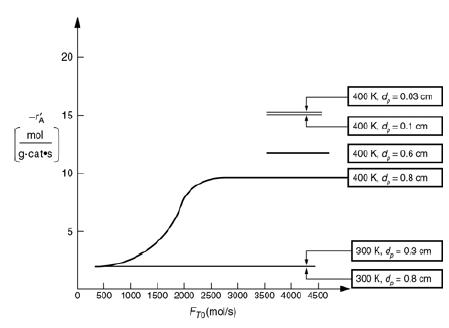
The reaction A → B is carried out in a differential packed-bed reactor at different temperatures, flow rates, and particle sizes. The results shown in Figure P15-3B were obtained.Reaction rates in a catalyst bed.In the graph, the vertical axis represents the reaction rate ranging from 0 to 20 in
The swimming rate of a small organism (J. Theoret. Biol., 26, 11 (1970)) is related to the energy released by the hydrolysis of adenosine triphosphate (ATP) to adenosine diphosphate (ADP). The rate of hydrolysis is equal to the rate of diffusion of ATP from the midpiece to the tail (see Figure
A first-order heterogeneous irreversible reaction is taking place within a spherical catalyst pellet that is plated with platinum throughout the pellet. The reactant concentration halfway between the external surface and the center of the pellet (i.e., r = R/2) is equal to one-tenth the
A first-order, heterogeneous, irreversible reaction is taking place within a catalyst pore that is plated with platinum entirely along the length of the pore (Figure P15-7B). The reactant concentration at the plane of symmetry (i.e., equal distance from the pore mouth) of the pore is equal to
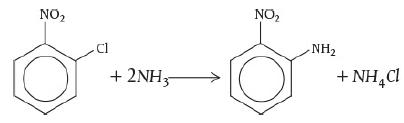
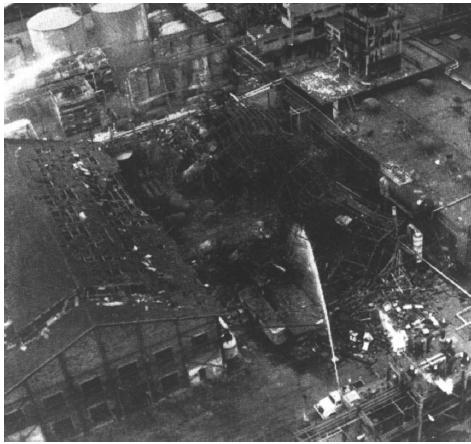
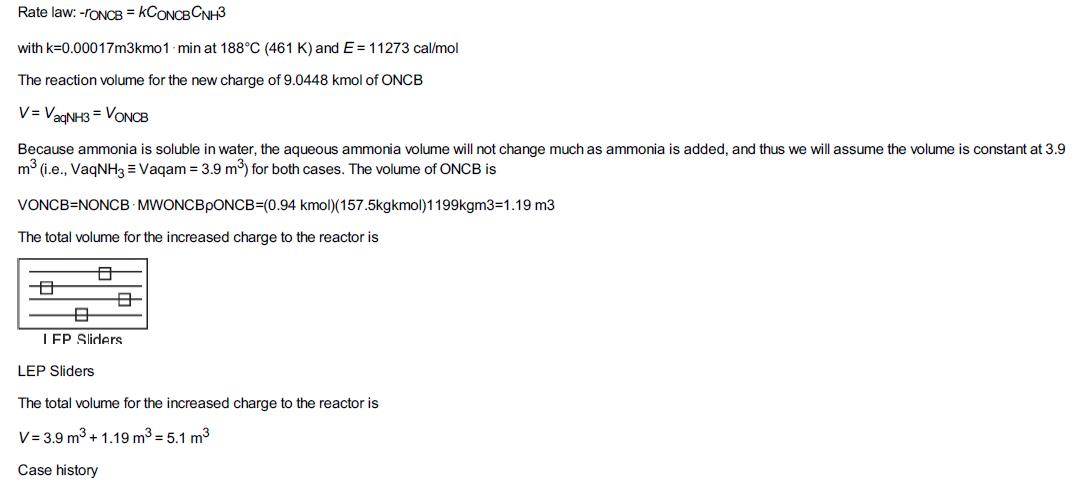
Six Types of Critical Thinking Questions1. Write a Critical Thinking Question for each type of CTQ for the Monsanto Incident, Example 13-2.2. Write another question for each CTQ for the case history concerning ethylene oxide in the insulated storage tank.Example 13-2Adapted from the problem by
The elementary isomerization reaction A → B is taking place on the walls of a cylindrical catalyst pore (see Figure P15-7B.) In one run, a catalyst poison P entered the reactor together with the reactant A. To estimate the effect of poisoning, we assume that the poison renders the catalyst pore
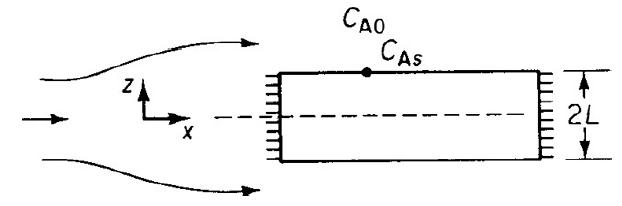
A first-order reaction is taking place inside a porous catalyst. Assume dilute concentrations and neglect any variations in the axial (x) direction.a. Derive an equation for both the internal and overall effectiveness factors for the rectangular porous slab shown in Figure P15-9A.b. Repeat part (a)
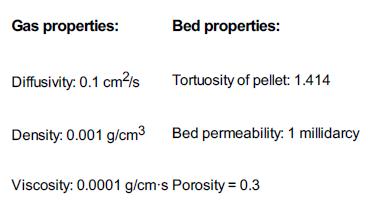
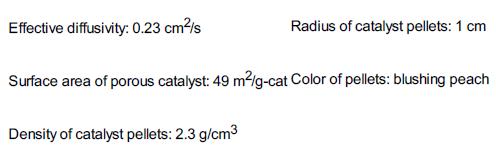
The second-order decomposition reaction A → B + 2C is carried out in a tubular reactor packed with catalyst pellets 0.4 cm in diameter. The reaction is internal-diffusion-limited. Pure A enters the reactor at a superficial velocity of 3 m/s, a temperature of 250°C, and a pressure of 500 kPa.
The irreversible gas-phase dimerization 2A → A2 is carried out at 8.2 atm in a stirred contained-solids reactor to which only pure A is fed. There are 40 g of catalyst in each of the four spinning baskets. The following runs were carried out at 227°C: Total Molar Feed Rate, FT0 (g mol/min) 1 2
Derive Equation. d2ydλ2−ϕn2yn=0 by 2dy/dλ, rearrange to get ddλ(dydλ)2=ϕn2yn2dydλ and solve using the boundary conditions dy/dλ = 0 at λ = 0.
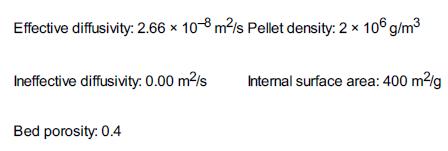
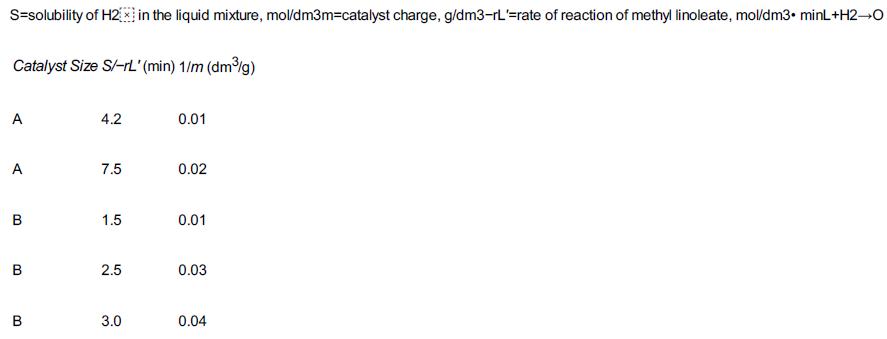
You will need to read about slurry reactions on the Web site’s Additional Material. The following table was obtained from the data taken in a slurry reactor for the hydrogenation of methyl linoleate to form methyl oleate.a. Which catalyst size has the smaller effectiveness factor?b. If catalyst
The catalytic hydrogenation of methyl linoleate to methyl oleate was carried out in a laboratory-scale slurry reactor in which hydrogen gas was bubbled up through the liquid containing spherical catalyst pellets. The pellet density is 2 g/cm3. The following experiments were carried out at 25°C:
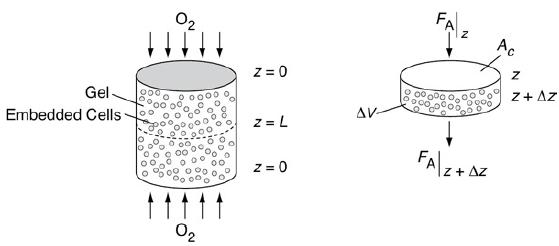
The equations describing diffusion and reaction in porous catalysts also can be used to derive rates of tissue growth and have been studied by Professor Kristi Anseth and her students at the University of Colorado. One important area of tissue growth is in cartilage tissue in joints such as the
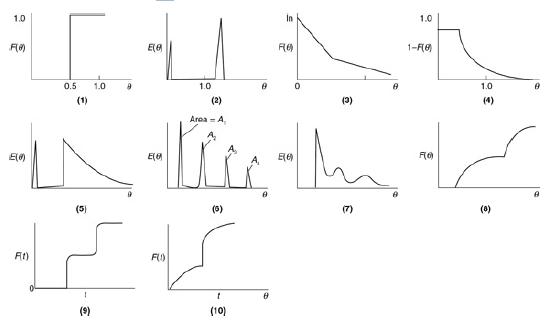
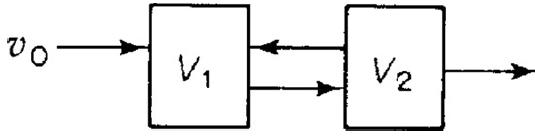
Suggest a diagnosis (e.g., bypassing, dead volume, multiple mixing zones, internal circulation) for each of the following real reactors in Figure P16-2B (a) (1–10 curves) that had the following RTD [E(t), E(Θ), F(t), F(Θ) or (1 – F(Θ))] curves:(a) RTD curves.The first graph of F of theta
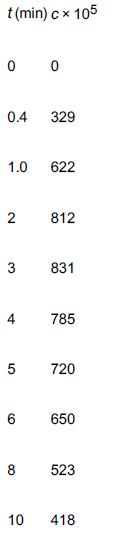
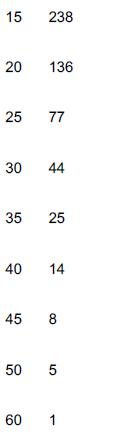
a. Example 16-1. What fraction of the fluid spends 9 minutes or longer in the reactor? What fraction spends 2 minutes or less?Example 16-1A sample of the tracer hytane at 320 K was injected as a pulse into a reactor, and the effluent concentration was measured as a function of time, resulting in
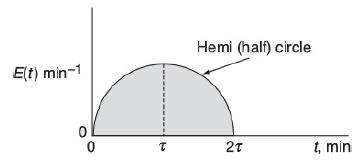
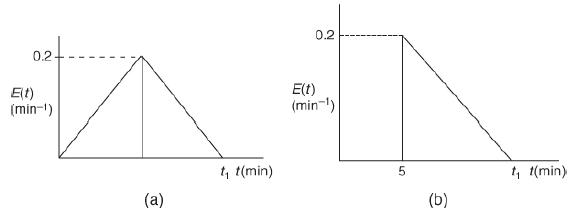
Consider the E(t) curve below.A graph is shown, with t (in minutes) on horizontal axis and E of t (minutes inverse) on vertical axis. A hemi (half) circular curve starts at the origin and ends at 2 tau on the horizontal axis. It is symmetric about the vertical line at tau. Mathematically this hemi
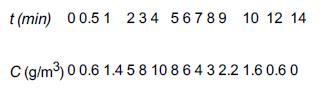
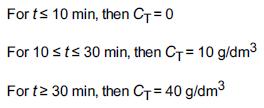
A step tracer input was used on a real reactor with the following results:a. What is the mean residence time tm?b. What is the variance σ2? For t≤ 10 min, then C₁ = 0 For 10 st≤ 30 min, then C+= 10 g/dm³ For t≥ 30 min, then C+= 40 g/dm³
The following E(t) curves were obtained from a tracer test on two tubular reactors in which dispersion is believed to occur.(a) RTD Reactor A; (b) RTD Reactor B The graphs for RTD reactors A and B are shown. The horizontal axis represents time (in minutes) and the vertical axis represents E of t
Derive E(t), F(t), tm, and σ2 for a turbulent flow reactor with 1/7 the power law, that is,U=Umax(1−rR)1/7
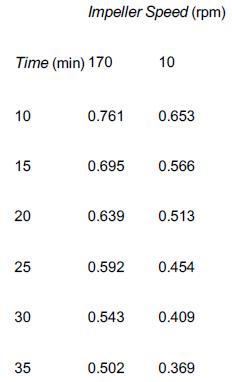
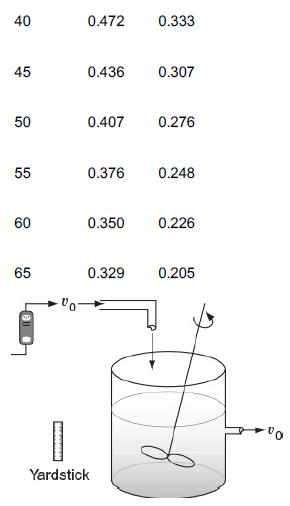
Using a negative step tracer input, Cholette and Cloutier (Can. J. Chem. Eng., 37, 107 (1959)) studied the RTD in a tank for different stirring speeds. Their tank had a 30-in. diameter and a fluid depth of 30 in. indide the tank. The inlet and exit flow rates were 1.15 gal/min. Here are some of
Pick two critical thinking questions and describe why they are the most important questions to ask.
Consider again the nonideal reactor characterized by the RTD data in Example 17-5, where E (t) and F(t) are given as polynomials. The irreversible gasphase nonelementary reaction A + B → C + D is first order in A and second order in B, and is to be carried out isothermally. Calculate the
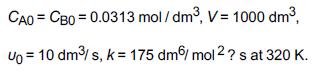
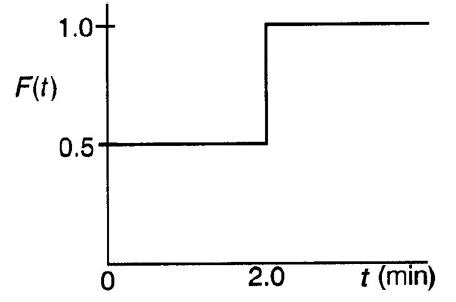
The second-order, elementary liquid-phase reaction 2A→k1AB is carried out in a nonideal CSTR. At 300 K, the specific reaction rate is k1A = 0.5 dm3 / mol · min. In a tracer test, the tracer concentration rose linearly up to 1 mg / dm3 at 1.0 minutes and then decreased -linearly to zero at
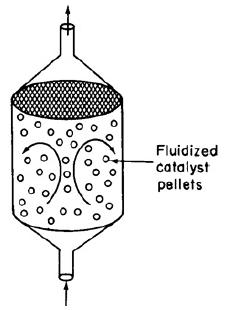
Using the data in Problem P16-11B,a. Plot the internal-age distribution I(t) as a function of time.b. What is the mean internal age αm?c. The activity of a “fluidized” CSTR is maintained constant by feeding fresh catalyst and removing spent catalyst at a constant rate. Using the preceding RTD
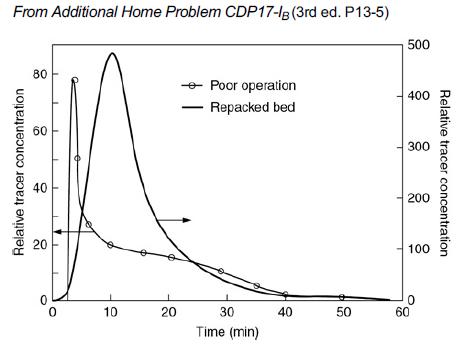
The relative tracer concentrations obtained from pulse tracer tests on a commercial packed-bed desulfurization reactor are shown in Figure P17-18B. After studying the RTD, what problems are occurring with the reactor during the period of poor operation (thin line)? The bed was repacked and the
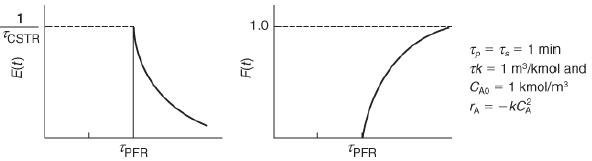
Use the RTD data in Examples 16-1 and 16-2 to predict XPFR, XCSTR, XLFR, XT-I-S, Xseg and Xmm for the following elementary gas-phase reactionsa. A → B k = 0.1 min–1b. A → 2B k = 0.1 min–1c. 2A → B k = 0.1 min–1 m3/kmol CA0 = 1.0 kmol/m3d. 3A → B k = 0.1 m6/kmol2min CA0 = 1.0
For the catalytic reaction A → cat C + D the rate law can be written as −rA′=kCA(1+KACA)2Which will predict the highest conversion, the maximum mixedness model or the segregation model? Specify the different ranges of the conversion where one model will dominate over the other.
Consider an ideal PFR, CSTR, and LFR.a. Evaluate the first moment about the mean m1=∫0∞(t−τ) E(t)dt for a PFR, a CSTR, and an LFR.b. Calculate the conversion in each of these ideal reactors for a second-order liquid-phase reaction with Da = 1.0 (τ = 2 min and kCA0 = 0.5 min–1).c.
The following E(t) curve was obtained from a tracer test on a reactor. E(t)=0.25t0
Go to the LearnChemE screencast link for Chapter 18 (http://umich.edu/~elements/6e/18chap/learn-cheme-videos.html). View one or more of the screencast 5- to 6-minute videos and write a two-sentence evaluation.
An Algorithm for Management of Change (MoC). List three things that would not have occurred if the MoC algorithm had been followed.
A second-order reaction is to be carried out in a real reactor that gives the following outlet concentration for a step input:For 0 ≤ t < 10 min, then CT = 10 (1 –e.1t)For 10 min ≤ t, then CT = 5 + 10 (1 – e.1ta. What model do you propose and what are your model parameters, α and β?b.
Let’s continue Problem P16-11D. Where τ = 10 min and = 14 min21. What would be the conversion for a second-order reaction with kCA0 = 0.1 min–1 and CA0 = 1 mol/dm3 using the segregation model?2. What would be the conversion for a second-order reaction with kCA0 = 0.1 min–1 and CA0 = 1
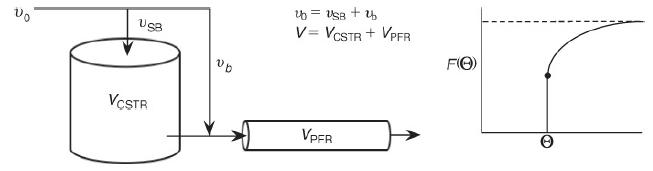
Suggest combinations of ideal reactors to model the real reactors given in Problem P16-2b(b) for either E(θ), E(t), F(θ), F(t), or (1 – F(θ)).
There is a 2-m3 reactor in storage that is to be used to carry out the liquid-phase second-order reaction A + B → C A and B are to be fed in equimolar amounts at a volumetric rate of 1 m3/min. The entering concentration of A is 2 molar, and the specific reaction rate is 1.5 m3/kmol · min. A
Showing 200 - 300
of 748
1
2
3
4
5
6
7
8
Step by Step Answers

 Get 50% OFF
Claim Now
Get 50% OFF
Claim Now




![f(E,T)=2(1TRT)3/2E1/2x exp[-ERT]](https://s3.amazonaws.com/si.question.images/images/question_images/1697/0/0/6/047652641dfc76681697006046317.jpg)
![f(E,T)dE=2(1KBT)3/2E1/2exp[-EkBT]dE(3-21) 0.9 m 0.81. 0.8 0.7 0.6 0.5 RET) 0.4 kcal 0.3 0.2 0.1 0 T - 300 K 0](https://s3.amazonaws.com/si.question.images/images/question_images/1697/0/0/5/62065264034435e71697005618607.jpg)





![HAO(273K)* =-20 kcal/mol,HBO(273x K)-15 kcal/mol,HCo(273K) =-41[x] kcal/mol CPC=30x cal/mol](https://s3.amazonaws.com/si.question.images/images/question_images/1697/6/1/0/505652f7b09e63471697610504453.jpg)