New Semester
Started
Get
50% OFF
Study Help!
--h --m --s
Claim Now
Question Answers
Textbooks
Find textbooks, questions and answers
Oops, something went wrong!
Change your search query and then try again
S
Books
FREE
Study Help
Expert Questions
Accounting
General Management
Mathematics
Finance
Organizational Behaviour
Law
Physics
Operating System
Management Leadership
Sociology
Programming
Marketing
Database
Computer Network
Economics
Textbooks Solutions
Accounting
Managerial Accounting
Management Leadership
Cost Accounting
Statistics
Business Law
Corporate Finance
Finance
Economics
Auditing
Tutors
Online Tutors
Find a Tutor
Hire a Tutor
Become a Tutor
AI Tutor
AI Study Planner
NEW
Sell Books
Search
Search
Sign In
Register
study help
sciences
physical chemistry
Physical Chemistry 3rd edition Thomas Engel, Philip Reid - Solutions
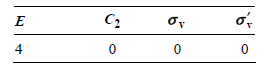
Decompose the following reducible representation into irreducible representations of the C2vgroup: 4
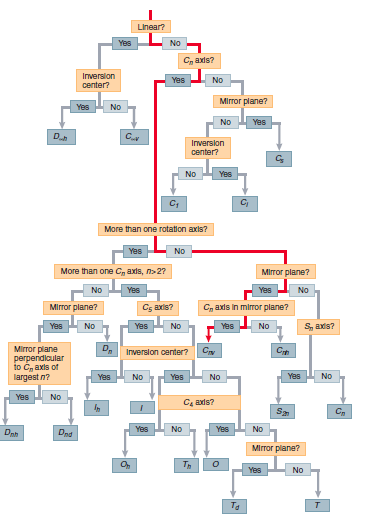
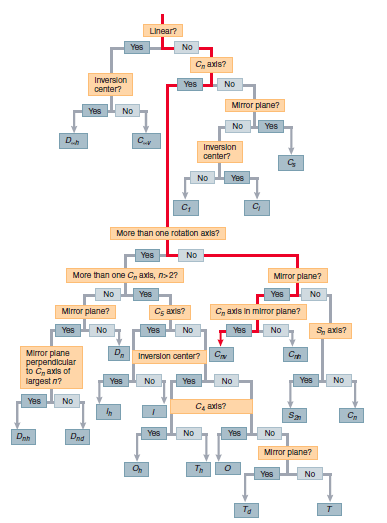
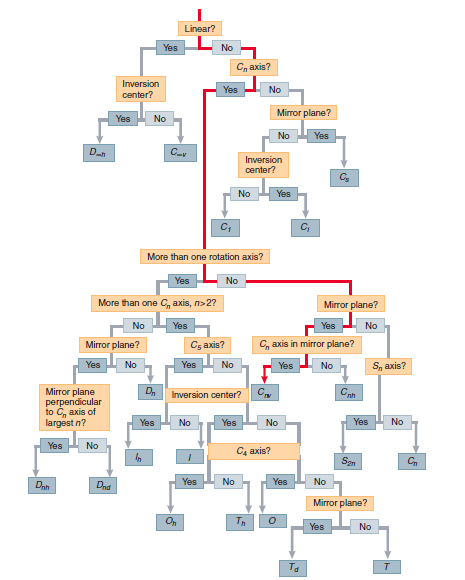
Use the logic diagram of Figure 27.2 to determine the point group for the planar molecule cis€“HBrC ‰¡ CClH. Indicate your decision-making process as was done in the text for NH3.a. linear?b. Cn axis?c. mirror plane? Linear? Yes No Cn axis? Inversion Yes No center?
To determine the symmetry of the normal modes of methane, an analysis of the transformation of individual coordinate systems on the five atoms is carried out, as shown in Figure 27.10 for H2O. After the rotational and translational representations are removed, the following reducible representation
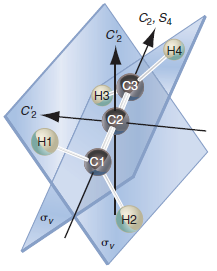
Use the logic diagram of Figure 27.2 to determine the point group for allene. Indicate your decision-making process as was done in the text for NH31. linear?2. Cn axis?3. more than 1Cn axis?4. more than 1Cn axis, n > 2?5. σ plane?6. σŠ¥ to C2? Linear? Yes No
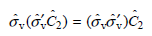
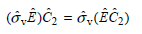
Use the 3 × 3 matrices for the C2vgroup in Equation (27.2) to verify the associative property for the following successive operations:a.b. ô,(6,C2) = (6,6-)C (Ĝ„Ê)Ĉ¸ = 6,(ÊĈ2) %3D
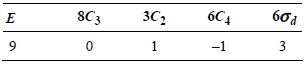
Methane belongs to the Td group. The reducible representation for the vibrational modes is Γ reducible = A1 + E + 2T2.a. Show that the A1 and T2 representations are orthogonal to each other and to the other representations in the table.b. What is the symmetry of each of the vibrational modes that
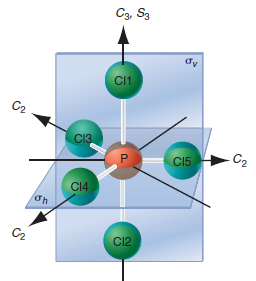
XeF4belongs to the D4hpoint group with the following symmetry elements: E, C4, C24, C2, C€²2, C€²€²2, i, S4, S24, σ, 2σ€², and 2σ€²€². Make a drawing similar to Figure 27.1 showing these elements. Сг, SA
NH3 belongs to the C3v group. The reducible representation for the vibrational modes is Γ reducible = 2A1 + 2E.a. How many vibrational modes does NH3 have?b. How many of these modes are infrared active and to which representation do they belong?c. Are any of the infrared active modes degenerate in
Benzene, C6H6, belongs to the D6hgroup. The reducible representation for the vibrational modes isa. How many vibrational modes does benzene have?b. How many of these modes are infrared active and to which representation do they belong?c. Which of the infrared active modes are degenerate in energy
The D3 group has the following classes: E, 2C3, and 3C2. How many irreducible representations does this group have and what is the dimensionality of each?
Use the logic diagram of Figure 27.2 to determine the point group for the planar molecule transŽ¯HBrC‰¡CBrH. Indicate your decision-making process as was done in the text for NH3.a. linear?b. Cn axis?c. more than 1 Cn axis?d. σ plane?e. C2 lies inσ ?
Use the 3 × 3 matrices for the C2v group in Equation (27.3) to verify the group multiplication table for the following successive operations:a. σ̂v σ̂′vb. σ̂v Ĉ2c. Ĉ2 Ĉ2
Show that a molecule with an inversion center implies the presence of an S2 element.
Why does the C3v group have a two-dimensional irreducible representation? Answer this question by referring to the form of the matrices that represent the operations of the group.
Can NH3 have molecular orbitals that are triply degenerate in energy?
Can a molecule with an inversion center be chiral? Give an example of a molecule with this symmetry element and explain your reasoning.
Why are all one-dimensional representations irreducible?
What is the difference between a symmetry element and a symmetry operation?
Can a molecule with D2h symmetry have a dipole moment? Give an example of a molecule with this symmetry and explain your reasoning.
Can a molecule with C3h symmetry have a dipole moment? Give an example of a molecule with this symmetry and explain your reasoning.
Explain why only two peaks are observed in the infrared spectrum of methane although six of the nine normal modes are infrared active.
Explain why the overlap integral between two combinations of AOs is nonzero only if the combinations belong to the same representation.
How are quantum mechanical calculations in the LCAO-MO model simplified through the construction of symmetry-adapted MOS?
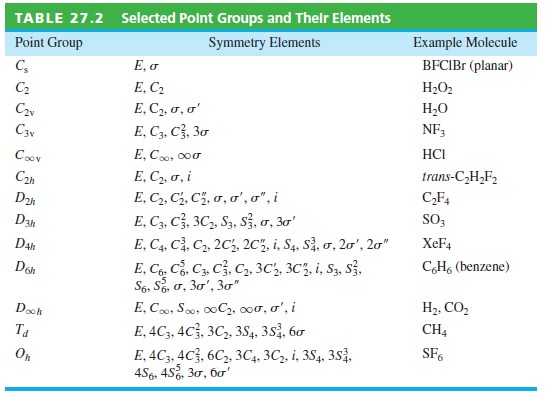
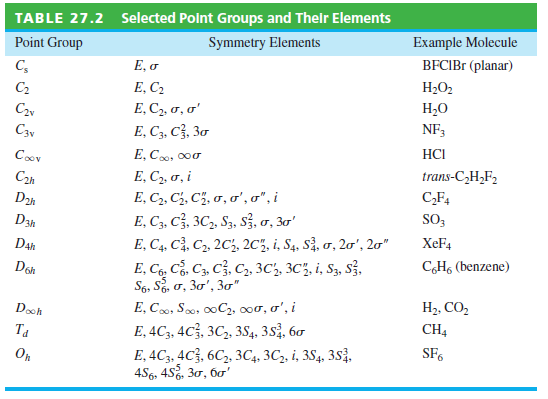
Why does the list of elements for the D6hgroup in Table 27.2 not list the elements S26, S36, and 6? Selected Point Groups and Their Elements Symmetry Elements TABLE 27.2 Example Molecule BFCIB (planar) Point Group E, o E, C2 E, C2, o, o' E, C3, C3, 30 C, H2O2 C2 H,0 NF3 C2v C3y HCI E, C, 000 Coov
Why does the list of elements for the D6hgroup in Table 27.2 not list the elements C26, C36, and C46? Selected Point Groups and Their Elements Symmetry Elements TABLE 27.2 Example Molecule BFCIB (planar) Point Group E, o E, C2 E, C2, o, o' E, C3, C3, 30 C, H2O2 C2 H,0 NF3 C2v C3y HCI E, C, 000 Coov
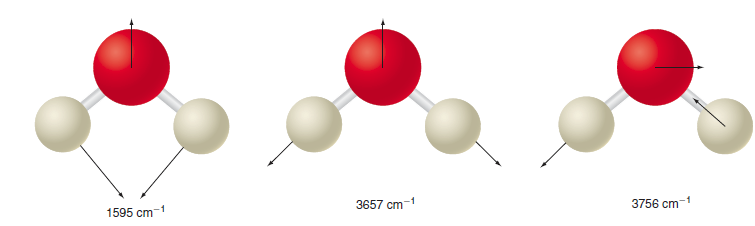
Which of the three normal modes of H2O in Figure 27.9 is best described as a bending mode? Does the bond angle remain unchanged in any of the modes? Which requires less energy, bond bending or bond stretching? 3756 cm-1 3657 cm-1 1595 cm-1
Can a molecule with an inversion center have a dipole moment? Give an example of a molecule with this symmetry element and explain your reasoning.
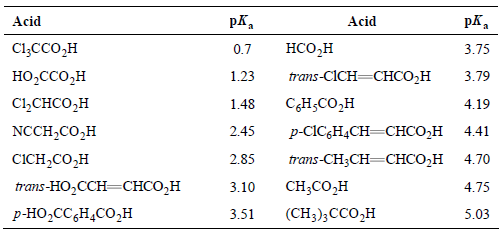
Chemists know that nitric and sulfuric acids are strong acids and that acetic acid is a weak acid. They would also agree that ethanol is at best a very weak acid. Acid strength is given directly by the energetics of deprotonation (heterolytic bond dissociation); for example, for acetic
Hydrocarbons are generally considered to be nonpolar or weakly polar at best, characterized by dipole moments that are typically only a few tenths of a debye. For comparison, dipole moments for molecules of comparable size with heteroatoms are commonly several debyes. One recognizable exception is
A surface for which the electrostatic potential is negative delineates regions in a molecule that are subject to electrophilic attack. It can help you to rationalize the widely different chemistry of molecules that are structurally similar.Optimize the geometries of benzene and pyridine using the
Lithium provides a very simple example of the effect of oxidation state on overall size. Perform HF/6-31G* calculations on lithium cation, lithium atom, and lithium anion, and compare the three electron density surfaces corresponding to enclosure of 99% of the total electron density. Which is
Do related molecules with the same number of electrons occupy the same amount of space, or are other factors (beyond electron count) of importance when dictating overall size requirements? Obtain equilibrium geometries for methyl anion, ammonia, and hydronium cation using the HF/6-31G* model and
Further information about the mechanism of the ethyl formate pyrolysis reaction can be obtained by replacing the static picture with a movie; that is, an animation along the reaction coordinate. Bring up “ethyl formate pyrolysis” (on the Spartan download) and examine the change in electron
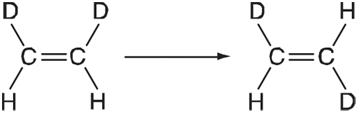
Olefins assume planar (or nearly planar) geometries wherever possible. This ensures maximum overlap between p orbitals and maximum π-bond strength. Any distortion away from planarity should reduce orbital overlap and bond strength. In principle, π-bond strength can be
BeH2 is linear, whereas CH2 with two additional electrons and H2O with four additional electrons are both bent to a similar degree. Could these changes in geometry have been anticipated by examining the shapes of the bonding molecular orbitals?a. Perform a series of geometry optimizations on BeH2
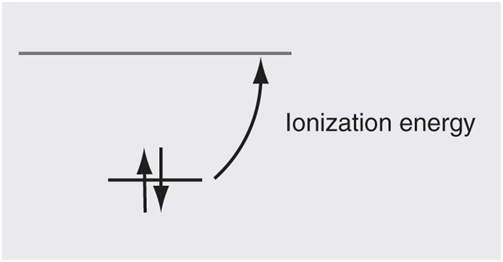
Molecular orbitals are most commonly delocalized throughout the molecule and exhibit distinct bonding or anti-bonding character. Loss of an electron from a specific molecular orbital from excitation by light or by ionization would, therefore, be expected to lead to distinct changes in bonding and
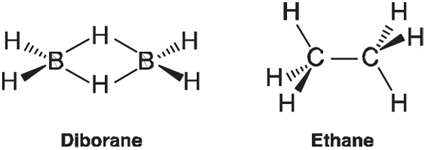
At first glance, the structure of diborane would seem unusual. Why shouldn€™t the molecule assume the same geometry as ethane, which after all has the same number of heavy atoms and the same number of hydrogens?The important difference between the two molecules is that diborane has two
It is well known that cyanide acts as a €œcarbon€ and not as a €œnitrogen€ nucleophile in SN2 reactions; for example,How can this behavior be rationalized with the notion that nitrogen is in fact more electronegative than carbon and, therefore, would be
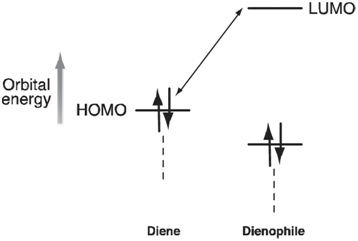
Diels€“Alder reactions commonly involve electron-rich dienes and electron-deficient dienophiles:The rate of these reactions generally increases with the Ï€ -donor ability of the diene substituent, Y, and with the Ï€ -acceptor ability of the dienophile substituent, X.
The three vibrational frequencies in H2O (1595, 3657, and 3756 cmˆ’1) are all much larger than the corresponding frequencies in D2O (1178, 2671, and 2788 cmˆ’1).This follows from the fact that vibrational frequency is given by the square root of a (mass-independent) quantity,
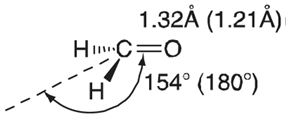
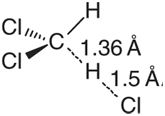
Hydroxymethylene has never actually been observed, although it is believed to be an intermediate both in the photo-fragmentation of formaldehyde to hydrogen and carbon monoxide,and in the photo-dimerization of formaldehyde in an argon matrix:Does hydroxymethylene actually exist? To have a chance
Molecules such as dimethylsulfoxide and dimethylsulfone can either be represented as hypervalent, that is, with more than the normal complement of eight valence electrons around sulfur, or as zwitterions, in which sulfur bears a positive charge:Atomic charges obtained from quantum chemical
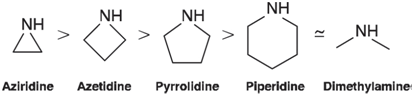
Pyramidal inversion in the cyclic amine aziridine is significantly more difficult than inversion in an acyclic amine; for example, requiring 80 kJ/mol versus 23 kJ/mol in dimethylamine according to HF/6-31G* calculations. One plausible explanation is that the transition state for inversion needs to
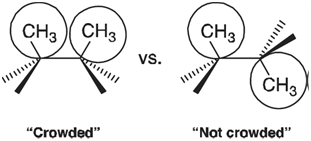
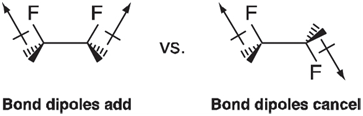
The energy of rotation about a single bond is a periodic function of the torsion angle, ˆ…, and is, therefore, appropriately described in terms of a truncated Fourier series, the simplest acceptable form of which is given byHere, V1 is the one-fold component (periodic in 360º),
Diels€“Alder cycloaddition of 1, 3-butadiene with acrylonitrile requires that the diene be in a cis (or cis-like) conformation:In fact, the diene exists primarily in a trans conformation, the cis conformer being approximately 9 kJ/mol less stable and separated from the trans conformer by
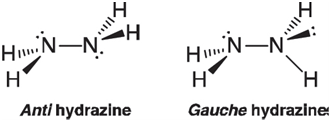
Hydrazine would be expected to adopt a conformation in which the N~H bonds stagger. There are two likely candidates, one with the lone pairs on nitrogen anti to each other and the other with the lone pairs gauche:On the basis of the same arguments made in VSEPR theory (electron pairs take up more
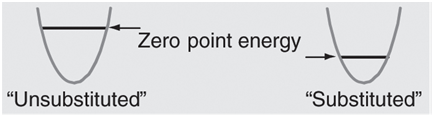
Evaluate the difference between change in energy at 0 K in the absence of zero point vibration and both change in enthalpy and in free energy for real molecules at 298 K. Consider both a uni-molecular iso-merization that does not lead to a net change in the number of molecules and a thermal
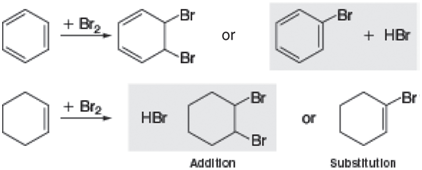
Aromatic molecules such as benzene typically undergo substitution when reacted with an electrophile such as Br2, whereas alkenes such as cyclohexene most commonly undergo addition:What is the reason for the change in preferred reaction in moving from the alkene to the arene? Use the
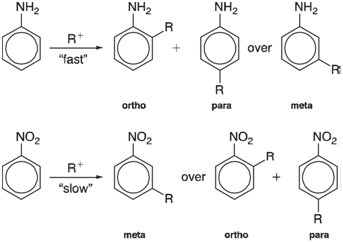
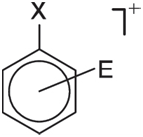
Electron-donating groups on benzene promote electrophilic aromatic substitution and lead preferentially to so-called ortho and para products over meta products, whereas electron-withdrawing groups retard substitution and lead preferentially to meta products (over ortho and para products); for
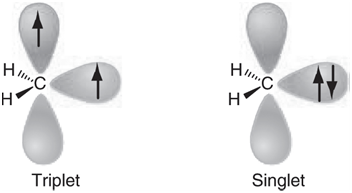
Singlet and triplet carbenes exhibit different properties and show markedly different chemistry. For example, a singlet carbene will add to a cis-disubstituted alkene to produce only cis-disubstituted cyclopropane products (and to a trans-disubstituted alkene to produce only trans-disubstituted
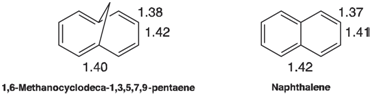
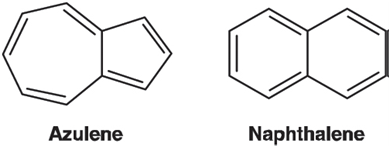
All chemists know that benzene is unusually stable, that is, it is aromatic. They are also well aware that many other similar molecules are stabilized by aromaticity to some extent and, more often than not, can recognize aromatic molecules as those with delocalized bonding. What most chemists are
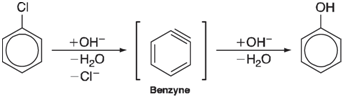
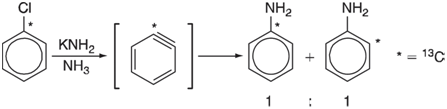
Benzyne has long been implicated as an intermediate in nucleophilic aromatic substitution; for example,Although the geometry of benzyne has yet to be conclusively established, the results of a 13C labeling experiment leave little doubt that two (adjacent) positions on the ring are equivalentThere
Discussion of the VSEPR model in Section 24.1 suggested a number of failures, in particular, in CaF2 and SrCl2, which (according to the VSEPR) should be linear but which are apparently bent, and in SeF2-6 and TeCl2−6, which should not be octahedral but apparently are. Are these really failures or
One of the most powerful attractions of quantum chemical calculations over experiments is their ability to deal with any molecular system, stable or unstable, real or imaginary. Take as an example the legendary (but imaginary) kryptonite molecule. Its very name gives us a formula, KrO22 −, and
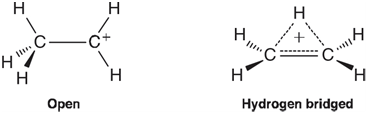
For many years, a controversy raged concerning the structures of so-called €œelectron-deficient€ molecules; that is, molecules with insufficient electrons to make normal two-atom, two-electron bonds. Typical is ethyl cation, C2H5+, formed from protonation of ethene.Is it best
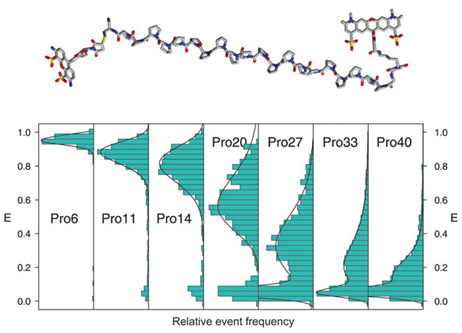
In the polyproline €œspectroscopic ruler€ experiment shown in Figure 25.19, the FRET pair employed is comprised of the fluorescent dyes Alexa Fluor 488 (excited-state lifetime of 4.1 ns) and Alexa Fluor 594. For this FRET pair R0= 5.4 nm. The distance between the FRET pair
How can circular dichroism spectroscopy be used to determine the secondary structure of a bio-molecule?
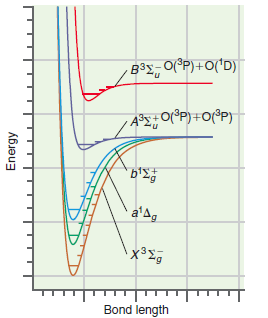
Calculate the bond order for O2in thestates. Arrange these states in order of increasing bond length on the basis of bond order. Do your results agree with the potential energy curves shown in Figure 25.1? XΙΣ, aΔg, b1Σ 43Σ, and B3Σ μ B³Y, O(°P)+O('D) A°%O(°P}=O(®P} `b'% a'a, 'x³%
What does the word resonance in FRET refer to?
In a simple model used to analyze UV photoelectron spectra, the orbital energies of the neutral molecule and the cation formed by ejection of an electron are assumed to be the same. In fact, some relaxation occurs to compensate for the reduction in the number of electrons by one. Would you expect
Determine if the following transitions are allowed or forbidden:a. 3Π u → 3Σ−gb. 1Σ+g → 1Πgc. 3Σ−g → 3Πgd. 1Πg → 1Δu
The ground electronic state of O2 is 3Σ−g and the next two highest energy states are 1Δg (7918 cm−1) and 1Σ+g (13195 cm−1), where the value in parentheses is the energy of the state relative to the ground state.a. Determine the excitation wavelength required for a transition between the
Ozone (O3) has an absorptivity at 300. nm of 0.000500 torr−1 cm−1. In atmospheric chemistry the amount of ozone in the atmosphere is quantified using the Dobson unit (DU), where 1 DU is equivalent to a 10−2 mm thick layer of ozone at 1 atm and 273.15 K.a. Calculate the absorbance of the ozone
Consider a diatomic molecule for which the bond force constant in the ground and excited electronic states is the same, but the equilibrium bond length is shifted by an amount δ in the excited state relative to the ground state. For this case the vibrational wave functions for the n =
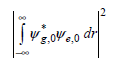
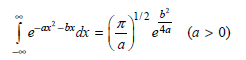
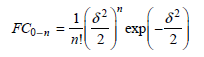
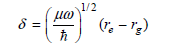
One method for determining Franck€“Condon factors between the n = 0 vibrational state of the ground electronic state and the nth vibrational level of an electronic excited state is:where δ is the dimensionless displacement of the excited state relative to the ground state,
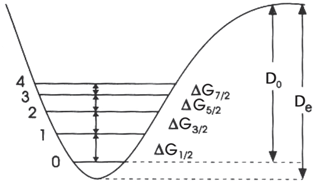
When vibrational transitions are observed in an electronic absorption spectrum, these transitions can be used to determine dissociation energies. Specifically, a Birge€“Sponer plot is constructed where the energy difference between successive vibrational transitions n and n + 1
Birge–Sponer plots are generally made using ΔG for n values far from the dissociation limit. If the data include n values close to the dissociation limit, deviations from a linear relationship between ΔG and n + 1/2 are observed. Taking these deviations into account allows a more accurate
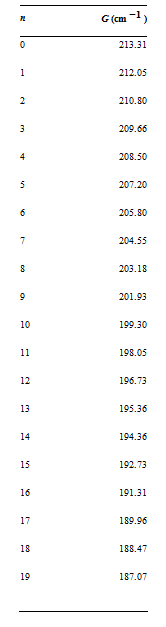
Electronic spectroscopy of the Hg⎯Ar van der Waals complex was performed to determine the dissociation energy of the complex in the first excited state (Quayle, C. J. K. et al. Journal of Chemical Physics 99 (1993): 9608). As described in P25.6, the following data regarding ΔG versus n were
Green fluorescent protein (GFP) and variants of this protein have been developed for in vivo FRET studies (Pollok B. and Heim R. Trends in Cell Biology 9 (1999): 57). Two variants of GFP, cyan fluorescent protein (CFP) and yellow fluorescent protein (YFP), form a FRET pair where R0 = 4.72 nm. The
Structural changes in proteins have been measured using FRET with the amino acid tryptophan as the donor and dansyl as the acceptor, where dansyl is attached to the protein through addition to amino acids with aliphatic amine groups such as lysine. For this pair R0 = 2.1 nm, and the excited-state
The assumption that the reaction coordinate in going from gauche to anti n-butane is a simple torsion is an oversimplification, because other geometrical changes no doubt also occur during rotation around the carbon–carbon bond; for example, changes in bond lengths and angles. Examine the energy
Ammonia provides a particularly simple example of the dependence of vibrational frequencies on the atomic masses and of the use of vibrational frequencies to distinguish between a stable molecule and a transition state. First examine the vibrational spectrum of pyramidal ammonia (“ammonia” on
The presence of the carbonyl group in a molecule is easily confirmed by an intense line in the infrared spectrum around 1700 cm−1 that corresponds to a C≡O stretching vibration. Locate this line in the calculated infrared spectrum of acetone (“acetone” on the pre-calculated Spartan file)
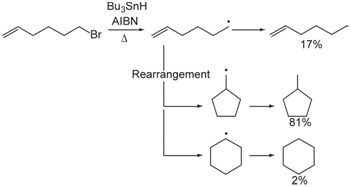
Chemists recognize that the cyclohexyl radical is likely to be more stable than the cyclopentylmethyl radical, because they know that six-membered rings are more stable than five-membered rings and, more importantly, that secondary radicals are more stable than primary radicals. However, much
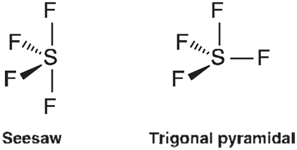
VSEPR (valence state electron pair repulsion) theory was formulated to anticipate the local geometry about an atom in a molecule (see discussion in Section 25.1). All that is required is the number of electron pairs surrounding the atom, broken down into bonded pairs and non-bonded (lone) pairs.
Each of the carbons in ethane is surrounded by four atoms in a roughly tetrahedral geometry; each carbon in ethene is surrounded by three atoms in a trigonal planar geometry and each carbon in acetylene by two atoms in a linear geometry. These structures can be rationalized by suggesting that the
The bond angle about oxygen in alcohols and ethers is typically quite close to tetrahedral (109.5°), but opens up significantly in response to extreme steric crowding; for example, in going from tert-butyl alcohol to di-tert-butyl ether:This is entirely consistent with the notion that while
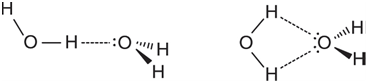
Water contains two acidic hydrogens that can act as hydrogen-bond donors and two lone pairs that can act as hydrogen-bond acceptors:Given that all are tetrahedrally disposed around oxygen, this suggests two reasonable structures for the hydrogen-bonded dimer of water, (H2O)2, one with a single
The relative intensities of vibrational peaks in an electronic spectrum are determined by the Franck€“Condon factors. How would the potential curve for the excited state in Figure 25.2 need to be shifted along the distance axis for the n = 0 †’ n€² = 0
The ground state of O+2is X2Î g, and the next few excited states, in order of increasing energy, areOn the basis of selection rules, which of the excited states can be accessed from the ground state by absorption of UV light? a*п, 4 п, 642, ?л, ? аnd e +2,
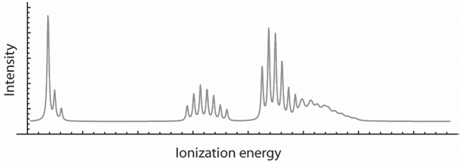
Suppose you obtain the UV photoelectron spectrum shown here for a gas-phase molecule. Each of the groups corresponds to a cation produced by ejecting an electron from a different MO. What can you conclude about the bond length of the cations in the three states formed relative to the ground-state
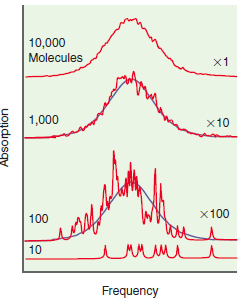
Why are the spectra of the individual molecules in the bottom trace of Figure 25.15 shifted in frequency? 10,000 Molecules x1 1,000 x10 x100 100 10 Frequency Absorption
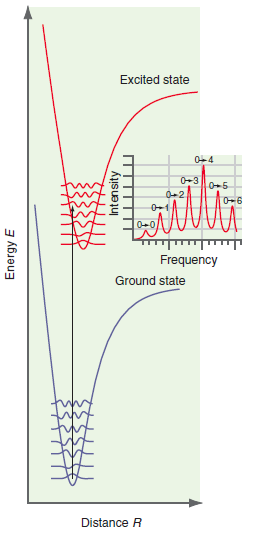
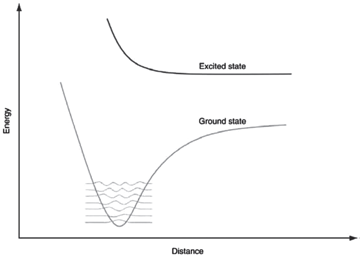
What do you expect the electronic spectrum to look like for the ground and excited states shown in the figure below? Excited state Ground state Distance ABsoug
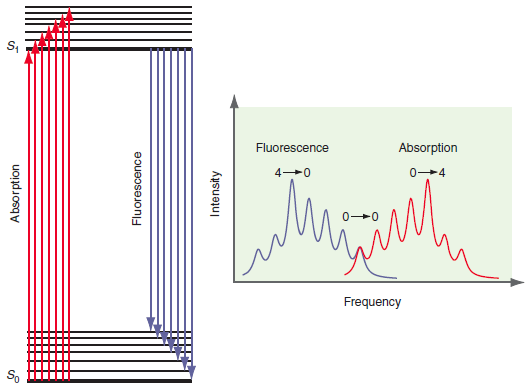
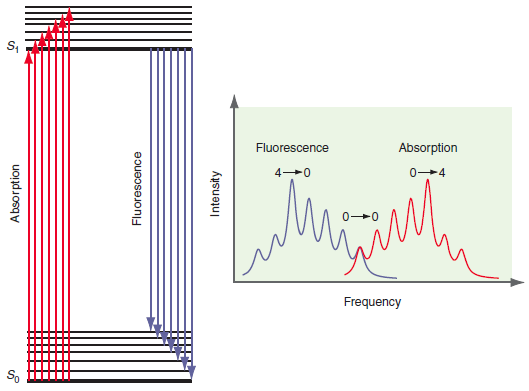
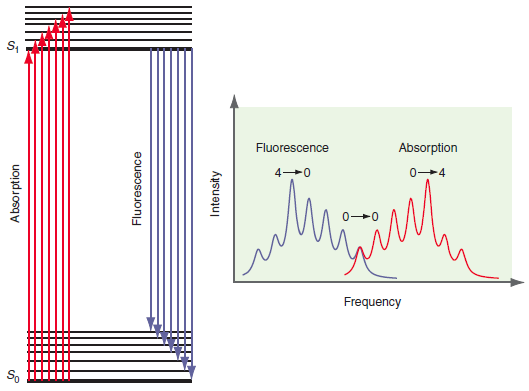
Because internal conversion is in general very fast, the absorption and fluorescence spectra are shifted in frequency as shown in Figure 25.10. This shift is crucial in making fluorescence spectroscopy capable of detecting very small concentrations. Can you explain why? Fluorescence Absorption 0-4
Explain why the spectator species M in Equation (25.5) is needed to make the reaction proceed.
How many distinguishable states belong to the following terms?a. 1Σ+gb. 3Σ−gc. 2πd. 2Δ
Predict the number of unpaired electrons and the ground-state term for the following:a. NOb. CO
Can linear dichroism spectroscopy be used for molecules in a static solution or in a flowing solution? Explain your answer.
The rate of fluorescence is higher than that for phosphorescence. Can you explain this fact?
Explain why the fluorescence and absorption groups of peaks in Figure 25.10 are shifted and show mirror symmetry for idealized symmetrical ground-state and excited-state potentials. Fluorescence Absorption 0-4 Frequency So Absorption Fluorescence Intensity
What aspect of the confocal microscope makes single-molecule spectroscopy in solutions possible?
What would the intensity versus frequency plot in Figure 25.10 look like if fluorescence were fast with respect to internal conversion? Fluorescence Absorption 0-4 Frequency So Absorption Fluorescence Intensity
Photoionization of a diatomic molecule produces a singly charged cation. For the molecules listed here, calculate the bond order of the neutral molecule and the lowest energy cation. For which of the molecules do you expect the n = 0 → n′ = 1 vibrational peak to have a higher
How can FRET give information about the tertiary structure of a biological molecule in solution?
Predict the number of unpaired electrons and the ground-state term for the followinga. BOb. LiO
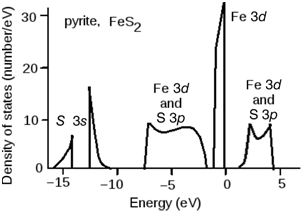
The density of states (DOS) of pyrite, crystalline FeS2(as calculated by Eyert et al, Physical Review B 55 (1998): 6350, is shown next. The highest occupied energy level corresponds to zero energy. Based on the DOS, is pyrite an insulator, a conductor, or a semiconductor? Also, how does the DOS
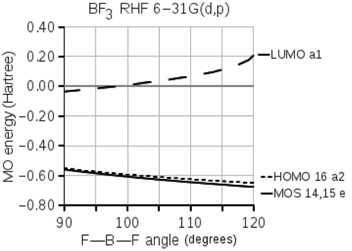
The following diagram shows the energies of valence molecular orbitals of boron trifluoride. The energies of three occupied orbitals (the a2HOMO and doubly degenerate e orbitals) are shown. The energy of the unoccupied LUMO is also shown. The angle on the abscissa is the FۥBۥF
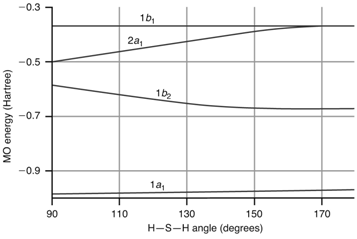
The energy of the occupied valence MOs of H2S is shown as a function of the HۥSۥH bond angle. Compared to the analogous diagram, Figure 24.11, for H2O, the 2a1 MO energy decreases more as the bond angle approaches 90 degrees. Explain, based on the MO diagram, why H2S is bent,
S − p hybridization on each Ge atom in planar trans-digermane has been described as sp1.5 for the GE―Ge sigma bond and sp1.8 for the Ge―H bond. Calculate the H―Ge―Ge bond angle based on this information. Note that the 4px and 4py orbitals are proportional to cos(θ) and sin(θ),
S − p hybridization on each Ge atom in planar trans-digermane has been described as sp1.5 for the Ge―Ge sigma bond and sp1.8 for the Ge―H bond. Suppose that the Ge lone electron (in terms of Lewis dot valence electrons) is in an spn hybrid orbital, where n is the hybrid’s p character. The
Showing 2200 - 2300
of 3563
First
16
17
18
19
20
21
22
23
24
25
26
27
28
29
30
Last
Step by Step Answers

 Get 50% OFF
Claim Now
Get 50% OFF
Claim Now






![Н.со_ нсон]—н, +со](https://dsd5zvtm8ll6.cloudfront.net/si.question.images/images/question_images/1525/6/7/0/8615aefe3cd736501525670848472.jpg)