New Semester
Started
Get
50% OFF
Study Help!
--h --m --s
Claim Now
Question Answers
Textbooks
Find textbooks, questions and answers
Oops, something went wrong!
Change your search query and then try again
S
Books
FREE
Study Help
Expert Questions
Accounting
General Management
Mathematics
Finance
Organizational Behaviour
Law
Physics
Operating System
Management Leadership
Sociology
Programming
Marketing
Database
Computer Network
Economics
Textbooks Solutions
Accounting
Managerial Accounting
Management Leadership
Cost Accounting
Statistics
Business Law
Corporate Finance
Finance
Economics
Auditing
Tutors
Online Tutors
Find a Tutor
Hire a Tutor
Become a Tutor
AI Tutor
AI Study Planner
NEW
Sell Books
Search
Search
Sign In
Register
study help
sciences
chemical principles
Chemical Principles The Quest For Insight 7th Edition Peter Atkins, Loretta Jones, Leroy Laverman - Solutions
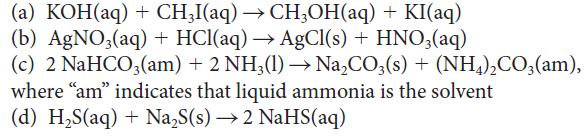
Which of the following reactions can be classified as reactions between Brønsted acids and bases? For those that can be so classified, identify the acid and the base. (a) KOH(aq) + CH3I(aq) → CH3OH(aq) + KI(aq) (b) AgNO3(aq) + HCl(aq) → AgCl(s) + HNO3(aq) (c) 2 NaHCO3(am) + 2 NH3(1)→→
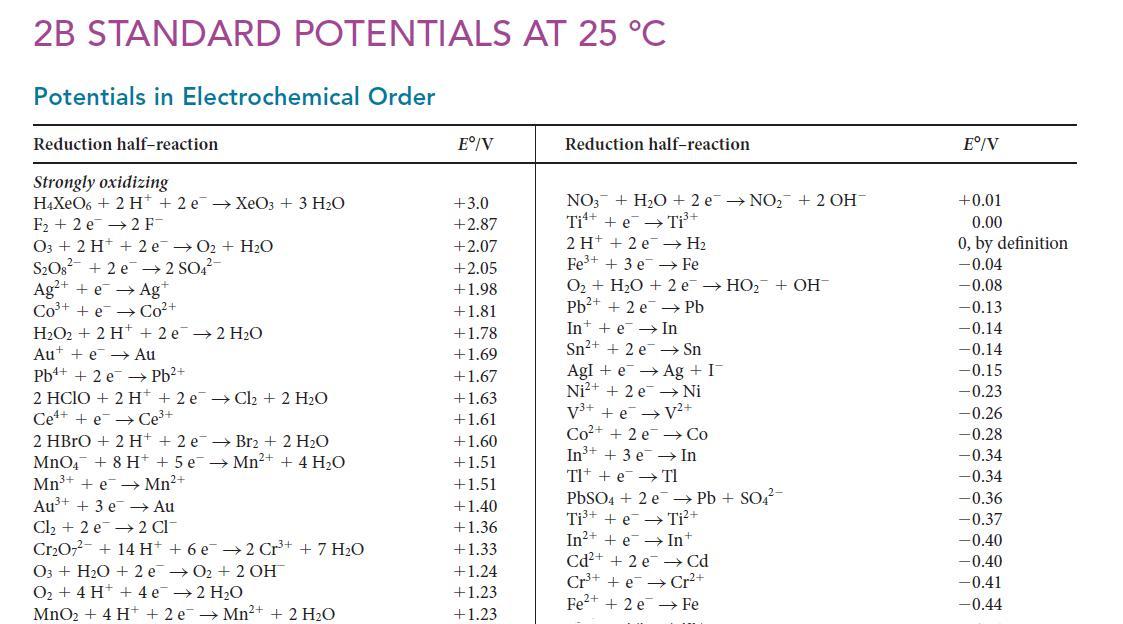
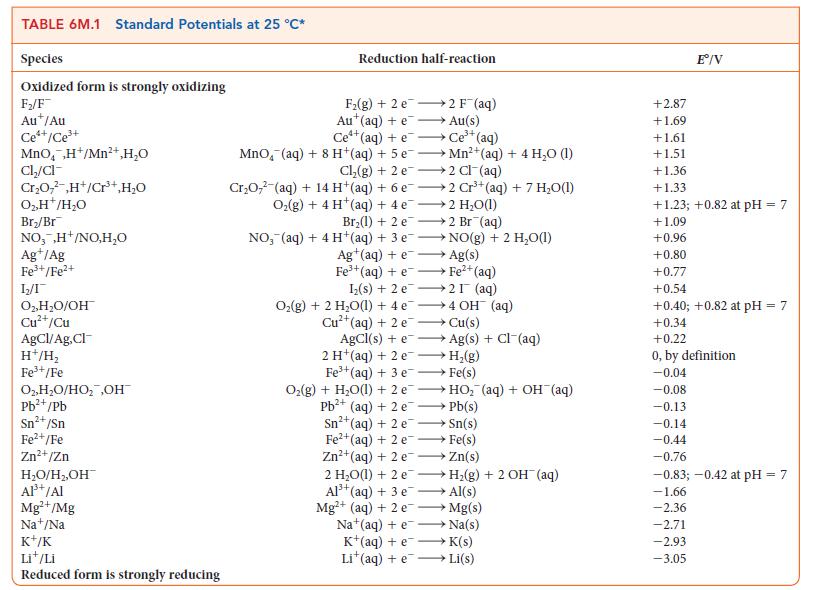
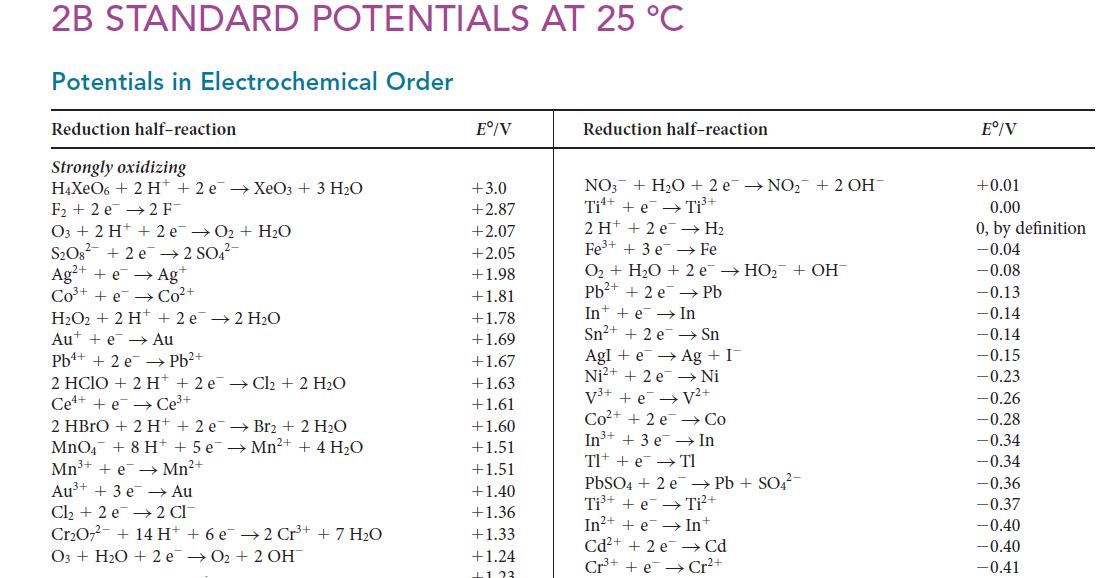
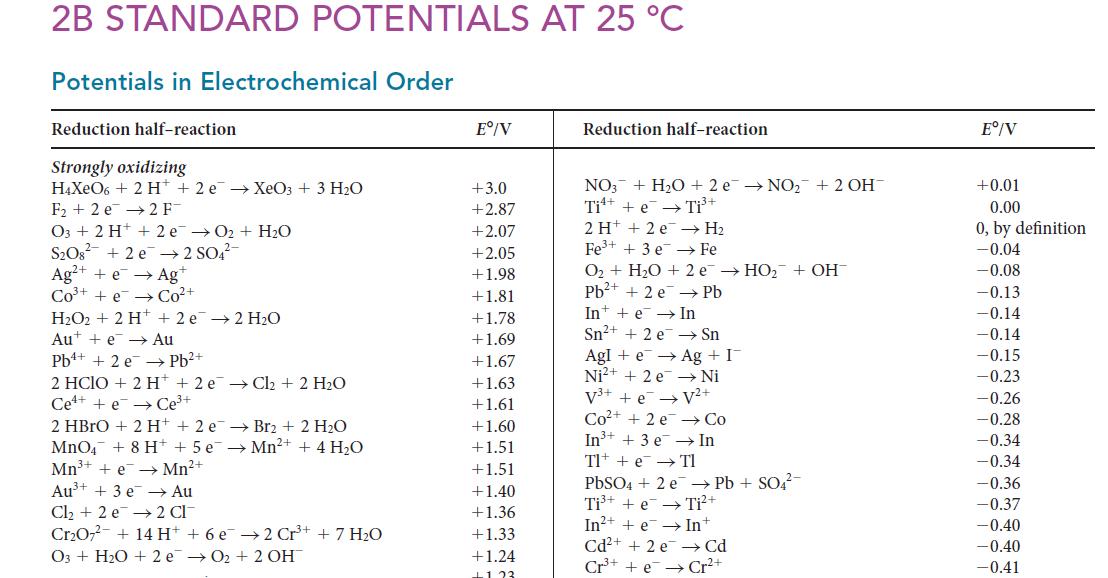
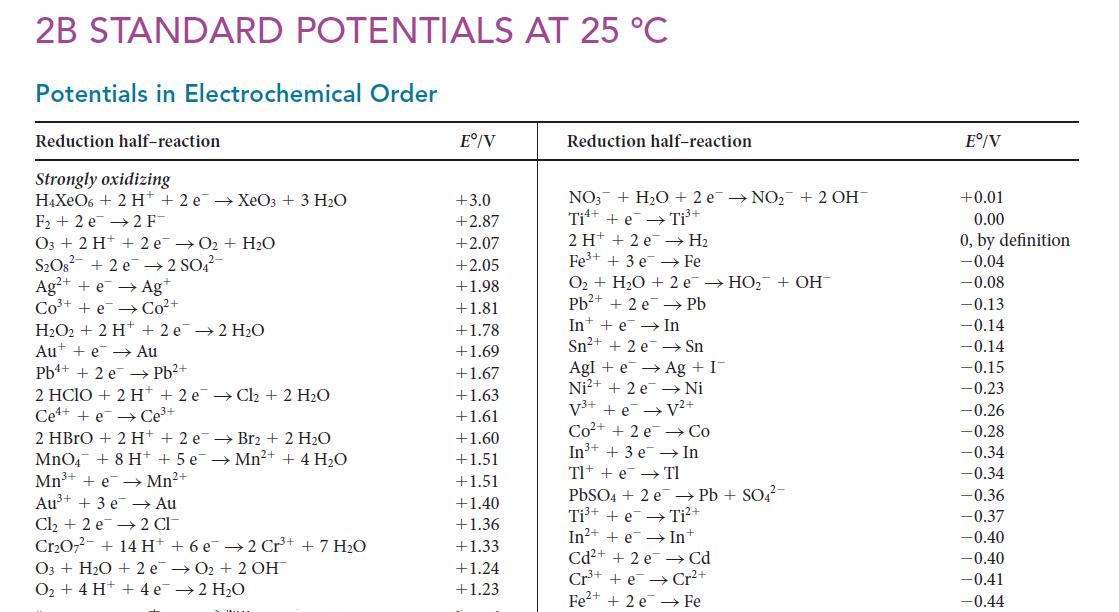
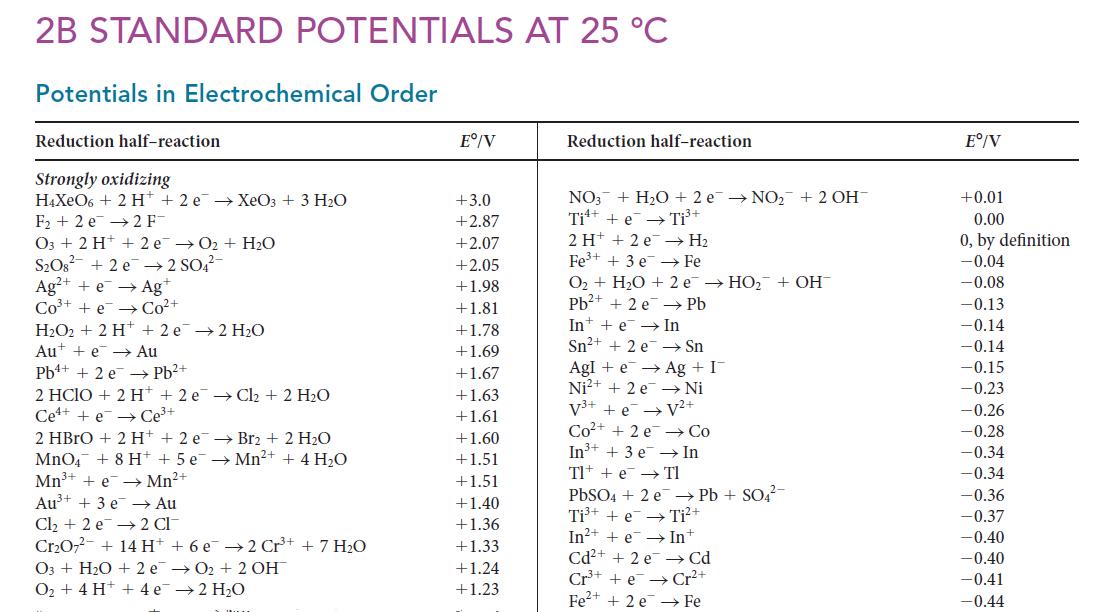
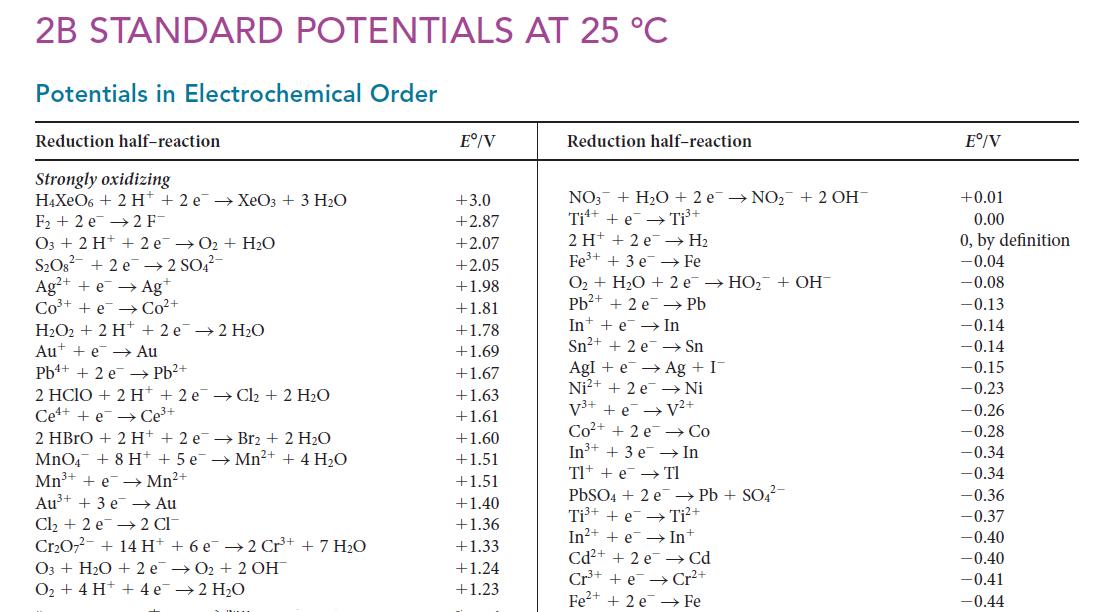
Use the data in Appendix 2B to calculate E°(Ti3+/Ti). 2B STANDARD POTENTIALS AT 25 C Potentials in Electrochemical Order Reduction half-reaction Strongly oxidizing H4XeO6 + 2 H+2 e XeO3 + 3 HO F +2e 2 FT 03 + 2 H+ + 2e O + HO SO8 +2e 2 SO4- Ag+ +eAg+ CO+ +eCo+ HO2 + 2 H+2e 2 HO Au + e Au Pb+ + 2e
Calculate the molar solubility of each of the following sparingly soluble compounds in its respective solution: iron(III) hydroxide at(a) pH = 11.0;(b) pH = 3.0; iron(II) hydroxide at(c) pH = 8.0;(d) pH = 6.0.
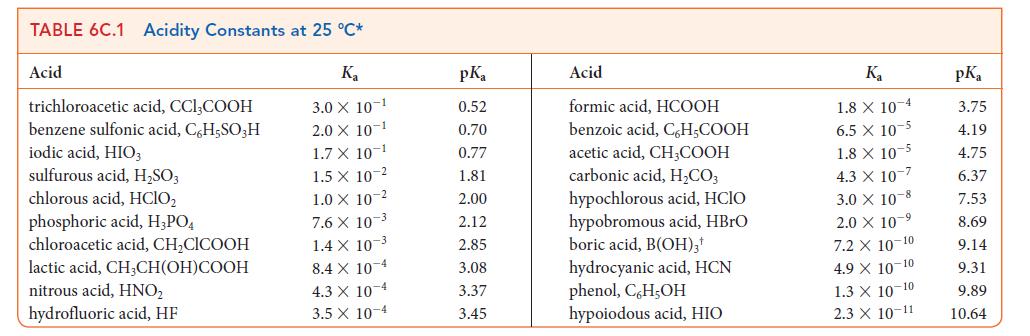
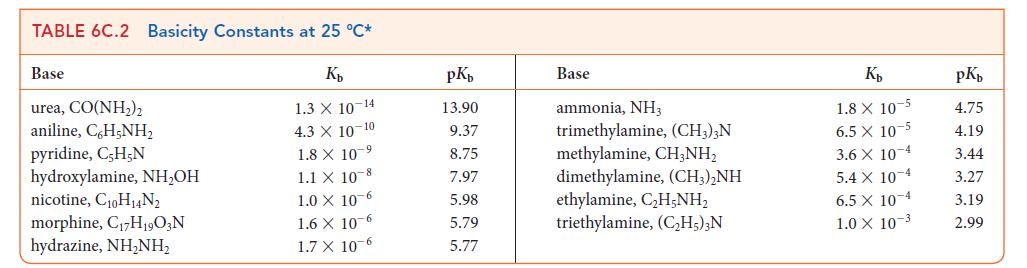
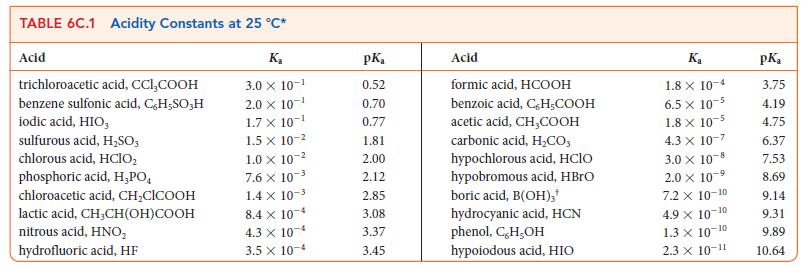
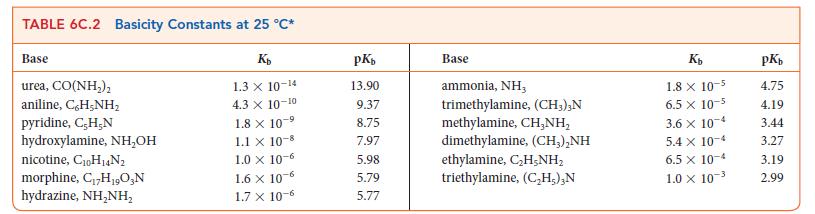
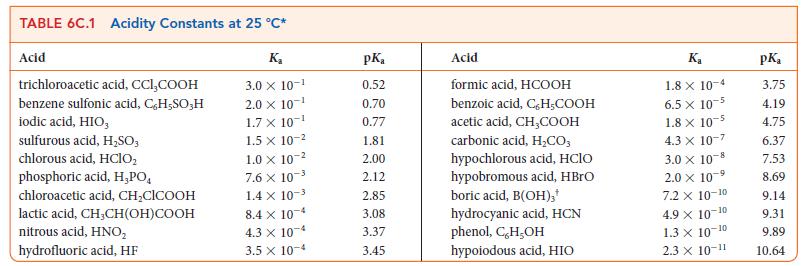
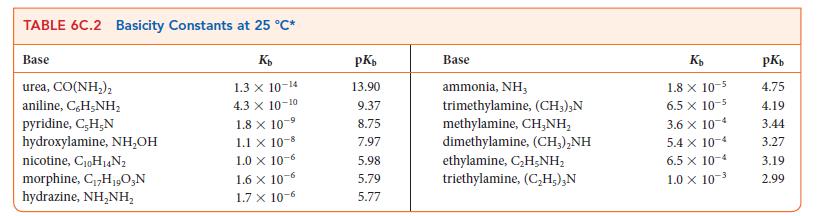
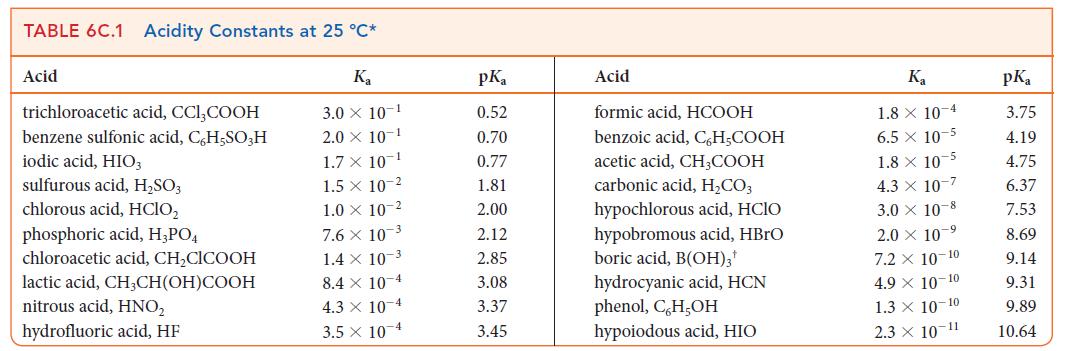
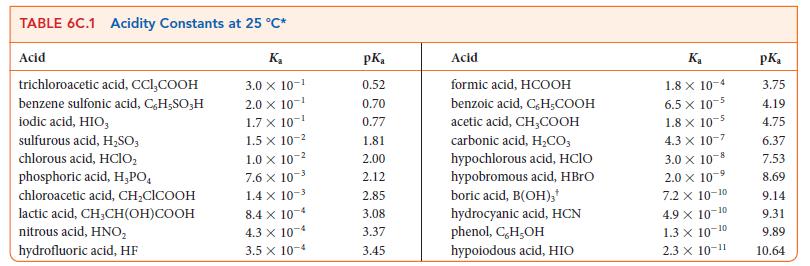
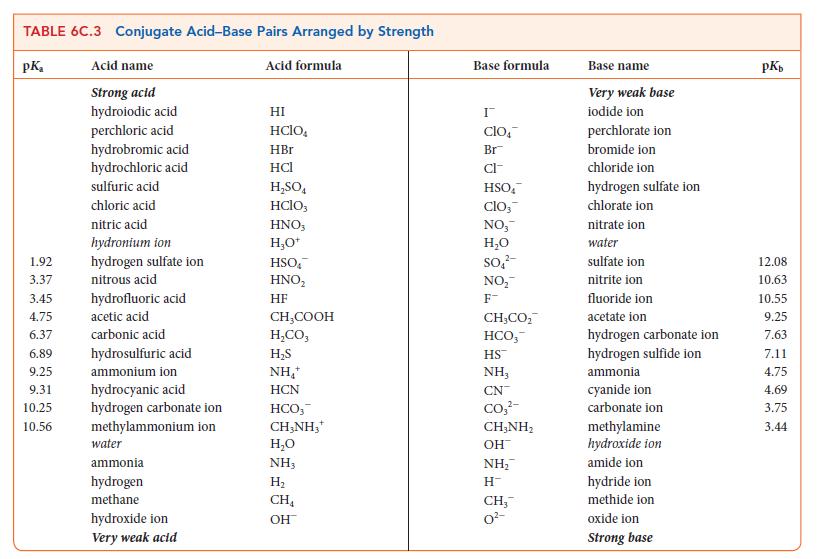
Use data from Tables 6C.1 and 6C.2 to place the following bases in order of increasing strength: C10H14N2 (nicotine), ClO2, (CH3)3N, HSO3–. TABLE 6C.1 Acidity Constants at 25 C* K 3.0 X 10⁻¹ 2.0 X 10⁻¹ 1.7 X 10⁻¹ 1.5 X 1.0 X 10-2 Acid trichloroacetic acid, CCI,COOH benzene sulfonic acid, C6H5SO3H
Calculate the molar concentrations of H2SO3, HSO3–, SO3 2–, H3O+, and OH– present in 0.125 m H2SO3(aq).
Morphine, C17H19O3N, is a potent painkiller. Suppose you are studying morphine and need to predict the pH of a morphine solution during a titration. Calculate the pH at the stoichiometric point of the titration of 30.00 mL of 0.0172 m C17H19O3N(aq) with 0.0160 m HCl(aq).
Calculate the pH of the solution that results from mixing(a) 0.100 L of 0.050 m (CH3)2NH(aq) with 0.280 L of 0.040 m (CH3)2NH2Cl(aq);(b) 45.0 mL of 0.015 m (CH3)2NH(aq) with 86.0 mL of 0.200 m (CH3)2NH2Cl(aq);(c) 100.0 mL of 0.080 m (CH3)2NH(aq) with 40.0 mL of 0.075 m (CH3)2NH2Cl(aq).
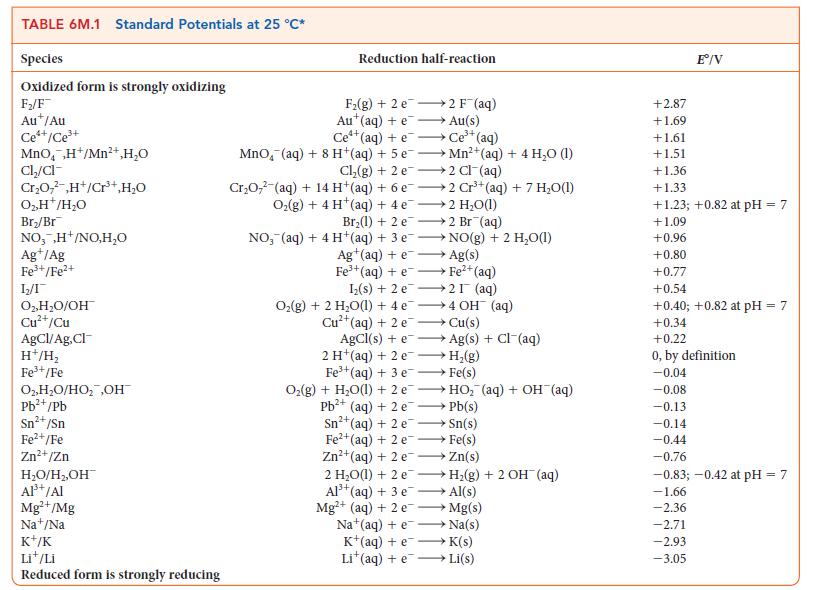
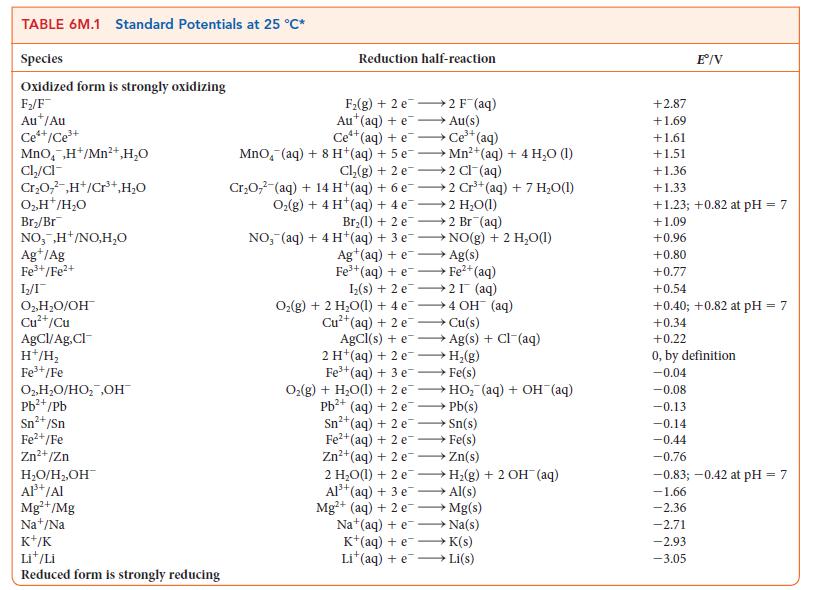
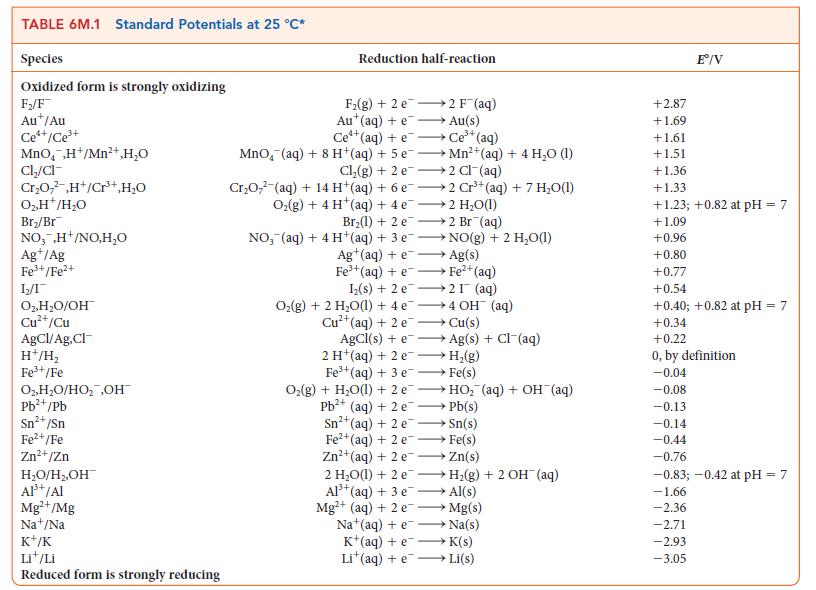
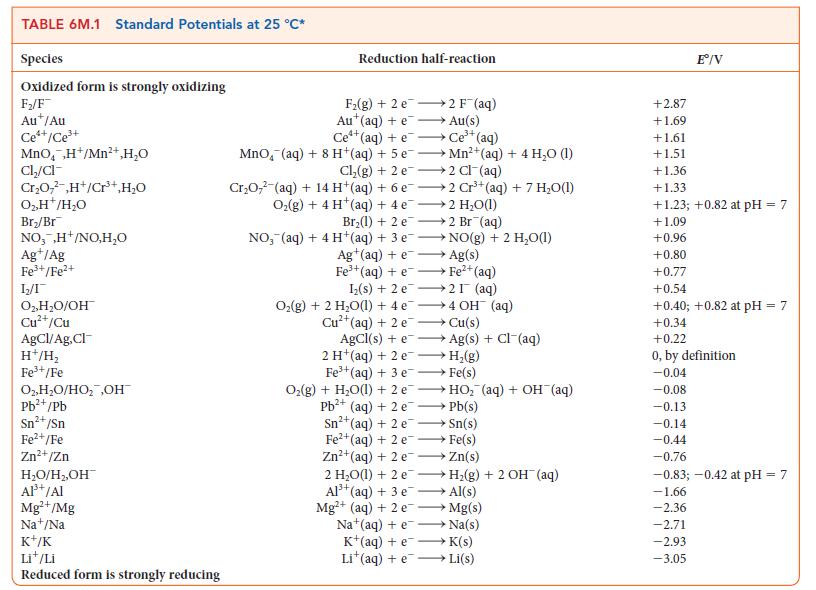
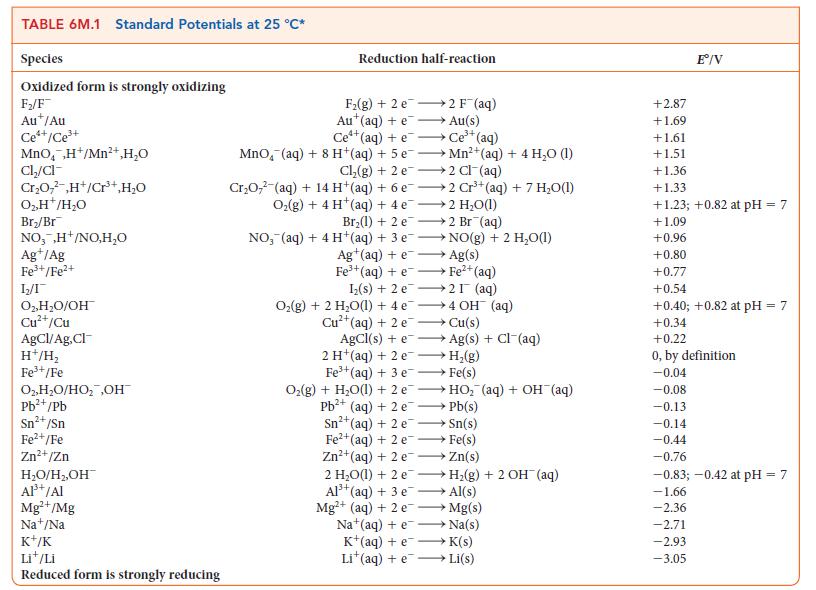
For the exercise in this topic, base your answers on the potentials listed in Table 6M.1 or Appendix 2B, with the exception of the reduction and oxidation of water at pH = 7:When a ruthenium chloride solution was electrolyzed for 500 s with a 120-mA current, 31.0 mg of ruthenium was deposited. What
A lead electrode in 0.020 m Pb(NO3)2(aq) is connected to a hydrogen electrode in which the pressure of H2 is 1.0 bar. If the cell potential is 0.078 V at 25°C, what is the pH of the electrolyte at the hydrogen electrode?
Write the equilibrium constant for the following reaction and calculate the value of K at 298 K for the reaction HNO2(aq) + NH3(aq) ⇌ NH4+ (aq) + NO2 – (aq) using the data in Tables 6C.1 and 6C.2. TABLE 6C.1 Acidity Constants at 25 °C* Acid trichloroacetic acid, CCI,COOH benzene sulfonic
An aqueous solution is 35.0% by mass methylamine (CH3NH2); its density is 0.85 g · cm–3.(a) Draw the Lewis structures of a methylamine molecule and its conjugate acid.(b) If 80.0 mL of this solution is diluted to 300.0 mL, what would be the pH of the resulting solution?
In the process of separating Pb2+ ions from Cu2+ ions as sparingly soluble iodates, what is the Pb2+ concentration when Cu2+ just begins to precipitate as sodium iodate is added to a solution that is initially 0.0010 m Pb(NO3)2(aq) and 0.0010 m Cu(NO3)2(aq)?
A student added solid Na2O to a volumetric flask of volume 200.0 mL, which was then filled with water, resulting in 200.0 mL of NaOH solution. Then 5.00 mL of the solution was transferred to another volumetric flask and diluted to 500.0 mL. The pH of the diluted solution is 13.25. (a) What is the
Calculate the molar solubility of silver bromide in 0.10 m KCN(aq).
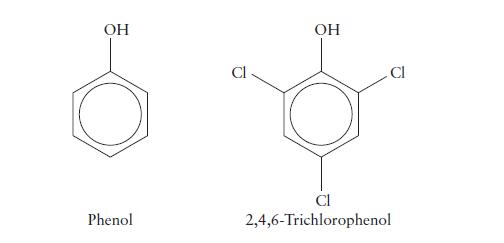
The values of Ka for phenol and 2,4,6-trichlorophenol are 1.3 * 10–10 and 1.0 * 10–6, respectively. Which is the stronger acid? Account for the difference in strength. OH Phenol OH Cl 2,4,6-Trichlorophenol
Write the chemical equations of the two proton transfer equilibria that demonstrate the amphiprotic character of(a) HCO3 –;(b) HPO4 2–. Identify the conjugate acid–base pairs in each case.
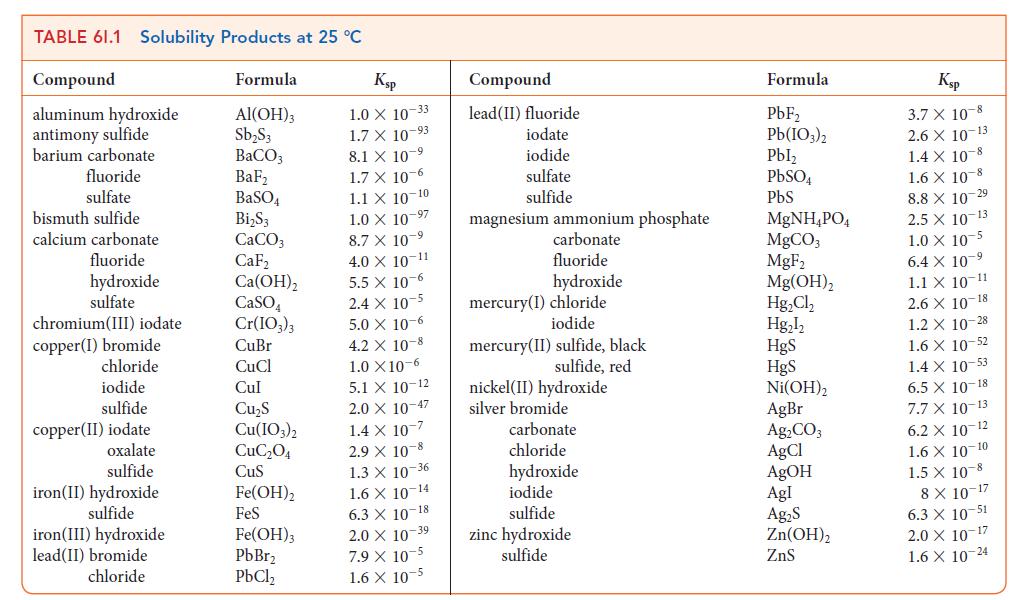
(a) Use data from Appendix 2B to calculate the solubility product of Hg2Cl2.(b) Compare this number with the value listed in Table 6I.1 and comment on any difference. TABLE 61.1 Solubility Products at 25 °C Compound aluminum hydroxide antimony sulfide barium carbonate fluoride sulfate bismuth
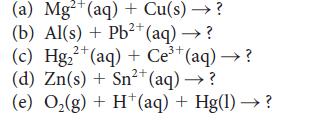
Suppose that each of the following pairs of redox couples is combined to form a galvanic cell that generates a current under standard conditions. Identify the oxidizing agent and the reducing agent, write a cell diagram, and calculate the standard cell potential from the standard potentials of the
Suppose that 4.25 g of an unknown weak acid, HA, is dissolved in water. Titration of the solution with 0.350 m NaOH(aq) required 52.0 mL to reach the stoichiometric point. After the addition of 26.0 mL, the pH of the solution was found to be 3.82.(a) What is the molar mass of the acid?(b) What is
Calculate the molar concentrations of H2CO3, HCO3–, CO32–, H3O+, and OH– present in 0.0456 m Na2CO3(aq).
A buffer solution of volume 100.0 mL is 0.100 m CH3COOH(aq) and 0.100 m NaCH3CO2(aq).(a) What are the pH and the pH change resulting from the addition of 10.0 mL of 0.950 m NaOH(aq) to the buffer solution?(b) What are the pH and the pH change resulting from the addition of 20.0 mL of 0.100 m
For the exercise in this topic, base your answers on the potentials listed in Table 6M.1 or Appendix 2B, with the exception of the reduction and oxidation of water at pH = 7:A sample of manganese of mass 4.9 g was produced from a manganese nitrate aqueous solution when a current of 350 mA was
Decide whether an aqueous solution of each of the following salts has a pH equal to, greater than, or less than 7. If pH > 7 or pH < 7, write a chemical equation to justify your answer.(a) NH4Br;(b) Na2CO3;(c) KF;(d) KBr;(e) AlCl3;(f) Cu(NO3)2.
Write the equilibrium constant for the reaction HIO3(aq) + NH2NH2(aq) ⇌ NH2NH3 + (aq) + IO3– (aq) and calculate the value of K at 298 K using the data in Tables 6C.1 and 6C.2.. TABLE 6C.1 Acidity Constants at 25 C* Acid trichloroacetic acid, CCI,COOH benzene sulfonic acid, C,H-SO;H iodic acid,
A chemist attempts to separate barium ions from lead ions by using the sulfate ion as a precipitating agent.(a) What sulfate ion concentrations are required for the precipitation of BaSO4 and PbSO4 from a solution containing 0.010 m Ba2+(aq) and 0.010 m Pb2+(aq)?(b) What is the concentration of
A student added solid K2O to a volumetric flask of volume 500.0 mL, which was then filled with water, resulting in 500.0 mL of KOH solution. Then 10.0 mL of the solution was transferred to another volumetric flask and diluted to 300.0 mL. The pH of the diluted solution is 14.12. (a) What is the
Precipitated silver chloride dissolves in ammonia solutions as a result of the formation of Ag(NH3)2+. What is the molar solubility of silver chloride in 1.0 m NH3(aq)?
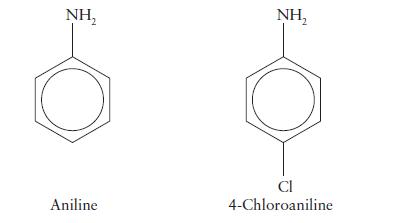
The value of pKb for aniline is 9.37 and that for 4-chloroaniline is 9.85. Which is the stronger base? Account for the difference in strength. NH₂ O Aniline NH₂ CI 4-Chloroaniline
Write the chemical equations of the two proton transfer equilibria that demonstrate the amphiprotic character of(a) H2PO3 –;(b) NH3. Identify the conjugate acid–base pairs in each case.
Suppose that 0.483 g of an unknown weak acid, HA, is dissolved in water. Titration of the solution with 0.250 m NaOH(aq) required 42.0 mL to reach the stoichiometric point. After the addition of 21.0 mL, the pH of the solution was found to be 3.75.(a) What is the molar mass of the acid?(b) What
Suppose that each of the following pairs of redox couples is combined to form a galvanic cell that generates a current under standard conditions. Identify the oxidizing agent and the reducing agent, write a cell diagram, and calculate the standard cell potential from the standard potentials of the
(a) The standard potential of the reduction of Ag2CrO4 to Ag(s) and chromate ions is 10.446 V. Write the balanced halfreaction for the reduction of silver chromate.(b) Using the data from part(a) and Appendix 2B, calculate the solubility product of Ag2CrO4(s). 2B STANDARD POTENTIALS AT 25
Calculate the molar concentrations of H2SO3, HSO3–, SO3 2–, H3O+, and OH– present in 0.170 m Na2SO3(aq).
A buffer solution of volume 100.0 mL is 0.140 m Na2HPO4(aq) and 0.120 m KH2PO4(aq).(a) What are the pH and the pH change resulting from the addition of 75.0 mL of 0.0100 m NaOH(aq) to the buffer solution?(b) What are the pH and the pH change resulting from the addition of 10.0 mL of 0.50 m
For the exercise in this topic, base your answers on the potentials listed in Table 6M.1 or Appendix 2B, with the exception of the reduction and oxidation of water at pH = 7:Copper from 200.0 mL of a solution of copper(II) sulfate is plated on to the cathode of an electrolytic cell.(a) Hydronium
Consider the two equilibria(a) Write the chemical equation for the overall equilibrium and calculate the corresponding equilibrium constant. (b) Estimate the solubility of CaF2 at (i) pH = 7.0; (ii) pH = 3.0. CaF₂ (s) Ca²(aq) + 2 F¯(aq) F (aq) + H₂O(1)— Kp= 4.0 X 10⁻¹ HF(aq) +
Decide whether an aqueous solution of each of the following salts has a pH equal to, greater than, or less than 7. If pH > 7 or pH < 7, write a chemical equation to justify your answer.(a) K2C2O4, potassium oxalate;(b) Ca(NO3)2;(c) CH3NH3Cl, methylamine
Arrange the following bases in order of increasing strength on the basis of the pKa values of their conjugate acids, which are given in parentheses:(a) Ammonia (9.26);(b) Methylamine (10.56);(c) Ethylamine (10.81);(d) Aniline (4.63; see Exercise 6C.12). Is there a simple pattern of
The pH of 0.40 m HF(aq) is 1.93. Calculate the change in pH when 0.356 g of sodium fluoride is added to 50.0 mL of the solution. Ignore any change in volume.
Draw the Lewis structure of boric acid, B(OH)3.(a) Is resonance important for its description?(b) The proton transfer equilibrium for boric acid is given in a footnote to Table 6C.1. In that reaction does boric acid act as a Lewis acid, a Lewis base, or neither?Justify your answer by using Lewis
Draw the Lewis structure or symbol for each of the following species and identify each one as a Lewis acid or Lewis base: (a) NH3; (b) BF3; (c) Ag¹; (d) F¯; (e) H™.
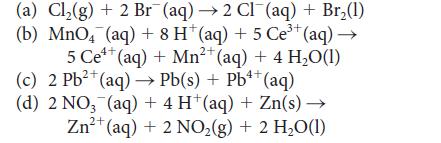
Identify the reactions with K > 1 in the following list and, for each such reaction, identify the oxidizing agent and calculate the standard cell potential. (a) Cl₂(g) + 2 Br (aq) →2 Cl¯(aq) + Br₂(1) 3+ (b) MnO4 (aq) + 8 H* (aq) + 5 Ce³+ (aq) →→ 4+ 2+ 5 Ce¹+ (aq) + Mn²+ (aq) + 4
Suppose that 25.0 mL of 0.10 m CH3COOH(aq) is titrated with 0.10 m NaOH(aq).(a) What is the initial pH of the 0.10 m CH3COOH(aq) solution?(b) What is the pH after the addition of 10.0 mL of 0.10 m NaOH(aq)?(c) What volume of 0.10 m NaOH(aq) is required to reach half way to the stoichiometric
A large volume of 0.150 m H2SO3(aq) is treated with a strong base to adjust the pH to 5.50. Assume that the addition of the base, a solid, does not significantly affect the volume of the solution. Estimate the molar concentrations of H2SO3, HSO3–, and SO32– present in the final solution.
Calculate the reaction quotient, Q, for the following cell reactions, given the measured values of the cell potential. Balance the chemical equations by using the smallest whole-number coefficients. 4+ (a) Pt(s) Sn¹+ (aq),Sn²+ (aq)||Pb¹+ (aq),Pb²+(aq) |C(gr), Ecell +1.33 V. (b) Pt(s) O₂(g)
For the exercise in this topic, base your answers on the potentials listed in Table 6M.1 or Appendix 2B, with the exception of the reduction and oxidation of water at pH = 7:Thomas Edison was faced with the problem of measuring the electricity that each of his customers had used. His first solution
Consider the two equilibria(a) Write the chemical equation for the overall equilibrium and calculate the corresponding equilibrium constant. (b) Estimate the solubility of BaF2 at (i) pH = 7.0; (ii) pH = 5.0. Ba2+ (aq) + 2 F (aq) BaF (s) F (aq) + H0 (1) Ksp = 1.7 X 10⁻⁶ HF(aq) + OH(aq) Kb 2.9 X
Rank the following solutions in order of increasing pH:(a) 1.0 * 10–5 m HCl(aq);(b) 0.20 m CH3NH3Cl(aq);(c) 0.20 m CH3COOH(aq);(d) 0.20 m C6H5NH2(aq). Justify your ranking.
Topic 6C discusses the relationship between molecular structure and the strengths of acids. The same ideas can be applied to bases.(a) Explain the relative strengths of the Brønsted bases OH–, NH2 –, and CH3 – (see Table 6C.3).(b) Explain why NH3 is a weak base in water, but PH3 forms
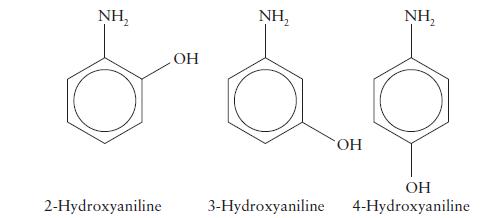
Arrange the following bases in order of increasing strength on the basis of the pKa values of their conjugate acids, which are given in parentheses:(a) Aniline (4.63; see Exercise 6C.12);(b) 2-hydroxyaniline (4.72);(c) 3-hydroxyaniline (4.17);(d) 4-hydroxyaniline (5.47). Is there a simple
Draw the Lewis structure or symbol for each of the following species and identify each one as a Lewis acid or Lewis base: (a) SO; (b) I; (c) CH3S (the C atom is the central atom); (d) NH; (e) NO.
Identify the reactions with K > 1 among the following reactions and, for each such reaction, write balanced reduction and oxidation half-reactions. For those reactions, show that K > 1 by calculating the standard Gibbs free energy of the reaction. Use the smallest whole-number coefficients to
Suppose that 30.0 mL of 0.12 m C6H5COOH(aq) is titrated with 0.20 m KOH(aq).(a) What is the initial pH of the 0.20 m C6H5COOH(aq)?(b) What is the pH after the addition of 5.00 mL of 0.20 m KOH(aq)?(c) What volume of 0.20 m KOH(aq) is required to reach half way to the stoichiometric point? (d)
A large volume of 0.250 m H2S(aq) is treated with a strong base to adjust the pH to 9.35. Assume that the addition of the base, a solid, does not significantly affect the volume of the solution.Estimate the molar concentrations of H2S, HS2, and S2– present in the final solution.
Calculate the reaction quotient, Q, for the following cell reactions, given the measured values of the cell potential. Balance the chemical equations by using the smallest whole-number coefficients. (a) Ag(s) Ag+ (aq)||CIO4(aq),H+ (aq), CIO, (aq) |Pt(s), Ecell = +0.40 V. (b) C(gr) Cl₂(g)
The pH of 0.50 m HBrO(aq) is 4.50. Calculate the change in pH when 5.10 g of sodium hypobromite is added to 100. mL of the solution. Ignore any change in volume.
For the exercise in this topic, base your answers on the potentials listed in Table 6M.1 or Appendix 2B, with the exception of the reduction and oxidation of water at pH = 7:Suppose that 2.69 g of a silver salt (AgX) is dissolved in 550 mL of water. With a current of 3.5 A, 395.0 s was needed to
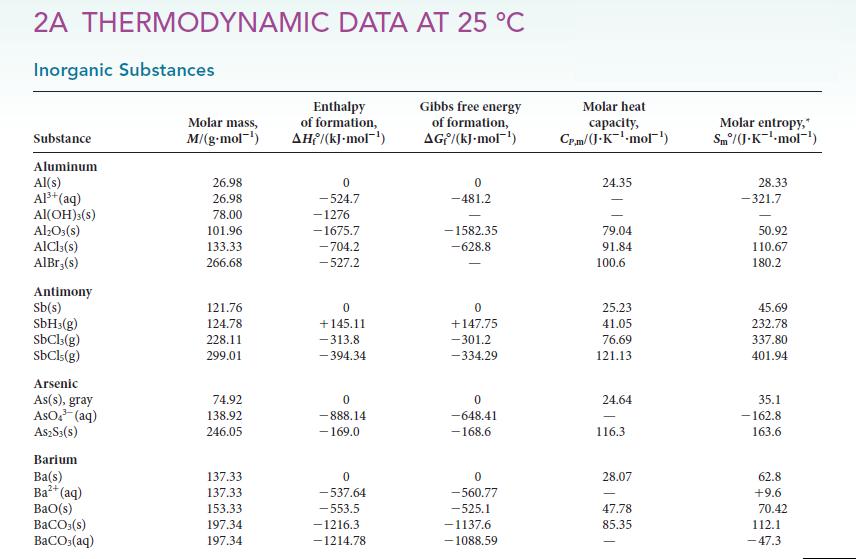
Use the thermodynamic data in Appendix 2A to calculate the acidity constant of HF(aq). 2A THERMODYNAMIC DATA AT 25 °C Inorganic Substances Substance Aluminum Al(s) Al³+ (aq) AI(OH)3(s) Al₂O3(s) AICI, (s) AlBr,(s) Antimony Sb(s) SbH3(g) SbCl3(g) SbCls(g) Arsenic As(s), gray AsO4³
Rank the following solutions in order of increasing pH:(a) 1.0 * 10–5 m NaOH(aq);(b) 0.20 m NaNO2(aq);(c) 0.20 m NH3(aq);(d) 0.20 m NaCN(aq). Justify your ranking.
For the exercise in this topic, base your answers on the potentials listed in Table 6M.1 or Appendix 2B, with the exception of the reduction and oxidation of water at pH = 7:Three electrolytic cells containing solutions of CuNO3, Sn(NO3)2, and Fe(NO3)3, respectively, are connected in series. A
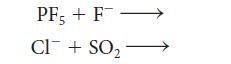
Draw the Lewis structure or symbol of each reactant, identify the Lewis acid and the Lewis base, and then draw the Lewis structure of the product (a complex) for the following Lewis acid–base reactions: PF, + F- CI+SO₂1
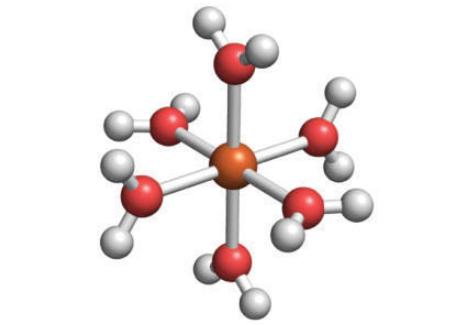
The structure below shows a hydrated d-metal ion. Draw the structure of the conjugate base of this complex.
The autoprotolysis constant, Khw, for heavy water, D2O, at 25°C is 1.35 * 10–15.(a) Write the chemical equation for the autoprotolysis (more precisely, the autodeuterolysis, because a deuteron is being transferred) of D2O. (b) Evaluate pKhw for D2O at 25°C.(c) Calculate the molar
The pKhw for the autodeuterolysis of heavy water, D2O (the analog of autoprotolysis, but involving the transfer of a deuteron), is 13.83 at 30.°C. Assuming ΔHr° for this reaction to be independent of temperature and using information from Exercise 6.17, calculate ΔSr° for the autodeuterolysis
Hemoglobin (Hb) molecules in blood carry O2 molecules from the lungs, where the concentration of oxygen is high, to the tissues where it is low (see the Interlude following Focus 5). In the tissues the equilibrium H3O+(aq) + HbO2– (aq) ⇌ HHb(aq) + H2O(l) + O2(aq) releases oxygen. When muscles
Is the osmotic pressure of 0.10 m H2SO4(aq) the same as, less than, or greater than that of 0.10 m HCl(aq)? Calculate the osmotic pressure of each solution to support your conclusion.
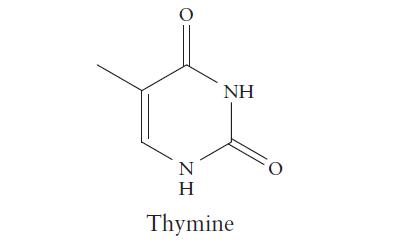
The two strands of the nucleic acid DNA are held together by hydrogen bonding between four organic bases. The structure of one of these bases, thymine, is shown below.(a) How many protons can this base accept?(b) Draw the structure of each conjugate acid that can be formed.(c) Mark with an
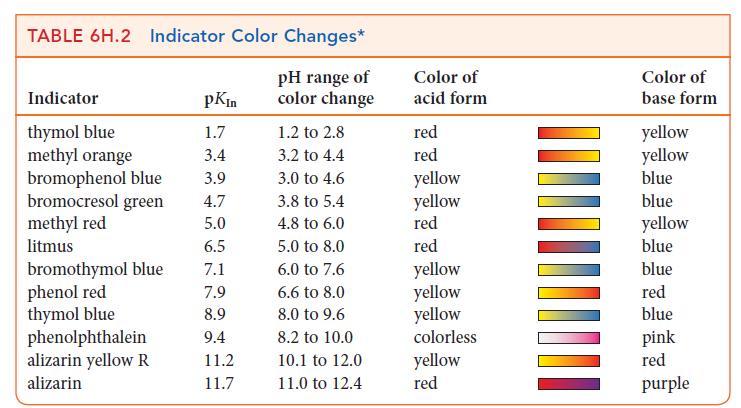
Which of the following indicators in Table 6H.2 could you use for a titration of 0.20 m CH3COOH(aq) with 0.20 m NaOH(aq):(a) Methyl orange;(b) Litmus;(c) Thymol blue;(d) Phenolphthalein?Explain your selections. TABLE 6H.2 Indicator Color Changes* pH range of color change Indicator thymol
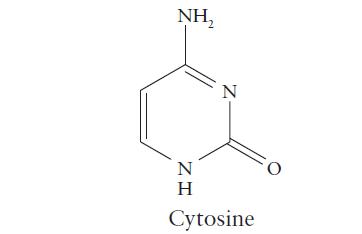
The two strands of the nucleic acid DNA are held together by hydrogen bonding between four organic bases. The structure of one of these bases, cytosine, is shown below.(a) How many protons can this base accept?(b) Draw the structure of each conjugate acid that can be formed.(c) Mark with an
A buffer solution containing equal amounts of acetic acid and sodium acetate is prepared. What molar concentration of the buffer must be prepared to prevent a change in the pH by more than 0.20 after the addition of 1.00 mL of 6.00 m HCl(aq) to 100.0 mL of the buffer solution?
You require 0.150 L of a buffer solution with pH = 3.00. On the shelf is a bottle of trichloracetic acid/sodium trichloracetate buffer with pH = 2.95. The label also says [trichloracetate ion]= 0.200 mol · L–1. What mass of which substance (trichloracetic acid or sodium trichloracetate) should
Malonic acid, HOOCCH2COOH, a diprotic acid with pKa1 = 2.8 and pKa2 = 5.7, is titrated with KOH(aq).(a) What is the pH when [HOOCCH2COOH] = [HOOCCH2CO2–]?(b) What is the pH when [HOOCCH2CO2–] = [–O2CCH2CO2–]?(c) Which is the predominant species at pH = 4.2?
A species that can accept two protons is classified as dibasic.The dibasic molecule 1,2-ethanediamine, H2NC2H4NH2, which has pKb1 = 3.19 and pKb2 = 6.44, is titrated with HCl(aq). (a) What is the pH when [H2NC2H4NH2] = [H2NC2H4NH3+]?(b) What is the pH when [H2NC2H4NH3+] =
A buffer solution is prepared by adding 55.0 mL of 0.15 m HNO3(aq) to 45.0 mL of 0.65 m NaC6H5CO2(aq). Determine the solubility of PbF2 in this buffer solution.
A sample of 0.150 m Na2CO3(aq) of volume 25.0 mL is titrated with 0.100 m HCl(aq). What is the pH of the solution at each stoichiometric point in the titration?
In a “precipitation titration,” the concentration of an ion is measured as it forms a precipitate. The concentration of CO32– ions in a sample of volume 25.0 mL was determined by titrating with 0.110 m AgNO3(aq). Before the stoichiometric point, the Ag+ ions react immediately with the CO3
What volume (in liters) of a saturated mercury(II) sulfide, HgS, solution contains an average of one mercury(II) ion, Hg2+?
Two friends go to an all-you-can eat restaurant but eat too much and get heartburn. Both return to their rooms and look for a remedy. One friend takes two tablets, each containing 750 mg CaCO3, and the second friend takes 3 teaspoons of milk of magnesia, which contains 400 mg MgO per teaspoon. What
Consider the equilibria(a) Write the chemical equation for the overall equilibrium and determine the corresponding equilibrium constant.(b) Evaluate the solubility of ZnS in a saturated H2S solution, 0.1 m H2S(aq), adjusted to pH = 7.0.(c) Evaluate the solubility of ZnS in a saturated H2S
Suppose that 0.122 g of phosphorous acid, H3PO3, is dissolved in water and that the total volume of the solution is 50.0 mL.(a) Estimate the pH of this solution.(b) Estimate the pH of the solution that results when 5.00 mL of 0.175 m NaOH(aq) is added to the phosphorous acid
Suppose that 0.242 g of oxalic acid, (COOH)2, is dissolved in 50.0 mL of water.(a) Estimate the pH of this solution.(b) Estimate the pH of the solution that results when 15.0 mL of 0.150 m NaOH(aq) is added to the oxalic acid solution.(c) Estimate the pH of the solution that results if an
Use data available in the tables and appendixes to calculate the standard Gibbs free energy of formation of PbF2(s).
Estimate the pH of the solution that results when each of the following solutions is added to 50.0 mL of 0.275 m Na2HPO4(aq):(a) 50.0 mL of 0.275 m HCl(aq);(b) 75.0 mL of 0.275 m HCl(aq);(c) 25.0 mL of 0.275 m HCl(aq).
Silver iodide is very insoluble in water. A common method for increasing its solubility is to increase the temperature of the solution containing the solid. Estimate the solubility of AgI at 85°C.
Estimate the pH of the solution that results when 75.0 mL of 0.0995 m Na2CO3(aq) is mixed with(a) 25.0 mL of 0.130 m HNO3(aq);(b) 65.0 mL of 0.130 m HNO3(aq
A buffer solution of volume 300.0 mL is 0.200 m CH3COOH(aq) and 0.300 m NaCH3CO2(aq).(a) What is the initial pH of this solution?(b) What mass of NaOH would have to be dissolved in this solution to bring the pH to 6.0?
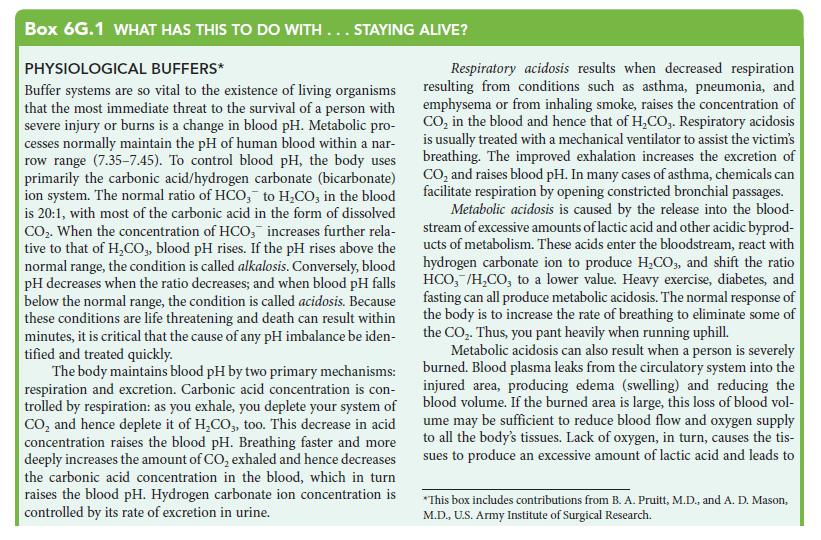
The main buffer in the blood consists primarily of hydrogen carbonate ions (HCO3–) and H3O+ ions in equilibrium with water and CO2:This reaction assumes that all H2CO3 produced decomposes completely to CO2 and H2O. Suppose that 1.0 L of blood is removed from the body and brought to pH =
The pH of the blood is maintained by a buffering system consisting primarily of hydrogen carbonate ion (HCO3–) and H3O+ in equilibrium with water and CO2:During exercise, CO2 is produced at a rapid rate in muscle tissue.(a) How does exercise affect the pH of blood?(b) Hyperventilation (rapid
A buffer solution of volume 250.0 mL is 0.300 m NH3(aq) and 0.400 m NH4Cl(aq).(a) What is the initial pH of this solution?(b) What volume of HCl gas at 2.00 atm and 25 °C would have to be dissolved in this solution to bring the pH to 8.0?
Novocaine, which is used by dentists as a local anesthetic, is a weak base with pKb = 5.05. Blood is buffered to pH = 7.4. What is the ratio of the concentration of novocaine to that of its conjugate acid in the bloodstream?
To simulate blood conditions, a phosphate buffer system with a pH = 7.40 is desired. What mass of Na2HPO4 must be added to 0.500 L of 0.10 m NaH2PO4(aq) to prepare such a buffer?
Fluoridation of city drinking water results in a fluoride ion concentration of approximately 5 = 10–5 mol · L–1. Suppose you are using a water filter that adds calcium to the water. Will CaF2 precipitate in water in which the Ca2+ ion concentration is 2 * 10–4 mol · L–1?
A solution is prepared by dissolving 1 mol each of Cu(NO3)2, Ni(NO3)2, and AgNO3 in 1 L of water. Using only data from Appendix 2B, identify the metals (if any) that, when added to these solutions,(a) Will leave the Ni2+ ions unaffected but will cause Cu and Ag to plate out of solution;(b) Will
Indicate for each of the following statements whether it applies to Ecell°, to Ecell, to both, or to neither:(a) Decreases as the cell reaction progresses;(b) Changes with temperature;(c) Doubles when the coefficients of the equation are doubled;(d) Can be calculated from K;(e) Is a measure of how
State how the oxidizing strength of each of the following oxidizing agents would be affected by raising the pH (stronger, weaker, or no change):(a) Br2;(b) MnO4 –;(c) NO3 –;(d) ClO4 –;(e) Cu2+. Justify your answers.
Using data in Appendix 2B, calculate the standard potential for the half-reaction Ti4+(aq) + 4 e– → Ti(s). 2B STANDARD POTENTIALS AT 25 C Potentials in Electrochemical Order Reduction half-reaction Strongly oxidizing H4XeO6 + 2 H+ 2 e XeO3 + 3 HO F2 e 2 F- O3 + 2 H+ 2 e 0 + HO SO8 +2e 2 SO4-
Arrange the following metals in order of increasing strength as reducing agents: U, V, Ti, Ni, Sn, Cr, Rb.
Ksp for Cu(IO3)2 is 1.4 * 10–7. Using this value and data in Appendix 2B, calculate E° for the half-reaction Cu(IO3)2(s) + 2 e– → Cu(s) + 2 IO3 –(aq). 2B STANDARD POTENTIALS AT 25 °C Potentials in Electrochemical Order Reduction half-reaction Strongly oxidizing H4XeO6+ 2 H+2 e → XeO3 +
A galvanic cell has the following cell reaction: M(s) + 2 Zn2+(aq) → 2 Zn(s) + M4+(aq). The standard potential of the cell is 10.16 V. What is the standard potential of the M4+/M redox couple?
Ksp for Ni(OH)2 is 6.5 * 10–18. Use this value and data from Appendix 2B to calculate E° for the half-reaction Ni(OH)2(s) + 2 e– → Ni(s) + 2 OH–(aq). 2B STANDARD POTENTIALS AT 25 °C Potentials in Electrochemical Order Reduction half-reaction Strongly oxidizing H4XeO6 + 2 H+ 2 e XeO3 + 3
Showing 1200 - 1300
of 3011
First
6
7
8
9
10
11
12
13
14
15
16
17
18
19
20
Last
Step by Step Answers

 Get 50% OFF
Claim Now
Get 50% OFF
Claim Now