New Semester
Started
Get
50% OFF
Study Help!
--h --m --s
Claim Now
Question Answers
Textbooks
Find textbooks, questions and answers
Oops, something went wrong!
Change your search query and then try again
S
Books
FREE
Study Help
Expert Questions
Accounting
General Management
Mathematics
Finance
Organizational Behaviour
Law
Physics
Operating System
Management Leadership
Sociology
Programming
Marketing
Database
Computer Network
Economics
Textbooks Solutions
Accounting
Managerial Accounting
Management Leadership
Cost Accounting
Statistics
Business Law
Corporate Finance
Finance
Economics
Auditing
Tutors
Online Tutors
Find a Tutor
Hire a Tutor
Become a Tutor
AI Tutor
AI Study Planner
NEW
Sell Books
Search
Search
Sign In
Register
study help
sciences
chemical principles
Chemical Principles The Quest For Insight 7th Edition Peter Atkins, Loretta Jones, Leroy Laverman - Solutions
A colleague has been doing an experiment in which it was important to know the mole fractions of the components of a solution. You want to use the same solution, but you have in mind an experiment in which it is necessary to know the molality of the solute. What is the molality of benzene, C6H6,
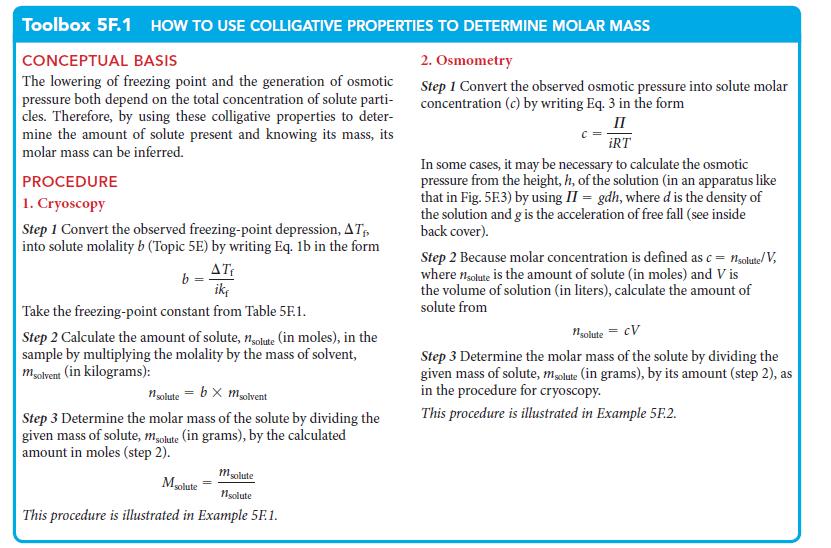
A solution consisting of a molecular substance of mass 1.14 g dissolved in 100. g of camphor freezes at 176.9°C. What is the molar mass of the substance?
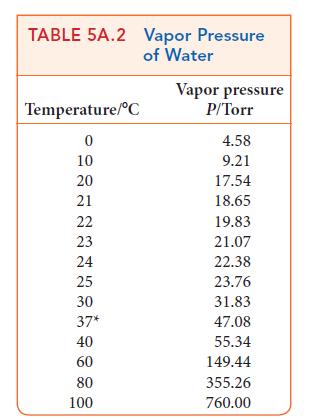
You are a chemical engineer at a processing plant for soft drinks. You have been asked to determine whether a particular solution will have a significantly different vapor pressure from pure water. Calculate the vapor pressure of water at 20°C in a solution prepared by dissolving 10.00 g of
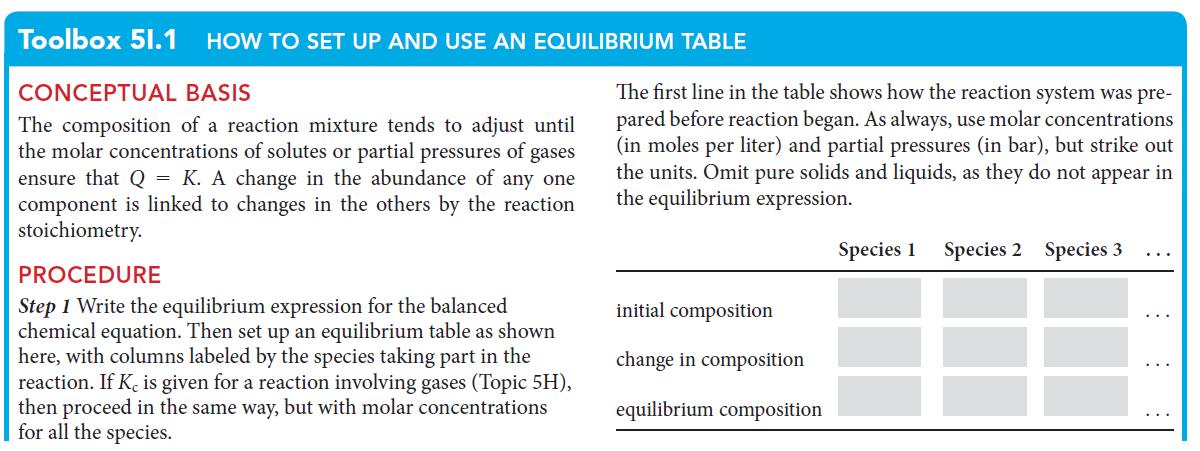
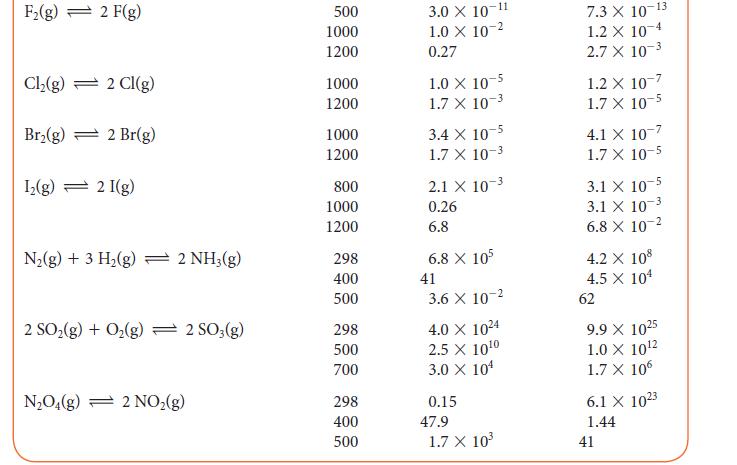
Hydrogen chloride, HCl, can be manufactured commercially by reacting H2 and Cl2 in a graphite-lined furnace. Suppose you are a chemical engineer working with this reaction. You will need to know the expected equilibrium composition in order to control the reaction. In an equilibrium mixture of HCl,
Consider the equilibrium CH4(g) + 4 I2(s) ⇌ CI4(g)+ 4 HI(g). (a) If the partial pressure of CH4 is increased, what happens to the partial pressure of CI4? (b) If the partial pressure of CI4 is decreased, what happens to the amount of I2? (c) If the concentration of HI is increased, what
When sodium chloride dissolves in water, can a chloride ion be removed from the crystal by one water molecule, or are several required to remove it? Explain your answer.
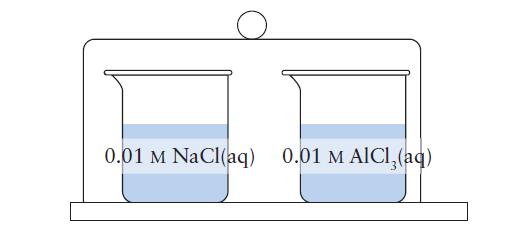
Two beakers, one containing 0.010 m NaCl(aq) and the other containing 0.010 m AlCl3(aq), are placed inside a bell jar and sealed. The beakers are left until the water vapor has come to equilibrium with any liquid in the container. The levels of the liquid in each beaker at the beginning of the
The oxidation of SO2 to SO3 is one of the reactions involved in the formation of acid rain. If you want to predict the spontaneous direction of the reaction for a specific mixture of the gases, you need to calculate the reaction quotient under those conditions. The standard Gibbs free energy of
Determine whether the following statements are true or false. If false, explain why.(a) In an equilibrium reaction, the reverse reaction begins only when all reactants have been converted to products.(b) The equilibrium concentrations will be the same whether one starts with pure reactants or
The equilibrium constant for the reaction PCl3(g) + Cl2(g) ⇌ PCl5(g) is K = 3.5 * 104 at 760°C. At equilibrium, the partial pressure of PCl5 was 2.4 * 102 bar and that of PCl3 was 8.32 bar. What was the equilibrium partial pressure of Cl2?
Suppose you are designing a chemical plant that is providing phosphorus compounds to other industries and you need to explore the equilibrium properties for the reaction of PCl5(g) ⇌ PCl3(g) + Cl2(g). The reaction has reached equilibrium at 250 °C (the equilibrium partial pressures of the
Which would be the better solvent, water or tetrachloromethane, for each of the following substances:(a) NH3;(b) HNO3;(c) N2?
Calculate(a) The molality of KOH in a solution prepared from 3.12 g of KOH and 67.0 g of water;(b) The mass (in grams) of ethylene glycol, HOC2H4OH, that should be added to 0.74 kg of water to prepare 0.28 m HOC2H4OH(aq);(c) The molality of an aqueous 3.68% by mass HCl solution.
Osmometry has been widely used in the polymer industry because it is a sensitive technique for determining the huge molar masses of polymer molecules. Now imagine that you are a polymer chemist; you have devised a new way to make polyethylene and wish to know the molar mass of your new material.
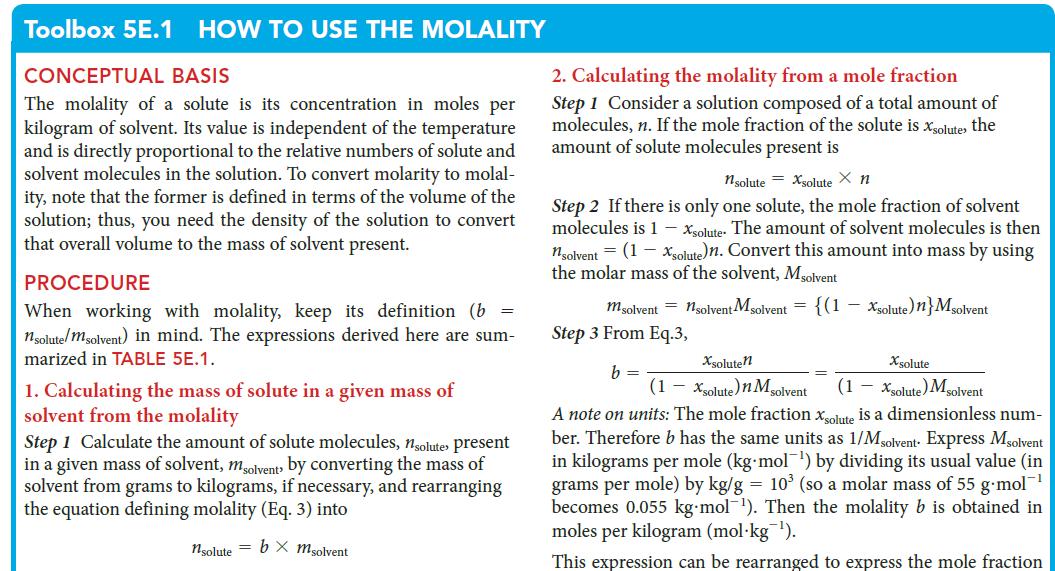
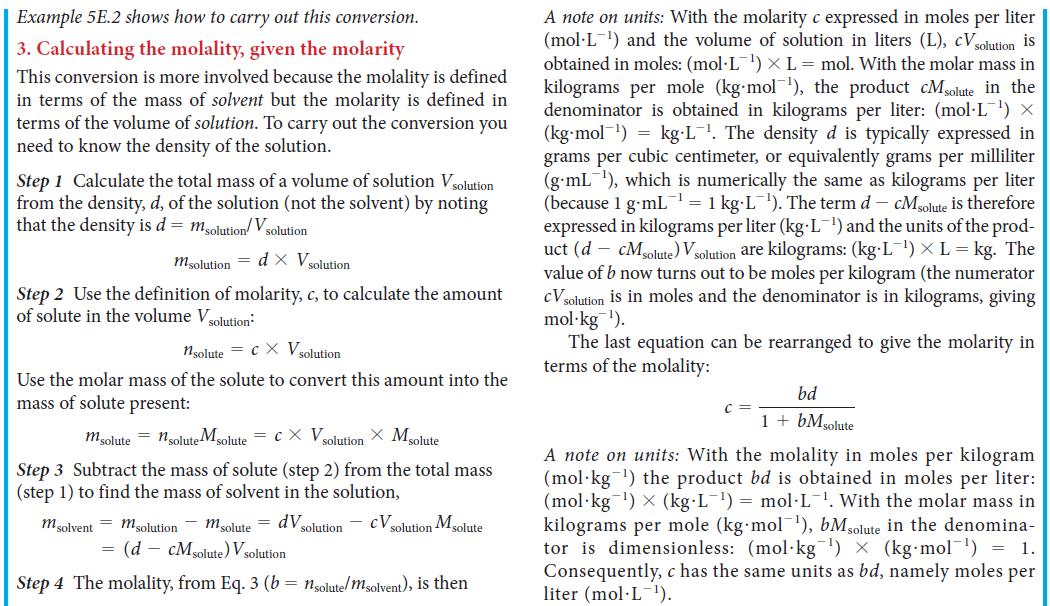
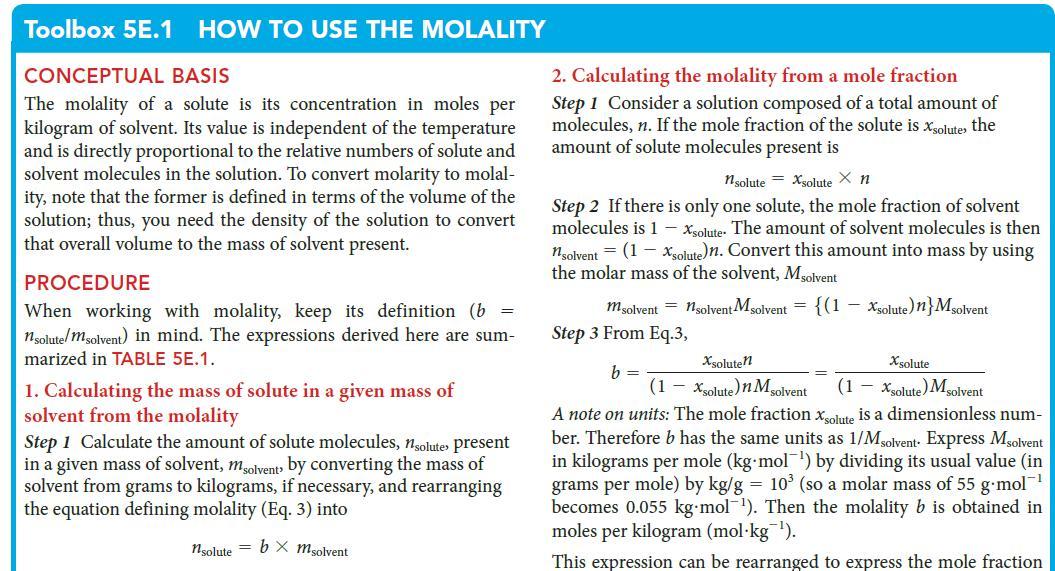
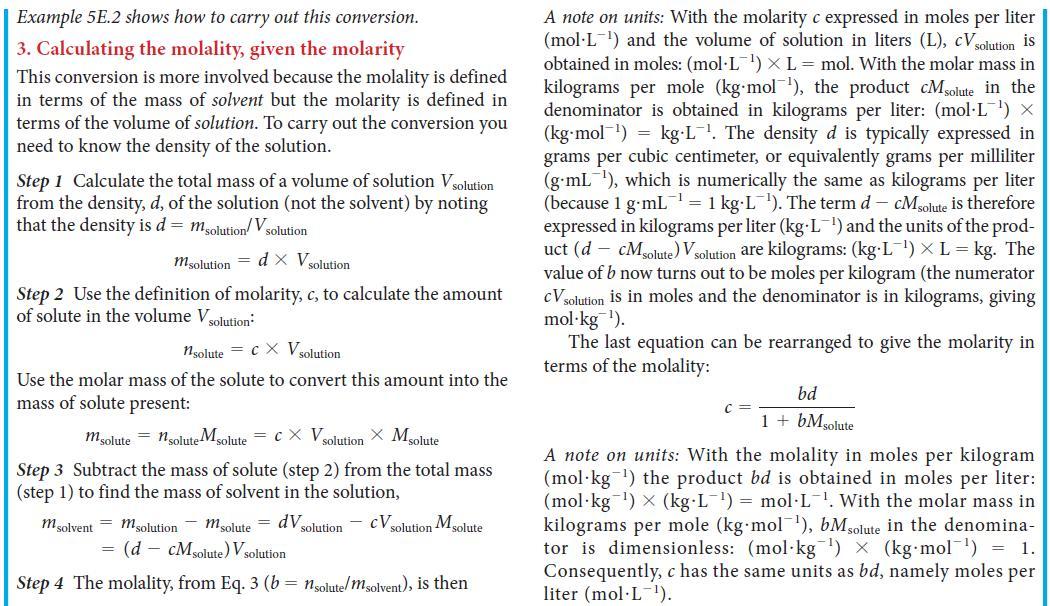
You have made up a solution of known molarity but now realize that you need to know the molality instead. Find the molality of sucrose, C12H22O11, in 1.06 m C12H22O11(aq), which is known to have density 1.140 g · mL–1.ANTICIPATE The mass of 1 L of aqueous solution is close to 1 kg, so the
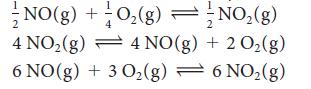
The equilibrium constant for the reaction 2 NO(g) + O2(g) ⇌ 2 NO2(g) is K = 2.5 * 1010 at 500. K. Find the value of K for each of the following reactions at the same temperature. = NO(g) + O₂(g) NO₂(g) 4 NO(g) + 2 O₂(g) 4 NO₂(g) 6 NO(g) + 3 0₂(g) = 6 NO₂(g)
Which do you expect to have the higher vapor pressure at room temperature, octane, C8H18, or butane, C4H10? Why?
When 1.78 g of a nonpolar solute was dissolved in 60.0 g of phenol, the latter’s freezing point was lowered by 1.362°C.Calculate the molar mass of the solute.
When you are designing a chemical plant, it is vitally important to know the pressures that will be encountered in reaction chambers and transfer piping. In some cases, that involves knowing the vapor pressures of the liquids present. What is the vapor pressure of each component at 25°C and the
Suppose you are a chemical engineer working in a plant that produces hydrogen iodide and are exploring the efficiency of the production process. If you know the value of K, for any given composition you can predict in which direction the reaction has a tendency to go. A mixture of hydrogen and
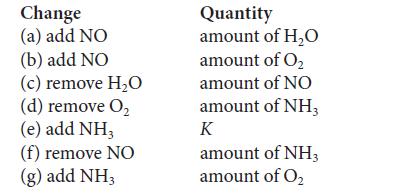
The four gases NH3, O2, NO, and H2O are mixed in a reaction vessel and allowed to reach equilibrium in the reaction 4 NH3(g) + 5 O2(g) ⇌ 4 NO(g) + 6 H2O(g). Certain changes (see the following table) are then made to this mixture. Considering each change separately, state the effect (increase,
You are now a chemical engineer in the process of designing a plant to separate hydrocarbons obtained from crude oil. You need to keep track of the composition of the mixtures you are dealing with, both the vapors and the liquids. Find the mole fraction of benzene at 25°C in the vapor of a
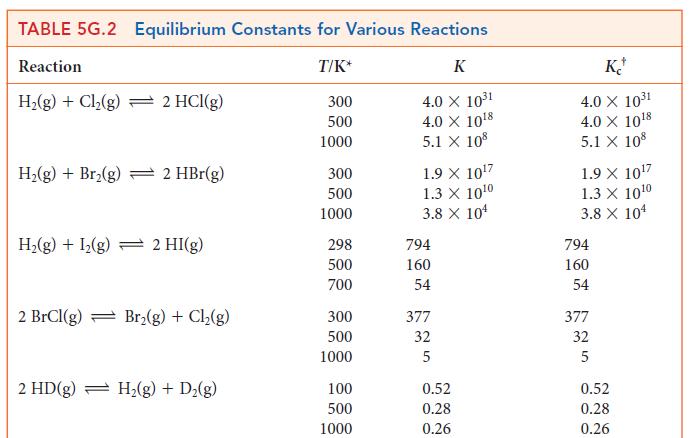
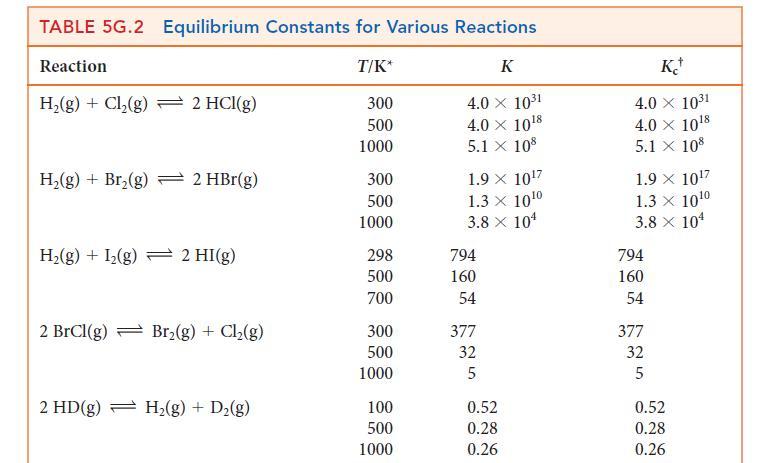
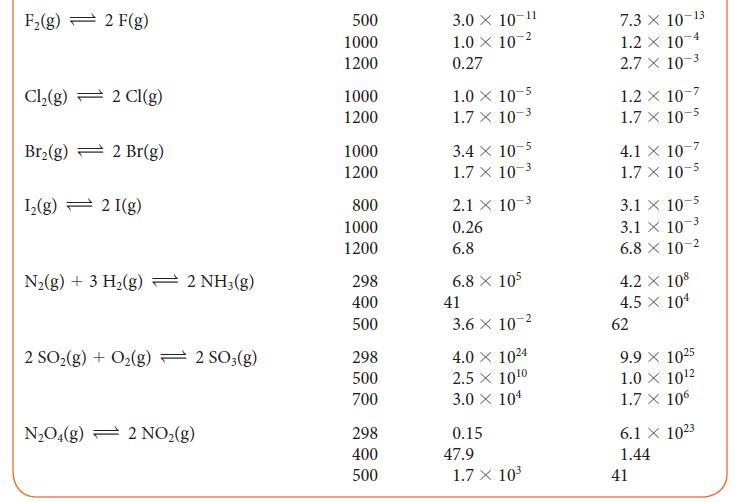
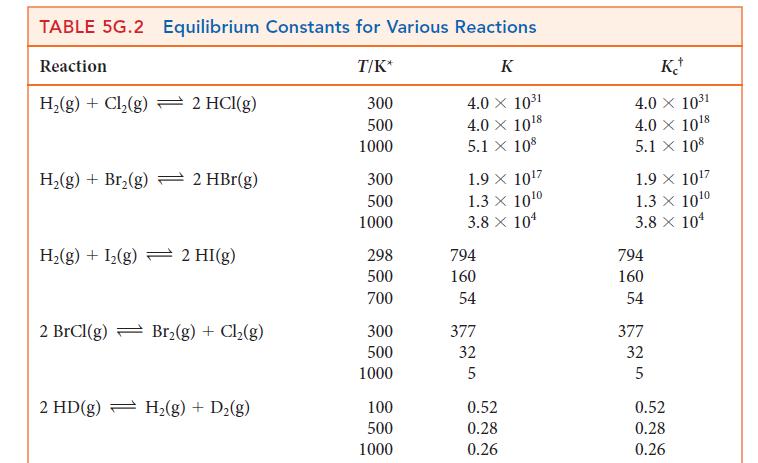
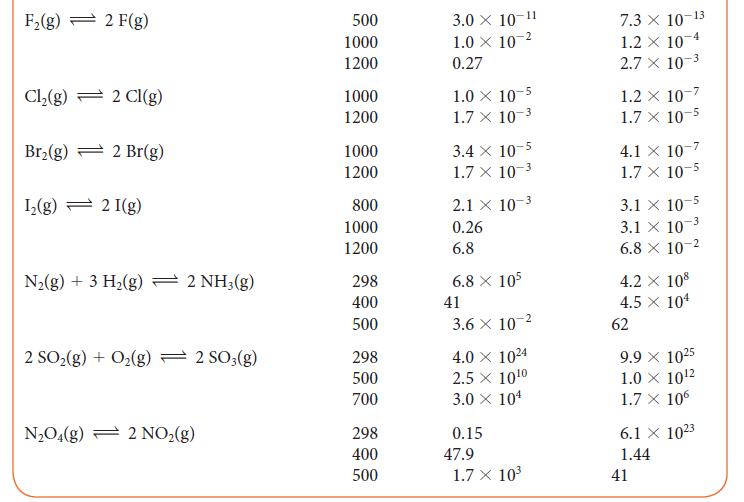
In a gas-phase equilibrium mixture of H2, I2, and HI at 500. K, [HI] = 2.21 * 10–3 mol · L–1 and [I2] = 1.46 * 10–3 mol · L–1. Given the value of the equilibrium constant in Table 5G.2, calculate the equilibrium molar concentration of H2. TABLE 5G.2 Equilibrium Constants for Various
Hydrogen iodide, HI, is used as a reagent in organic chemistry to transform primary alcohols into alkyl iodides. Suppose you are a chemist using HI; you would need to understand the equilibrium behavior of HI to maximize your yield of products. At 25.00°C, the standard Gibbs free energy of
Complete the following statements about the effect of intermolecular forces on the physical properties of a substance.(a) The higher the boiling point of a liquid, the (stronger, weaker) are its intermolecular forces.(b) Substances with strong intermolecular forces have (high, low) vapor
Write the expression for K for each of the following reactions: (a) 2 C₂H4 (g) + O₂(g) +4 HCl(g) — 2 C₂H4Cl₂(g) + 2 H₂O(g) (b) 4 NH3(g) + 6 NO(g) = 7 N₂(g) + 6 H₂O(g)
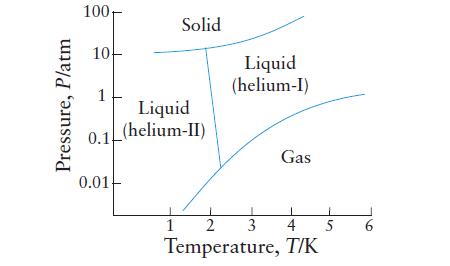
The phase diagram for helium is shown here.(a) What is the maximum temperature at which superfluid helium-II can exist?(b) What is the minimum pressure at which solid helium can exist?(c) What is the normal boiling point of helium-I?(d) Can solid helium sublime? Pressure,
The following groups are found in some organic molecules.Which are hydrophilic and which are hydrophobic:(a) —NH2;(b) —CH3;(c) —Br;(d) —COOH?
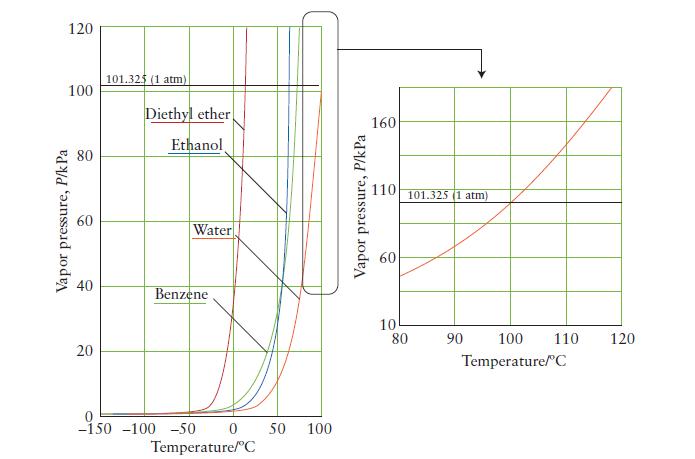
Use the vapor-pressure curve in Fig. 5A.3 to estimate the boiling point of water when the atmospheric pressure is(a) 60. kPa;(b) 160. kPa.FIGURE 5A.3 120 100 Vapor pressure, P/k Pa 40 20 101.325 (1 atm) Diethyl ether Ethanol Water Benzene -1.50 -150 -100 -50 0 50 100 Temperature/C Vapor pressure,
Use the information in Table 5G.2 to determine the value of K at 300 K for the reaction 2 BrCl (g) + H2(g) ⇌ Br2(g) + 2 HCl(g). TABLE 5G.2 Equilibrium Constants for Various Reactions Reaction H₂(g) + Cl₂(g) 2 HCl(g) H₂(g) + Br₂(g) → 2 HBr(g) H₂(g) + I₂(g) 2 HI(g) 2 BrCl(g) Br₂(g)
What is the molality of ethylene glycol, C2H6O2, in an aqueous solution used for antifreeze, given that the mole fraction of ethylene glycol is 0.250?
Nitrogen tetroxide, N2O4, is a rocket propellant that can be prepared by the dimerization of nitrogen dioxide, NO2. If you were a chemical engineer producing N2O4, you would need to know whether to use a high or a low pressure for the synthesis. Predict the effect of compression on the equilibrium
Dinitrogen oxide, N2O, colloquially called “laughing gas,” was first used as an anesthetic in dentistry in 1844. Suppose that you are a chemist attempting to prepare N2O from N2 and O2; you might want to know the expected equilibrium composition. You plan to transfer a mixture of 0.482 mol N2
Phosphorus pentachloride, PCl5, is used to convert alcohols (such as CH3CH2OH) to alkyl chlorides (such as CH3CH2Cl). If you were an industrial chemist, you might be asked to prepare some PCl5 by the reaction of PCl3 and Cl2. At elevated temperatures, however, PCl5 decomposes to these starting
The freezing point of a 1.00% by mass NaCl(aq) is 20.593°C.(a) Estimate the van ’t Hoff i factor from the data.(b) Determine the total molality of all solute species.(c) Calculate the percentage dissociation of NaCl in this solution. (The molality calculated from the freezing-point depression
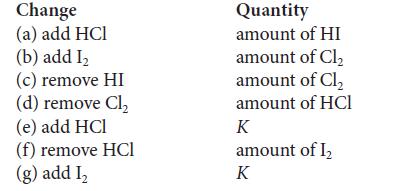
The four substances HCl, I2, HI, and Cl2 are mixed in a reaction vessel and allowed to reach equilibrium in the reaction 2 HCl(g) + I2(s) ⇌ 2 HI(g) + Cl2(g). Certain changes (which are specified in the first column in the following table) are then made to this mixture. Considering each change
The freezing point of a 1.00% by mass MgSO4(aq) solution is 20.192°C.(a) Estimate the van ’t Hoff i factor from the data.(b) Determine the total molality of all solute species.(c) Calculate the percentage dissociation of MgSO4 in this solution.
Write the expression for K for each of the following reactions: (a) Br₂(g) + 3 F₂ (g) 3 (b) 4 NH3(g) + 3 O₂(g) F₂ (g) 2 BrF3(g) 2 N₂(g) + 6H₂O(g)
Hydrogen peroxide, H2O2, is a syrupy liquid with a vapor pressure lower than that of water and a boiling point of 152°C. Account for the differences between these properties and those of water.
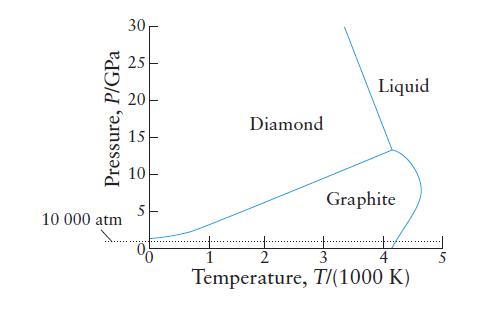
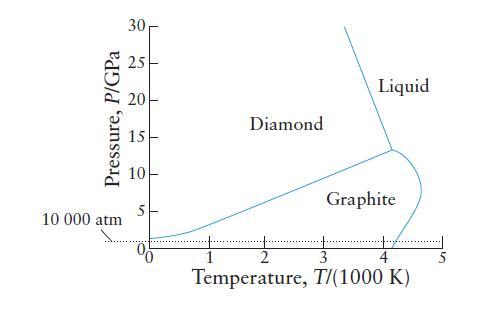
The phase diagram for carbon, shown here, indicates the extreme conditions that are needed to form diamonds from graphite.(a) At 2000 K, what is the minimum pressure needed before graphite changes into diamond?(b) What is the minimum temperature at which liquid carbon can exist at pressures below
Use the vapor-pressure curve in Fig. 5A.3 to estimate the boiling point of benzene when the atmospheric pressure is(a) 50. kPa;(b) 80. kPa.FIGURE 5A.3 120 100 Vapor pressure, P/k Pa 40 20 101.325 (1 atm) Diethyl ether Ethanol Water Benzene -1.50 -150 -100 -50 0 50 100 Temperature/C Vapor
One step in the manufacture of sulfuric acid is the formation of sulfur trioxide by the combustion of SO2 with O2 in the presence of a vanadium(V) oxide catalyst. Suppose you are working out how to increase the equilibrium composition of sulfur trioxide. Predict how the equilibrium composition for
Use the information in Table 5G.2 to determine the value of K at 500 K for the reaction 2 NH3(g) + 3 I2(g) ⇌ N2(g) + 6 HI(g). TABLE 5G.2 Equilibrium Constants for Various Reactions Reaction H₂(g) + Cl₂(g) 2 HCl(g) H₂(g) + Br₂(g) → 2 HBr(g) H₂(g) + I₂(g) 2 HI(g) 2 BrCl(g) Br₂(g) +
Two unknown molecular compounds were being studied. A solution containing 5.00 g of compound A in 100. g of water froze at a lower temperature than a solution containing 5.00 g of compound B in 100. g of water. Which compound has the greater molar mass? Explain how you arrived at your answer.
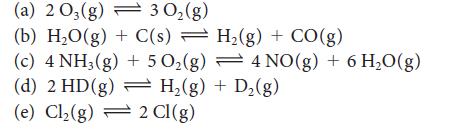
State whether reactants or products will be favored by an increase in the total pressure (resulting from compression) on each of the following equilibria. If there is no change, explain why that is so. (a) 203(g) (b) H₂O(g) + C(s) (c) 4 NH3(g) + 5 O₂(g) (d) 2 HD (g) (e)
Explain the effect that an increase in temperature has on each of the following properties:(a) Viscosity;(b) Surface tension;(c) Vapor pressure;(d) Evaporation rate.
The vapor pressure of benzene, C6H6, is 94.6 Torr at 25 8C. A nonvolatile compound was added to 0.300 mol C6H6(l) at 25°C and the vapor pressure of the benzene in the solution decreased to 75.0 Torr. What amount (in moles) of solute molecules was added to the benzene?
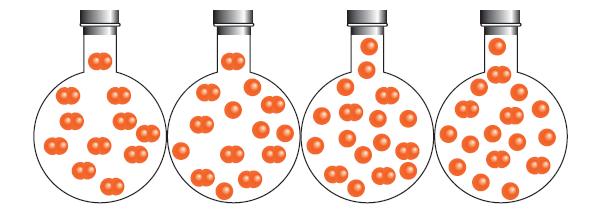
The following flasks show the dissociation of a diatomic molecule, X2, over time.(a) Which flask represents the point in time at which the reaction has reached equilibrium?(b) What percentage of the X2 molecules has decomposed at equilibrium?(c) Assuming that the initial pressure of X2 was 0.10
Use the phase diagram for helium in Exercise 5B.3(a) To describe the phases in equilibrium at each of helium’s two triple points;(b) To decide which liquid phase is the more dense, helium-I or helium-II.Exercise 5B.3The phase diagram for helium is shown here. Pressure,
In a gas-phase equilibrium mixture of PCl5, PCl3, and Cl2 at 500. K, PPCl5 = 1.18 bar, PCl2 = 5.43 bar. What is the partial pressure of PCl3, given that K = 25 for the reaction PCl5(g) ⇌ PCl3(g) 1 Cl2(g)?
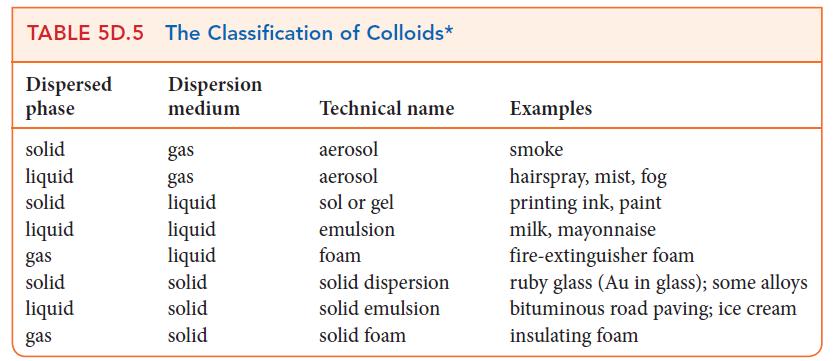
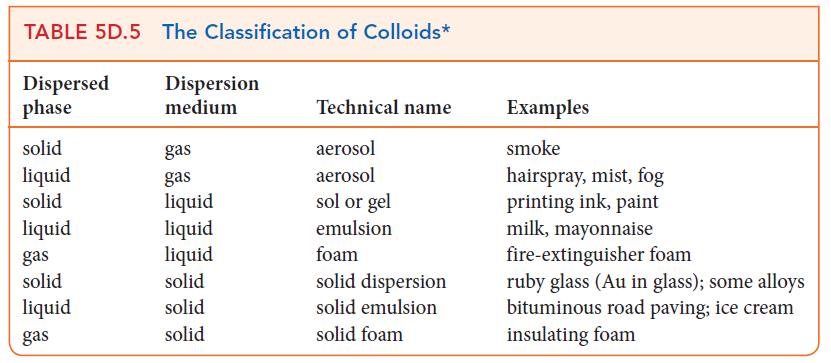
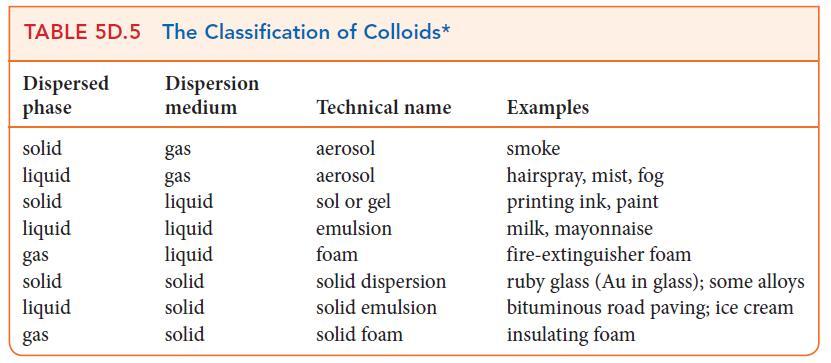
State the molar solubility in water of(a) O2 at 50. kPa; (b) CO2 at 500. Torr;(c) CO2 at 0.10 atm. The temperature in each case is 20°C, and the pressures are partial pressures of the gases.Use the information in Table 5D.2. TABLE 5D.5 The Classification of
Most reactions proceed faster at higher temperatures, and many industrial processes are carried out at high temperatures. However, for exothermic reactions increasing the temperature reduces the equilibrium constant and thus the reaction yield. Suppose you are studying how to increase the yield of
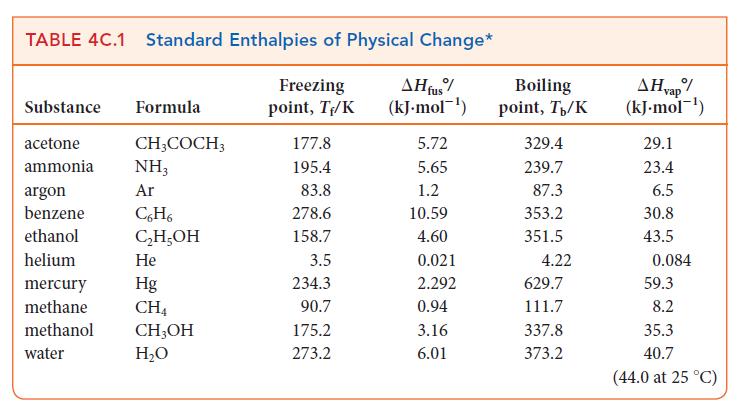
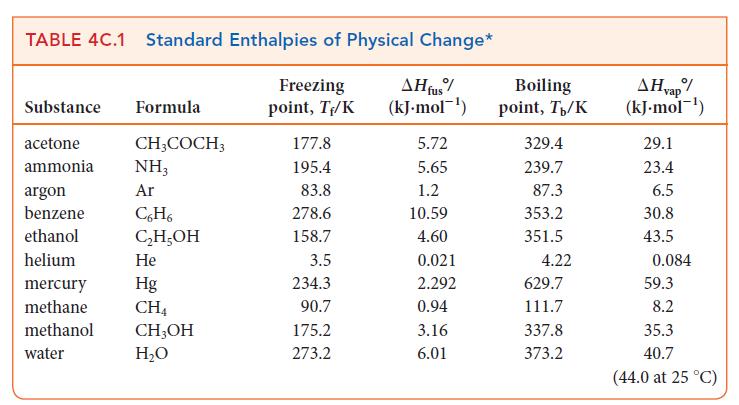
Use data from Table 4C.1 to calculate the vapor pressure of methanol at 25.0 °C. TABLE 4C.1 Standard Enthalpies of Physical Change* Freezing AH fus% (kJ.mol-¹) point, T₁/K Substance
The density of a 5.00% by mass K3PO4 aqueous solution is 1.043 g · cm–3. Determine(a) The molality;(b) The molarity of potassium phosphate in the solution.
Evaluate Kc for each of the following equilibria from the value of K: (a) 2 NOCI(g) (b) CaCO3(s) 2 NO(g) + Cl₂(g), K = 1.8 × 10-² at 500 K CaO(s) + CO₂(g), K = 167 at 1073 K
State what happens to the concentration of the indicated substance when the total pressure on each of the following equilibria is increased (by compression): (a) NO₂(g) in 2 Pb (NO3)2(s) 2 PbO (s) + 4 NO₂ (g) + O₂(g) 2 HNO3(aq) + NO(g) (b) NO(g) in 3 NO₂(g) + H₂O(1)
Two unknown compounds were being studied. Compound C is molecular and compound D is an ionic compound known to dissociate into ions completely in dilute aqueous solutions. A solution containing 0.30 g of compound C in 100. g of water froze at the same temperature as a solution containing 0.30 g of
Explain how the vapor pressure of a liquid is affected by each of the following changes in conditions:(a) An increase in temperature;(b) An increase in surface area of the liquid;(c) An increase in volume above the liquid;(d) The addition of air to the volume above the liquid.
The vapor pressure of benzene is 100.0 Torr at 26 °C. A nonvolatile compound was added to 0.400 mol C6H6(l) at 26°C and the vapor pressure of the benzene in the solution decreased to 68.0 Torr. What amount (in moles) of solute molecules was added to the benzene?
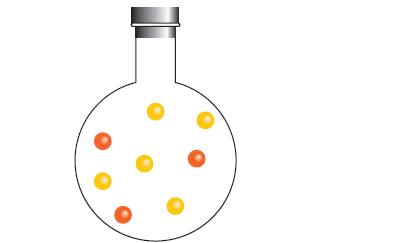
The flask below contains atoms of A (red) and B (yellow). They react as follows 2 A (g) + B (g) → A2B(g), with K = 0.25. Draw a picture of the flask and its contents after the reaction has reached equilibrium.
Calculate the solubility in water (in milligrams per liter) of(a) Air at 0.80 atm;(b) He at 0.80 atm;(c) He at 36 kPa. The temperature is 20°C in each case, and the pressures are partial pressures of the gases. Use the information in Table 5D.2. TABLE 5D.5 The Classification of
Use the phase diagram for carbon in Exercise 5B.4(a) To describe the phase transitions that carbon would undergo if the pressure on a sample is increased at a constant temperature of 2000 K from 100 atm to 1 * 106 atm;(b) To rank the diamond, graphite, and liquid phases of carbon in order of
In a gas-phase equilibrium mixture of SbCl5, SbCl3, and Cl2 at 500. K, PSbCl5 = 0.072 bar and PSbCl3 = 5.02 mbar. Calculate the equilibrium partial pressure of Cl2, given that K = 3.5 * 10–4 for the reaction SbCl5(g) ⇌ SbCl3(g) + Cl2(g).
Use data from Table 4C.1 to calculate the vapor pressure of mercury at 275 K. TABLE 4C.1 Standard Enthalpies of Physical Change* Freezing AH fus% (kJ. mol) point, T/K Substance Formula acetone ammonia argon benzene ethanol helium CH3COCH3 NH3 Ar C6H6 CH5OH He Hg CH4 mercury methane methanol CHOH
Evaluate Kc for each of the following equilibria from the value of K: (a) 2 SO₂(g) + O₂(g) 2 SO3(g), K = 3.4 at 1000. K (b) NH₂HS(s) - NH3(g) + H₂S(g), K = 9.4 x 10-² at 24 °C
Calculate(a) The molality of 13.63 g of sucrose, C12H22O11, dissolved in 612 mL of water;(b) The molality of CsCl in a 10.00% by mass aqueous solution;(c) The molality of acetone in an aqueous solution with a mole fraction for acetone of 0.197.
Determine the freezing point of a 0.10 mol · kg–1 aqueous solution of a weak electrolyte that is 7.5% dissociated into two ions.
A reactor for the production of ammonia by the Haber process is found to be at equilibrium with PN2 = 3.11 bar, PH2 = 1.64 bar, and PNH3 = 23.72 bar. If the partial pressure of N2 is increased by 1.57 bar, what will be the partial pressure of each gas once equilibrium is re-established?
Balance the following equations using the smallest whole number coefficients, then write the expression for K for each reaction: (a) CH4(g) + O₂(g) (b) I₂(g) + F₂(g) → IF, (g) (c) NO₂(g) + F₂(g) = FNO₂(g) CO₂(g) + H₂O(g)
You have two beakers: one is filled with tetrachloromethane and the other with water. You also have two compounds, butane (CH3CH2CH2CH3) and calcium chloride.(a) In which liquid will butane dissolve? Sketch the local environment of the solute in the solution.(b) In which solvent will calcium
When 8.05 g of an unknown compound X was dissolved in 100. g of benzene, the vapor pressure of the benzene decreased from 100.0 Torr to 94.8 Torr at 26°C. What is(a) The mole fraction and what is(b) The molar mass of X?
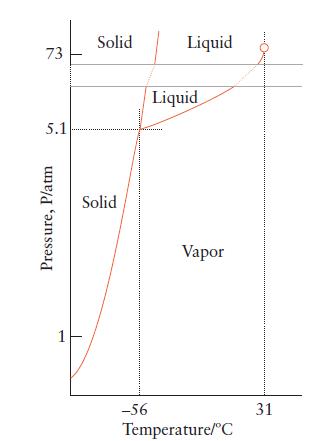
Use the phase diagram for carbon dioxide (Fig. 5B.3) to predict what would happen to a sample of carbon dioxide gas at –50°C and 1 atm if its pressure were suddenly increased to 73 atm at constant temperature. What would be the final physical state of the carbon dioxide? 73 5.1 Pressure,
The minimum mass concentration of oxygen required for fish life is 4 mg L–1.(a) Assume the density of lake water to be 1.00 g · mL–1, and express this concentration in parts per million (which is equivalent to milligrams of O2 per kilogram of water, mg · kg–1).(b) What is the minimum
If Q = 1.0 for the reaction N2(g) + O2(g) → 2 NO(g) at 25°C, will the reaction have a tendency to form products or reactants, or will it be at equilibrium?
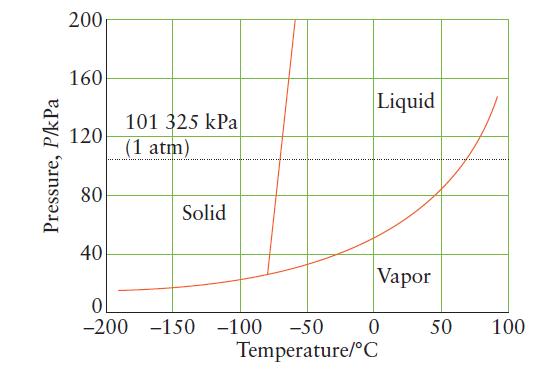
Use the phase diagram for compound X below to answer these questions: (a) Is X a solid, liquid, or gas at normal room temperatures? (b) What is the normal melting point of X? (c) What is the vapor pressure of liquid X at 250°C? (d) What is the vapor pressure of solid X at 2100°C? Pressure,
The density of 14.8 m NH3(aq) is 0.901 g · cm–3. What is the molality of NH3 in the solution?
The vapor pressure of boron trichloride at 228 °C is 17.0 kPa and its enthalpy of vaporization is 23.77 kJ · mol–1. What is the normal boiling point of boron trichloride?
A 0.124 m CCl3COOH(aq) solution has a freezing point of 20.423°C. What is the percentage deprotonation of the acid?
Balance the following equations using the smallest whole number coefficients, then write the expression for K for each reaction: (a) CH4(g) + Cl₂(g) — CH₂Cl₂(g) + HCl(g) (b) NH3(g) + ClF3(g) (c) N₂(g) + O₂(g)= HF (g) + N₂(g) + Cl₂(g) N₂O5(g)
The normal boiling point of ethanol is 78.4 °C. When 9.15 g of a soluble nonelectrolyte was dissolved in 100. g of ethanol, the vapor pressure of the solution at that temperature was 7.40 * 102 Torr.(a) What are the mole fractions of ethanol and solute?(b) What is the molar mass of the solute?
In a laboratory studying the extraction of iron metal from iron ore, the following reaction was carried out at 1270 K in a reaction vessel of volume 10.0 L: FeO(s) + CO(g) ⇌ Fe(s) + CO2(g). At equilibrium the partial pressure of CO was 4.24 bar and that of CO2 was 1.71 bar. The pressure of the
A new substance developed in a laboratory has the following properties: normal melting point, 83.7°C; normal boiling point, 177 °C; triple point, 200. Torr and 38.6 °C.(a) Sketch the approximate phase diagram and label the solid, liquid, and gaseous phases and the solid–liquid, liquid–gas,
The volume of blood in the body of a deep-sea diver is about 6.00 L. Blood cells make up about 55% of the blood volume, and the remaining 45% is the aqueous solution called plasma.What is the maximum volume of nitrogen measured at 1.00 atm and 37°C that could dissolve in the diver’s blood plasma
The density of 11.7 m HClO4(aq) is 1.67 g · cm–3. What is the molality of HClO4 in the solution?
If Q = 1.0 * 1032 for the reaction C(s) + O2(g) → CO2(g) at 25°C, will the reaction have a tendency to form products or reactants, or will it be at equilibrium?
The vapor pressure of dimethyl ether at 258°C is 18.1 kPa and its enthalpy of vaporization is 21.51 kJ · mol–1. What is the normal boiling point of dimethyl ether?
What is the osmotic pressure at 20°C of(a) 0.010 m C12H22O11(aq);(b) 1.0 m HCl(aq);(c) 0.010 m CaCl2(aq)? Assume complete dissociation of the CaCl2.
A sample of ozone, O3, amounting to 0.10 mol, is placed in a sealed container of volume 1.0 L and the reaction 2 O3 (g) → 3 O2 (g) is allowed to reach equilibrium. Then 0.50 mol O3 is placed in a second container of volume 1.0 L at the same temperature and allowed to reach equilibrium.
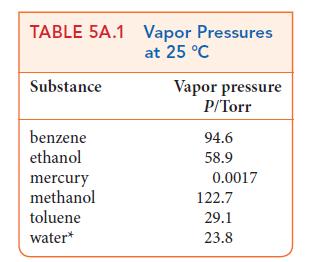
Benzene, C6H6, and toluene, C6H5CH3, form an ideal solution. The vapor pressure of benzene is 94.6 Torr and that of toluene is 29.1 Torr at 25°C. What is the vapor pressure of each component at 25°C and what is the total vapor pressure of a mixture of 1.00 mol benzene and 0.400 mol toluene at
When a molar mass is determined from freezing-point depression, it is possible to make each of the following errors (among others). In each case, predict whether the error would cause the reported molar mass to be greater or less than the actual molar mass.(a) There was dust on the balance,
Consider the equilibrium 3 NH3(g) + 5 O2(g) ⇌ 4 NO(g) + 6 H2O(g). (a) What happens to the partial pressure of NH3 when the partial pressure of NO is increased? (b) Does the partial pressure of O2 decrease when the partial pressure of NH3 is decreased?
Calculate(a) The molality of chloride ions in an aqueous solution of magnesium chloride in which xMgCl2 = 0.0120;(b) The molality of 6.75 g of sodium hydroxide dissolved in 325 g of water;(c) The molality of 15.00 m HCl(aq) with a density of 1.0745 g·cm–3.
For the reaction H2(g) + I2(g) ⇌ 2 HI(g), K = 160. at 500. K. An analysis of a reaction mixture at 500. K showed that it had the composition PH2 = 0.20 bar, PI2 = 0.10 bar, and PHI = 0.10 bar.(a) Calculate the reaction quotient.(b) Is the reaction mixture at equilibrium?(c) If not, is there
The carbon dioxide gas dissolved in a sample of water in a partly filled, sealed container has reached equilibrium with its partial pressure in the air above the solution. Explain what happens to the solubility of the CO2 if(a) The partial pressure of the CO2 gas is doubled by the addition of more
Arsine, AsH3, is a highly toxic compound used in the electronics industry for the production of semiconductors. Its vapor pressure is 35 Torr at 2111.95°C and 253 Torr at 283.6°C. Using these data, calculate(a) The standard enthalpy of vaporization;(b) The standard entropy of
Which of the following solutions has the highest osmotic pressure at 50°C:(a) 0.10 m KCl(aq);(b) 0.60 m CO(NH2)2(aq);(c) 0.30 m K2SO4(aq)? Justify your answer by calculating the osmotic pressure of each solution.
Hexane, C6H14, and cyclohexane, C6H12, form an ideal solution. The vapor pressure of hexane is 151 Torr and that of cyclohexane is 98 Torr at 25.0°C. What is the vapor pressure of each component at 25°C, and what is the total vapor pressure of a mixture of 0.400 mol hexane and 0.200 mol
The freezing point of benzene is 5.53°C. Suppose that 10.0 g of an organic compound used as a component of mothballs is dissolved in 80.0 g of benzene. The freezing point of the solution is 1.20°C.(a) What is an approximate molar mass of the organic compound?(b) An elemental analysis of that
A mixture consisting of 0.10 mol H2(g) and 0.10 mol Br2(g)is placed in a container of volume 2.0 L. The reaction H2(g) 1 Br2(g) → 2 HBr(g) is allowed to come to equilibrium. Then 0.20 mol HBr is placed into a second sealed container of volume 2.0 L at the same temperature and allowed to reach
Consider the equilibrium 2 SO2(g) + O2(g) ⇌ 2 SO3(g).(a) What happens to the partial pressure of SO3 when the partial pressure of SO2 is decreased? (b) If the partial pressure of SO2 is increased, what happens to the partial pressure of O2?
Showing 1500 - 1600
of 3011
First
9
10
11
12
13
14
15
16
17
18
19
20
21
22
23
Last
Step by Step Answers

 Get 50% OFF
Claim Now
Get 50% OFF
Claim Now